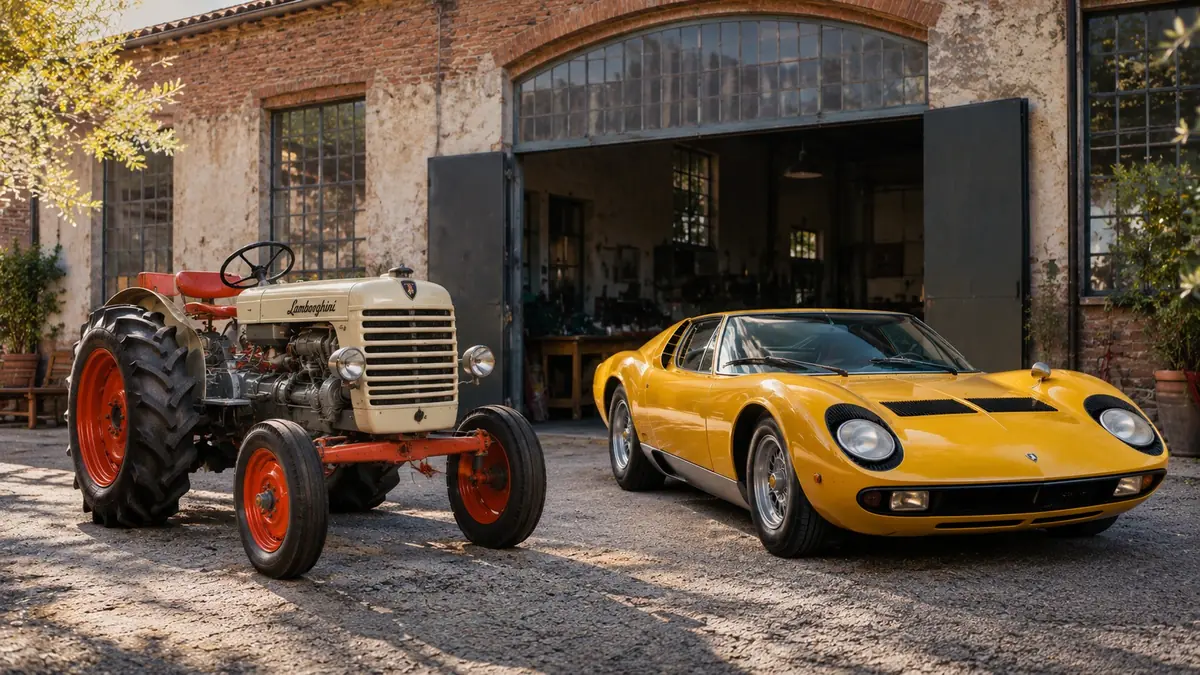
The story begins, as the best stories in Italy do, with an insult delivered over a clutch. In the early 1960s, Ferruccio Lamborghini, a wealthy tractor manufacturer from Emilia-Romagna, bought himself a Ferrari from the 250 series. He drove it as his weekend car.
By the standards of Modena, he was exactly the customer Enzo Ferrari wanted: rich, local, loyal, and silent. But Lamborghini was also a mechanical engineer by trade. He had built his fortune rebuilding military trucks after the war. He knew a weak component when he felt one. His Ferrari’s clutch kept failing. He traced the part and discovered it was the same unit he installed in his tractors. He then drove to Maranello to make his complaint in person.
Enzo Ferrari was a man whose contempt for customers was as legendary as his cars. He heard Lamborghini out and dismissed him. In the most storied versions of the story, he said a tractor maker should stick to tractors. Lamborghini returned to Sant’Agata Bolognese, summoned his engineers, and announced that they would build a grand touring car. It would be better than Ferrari’s and ready for the 1963 Turin Auto Show.
He was right. The 350 GTV debuted on schedule. The company he founded has now outlived him by three decades. The feud it ignited produced sixty years of the most beautiful road weapons ever made, including several of the hypercars no one can buy. This is how an insult became an industry.
Ferruccio: The Engineer Who Hated Racing
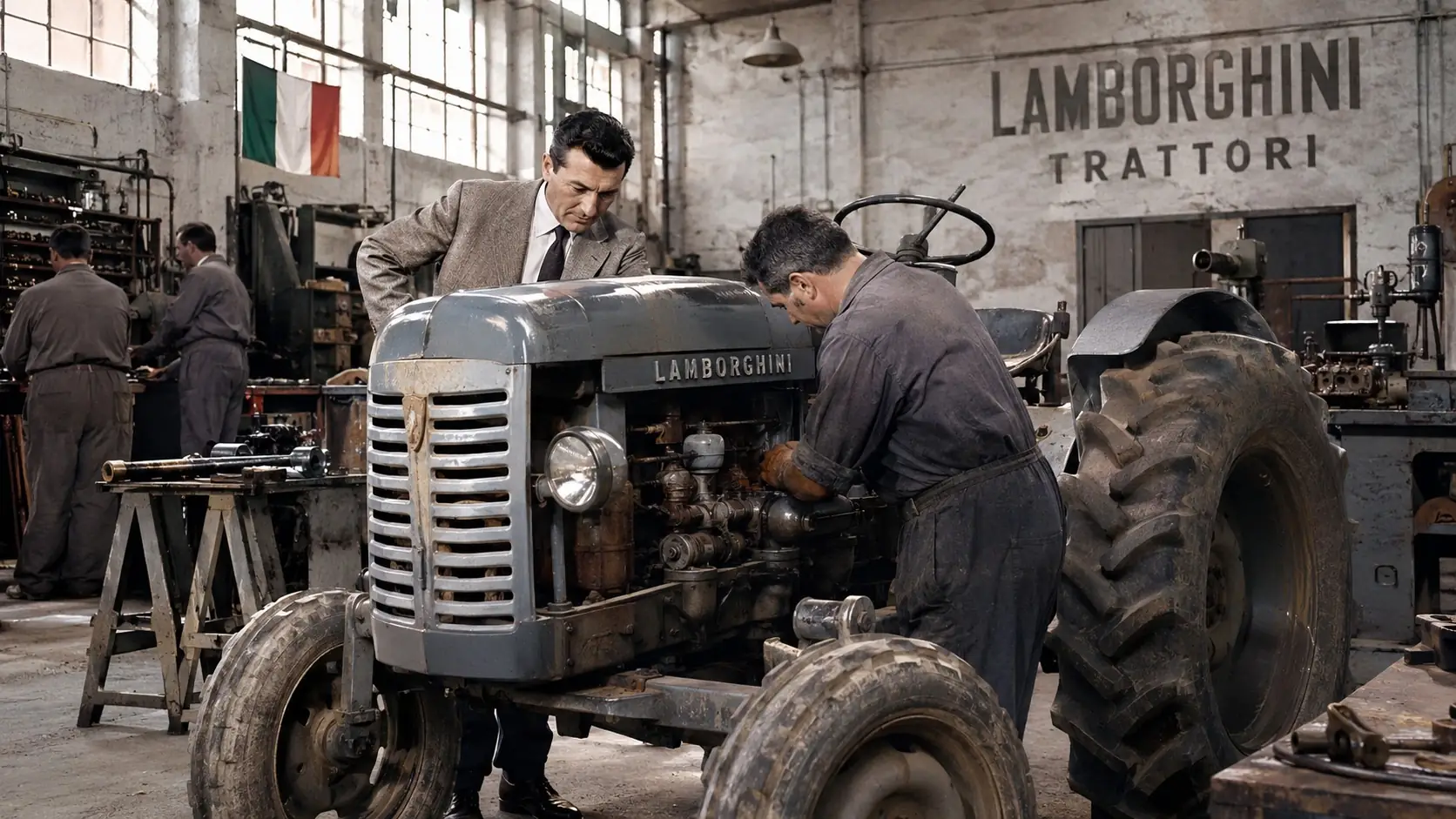
The insult lands differently once you know the man. Ferruccio Lamborghini was born in 1916 to a family of grape farmers. He trained as a mechanic in the Italian air force during the Second World War. When he returned, he found his region’s farmland desperate for machinery.
He began rebuilding surplus military trucks into agricultural tractors. In 1948, he founded Lamborghini Trattori. By the early 1960s, he had become one of Italy’s most successful industrialists. He was wealthy enough to indulge his taste for fast cars and frustrated enough by them to know exactly what they got wrong.
A Different Philosophy of Performance
His philosophy was heresy by Maranello’s standards. Enzo Ferrari believed racing was the point of everything. Road cars existed to fund the track, and comfort was a compromise. Lamborghini believed the opposite.
He had seen enough competition machinery to consider it fragile and temperamental. He wanted to build grand tourers for the road. These would combine the performance of a Ferrari with the refinement of a Rolls-Royce. They would have proper interiors, proper luggage space, and a ride that did not punish.
The first cars wore this conviction visibly. The 350 GT and 400 GT were fast, civilized, and almost suspiciously well finished. They were the anti-Ferrari in every detail that mattered to the man writing the checks.
A Contrarian Legacy
It made for a strange founding creed. A supercar company was founded by a man who disapproved of supercar behavior. Yet that philosophy defined the marque’s character forever.
To this day, Lamborghini builds drama and theater where Ferrari builds purity of purpose. Every V12 Lamborghini carries the founder’s contrarian DNA. The Miura, the Countach, the Aventador, and their descendants remain outrageous, road-focused, and deliberately indifferent to the racetrack.
The Miura: The Shot Heard Around Modena
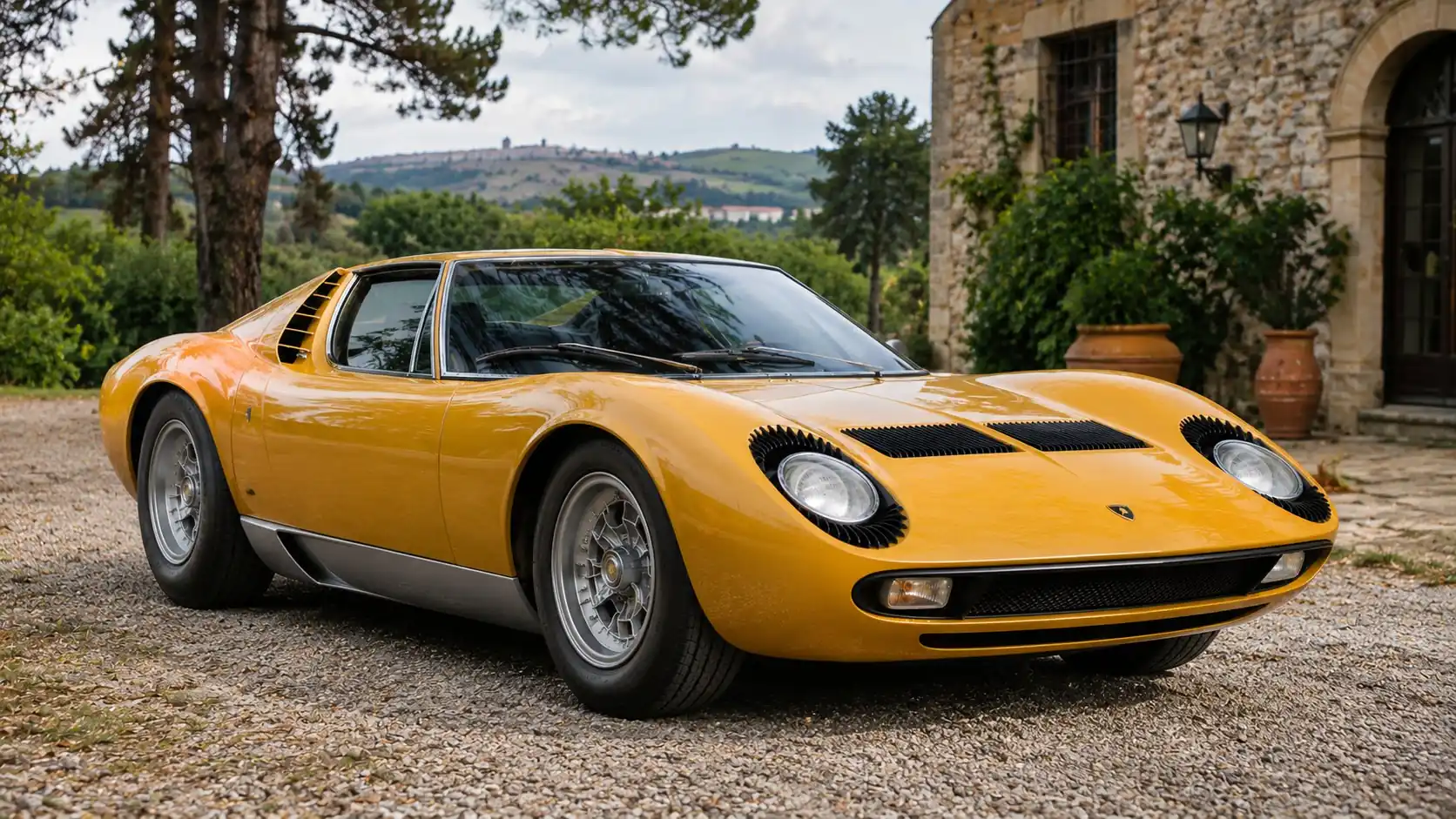
If the 350 GT announced Lamborghini, the Miura detonated it. The car was introduced as a chassis prototype at the 1965 Turin show and as a complete model in 1966. Its V12 engine was a masterpiece developed by the young engineer Giotto Bizzarrini. Positioned behind the seats and mounted transversely across the chassis, it helped invent the supercar template as we understand it today.
Low, wide, and impossibly beautiful, the Miura was styled by Marcello Gandini at Bertone when he was barely 25. It made every Ferrari of its era look like the past. It was the fastest road car in the world when it appeared. Its roster of owners, from the Shah of Iran to Frank Sinatra, established the Lamborghini customer as the peacock to Ferrari’s purist.
The Miura’s success made the insult unrecoverable. Whatever Enzo Ferrari had said about tractors, the world had now seen what a tractor maker could do with a clean sheet. Maranello spent the following decade answering a company that had not even existed when the decade began.
The Countach and the Wedge Decade
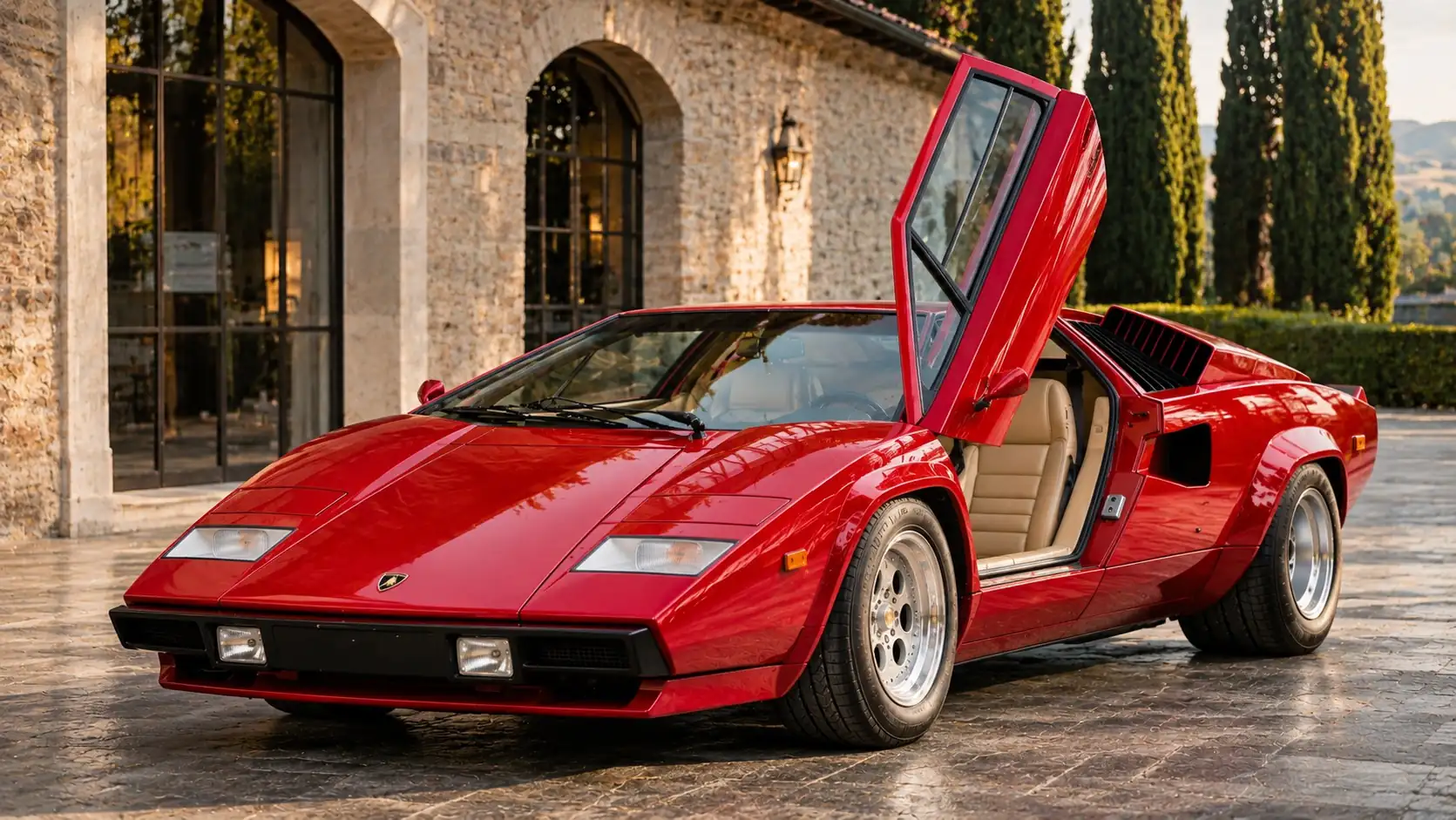
The Countach, which replaced the Miura in 1974, traded the Miura’s curves for a geometry of angles so radical that the word itself entered the language as an exclamation. Its scissor doors, its periscope rearview mirror, its cabin so tight that the pedals sat off center, all of it was impractical, theatrical, and utterly magnetic, and it fixed Lamborghini’s design language for the following fifty years.
The Countach was never the best supercar to drive; its visibility was a rumor and its air conditioning a suggestion. But it was the supercar that stopped crowds, that appeared on bedroom walls from Osaka to Omaha, and that made the brand synonymous with excess at the exact moment the 1980s arrived to reward excess.
The decade also brought turbulence. Ferruccio sold the company in 1974, exhausted and disillusioned after a tractor workers’ strike and the oil crisis gutted the market for twelve cylinder excess.
Lamborghini passed through receivership, Swiss and American ownership, and near collapse more than once, even as its cars, the Jalpa, the LM002 military derived SUV that anticipated the luxury 4×4 by twenty years, kept the flame alive.
The marque’s survival through these decades is itself one of the industry’s improbabilities; it was saved, ultimately, by the same Volkswagen Group that would also absorb the rival’s parent structure and by the SUV revolution it had pioneered with the LM002.
The Modern Empire: From Gallardo to Revuelto
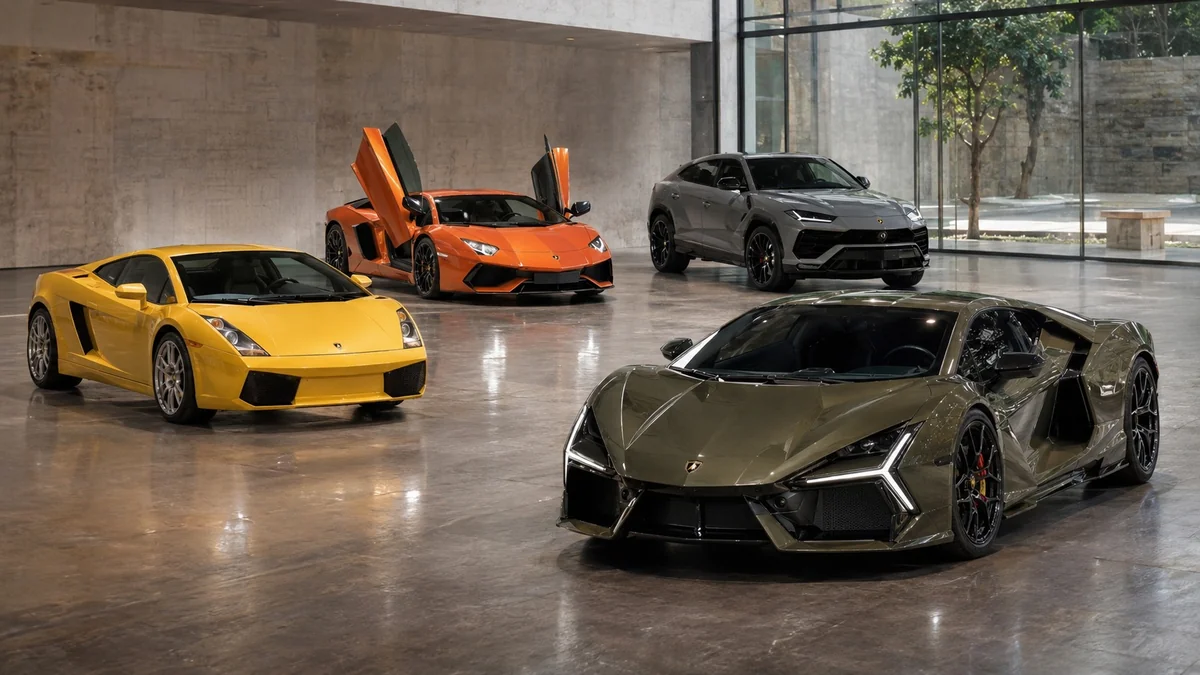
Under Audi’s ownership from 1998, Lamborghini executed the most complete resurrection in supercar history. The Gallardo, introduced in 2003, became the best selling Lamborghini ever by an order of magnitude, a V10 powered junior supercar that shared its bones with the Audi R8 and printed the money that funded everything after.
The Aventador restored the V12 flagship with scissor doors and theatre intact. And the Urus, launched in 2018, detonated the brand a second time, becoming the fastest selling model in company history and transforming Lamborghini’s volume, profits, and customer base almost overnight.
Today the marque stands at another inflection point, replacing its flagship V12 with hybrid technology in the Revuelto while the Urus funds the transition, a playbook the entire industry is watching.
The man who built tractors would, one suspects, approve of the hybrid engineering and disapprove of the racing programs Lamborghini now runs; the company has, in its modern era, embraced the competition he spurned, winning everything from GT3 championships to the class honors at Daytona.
The feud, in other words, ended the only way it could: with both houses, now siblings under the same German parentage, still pretending it never did. Our Ferrari feature tells the other half of that argument, and the two together form the longest rivalry in the luxury world.
FAQs
Why did Lamborghini start making cars?
Ferruccio Lamborghini, a successful tractor manufacturer, complained to Enzo Ferrari about the clutch in his Ferrari and was dismissed as a mere tractor maker. Insulted, he decided to build a grand touring car superior to Ferrari’s, founding Automobili Lamborghini in 1963 and debuting the 350 GTV that same year.
Is the Ferrari Lamborghini feud true?
The core story is well documented in Ferruccio Lamborghini’s own accounts, including the clutch complaint and Ferrari’s dismissive response, though the exact words vary by telling. The rivalry it created was real and shaped both companies for decades, even after they came under common corporate ownership.
What was the first Lamborghini?
The 350 GTV prototype debuted at the 1963 Turin Auto Show, followed by the production 350 GT in 1964. Both carried a new V12 engine designed by Giotto Bizzarrini, whose architecture would power Lamborghini flagships for nearly six decades.
Why is the Miura considered so important?
The 1966 Miura established the mid engine, transverse V12 layout that defines the supercar to this day and was the world’s fastest road car when introduced. Its styling by the young Marcello Gandini set a standard for automotive beauty that still shapes the category.
Did Ferruccio Lamborghini like racing?
No. He deliberately avoided motorsport, considering competition machinery fragile and believing road cars should prioritize refinement and reliability. Ironically, modern Lamborghini campaigns heavily in GT racing, a reversal the founder would likely have disliked.
What does Countach mean?
The name comes from a Piedmontese exclamation of astonishment, roughly translating to an admissive gasp, reportedly uttered by a visitor seeing the prototype for the first time. The car’s scissor doors and wedge shape made the word a permanent part of automotive language.
Who owns Lamborghini today?
Lamborghini has been part of the Volkswagen Group since 1998, operating under Audi oversight. The group also controls other storied marques, making Lamborghini and Ferrari, after decades as bitter rivals, corporate cousins under overlapping German parentage.
What is Lamborghini’s best selling model?
The Urus SUV, introduced in 2018, became the best selling model in company history within a few years, eclipsing even the Gallardo. It transformed the company’s volume and profits, funding the hybrid transition represented by the Revuelto flagship.