William Lyons built his first vehicles on the observation that a sidecar could be beautiful. The company that grew from that observation spent the following century proving that speed and elegance were not competing virtues, but the same one.
Jaguar, born from the Swallow Sidecar Company of Blackpool, became the maker of what many consider the most beautiful car ever made: the E-Type. It also became a seven-time winner of Le Mans. It achieved both under the guidance of a man with no formal engineering training and a perfect eye for proportion.
The Jaguar story is the story of taste applied to machinery.
Today the brand is completing one of the industry’s most radical rebirths, an all electric lineup arriving after decades of tumult. Here is how the cat earned its place, and where it goes next.
The Sidecar Years
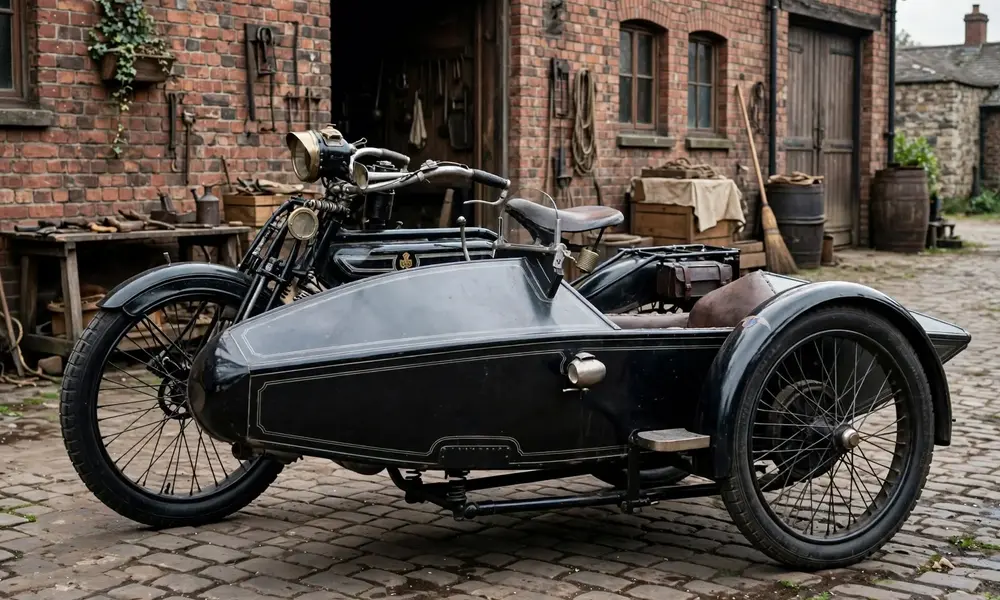
In 1922, William Lyons and William Walmsley founded the Swallow Sidecar Company in Blackpool. They built motorcycle sidecars with a visual flair that distinguished them immediately.
Lyons’s talent was not mechanical invention but aesthetic judgment. He could look at a motorcycle and a sidecar and see a composition.
The company progressed to car bodies, including the Austin Seven-based Swallows of the late 1920s. It then moved to complete cars under the SS name, beginning with the SS1 in 1931 and the SS Jaguar in 1935. The latter’s leaping cat mascot and flowing fenders established the visual language that defines the marque to this day.
The SS Jaguar’s engine was not its own. The Standard Motor Company supplied the six-cylinder unit, but the shape was pure Lyons. And the shape was everything.
The E-Type and the Postwar Miracle
The war ended the SS name, which carried unfortunate associations. The company emerged as Jaguar, keeping the cat and the ambition.
The XK120 of 1948, the fastest production car in the world, introduced the XK engine that would power Jaguars for four decades. The C-Type and D-Type racing cars then won Le Mans five times between 1951 and 1957. The D-Type’s monocoque construction and disc brakes also advanced the state of the art.
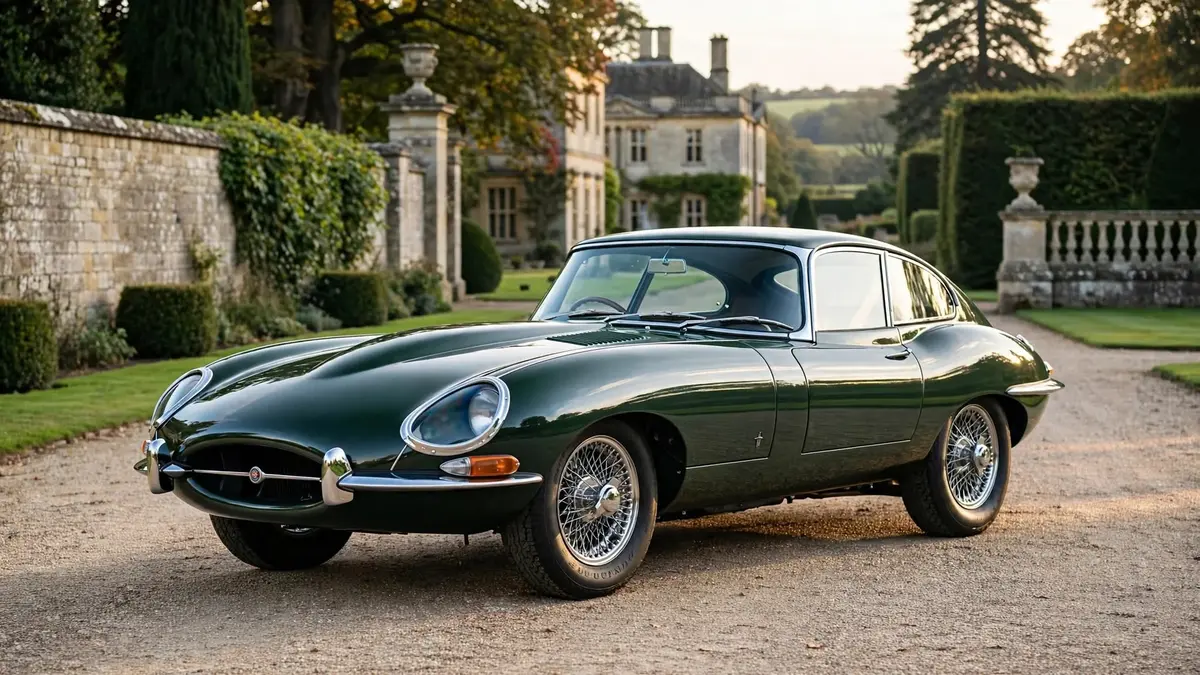
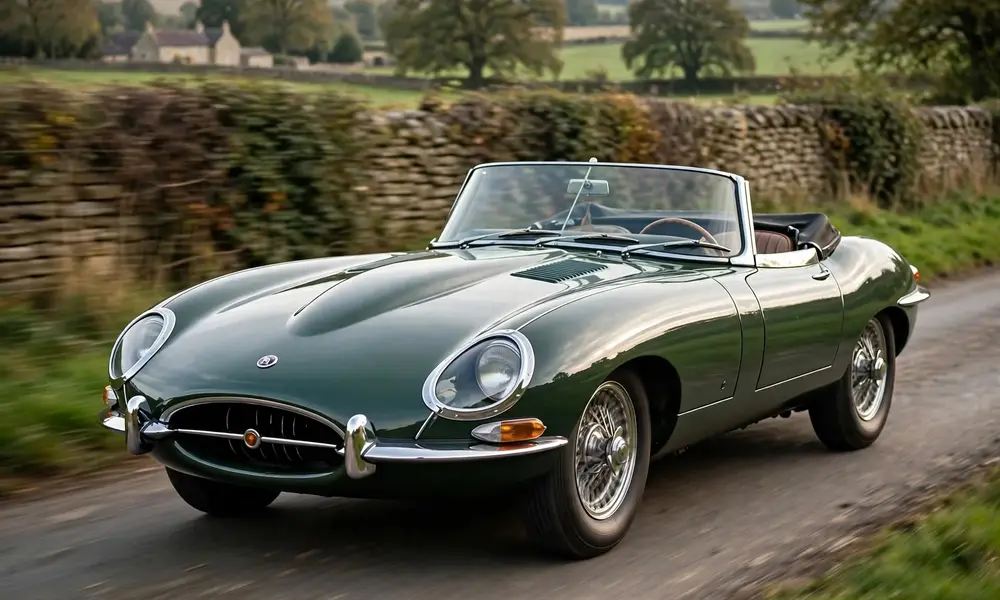
Then, in 1961, came the E-Type. It reached 150 miles per hour and cost a fraction of its Ferrari and Aston Martin rivals. Its shape was so striking that Enzo Ferrari himself called it the most beautiful car ever made.
The E-Type became the 1960s distilled into metal. It was the car of the decade, and its ownership by celebrities from George Harrison to Tony Curtis fixed Jaguar as the thinking person’s glamour.
The Wilderness Decades
The 1970s brought the XJ6, still perhaps the finest sedan of its era. Then came decades of struggle: nationalization within British Leyland, quality crises that damaged the American market, privatizations, and a revolving ownership structure. The company passed through Ford and Tata without ever quite settling its identity.
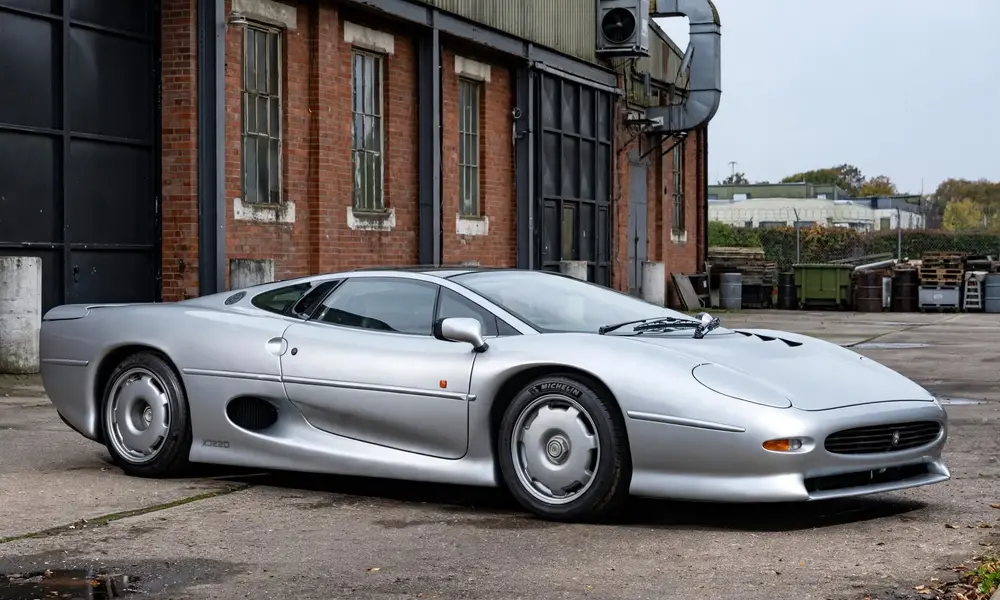
The marque produced wonders during these wilderness years. The XJ220 supercar of 1992 was briefly the world’s fastest production car. The XK8 and the modern F-Type also carried the Jaguar spirit forward. But the consistency of the Lyons era never returned.
The old formula, racing glory converted into road car desirability, lay dormant for forty years. It was waiting for someone to remember it.
The Electric Rebirth
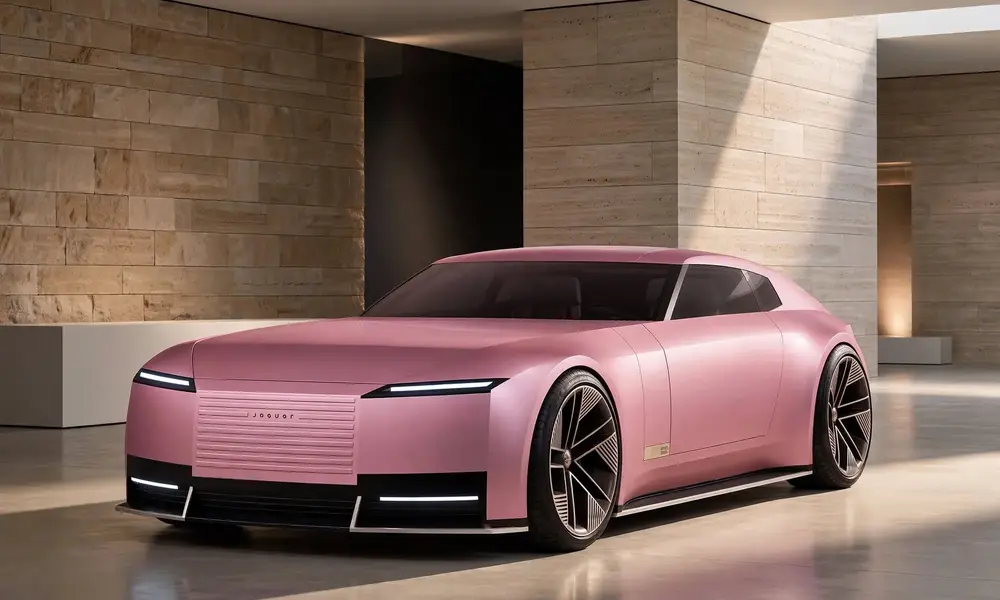
Jaguar’s current chapter is the boldest in its history: a complete reinvention as an all-electric luxury brand. It brings a new design language, new platforms, and the retirement of every combustion model. It is a bet that rivals the E-Type’s original ambition.
The Type 00 concept and the production cars that follow it aim to reset the marque’s identity for the electric age. Jaguar plans to price these cars against Porsche and the luxury establishment rather than mass-premium brands.
Whether the bet succeeds will become the industry’s great test case. It will show whether heritage can be rebooted at will.
The cat has reinvented itself before, from sidecars to Le Mans. Its next transformation is underway.
FAQs
1. Who founded Jaguar?
William Lyons, who began with the Swallow Sidecar Company in Blackpool in 1922 with partner William Walmsley, progressing to car bodies and complete cars before renaming the company Jaguar after the Second World War.
2. Why is the E-Type so famous?
Its combination of 150 mile per hour performance, a price roughly a third of its Italian rivals’, and a shape that Enzo Ferrari called the most beautiful car ever made made it the definitive sports car of the 1960s, an icon of the decade itself.
3. How many times has Jaguar won Le Mans?
Seven overall victories: 1951 and 1953 with the C-Type, 1955, 1956, and 1957 with the D-Type, and 1988 and 1990 with the XJR prototypes of the Group C era.
4. What was the SS Jaguar?
The 1935 model that established the Jaguar name and visual identity, built by the company still then called SS Cars, using Standard engines in bodies of Lyons’s flowing design. The company became Jaguar Cars after the war.
5. Who owns Jaguar today?
Jaguar is part of Jaguar Land Rover, owned by India’s Tata Group since 2008, which has funded the brand’s electric reinvention after the Ford and BMW eras.
6. What is Jaguar’s most valuable car?
The D-Type, particularly the 1956 Le Mans winning long nose examples, commands eight figures at auction, and the XKSS, the road going D-Type derivative, approaches similar values. The E-Type remains the most valuable road car.
7. What is Jaguar’s electric strategy?
A complete transition: every combustion model retired, a new electric platform and design language debuting mid decade, and the brand repositioned as an all electric luxury marque competing on design and exclusivity rather than volume.
8. What is Jaguar’s design philosophy?
Lyons’s founding principle, that a car should be beautiful first and fast because of it, expressed through the flowing fenders of the 1930s, the E-Type’s monoline, and the new electric era’s reinterpretation of the leaping cat’s proportions.
Disclaimer: This content is for informational purposes only and reflects our personal opinions and experiences. We just love to write and share what we know and research.