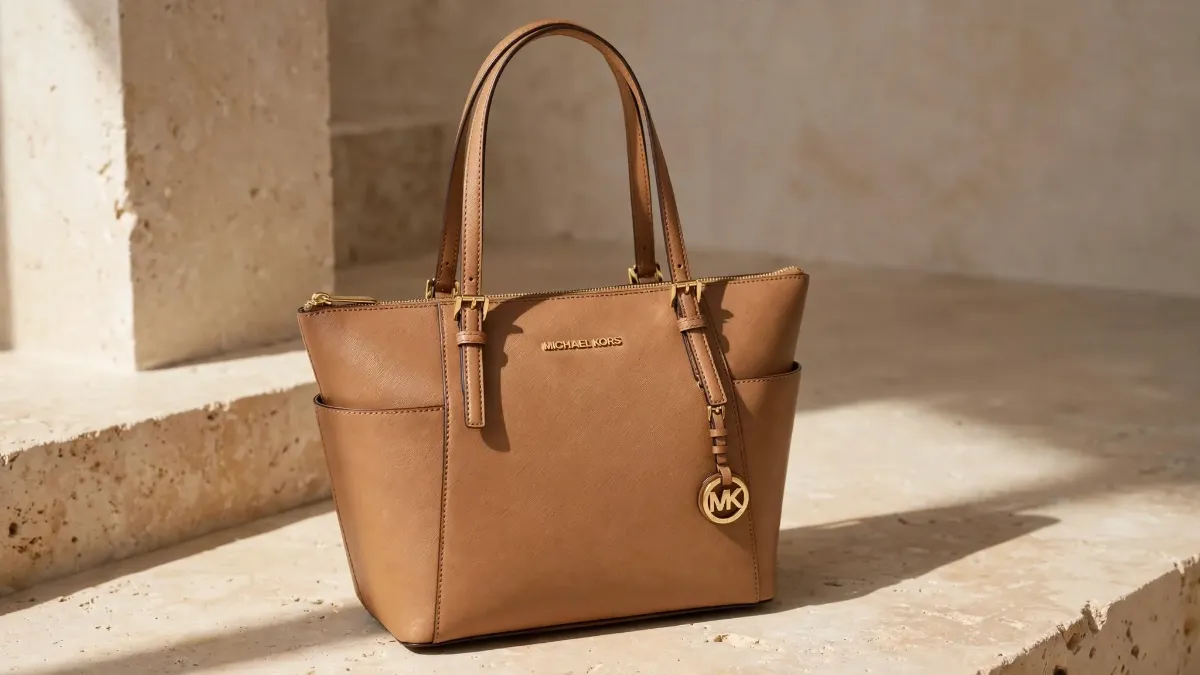
Knowing how to tell if a Michael Kors handbag is real starts with identifying the exact bag and checking whether its details belong together. A logo, a number, a dust bag, or a convincing receipt cannot establish authenticity on its own.
That matters when you find a bag you genuinely love. Perhaps it is the right colour, an older shape you missed, or a secondhand purchase that fits your budget beautifully. You should be able to enjoy that discovery without rushing past the questions that protect it.
The strongest approach combines a model-specific comparison, clear photographs, purchase history, and workable buyer protection. Where uncertainty remains, seek an independent authentication opinion from a service that explicitly covers Michael Kors.
A visual checklist can help you screen a listing. It cannot promise a definitive answer for every bag.
Start with the exact model, not a universal Michael Kors rule
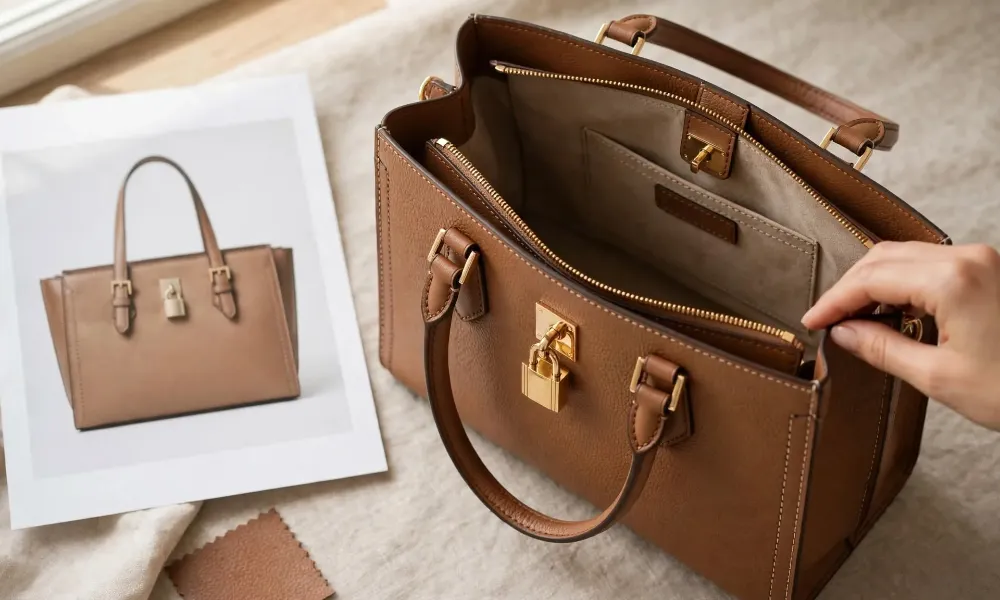
Before examining a zipper, establish what the seller claims to be selling. Ask for the model name, approximate purchase date, size, material, and any readable style information.
“Michael Kors tote” is too broad a description for a meaningful comparison. A leather tote, coated-canvas version, and jacquard design may legitimately have different construction.
Look for a reference that matches the claimed model, material, size, and period as closely as possible. Official product listings are especially useful when available.
Compare the pocket arrangement, closure, strap attachments, proportions, and specified materials. A resemblance to another bag in the same family is not enough.
Our guide to buying a used designer bag online explains the wider purchase checks to complete alongside this model research.
Which common authenticity rules can mislead you?
Some popular shortcuts confuse a detail worth investigating with proof of authenticity. Official Michael Kors product pages provide useful counterexamples.
| Shortcut | What verified product information shows | A better question |
| “A genuine bag must be leather.” | The Brooklyn Quilted Recycled Polyester Tote is listed as recycled polyester. | Does the material match this exact model? |
| “A real bag cannot have a printed logo design.” | The Bay Large Logo Tote is described with a signature logo print and coated-canvas composition. | Does the branding method match the reference? |
| “No dust bag means it is fake.” | Official Jodie and Bay listings explicitly state that a dust bag is not included. | What originally accompanied this particular bag? |
| “A new bag under $100 must be counterfeit.” | Official Michael Kors sale and outlet listings include bags below $100. | Is the price plausible for the model and sales channel? |
| “Finding a matching style number proves it.” | Official listings publish style numbers that anyone can read. | Do the physical bag and its claimed identity also agree? |
These examples do not authenticate a resale listing. They explain why a blanket rule can reject a legitimate bag—or give false confidence about a counterfeit.
A real example: material and packaging need separate checks
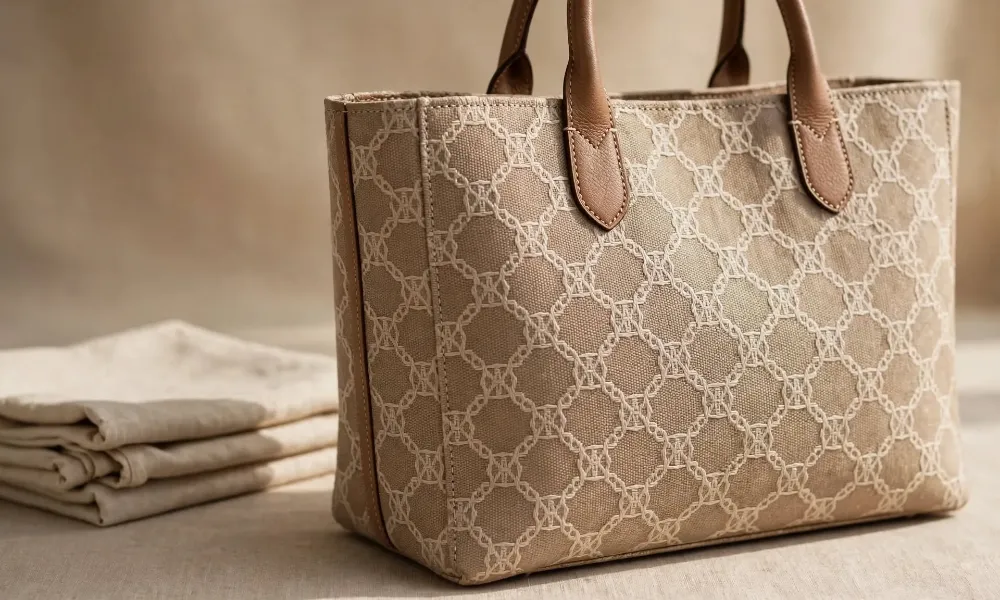
Michael Kors’ Jodie Large Logo Jacquard Tote listing, style 35H1T2JT3C, specifies recycled-polyester logo jacquard and says a dust bag is not included.
Neither detail makes an unfamiliar listing genuine. But a guide that rejects every non-leather bag or every bag without a dust bag would fail against this official example.
That is the distinction to keep: an exception disproves a universal shortcut; it does not approve the bag in front of you.
How should you examine the logo?
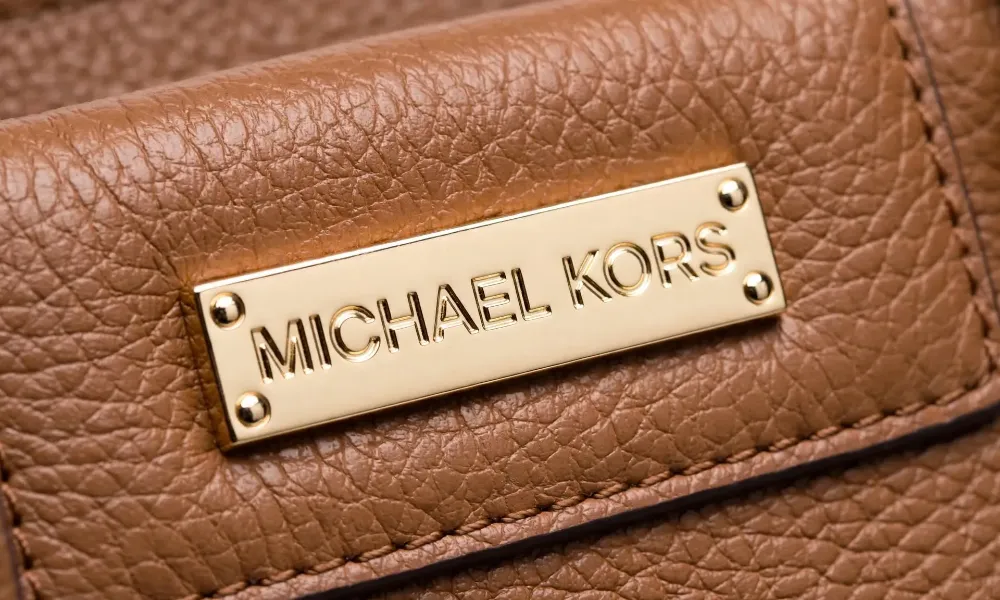
Start with spelling, then compare the branding with a reliable reference for the exact model.
Look at the letter shapes, spacing, placement, and how the logo is attached or applied. Request a sharp, straight-on image rather than relying on a distant photograph.
A clear misspelling is a serious warning sign. Correct spelling, however, is only the beginning of the assessment.
Avoid assuming every genuine Michael Kors bag must use identical lettering, logo placement, or branding materials. The relevant question is whether those details make sense for the claimed design.
Can a Michael Kors serial number prove authenticity?
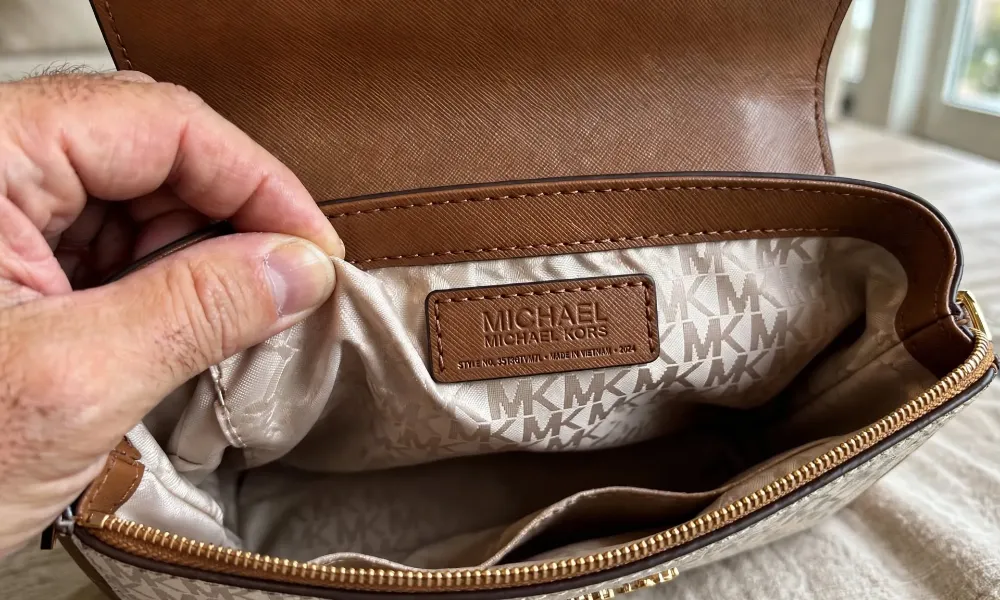
Treat a code as a research lead, rather than a verdict. A number that leads to the correct product page helps you investigate identity, but it does not establish the origin of the physical item.
Also distinguish a product style number from a unique identifier. For example, an official page labelled “Style #” identifies the product style; finding that same public code elsewhere does not prove that only one bag can bear it.
Ask for photographs of every label, front and back where accessible, with the text readable. Record what is actually visible rather than fitting it into a supposedly universal online format.
This guide does not rely on an official public serial-number lookup. If an unfamiliar website claims to verify a bag instantly from a code, establish who operates it and what its result actually means before paying or sharing information.
What if searching the number produces no result?
An unsuccessful search is unresolved evidence. It is not, by itself, proof that the bag is counterfeit.
Ask whether the seller can provide better purchase information or a clearer photograph. If the reference remains uncertain, an authenticator may be able to advise whether there is enough information to assess it.
You can also decide not to buy. You do not need a counterfeit verdict to conclude that a listing lacks the evidence you want.
What do stitching and hardware really tell you?
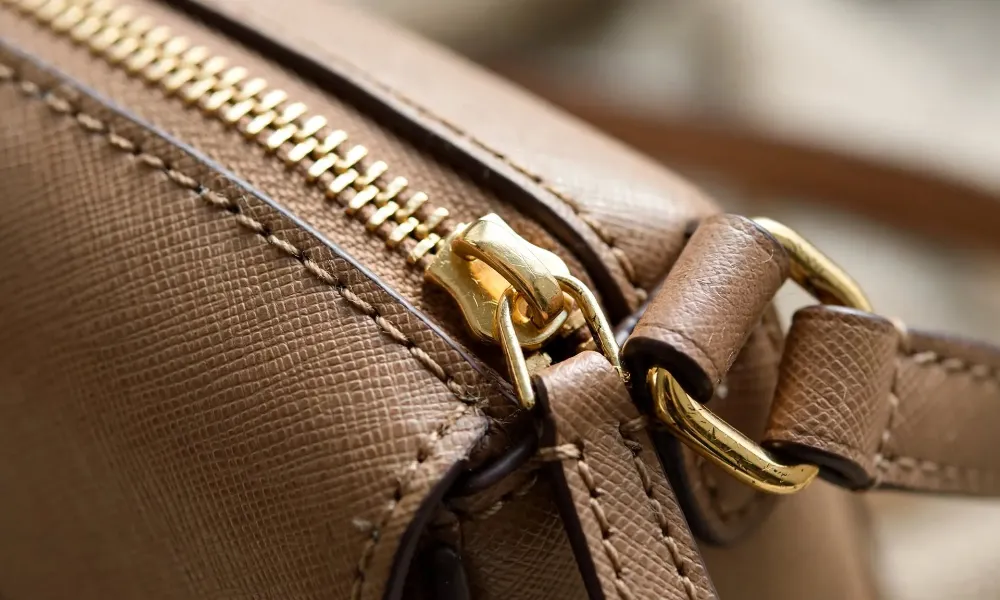
Use close-up photographs to look for inconsistencies and condition problems. Inspect handle attachments, strap anchors, seam intersections, zipper ends, and hardware markings.
Then compare those areas with the right reference. A rule such as “all genuine bags have double stitching” or “the thread always matches the exterior” needs model-specific support before it becomes useful.
Hardware weight and zipper movement also require context. A smooth zipper is reassuring about operation; it does not establish authenticity.
A damaged finish or uneven repair may be important to your purchase even when the bag is genuine. Keep those concerns in the condition assessment rather than forcing every flaw into a real-or-fake conclusion.
Does the country label settle the question?
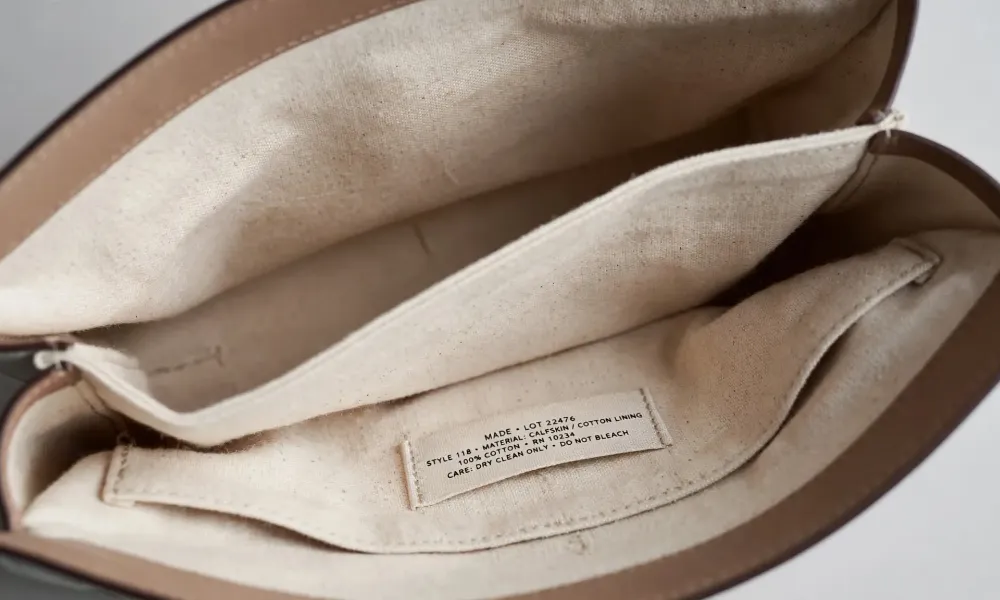
No. Do not authenticate or reject a bag solely because a country appears on an internet list.
Read the complete label and investigate whether it fits the claimed model and period. A generic list of manufacturing locations is not a documented production history for every Michael Kors handbag.
Similarly, a country label that appears plausible does not prove the rest of the bag. It belongs in the overall assessment.
If a seller uses the country label as their only evidence, ask for the missing details before proceeding.
Are Michael Kors outlet bags real?
Michael Kors operates an official outlet channel. An outlet purchase is therefore not, by itself, evidence of a counterfeit.
The important distinction is between the brand’s genuine outlet channel and an unrelated website using “outlet” in its name. An attractive logo or familiar photographs cannot establish who operates a store.
Compare outlet bags against the appropriate references. Do not assume that a bag described as outlet merchandise must match a different full-price model detail for detail.
Ask the seller where it was purchased and what documentation supports that history. “Bought at an outlet” is a claim to investigate, not a complete explanation.
Which photographs should you request?
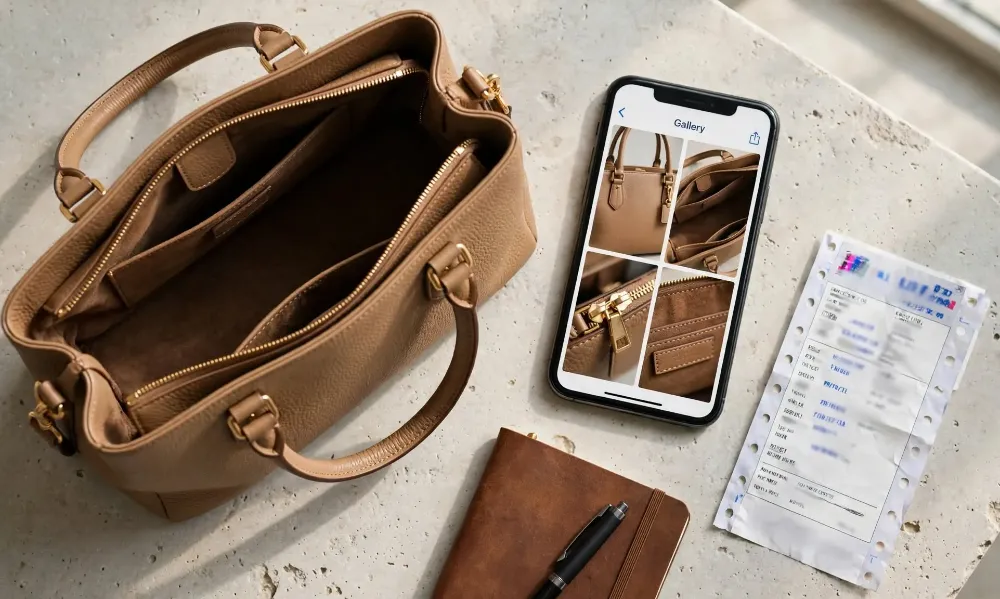
Ask for pictures of the actual bag, rather than additional catalogue images. Natural light and clear focus are more useful than filters.
Request:
- The front, back, both sides, and base.
- The complete interior with pockets visible.
- All labels and codes, including reverse sides where accessible.
- Close-ups of branding, hardware, zipper pulls, and strap attachments.
- Handles, corners, edge finishing, and any disclosed repairs.
- The receipt or order record with personal and payment details covered.
A fresh photograph containing a handwritten date or the seller’s username can help connect the seller to an item. It does not authenticate that item.
If important areas remain blurred or missing after a reasonable request, consider whether you have enough evidence to continue.
What does a receipt prove?
A receipt can support a purchase history. It does not automatically connect the document to the bag being offered.
Check whether the retailer, date, model description, colour, and style information agree where those details are present. Ask for clarification when they do not.
Likewise, a missing receipt leaves a gap in provenance; it is not a standalone counterfeit finding.
Keep the bag and the paperwork under review together. Neither should be allowed to explain away contradictions in the other.
When is independent authentication worth paying for?
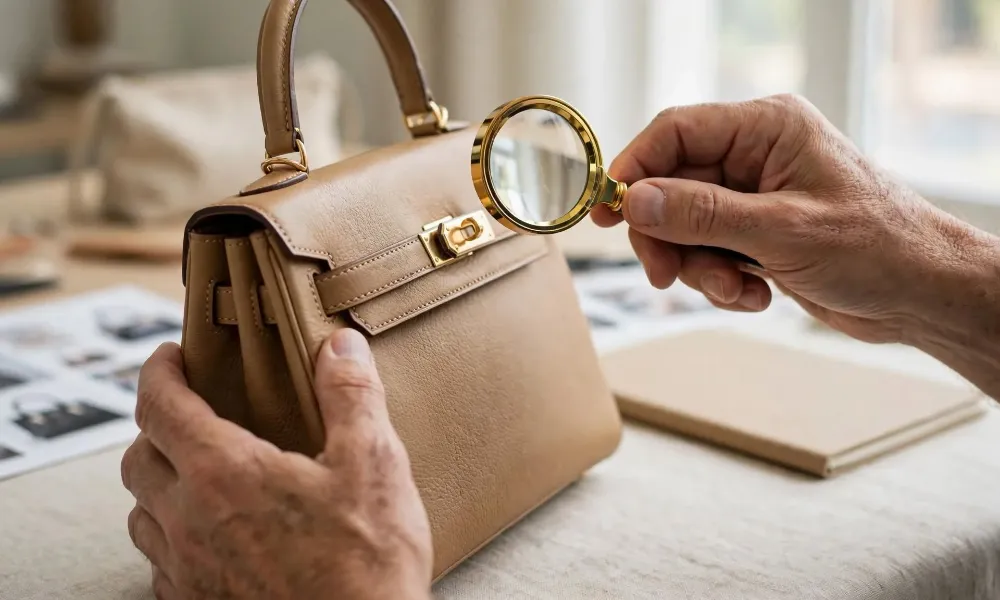
Consider it when the cost of an incorrect purchase would matter to you, when reference material is incomplete, or when the seller’s claims leave unresolved questions.
Before choosing a service, confirm that it explicitly assesses Michael Kors and the relevant category. Ask what photographs it requires, whether physical inspection may be needed, and whether it can return an inconclusive result.
Find out what the written opinion includes and whether the selling platform accepts it for disputes. Do this before assuming a certificate will secure a refund.
Avoid treating an automated score as more evidence than it is. Understand the method, limitations, and available review process.
What should you do if the bag has already arrived?
Preserve the listing, order details, seller messages, packaging, and photographs of the bag as received. Note any specific differences from the description.
Keep three questions separate: is authenticity disputed, is condition misdescribed, or has the wrong item arrived? A genuine bag with undisclosed damage may still present a purchase problem.
Check the platform’s current reporting process and deadlines promptly. Follow its return instructions and retain tracking records if a return is authorised.
Avoid cleaning, recolouring, repairing, or otherwise altering the bag while the issue is being assessed. Once the purchase is resolved, our guide to caring for designer leather bags can help you begin a material-appropriate routine.
A practical stop, ask, or proceed framework
This is our editorial purchase framework, not an authentication score.
Stop: The seller refuses essential photographs, pressures you to bypass platform payment, or leaves major contradictions unexplained.
Ask: The style is unclear, documentation is incomplete, or a detail differs from your reference. Request evidence or seek a qualified opinion.
Consider proceeding: The claimed identity and available evidence are consistent, uncertainties are acceptable to you, and the purchase has workable protections.
“Consider proceeding” does not mean “certified authentic.” It means you have completed a more informed buying decision.
Frequently asked questions
Can a genuine Michael Kors bag have no dust bag?
Yes. Some official listings explicitly say a dust bag is not included. Check the exact model instead of treating packaging as a universal requirement.
Can a real Michael Kors bag cost less than $100?
Yes. Official sale and outlet listings can fall below that price. A discount alone proves neither authenticity nor counterfeiting.
Does peeling mean the bag is fake?
No single condition issue settles authenticity. Identify the material, investigate the claimed model, and assess the damage separately.
Can a Michael Kors bag be authentic without being leather?
Yes. Official collections include bags made with materials such as coated canvas and recycled polyester.
Can photographs guarantee that a bag is genuine?
This guide makes no such guarantee. Photographs support screening and may support a specialist assessment, but missing details can leave the result unresolved.
The editorial read
A beautiful secondhand find should bring pleasure into your life. It should not require you to ignore uncertainty because the colour is perfect or the seller says someone else is waiting.
Give the bag a clear identity, ask for evidence, and keep your ability to question the purchase intact. Those habits are more useful than memorising a handful of supposed secret signs.
You are allowed to love the bag and still take your time.