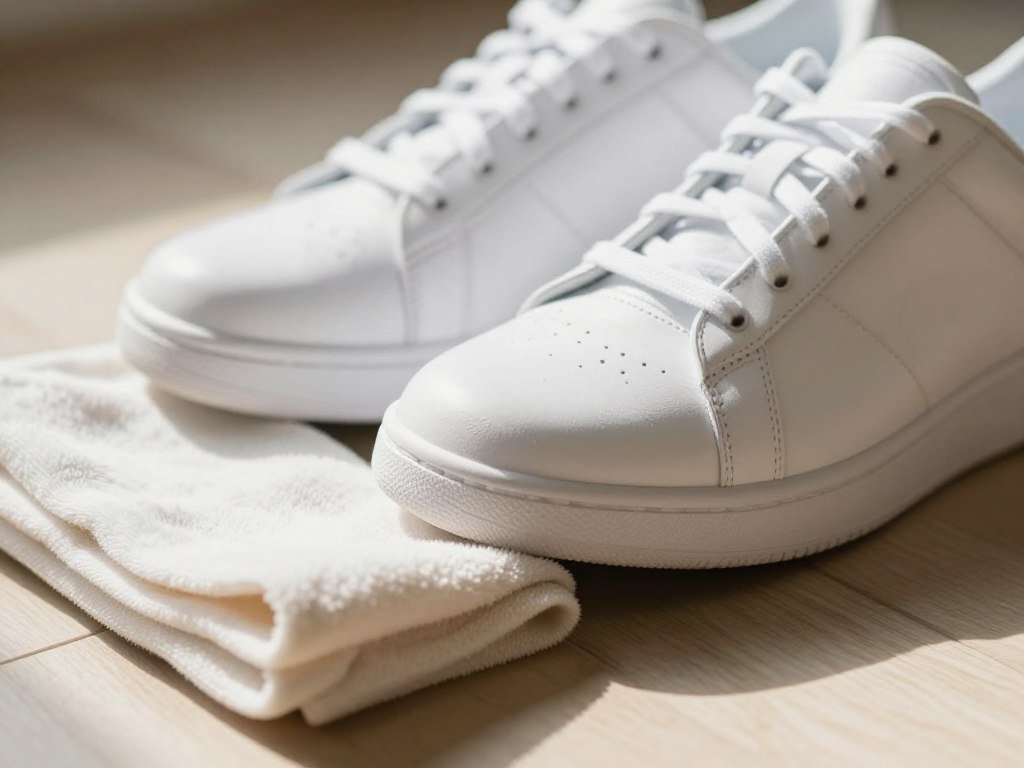
A small scuff is easier to handle on the day it appears than after dirt has built up around it. If you want to know how to keep white sneakers clean, start with a simple routine that suits the shoe’s material. Regular light care is easier on the surface than repeated, forceful scrubbing. It also helps you deal with fresh marks before they become harder to lift.
A spot test means applying a cleaning product to a small, hidden area first to check for discoloration or damage. Materials such as leather, suede, canvas, mesh, and knit can react in different ways, even when they share one shoe. A gentle product check and the shoe’s care label are the two checks to make before any wet cleaning.
Key Takeaways
- Match each cleaning method to the shoe’s material.
- Remove loose dirt before using a damp cloth or cleaner.
- Clean fresh marks before grime builds up around them.
- Use a spot test before trying an unfamiliar product.
- Let the shoes dry fully before wearing them again.
- Keep damp shoes out of closed storage.
How to Keep White Sneakers Clean Between Deep Cleans
A quick dry wipe after wearing can remove surface dirt before it settles into seams and texture. Fresh dirt is usually easier to lift than grime that has been rubbed into the shoe through repeated wear. Make this a small part of sneaker care, not a reason to scrub every time you take your shoes off.
Use a soft, dry cloth or brush to remove loose dirt from the upper and sole. For a small mark, use a damp cloth only when the material allows it. Prompt spot cleaning and complete drying between wears help limit dirt buildup.
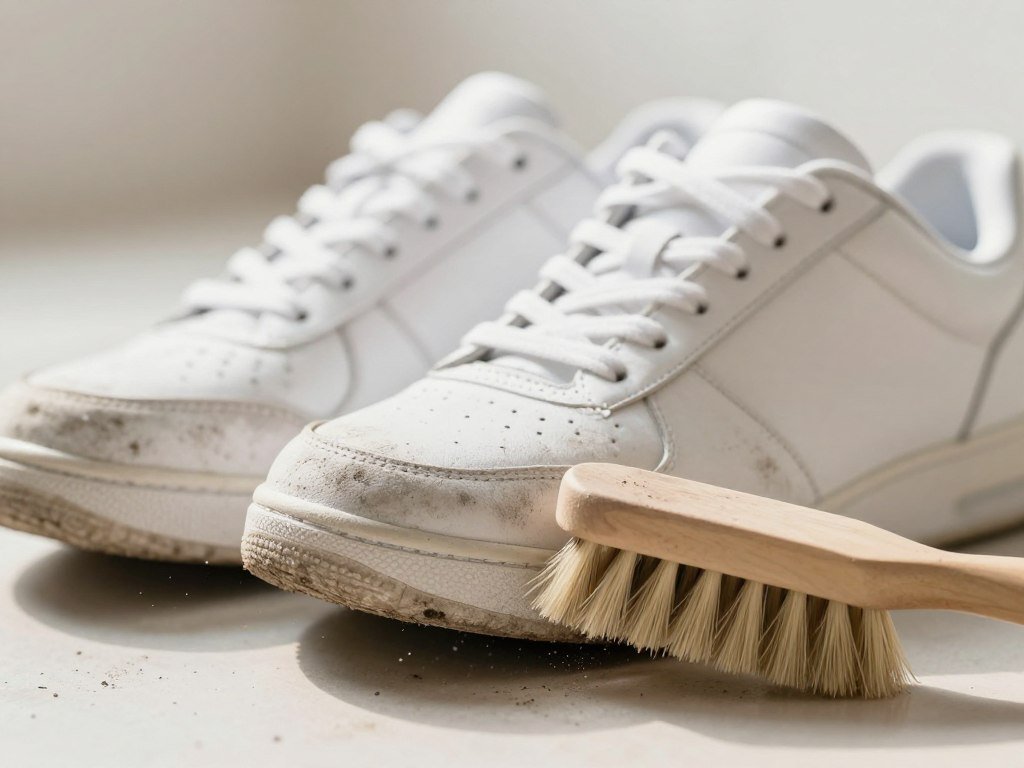
Wipe gently, using a clean part of the cloth as dirt comes away. If your shoes are white against dark clothes, a quick check after wearing can help you catch marks from cuffs or bags. That contrast can work well with casual and smart-casual outfits, as shown in these white sneaker outfit ideas.
Leave a mark alone if wiping it would spread wet grime across a delicate panel.
Fresh dirt does not always need a cleaner. A dry wipe may be enough for dust, while a small damp cloth can help with a surface mark on a washable material. Stop when wiping starts to smear the mark, rather than turning a small stain into a larger patch.
Keep a soft cloth near the place where you take your shoes off. That makes a quick check easy without making each day’s wear feel like a deep clean. If a mark stays put, identify the panel before choosing another cleaning method.
How to Identify the Material Before Cleaning
One sneaker can combine leather, mesh, suede trim, and rubber, so treat its panels as separate surfaces. Look at the upper, seams, tongue, and trim before choosing a cleaning method. Each panel may need its own care.
Use the label or maker’s care instructions as your guide when materials differ. Do not use one wet method across a mixed-material shoe unless its care directions allow it. The table gives a safe starting point for common surfaces, not a substitute for the shoe’s own instructions.
| Material | Suitable starting method | Main caution |
|---|---|---|
| Smooth leather | Damp soft cloth with mild soap | Do not soak |
| Canvas | Gentle fabric cleaning | Clean the full panel evenly |
| Mesh or knit | Mild soapy water and a soft brush | Use light pressure |
| Suede or nubuck | Dry suede brush or eraser | Do not use a wet all-purpose routine |
Texture offers a clue, but it does not always tell you the full story. Smooth leather feels even, while suede has a soft, raised nap; mesh and knit show visible loops or openings. Canvas usually has a tighter woven surface, though trim or coatings can change how it reacts to water.
Some shoes use several materials that look alike at a glance. Check inside the tongue, the box, or the maker’s care page if you still have access to it. The same shoe may have a washable fabric panel and a delicate trim beside it.
For leather goods, gentle wiping and care suited to the finish also matter beyond footwear. This guide to leather bag care covers a similar low-moisture approach for smooth leather. If you cannot identify a finish, test a hidden spot rather than assuming it is washable.
How to Clean White Sneakers Before Adding Water
Start with a dry shoe, since brushing wet dirt can push grit deeper into the material. Dry preparation helps keep loose debris from turning into muddy streaks during cleaning. The first step in how to clean white sneakers is to remove loose dirt before any wet scrubbing.
Gather the few things you need and keep the different shoe parts in view. Remove laces and insoles only when they are designed to come out. Clean those parts separately only when their care permits it.
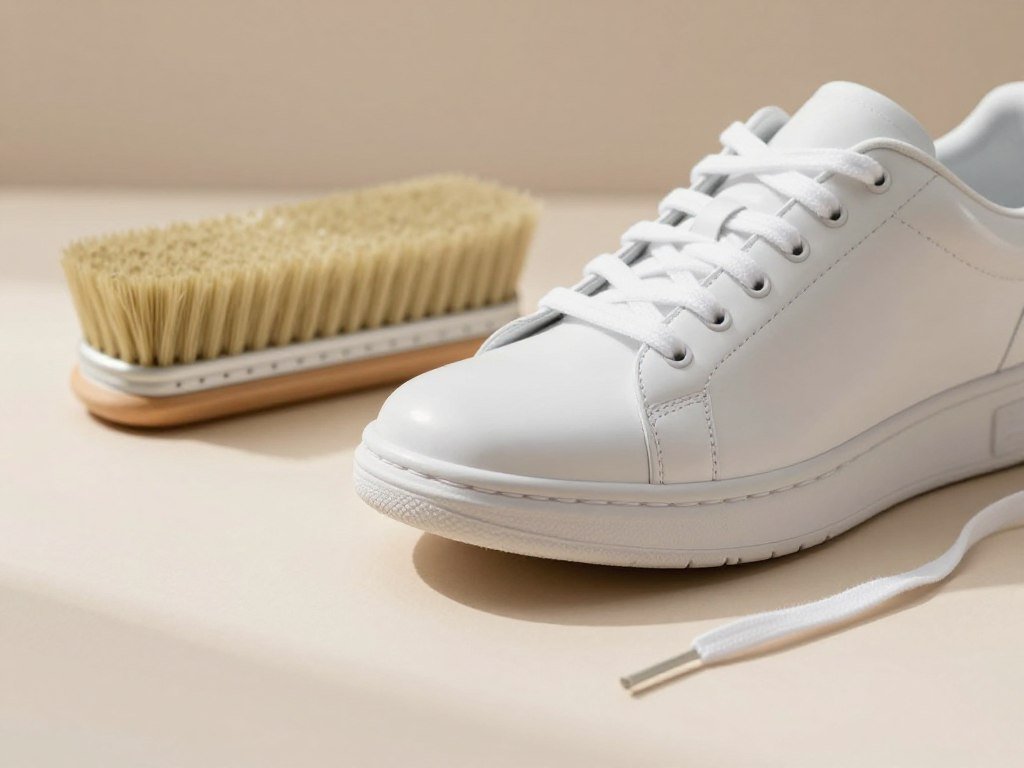
Remove the Laces and Insoles
Use these five preparation steps before choosing a cleaning solution. Keep the shoe dry while you work through the list, and check care directions for each removable part.
- Check the shoe’s care label and maker’s instructions.
- Remove the laces if they come out easily.
- Remove removable insoles without pulling or bending them.
- Dry-brush loose dirt from the upper and sole.
- Set a clean cloth and a small bowl of water nearby.
Laces and insoles may use a different fabric or foam from the shoe itself. A separate care label takes priority for those parts. Do not assume that a method safe for the upper will suit the insole.
Dry-Brush Away Loose Dirt
Brush across the upper with light strokes, then clear dirt from the sole. A soft brush can reach seams and textured areas without grinding grit into them. Use a clean cloth to pick up the loosened debris.
Keep each part where you can find it, especially if you removed a lace or insole with its own care directions. A dry shoe is now ready for a method matched to its material. Set aside any removable part that has a different care label from the shoe.
How to Keep White Leather Sneakers Clean
A lightly damp cloth is safer for smooth white leather than a saturated brush. Low moisture helps clean the surface without soaking the material. For wipeable white leather, use a few drops of mild, unscented liquid soap in warm water.
Work over a small area with a soft cloth, then check what lifted. Wipe the leather with a damp cloth, not a soaked one. This routine is for leather that can be wiped, not suede, nubuck, or an unknown delicate finish.
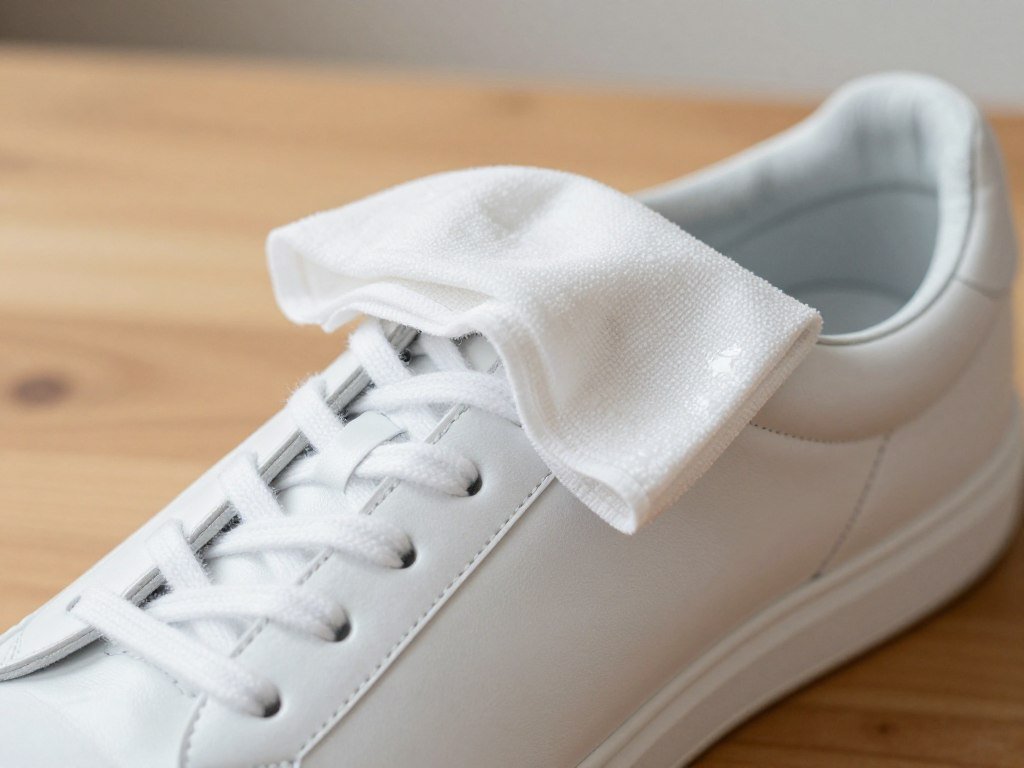
Clean Sealed Leather With a Damp Cloth
Dip the cloth in the soapy water and wring it out well. Wipe gently, using short passes rather than hard scrubbing. For help with leather care beyond shoes, see these leather cleaning tips from Reader’s Digest.
Check the surface as you go. If the cloth picks up dirt, turn it to a clean section before continuing. A fresh area of cloth helps keep grime from moving back onto the leather.
Leather finishes can vary, so a hidden spot test is a sensible first check. Apply the solution to a small, unseen area and look for a change in color or finish after it dries. Stop if the material reacts in a way you did not expect.
Remove Soap Residue and Air-Dry
Use a fresh damp cloth to lift soap residue from the surface. The cloth should feel damp, not wet enough to leave water running across the shoe. Do not leave visible soap behind, since residue can make a clean panel look dull.
Place the shoes in a shaded, ventilated space and let them air-dry. A leather-cleaning expert’s advice also favors a damp, not saturated, cloth and the mildest workable method. Keep bleach and ammonia-based cleaners off white leather because they can strip oils and contribute to yellowing.
How to Clean White Fabric Shoes Without Water Rings
On white canvas, cleaning only one wet spot can leave a ring that looks like another stain. Even wetting helps reduce that risk, so clean the whole panel rather than soaking one isolated mark. This is a useful way to clean white canvas shoes without turning them yellow.
For washable fabric, follow both the product label and the shoe care label. Avoid harsh cleaners, excess water, and uneven wetting. OxiClean’s hand-cleaning directions use Versatile Stain Remover Powder at Line 1 per 16 ounces of warm water.
Clean the Whole Canvas Panel Evenly
Use a clean white towel to blot the mixture onto the stain. Work across the full panel with even, controlled touches, rather than making one small spot much wetter than the rest. Do not pour the mix directly onto the shoe.
A mild cleaner and careful blotting can help with ordinary marks on washable fabric. Follow the product label for preparation and use, and stop if the fabric changes color or texture. The shoe’s care label takes priority if it rules out that cleaner or method.
Keep water use modest and avoid hard scrubbing. Wet fabric can spread dirt through the weave, while uneven moisture may leave a visible edge as it dries. Blotting gives you more control than rubbing back and forth.
Blot Washable Fabric Instead of Scrubbing Hard
Use a second, damp towel to lift the cleaning solution and loosened dirt. Rinse the towel as needed so you do not transfer grime back onto the panel. If a mark remains, let the area dry before judging it again.
For washable fabric shoes, use OxiClean Versatile Stain Remover Powder at Line 1 per 16 ounces of warm water, then blot as directed. A separate damp towel helps remove leftover solution without soaking the shoe. Blot a fabric stain with a clean white towel and lift the residue with a separate damp towel.
How to Clean White Mesh and Knit Sneakers
Mesh and knit have open weaves, so a soft brush and light pressure matter more than force. Small areas are easier to control than a large patch of wet fabric. Use mild soapy water, a soft brush, and a cloth to lift loosened dirt.
Work carefully across the weave, without pushing grit deeper into its openings. Avoid bleach and other harsh cleaners on mesh and knit. These materials can snag or change texture when scrubbed too hard.
Use Mild Soapy Water on Mesh
Dip the brush into mild soapy water, then remove extra water before it reaches the shoe. Brush a small section with light strokes and pause to check the fibers. Use a cloth to lift dirt from the surface instead of grinding it into the weave.
Repeat the same gentle motion on the next small area. Avoid flooding the mesh, since excess water can carry loosened dirt into nearby seams. A clean cloth can pick up grime as it comes free.
Brush Knit Gently and Avoid Harsh Cleaners
Knit can have loops that catch on stiff bristles, so choose a soft brush and keep the strokes controlled. Mild soap is enough for routine dirt when the care directions allow water. Leave bleach and harsh cleaners out of the process.
Check the surface often rather than brushing through a whole panel without looking. If fibers begin to snag or the surface changes texture, stop brushing. Let the material rest before you decide whether another method is safe.
Some running shoes combine a knit upper with bonded sections or support pieces. Their care label may limit how much water or force they can take. Stop brushing if fibers begin to snag or the surface changes texture.
How to Clean White Suede and Nubuck Carefully
Suede’s raised nap can change when it is soaked or scrubbed with the wrong brush. Dry care is the safer starting point for suede and nubuck. Use a suede brush for dry dirt and an eraser for marks that respond to dry treatment.
Keep liquid away unless the shoe’s care directions specifically permit it. Do not use Dawn Powerwash or another wet all-purpose sneaker routine on suede or nubuck. A wet method can change the nap or leave a new mark.
Lift Dry Dirt With a Suede Brush
Let loose dirt settle before brushing, then use a suede brush with short, gentle strokes. Brush in one direction first, checking the nap as you go. A stiff brush or forceful back-and-forth scrubbing can roughen the surface.
Some sneakers have suede trim beside washable panels. Keep any wet method on the washable area and away from the trim. Use a separate cloth or brush if the materials meet along a seam.
Treat Marks Without Soaking the Nap
For a mark that responds to dry treatment, try a suede eraser. Use light pressure and stop to check the surface before rubbing again. Brush away any crumbs without pressing them into the nap.
Liquid can leave a visible edge or flatten the raised surface. Only use it when the shoe’s own care directions permit that method. If a stain does not lift with gentle dry treatment, use a cleaner specifically labeled for that material.
How to Clean White Rubber Soles and Scuffs
Keep the brush on the rubber edge so loosened grime does not streak across a fabric upper. Short strokes help you work on one small area at a time. A brush suited to rubber can lift everyday dirt from white soles.
Brush back and forth with a cleaner permitted for the shoe, then wipe away the loosened dirt and foam. Finish each small section with a clean cloth before moving on. Surface dirt and a scuff are different problems, so one may respond when the other stays visible.
Brush the Rubber Sole in Short Strokes
Keep the brush on the rubber midsole and sole edge. Use controlled strokes instead of sweeping across the upper, where loosened grime can leave a streak. A small brush can reach the seam without dragging dirt across the fabric.
Work in short sections and watch where the foam goes. If it collects near the upper, wipe it away rather than brushing it into another material. Use a cleaner only if the shoe’s care directions permit it.
A melamine sponge may abrade a finish. If the shoe’s care instructions allow it, spot-test an inconspicuous area and use the sponge gently. Do not treat a scuff as ordinary dirt if cleaning does not change it.
Wipe Away Dirty Foam Promptly
Use a clean cloth to remove dirty foam as each section is finished. Turn the cloth to a clean area when it picks up grime. This keeps wet dirt from drying back onto the rubber.
Check the edge where the sole meets the upper before moving on. That narrow seam can hold foam and dirt that a quick pass misses. A clean cloth after each small section is more useful than letting dirty foam dry on the sole.
Which Household Cleaners Are Safe for White Sneakers?
A kitchen cleaner is not automatically gentle enough for every white upper. Material matters more than the fact that a product works on household grime. Check the shoe’s care instructions before using dish soap, baking soda, or a spray cleaner.
Dawn says to check the maker’s care instructions and spot-test Dawn Powerwash in an inconspicuous area. Do not use Dawn Powerwash on leather, suede, nubuck, silk, velvet, hand-painted items, or one-of-a-kind or limited-edition items.
| Cleaner | Where it may be used | Key restriction |
|---|---|---|
| Diluted mild dish soap | Eligible washable or synthetic areas | Use plenty of water |
| Dawn Powerwash | Rubber soles, canvas, or synthetic fabric | Check care instructions, spot-test, and exclude listed materials |
| Baking soda | No default all-material recommendation | Check care instructions before using an abrasive paste |
Use Dawn Powerwash Only on Permitted Materials
Dawn’s directions apply Powerwash to rubber soles, canvas, or synthetic-fabric portions. The directions say to scrub with a sponge or toothbrush, then wipe away excess with a wet rag or sponge. Do not extend that method to materials or special items the label excludes.
Diluted dish soap is a separate option for materials whose care instructions allow it. Nike recommends using plenty of water, since concentrated dish soap can discolor some materials or strip natural oils. Keep the mixture mild rather than using a thick layer of soap.
Baking Soda Is Not a Universal Fix
Baking soda is not a required or universally safe sneaker cleaner. An abrasive paste can affect some finishes, so use a method allowed for the shoe’s material instead. Do not assume a home remedy is harmless because it is common in a kitchen.
Spot-test any cleaner in a hidden area and wait for the surface to dry before judging the result. A color change or texture shift is a reason to stop. Follow the shoe’s care instructions before using any household cleaner.
Can You Clean White Shoes in a Washing Machine?
The care label, not the shoe’s white color, decides whether machine washing is an option. Read the label before adding water or detergent. Some fabric shoes allow a machine wash, while specialty materials usually call for hand cleaning.
OxiClean says machine washing may suit canvas, mesh, and other fabric shoes when their labels permit it. Machine washing is generally not recommended for leather, suede, wool, or other specialty materials.
| Shoe and label condition | Cleaning choice | Limitation |
|---|---|---|
| Care label permits machine washing | Follow the label and product directions | Use the warmest water the label allows |
| Leather, suede, wool, or specialty material | Hand-clean | Machine washing is generally not recommended |
| Running shoes with bonded parts or support structures | Hand-clean | Heat and detergent may damage construction |
Machine-Wash Only Shoes Whose Labels Permit It
For permitted machine-washable shoes with dinginess or yellowing, OxiClean’s White Revive directions use one scoop per gallon of the warmest water the care label approves. Soak for six hours, then wash with detergent and White Revive powder filled to Line 2.
Use those directions only when the shoe’s label permits soaking and machine washing. A product recipe cannot override a label that rules out either step. Follow the shoe’s own instructions if they set a different limit.
Choose a cycle and water setting only when the care label gives permission for machine washing. Keep the product directions in view as well. A machine is not a safe shortcut for a shoe with parts that may loosen or lose shape.
Hand-Clean Specialty Materials
On recommends hand-cleaning running shoes rather than machine washing or tumble-drying them. Sustained heat and detergent exposure may harm seams, bonded parts, structure, and support. If you are choosing shoes for runs or walks, this guide to women’s running shoe features covers fit, comfort, and intended use.
Use a gentle hand method suited to the shoe’s materials when its label rules out machine washing. On running shoes with bonded parts or support structures, hand-clean rather than risk construction damage. If the label is unclear, hand-clean the shoe rather than risking its seams or bonded parts.
What to Do When White Shoes Turn Yellow
If the surface is clean but still yellow, more scrubbing may not change the underlying discoloration. Check the cause before adding another cleaner. Gently remove ordinary dirt first, then see whether the yellow color remains.
Oxidation-related yellowing is not ordinary surface dirt and may not come off with scrubbing. Harder rubbing is unlikely to solve yellowing caused by oxidation. Aging rubber and glue can also change color over time.
Clean Dirt Before Treating Discoloration
Use a material-safe method to lift visible dirt from the shoe. Clean the upper and soles as separate surfaces if their materials call for different care. Once ordinary grime is gone, let your eyes adjust to the remaining color.
If the yellow mark fades as dirt lifts, it was likely surface grime. If it remains, avoid repeating the same scrub with more force. A clean cloth can show whether dirt still transfers from the surface.
Know When Yellowing Is Not a Surface Stain
Oxidation changes the material itself, while a stain sits on or within the surface. Aging rubber or glue may also discolor even when the shoe is clean. Do not count on a home cleaning method to restore aged material to its former color.
Repeated scrubbing can wear down rubber or damage an upper without changing oxidation. Stop when the color stays put and the surface starts to feel rough or thin. Stop once further rubbing risks wearing down the rubber or upper.
How to Dry White Sneakers Without Damage
A pair that feels dry on the outside may still hold moisture in its lining. Room-temperature air is a safer choice than a heater or dryer. Leave the shoe’s opening exposed so air can reach inside.
Place clean paper or towels loosely inside to absorb moisture and help the shoe keep its shape. Many shoes need at least eight hours to dry at room temperature. Material and the amount of water affect the time.
Air-Dry at Room Temperature
Set the pair in a well-ventilated space, with the openings facing up. Use clean paper or towels inside, but do not pack them tightly. Replace them if they become wet, so they can keep drawing out moisture.
- Expose the shoe opening to room air.
- Place clean paper or towels loosely inside.
- Choose a well-ventilated place.
Air movement helps moisture leave the lining and seams. Give the shoe time rather than trying to speed it up with intense heat. A pair that remains damp inside is not ready to wear.
Keep Heat and Direct Sun Away
Keep the shoes away from heaters, clothes dryers, and direct sunlight. Excess heat can damage shoes, while direct sun may affect their color. A shaded spot with open airflow works better for gentle drying.
Drying time depends on the material and how wet the shoes became. Many shoes take at least eight hours at room temperature, and thicker or wetter pairs may need longer. Wait until the shoe is fully dry before wearing it or putting it in closed storage.
Should You Use a Protective Spray on White Sneakers?
A protective spray is a surface treatment intended to repel some liquid and soil, not a promise that white shoes will stay spotless. Some protection can help with spills and dirt, but it cannot prevent every stain or all yellowing. Pick a product labeled for the shoe’s material.
Jason Markk Repel Spray is a water-based, odorless, colorless water-and-oil repellent sold in a 5.4-ounce size. Check material compatibility and spot-test a hidden area before applying any protective spray.
| Spray feature | Jason Markk Repel Spray | What it means |
|---|---|---|
| Base | Water-based | Check the label for material use |
| Repellent type | Water-and-oil repellent | May repel some liquid and soil |
| Size and appearance | 5.4 ounces, odorless, colorless | Does not guarantee stainproof shoes |
Choose a Spray Labeled for the Shoe Material
Read the product label before using a spray on leather, suede, canvas, mesh, or knit. A product’s water-repellent claim does not mean it suits every finish. Test a hidden area and check for a change after it dries.
A repellent can help some spills bead or sit on the surface long enough to wipe away. It does not make the shoe stainproof, and it cannot stop all material yellowing. Avoid assuming that one product works on every panel of a mixed-material pair.
Apply Only to a Clean, Dry Pair
Apply the spray only after the shoes are clean and fully dry. Jason Markk Repel directions call for misting from 6-8 inches away and letting the spray dry before wearing the shoes.
Use the label’s application directions and keep the spray off areas it does not list. A protective treatment is a helper, not a shield against every mark. Skip any spray whose label does not permit the shoe’s material.
How to Store White Sneakers and Prevent Grime Buildup
A clean pair can pick up dust or moisture again if it is put away while damp. Dry storage helps limit grime and moisture between wears. Keep shoes in a cool, dry place away from prolonged direct sunlight.
Use a short routine to protect the pair between outings. Only put fully dry shoes into closed storage. A pair worn in rain or heavy perspiration needs time to dry before you put it away.
Choose a Cool, Dry Storage Spot
Use this checklist to keep dust, light, and trapped moisture from undoing your cleaning:
- Store shoes in a cool, dry place.
- Keep them away from prolonged direct sunlight.
- Let each pair dry completely between wears.
- Rotate pairs when another suitable pair is available.
Direct sunlight can contribute to yellowing over time. A shelf or closet away from a bright window offers a better spot than a sunny entryway. Keep storage simple, with enough room for air to move around the shoes.
Closed storage can keep dust off the surface, but moisture needs a way out first. Do not seal a pair in a box after rain or heavy perspiration. Let the lining and seams dry fully before closing the door or lid.
Let Shoes Dry and Rotate Pairs
Rotating between pairs gives each pair time to dry before its next wear. That can help if you walk often or wear sneakers for long stretches. This guide to women’s walking shoes also covers fit, support, and care for everyday use.
Check the surface before putting a pair away. A fresh stain is easier to notice before storage than after it has sat in place. If another pair is not available, give the worn shoes enough time to dry fully before wearing them again.
Keep the pair you are not wearing out of strong sun and away from damp floors. Do not store shoes while they still feel cool or moist inside. Keep a simple rotation so the pair you wear next is already dry and ready.
Conclusion
The easiest routine to keep up is the one that uses the gentlest method your shoe’s material allows. Fresh dirt is simpler to handle before it builds up, and hard scrubbing can wear a surface without lifting a set stain. Small, steady care can keep the pair ready for regular wear.
Before your next clean, check the care label and identify each panel on the pair. That quick check can help you avoid using a wet method on a material that needs dry care. Check the label on your next-wear pair and keep a soft brush or cloth where you take your shoes off.
FAQ
Will Scotchgard keep my shoes white?
What is the 3 shoe rule?
What is a good way to clean white sneakers?
Is there a spray to put on white shoes to keep them white?
Does Dawn dish soap clean white sneakers?
What soap to use on white shoes?
How to keep white shoes from yellowing after washing?
Should I use detergent or dish soap to wash my shoes?