How much a helicopter costs is a question with two answers, and most first time buyers only ask about the first. A broker friend who has sold everything from trainers to presidential machines puts it bluntly to every new client: the purchase price is the cover charge, he tells them, and the party is billed separately.
A pre-owned light helicopter can be had for the price of a mid range luxury car, which seduces buyers into thinking the category is approachable. Then the first year arrives with its insurance premiums, its maintenance schedules, its hangar fees and pilot salaries, and the true picture emerges.
None of this should discourage anyone: helicopter ownership delivers a form of freedom that no other machine on earth can match, landing where jets cannot, turning geography into a suggestion. But the category rewards clear eyes. Here is the complete financial picture, from purchase through the annual reality, with the honest numbers at every level.
The Purchase Price, Class by Class
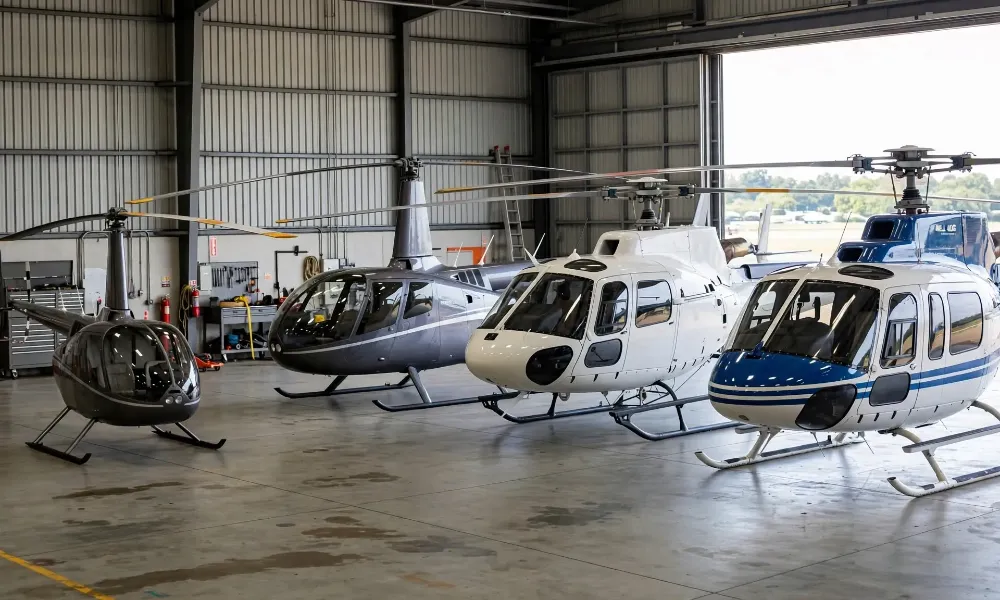
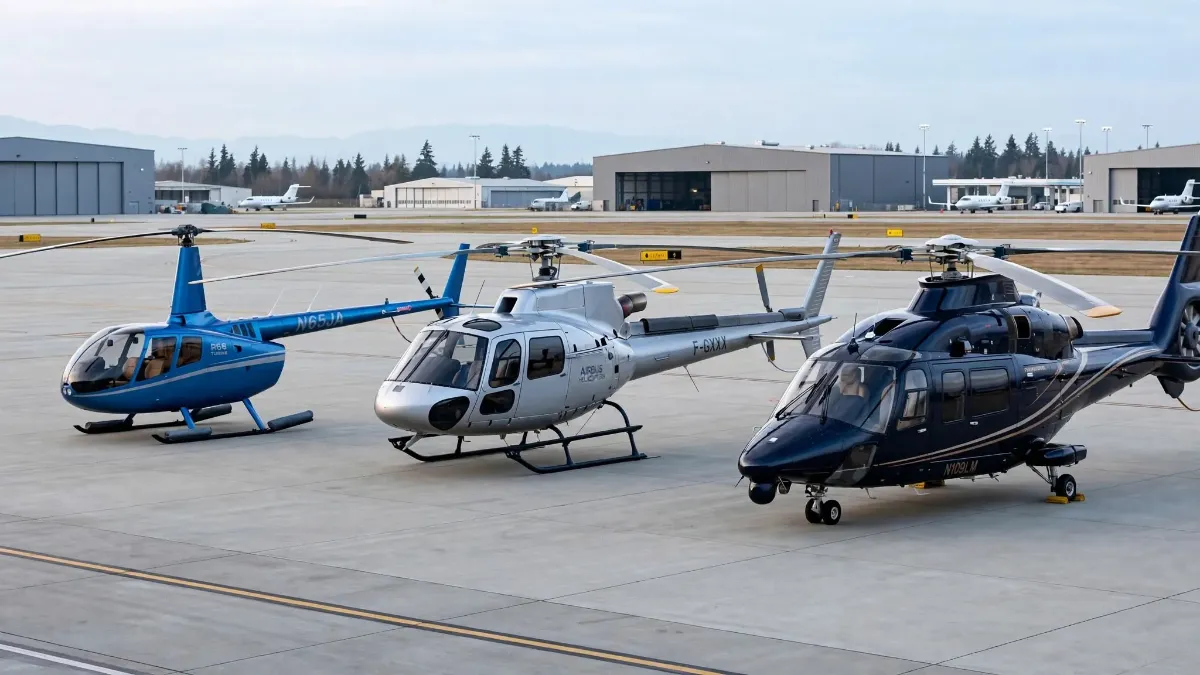
Helicopter pricing spans a wider range than almost any vehicle category. At the entry point, pre-owned piston machines like the Robinson R22, the two seat trainer that taught much of the industry to fly, trade from around two to three hundred thousand dollars.
The four seat Robinson R66, the turbine powered step up beloved of private owners, runs from around one million dollars pre-owned to roughly one and a half million new.
The popular single engine turbine class, where the Airbus H125 and Bell 407 live, runs from roughly three to six million dollars depending on age and configuration, with new aircraft at the top of that band. Light twins, the AW109 GrandNew, the Bell 429, and the Airbus H135 and H145 family explored in our guide to luxury helicopter models, typically run from five to ten million dollars new.
Medium VIP machines like the Sikorsky S-76 climb toward fifteen million, and the large cabin flagships, the AW139 and the S-92, command fourteen to over twenty million dollars in VIP trim. Every step up buys capability: more seats, more range, twin engine safety margins, and cabin refinement.
The Annual Fixed Costs Nobody Mentions
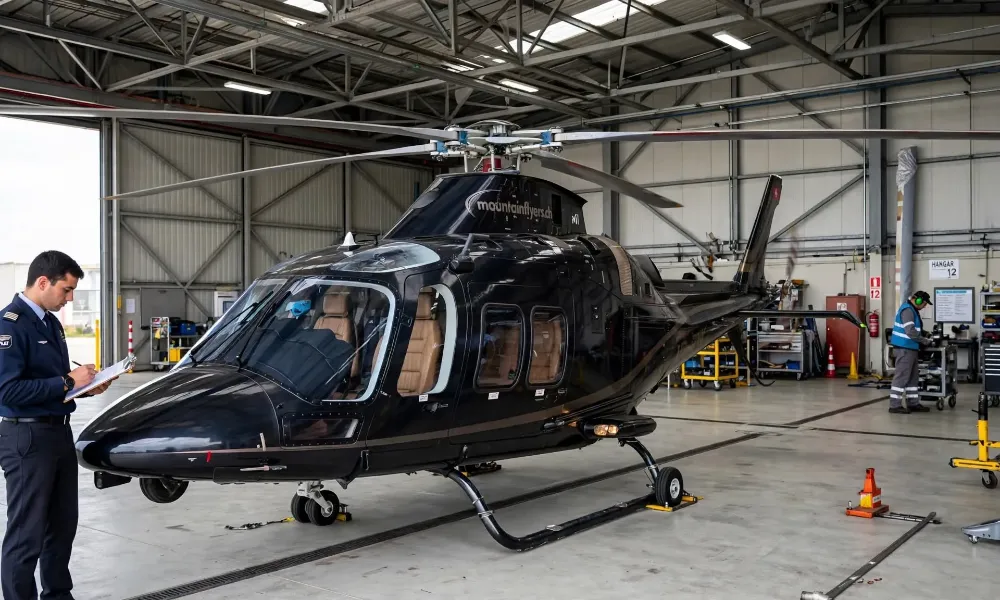
Ownership’s fixed costs arrive whether the aircraft flies or not, and they form the budget’s foundation. Insurance leads the list: hull and liability coverage for a turbine helicopter typically runs from three to five percent of hull value annually, varying with pilot experience, usage, and claims history, so a five million dollar helicopter can carry a mid five figure annual premium before it leaves the ground.
Hangarage follows, and geography rules: a heated hangar at a prime metropolitan area airport can cost several thousand dollars monthly, while rural storage runs far less. Then comes crew, the largest fixed line for most operations.
A professional pilot’s salary ranges from around eighty thousand to well over one hundred fifty thousand dollars depending on experience and aircraft type, and serious operations often employ two pilots or supplement with contract crew.
Add subscriptions for navigation data, avionics databases, tracking, and management software, plus recurrent training for the crew, and the fixed base for a professionally operated turbine helicopter commonly lands between two hundred and four hundred thousand dollars annually before a single hour is flown.
The Cost of Every Flight Hour
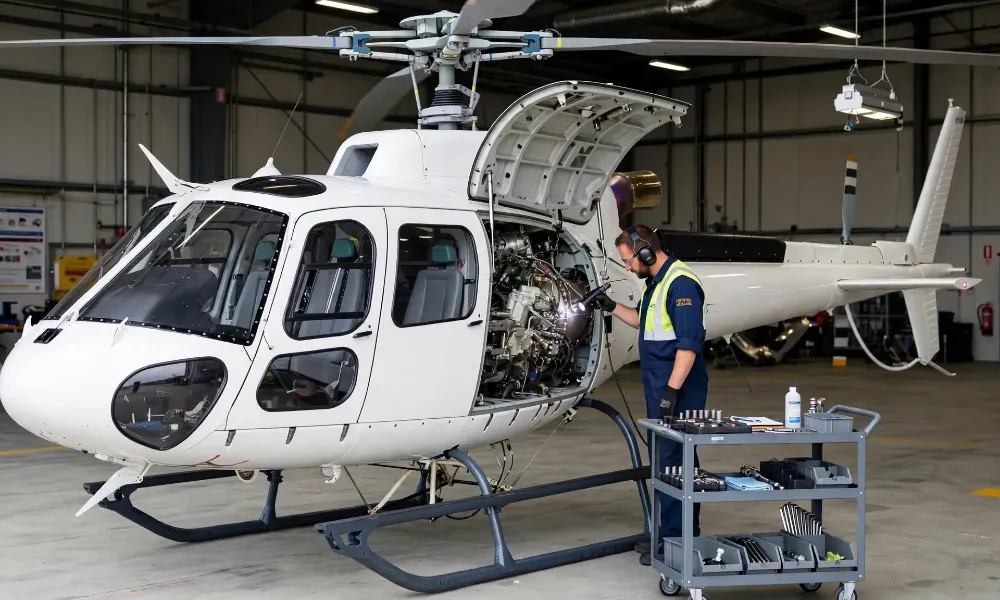
The hourly operating cost, the number that actually moves with usage, combines fuel, maintenance reserves, and inspections. Fuel burn for a light single turbine runs around 40 to 60 gallons per hour; light twins and mediums burn substantially more.
Maintenance is where helicopter economics differ most from airplanes: rotorcraft lives are governed by life limited components, blades, gearboxes, and rotor heads that must be overhauled or replaced at fixed hour intervals regardless of condition.
Engine programs and parts plans, sold per flight hour, smooth these costs into predictable reserves, typically running from several hundred to over a thousand dollars per hour depending on the model.
The all in direct operating cost lands roughly as follows: a Robinson R66 around four to six hundred dollars per hour, an H125 or Bell 407 in the seven hundred to one thousand range, light twins from twelve hundred to two thousand, and large VIP machines well beyond.
These figures explain why the real cost of aircraft ownership surprises buyers across both the fixed wing and rotary worlds: the machine’s appetite is proportional to its capability.
The Ownership Threshold: When Buying Makes Sense
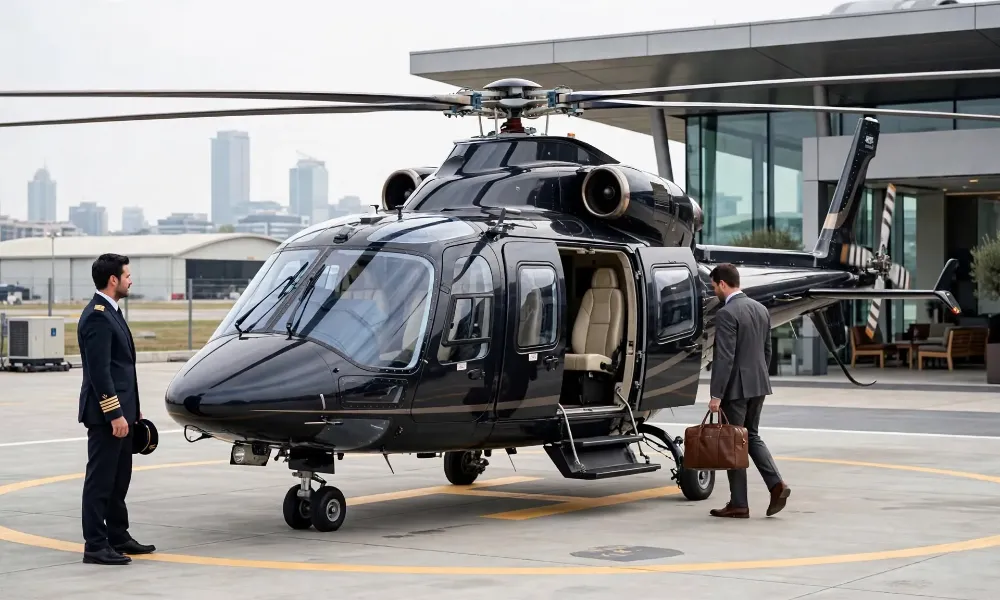
Aviation’s honest rule of thumb holds that ownership begins to make sense around 150 to 200 flight hours per year, the point where the fixed costs spread across enough hours to compete with charter rates.
Below that threshold, chartering wins decisively: the same charter economics that govern Miami’s market apply everywhere, delivering a helicopter, pilot, insurance, and maintenance in one hourly price with zero residual responsibility.
Above the threshold, the case builds, especially for owners with specific patterns: the weekly Hamptons run, the daily commute between a ranch and the city, the yacht support mission. Ownership adds values charter cannot: the aircraft is always available, configured to your taste, maintained to your standard, and flown by crew who know your preferences.
Many sophisticated owners blend both, owning a machine for their core missions and chartering larger types when the mission demands, the same portfolio logic that governs private jet charter decisions.
Buying Smart: The Insiders’ Rules
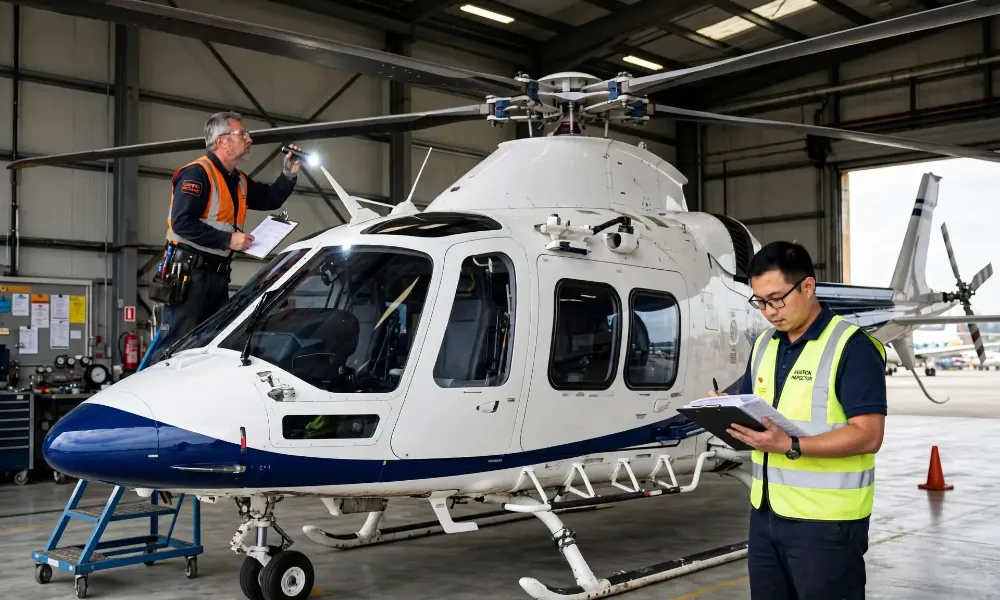
The pre-owned market rewards diligence. Always commission a pre-purchase inspection by an independent maintenance facility, and review the records with particular attention to component times remaining, damage history, and maintenance program enrollment, because a helicopter with a fresh engine and life remaining on its blades is worth dramatically more than an identical machine facing overhauls.
Budget for the upgrades your mission demands, avionics, interior refurbishment, air conditioning, and paint, which can add meaningfully to the purchase.
And assemble the support before the purchase: a management company or director of maintenance, an insurance broker who specializes in rotorcraft, and a pilot whose experience matches the machine. The happiest helicopter owners share a trait: they treated the acquisition as building a small flight department rather than buying a vehicle. Do that, and the numbers stop being a shock and become what they should be, the price of the most liberating machine ever offered to private hands.
FAQs
How much does a helicopter cost to buy?
Purchase prices span from around two to three hundred thousand dollars for a pre-owned Robinson R22, through three to six million for popular turbine singles like the Airbus H125 and Bell 407, to five to ten million for light twins, and fifteen to over twenty million dollars for large VIP machines like the AW139 and S-92.
How much does it cost to own a helicopter per year?
Annual fixed costs including insurance, hangar, crew, training, and subscriptions typically run two hundred to four hundred thousand dollars for a professionally operated turbine helicopter, plus direct operating costs of several hundred to over two thousand dollars per flight hour depending on the model.
What is the cheapest helicopter to own and operate?
The Robinson R66 offers the lowest turbine ownership costs, with purchase around one million dollars pre-owned and direct operating costs of roughly four to six hundred dollars per flight hour. Piston machines like the R44 cost less to acquire but offer less capability.
When does owning a helicopter make sense versus chartering?
The industry threshold sits around 150 to 200 flight hours per year, where fixed ownership costs spread enough to compete with charter rates. Below that, chartering wins on economics. Ownership adds availability, configuration control, and crew familiarity that frequent flyers value.
How much is helicopter insurance?
Hull and liability insurance typically runs three to five percent of the aircraft’s value annually, varying with pilot experience, usage type, and claims history. A five million dollar helicopter can carry a mid five figure annual premium, with pilot training credentials materially affecting rates.
What are helicopter maintenance costs?
Helicopters carry life limited components, blades, gearboxes, and rotor heads requiring overhaul or replacement at fixed hours. Hourly maintenance reserves run from several hundred to over a thousand dollars per hour depending on model, and engine and parts programs smooth these into predictable costs.
Can I hire a pilot for my own helicopter?
Yes. Professional helicopter pilots earn from around eighty thousand to over one hundred fifty thousand dollars annually depending on experience and type. Many owners employ pilots directly, use management companies, or contract freelance crew for their missions.
What should I check when buying a pre-owned helicopter?
Commission an independent pre-purchase inspection and scrutinize component times remaining, engine program enrollment, damage history, and maintenance records. Two identical helicopters can differ dramatically in value based on remaining component life and documentation quality.