
Imagine arriving at a quiet lake early in the morning, unfolding your gear beside the shore, and setting off before the water has lost its glassy calm. No roof rack, no bulky boat taking over the garage, and no complicated arrangements just to enjoy a few hours outdoors.
That freedom is a big part of the appeal of inflatable kayaks. They can fit into a car boot, pack away between adventures, and make paddling more accessible for people who don’t have space for a traditional kayak. But not every model is designed for the same experience. Some are made for relaxed afternoons on calm lakes, while others offer firmer construction, better tracking, or the capacity to carry two paddlers and their gear.
The best inflatable kayaks are the ones that suit the water you’ll explore, the people joining you, and how often you expect to use them. Here’s what to look for before choosing one.
1. Sea Eagle 370 Pro: For Versatile Recreational Paddling
The Sea Eagle 370 Pro is worth considering for paddlers who want a spacious inflatable kayak for recreational outings. Its generous capacity and tandem layout make it suitable for two adults, or for a paddler travelling with additional equipment, provided the total load remains within the manufacturer’s limit.
The design prioritises portability and practical use rather than the speed of a narrow touring kayak. That makes it a candidate for relaxed outings on suitable lakes and rivers.
Before buying, check exactly what the selected package includes, as accessories can vary between kits.
Consider it if: You want a roomy recreational kayak for shared outings and flexible storage.
Keep in mind: A larger inflatable can be heavier to carry and may be more affected by wind than a well-designed rigid touring kayak.
2. Advanced Elements AdvancedFrame: For Better Tracking
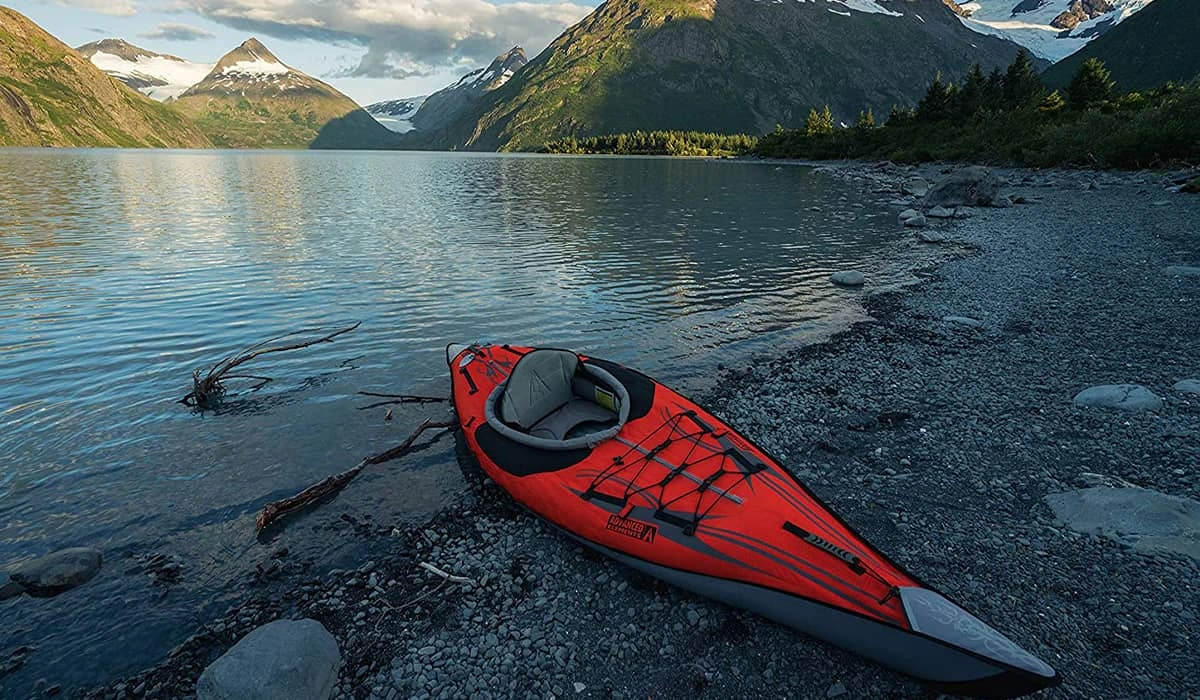
Some inflatable kayaks feel more like floating platforms than traditional boats. The Advanced Elements AdvancedFrame is designed to provide a more structured paddling experience, using built-in aluminium ribs at the bow and stern to help the kayak track more effectively.
This construction can make a difference when you want to maintain a straighter course instead of constantly correcting your direction. It is an appealing option for people who expect to paddle regularly but don’t have the storage space for a rigid kayak.
The AdvancedFrame family includes different configurations, so check the exact model before purchasing. A standard solo version and a convertible model have different seating arrangements, weights, and intended uses.
Consider it if: You value directional stability and a more traditional kayak-like feel.
Keep in mind: Structured construction can add weight and setup time compared with simpler inflatable designs.
3. Intex Explorer K2: For Casual Days on Calm Water
Not every paddling adventure needs an expensive boat. The Intex Explorer K2 is a familiar budget-friendly option for two people who want to try recreational kayaking without making a substantial initial investment.
Its tandem configuration makes it suitable for couples, friends, or an adult paddling with an older child, provided the combined load stays within the stated capacity. Its appeal is straightforward: a portable setup for occasional outings on calm, sheltered water.
This type of kayak is best approached as recreational equipment rather than a high-performance touring boat. Wind, current, and exposed water can make a basic inflatable harder to control.
Consider it if: You are new to kayaking and want an accessible option for occasional calm-water trips.
Keep in mind: Check the load limit, included accessories, and intended water conditions. It is not a substitute for a kayak designed for exposed coastal paddling or demanding rapids.
4. Intex Challenger K1: For Solo Paddlers on a Budget
For someone who prefers to explore alone, the Intex Challenger K1 offers a relatively inexpensive introduction to inflatable kayaking.
Its compact solo layout suits relaxed paddling on appropriate calm water. It is also easier to plan around when you don’t need to coordinate seating or paddling with another person.
The trade-off is performance. Entry-level inflatables generally offer less rigidity and directional efficiency than more advanced designs. If you expect to paddle long distances regularly, upgrading to a stiffer construction may be worthwhile.
Consider it if: You want a simple solo kayak for occasional recreational use.
Keep in mind: Review the manufacturer’s current capacity and instructions, and leave sufficient room for clothing, water, safety equipment, and other gear.
5. Sea Eagle 350FX FishSkiff: For Fishing-Oriented Adventures
Kayaking and fishing can make a satisfying combination, particularly on quiet lakes and suitable sheltered waterways. However, anglers need different features from people who simply want to paddle along a scenic shoreline.
The Sea Eagle 350FX FishSkiff is designed around fishing use, with a wider platform and a layout intended to accommodate fishing equipment. Its appeal is the ability to combine transportability with a more specialised setup.
Fishing-specific designs are not necessarily the best choice for someone who wants a lightweight kayak for occasional sightseeing. Before purchasing, consider the equipment you intend to carry, how you will enter and exit the water, and whether the boat suits your preferred fishing locations.
Consider it if: Fishing is the main reason you want an inflatable watercraft.
Keep in mind: Confirm the model’s current specifications and permitted conditions of use. A fishing-oriented inflatable should not automatically be treated as suitable for every river or coastal environment.
What Makes a Good Inflatable Kayak?
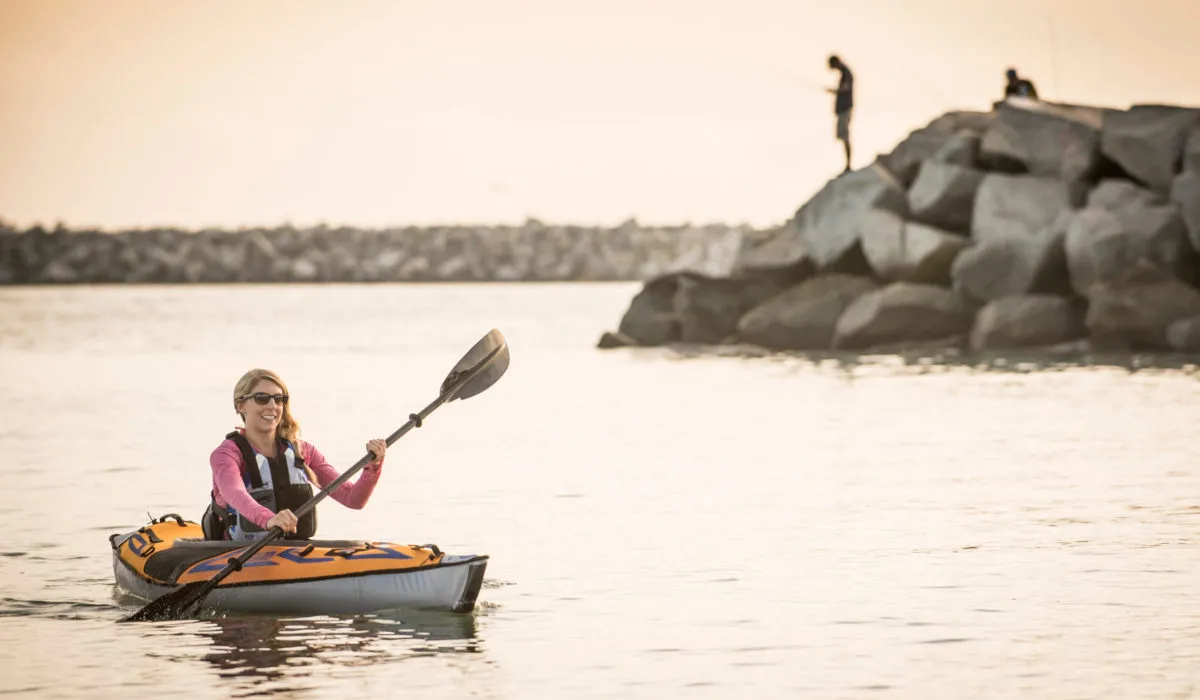
The difference between a satisfying purchase and a boat that stays in storage often comes down to a few practical details.
Construction and floor stiffness
Traditional inflatable kayaks use air chambers with a flexible floor, while some advanced models use drop-stitch construction. Drop-stitch material connects the upper and lower surfaces internally, allowing the structure to become firmer when inflated to its specified pressure.
A firmer floor can improve support and paddling performance, but it usually comes at a higher price. For occasional trips on sheltered water, a basic design may be sufficient. For regular paddling or longer distances, construction deserves more attention.
Weight capacity
The maximum capacity must account for everything aboard, not just the paddlers. Include clothing, footwear, drinking water, food, safety equipment, and any other gear.
Avoid choosing a kayak that only just meets your expected total load. A sensible margin helps you avoid operating close to the manufacturer’s maximum limit.
Length and width
Longer kayaks generally maintain a straighter course more easily, while shorter models tend to be easier to manoeuvre and transport. Wider designs often feel more stable for beginners, although extra width can reduce speed and paddling efficiency.
Think about your typical outing rather than choosing a boat based on one impressive specification.
Air chambers and valves
Separate air chambers can provide additional buoyancy if one chamber loses air. Check how the chambers are arranged, how the valves work, and whether the manufacturer provides clear inflation instructions.
Always use the recommended pressure. Underinflation can affect performance, while overinflation can damage the kayak.
Portability and setup
One of the main attractions of an inflatable kayak is that it can be packed away. However, the real convenience depends on its packed weight, carrying bag, inflation process, and drying requirements.
Consider where you will inflate it, how far you’ll carry it to the water, and whether you have enough space to dry it properly before storage.
Which Inflatable Kayak Is Right for You?

The right model depends on how you plan to use it.
| Your priority | Option to consider | Why it may suit you |
| Shared recreational outings | Sea Eagle 370 Pro | Spacious tandem layout |
| Improved tracking | Advanced Elements AdvancedFrame | Structured bow and stern |
| Affordable tandem paddling | Intex Explorer K2 | Accessible entry-level option |
| Budget solo paddling | Intex Challenger K1 | Simple, compact setup |
| Fishing | Sea Eagle 350FX FishSkiff | Fishing-oriented design |
These are options for different needs, not a universal ranking. Verify current specifications, package contents, warranty terms, and manufacturer guidance before making a purchase.
Where Can You Use an Inflatable Kayak?
Calm lakes and sheltered waterways are generally the most suitable starting points for recreational paddlers. Slow-moving rivers may also be appropriate when local conditions, access rules, and the kayak’s intended use allow it.
Coastal water requires greater care. Wind can push an inflatable off course, and waves, currents, and changing weather can turn a pleasant outing into a difficult situation. An ordinary recreational inflatable should not be assumed suitable for open sea conditions.
Whitewater requires a kayak specifically designed for the relevant river conditions, along with appropriate skills and safety equipment.
Always wear a properly fitted personal flotation device, check the weather and water conditions, tell someone where you are going, and follow local regulations. Beginners should start in sheltered water and consider instruction before progressing to more demanding environments.
If paddling is part of a wider outdoor holiday, our guides to luxury travel destinations and luxury weekend getaways offer ideas for planning a trip around scenic surroundings and time outdoors.
How to Make Your Inflatable Kayak Last Longer
A little care can help protect your investment.
- Rinse after use: Remove mud, sand, salt, and debris, following the manufacturer’s cleaning instructions.
- Dry it thoroughly: Packing a damp kayak away can encourage mildew and unpleasant odours.
- Protect it from prolonged sunlight: Follow the manufacturer’s guidance for UV exposure and storage.
- Inspect before every outing: Check seams, valves, chambers, and the hull for signs of damage.
- Carry a compatible repair kit: Know how to use it and understand when damage requires professional attention.
- Store it correctly: Keep the kayak clean, dry, and away from sharp objects and excessive heat.
Avoid dragging the kayak over rough ground, and never assume that a small puncture is harmless simply because the boat remains afloat.
Frequently Asked Questions
Are inflatable kayaks worth buying?
They can be an excellent choice if you have limited storage space, don’t want to transport a rigid kayak, or paddle recreationally. The main trade-offs are that many inflatables are slower and more affected by wind than comparable rigid boats.
Can two adults use an inflatable kayak?
Yes, if the model is designed for tandem use and its weight capacity accommodates both people and all their equipment. Check the manufacturer’s specifications rather than relying on the number of seats alone.
Are inflatable kayaks safe for beginners?
They can be suitable for beginners when used in appropriate conditions. Start on calm, sheltered water, wear a properly fitted personal flotation device, follow the manufacturer’s instructions, and avoid strong wind, fast currents, and exposed coastal areas.
How long does an inflatable kayak last?
Lifespan depends on construction quality, frequency of use, UV exposure, storage, and maintenance. Inspect the kayak regularly and follow the manufacturer’s care instructions rather than assuming every model will last the same number of years.
Is a drop-stitch inflatable kayak better?
Drop-stitch construction can create a firmer structure and improve support and performance. However, it is not essential for every recreational paddler. Your budget, storage needs, intended water, and frequency of use should guide the decision.
The Best Boat Is the One That Gets You Outside
An inflatable kayak can make spontaneous outdoor adventures much easier. It may be a quiet solo paddle before breakfast, an afternoon exploring a sheltered lake with a friend, or a fishing trip that begins far from a busy marina.
The important thing is to match the boat to the experience you want. Consider construction, capacity, comfort, and the conditions in which you’ll paddle before getting distracted by features you may never use.
Choose carefully, look after your equipment, and start with water that matches your experience. The real reward isn’t the kayak itself; it’s the freedom to discover more of the world from the water.
Disclaimer: This article is intended for informational purposes only.