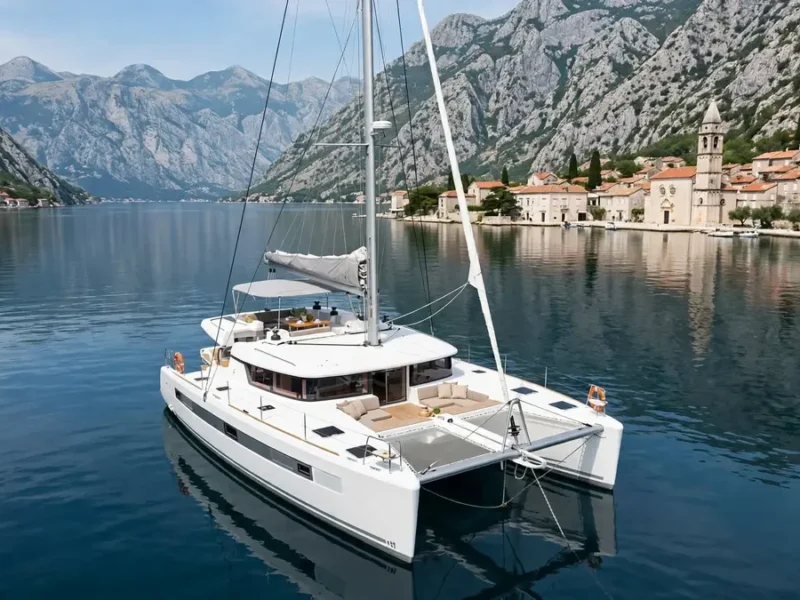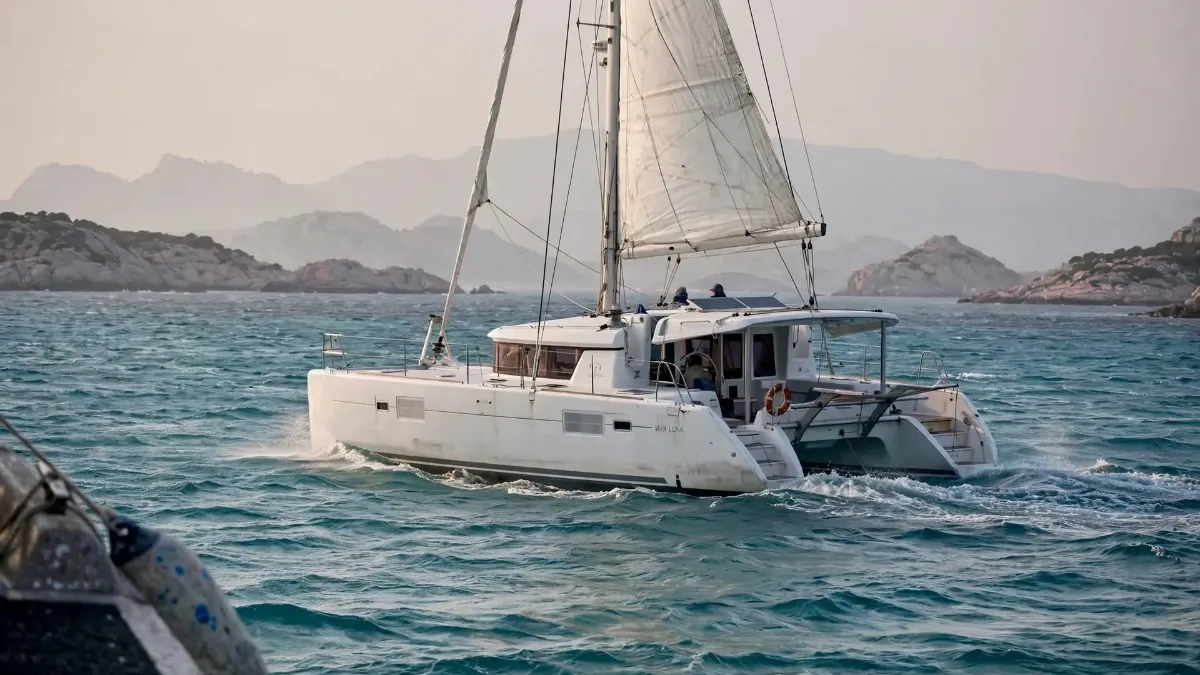
A crewed catamaran charter in Sardinia expresses this series’ catamaran thesis more purely than anywhere else covered. The island is the western Mediterranean’s finest sailing ground. The catamaran is the coast’s honest boat. Here, the two arguments become one.
The distances between the island’s coasts are real and maritime. They involve an hour or two of open water that feels like sailing rather than transit. The wind is the reliable afternoon maestrale. The island’s sailors have worked with it since before Rome.
The anchorages are small coves of pink granite and white sand. Each holds a handful of boats under park rules that keep the numbers honest. The water’s clarity, the island’s signature, is best earned at eight knots under canvas. You arrive at a cove the motor fleet reaches sooner but enjoys less.
Everything this series has said about twin hulls, shallow draft, and stillness at anchor applies here. The same is true of the half-price advantage. The island says it all back, even louder.
I heard it put simply by the same Olbia captain guiding this series through Sardinia. We were anchored off Spargi in the hour before dinner.
The motor yachts, he said, cross to the islands and take their photographs. Then they cross back to Porto Cervo for the night. The catamarans stay. They have the draft for the coves, the wind for the passages, and the deck for the evening. They understand what the island is: a place you sail into, not drive to.
Then he said the sentence that belongs at the head of this guide:
“In Sardinia, the catamaran is not the budget choice. It is the correct one.”
The pages below make his case in the series’ order. They explain why the island rewards twin hulls, the week it offers, and the honest costs. They also cover who it suits and the method.
Why the Island Rewards the Twin Hulls
Four advantages, each sharpened by Sardinia.
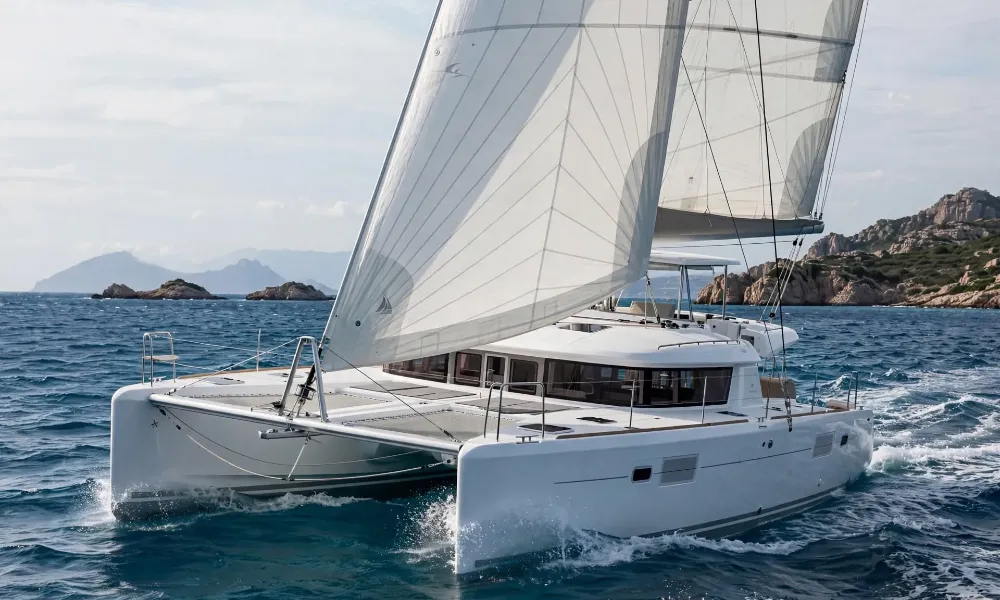
The passages first. The island’s coasts are an hour or two apart, open water with the maestrale building through the afternoon, and the catamaran’s speed under sail makes these the week’s pleasure rather than its tax. The crossing from the Emerald Coast to the archipelago, Corsica’s mountains rising ahead, is the half day that converts motor guests quietly and permanently.
The coves second. The archipelago’s anchorages are small, shallow, and rationed by the park, which is precisely the catamaran’s territory: draft under two meters claims the sand patches and the cove heads the deep fleet must admire from farther out, and the park’s limits mean the cove, once claimed, stays uncrowded by definition.
The stillness third. The maestrale that makes the afternoons worth sailing can make the anchorages roll by evening, and here the catamaran’s twin hulls deliver their familiar miracle: level decks, calm lunches, children’s naps uninterrupted, and the grandparents’ patience intact, in water of a clarity that keeps the swimmers over the side until dark.
The deck fourth, quietly. The Sardinian day is built around the long evening at anchor, the aperitivo as the light goes, dinner under the first stars, and the catamaran’s cockpit and trampoline are the island’s best terrace; no marina table in Porto Cervo competes with a cove to oneself at dusk.
The Week the Islands Give You
A sensible structure begins in the northeast. Board at Olbia or Cannigione, the latter inside the archipelago and the connoisseur’s choice. Spend the first evening having dinner ashore.
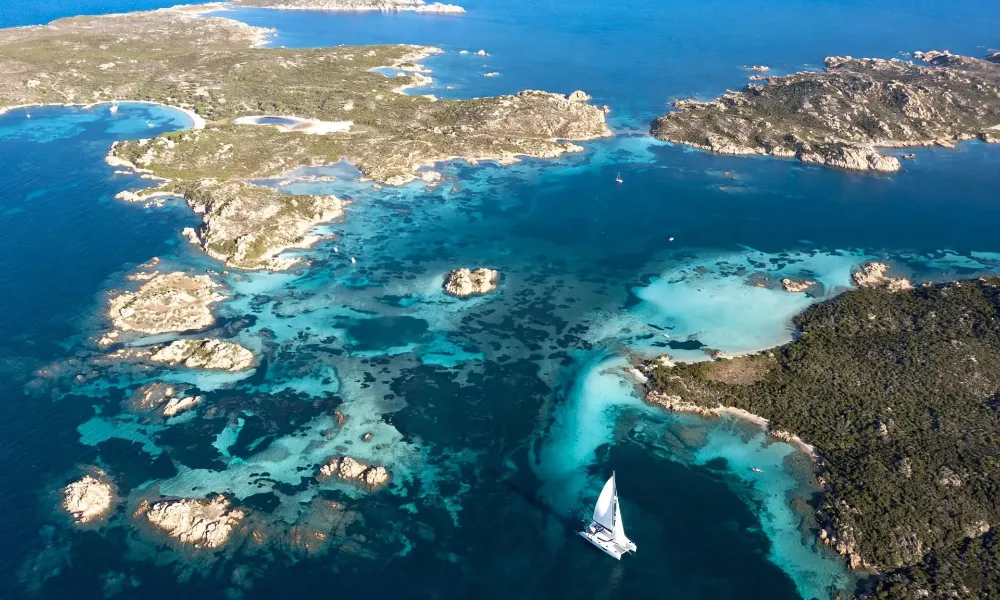
Day two crosses to the islands under canvas. Discover the first cove and enjoy the first swim in improbably clear water. Spend the evening anchored off Spargi.
Days three and four belong entirely to the archipelago. Visit Budelli and its pink beach under park rules. Explore the coves of Santa Maria and the straits toward Corsica’s silhouette. Each day brings a passage, a cove, a swim, and a long evening.
Day five returns to the Emerald Coast for its theater. Visit Porto Cervo’s harbor and boutiques. Enjoy the fleet at golden hour and the contrast that makes the islands’ silence legible.
Day six crosses back for another visit to the finest anchorage. Repetition in a cove of this quality is preference, not failure.
Day seven closes at the base with the market and farewell lunch. The party’s photographs will follow, and they will prove inadequate, as everyone’s do.
What It Costs, Honestly
The category’s arithmetic holds, with the island’s additions. Quality crewed catamarans measuring forty to fifty feet run fifteen to thirty thousand euros weekly. These include a captain and chef or hostess. The fifty-five to sixty-foot flagships run forty-five to sixty-five thousand euros.
Against a motor yacht with equal sleeping capacity, the saving reaches half or better. On this island, the saving doubles. The passages that increase a motor yacht’s fuel costs are precisely the hours the catamaran came for. The allowance also reconciles with a smile.
The island’s particular costs remain unchanged. VAT stands at twenty-two percent, while the allowance runs thirty to forty percent. Park permits cost a few hundred euros. The customary gratuity ranges from five to fifteen percent.
Berths at Olbia and Cannigione remain modestly priced. The catamaran’s shallow draft reduces dependence on marinas, which the motor fleet pays for. This is because the island’s coves, not its quays, are the destination.
The total for a fine island week runs well below the equivalent motor week. The difference buys a longer September, a better table, or a second week. That is the purchase this coast rewards most.
Who It Suits
The Sardinian catamaran suits sailors first, obviously and completely.
It also suits families. The coves are safe, and the water is shallow and warm. The deck becomes the day’s playroom. The island’s table completes every day correctly, with roast piglet, sea urchin, and pane carasau.
It suits swimmers and snorkelers, because water clarity is the point. The platform sits at knee height above it.
It also suits those who found the Riviera finished and want the Mediterranean as it was. The island offers exactly that, and the catamaran is its honest instrument.
However, it does not suit those who measure the week through arrival theater. Nor does it suit guests who need the season’s crowds to feel its pulse. The archipelago offers silence and coves. Guests who need a scene should berth at Porto Cervo and watch the fleet. That is also a pleasure, though a different and shorter one.
A Method for Booking Well
First, base yourself inside the archipelago if the week’s heart is the islands. Choose Cannigione or La Maddalena town, and let Porto Cervo be a day, not a home.
Second, engage a captain with a park season. The permits, cove rotations, and weather windows inside the archipelago require local knowledge. That knowledge also carries legal weight.
Third, book June or September, the island’s finest months. Expect warm water, reliable wind, and anchorages with room. Take August only if the calendar insists, and book it a year out.
Fourth, provision for the island table and let the chef visit a market. The Sardinian kitchen deserves the same seriousness the Ligurian received.
Fifth, sail at least one full passage without the engines. The afternoon maestrale fills the canvas, and the island’s profile slides past in silence. That moment explains why the correct boat exists. It makes the argument that Pravi Celer’s survey of the classiest powerboats in the world makes in a different register: the machine matters, but the water it meets matters more.
Frequently Asked Questions
What is a crewed catamaran charter in Sardinia?
The private hire of a catamaran sailing yacht with professional crew, based at Olbia, Cannigione, or Porto Cervo, and sailing the La Maddalena archipelago, the Emerald Coast, and the island’s outer waters.
How much does a crewed catamaran charter in Sardinia cost?
Working bands of fifteen to thirty thousand euros weekly for forty to fifty foot catamarans with two crew, and forty five to sixty five thousand for fifty five to sixty foot flagships, before the allowance at thirty to forty percent, VAT at twenty two percent, park permits, and gratuity.
Why choose a catamaran in Sardinia over a motor yacht?
The island is the Mediterranean’s finest sailing ground, the passages are the pleasure, the coves are shallow and small, the stillness at anchor survives the maestrale, the deck serves the long evenings, and the cost runs about half for the same sleeping capacity.
Can a catamaran anchor inside the La Maddalena park?
Yes, under the park’s rules designating where and how many boats each cove may hold, with permits the captain carries as routine; the limits are precisely what keep the anchorages the coast’s best.
Is a Sardinia catamaran charter good for families?
Exceptionally so; safe coves, shallow warm water, a deck sized for children, short passages, and a cuisine the youngest sailors remember longest make the island the family’s finest week in this series.
When is the best season for a catamaran charter in Sardinia?
June and September for warm water, honest wind, and anchorages with room; May and October for the wild island nearly alone; August for the full Emerald Coast theater at its highest prices.