Key Takeaways
-
Safety placement and hazard activation first
-
Wheel lock key location awareness
-
Correct jacking points prevent frame damage
-
Precise lug nut torque patterns
-
Post-change sensor calibration steps
Picture this. You are driving your pristine machine down the highway, music playing, feeling great.
Suddenly, you hear that dreaded rhythmic thumping sound, and your steering wheel pulls hard to one side.
You pull over. Yep, it is a flat.
Knowing how to change a tire on a premium vehicle is an essential skill that saves your day and protects your investment.
Don’t panic, because you can easily handle this with the right steps.
AI Overview
Discover exactly how to change a tire on your high-end vehicle without damaging sensitive body panels or advanced air suspension systems. This premium tire change guide provides immediate, actionable flat tire tips to get you back on the road quickly. Learn how to change a flat tire efficiently while preserving your vehicle’s value with pro-level car tire maintenance advice.
The Sudden Flat: Why Luxury Cars Need Special Care
Getting a flat tire is always annoying, but doing it in a high-end car adds an extra layer of stress.
These vehicles aren’t built like standard daily commuters. They feature delicate carbon fiber, low side skirts, and complex electronics.
If you use standard roadside methods blindly, you risk scratching custom wheels or crushing expensive body work.

That is exactly why generic instructions online do not work for your vehicle. You need customized knowledge.
At PraviCeler, we believe that true luxury means being prepared for any situation on the road.
Let’s dive into the specifics of managing your high-performance wheels safely.
Essential Tools: What is in Your Trunk right now?
Before we even talk about lifting the car, we need to inspect your tool kit.
Most premium vehicles come with specialized tools hidden beneath the trunk lining.
Let’s look at what you should have versus what you actually need for an emergency.
| Standard Tool | Luxury Equivalent / Upgrade | Purpose |
| Basic Scissor Jack | Hydraulic Bottle Jack or Low-Profile Jack | Lifting the vehicle safely without slipping |
| Standard Lug Wrench | Telescoping Lug Wrench with Protective Sleeves | Removing lug nuts without scratching the alloy wheel finish |
| Generic Wheel Chocks | Heavy-Duty Rubber Chocks | Preventing the vehicle from rolling during a tire change |
| No Protection | Wheel Lock Key & Alignment Pin | Accessing secured wheels and mounting them straight |
Take a minute this weekend to check your trunk. Finding out you are missing the wheel lock key while stranded is a nightmare.
Crucial Pre-Checks: The Golden Safety Rules
Safety is your absolute priority when learning how to change a flat tire on a busy roadside.
Never attempt to swap a wheel on uneven ground or soft dirt. The weight distribution will cause the jack to sink or slip.
Find a flat, solid surface like a concrete parking lot or a wide asphalt shoulder far from traffic lanes.
Turn on your hazard lights immediately to alert other drivers.

Engage your electronic parking brake tightly before you step out of the car.
If your vehicle has an adjustable air suspension system, you must enter the digital settings and turn on “Jack Mode.”
Failing to deactivate automatic leveling can cause the car to try to adjust itself while lifted, which is incredibly dangerous.
Step-by-Step Premium Tire Change Guide
Let’s walk through the actual mechanical process carefully. Take a deep breath; you can absolutely do this perfectly.
1. Secure the Vehicle and Loosen Lug Nuts
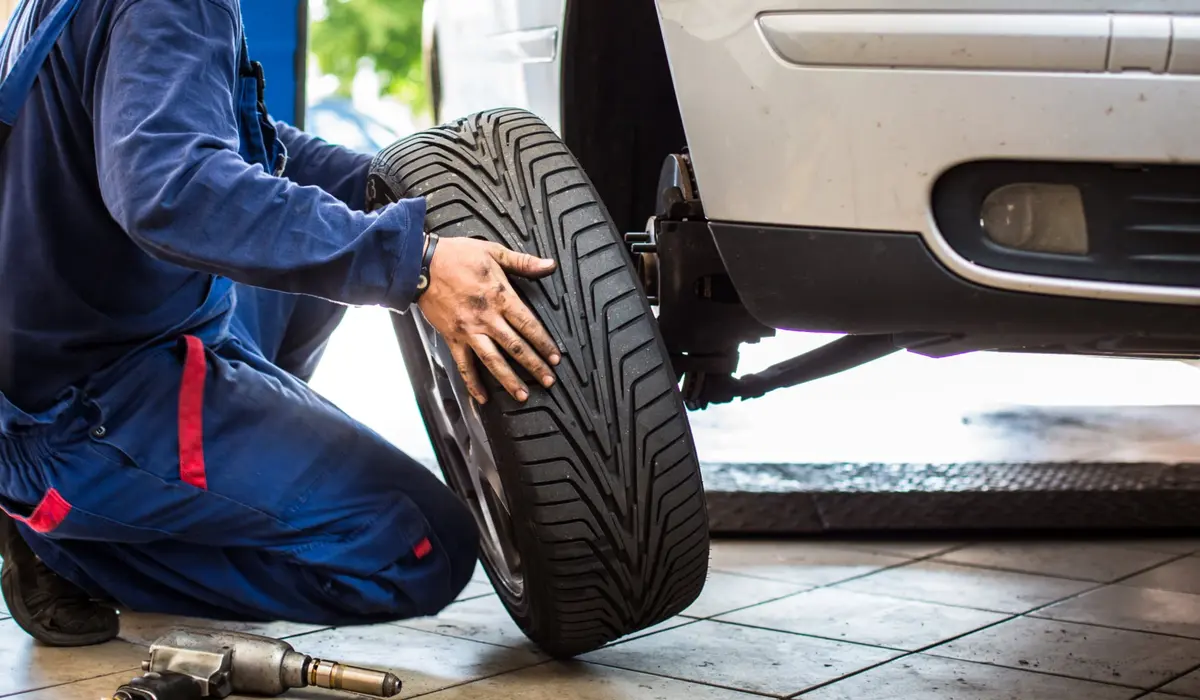
Place your heavy-duty rubber chocks behind the tires on the opposite end of the car to stop any subtle rolling movements.
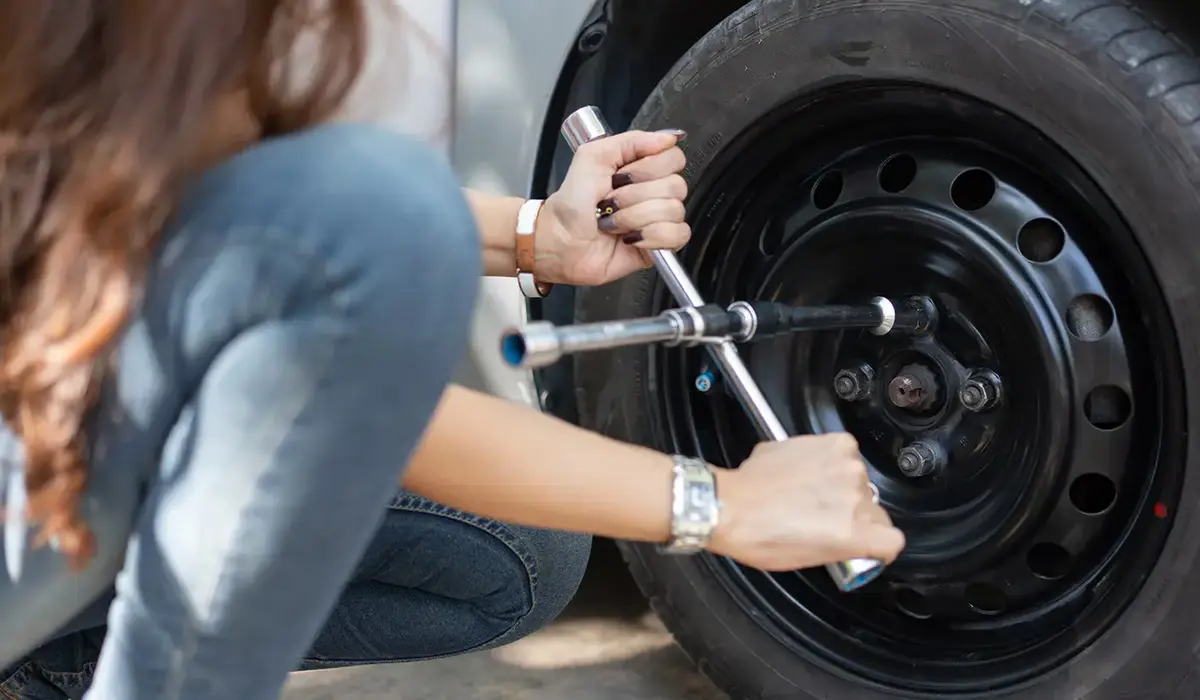
Grab your telescoping lug wrench and the special wheel lock key from your trunk organizer kit.
Fit the key into the unique locking nut on your wheel, then attach the wrench firmly.
Loosen the lug nuts by turning them counterclockwise, but only break the initial resistance for now.
Do not remove the nuts completely while the vehicle is resting on the ground.
2. Locate the Perfect Jack Points
Look under the rocker panels for the specific reinforced lifting points designated by the manufacturer.
Premium cars often have plastic jack point pads or small arrows stamped into the metal frame beneath the side skirts.
Placing a jack in the wrong spot will instantly crush your rocker panels or puncture the battery floor panels.
Align your jack head directly under the reinforced pad.
Slowly raise the jack until it makes solid contact with the lifting point, checking the alignment one last time.
3. Lift the Car and Remove the Wheel
Pump or turn the jack steadily to lift the flat tire completely off the pavement.
You only need about two to three inches of clearance from the ground to swap the wheels safely.
Remove the loosened lug nuts completely and store them inside your inverted trunk mat so they do not roll away into the dirt.
Carefully lift the heavy wheel straight off the wheel hub assembly.
Avoid scraping the brake rotors or damaging the painted brake calipers behind the wheel face.
4. Mount the Spare Tire Correctly
Lift your spare tire or compact donut and align the rim holes perfectly with the wheel hub studs.
Using a threaded alignment pin can save your back here by holding the heavy wheel weight in place.
Thread the lug nuts back on by hand to ensure they do not cross-thread or damage the delicate metal threads.
Snug the nuts down with your wrench until they are seated flat against the wheel surface, but do not torque them down yet.
5. Lower and Final Torque
Slowly turn the jack valve to lower the vehicle back down until the tire touches the ground slightly.
The tire should have just enough friction against the pavement to prevent it from spinning while you tighten it.
Use a star pattern to tighten the nuts, jumping across to opposite nuts rather than moving in a circle.
This star pattern ensures that the wheel seats completely flat against the brake rotor hub.
Lower the vehicle completely to the ground, remove the jack, and give the lug nuts one final check with your wrench.
Understanding Run-Flat Tires vs. Traditional Spares
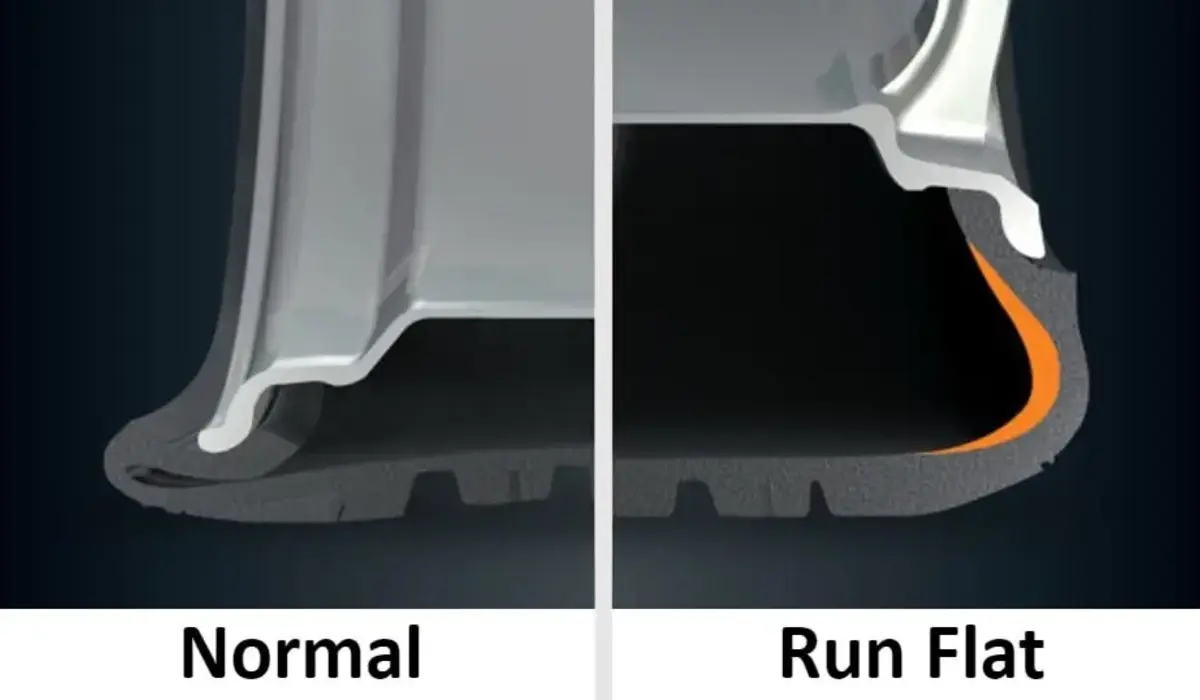
Many high-performance cars don’t even include a traditional spare tire anymore. Instead, they rely on advanced tire tech.
Let’s break down how these modern systems change your emergency roadside strategy.
The Run-Flat System
Run-flat tires feature heavily reinforced sidewalls designed to support the vehicle weight even with zero air pressure.
Generally, they allow you to drive for roughly 50 miles at a maximum speed of 50 miles per hour after a puncture.
This means you might not need an immediate roadside tire change guide scenario if you are close to a service center.
However, once a run-flat tire runs completely empty, the internal structure is usually destroyed and cannot be safely patched.
Tire Inflator Kits
Some brands provide an emergency aerosol sealant gel and a small twelve-volt air compressor instead of a physical spare wheel.
This setup works great for small nail punctures in the center tread, but it is completely useless for sidewall tears.
Understanding what gear your car has ahead of time keeps you from getting caught off guard during an unexpected blowout.
Essential Post-Change Protocols
Your work isn’t fully finished just because the spare tire is on and the jack is back in the trunk.
Modern premium cars feature highly sensitive electronic systems that require attention after a mechanical swap.
-
Calibrate Your TPMS: Navigate to your dashboard screen and reset the Tire Pressure Monitoring System so it tracks the temporary tire.
-
Observe Speed Limits: Drive carefully, keeping your speed under 50 miles per hour if you are riding on a compact space-saver donut.
-
Check Torque Settings: Stop by a local shop within twenty miles to have a technician verify your lug nut tightness with a torque wrench.
-
Schedule Alignment Inspections: A sudden impact that causes a flat can easily knock your precision suspension alignment out of spec.
Following these quick checks protects your electronic differentials and prevents long-term tire wear on your main wheel set.
Proactive Car Tire Maintenance for Maximum Safety
The absolute best way to handle a flat tire situation is to prevent it from ever happening in the first place.
Consistent car tire maintenance ensures your rubber performs perfectly when cornering at high highway speeds.
Check your tire pressures every single month using a high-quality digital gauge when the tires are completely cool.
Changes in ambient temperature cause air pressure to fluctuate significantly, triggering premature wear patterns.
Inspect the inner edge of your high-performance tires for uneven wear, which indicates an alignment issue.
Because performance cars often run aggressive camber setups, the inside edge can wear down to the metal wires while the outside looks brand new.
Regular inspections at PraviCeler will help you spot these hidden dangers before they turn into high-speed highway failures.
Advanced Roadside Troubleshooting
Sometimes things don’t go perfectly smoothly according to the standard manual instructions.
Let’s look at a few common roadblocks you might encounter on the side of the road.
Seized Wheel Hubs
In some cases, you remove all the lug nuts but the wheel refuses to budge from the vehicle hub.
This happens due to microscopic corrosion build-up between the aluminum wheel rim and the iron brake rotor interface.
Give the outer rubber edge of the tire a firm, careful kick with your shoe to break the microscopic rust bond safely.
Never hit the actual alloy metal rim face with any tools, or you will cause permanent cosmetic finish damage.
Broken Locking Keys
If a past mechanic over-tightened your locking lug nut with a heavy air impact gun, your key might snap under manual pressure.
If your locking key cracks, do not attempt to force it with a hammer or improvised tools.
Stop immediately and call a professional flatbed towing service to prevent damaging the expensive wheel rim channel.
Choosing Premium Replacement Rubber
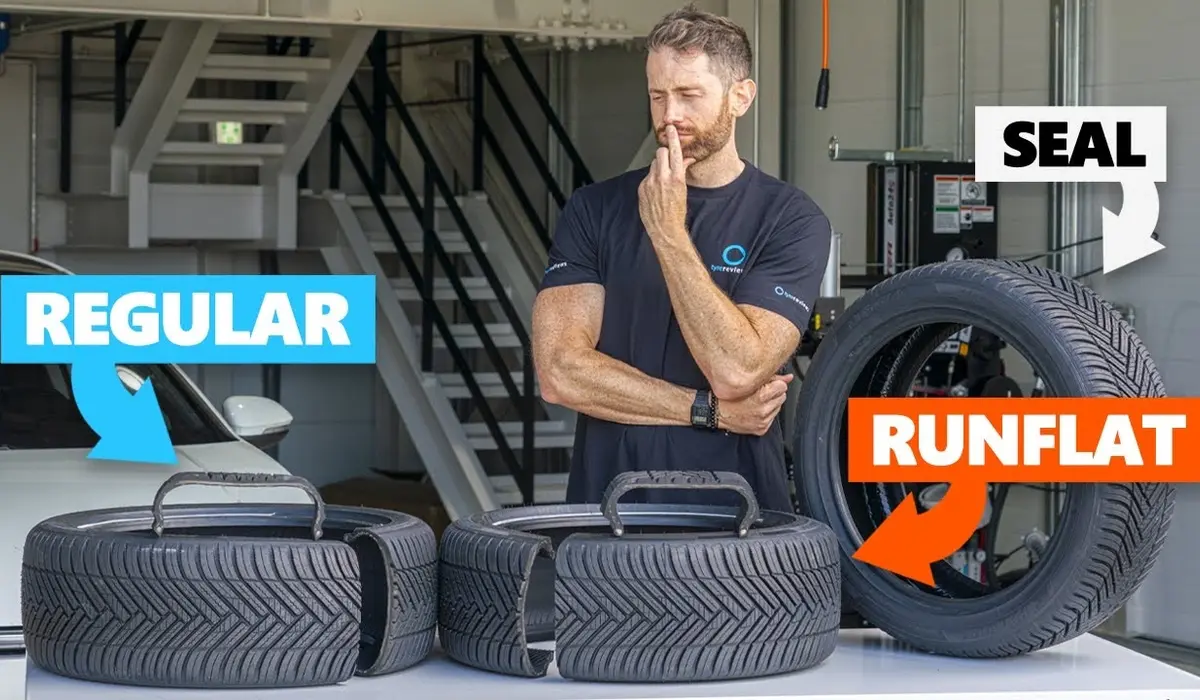
When it is time to replace your damaged tire permanently, don’t cut corners on cheap budget brands.
Your tires are the only four contact patches connecting your luxury machine to the open pavement.
| Tire Category | Best For | Estimated Lifespan |
| Ultra-High Performance (UHP) | Extreme dry grip, precise track handling, maximum high-speed stability | 15,000 – 25,000 Miles |
| Premium Grand Touring | Quiet highway ride comfort, wet weather safety, long-distance driving | 40,000 – 60,000 Miles |
| Dedicated Winter Rubber | Maximum traction on sub-zero asphalt, packed snow, and slick ice | 4 – 5 Winter Seasons |
Investing in top-tier compound tires preserves the exact ride quality and handling dynamics that the factory engineers spent years developing.
Keeping Your Roadside Kit Luxury-Ready
To finish up our comprehensive guide, let’s look at a few extra items you should add to your trunk today.
Standard factory kits provide the bare minimum, but a few additions can turn a stressful event into a minor inconvenience.
Keep a pair of clean mechanic gloves in your spare tire well to protect your hands from black brake dust.
Pack a small, durable foam kneeling pad so you don’t ruin your nice clothes on wet, muddy roadside asphalt.
A high-output LED headlamp is vastly superior to your smartphone flashlight when working in the dark.
Having these small extras on hand makes utilizing your flat tire tips knowledge a clean, seamless experience.
With a little preparation and the right approach, you will handle any unexpected tire issue like an absolute professional.
Conclusion
Mastering how to change a tire on your high-end vehicle is all about patience, safety, and using the exact right tool placement.
By taking care of your lifting points, deactivating air leveling systems, and keeping your trunk tools complete, you protect your premium car from costly structural scuffs.
Keep up with your routine inspections, stay prepared for roadside surprises, and enjoy the smooth peace of mind that comes with true automotive self-reliance.
Frequently Asked Questions
How long can you safely drive on a luxury car run-flat tire?
Based on available data, you can generally drive on a punctured run-flat tire for roughly 50 miles at a maximum speed of 50 miles per hour. This allows you to reach a local repair facility safely without needing an immediate roadside replacement.
Where is the wheel lock key usually hidden in premium vehicles?
In most cases, manufacturers place the specialized wheel lock key inside the factory tool foam organizer beneath your trunk floor mat. It is frequently stored directly alongside the tow hook accessory or the lug nut wrench socket extension.
Can you safely patch a high-performance tire after an unexpected puncture?
You can generally patch a performance tire if the puncture hole is less than a quarter-inch wide and located strictly within the center tread area. Sidewall damage or shoulder punctures can never be repaired safely and require total tire replacement.
Why do I need a special mode to jack up my air suspension?
Activating “Jack Mode” locks the air suspension valves and prevents the computer from automatically adjusting air pressure while lifting. If left active, the car will try to level itself dynamically, which can cause the vehicle to fall off the jack.