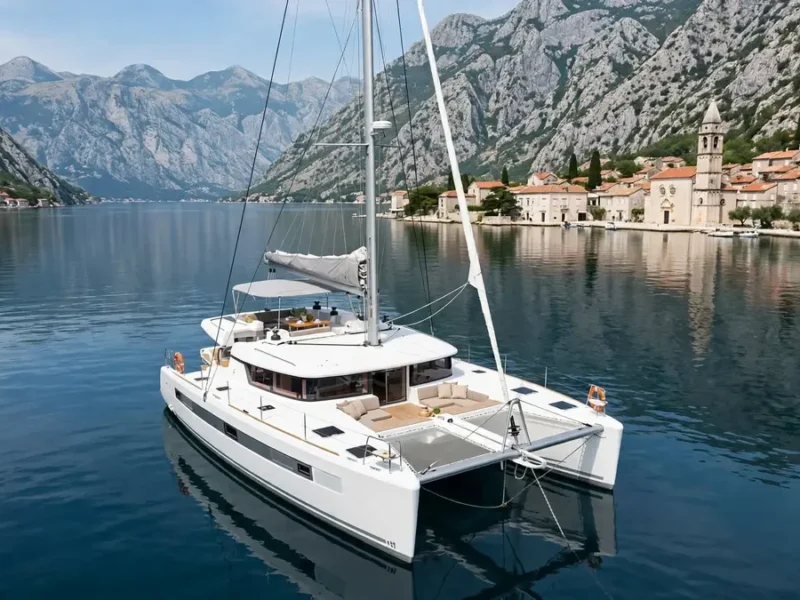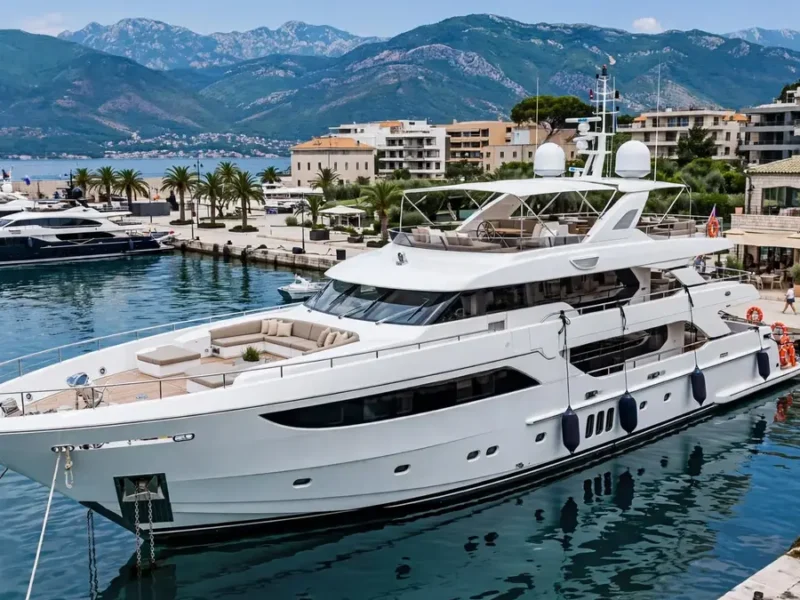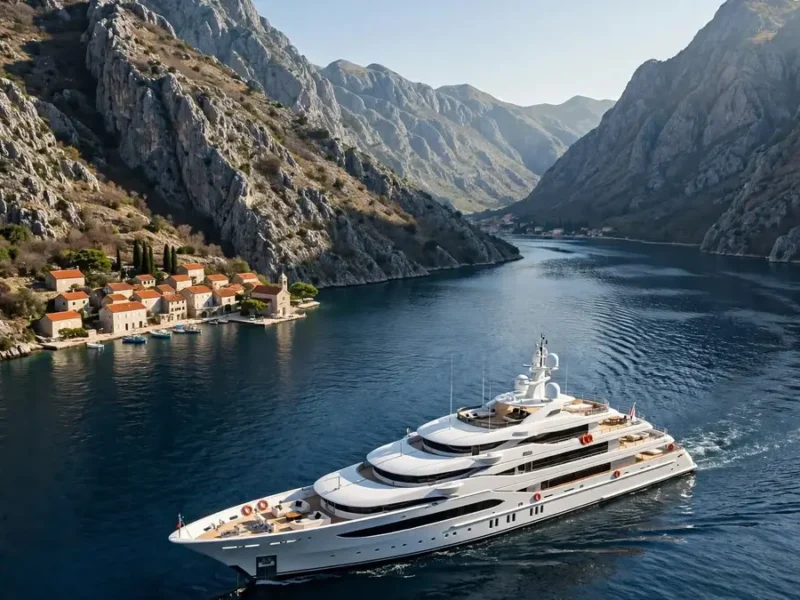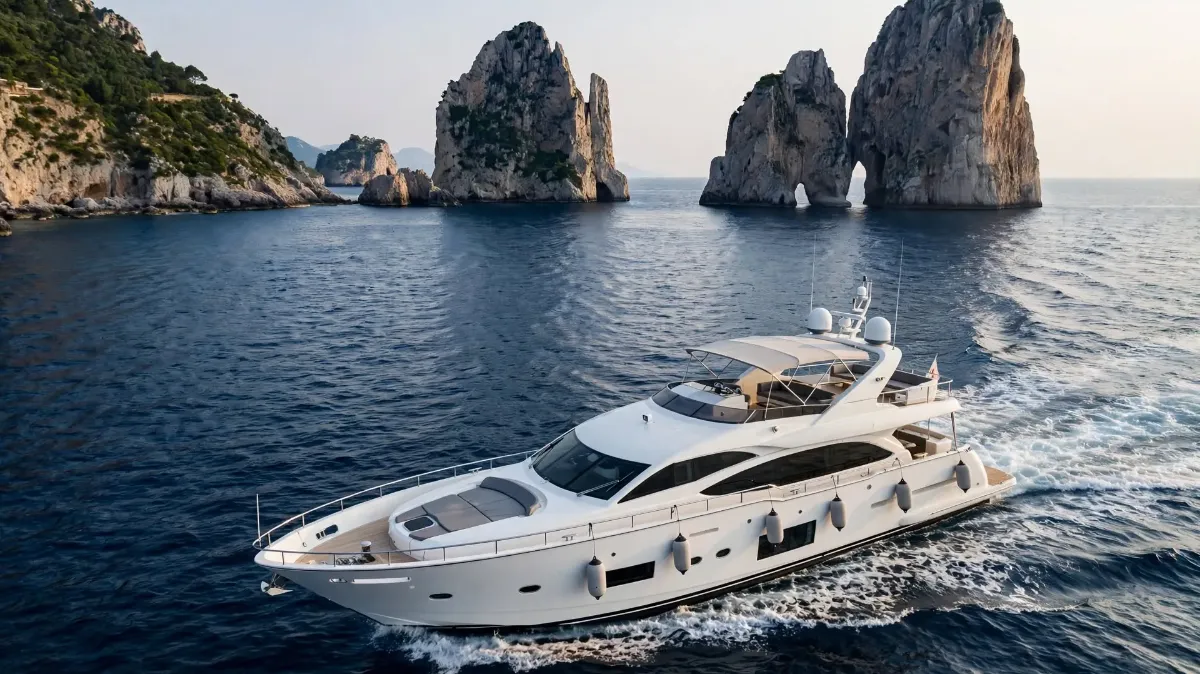
Capri yacht charter cost, asked directly, answers directly: a properly crewed luxury motor yacht serving the island begins around twenty five thousand euros per week in high season and rises without ceiling, and a representative week at the center of the market totals near one hundred and eight thousand euros once the Italian VAT, the provisioning allowance, and the crew’s gratuity join the base.
The ladder is the Mediterranean’s, because the fleet is the Mediterranean’s; what earns Capri its own cost article is the island’s unique arithmetic of a place with almost no harbor at all.
Capri has one small working marina, a scatter of managed buoys, and a worldwide reputation, and on an island where the address itself is the commodity, every fixed thing, the buoy, the berth, the table in the piazzetta, the hour inside the Blue Grotto, prices at a premium the mainland cannot match.
This guide walks the ladder and the island’s particularities in turn, then closes with the itemized week, as the series has since Monaco.
I had the island’s economics framed by the Sorrento broker who has guided this series through the gulf, over the espresso that precedes all serious business here. Capri, she said, has been selling the same thing for twenty centuries, and the thing is not the grotto or the rocks or the view, though all three are real.
The thing is that when you say the name, everyone in the room knows what you mean. Her framing is exact, and it belongs at the head of this guide: a name like any great marque, earned over a long history and priced accordingly, and the pages below follow it through the ladder, the particularities, and the accounting.
The Base Rate, by Size
The ladder matches the coasts’, with the island’s premium concentrated at the top.
The entry of the luxury category, crewed motor yachts of twenty to twenty four meters, runs twenty five to thirty five thousand euros weekly in high season, four or five cabins and a professional crew of three or four, and on this island the size serves well, since the passages to the mainland and along the coast are short and the anchorages lie minutes apart.
The center of the market, twenty five to thirty five meters, runs forty five to ninety thousand weekly, crews of five to eight, and it is the band the representative week below is built from; most repeat guests on the island settle here, trading length for week length as the wise do everywhere in this series.
Above thirty five meters, the market opens into the superyacht category, one hundred fifty thousand weekly to well beyond half a million, and here the island’s scarcity shows in its purest form: Marina Grande’s capacity for such yachts is a handful of berths, negotiated early and quietly, and the congregation off the faraglioni each August belongs to guests who decided the matter a season before.
The Island Particularities
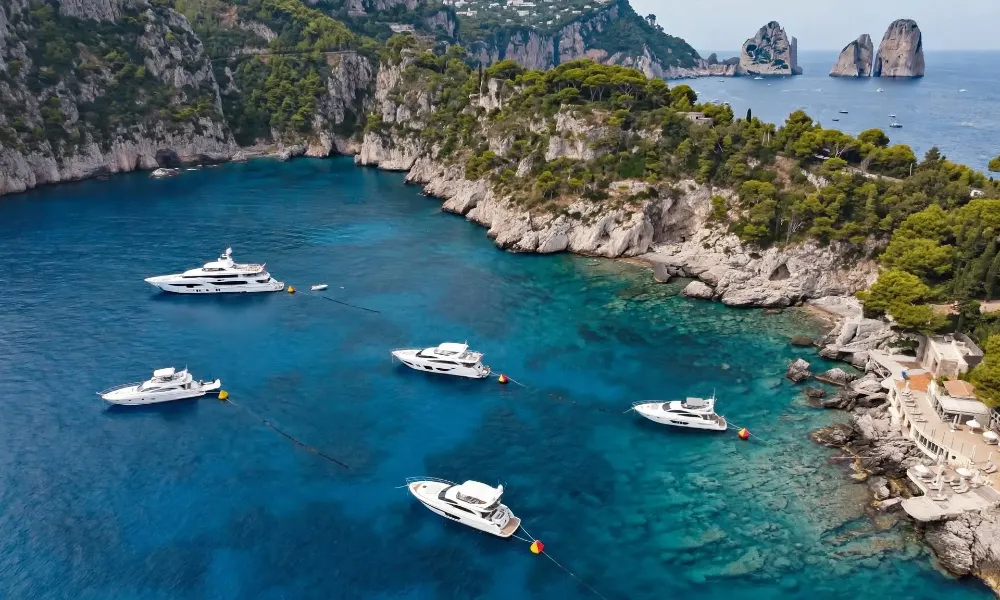
Three adjustments to the mainland accounting, each a direct consequence of the address.
The buoys first. Capri’s classic night is a buoy off Marina Piccola, beneath the cliffs and beside the faraglioni across the water, and the buoy for the center of the market runs, as a broad planning figure, three hundred to five hundred euros nightly in high season, sometimes more when the field is tight; there is no free alternative, because the island’s underwater shelf is managed and the open anchorages outside carry their own fees and rules.
What the figure buys, and what no marina berth in this series has offered at any price, is the address itself: the evening at the buoy, the rocks going gold, the piazzetta’s lights across the water, is the commodity the island has been selling since the emperors, and it is worth quoting precisely and paying without negotiation.
Marina Berths, VAT, and Provisioning Costs
The second fixed seat, the island’s few proper berths in the Marina Grande, price at the coast’s top band in August, two thousand euros and more nightly for the center of the market in the peak weeks, which is why the wise week behaves as the series has long advised: sleep at the buoy, visit the marina, and berth at the working base on the mainland.
The VAT and the allowance follow the Italian standing figures: VAT at twenty two percent on the charter fee, and the provisioning allowance at thirty to forty percent, which on this island funds the table as much as the logistics, the piazzetta’s restaurants and the Marina Piccola lunches being among the fixed seats the broker must hold early.
And the premium itself, which deserves its own paragraph because it is the island’s signature: everything scarce on Capri, the buoy, the berth, the table, the early grotto hour, prices at what the market will bear in August without apology, and the market bears a great deal, because the island’s name has meant the beautiful life since the emperors and the demand does not flinch.
The premium is not a tax to be resented but the price of the address, and it repays itself differently than any berth money in this series: in the hour at anchor off the faraglioni at dusk, when the day boats have gone and the island resumes its own life, and the guest understands precisely what the name was always buying.
The Full Accounting of a Representative Week
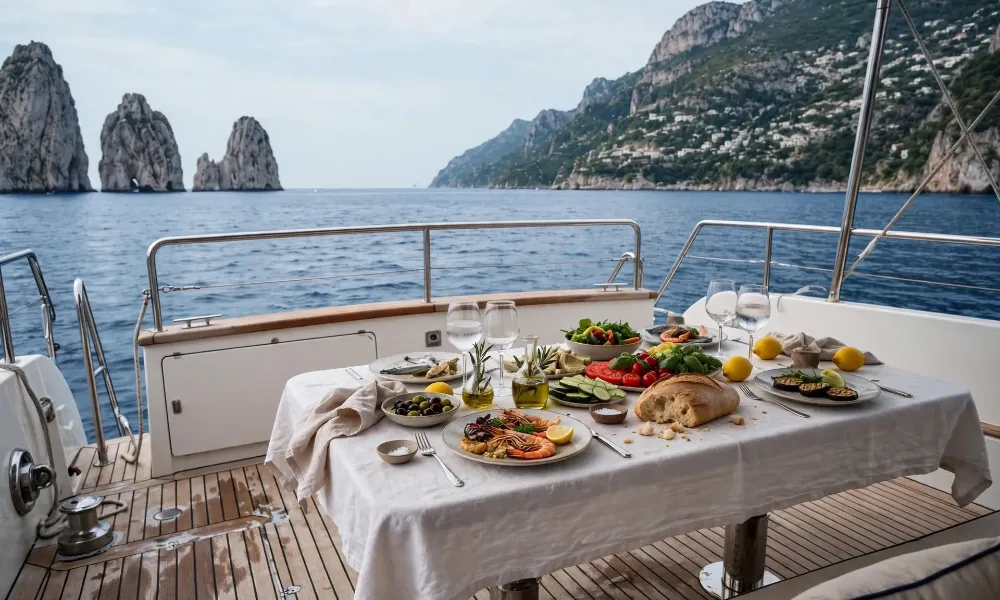
A high season week, center of the market, thirty meter crewed motor yacht based at Sorrento with the island as home waters, sixty five thousand euros base, itemized in the series’ established manner. Base charter, sixty five thousand. Provisioning allowance at thirty five percent, twenty two thousand seven hundred and fifty, covering fuel, the island table, the buoys, the tender’s grotto permissions, and the marina nights, reconciled against receipts at week’s end.
VAT at twenty two percent on the charter fee, fourteen thousand three hundred. Crew gratuity at the customary five to fifteen percent, three and a quarter to ten thousand. The total lands between one hundred and five thousand and one hundred and twelve thousand euros, and the September version of the same week, on the island at its kindest, steps down meaningfully with nothing surrendered but the queue and the premium.
Closing Notes on the Capri Charter Experience
Two closing notes, as the series’ custom has become. The first is that the island’s reconciliation reads like the others in this series only pleasanter: the fuel figure is small on these short passages, the table’s receipts tell of evenings in the piazzetta that no guest has regretted, and the buoy lines, paid nightly, were the best seats in the house.
The second is that the same judgment governs here as everywhere in the series: the difference between a good week and a great one is rarely the hull and almost always the timing and the table, and the money follows those priorities the way the island follows the water.
It is the reasoning behind every serious luxury purchase, the same accounting of heritage and scarcity that governs the great marques, a parallel Pravi Celer has traced in its history of Rolls Royce from 1904 and the pricing of names that earned their meaning long ago: one does not buy the object alone, but the century inside it, and the island’s premium buys twenty of them.
Frequently Asked Questions
How much does a yacht charter serving Capri cost?
Crewed luxury motor yachts run from about twenty-five thousand euros weekly at the entry of the category to beyond half a million for superyachts, with the center of the market between forty-five and ninety thousand in high season. The island’s fixed seats, the buoys, the marina berths, and the great tables are priced above the mainland’s.
Is Capri more expensive than the Amalfi Coast?
Base rates are identical, since the fleet is the same. The island adds the buoy premium, Marina Grande’s top band in August, and competition for its small supply of tables and hours, all of which the September shoulder season returns.
What does a buoy off Marina Piccola cost?
Broadly three hundred to five hundred euros nightly for the center of the market in high season, varying with size and how early the week was arranged. It is worth every euro for the address it buys.
What is the APA on a Capri charter?
Typically thirty to forty percent of the charter fee, covering fuel, provisioning, buoys, berths, and tender permissions, reconciled against receipts. Here, it funds the Piazzetta’s table as much as the logistics.
What is the cheapest season for a Capri yacht charter?
May and October carry the lowest rates and leave the island nearly to itself. Late September offers warm water at stepped-down prices, with the Piazzetta answering without a fight. August is the island’s steepest month, its premium at full voice and its fixed seats contested to their last number.
How much should I tip the crew?
Five to fifteen percent of the base charter fee is customary across the Italian coasts, at the guest’s discretion. A crew that has timed the grotto hours, held the good buoy, and known which table to call earns the top of the range naturally and without any discussion at all.