
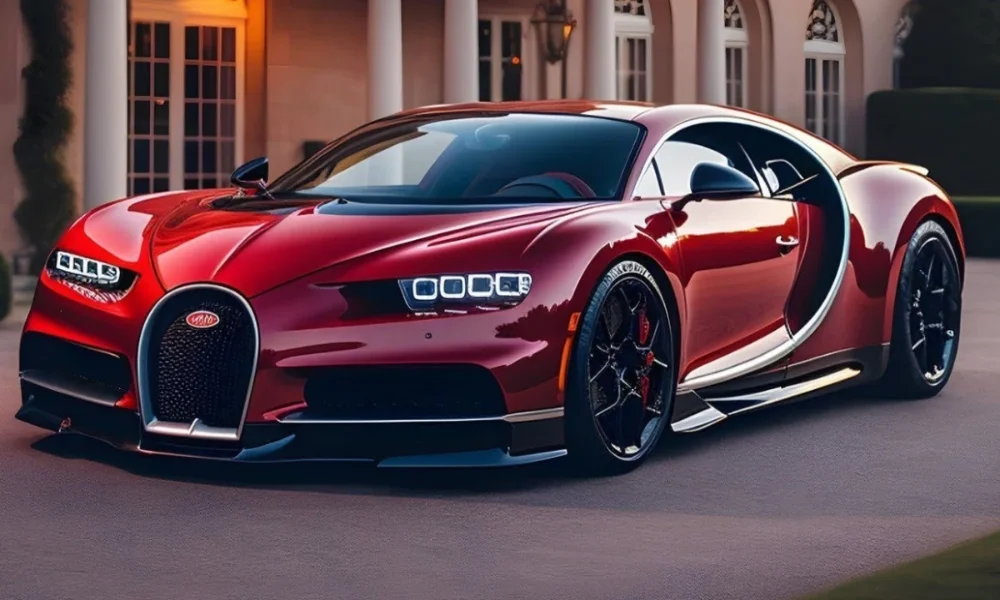
My uncle sold Ferraris for eleven years. He used to say that the only people who ask about price are the ones who can’t afford it. He wasn’t being cruel. His point was that the Bugatti buyer is a different creature entirely. They already know the Bugatti Chiron price. What they want to know is whether the car justifies it.
That’s the question worth answering. The Bugatti Chiron price in USA sits somewhere around $3.3 million at the base. Somewhere north of $4.5 million if you go the Super Sport 300+ route. And it keeps climbing from there once Bugatti’s personalization team gets involved. For most people those numbers are abstract. For Bugatti buyers, they’re a starting point.
What follows is a full breakdown, written for people who want specifics and not a press release retype. Prices, real Bugatti specs, what the top speed records actually mean, how variants differ, and what it costs to keep one of these alive after you’ve signed the paperwork.
Bugatti Chiron Price in USA 2026: A Real Breakdown
Let’s start with what the car costs, because that’s what brought you here.
The base Chiron retails for approximately $3.3 million USD before tax. Add California sales tax and you’re suddenly looking at another $270,000 on top. New York isn’t much kinder. And that’s before you’ve touched a single optional item, before the leather has been chosen, before you’ve told them what color the seatbelts should be.
Bugatti sells through a tiny authorized dealer network in the US, fewer than ten locations nationally. That’s not an accident. They’re not trying to move volume. Each transaction involves the factory directly, especially if you’re going into the bespoke La Maison Bugatti program, where specs are negotiated like a contract rather than picked off a brochure.
What Each Bugatti Chiron Price in the USA
The Bugatti Chiron Price isn’t depending on a single aspect. Different variants target different performance priorities and each carries its own price tag:
- Bugatti Chiron (Base): Starting at $3.3 million USD
- Bugatti Chiron Sport: Approximately $3.5 million USD
- Bugatti Chiron Super Sport: Starting at $3.9 million USD
- Bugatti Chiron Super Sport 300+: Approximately $4.5 million USD
- Bugatti Chiron Pur Sport: Starting at $3.6 million USD
All these are pre-tax, pre-options figures. The final number for any bespoke-spec car can climb well past $5 million total. Nobody publishes that figure publicly because it varies per client.
For a wider look at where the Chiron sits within the supercar world, visit Praviceler’s Supercar Guide for pricing context across the segment.
Bugatti Chiron Top Speed: What 304 mph Took to Achieve
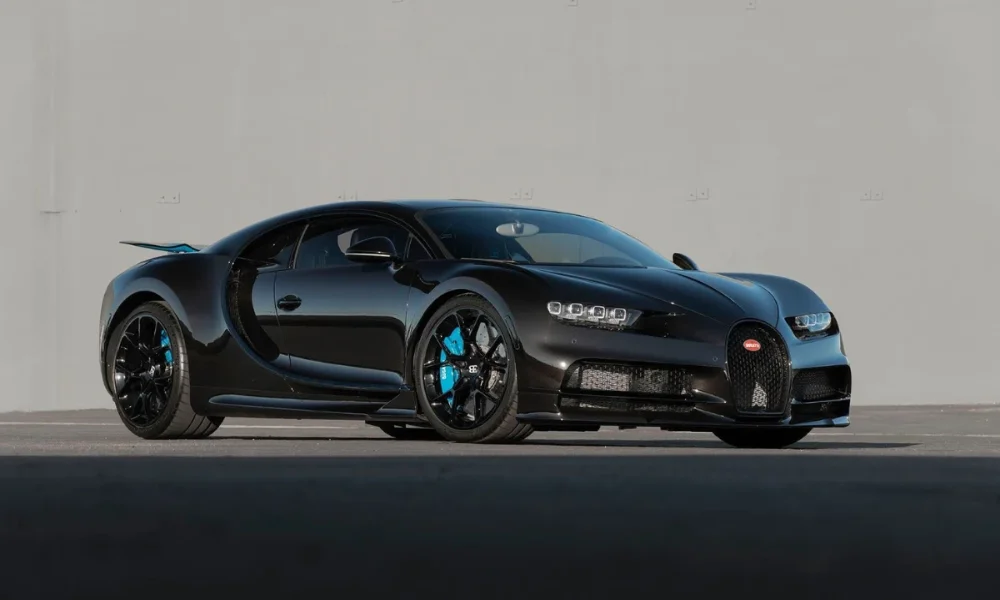
Every Chiron delivered to a customer has a speed limiter set at 261 mph (420 km/h). Not because the car maxes out there. Because road-legal tires, even the best ones Michelin makes, aren’t certified to sustain operation at higher speeds for extended runs. Remove the certification question and the car wants to go faster. Bugatti proved it.
August 2019. The Volkswagen Group’s private test oval in Ehra-Lessien, Germany. Andy Wallace, Le Mans winner, sat inside a modified Chiron Super Sport 300+ and ran 304.773 mph (490.484 km/h). That was a world record. First production-derived car in history to crack 300 mph. Wallace said afterward that the hardest part wasn’t the speed itself but managing focus for that long at that intensity. You can’t look at anything except the road directly ahead.
Bugatti Chiron Top Speed vs Real-World Context
- 261 mph with the limiter on is still faster than any other standard road car you can legally register in the US
- The 304 mph run used road-derived components, not race-only hardware built to a one-off specification
- At 261 mph the car generates roughly 800 lbs of aerodynamic downforce keeping it pinned to the track
- To overcome air resistance at that speed requires approximately 1,500 hp just to hold velocity, not to accelerate further
Full Bugatti Specs: Everything on One Page
The spec sheet for the Chiron reads like something an engineer wrote for other engineers. These aren’t marketing numbers rounded up for a press kit.
Engine and Drivetrain
- Engine: 8.0-liter quad-turbocharged W16
- Horsepower: 1,479 hp (1,103 kW) — Super Sport variants produce 1,578 hp
- Torque: 1,180 lb-ft (1,600 Nm)
- Transmission: 7-speed dual-clutch automatic
- Drive system: All-wheel drive
Performance
- 0 to 60 mph: 2.4 seconds
- 0 to 124 mph: 6.1 seconds
- 0 to 186 mph: 13.6 seconds
- Top speed (road limiter active): 261 mph / 420 km/h
- Top speed (Super Sport 300+, record run, limiter off): 304.773 mph
Dimensions and Weight
- Curb weight: 4,400 lbs (1,996 kg)
- Length: 178.9 inches (4,544 mm)
- Width: 80.2 inches (2,038 mm)
- Height: 47.7 inches (1,212 mm)
- Fuel tank: 26.4 gallons (100 liters)
Aerodynamics
The rear wing does three jobs. In highway mode it stays low to reduce drag. Flip into handling mode and it rises to add cornering downforce. Brake hard from triple-digit speeds and it swings to a 49-degree angle and acts as a physical air brake alongside the carbon ceramic discs. At 261 mph the car sits on roughly 800 lbs of aerodynamic load. Strip that wing off and the front end would go light well before you reached top speed.
Why the Fastest Car Price Is What It Is
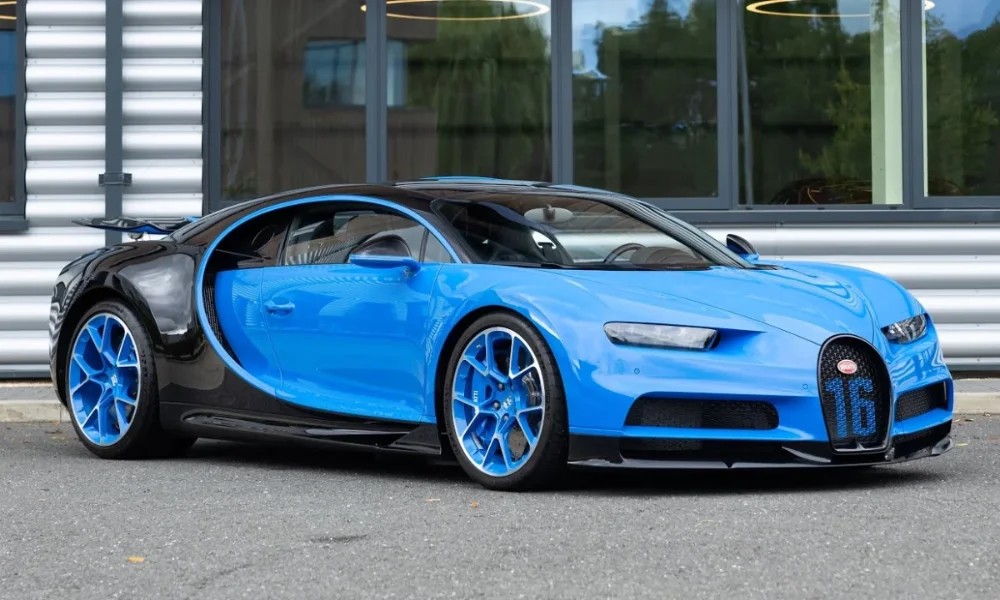
People assume the price is mostly branding. It isn’t. There are real engineering reasons the Chiron costs what it does, and they’re not obvious from the outside.
A W16 Engine Exists Nowhere Else
The Chiron’s 8.0-liter W16 is effectively two narrow-angle V8 blocks bolted to a shared crankshaft. Sixteen cylinders. Sixty-four valves. Four turbochargers running in pairs, with the low-RPM pair stepping aside as the high-RPM pair takes over at a tuned crossover point. One technician builds each engine by hand, taking more than two weeks. The cooling architecture is more complex than you’d find on most small aircraft. No other production car uses this layout. Bugatti developed it in-house and it exists solely for this platform.
The Tire Engineering Problem at 304 mph
At the record speed of Bugatti Chiron price, the tires on the 300+ were spinning at approximately 4,100 rpm. Centrifugal force at that rotational rate causes ordinary rubber compounds to deform outward and eventually fail. Michelin spent months developing and certifying a bespoke compound for the record run. Standard road Chirons run Michelin Pilot Sport Cup 2s, already among the highest-spec tires available for any street-legal vehicle. A full set costs around $42,000 to replace.
Hand-Finished in Molsheim, France
The chassis is a single-piece woven carbon fiber monocoque, which gives the Chiron stiffness that steel construction at comparable weight could never approach. Final body finishing happens at Bugatti’s atelier in Molsheim, a facility that has been building cars since 1909. Output there runs a handful of units per week on a good week. Each completed car goes through several weeks of inspection before it ships.
The Real Ownership Cost Nobody Talks About
The purchase price is one number. Living with a Chiron in the US is an ongoing financial commitment that runs well into six figures every year. Some of this surprises first-time hypercar buyers who are more used to the Porsche or Ferrari tier.
- Annual insurance: $60,000 to $120,000 USD depending on location, coverage, and driver record
- Scheduled service: $20,000 to $40,000 per maintenance interval at an authorized Bugatti center
- Full tire replacement: approximately $42,000 for a complete set
- Authorized service points in the US are very limited, so logistics for servicing often involve shipping the car
- Climate-controlled storage, specialist transport, and custom lift or garage requirements add further annual costs
Bugatti offers a managed service program that handles scheduling and parts coordination. Most owners use it. The alternative is trying to navigate parts sourcing and technical documentation independently, which is not straightforward for a W16.
Bugatti Chiron Price for Variants: Which One to Actually Consider
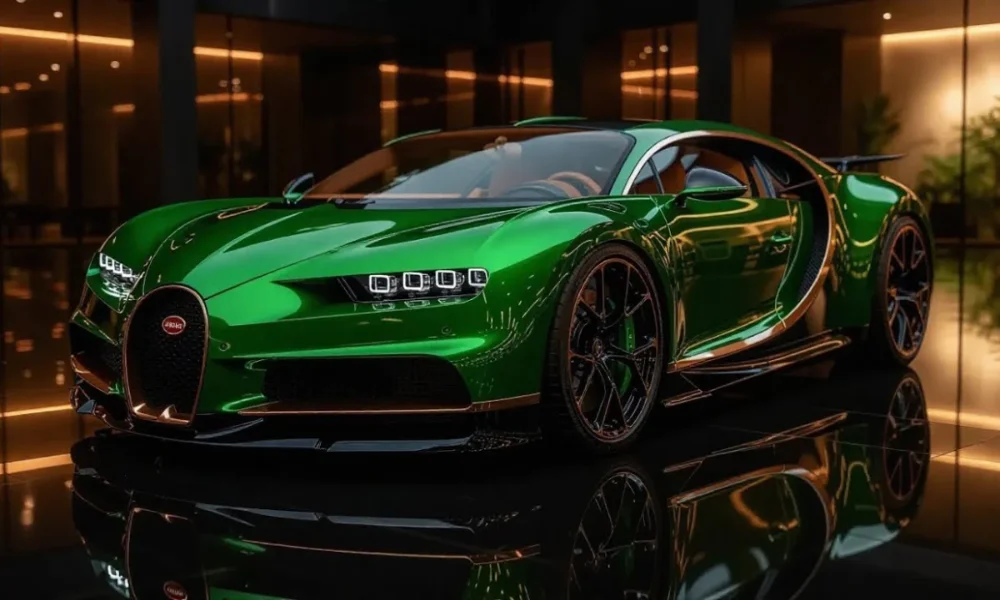
If you’re shopping within the Chiron range, the decision isn’t just about budget. Each version reflects a genuinely different set of priorities, and getting that wrong means owning a car that doesn’t match how you drive.
Chiron Sport: For Drivers Who Use the Car
The Sport shaved around 18 kg off the base car using carbon fiber wiper arms and a glass fiber torque tube, combined with recalibrated suspension geometry. It’s the version that feels most alive on a winding road. Stiffer, sharper, more communicative. Owners who actually put road miles on their Chiron rather than leaving it for events tend to land here. It doesn’t go faster in a straight line than the base car, but it handles with noticeably more intention.
Super Sport and Super Sport 300+: Built for Top-Speed Runs
The Super Sport stretches the body by 250 mm to extend the aerodynamic platform and improve stability at extreme speed. Power goes up to 1,578 hp. The Super Sport 300+ was limited to 30 units globally as a tribute to the record run. Both are the closest production vehicles to a licensed land-speed machine. If your interest is primarily in maximum straight-line velocity, this is the branch of the family tree to focus on.
Chiron Pur Sport: Corners Over Straights
The Pur Sport is misunderstood. People see a lower top speed (217 mph) and assume it’s a lesser car. It isn’t. Bugatti shortened the gearing, stiffened the suspension more aggressively than any other Chiron variant, and cut weight to move the car’s focus entirely to lateral performance. On a track day or a mountain pass, it outperforms the base car significantly. For buyers who find the standard Chiron slightly too focused on straight-line drama, this is the one to consider.
Why People Actually Pay Bugatti Chiron Prices in USA
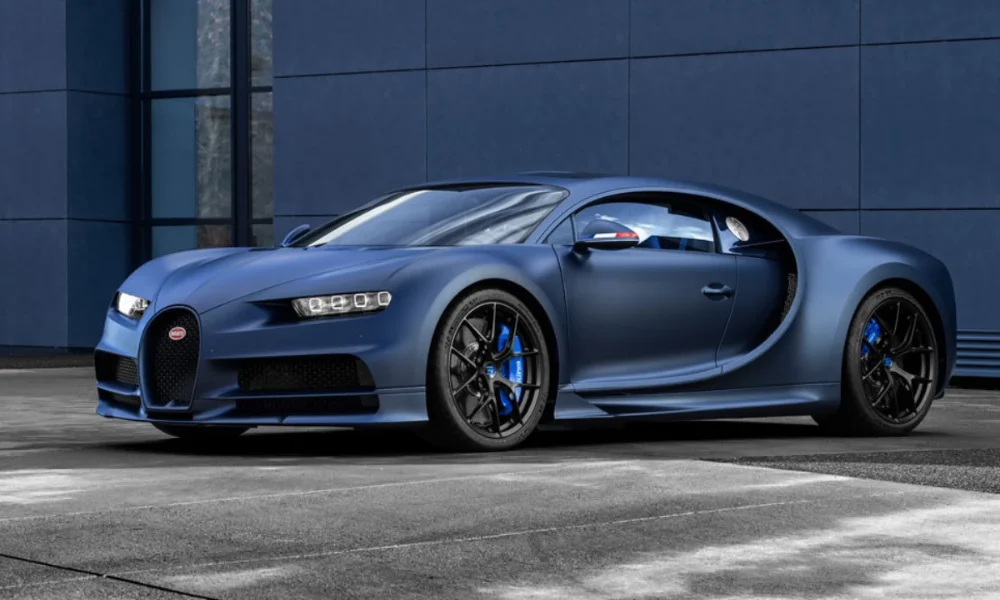
Practicality has nothing to do with it, obviously. Nobody is buying a Chiron because they need a reliable daily driver. The reasons people pay what they pay are a bit more layered.
Scarcity is part of it. Five hundred total Chirons were produced. That’s a fixed number, permanent. Certain limited variants ran to 30 units globally. You can’t manufacture more of them after the fact. Compare that to any other luxury purchase where supply is essentially unlimited.
- Assembly takes six months per car. There’s no faster way to build one correctly.
- Owners who drive theirs describe the experience at legal speeds as categorically different from any other car they’ve owned
- Certain limited Chiron variants have appreciated in value rather than depreciated, which is unusual for a car
- La Maison Bugatti bespoke configurations mean no two production cars come off the line looking the same
Bugatti is also 113 years old. That history underpins the secondary market, parts availability, and the cultural weight the brand carries in a way that newer entrants to the hypercar space simply can’t replicate regardless of their specs.
How the Chiron Compares to Other Fastest Car Price Contenders
At this tier the competitors include Koenigsegg’s Jesko Absolut, the Hennessey Venom F5, and the SSC Tuatara. Each makes large top-speed claims. A few key differences are worth knowing before treating them as equivalents.
- The Chiron’s 304 mph record was independently verified. Not all competitors’ claims have been subjected to the same scrutiny.
- Bugatti’s US dealer and authorized service network, while small, is more developed than most competing brands
- The Chiron can handle daily use. Working HVAC, a sound system, actual luggage storage. Some competitors are barely street-driveable in practice.
- A 113-year company history gives the Chiron a real secondary market and documented provenance that new-entrant hypercars don’t yet have
Frequently Asked Questions
How much does a Bugatti Chiron cost in the USA in 2026?
The base Bugatti Chiron price in USA is approximately $3.3 million before tax. That number rises with each variant step and can exceed $5 million for a fully bespoke Super Sport 300+ after state taxes. Since standard production ended at 500 units, 2026 purchases go through dealer pre-owned stock or the private secondary market, where pricing reflects current demand.
What is the top speed of the Bugatti Chiron?
Road-going Chirons are electronically limited to 261 mph (420 km/h). The Chiron Super Sport 300+ ran 304.773 mph at Ehra-Lessien in August 2019, an independently verified record that made it the first production-derived car to break 300 mph.
How many Bugatti Chirons were built?
Bugatti produced 500 standard Chirons total. Limited variants were smaller runs. The Super Sport 300+ was capped at 30 units globally. Production is complete. That supply ceiling won’t change.
What engine is in the Bugatti Chiron?
An 8.0-liter quad-turbocharged W16, a layout exclusive to Bugatti and found in no other road car. Standard output is 1,479 hp. Super Sport variants produce 1,578 hp. Torque is 1,180 lb-ft in standard trim.
Is the Bugatti Chiron street legal in the USA?
Yes. The Chiron is fully road-legal and can be titled and insured in the United States. Buyers go through authorized Bugatti dealers. With new production done, that typically means working from existing dealer inventory or sourcing through the secondary market.
How fast is the 0-60 mph time on a Bugatti Chiron?
2.4 seconds to 60 mph. 6.1 seconds to 124 mph. 13.6 seconds to 186 mph. Across every benchmark in that range, the Chiron is among the quickest road cars ever built.
What kind of gas mileage does a Bugatti Chiron get?
Around 9 mpg city and 14 mpg highway in ordinary driving. Under sustained full throttle the conversation shifts from miles per gallon to gallons per minute. The 26.4-gallon tank will empty in roughly eight minutes at maximum output. Fuel costs are genuinely the smallest line item in Chiron ownership.
Is the Bugatti Chiron still in production in 2026?
No. All 500 units were allocated and the production run is closed. Bugatti has moved on to the Tourbillon as its current flagship. Chirons trade actively on the secondary market and several authorized US dealers carry certified pre-owned examples.
Final Thoughts
The Bugatti Chiron price in USA has never been a number for a wide audience, and it was never meant to be. Five hundred total cars, each taking six months to build, sold through fewer than ten dealers in the entire country. That’s a production model designed around exclusivity from the ground up, not one that happened to end up exclusive.
The Bugatti Chiron top speed records are real and verified, not press release figures. The 304 mph run happened in public, with independent oversight, using a car derived from a road-production platform. That matters in a segment where outlandish claims are common and documented verification is rare.
If you’re researching the fastest car price because you’re actually in the market, the secondary market in 2026 is the place to look. If you’re here because you’re genuinely curious what it takes to build and sell a car at this level, the specs and the story behind them answer that question better than any marketing does.
For deeper coverage of the supercar segment and related pricing guides, visit Praviceler’s Supercar Guide.
