What makes a painting worth millions of dollars? Sometimes it is the genius of the artist. Sometimes it is a rare moment in art history, an extraordinary story of ownership, or the chance to acquire a work that may never appear on the market again.
At the highest level of the art world, a single auction can become a global event. Collectors compete for masterpieces, auctioneers manage extraordinary bidding battles, and prices reach levels that seem almost impossible to imagine.
Leonardo da Vinci’s Salvator Mundi remains the most expensive painting sold at public auction, achieving $450.3 million in 2017. More recently, Gustav Klimt’s Portrait of Elisabeth Lederer reached $236.4 million in 2025, while Jackson Pollock’s Number 7A, 1948 sold for $181.2 million in May 2026.
These records reveal more than extraordinary prices. They tell stories about artistic innovation, cultural influence, rarity, and the collectors willing to compete for exceptional works. Understanding the achievements of the greatest painters in art history also helps explain why certain artists continue to command extraordinary attention in the global art market.
Here are seven of the most expensive paintings ever sold at auction, ranked by their reported sale prices in US dollars.
Note: This ranking focuses on publicly reported auction results for paintings. Prices include the buyer’s premium where reported and are not adjusted for inflation. Private sales are excluded, and future auctions may change the ranking.
1. Salvator Mundi Leonardo da Vinci
Auction price: $450.3 million
Year sold: 2017
Auction house: Christie’s, New York
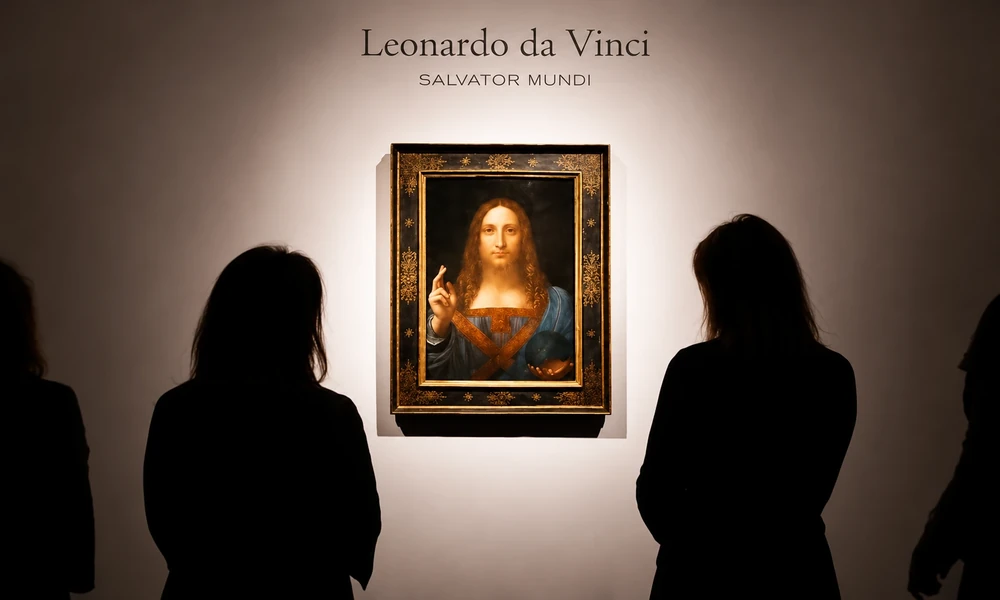
Few paintings have generated a story as remarkable as Leonardo da Vinci’s Salvator Mundi, a depiction of Christ holding a transparent crystal orb while raising his right hand in blessing.
The painting’s history is unusually dramatic. For many years, it was heavily overpainted and treated as a lesser work. After its rediscovery and an extensive period of study and restoration, it was presented as a work by Leonardo and included in a landmark exhibition at London’s National Gallery in 2011.
That attribution has remained a subject of scholarly debate, adding another layer to the work’s already complicated history.
On November 15, 2017, the painting sold at Christie’s for $450,312,500, including the buyer’s premium. The sale established a record for any artwork sold at public auction, not just paintings.
Its extraordinary price reflected the rarity associated with Leonardo’s paintings, the work’s history, and fierce competition among bidders.
The painting subsequently disappeared from public view, adding to its air of mystery.
Salvator Mundi is a reminder that the value of an artwork can depend on far more than its appearance. Attribution, rarity, historical significance, and provenance can all influence how collectors respond to a masterpiece.
2. Portrait of Elisabeth Lederer Gustav Klimt
Auction price: $236.4 million
Year sold: 2025
Auction house: Sotheby’s, New York
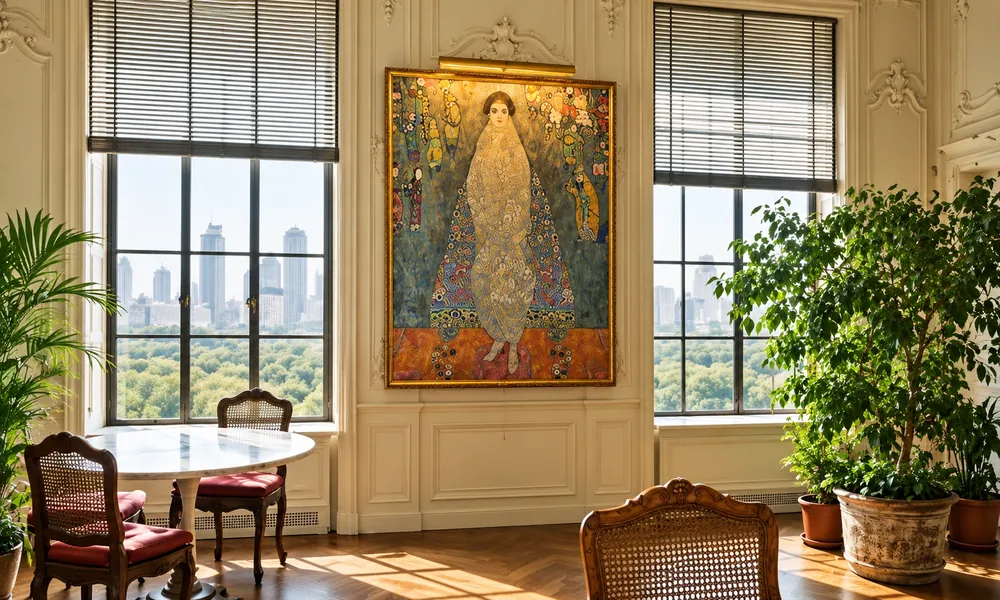
Gustav Klimt’s Portrait of Elisabeth Lederer became one of the most significant auction results of the modern art market when it sold for $236.4 million on November 18, 2025.
Painted between 1914 and 1916, the portrait depicts Elisabeth Lederer, the daughter of one of Klimt’s important patrons. It reflects the artist’s distinctive approach to portraiture, combining an elegant figure with carefully considered detail and a strong sense of visual presence.
The painting also carries a history shaped by political upheaval. It was seized by the Nazis before surviving the Second World War and was later restituted to Elisabeth’s brother, Erich Lederer, in 1948.
When the portrait came to auction as part of the Leonard A. Lauder Collection, it achieved a price that made it the second-most-expensive painting ever sold at public auction at the time.
The result demonstrated the continuing demand for exceptional works by major modern artists. It also showed how an artwork’s historical journey can become inseparable from the way it is understood today.
For Klimt, the portrait represents more than an auction record. It is a work connected to the social world in which he painted, the history of its owners, and the broader story of art lost and recovered during the twentieth century.
3. Shot Sage Blue Marilyn Andy Warhol
Auction price: $195.04 million
Year sold: 2022
Auction house: Christie’s, New York
Andy Warhol transformed an image of Marilyn Monroe into one of the most recognizable artistic statements of the modern era.
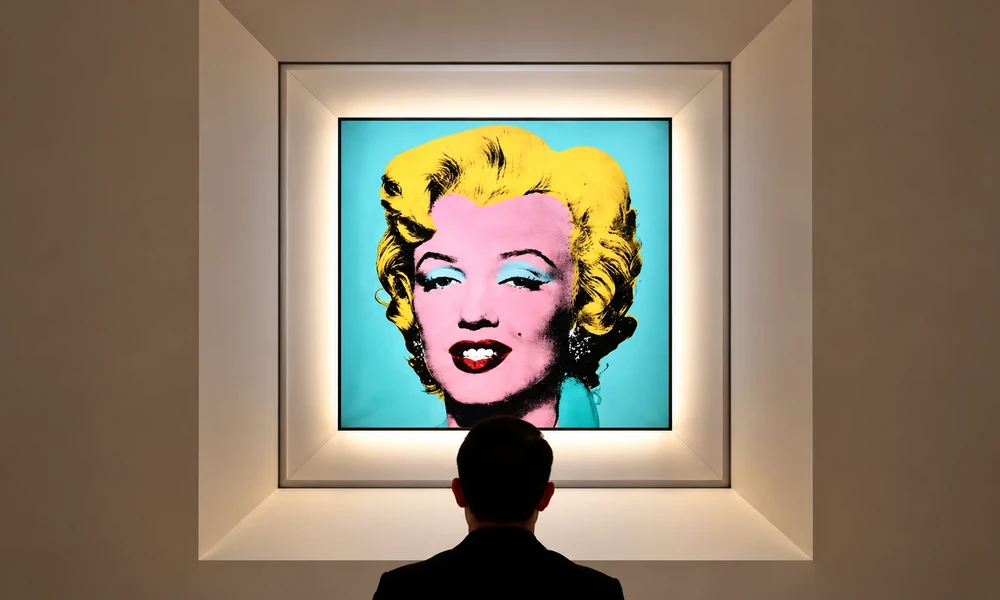
Shot Sage Blue Marilyn, created in 1964, belongs to Warhol’s celebrated series of Marilyn Monroe portraits. Using a photographic image and a silkscreen process, he transformed a familiar Hollywood face into an artwork about celebrity, reproduction, color, and modern consumer culture.
The painting’s bold blue-green background, sharply contrasting features, and repeated-print aesthetic capture much of what made Warhol so influential. He challenged traditional ideas about originality by drawing on images already familiar to the public.
On May 9, 2022, the painting sold for $195.04 million at Christie’s. It became the most expensive twentieth-century artwork sold at auction and the second-most-expensive artwork overall at that time.
Its appeal reflects the unusual meeting of art, entertainment, and cultural memory. Marilyn Monroe was already an international icon, and Warhol’s image has become almost as recognizable as the star herself.
The sale also demonstrated the powerful position of Pop Art in the high-end market. Warhol’s work continues to interest collectors because it captures a period when the boundaries between fine art, mass media, advertising, and celebrity began to blur.
Other influential figures in visual art, including photographer Diane Arbus, explored human identity and the ways images shape our understanding of people.
4. Number 7A, 1948 Jackson Pollock
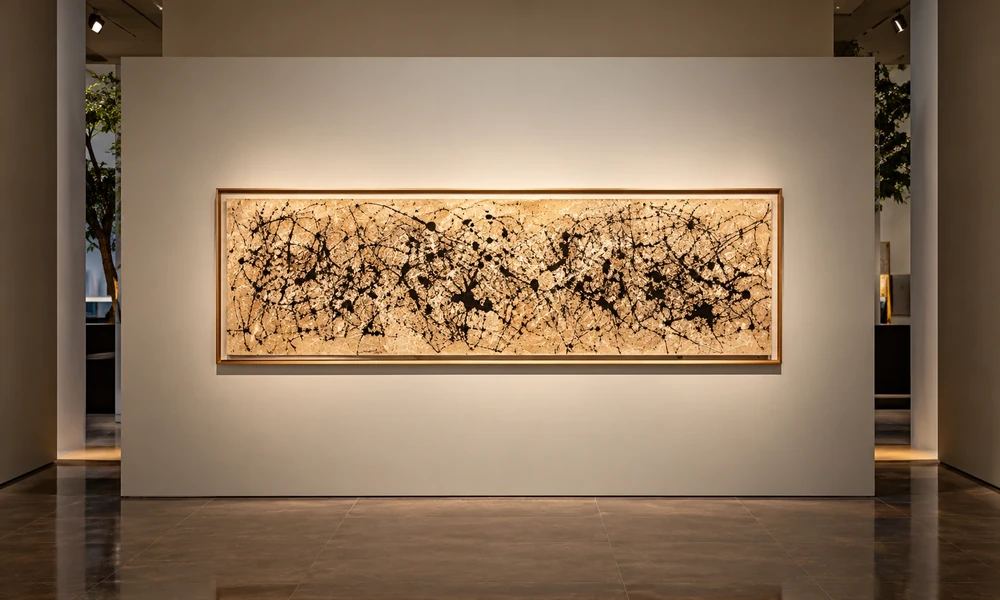
Auction price: $181.185 million
Year sold: 2026
Auction house: Christie’s, New York
Jackson Pollock changed the way many people understood painting. Instead of relying on conventional brushwork and carefully defined subjects, he developed a physical, energetic approach in which paint could be dripped, poured, and moved across a canvas.
Number 7A, 1948 is a major example of this revolutionary period. Painted when Pollock was 36, the large horizontal canvas reflects the movement and complexity associated with his abstract expressionist practice.
The work sold for $181,185,000 at Christie’s in New York on May 18, 2026, setting a new auction record for Pollock.
Its scale is part of its impact. Measuring approximately 35 by 131.5 inches, the canvas draws the eye across an intricate web of marks, colors, and overlapping gestures. Rather than presenting a recognizable landscape or figure, it invites viewers to experience movement and rhythm directly.
Pollock’s work helped reshape postwar art, particularly in the United States, by showing that abstraction could carry the energy and ambition of monumental historical painting without relying on traditional subjects.
The price reflects the rarity of a major work from a defining period in his career, as well as its importance to twentieth-century art history.
5. Three Studies of Lucian Freud Francis Bacon
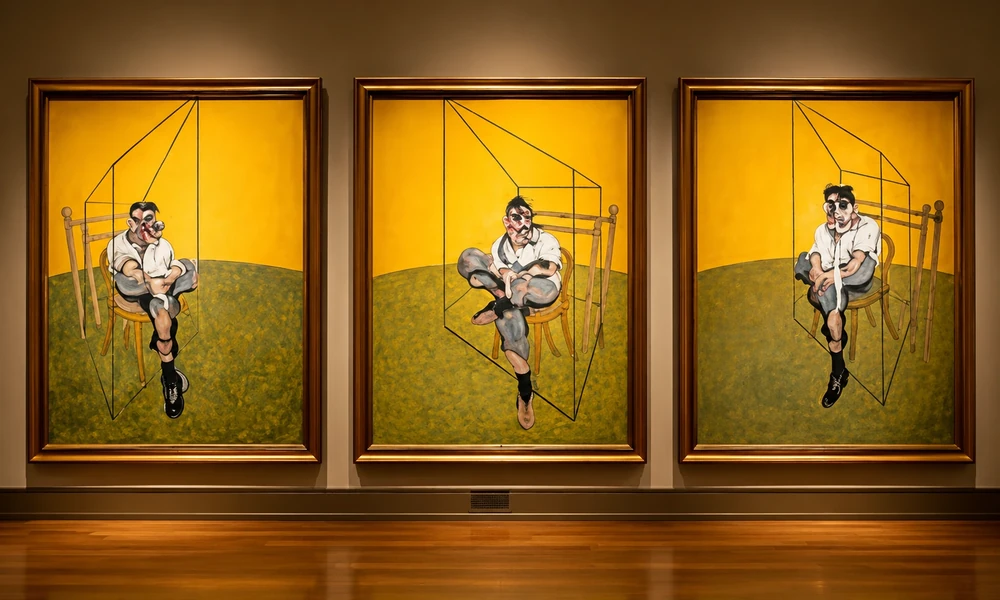
Auction price: $142.405 million
Year sold: 2013
Auction house: Christie’s, New York
Francis Bacon’s Three Studies of Lucian Freud is a triptych composed of three paintings showing fellow artist Lucian Freud. Rather than presenting a conventional single portrait, Bacon uses the three panels to explore the human figure through distortion, intensity, and psychological tension.
Completed in 1969, the work reflects Bacon’s interest in the instability of human identity and the emotional force of the painted body.
The three panels work together while remaining visually distinct. The repeated figure appears altered across the composition, creating a sense of movement and unease that is characteristic of Bacon’s work.
On November 12, 2013, the triptych sold for $142.405 million at Christie’s. At the time, it set a record for any artwork sold at auction.
The painting is especially significant because it brings together two major figures of postwar British art. Bacon and Freud developed very different approaches to painting, yet both explored the human condition through intense, often uncompromising figurative work.
The auction result reflected the importance of Bacon’s work to postwar art history and the rarity of a major triptych of this scale.
It also demonstrates why a work’s format can matter. A triptych is not simply three unrelated images placed side by side; its meaning often emerges through the relationship between its panels.
6. The Scream Edvard Munch
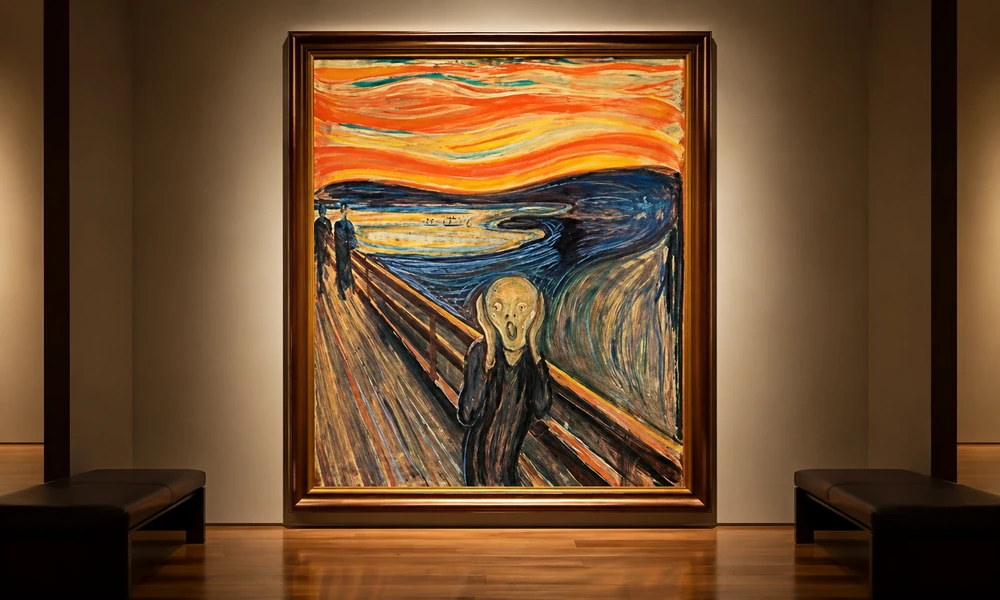
Auction price: $119.923 million
Year sold: 2012
Auction house: Sotheby’s, New York
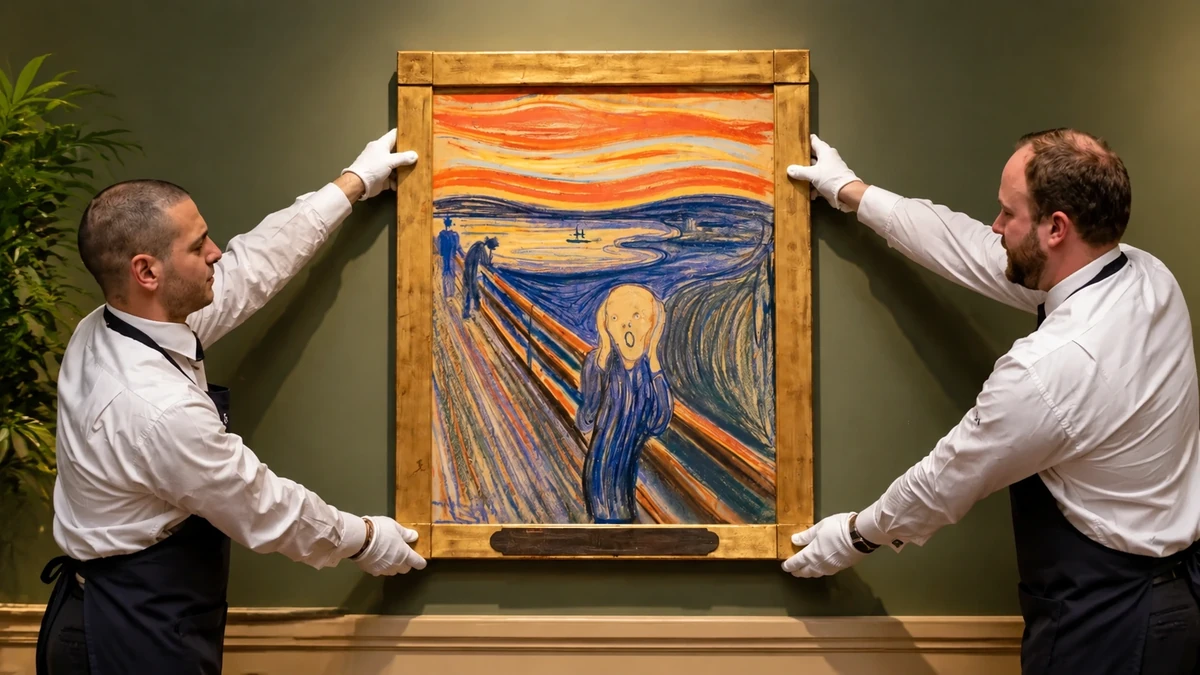
Edvard Munch’s The Scream is one of the most recognizable images in modern art. Its central figure, open mouth, and swirling landscape have become widely understood symbols of anxiety and emotional distress.
The version sold at Sotheby’s in May 2012 is a pastel on board, rather than an oil painting. It is included here as a major art-market comparison because of its historic auction price and its exceptional place in discussions of valuable paintings and artworks.
Munch explored the image in several versions, using different media. The recurring composition reflects his interest in emotional states and the uneasy relationship between the individual and the surrounding world.
The pastel version sold for $119,922,500, setting an auction record at the time.
Its lasting appeal is difficult to separate from its extraordinary cultural reach. The figure has appeared in popular culture, been parodied, and become a visual shorthand for feelings that are difficult to express in words.
Yet the work is more than a familiar image. It forms part of Munch’s broader exploration of love, fear, jealousy, loneliness, and mortality.
The sale demonstrated how an artwork with deep cultural recognition can attract exceptional attention from collectors. It also showed that the significance of a work often extends far beyond its physical dimensions or medium.
7. Fillette à la corbeille fleurie Pablo Picasso
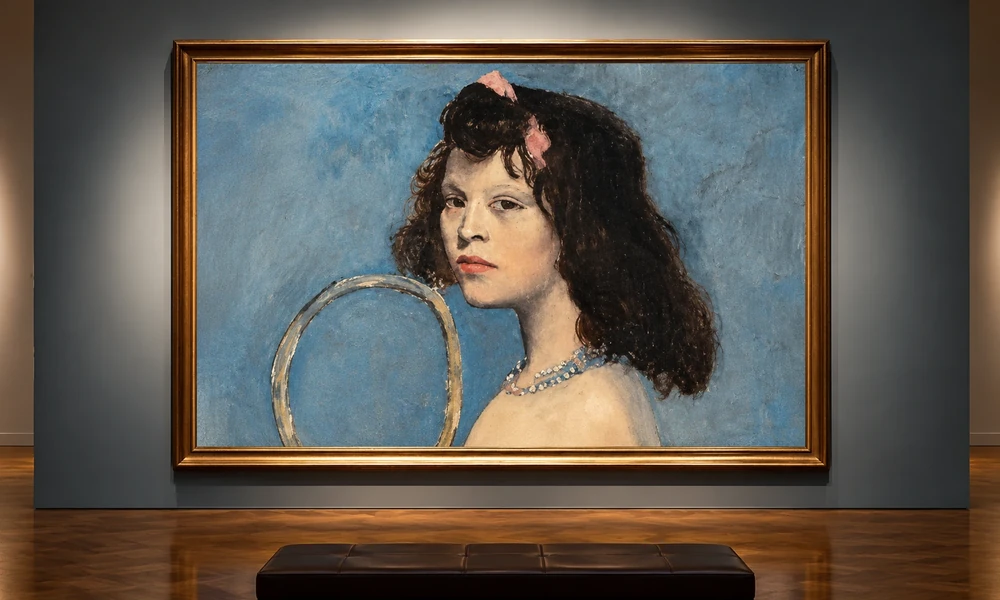
Auction price: $115 million
Year sold: 2018
Auction house: Christie’s, New York
Pablo Picasso’s Fillette à la corbeille fleurie, often translated as Young Girl with a Flower Basket, is a painting from his Rose Period, when warmer colors and more delicate figures became prominent in his work.
Created in 1905, the painting depicts a young girl holding a basket of flowers. Its subject and palette differ from some of Picasso’s later, more radical experiments, offering a glimpse of the artist before Cubism transformed his approach to space and form.
The painting sold for $115 million at Christie’s on May 8, 2018, as part of the collection of Peggy and David Rockefeller.
Its sale was notable not only for the price but also for the painting’s history within a significant private collection. Works from long-established collections often attract interest because their ownership records and personal histories add to the broader narrative surrounding them.
Picasso’s Rose Period is frequently appreciated for its sensitivity, subtle color, and human subjects. The painting’s result reflects the enduring demand for important works from the artist’s early career.
It also provides a useful contrast with Les Femmes d’Alger (Version O). Both paintings are by Picasso, yet they belong to different moments in his development and reveal how widely his artistic language could evolve.
What Makes a Painting Sell for Hundreds of Millions?
There is no single formula that explains extraordinary auction prices. A painting may attract intense competition because of the artist’s reputation, the work’s importance within their career, its rarity, its ownership history, or the moment at which it enters the market.
Several factors often intersect.
Artistic significance matters when a work represents a defining moment in an artist’s development or helps explain a wider movement in art history.
Rarity can influence demand, particularly when an artist produced relatively few paintings or when major examples are already held by museums.
Provenance and historical context can shape how collectors understand a work. The history of ownership, exhibition, and restoration may add important information, although each claim must be assessed carefully.
Competition among collectors also plays a role. Public auctions bring bidders together around a particular work at a particular time. The final price reflects that competition, not a universal measure of artistic quality.
Finally, market conditions matter. Interest rates, confidence, the availability of major works, and the priorities of individual collectors can affect auction results.
A record price does not mean that every work by the same artist is worth a comparable amount. Even within a single artist’s career, values can vary dramatically according to the individual work’s subject, date, condition, provenance, and significance.
Frequently Asked Questions
What is the most expensive painting ever sold at auction?
Leonardo da Vinci’s Salvator Mundi holds the record, having sold at Christie’s in New York for $450,312,500 on November 15, 2017, including the buyer’s premium.
What painting sold for $236.4 million in 2025?
Gustav Klimt’s Portrait of Elisabeth Lederer, painted between 1914 and 1916, sold at Sotheby’s in New York for $236.4 million on November 18, 2025.
What is the most expensive painting by Andy Warhol ever sold at auction?
Warhol’s Shot Sage Blue Marilyn sold for $195.04 million at Christie’s in May 2022. It became the most expensive twentieth-century artwork sold at auction.
Why are Picasso paintings so expensive?
Picasso’s importance to modern art, the breadth of his career, and the rarity of major works contribute to demand for his paintings. Prices still vary widely depending on a work’s period, quality, condition, and provenance.
Are auction prices the same as private-sale prices?
No. Auction prices are publicly reported results, often including a buyer’s premium. Private transactions may be confidential, and the terms and reported figures can differ. A ranking of auction records should not be treated as a complete ranking of every art sale.
Do expensive paintings always increase in value?
No. Art markets can rise or fall, and a record auction price does not guarantee future appreciation. Selling costs, limited demand, and changing tastes can all affect resale results. Art should not be treated as a guaranteed investment.
Final Thoughts
The world’s most expensive paintings reveal the extraordinary intersection of creativity, history, culture, and wealth. From the mystery surrounding Leonardo’s Salvator Mundi to Warhol’s reimagining of celebrity and Pollock’s radical approach to abstraction, each work represents a different vision of what painting can achieve.
Their prices are extraordinary, but the deeper stories are what make them worth exploring. These paintings have survived changing tastes, historical upheavals, and generations of interpretation. Some challenged the artistic conventions of their time; others became lasting symbols of entire cultural movements. Exploring the work of the greatest painters of all time offers further insight into the artists who shaped these movements and transformed the history of art.
For most people, owning a painting worth hundreds of millions of dollars will remain a distant dream. But appreciating great art has never required an extraordinary fortune. A visit to a museum, time spent studying an artist’s work, or discovering a local painter can be just as rewarding in its own way.
The auction room measures a painting in dollars. Art history measures it through influence, imagination, and the questions it leaves behind.
Disclaimer: This article is intended for informational purposes only.