I used to think there were only two options. Cheap stuff that fell apart, or designer stuff I couldn’t afford. Took me an embarrassingly long time to figure out there’s a whole middle.
That middle is where the affordable luxury fashion brands live. Wool instead of polyester. Seams that hold. Clothes someone actually thought about before sending them to the factory. And mostly priced under $500, a lot of it well under.
Below are twelve I keep coming back to. Some I own. Some I’ve recommended to friends who then bought them and texted me to say thanks. None paid to be here.
First, what counts as “affordable luxury” anyway
People throw the phrase around. So here’s my working definition.
Natural fibers. If a brand calls itself luxury and the label says 100% polyester, that’s not luxury, that’s a story they’re telling you.
Construction you only notice later. The collar that doesn’t curl. The seams that don’t pucker after a wash. You can’t always feel it in the store. You feel it in month seven.
Designs that don’t expire. Good brands in this space avoid trends on purpose. The coat looks the same in three years as the day you bought it.
And the math. A $200 coat worn through three winters? Maybe a buck fifty a wear. A $60 one that pills and sags by February? You did worse. Cheap rarely stays cheap.
Okay. The brands.
1. Sezane
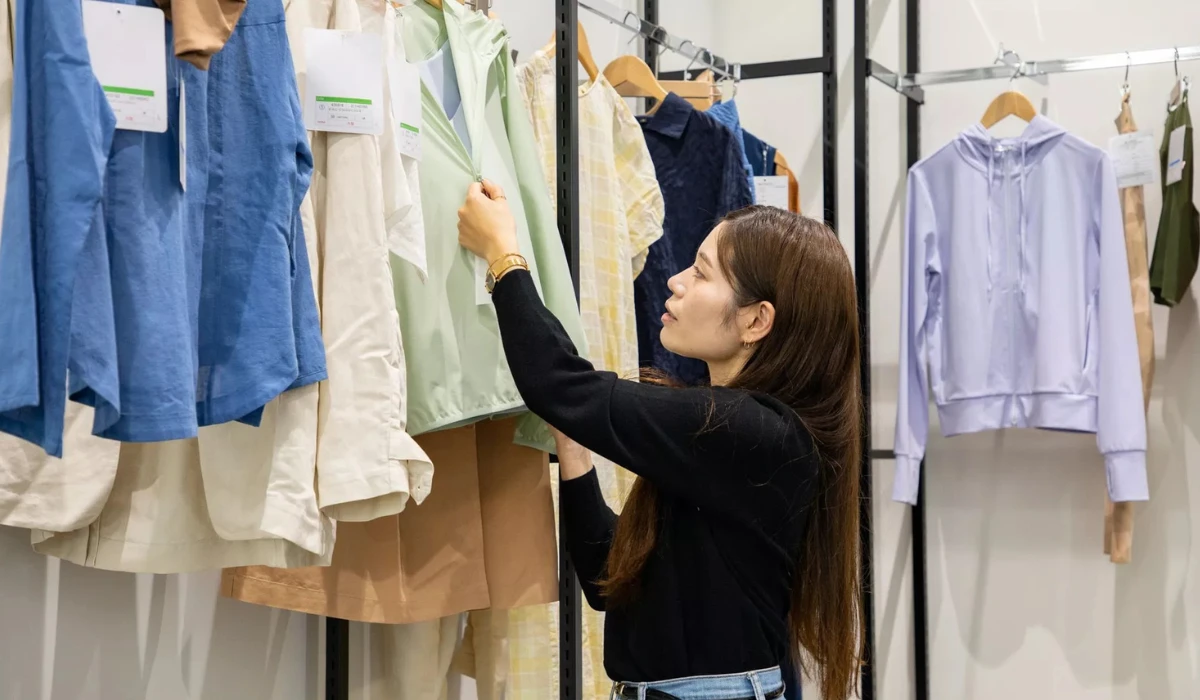
Paris, 2013, started online only. Now it’s one of the most loved names in this whole category and honestly the clothes earn it.
The sourcing is mostly Portugal and Italy and you can tell. Their linen has actual body to it, not the flimsy stuff that turns into a wrinkled mess by lunch. And the cashmere, which runs $150 to $250, holds its shape. If you’ve ever watched a cheap cashmere sweater pill itself into ruin after three wears, you’ll get why that matters.
Everyone tells you to start with the Breton stripes. Everyone’s right. But the linen blazers and the floral dresses are where the brand really cooks.
They also publish proper transparency reports on production, not the vague stuff most brands hide behind. Worth knowing if that’s a thing you care about.
Range here runs about $60 to $350.
2. Reiss
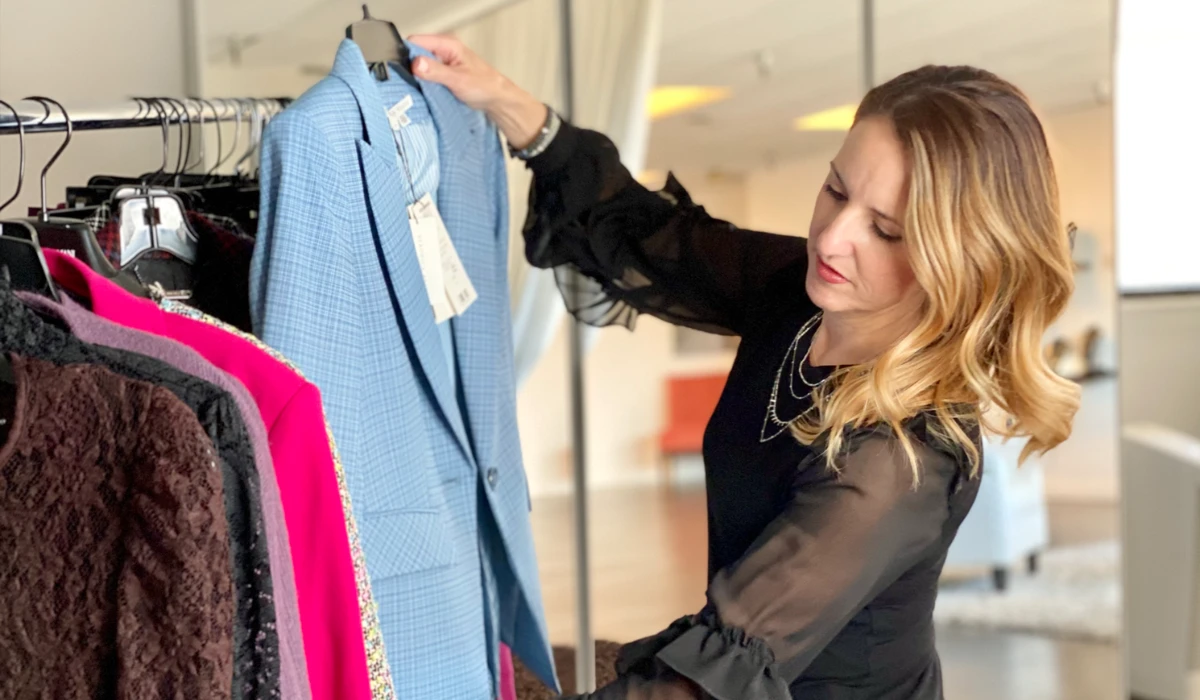
British, made its name on tailoring, and probably the best-kept secret on this list if you have to dress for work.
A full suit runs $400 to $500. A comparable one from a real luxury house? Starts around $1,500 and climbs. The suits are good but the separates are where most people get their money’s worth. Slim trousers that keep their crease.
Collarless blazers that read expensive with zero branding doing the heavy lifting. The women’s occasion dresses, in crepe and ponte, are wedding-appropriate without trying too hard.
One tip: their end-of-season sales are real. I’ve seen a $350 blazer drop to $190. Same blazer. The price moves, the quality doesn’t.
Most pieces land $80 to $500.
3. COS
Yes, it’s owned by H&M. No, that doesn’t mean what you think.
COS has run its own design lane since 2007 and the clothes sit way above anything else in that family. Scandinavian through and through, clean, precise, restrained. A coat doesn’t try to do much, but the wool’s got weight, the lining’s there, the proportions land.
Their merino turtleneck at around $100 honestly competes with stuff twice the price, because the knit and the fiber are actually comparable. Not the story, the garment.
And the silhouettes don’t age. A structured linen shirt from three years ago still looks deliberate now. Harder to pull off than it sounds, and most brands at this price don’t.
You’re looking at $50 to $350 across the board.
4. Massimo Dutti
If you’re outside Europe you may have never heard of it. Same group as Zara, totally different animal.
Where Zara is fast and chasing the trend, Massimo Dutti is slow and built on natural materials. The Spanish and Italian manufacturing shows up in the tailoring, blazers at $150 to $250 with lapel structure and a shoulder line you don’t usually get at that number.
The cashmere, $100 to $200, has been a bestseller for years and it earns it. Real gauge, real drape, none of that ballooning at the elbows.
For men especially it’s underrated. The shirts and outerwear bring that European cut at prices that make it worth building around.
Most of it sits $50 to $400.
5. Arket
The H&M Group brand nobody talks about and everybody who tries it gets hooked on.
The whole concept is an archive. A slow, permanent collection, pieces meant to last, no seasonal panic. The outerwear is the real argument. Wool blend coats around $300 to $380 with a fabric weight and internal build that photographs way above that.
Their trenches have proper body, none of that thin papery feel cheaper versions get stuck with.
They also list material sourcing on most products. Knowing where a fabric came from doesn’t make it better, but a brand that bothers to tell you tends to be one that thought hard about what it made.
Pricing’s about $60 to $400.
6. Club Monaco
New York in the best way. Easy, polished, never stuffy. The kind of brand that turns getting dressed into something automatic.
The tailored separates punch above the price. Blazers cut clean. Merino that keeps its shape. Silk blouses that feel like silk and not the shiny fake. And the men’s suiting, which gets ignored next to flashier labels, gives you a clean modern cut in real wool, rarely over $450 for the full thing.
Bookmark the seasonal sales. The markdowns on core pieces get serious, and these are pieces worth owning at full price anyway.
Figure $80 to $450.
7. Cuyana
Built the whole brand on one line: fewer, better things. And they mean it. The range is small on purpose, edited down to the categories they can actually nail.
The leather is the case for them. A tote at $250 to $400 in Argentine pebbled leather, hardware that doesn’t scratch or tarnish inside a year. No logos, no flash, just good leather and a good shape. Sits next to an $800 bag and you can’t tell.
The cashmere basics are done the same careful way, and they’re more open than most about where the materials come from.
You’re in $100 to $450 territory.
8. Vince
Doesn’t get talked about enough, and the people who do know it are weirdly intense about it. I get it.
The cashmere is the headline. Vince knits heavier than most in this bracket, so the sweaters have real substance instead of that thin drapey feel that reads cheap no matter the fiber. A crewneck at $250 to $400 wears like something double the price.
You can feel the difference against the $150 sweaters at mid-range shops. It’s the hand of the fabric.
Their silk and satin blouses are the quiet standout too, often under $200, that easy unfussy elegance that’s genuinely hard to fake.
Most of it’s $100 to $500.
9. Frame
If you’re going to spend real money on jeans, this is one of the few brands under $500 where I’d actually do it.
Built entirely on denim. Japanese and American selvedge, construction that means the fit holds and the fabric ages instead of just dying. A pair runs $200 to $280 and does what good denim should: fits right out of the gate, still fits six months later, doesn’t fade into sad gray. Low bar, I know. At this price it somehow isn’t.
The ready-to-wear has grown up too. The silk shirts and linen pieces carry that same restraint, clean and well-proportioned, none of the over-designed mess brands fall into when they stretch past their core thing.
Range is roughly $100 to $500.
10. Toteme
Full honesty up top: this one sits at the ceiling, and a couple of pieces tip past $500. It’s here because it’s everything this category is supposed to be, done with a consistency the others only hit sometimes.
Stockholm label, launched 2014, beloved by people who care enormously how a thing is made and not at all whether anyone can identify the brand. No visible logos. The design is pared back almost to nothing and somehow works, because the fabric and the proportions are exact enough to carry it.
The scarf-collar coat is the one that made them famous. Around $500, proper wool blend with weight, and it photographs at $1,500-plus to anyone who doesn’t know better. The silk blouses and wide-leg trousers run the same standard.
Call it $150 to $500.
11. Me+Em
British, direct-to-consumer, almost never in the same conversation as the Instagram-famous names here, which is a shame because the clothes are excellent.
The whole pitch is “smart dressing for modern women,” which means nothing until you wear it and realize it means: stuff that goes from work to dinner to the weekend without a change of clothes. The fabric beats the price.
Merino, cotton twill, tailored trousers, all natural fibers, finished properly. And the sizing is consistent, which sounds minor and absolutely isn’t when you’re buying things you plan to wear for years.
Recent collections stay neutral and seasonless, with the kind of detail, good buttons, clean topstitching, considered proportions, that reads thoughtful instead of trend-chasing.
Pricing’s $80 to $450.
12. Kate Spade
The odd one out here, and I mean that as a compliment. Everything else on this list whispers. Kate Spade does not. Color, personality, a kind of cheerful confidence its customers are fiercely loyal to.
Restraint isn’t the only road to quality. The bags prove it. Structured shoulder bags and satchels at $200 to $400, real leather, hardware that doesn’t tarnish in a month, interiors built to actually work. The leather patinas instead of peeling. Not a given at this price.
The ready-to-wear, especially the dresses and tailored separates, gives you polished occasion and workwear under $350. If quiet luxury feels a little sterile to you, this fills a real gap.
You’re at $80 to $450.
How to actually shop these without wasting money
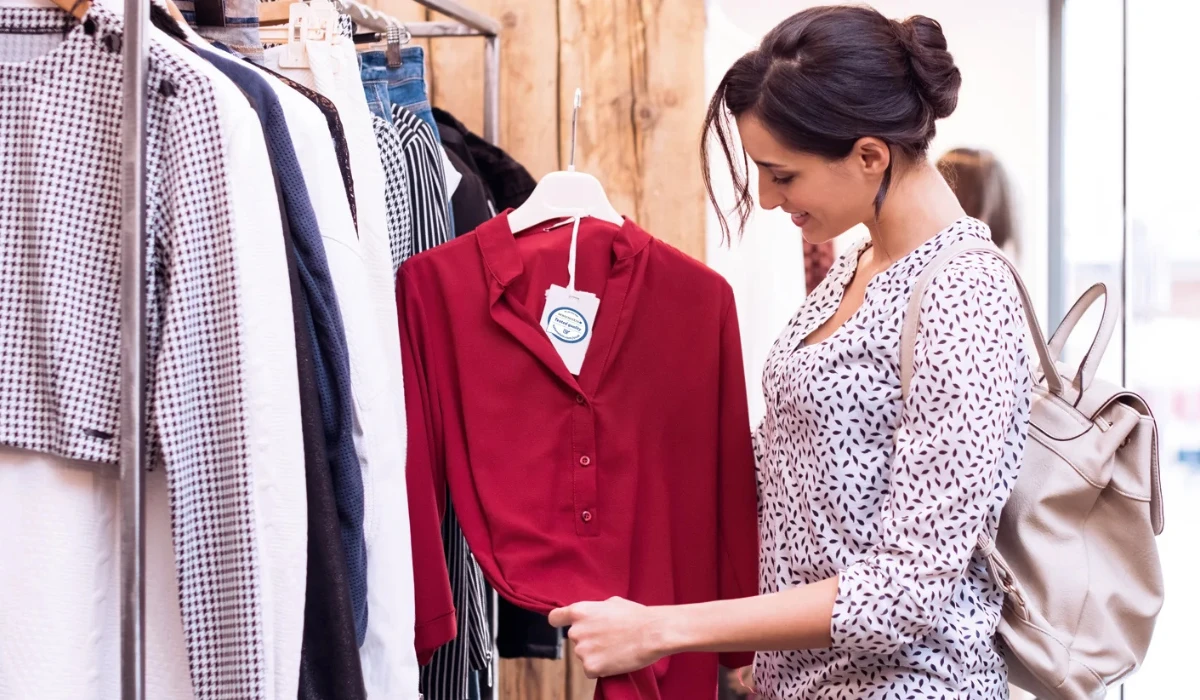
Knowing the brands is half of it. Shopping them so you end up with something useful instead of a closet of one-offs is the other half.
Think capsule, not collection. One strong blazer, two knits in different weights, well-cut trousers in a neutral, one good bag. That’ll carry you through more situations than eight scattered buys from the same budget. You’re building a system.
Trust the end-of-season sales. Reiss, COS, Club Monaco and a few others run real clearances, not the fake 10%-off kind. Core pieces drop 40 to 50%. A $350 coat at $175 is still a $350 coat. Mark the calendar, be patient.
Read the care label first. Natural fibers need more babysitting than synthetics. A sweater that says hand-wash cold isn’t an annoyance, it’s a sign you bought something worth maintaining. Commit to it or buy something else.
Spend on outerwear and bags before anything. They do the most visual work. A cheap coat sinks the whole outfit. A good bag lifts almost everything. Limited budget? Start here.
Judge the garment, not the logo. None of these brands are above a weak season. Touch the fabric, check the seams, try the fit. The brand tells you if they’re generally trustworthy. The piece in your hand tells you if this one’s worth buying.
Frequently Asked Questions
Best brand for a handbag under $500?
Cuyana for minimalist leather with real sustainability credentials. Kate Spade for structured bags with more color and personality. Both give you genuine leather and hardware that survives daily use, no four-figure tag.
How are these different from designer luxury brands?
The big houses, Louis Vuitton, Hermes, Prada, charge partly for craftsmanship and partly for the logo and the social signal. Affordable luxury brands charge for the garment. You pay for what it is, not what owning it says about you.
Do any have good men’s options?
Plenty. Reiss, COS, Arket, Club Monaco, Massimo Dutti and Vince all have serious men’s lines. The suiting at Reiss and Club Monaco is some of the best value going, full suits under $500 that look sharp without shouting a brand name.
Which are the most sustainable?
Sezane and Cuyana, most consistently and specifically. Sezane publishes actual transparency reports. Cuyana puts supply chain info right on the product pages. Arket lists fabric composition and origin for most pieces, which beats what most brands at any price bother with.
Last thing
The idea that you need a luxury budget to dress well is just old. These brands put it to bed, not with copy, with the clothes themselves.
What ties them together is simple: they build things that last. A Sezane shirt that still photographs well three years on. Frame jeans that fit the same way they did on day one. A Cuyana bag that patinas instead of peeling. That’s the entire case for affordable luxury fashion brands, the money comes back over time in a way cheap buying never manages.
Buy less. Buy better. Wear it till it’s paid you back. Stay tuned with Pravi celer for further info!