
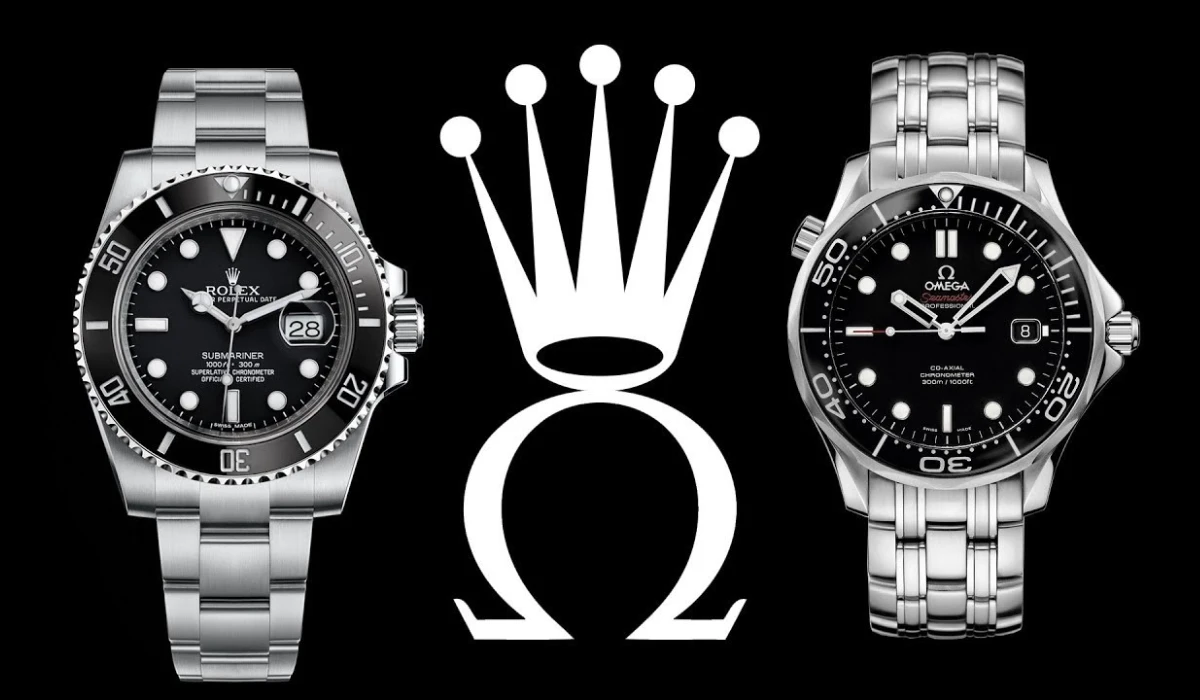
Ask which dive watch to buy on any forum. You’ll get yelled at inside ten minutes, probably called names too. The Rolex Submariner vs Omega Seamaster thing has been going since the 90s. People get weird about it.
Here’s what nobody says out loud. Both watches do basically the same job. Both came from real diving stuff. Both will outlive you unless you do something dumb. So why does one cost almost double in 2026? And is that extra cash actually buying you anything real, or are you just paying for a crown on the dial?
That’s what this is about. No fanboy nonsense. Just what your money gets you.
Quick Verdict First
Most people scroll. So.
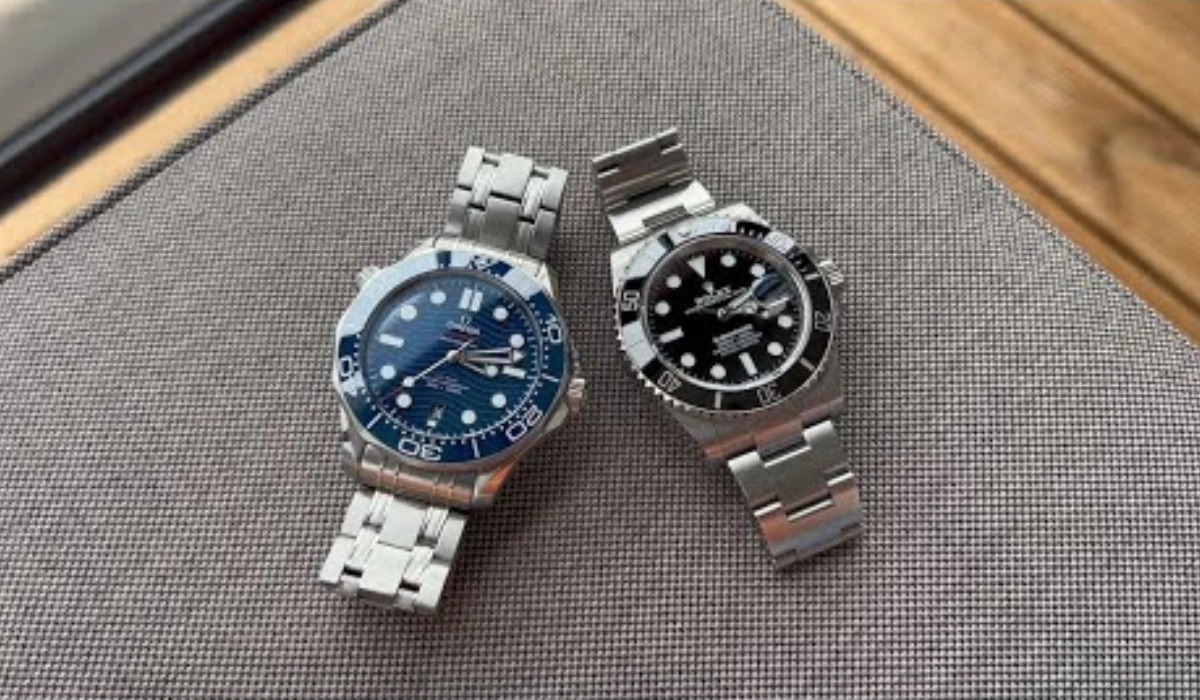
Rolex Submariner vs Omega Seamaster comes down to one annoying truth. The Sub holds its money. The Seamaster gives you more watch for less, but you eat depreciation. Depends on whether you see watches as assets or as something you actually wear.
Want a watch that’s basically a savings account with hands? Sub. Want a better-built watch with cash left for a trip somewhere nice? Seamaster. Why below.
Where They Came From
Submariner dropped in 1953. First proper diver rated to 100m, which mattered back then. McQueen had one. Connery wore one as Bond, on a nylon strap that honestly looked rough but worked anyway. Rolex barely touched the design since. That’s the whole point, kind of.
Omega came back with the Seamaster 300 in 1957. The current Diver 300M traces to 1993. Bond switched over with GoldenEye. Rolex stayed safe. Omega kept shoving in new tech, co-axial escapements, antimagnetic stuff nobody really needs day to day. Two different ways of thinking about the same problem.
The Price Thing
Brace.
Submariner Date (the 126610LN) retails near $10,950 at an AD. Good luck getting it for that. Real street prices? $14k to $16k because of waitlists and grey market markup that nobody seems able to break. No-date Sub starts around $9,200 retail. Same availability headache.
Seamaster Diver 300M? $5,400 to $6,400 retail. Walk into a boutique tomorrow, buy it, go home. No waitlist, no “let me add you to my preferred client list,” no weird dance with a sales associate. That last bit alone says something.
So you’re looking at maybe ten grand between them. For doing the same job. Worth it? Depends entirely on what you want from owning a watch.
Build and Materials
Both are tanks. That part isn’t up for debate.
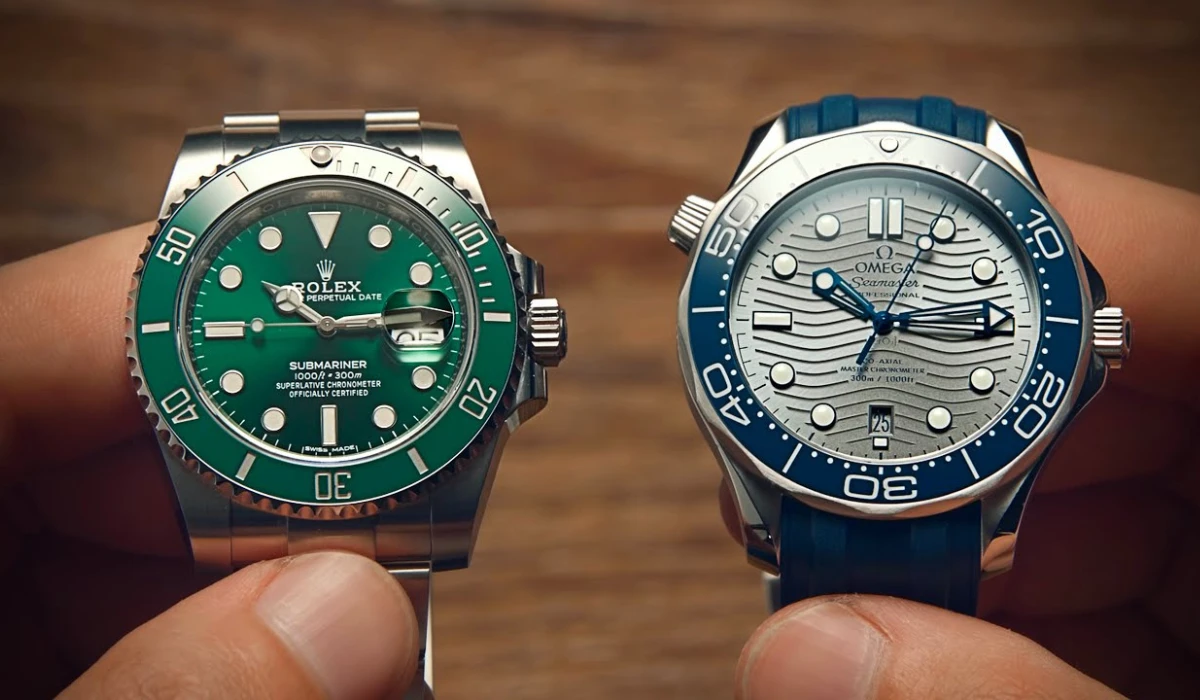
Rolex uses Oystersteel, which is 904L branded their way. Better corrosion resistance than 316L, polishes back to new pretty easy. Omega mostly uses 316L on the Seamaster, with titanium and ceramic if you wanna spend more. Day to day you won’t feel the difference. Both scratch when you hit a doorframe. Ask me how I know.
Ceramic bezels, both. Sapphire crystals, both. Lume is close. Omega’s Super-LumiNova punches brighter at first. Rolex’s Chromalight hangs on longer through the night. I’ve had both on the nightstand. The Sub still glows faintly at 4am when I check the time. The Omega’s mostly done by then.
Where the Seamaster wins on character: wave dial, plus the little helium valve at 10 o’clock. It looks like something. The Sub wins on consistency. Every single one feels machined to the exact same spec. Omega QC isn’t bad. You do occasionally see one with a bezel that’s a hair off. Doesn’t happen with Rolex, near as I can tell.
Movements: Omega Sneaks Ahead
This is the part Rolex guys don’t really wanna talk about.
Seamaster runs the Omega 8800 or 8900 depending on version. Master Chronometer cert from METAS, antimagnetic to 15,000 gauss, accuracy of 0 to +5 seconds a day. Five year warranty.
Submariner uses the 3235. Great caliber. -2 to +2 seconds a day, 70 hours power reserve, COSC cert. Five year warranty too, but Rolex only matched that recently. Solid stuff all around. Against magnetic fields though, not in the same league as Omega.
Pure engineering, the Omega is just ahead. Rolex movements are simpler, probably last longer over 30-plus years between services. Both will outlive most people who own them. But if specs do anything for you, Omega takes this one.
How They Wear
Sub is 41mm wide, 12.5mm thick. Slim for modern standards. Wears smaller than the number sounds because of how the lugs sit. Works on anything from 6.5 to 8 inch wrists, easy.
Seamaster’s 42mm and 13.5mm thick. Chunkier. More wrist presence, sportier look. On smaller wrists it can look like a lot. The wave dial catches light differently at every angle, which some love and some find busy for daily wear. I lean toward loving it but you might not.
Bracelet comfort? Sub, no question. The Oyster with Glidelock is just better than what Omega’s putting out. You can micro-adjust on the fly when your wrist swells in summer. Omega’s bracelet is fine. It’s just not Oyster fine.
Resale: Where The Argument Usually Ends
Here’s the conversation killer.
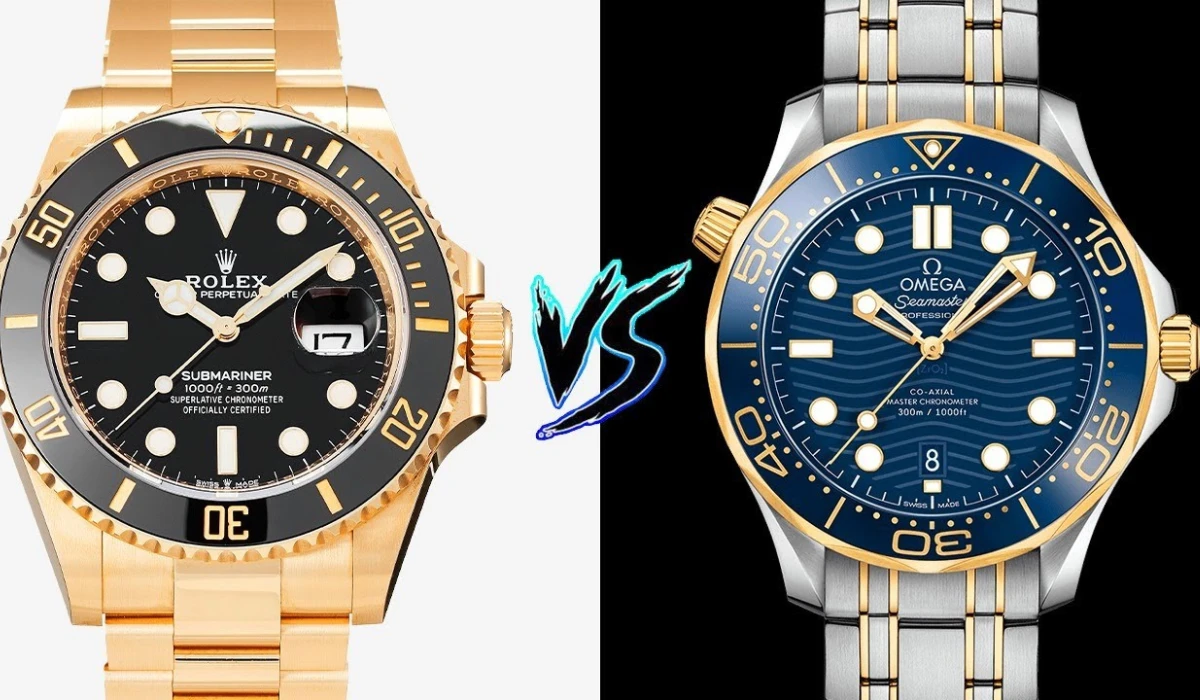
Buy a Sub today, wear it five years, sell it. You’ll probably get 90 to 110% of retail back. Sometimes more depending on the model and where the market’s at. Grey market has kept Rolex prices above MSRP for over ten years now, which is genuinely strange when you think about it.
Seamaster? Different story. 20 to 40% drop in the first couple years before things flatten out. Lightly worn ones sit around $3,500 to $4,500 secondhand, which honestly makes buying pre-owned the smart move if you don’t need that fresh-from-the-boutique feeling.
If you treat watches as wearable savings, Rolex wins this every single time. If you don’t care about resale and just want to enjoy your watch, the Seamaster gives you way more watch for the money. Both answers are valid.
Diving and Actual Use
Both rated to 300m. Both screw-down crowns. Both unidirectional bezels.
Anybody saying 300m matters for swimming is being silly. You’re not going past 40m recreationally. Neither watch cares. The helium valve on the Seamaster is for saturation divers, maybe 0.001% of buyers. Cool detail. Functionally just jewelry for the rest of us.
Showers, pools, snorkeling, the occasional dive trip, either one is fine. Neither’s gonna fail doing anything normal.
So Which One
Get the Sub if you’ve got the budget, patience for AD games, and you think of watches as long-term holds. You’re paying for the crown, the resale, seventy years of consistency. Nobody who buys one regrets it once the sticker shock fades.
Get the Seamaster if you want a serious watch but the Rolex tax feels rude. Better movement tech, available this week, leaves enough money for a real trip somewhere. First-time luxury buyers usually do better starting here. Move up later if you wanna.
Honestly both are great watches. The wrong move is the one you talked yourself into for the wrong reasons. Buy what you actually want to wear.
Rolex Submariner vs Omega Seamaster comes down to prestige versus value. Sub runs $10,950 to $16,000 with near-perfect resale. Seamaster sits at $5,400 to $6,400 with a more advanced Master Chronometer movement antimagnetic to 15,000 gauss. Both 300m divers with ceramic bezels, sapphire crystals. Rolex wins on resale, brand, bracelet feel. Omega wins on movement specs, value, availability.
FAQs
Is the Omega Seamaster as good as the Rolex Submariner?
Mechanically? Arguably better, thanks to the Master Chronometer rating and antimagnetic protection. Sub pulls ahead on brand status, resale, and bracelet quality. For pure build and tech though, the Omega holds its own at almost half the price.
Does the Omega Seamaster hold value?
Expect 20 to 40% drop in the first few years before prices flatten secondhand. Won’t match Rolex resale. Still better than most luxury watch brands and a solid long-term buy if you’re not flipping it.
Why is the Submariner so much more than the Seamaster?
Tight supply, controlled allocation, and a secondary market that often prices used pieces over retail. Rolex keeps production deliberately low. Demand stays high. Resale stays strong, year after year.
Can you actually dive with both?
Yep. Both rated to 300m, which covers any recreational diving, swimming, or water sport you’ll realistically do. Screw-down crowns and proper unidirectional bezels on both.
Which one makes more sense as a first luxury watch?
Seamaster, usually. Serious build, advanced movement tech, no waitlist drama, no inflated pricing. Buyers focused on resale or status from day one might still wanna start with the Sub.
