Small doesn’t mean cheap. It never did. Walk into the right boutique hotel and the room might be 180 square feet, but it feels expensive, calm, and intentional. That’s not magic. It’s a decision. The right ones, made in the right order.
If your bedroom is small and you want it to feel genuinely luxurious, here’s what actually moves the needle.
The Bed Is the Whole Room — Treat It That Way
You don’t get to phone this part in. In a small bedroom, the bed takes up most of the floor plan. So whatever it looks like, that’s what the room looks like. Full stop.
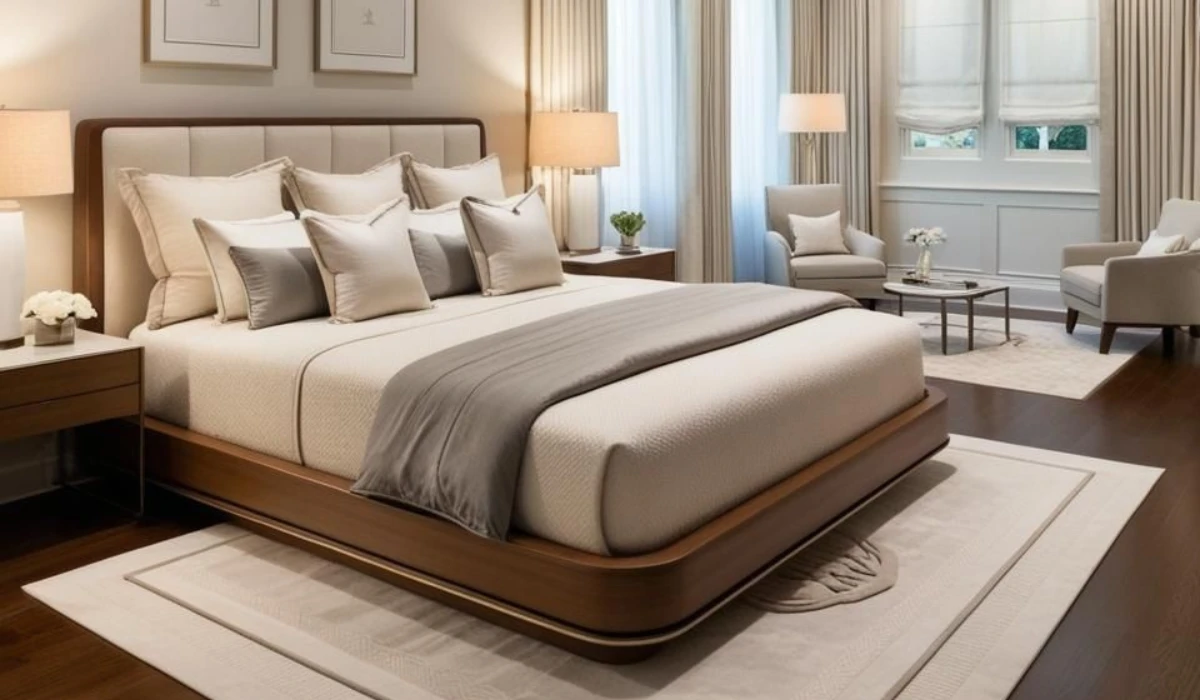
Start with the bedding. Hotel-style linen in white or ivory. Thread count above 400. A proper duvet, not a thin one. Sleeping pillows, Euro squares behind them, two decorative cushions in front. That layered look takes about 90 seconds to learn and makes the bed look like it costs three times what it did.
Make it every morning. Non-negotiable. An unmade bed in a small room doesn’t just look messy, it makes the whole space feel like it’s falling apart.
✦ Pro Tip: Two Euro squares at the back. Two sleeping pillows. Two decorative cushions at the front. This is the hotel formula. Copy it exactly.
One Color. Multiple Textures. That’s the Palette.
People overthink color in small rooms. They go bold trying to add personality and end up with a space that feels smaller and busier than it did before.
Pick one neutral. Off-white. Warm cream. A soft gray that leans toward beige. Keep everything in that family and the room will feel bigger, calmer, and more expensive without you doing anything else.
Where people go wrong is confusing “neutral” with “boring.” It isn’t. Texture is what stops a neutral room from feeling flat. A linen throw with some weight to it. A headboard in boucle. A rug with actual pile. These things add depth without adding noise.
A Tall Headboard Changes the Whole Room
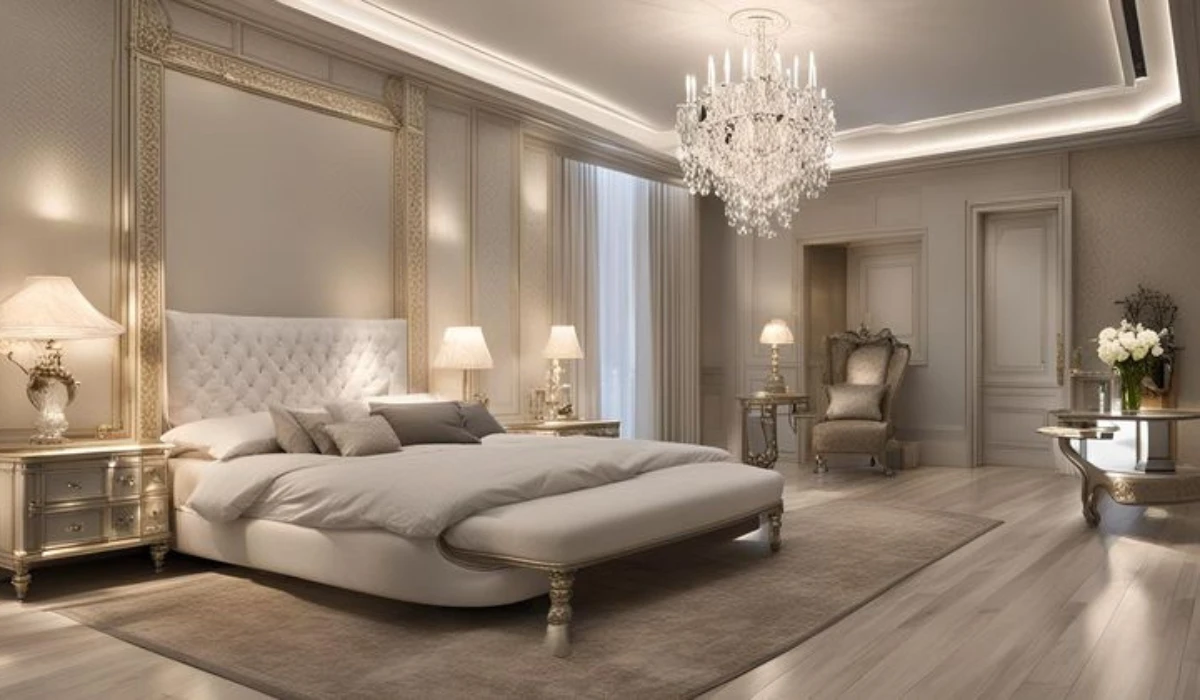
Most small bedrooms have the same problem, they feel squat. The ceiling feels low. The room feels like a box. A tall headboard fixes this in a way almost nothing else does.
Floor to close-to-ceiling. Upholstered, velvet, linen, or leather. Mounted directly onto the wall rather than attached to the bed frame. That last part matters. Wall-mounted panels look custom. Bed-attached headboards look like furniture. The difference is noticeable.
This is also one of the easier upgrades to do affordably. A custom panel cut to size and mounted with a French cleat costs a fraction of a designer headboard and looks identical from across the room.
Stop Ignoring Your Ceiling Height
Most small bedrooms have more vertical space than horizontal. Use the vertical.
Curtains go near the ceiling, not above the window. The rod sits two or three inches below the ceiling line. The curtains fall to the floor. That one change makes the ceiling feel higher than it is. Floating shelves mounted high do the same thing, storage without touching the floor, which reads as spacious.
✦ Pro Tip: Same paint color on the ceiling and walls. Sounds counterintuitive. The logic is simple, the contrast line between wall and ceiling is what makes a small room feel boxed in. Remove the line, remove the box.
Every Piece of Furniture Has to Justify Itself
This is where most small bedroom redesigns go wrong. People keep adding. A chair because it might be useful. A second dresser for storage. A desk that technically fits if you push the bed slightly left.
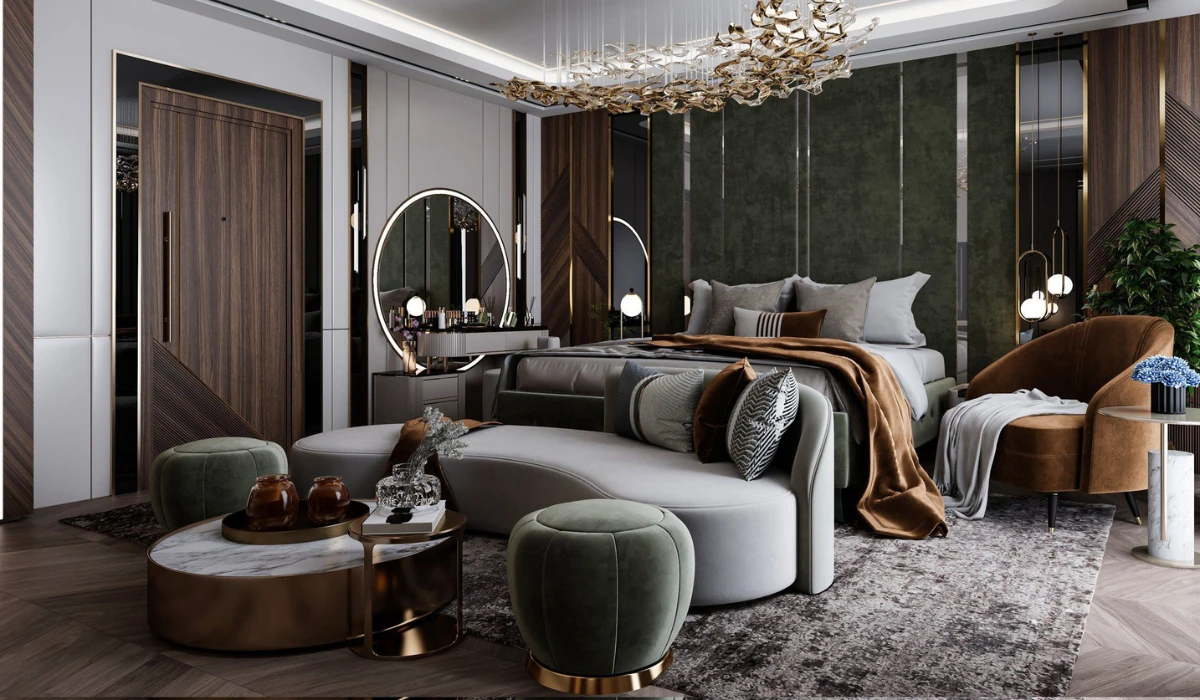
Stop. Each piece you add past the essentials costs you something, floor space, visual calm, the feeling of room to breathe. In a small luxury bedroom the furniture list is short: the bed, two bedside tables, one storage unit. That’s it. Everything else is a negotiation that usually costs more than it gives.
Bedside tables with drawers, not open shelves. Storage bench at the foot of the bed if you need one, at least it doubles as something. Every surface should earn its square footage.
Overhead Lighting Is the Problem, Not the Solution
A single overhead light in a bedroom is functional. It is not luxurious. It is not flattering. It makes everything look like a waiting room.
Layer instead. Two bedside lamps, one on each side, same lamp, same height. That symmetry alone reads as intentional and expensive. A dimmable ceiling fixture you use for ambience, not illumination. A small table lamp on the dresser if there’s room. Smart bulbs that go warm and dim. At 10% brightness with warm color temperature, a bedroom stops being a room you sleep in and starts being a room you want to be in.
The Details Nobody Talks About
Scent is underrated. A reed diffuser, sandalwood, white tea, something clean, placed near the door means the room smells like a hotel before you’ve even registered anything visual. It’s one of the cheapest things you can do and one of the most effective.
A rug under the bed. Even a small one. The first thing your feet touch in the morning shouldn’t be cold floor. It sets a tone. Soft underfoot, warm light, good scent, that’s what people mean when they say a room “feels” luxurious.
FAQ: Luxury Small Bedrooms
How do I make a small bedroom look like a hotel room?
White bedding made properly, two matching bedside lamps, no clutter on surfaces, minimal furniture, curtains that go to the ceiling. That’s the short list. Get those right before you worry about anything else.
What colors make a small bedroom look bigger?
Warm neutrals. Off-white, ivory, soft cream, warm gray. They bounce light back into the room and push the walls back visually. Keep the palette tight, two or three shades from the same family maximum.
Should I use a king bed in a small room?
Only if it fits properly, meaning you can walk around it without turning sideways. A queen bed dressed in good linen looks more luxurious than a king bed that barely clears the walls. Size isn’t the flex — proportion is.
Small bedrooms don’t need more space. They need better decisions. The rooms that feel expensive aren’t expensive because of square footage, they’re expensive because somebody was deliberate about every choice. You can do the same thing. The room size is not the obstacle.