The most expensive watches 2026 has produced are not the familiar names from old auction catalogues. They are new releases, unveiled in Geneva in April and in the months that followed, made to be worn, wound, and argued over in boutiques rather than locked away after a single sale.
This year the great houses did not simply raise prices. They introduced new calibres, new materials, and new complications, and they asked collectors to pay for invention as much as for gold.
A platinum Patek Philippe that charts the sunrise, a Richard Mille built to follow a football match minute by minute, a Jacob & Co. creation set with 298 diamonds, and a Rolex Daytona in a metal the brand had never used for the model before each tells a different story about what luxury watchmaking values now.
Some cost a little over fifty thousand dollars. Others cost close to two million. A handful cost far more, and are made in such small numbers that most collectors will never see one outside a photograph.
Why 2026 Was a Different Kind of Expensive Year
Watches and Wonders 2026 opened in Geneva on 14 April with its largest line-up yet, and the tone was set within hours. Patek Philippe celebrated fifty years of the Nautilus with three ultra-thin limited editions. Rolex marked one hundred years of the Oyster case, the first waterproof wristwatch case.
Vacheron Constantin, Audemars Piguet, and Patek Philippe each brought a genuine technical novelty rather than a new dial colour. Richard Mille arrived early, in February, with a watch developed over five years. Jacob & Co. marked its fortieth anniversary with a new diamond cut and a three-and-a-half-million-dollar tourbillon. The pattern was consistent: thinness, astronomy, skeletonisation, and materials science, rather than size for its own sake.
That matters because the price of a new luxury watch is rarely a simple reflection of its materials. A gold case adds thousands. A tourbillon, a minute repeater, or a perpetual calendar adds tens or hundreds of thousands, because each requires months of hand assembly, adjustment, and testing by a watchmaker who may finish only a handful of such movements in a year.
A limited edition adds scarcity, and scarcity adds a premium that has nothing to do with the metal at all. In 2026, the most expensive watches combined all three precious metal, a difficult complication, and a small production run and the result was a year in which a new watch could cost as much as a house in many cities, and still sell out before most collectors had a chance to try it on. Every price here is a published retail price for a new 2026 release, not an auction result.
Patek Philippe: Astronomy, the Cubitus, and Fifty Years of the Nautilus
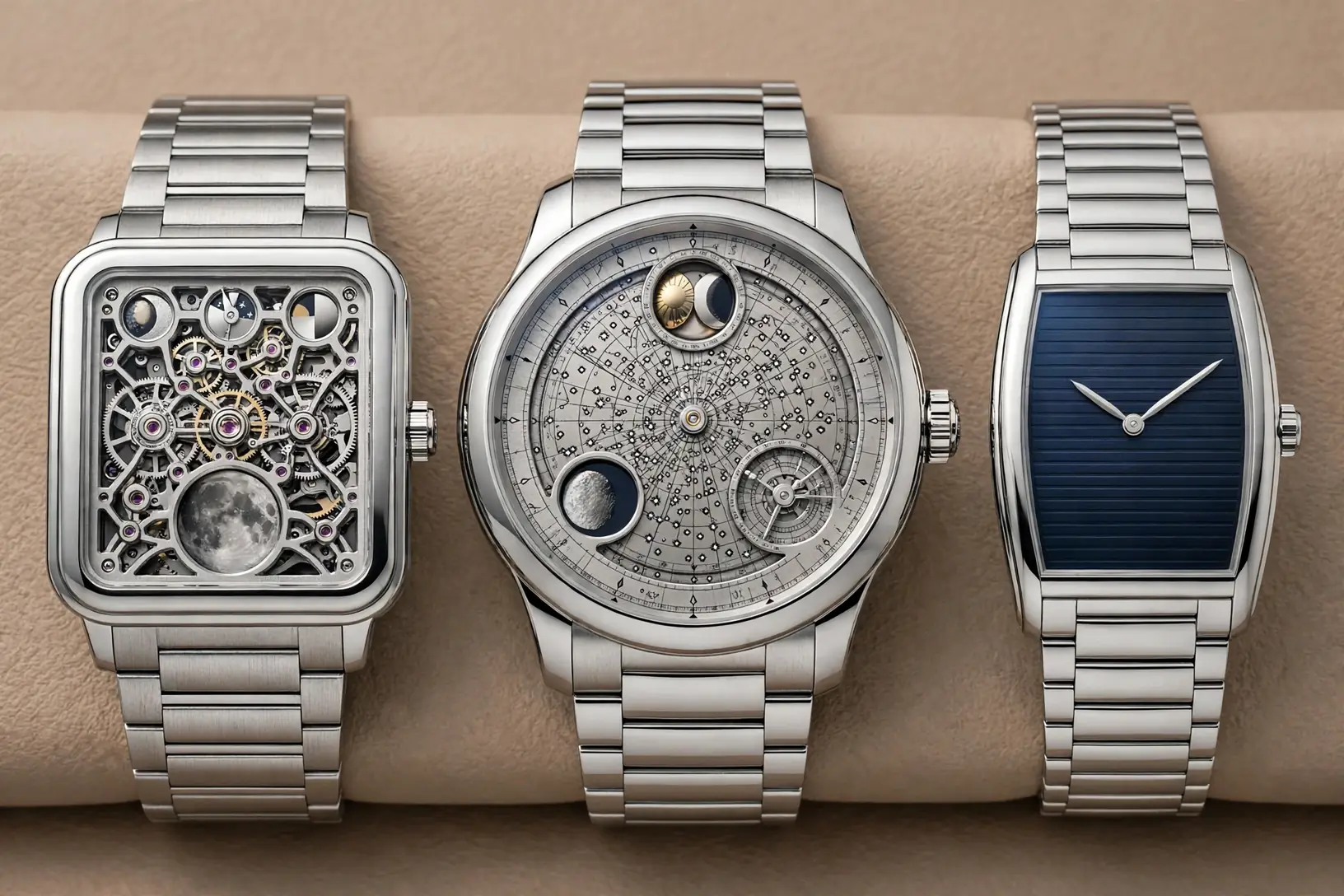
The Celestial Sunrise and Sunset, Ref. 6105G-001 — $437,610
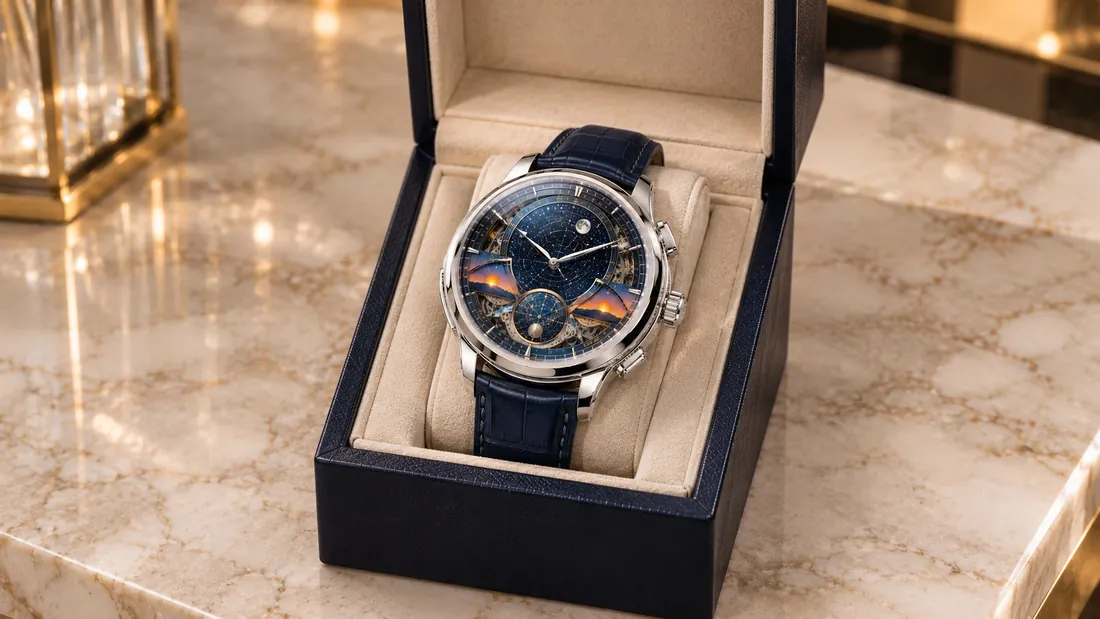
The most expensive new Patek Philippe of the year, and one of the most technically ambitious watches of 2026 from any house, is the Celestial Sunrise and Sunset, reference 6105G-001. It is the first Patek Philippe wristwatch to display the times of sunrise and sunset, with a multi-layered sky chart dial calibrated for Geneva.
The watch is housed in a 47 mm white gold case, supported by no fewer than six patent applications, reflected in its ten displays. The retail price is $437,610. What makes it cost what it does is the astronomy: the sky chart and the sunrise and sunset indications must be calculated, engraved, and assembled with a precision that leaves no room for approximation.
The dial is not a picture of the sky; it is a working instrument, calibrated to a specific latitude, made in tiny numbers by watchmakers who have spent years learning a single complication.
The Cubitus Perpetual Calendar Skeleton, Ref. 5840P-001 — $187,547
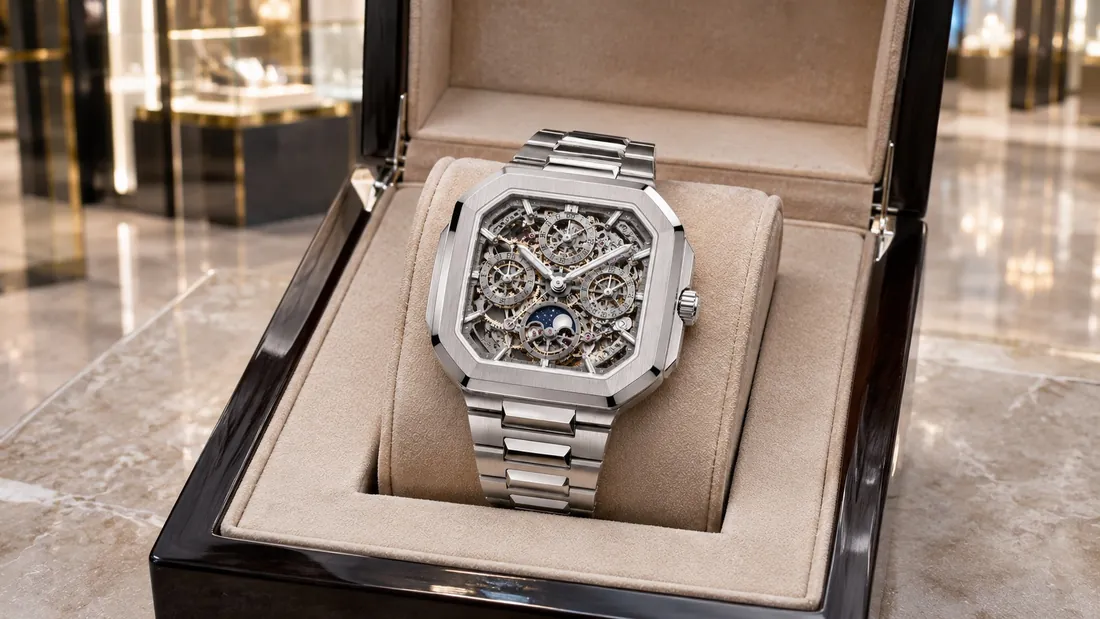
The Cubitus arrived in October 2024 as Patek Philippe’s first all-new collection in twenty-five years, with a square case, rounded corners, and an integrated bracelet. It divided opinion at first, and then became one of the hardest steel Patek Philippe watches to acquire at retail.
In 2026, at Watches and Wonders, the manufacture took the collection into more complicated territory with its first grand complication: the Cubitus Perpetual Calendar Skeleton, reference 5840P-001, priced at $187,547, or CHF 150,000.
It is housed in a 45 mm platinum case, 10 mm thick, and powered by the new calibre 28-28 Q SQU, a skeletonised perpetual calendar movement developed specifically for the square case, with 313 components, a micro-rotor, and a 48-hour power reserve.
Day, date, month, leap year, and a large moon phase are all on board. A skeletonised perpetual calendar in a shaped movement is a serious answer to the question the collection has carried since 2024: was the square case a styling exercise, or the beginning of a serious family of watches?
The Nautilus at Fifty: Refs. 5610/1P-001, 5810/1G-001, and 5810G-001
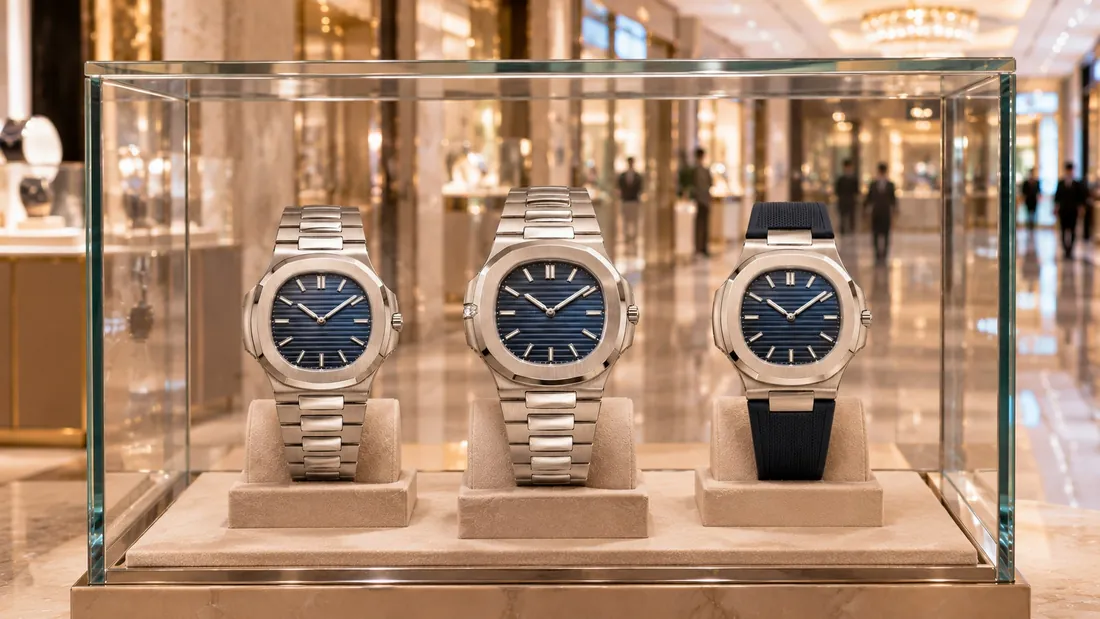
The Nautilus turned fifty in 2026, and Patek Philippe marked the anniversary with three ultra-thin limited editions that return to the model’s original minimalist spirit. There is no date and no central seconds hand, while slimmer proportions echo the icon’s 1976 debut.
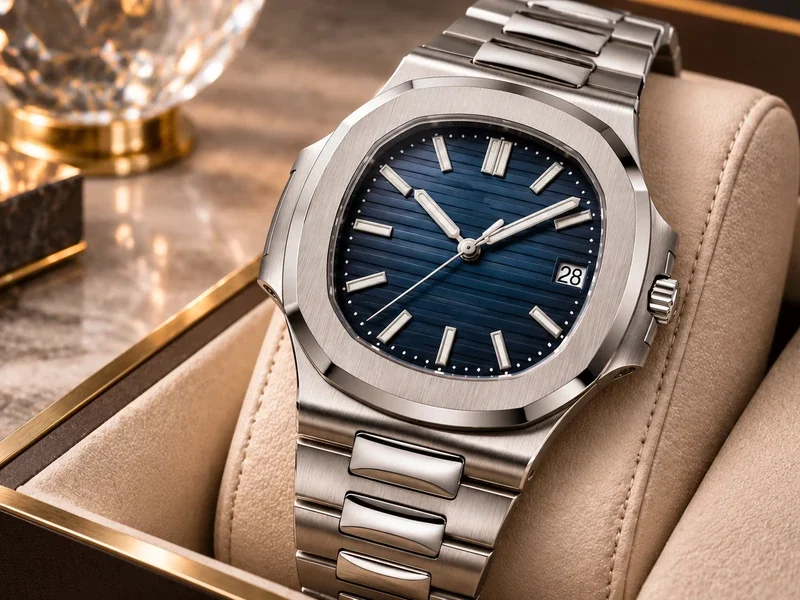
The standout model is the Nautilus Ref. 5610/1P-001 in platinum, priced at $161,000. Limited to 2,000 pieces, it measures 38 mm wide and 6.9 mm thick, reviving the mid-size format, with a full platinum bracelet, a sunburst blue horizontally embossed dial, and the brand’s signature diamond set into the case flank at nine o’clock.
There are also two 41 mm white gold versions: the bracelet-mounted Ref. 5810/1G-001, priced at $134,200 and limited to 2,000 pieces, and the Ref. 5810G-001, priced at $107,300, limited to 1,000 pieces and fitted with a navy composite strap.
The discipline of these watches is the point. In an anniversary year, many houses would have added complications and gemstones. Patek Philippe did the opposite, removing the date, thinning the case, and trusting the original design to carry the occasion.
That restraint is itself a luxury, and it is why the anniversary Nautilus watches, although far from the most expensive Patek Philippe watches of the year, are among the most sought after. To understand why a steel sports watch from 1976 still shapes everything Patek Philippe does, it helps to revisit how one watch changed everything.
The Perpetual Calendar Chronographs — $248,813 Each
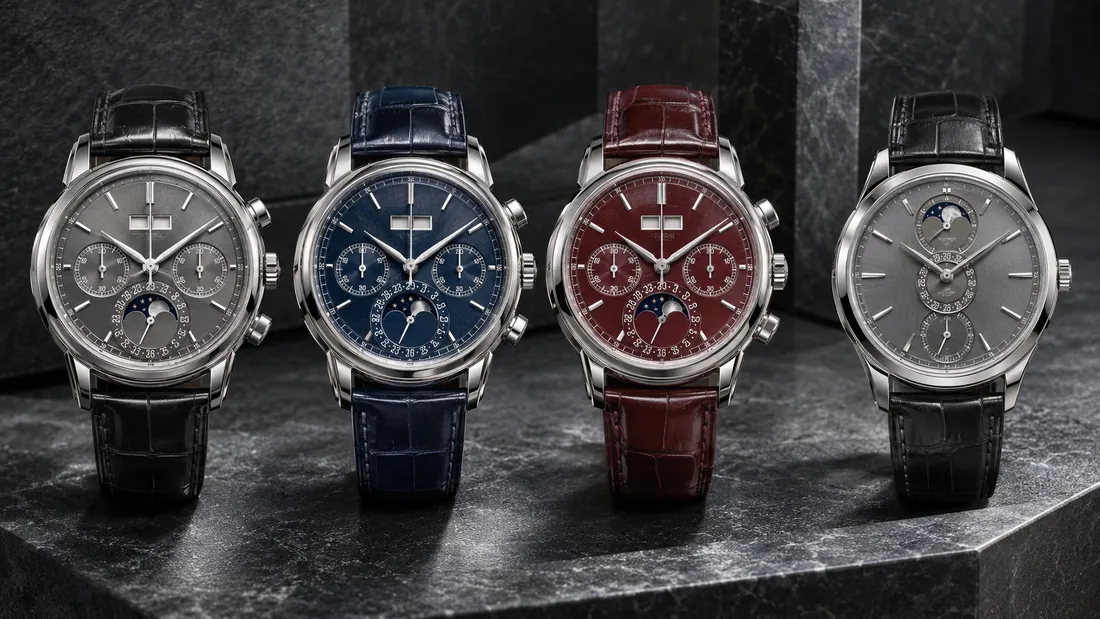
Alongside the novelties, Patek Philippe continued its most classical grand complication, the perpetual calendar chronograph, in three new versions with grey, blue, and red dials, references 5270P-015, 5270P-016, and 5270P-017. All three share a 40 mm platinum case with a concave bezel and two-tier lugs, powered by the manually wound Calibre CH 29-535 PS Q, at $248,813 each.
The in-line perpetual calendar, reference 5236P-011, with a grey dial in a 41.3 mm platinum case, powered by the self-winding calibre 31-260 PS QL with 503 components and a power reserve of 38 to 48 hours, is priced at €144,615. These are the backbone of Patek Philippe’s high end: watches that combine two of the most difficult complications in watchmaking, in platinum, in a case that can be worn every day.
Rolex: A Centenary, a New Metal, and Quiet Confidence
Rolex in 2026 was a study in quiet confidence. The brand celebrated one hundred years of the Oyster case, the world’s first waterproof wristwatch case, and it discontinued the white gold GMT-Master II Pepsi, reference 126719BLRO.
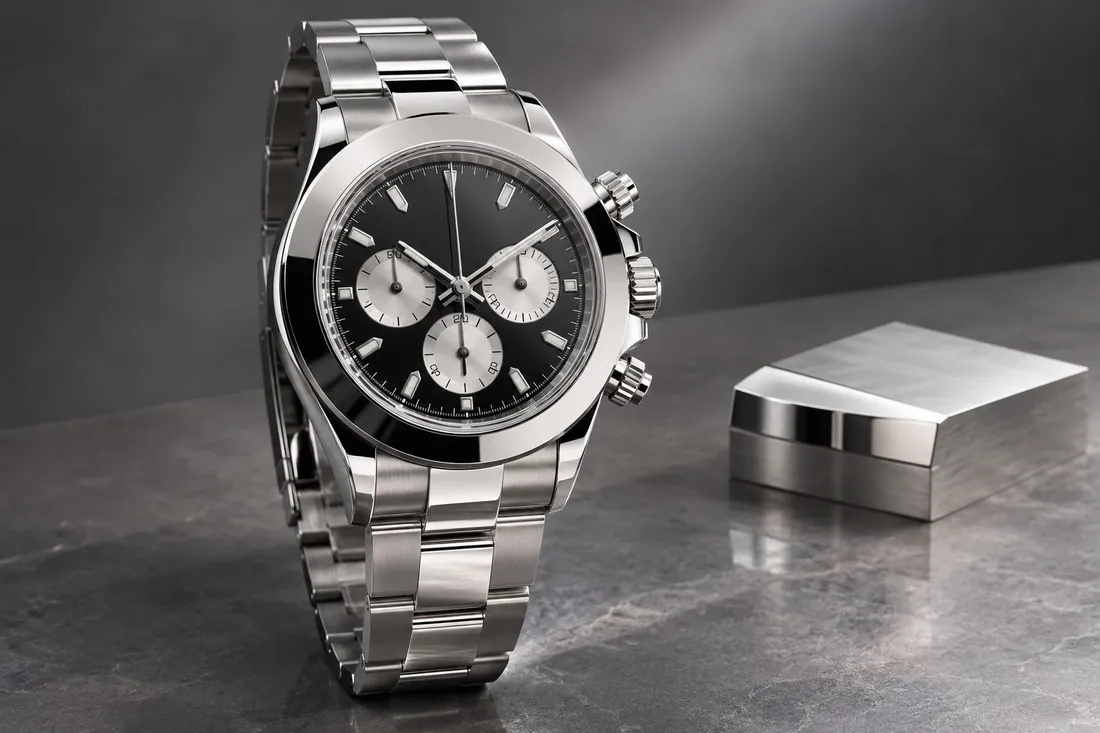
Rolex released seven new watches at Watches and Wonders, and the most expensive among them were not the loudest. The new Daytona’s glossy enamel dial has a richer, deeper finish than standard lacquer dials, and Rolex has introduced the first Rolesium Cosmograph Daytona, pairing Oystersteel and platinum in reference 126502, priced at CHF 51,500.
Rolesium is Rolex’s own combination of steel and platinum, used here for a Daytona for the first time, and the enamel dial requires firing layers of enamel at high temperature, a process that rejects many dials before one is accepted.
Rolex’s Oyster Centenary: Anniversary Design and Retail Price Comparison
Rolex also released an Oyster Perpetual 41 to mark one hundred years of the Oyster case, in yellow gold and steel, with the winding crown engraved with the number 100, the dial replacing the words Swiss Made with the words 100 years, and green accents ringing the minute track.
It is a subtle anniversary watch, and deliberately so. The Oyster case, invented in 1926, is the foundation of the modern Rolex, and a hundred years later it is still the case in which almost every Rolex is built.
At retail, Rolex remains the most accessible house on this list: a Submariner 124060 was listed at $10,050 on Rolex’s United States website in October 2026. The Daytona in Rolesium, at CHF 51,500, is five times that price, yet still less than a third of the least expensive new Patek Philippe grand complication.
The question collectors ask most often is not which is better, but which holds its value, and the honest answer is worth reading in full: Rolex vs Patek Philippe: which holds value best.
Audemars Piguet: Openworked Perpetuals and a Rectangular Surprise

Audemars Piguet began 2026 with a large group of first-semester novelties, and the headline was the Royal Oak Selfwinding Perpetual Calendar Openworked, a 41 mm watch, just 9.5 mm thick, in lightweight titanium with accents in Bulk Metallic Glass.
The sapphire dial reveals the Calibre 7139, showing day, date, month, leap year, moon phase, and week, with a 55-hour power reserve and 50 metres of water resistance. The price is CHF 180,300.
It is a high-complication watch designed for everyday wear, and that combination is the point of the Royal Oak in 2026. The same calibre also appears in the Code 11.59 line, and two 38 mm Code 11.59 watches followed later in the year, in yellow gold with a gold obsidian dial at CHF 45,500, and in pink gold with a black onyx dial at CHF 54,100.
Vacheron Constantin: Thinness, Titanium, and a Salmon Dial
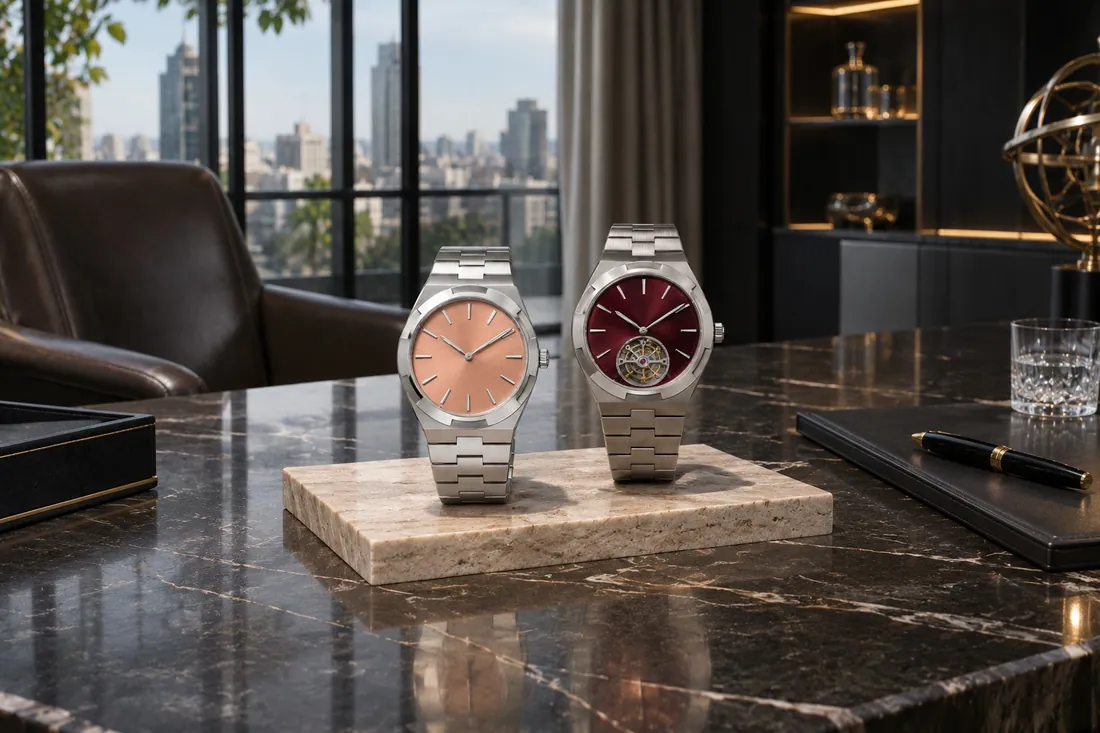
Vacheron Constantin delivered one of the strongest line-ups at Watches and Wonders 2026, and its most expensive new watches are also among its thinnest. The Overseas Self-winding Ultra-Thin is powered by the new Calibre 2550, an automatic movement just 2.4 mm thick.
The watch measures 39.5 mm across and 7.35 mm thick, making it the thinnest model in the Overseas collection to date. Thanks to a platinum micro-rotor and suspended double barrel, it still delivers an 80-hour power reserve. The 950 platinum case is paired with a salmon-toned dial, while the watch retains the Overseas quick-change system and 50 metres of water resistance. It is limited to 255 boutique-only pieces, and the price is $159,000.
The Overseas Titanium Tourbillon, also new in 2026, brings the burgundy red dial of the previous year’s Overseas Perpetual Calendar to the Overseas Tourbillon. Both the 42.5 mm case and the integrated bracelet are crafted from titanium, and the price is €170,000. Titanium is a difficult metal to work with, and a titanium bracelet is a particular challenge, because the metal is hard, springy, and unforgiving of error.
Richard Mille: A Football Match, Mechanically

Richard Mille’s most expensive new watch of 2026 is also its most specialised. The RM 41-01 Tourbillon Soccer, released in February 2026 ahead of a World Cup year, is a hand-wound tourbillon flyback chronograph engineered over five years to track a football match from kick-off to the final whistle, including half-time, extra time, and the recording of goals. Each colour version is limited to 30 pieces, and the price is $1,940,000.
The watch is offered in two case constructions: Red Carmin Basalt TPT and Dark Blue Quartz TPT, both with Carbon TPT middle cases.
The case measures 43.23 by 49.65 mm, and the movement is the manual-winding Calibre RM41-01, skeletonised, with dual column wheels, a titanium baseplate, 650 components, and 51 jewels, with a 70-hour power reserve and 50 metres of water resistance. The chronograph is not a standard stopwatch.
It is a patented system, developed in collaboration with Audemars Piguet Le Locle, that divides a match into its two halves, counts extra time, and records goals mechanically. No other brand is attempting a complication like this at this level.
Richard Mille RM 41-01: The Engineering Behind Its $1.94 Million Price Tag
The price reflects not only the material and the technical complexity but also the research and development required to pioneer an entirely new mechanical complication. Five years of development, a new calibre, a new case material, and a production run of thirty pieces per version mean that each watch carries a large share of the development cost.
That is the economics of Richard Mille, and it is why the brand’s watches rarely appear below $100,000 even pre-owned. The RM 41-01 is not a watch for a football fan who wants a souvenir. It is a collector’s object that happens to track football better than anything else with hands and springs.
Richard Mille also continued its work in high jewellery in 2026, with the RM HJ-02, a creation with twelve gem-set tourbillons in 34 mm and 36 mm white gold cases. Among the most luxurious things in the world, a Richard Mille of this kind holds its place not because it is the most expensive object on the list, but because it is the most uncompromising.
Jacob & Co.: Forty Years, a New Cut, and $3.4 Million of Diamonds
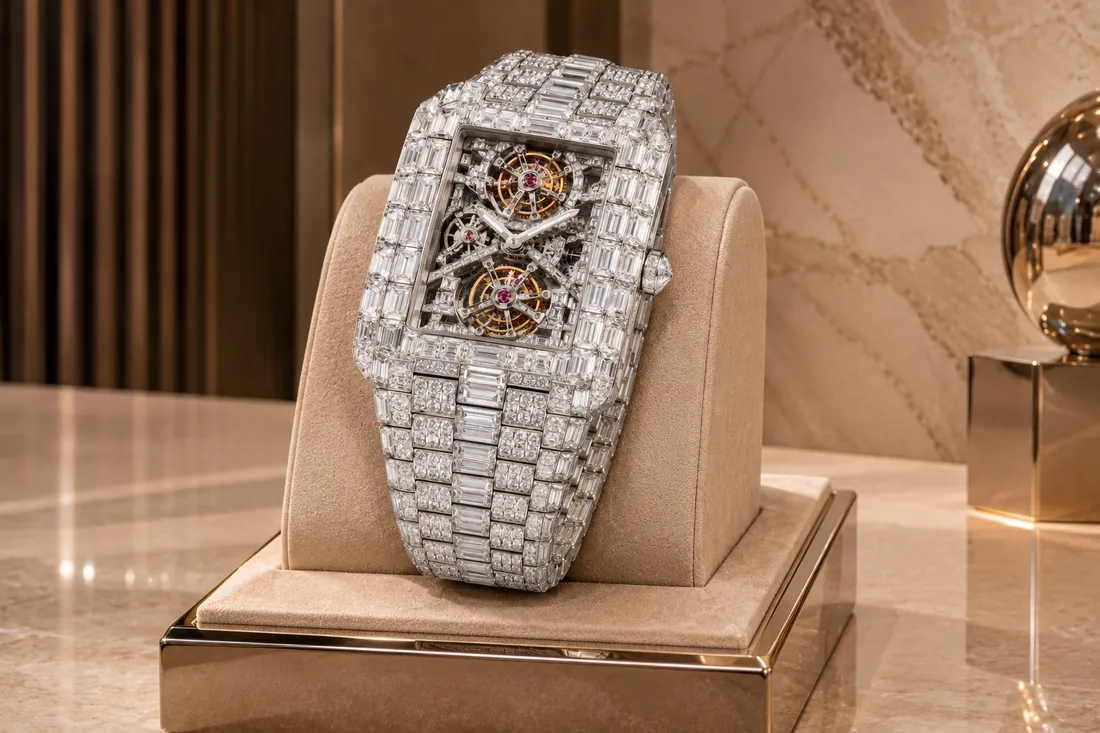
Jacob & Co. turned forty in 2026, and it marked the anniversary in the only way the house knows how: with diamonds, scale, and theatre. For its fortieth anniversary, the house unveiled the patented 37-facet Angel Cut, a new diamond cut, and crowned it with a $3.4 million Billionaire Double Tourbillon, an 18-piece spectacle set with 298 diamonds and 79 carats of brilliance.
The watch is the most expensive new release of the year by a considerable margin, and it is also the most straightforward to understand. Its value is in the stones, the setting, and the double tourbillon movement beneath them.
Jacob & Co., founded in New York by jeweller Jacob Arabo, transforms watches into miniature kinetic sculptures, with planetary displays, music boxes, roulette mechanisms, and dragon motifs.
The 2026 Billionaire Double Tourbillon is not a one-off, but with eighteen pieces it is scarcely less exclusive, and it shows how the house has refined its approach: the diamonds are not simply added to a watch, they are the architecture of the watch.
The Opera Godfather, in rose gold, is priced at around $460,000, and the Casino Tourbillon Full Baguette at $1,400,000, combining a difficult movement with a spectacle, so that the watch is both a timekeeper and a performance.
The Independents: Ulysse Nardin, A. Lange & Söhne, and Zenith

The most expensive watches of 2026 are not only from the great houses. Ulysse Nardin’s Super Freak, new in 2026, is priced at $516,300. It is a development of the Freak, the watch that since 2001 has done away with a conventional dial, hands, and crown, and instead tells the time with a rotating movement that is itself the display.
The Super Freak takes that idea to its extreme, with a flying carousel tourbillon and a level of hand finishing that places it among the most expensive new watches of the year from any brand.
A. Lange & Söhne presented the Lange 1 Tourbillon Perpetual Calendar Lumen, a watch that glows in the dark, with a luminous coating that reveals the tourbillon and the perpetual calendar in low light; the price is upon request, which in watchmaking usually means that the number is large and the production is small. Zenith presented the G.F.J. in tantalum and yellow gold, priced at $75,800 for the yellow gold version and $115,900 for the tantalum version.
Tantalum is a rare, dense, dark grey metal, difficult to machine and rarely used in watchmaking.
What Actually Makes a New Watch Cost $200,000, or $2 Million?
After a list like this, it is natural to ask what the money buys. The answer is not one thing, but four, and they combine in different proportions in every watch above. The first is the complication.
A perpetual calendar, a minute repeater, a tourbillon, and a split-seconds chronograph are each difficult to make, and a watch that combines two or three of them is exponentially more difficult. The Patek Philippe perpetual calendar chronograph, at $248,813, combines two grand complications in a 40 mm platinum case.
The Richard Mille RM 41-01, at $1,940,000, combines a tourbillon, a flyback chronograph, and two entirely new football complications, developed over five years.
How to Read the Prices, and How to Buy
For a buyer, the most important advice is the simplest: buy the watch you want to wear, not the watch you think will appreciate. The Nautilus anniversary watches, limited to 1,000 or 2,000 pieces, will almost certainly trade above retail, as the Cubitus did after 2024, when premiums ran 65 to 90 percent above list.
But a watch bought only for its premium will be sold at the first sign of a falling market. A watch bought because its complication, material, or design speaks to you will be kept, worn, and enjoyed, whatever the market does.
Retail prices in 2026 also moved with tariffs on Swiss imports and the rising cost of gold and platinum, so a price announced in Geneva in April may not be the price paid in New York in November. Buy from an authorised dealer or boutique, and keep the papers: a new watch without its papers, box, and guarantee has lost a large part of its value.
A good watch does not hurry you, and the best of 2026 seem to understand that better than most. Whether you buy one, admire one from a distance, or simply enjoy knowing such craft still exists, the pleasure is in looking closely. The year’s finest watches reward exactly that kind of attention, long after the price has faded from memory.