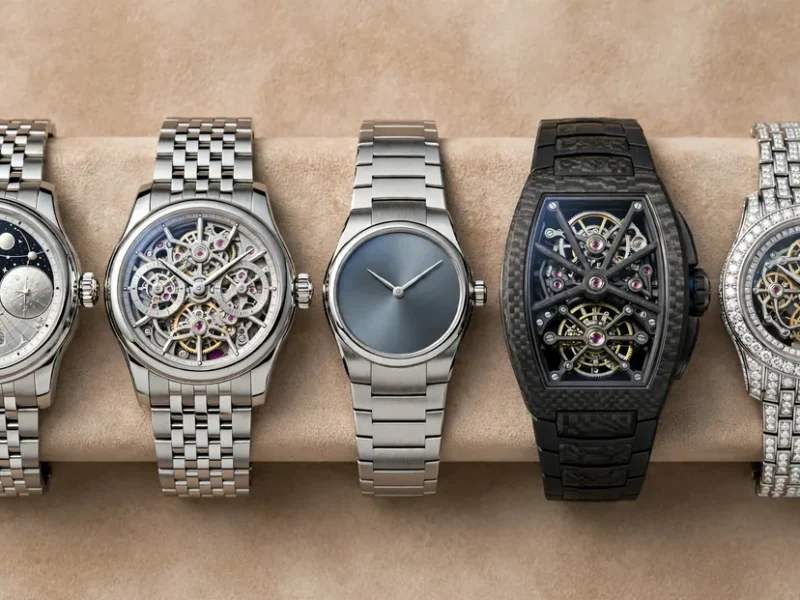
Learning how to buy your first Patek Philippe is less like shopping for a watch and more like being introduced to a family. The house has been making watches in Geneva since 1839, it produces only around 60,000 to 70,000 pieces a year, and the most wanted models cannot simply be ordered, no matter how much money is on the table. A first Patek is a decision about taste, patience, and what kind of collector you intend to become.
This guide follows the journey in order: the families and references worth knowing, dealer versus secondary market, how waiting lists really work, what to budget, how to be sure a watch is real, and the mistakes that catch first-time buyers out.
Why a First Patek Is Different from Any Other First Watch
Most luxury purchases reward decisiveness: you walk in, choose, pay, and leave wearing it. Patek Philippe rewards the opposite temperament. The company is still owned by the Stern family, who took control in 1932, and is run today by Thierry Stern, the fourth generation to lead it. Production is deliberately limited, the catalogue changes slowly, and the house would rather sell fewer watches well than chase volume a system built around long relationships rather than single transactions.
The second difference is the weight of history attached to every reference. Patek Philippe made the first perpetual calendar wristwatch and the first split-seconds chronograph wristwatch, and built the Calatrava in 1932 to show that a wristwatch could be a restrained, perfectly proportioned object rather than a piece of jewellery. When you buy a Calatrava today, you are buying into a design language that has barely changed in ninety years.
The third difference is financial. A Patek is one of the very few watches that can plausibly be described as an asset as well as an object, but that reputation is unevenly spread: some references trade far above retail, while others lose a third of their value the moment they leave the boutique.
Understanding which is which is the most valuable homework a first buyer can do, and the comparison of Rolex vs Patek Philippe: which holds value best shows how differently the two houses behave once a watch is on the wrist rather than in the window.
Know the Families: Calatrava, Nautilus, Aquanaut and Complications
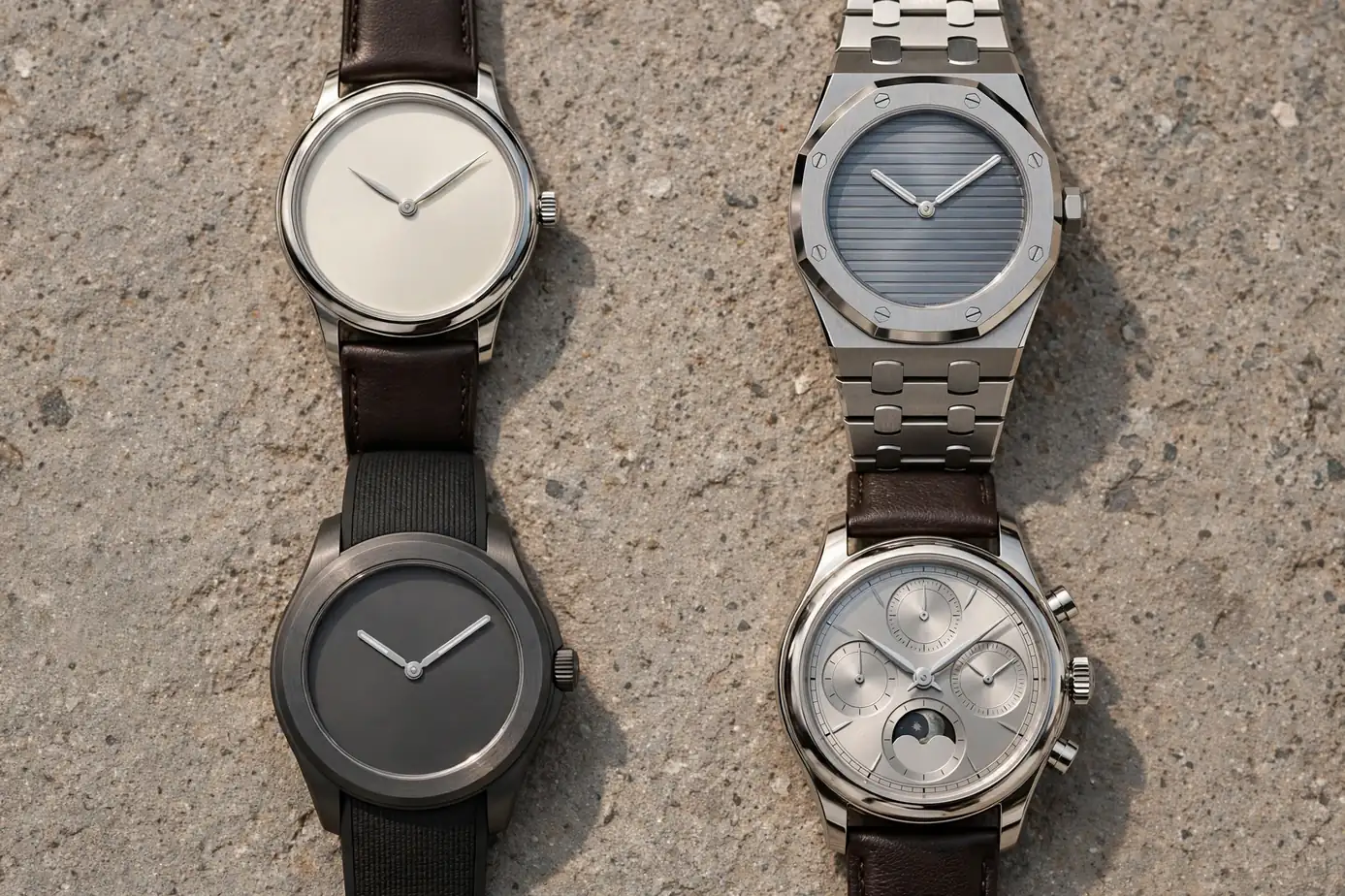
Patek’s catalogue looks small next to most luxury brands, and that is deliberate. Four ideas carry almost the whole range: the dress watch, the steel sports watch, the travel watch, and the complication. Knowing which suits your life narrows a bewildering choice down to two or three references.
Calatrava: The Classic Entry Point
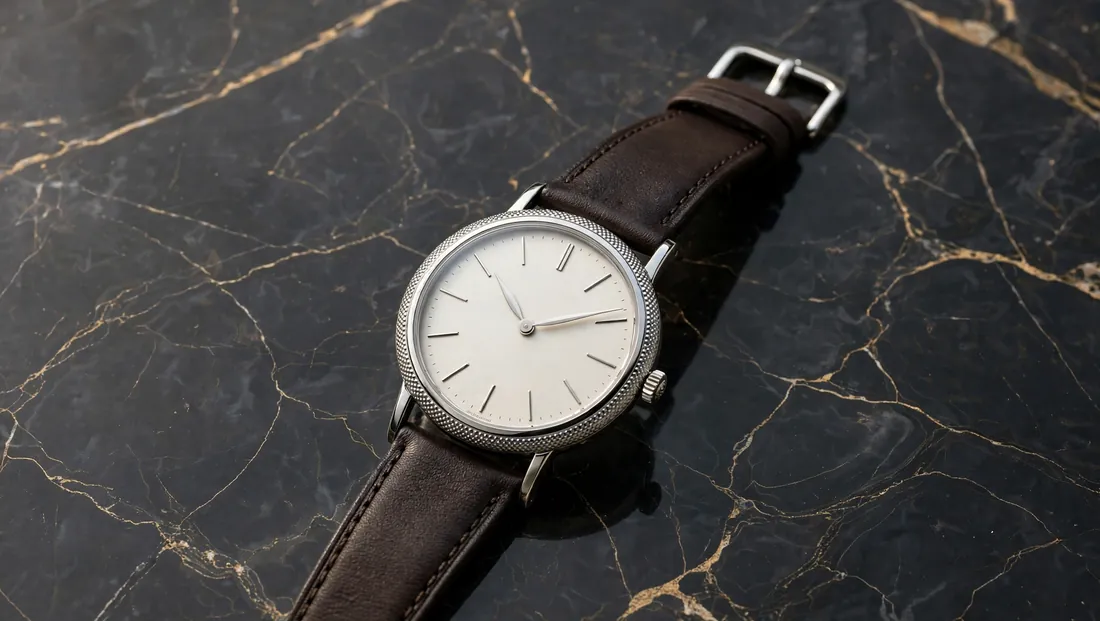
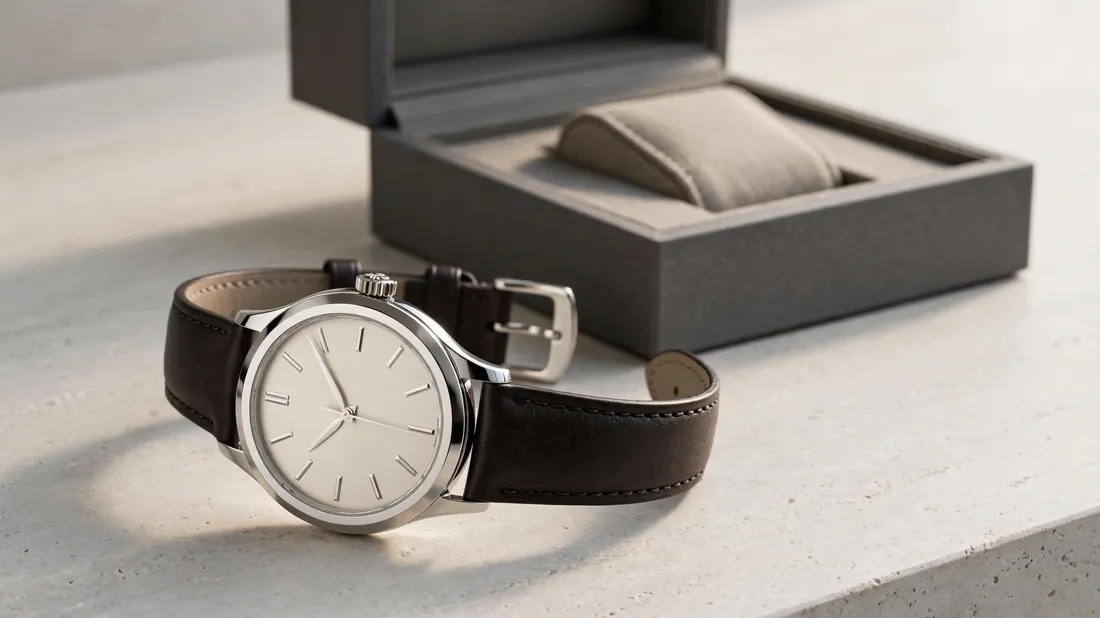
The Calatrava is where most first-time Patek buyers begin, and for good reason. The original Reference 96, launched in 1932, defined the modern round dress watch: a clean dial, a slim case, no ornament for its own sake.
Today’s Reference 6119, introduced in 2020, is its direct heir a 39 mm case with a hand-wound calibre 30-255 PS, a hobnail bezel, and a dial of remarkable restraint. It is the watch to choose if you want the purest expression of the house, and if your wardrobe runs to tailored clothing.
The Reference 5226G, launched in 2022, adds a textured, almost charcoal dial and a more contemporary stance, while the discontinued 37 mm Reference 5196 remains a favourite on the pre-owned market. The Calatrava is also the most accessible way into the brand: new examples generally start in the region of twenty thousand pounds or dollars.
Nautilus and Aquanaut: The Steel Icons
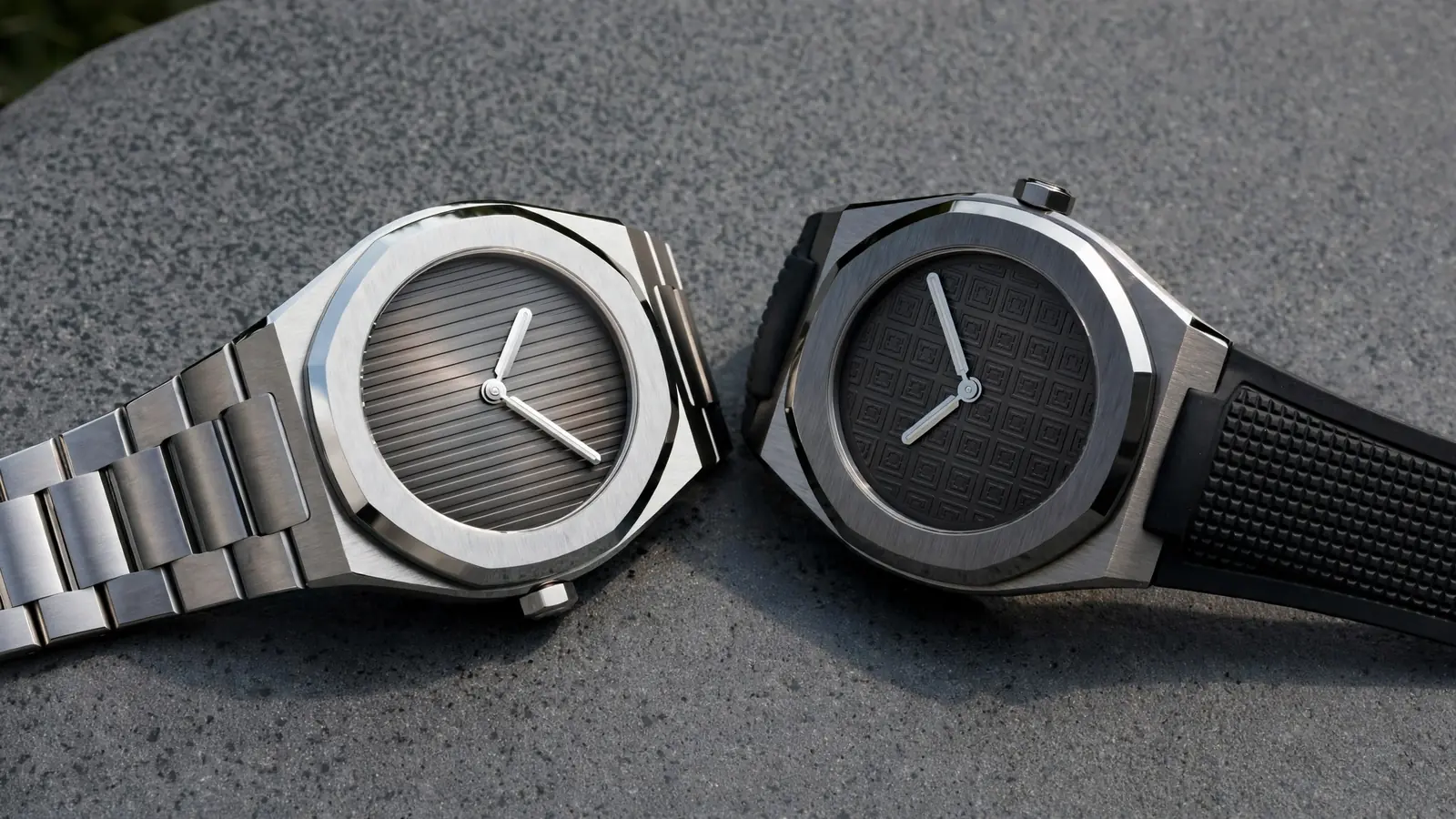
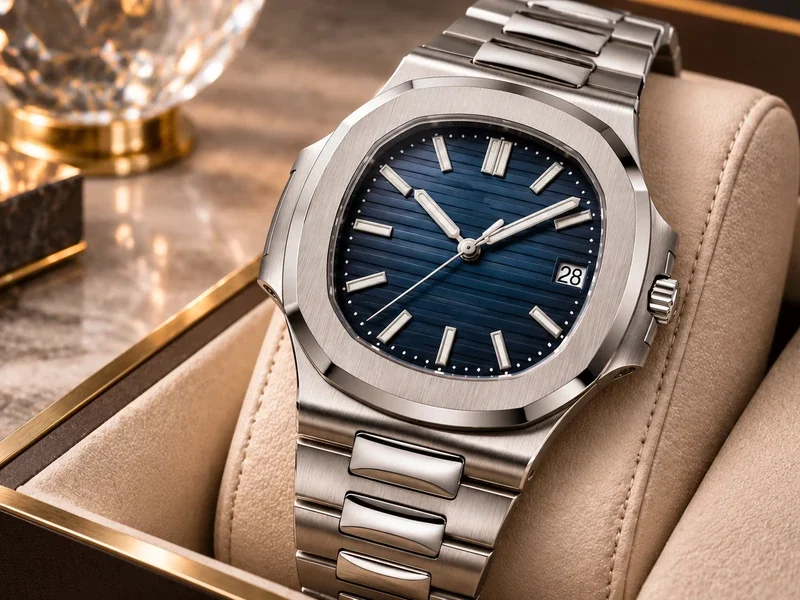
The Nautilus is the watch that changed Patek’s modern fortunes, and how one watch changed everything is worth knowing before you try to buy one. Designed by Gérald Genta and launched in 1976, it took the luxury sports watch in steel porthole case, integrated bracelet, horizontally embossed dial and made it the most desired object in watchmaking.
The 40 mm steel Reference 5711 was discontinued in 2021; its successor, the white-gold Reference 5811/1G, is larger at 41 mm and considerably more expensive.
The Reference 5712/1A, with its moon phase, power reserve, pointer date and small seconds on an asymmetric dial, is the Nautilus many collectors actually want to live with, because it shows Patek’s complication-making skill in a sports watch. It is also one of the hardest references to obtain at retail, and one of the most expensive on the secondary market relative to its boutique price.
The Aquanaut is the Nautilus’s younger, more relaxed sibling. Launched in 1997, it trades the steel bracelet for a textured rubber strap and wears more casually than any other Patek.
The 40 mm steel Reference 5167A is the natural first Aquanaut, the 5167/1A adds a steel bracelet, and the 5968A adds a flyback chronograph in a bolder 42.2 mm case. For a first buyer who wants one watch to wear daily, the Aquanaut is often the most sensible choice in the catalogue.
Complications: Where Patek Earns Its Reputation
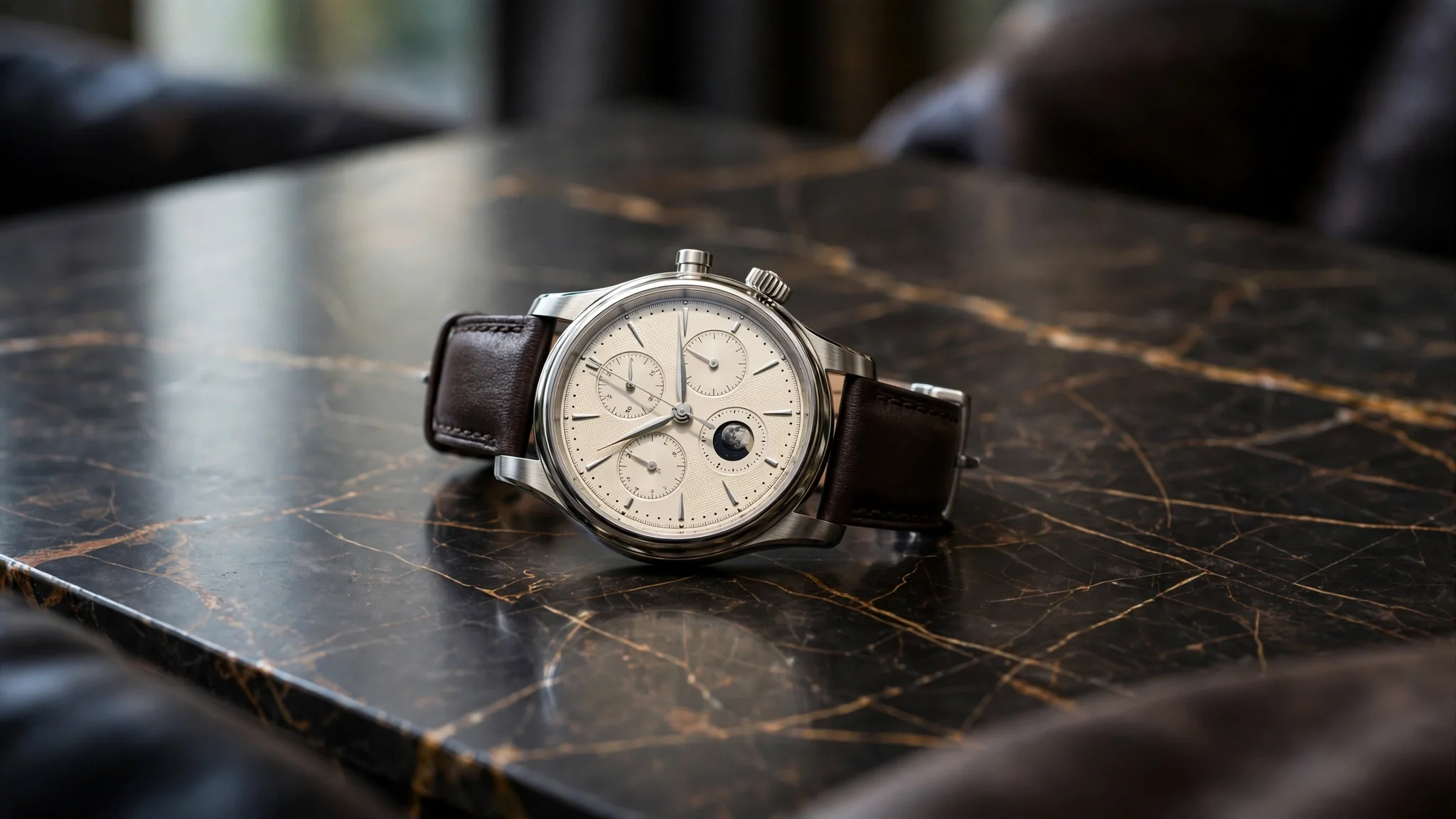
Above the time-only watches sits the range that made Patek’s name among collectors. An annual calendar, adjusted only once a year, appears in references such as the 5396 and 5205; a perpetual calendar, which knows the leap years and needs no adjustment until 2100, in references such as the 5327 and the in-line perpetual calendar Reference 5236P.
The Reference 5270 pairs a perpetual calendar with a chronograph. For a first buyer, a complication is a wonderful second Patek but a demanding first one: more expensive, more delicate, costlier to service. Admire them, and let the first purchase be a watch you will wear without anxiety.
The Reference Numbers Worth Knowing
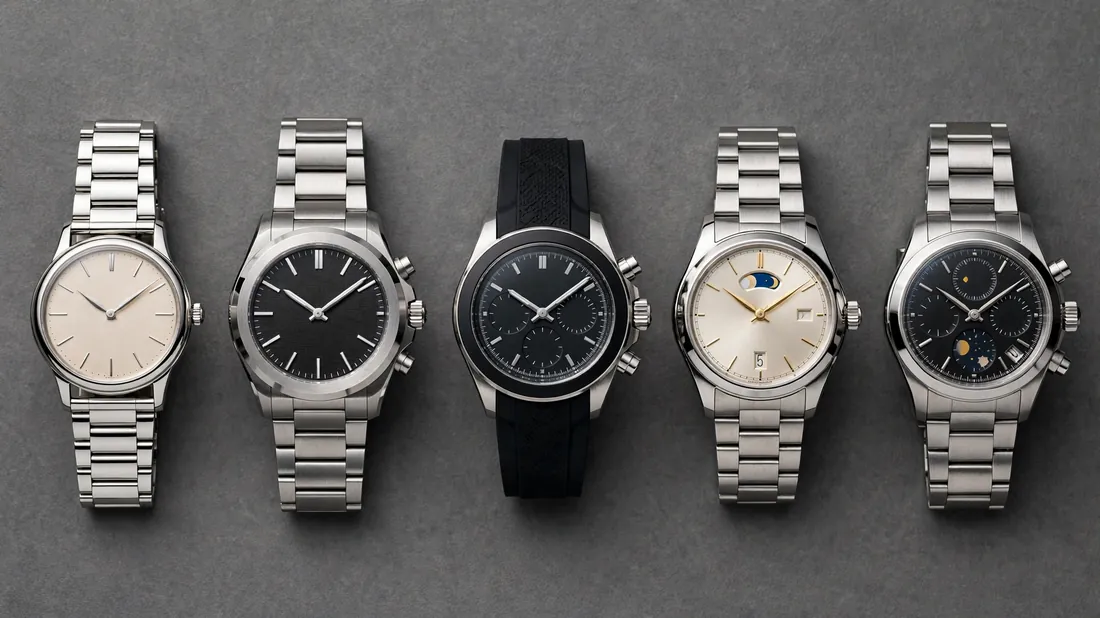
Patek collectors talk in numbers, and a first buyer should learn the dozen that matter most. Calatrava: the 6119 and the 5226G. Nautilus: the 5811/1G flagship, the complicated steel 5712/1A, and the annual calendar 5726/1A. Aquanaut: the time-only 5167A, the bracelet 5167/1A, the Travel Time 5164A, and the chronograph 5968A.
Complications: the annual calendars 5396G and 5205, the perpetual calendar 5327G, the in-line perpetual calendar 5236P, and the perpetual calendar chronograph 5270. Knowing these twelve is enough to walk into any dealer conversation with confidence.
Authorised Dealer or Secondary Market?
Every first Patek purchase runs through one of two channels, and the choice between them shapes everything else: price, waiting time, certainty, and the relationship you build with the brand.
Buying from an authorised dealer is the ideal: you pay retail, receive the full set box, papers, certificate of origin and your purchase is registered with Patek Philippe. The boutique will size the bracelet, explain the movement, and remain your point of contact for servicing.
The drawback is availability: the most wanted references are not in stock, and a dealer cannot simply order one for you. You will be asked to express interest, and then to wait.
Buying on the secondary market is the practical alternative, and for many first buyers it is the right one. Reputable dealers and auction houses hold the references the boutiques cannot supply, and you can have the watch on your wrist within days rather than years.
The price, however, will usually be above retail for the desirable steel models sometimes far above and the burden of verifying authenticity falls on you. The principles of buying vintage watches through dealers and auctions apply here in full: buy the seller before you buy the watch, insist on complete documentation, and never let urgency override diligence.
There is also a third path: a pre-owned Calatrava or a discontinued reference from a well-established dealer, often available at or below original retail. It lets you experience the brand without joining a waiting list and teaches you what you actually like on the wrist before you commit to a flagship model.
Waiting Lists and How Allocation Really Works
The phrase “waiting list” is misleading, because in most cases there is no list. What exists instead is allocation: each authorised dealer receives a small number of the most wanted references each year, and the dealer’s management decides who receives them.
The decision is guided by the relationship between the client and the dealer purchase history across the dealer’s brands, genuine engagement with the house, and the sense that the watch will be worn rather than immediately resold.
A few honest truths follow. First, no one can promise you a Nautilus or an Aquanaut by a particular date, and anyone who does is selling you something else.
Second, buying other watches from the same dealer group can help, but only if they are watches you genuinely want; buying pieces you do not care about purely to build history is expensive and uncertain. Third, dealers remember the clients who are pleasant, realistic, and clear about one reference rather than a list of ten.
Most importantly: you do not need a Nautilus to begin. A Calatrava, an Aquanaut in a less contested reference, or a complication bought at retail are all obtainable without a multi-year wait. The buyers who become frustrated fixate on a single reference and treat everything else as a consolation prize; the buyers who enjoy the brand choose the best watch available to them now, wear it, and let the relationship develop.
What to Budget: Entry Prices in 2026 and 2027
Budget honestly, and budget beyond the price on the tag. As a rough guide at the time of writing, a new steel Calatrava such as the Reference 6119 sits in the region of twenty to twenty-five thousand pounds or dollars at retail, depending on the market and the metal.
A steel Aquanaut 5167A is in a similar region at retail roughly the low twenties though on the secondary market the same watch commonly changes hands for considerably more. A white-gold Nautilus 5811/1G is a step change, at roughly seventy thousand retail, and the steel 5712/1A sits near forty thousand at retail, with secondary prices far higher.
Complications start higher still. An annual calendar such as the 5396 or 5205 generally begins in the region of forty to fifty thousand; a perpetual calendar such as the 5327 is roughly double that; and a perpetual calendar chronograph such as the 5270 is well into six figures.
These are approximate retail figures, and they move with exchange rates and periodic price adjustments, so treat them as a map rather than a menu and always confirm the current price with the dealer before you commit.
Beyond the purchase price, allow for the cost of ownership: servicing in Geneva is not inexpensive, insurance is worth having from the day you buy it, and a daily watch deserves a proper place to rest at night. None of these is large next to the price of the watch, but a buyer who budgets only for the tag price will feel each one as a surprise.
Authentication: How to Be Sure It Is Real
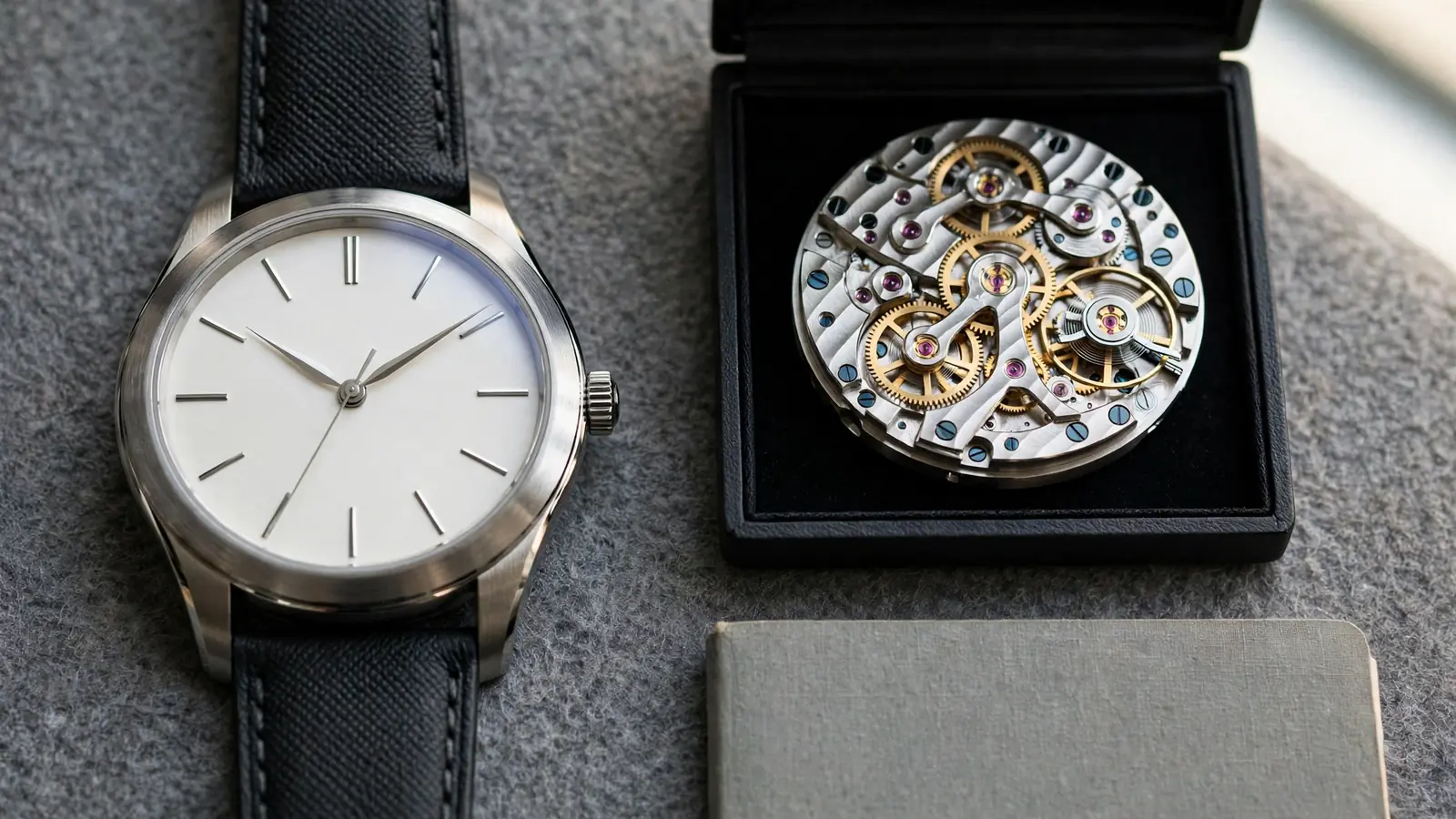
The desirability of Patek Philippe has made it one of the most faked and misrepresented names in watchmaking, and authentication is not a step to skip. Bought from an authorised dealer, the question does not arise. Bought anywhere else, it is the whole question.
Start with the papers. A modern Patek should come with its certificate of origin, its instruction booklets, and its presentation box, and the details on the certificate should match the watch: reference number, serial number, calibre, and the name of the authorised dealer who originally sold it.
Patek Philippe also offers an Extract from the Archives, a document issued by the manufacture confirming the watch’s production date and original characteristics the closest thing to a birth certificate a watch can have.
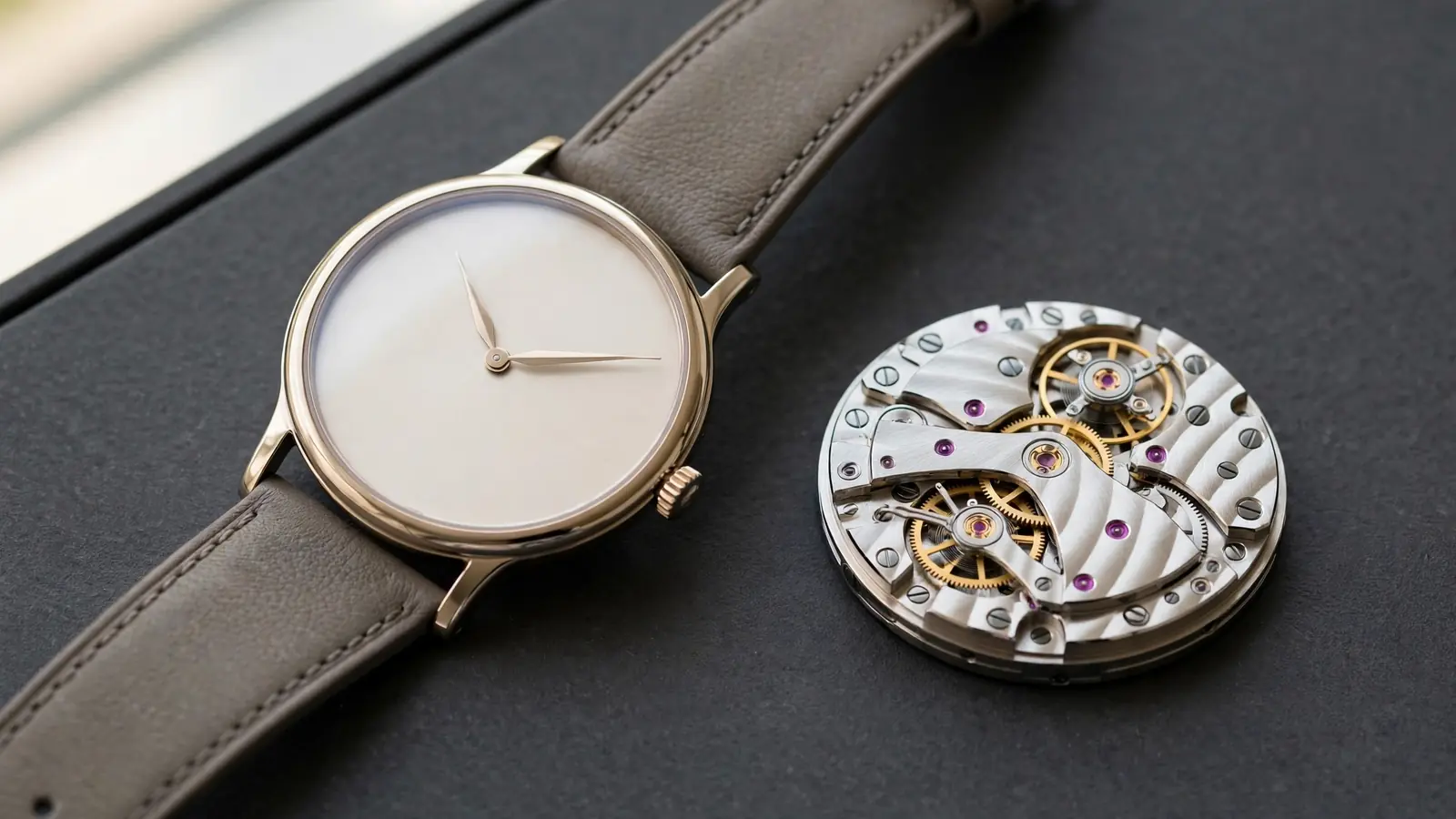
Then look at the watch itself. The finishing on a Patek movement Geneva stripes, polished bevels, engraving is of a quality counterfeits rarely approach, and a watchmaker who knows the brand can confirm authenticity in minutes.
Hallmarks, dial printing, the feel of the crown and pushers, and the bracelet or strap all repay close attention. If anything feels wrong, walk away; there will always be another watch.
Finally, choose the seller with the same care you choose the watch. Established dealers with long histories, transparent return policies, and in-house watchmakers are worth their premium.
Private sellers and unfamiliar listings can offer tempting prices, and some are genuine but a first buyer has no cheap way to tell the difference, and the saving is rarely worth the risk. Pay for certainty on your first Patek.
Servicing, the Extract from the Archives, and Keeping It for Decades
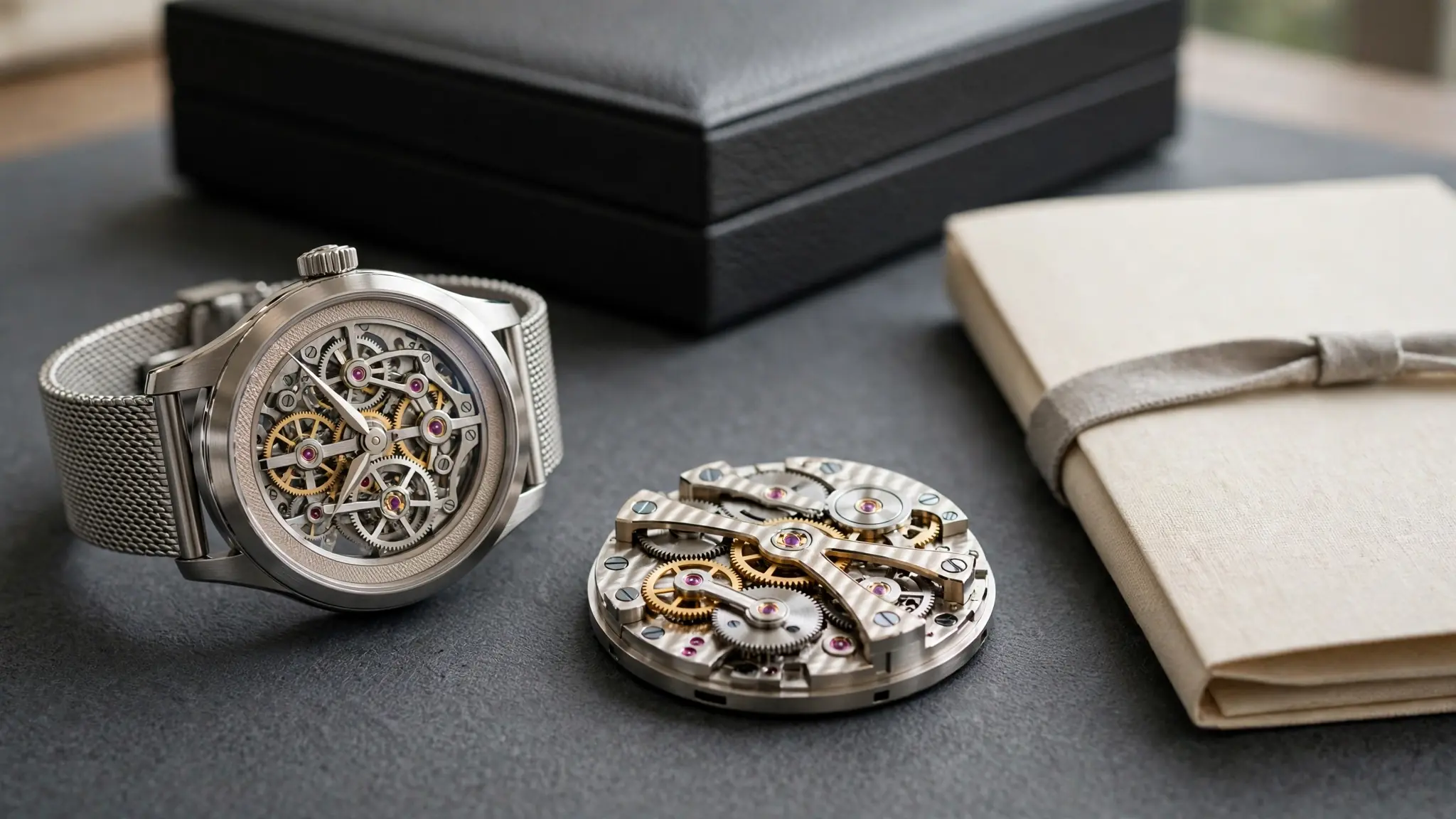
A Patek Philippe is built to be serviced rather than replaced, and the manufacture in Geneva will service watches of any age a claim very few brands can make. A mechanical watch should generally be serviced every three to five years, though one that runs well can often wait a little longer.
The service is thorough: the movement is dismantled, cleaned, re-oiled and regulated, the case refinished only with the owner’s consent, and the watch tested for days before it is returned.
Keep every document the watch accumulates. The original certificate, service receipts, and the Extract from the Archives together form the watch’s provenance, and provenance is a large part of what the next owner or the next generation will pay for.
Store the box and papers somewhere safe and dry, and photograph the certificate and the serial number so that you have a record if anything is ever lost or stolen.
Worn daily, a Patek is robust: the steel sports watches are water resistant to 120 metres, and the movements are designed for decades of service. Rinse a sports watch after swimming in the sea, keep any watch away from strong magnets, do not set the date on a calendar watch between nine in the evening and three in the morning, and let a qualified watchmaker handle anything beyond winding and setting the time.
You Never Actually Own a Patek Philippe
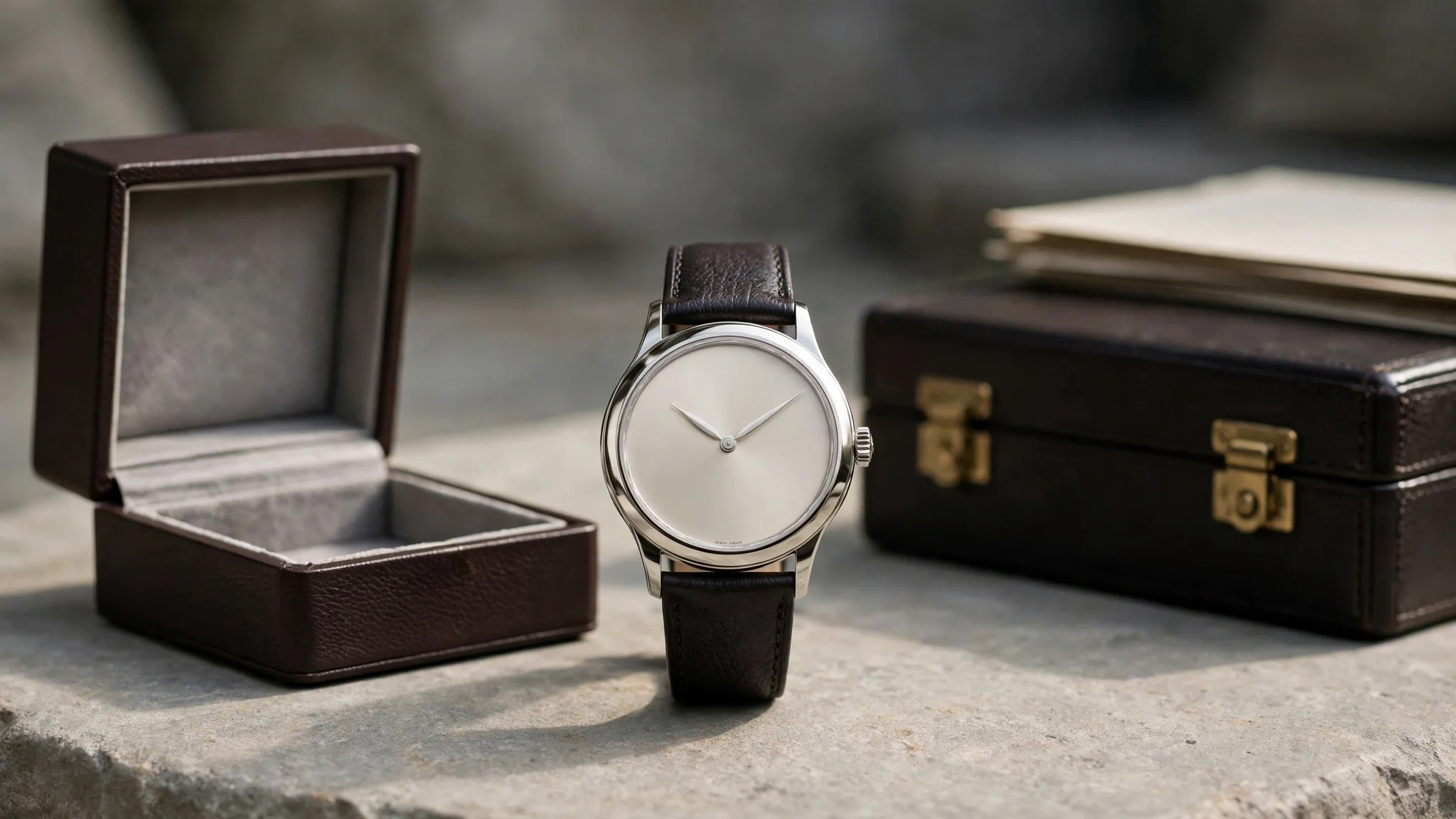
The most famous line in watch advertising belongs to Patek Philippe: “You never actually own a Patek Philippe. You merely look after it for the next generation.” It first appeared in the 1990s, and it has endured because it is not really advertising at all.
It is a description of how the house thinks about its watches, and it is worth taking seriously when you choose your first one.
The line reframes the purchase. You are not buying a status object for this year; you are choosing something that should still be running, and still be beautiful, when it is worn by someone who is a child today. Choose a reference you will not tire of, in a size that will not look dated, in a style that belongs to no single fashion season the logic on which the Calatrava has survived ninety years.
It also reframes the cost. Spread over forty or fifty years of wearing, possibly across two generations, the price of a first Patek looks very different from the price of a watch bought for a season. That is not a reason to overspend no watch is worth financial strain but it is a reason to choose slowly, and to think of the purchase as the beginning of a relationship rather than the end of a transaction.
Mistakes First Buyers Make
The first mistake is buying the wrong watch for the wrong reason: choosing the reference with the highest secondary-market premium rather than the one you actually want to wear. A watch bought as an investment and never worn is a poor investment and a joyless possession. Buy the watch you love, and let any appreciation be a bonus.
The second mistake is overpaying in a hurry. The secondary market rewards patience; the same reference can vary by thousands between sellers, and prices soften when a new model is announced or when a fashion cools. Set a maximum price before you start looking, and be willing to wait months for the right example at the right price.
The third mistake is neglecting the full set. A watch without its box and papers is worth materially less than the same watch with them, and for some references the difference is a quarter of the value. On a first purchase, completeness is not a luxury; it is part of what you are buying.
Common Mistakes to Avoid When Buying Your First Patek Philippe
The fourth mistake is ignoring the size on the wrist. A 41 mm Nautilus wears very differently from a 39 mm Calatrava, and a chronograph at 42 mm is a different proposition again. Try the watches on more than once, and judge how they sit under a shirt cuff rather than how they look in a photograph. A watch that is uncomfortable will not be worn, whatever it cost.
The fifth mistake is treating the authorised dealer as an obstacle rather than a partner. The dealers who allocate the most wanted watches are the same people who will service your watch, advise you on the next one, and tell you honestly when a reference is not right for you. Courtesy, realism, and genuine interest open doors over time that no amount of money can force.
And the last mistake is the simplest: buying before you are ready. A first Patek Philippe should be a considered purchase, made with money you can comfortably spend, at a moment when you can enjoy it. If the budget is not there yet, the waiting is not wasted it is the time in which you learn what you want, and the watch you eventually choose will be better for it.
There is a quiet satisfaction in choosing slowly, in letting the first Patek be the right one rather than the first one available. Wear it daily, have it serviced properly, keep its papers safe, and it will reward you in the unhurried way that only a watch made to outlast its owner can.