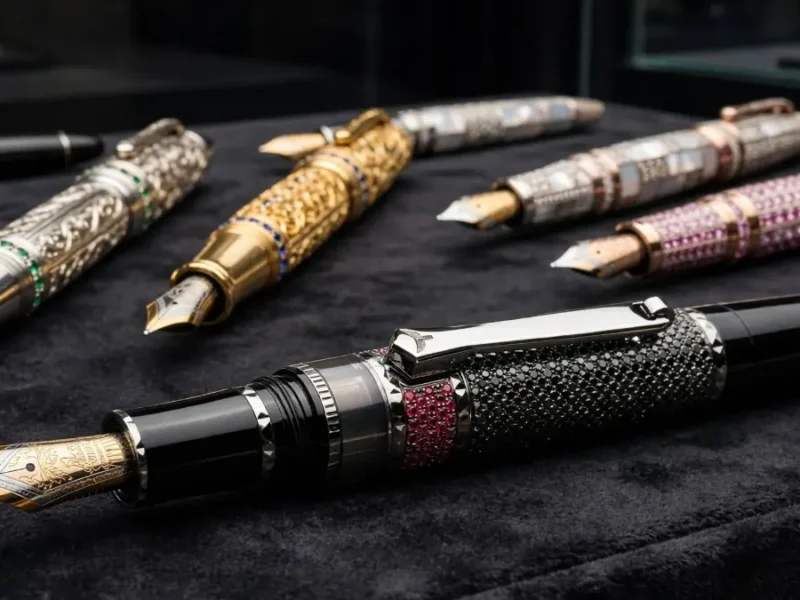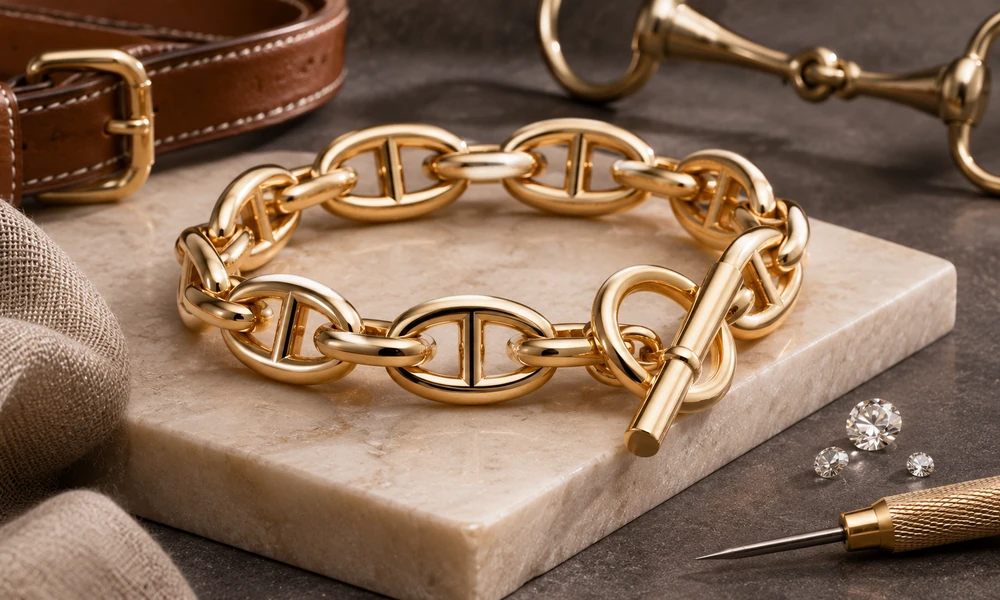
Most jewellery houses begin with jewellery. Hermès did not. It began in 1837 as a harness workshop in Paris, making bridles, saddles and carriage fittings for the European equestrian world, and it spent nearly a century perfecting leather, metalwork and the discipline of making things that had to work beautifully under strain before it made a single piece of jewellery.
That history is not a footnote to its high jewellery. It is the reason the jewellery looks the way it does: functional forms, honest materials, and a refusal to decorate what is already well made. The full story of the house is worth knowing before the jewels themselves, and our account of the Hermès story, from harness workshop to luxury icon, sets out how each generation added a craft to the last.
High jewellery at Hermès is therefore a late arrival with deep roots. The house made its first piece of jewellery in 1927, a silver and leather bracelet, and its first true high jewellery collection did not appear until 2010.
What came between was a slow education: in silver, in gold, in the anchor-chain motif that became the house emblem, and in the idea that a jewel should be designed like a piece of equipment to be worn, moved in, and lived with rather than like an ornament kept for occasions.
This article follows that education, from the workshop to the atelier, and explains what makes Hermès high jewellery distinct among the great Paris maisons.
From Harness Workshop to Jewellery House
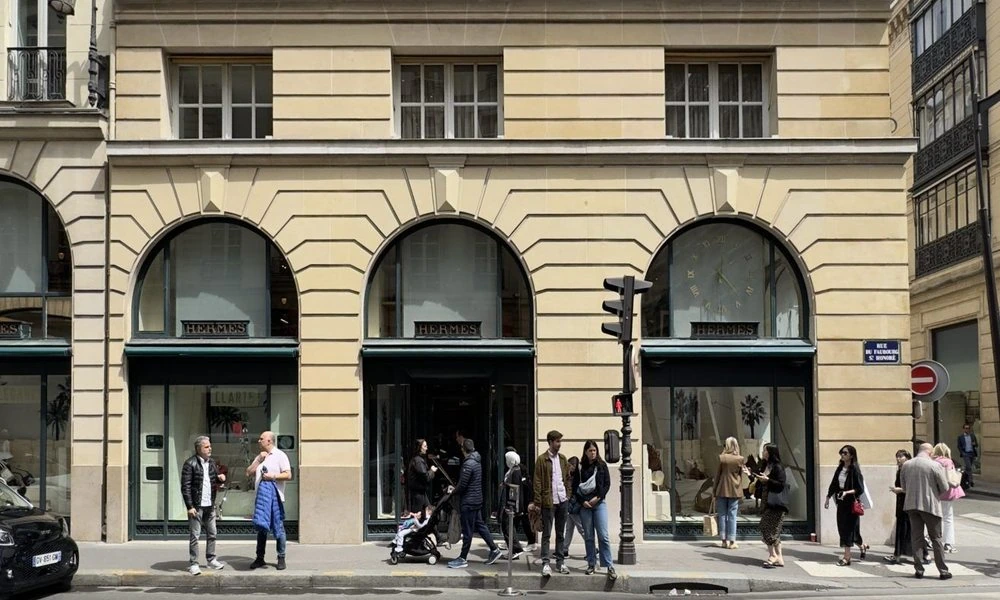
Thierry Hermès founded his workshop in Paris in 1837, in the Grands Boulevards quarter, serving a clientele that arrived on horseback. A harness maker in that era was part engineer, part saddler: the work had to be strong enough to control a horse, supple enough not to chafe, and finished well enough to be seen in the Bois de Boulogne.
The house learned early that utility and beauty were the same problem, not two. Metal fittings were polished, stitched and burnished to the same standard as the leather, because a buckle that failed was a danger and a buckle that looked poor was an embarrassment.
That standard travelled with the house as it grew. Leather goods followed the harness work, then silk scarves in 1937, then ready-to-wear, perfume and watches the first Hermès wristwatch was made in 1912, for Jacqueline Hermès, at the request of her father Émile. Jewellery came comparatively late, and it came in the house’s own way.
The first piece, the Filet de selle bracelet of 1927, was not a gem-set showpiece but a bracelet in silver and leather, borrowing its form from the saddle. It announced the principle that would govern Hermès jewellery ever since: begin with an object the house already understands, and make it precious without making it unfamiliar.
It is worth pausing on how unusual that is. The great Paris jewellers Cartier, Van Cleef & Arpels, Boucheron were jewellers first, and their houses were built around stones. Hermès arrived at jewellery from the stable and the workshop, and its jewels still carry that inheritance. A Hermès piece is more likely to be inspired by a chain, a stirrup, a whip or a horse’s hoof than by a flower or a star.
The equestrian world gave the house a vocabulary of buckles, straps, rings and links, and the jewellery is, in a real sense, that vocabulary translated into gold and diamonds.
The Chaîne d’ancre: An Anchor Chain Becomes an Icon
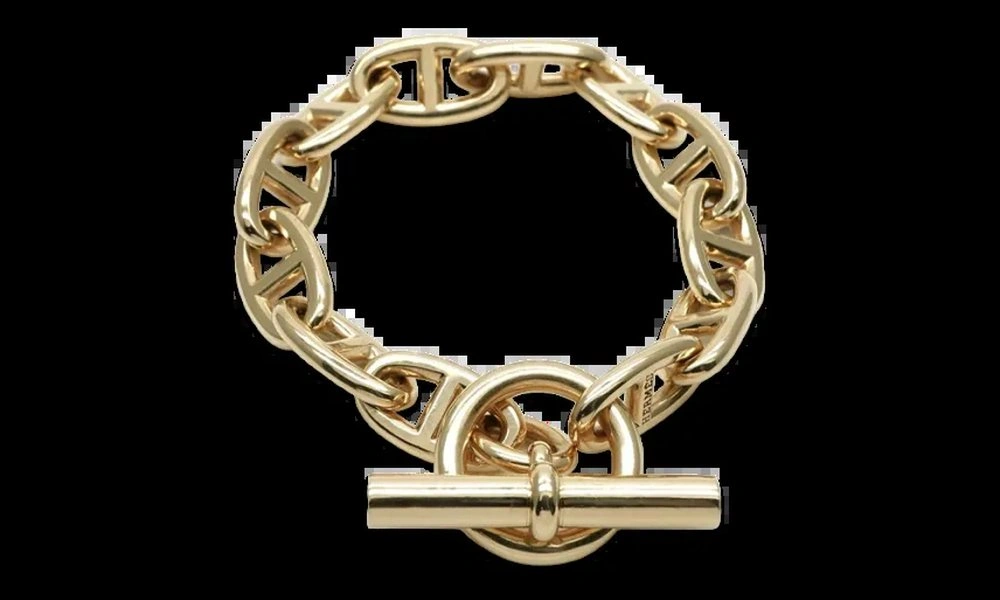
If one object explains Hermès jewellery, it is the Chaîne d’ancre bracelet. It was designed in 1938 by Robert Dumas, who had married into the Hermès family and would later lead the house, after anchor chains he had seen on the Normandy coast. The design is disarmingly simple: a row of interlocking oval links, each crossed by a short central bar, closed with a toggle clasp.
The bar is the detail that matters. On a ship’s anchor chain it stops the links collapsing under sideways load; on a bracelet it gives each link its structure and its rhythm, and it is what makes the design recognisable at a glance.
The first Chaîne d’ancre bracelets were made in silver, at a time when silver jewellery was unfashionable among the Paris houses, which preferred gold and platinum. The choice was deliberate. Silver suited the industrial reference, it kept the piece within reach of a wider clientele, and it proved the point that the design, not the metal, was the luxury.
The bracelet succeeded immediately, and it has been made continuously ever since in sterling silver and in 18-karat yellow, rose and white gold becoming the house’s emblematic jewel and the seed from which almost all later Hermès jewellery grew.
What the Chaîne d’ancre teaches, and what every later Hermès high jewellery collection repeats, is that a strong idea needs no embellishment. The motif has since appeared across the house: in necklaces, rings and earrings, in watch bracelets and belts, and, in its most elaborate form, in high jewellery necklaces where the anchor links are pavé-set with diamonds and sapphires.
Each time, the geometry does the work. The links must be perfectly regular, the bar exactly centred, the toggle exactly weighted because when a design is this plain, any flaw is visible. It is the hardest kind of simplicity to make well, and it is the standard against which Hermès jewellery is still judged.
Pierre Hardy and the Arrival of Haute Bijouterie
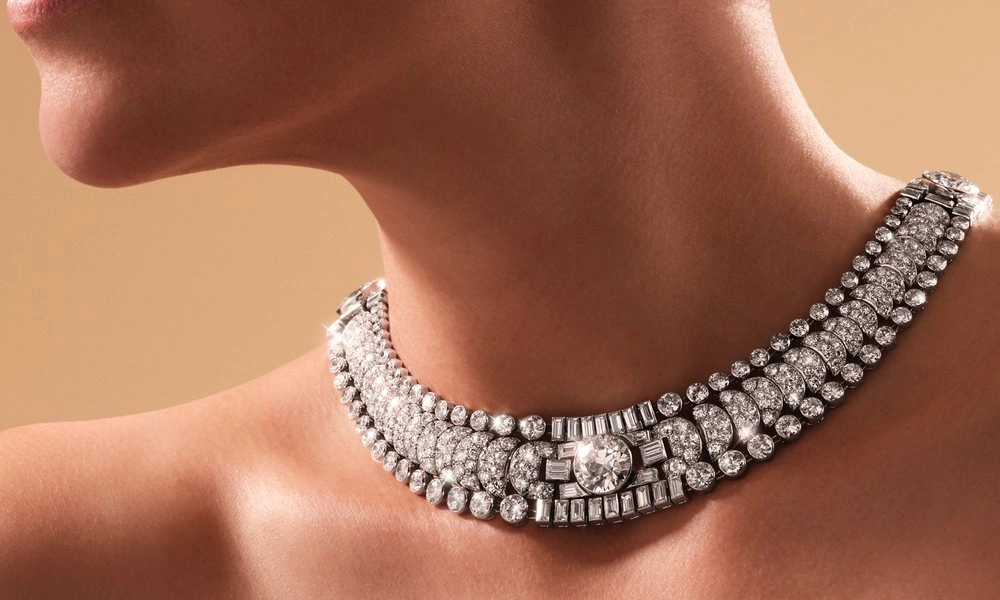
For most of the twentieth century, Hermès jewellery meant silver and gold, worn daily and designed to be unobtrusive. High jewellery one-of-a-kind pieces in precious stones, made in tiny numbers for the house’s most committed clients arrived with a single appointment. Pierre Hardy joined Hermès in 1990 to design footwear, and in 2001 the house added jewellery to his responsibilities.
Hardy was an unusual choice: a designer trained in the plastic arts, with his own shoe label, who thought about jewellery as sculpture and architecture rather than as adornment. He spent his first years learning to transform metal into the shapes he envisaged, working first in silver fine jewellery, before the house gave him the commission that changed its jewellery entirely.
The first Haute Bijouterie collection appeared in 2010: fourteen pieces, inspired by the horse’s hoof, in pink gold and platinum with black jade, pink quartz and aventurine fine stones the house had not used before. Its two signature pieces said everything about Hardy’s approach.
The Fouet necklace was a slinky, diamond-covered whip, made into a jewel. The Centaure ring was a bold, graphic interpretation of a hoof. Both were sculptural, tactile and unmistakably Hermès, yet nothing like the polite jewellery the house had made before.
Hardy himself put it plainly at the time, saying that Hermès was not a very precious universe, and that he had simply gone back to its roots taking the roughest, strongest element and giving it the most feminine, most modern interpretation.
Hardy’s appointment also changed how often the house speaks in high jewellery. He creates a new high jewellery collection roughly every two years, a slow rhythm by fashion standards, and one he has described as an escape from the demands of fast-moving, continually changing fashion. The length of time required to fabricate the jewels months of drawing, modelling, stone selection and setting sets the pace.
Among the jewellery designers shaping the modern heirloom, Hardy is unusual in treating each collection as a single idea, worked through in every form a jewel can take, rather than as a set of separate pieces.
Our guide to luxury jewellery designers for modern heirloom pieces places his work in that wider company, but the Hermès collections repay attention on their own terms.
How a High Jewellery Piece Is Made
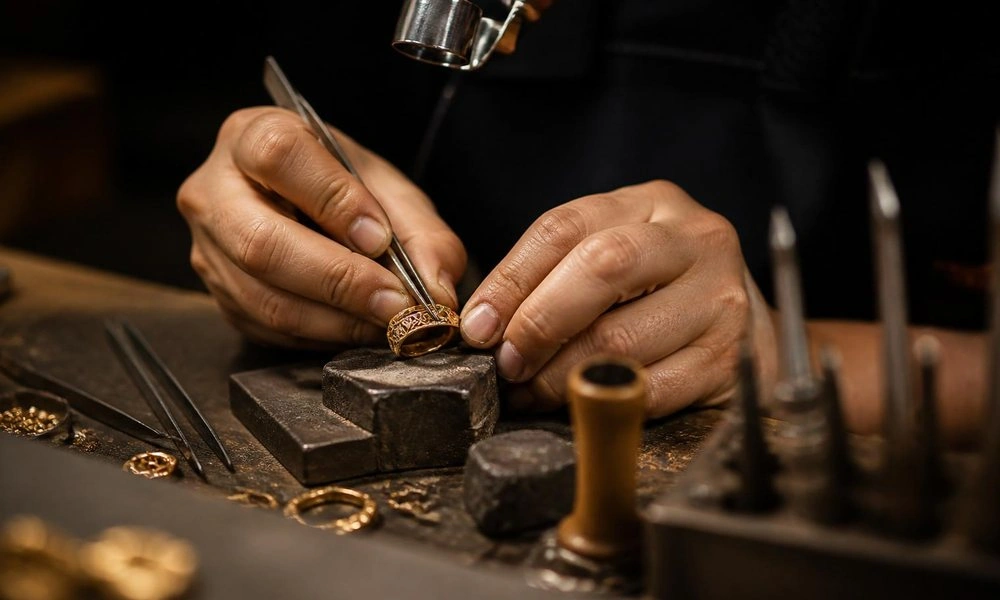
A Hermès high jewellery piece begins, as most things at the house do, with a drawing and with a question about the body. Hardy has said he is preoccupied with the jewel’s connection to the body, emotional as well as physical: how a necklace sits on the collarbone, how a ring turns on the finger, how a bracelet moves with the wrist.
The collections are designed around that contact before they are designed around stones. A piece that looks magnificent on a stand and awkward on the skin has failed at Hermès, whatever its carat weight.
From the drawing, the piece passes through the house’s own high jewellery workshop in Paris, which it is reported to have established in 2010, the same year as the first Haute Bijouterie collection. Bringing the making in-house mattered: it meant the goldsmiths, setters and polishers worked alongside the designer, and that the house controlled every stage from sketch to finished jewel.
The crafts involved are the traditional ones goldsmithing, enamelling and gem-setting but applied to forms that are often deliberately difficult: a necklace that opens and closes, a ring built around a rough stone, a chain whose links must flex in exactly the right way.
Time is the honest measure of the work. A single important necklace in this category can take many hundreds of hours, and some reported examples approach two thousand. The hours go, invisibly, into matching stones, cutting seats, raising pavé, polishing each link and testing every mechanism.
A transformable piece one that opens, folds or converts must work smoothly thousands of times, and the mechanism is tested as rigorously as the setting.
Light, Shadow and Colour: The Collections
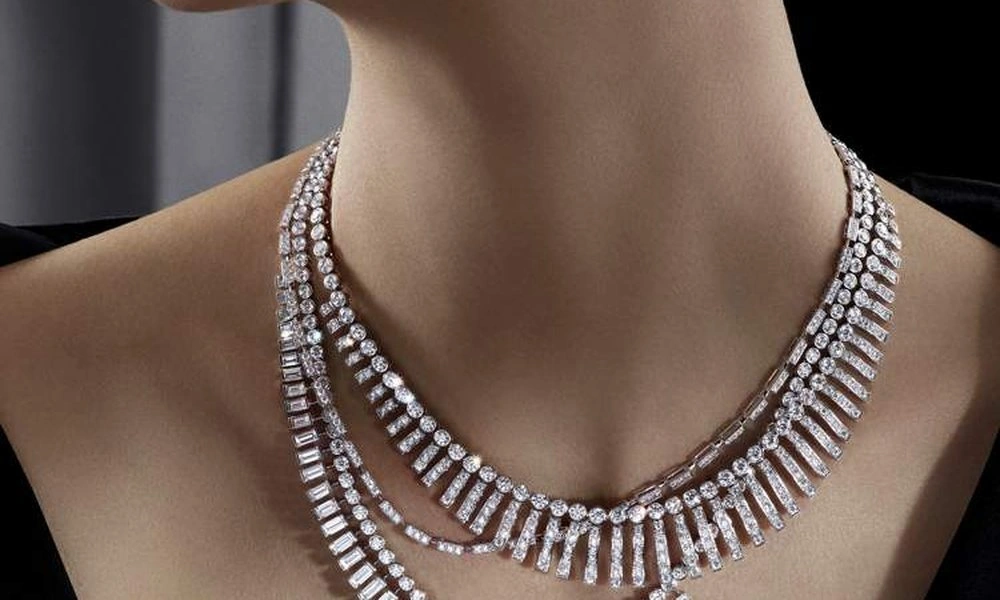
Each Hardy collection is built around one idea, and the ideas have grown steadily more ambitious.
Lignes Sensibles, described by the house as a manifesto of gracious radicality, gave form to invisible waves of energy lines like faint sketches on the skin, suggesting the human sensory system in muted, watercolour-like gemstones: pastel tourmalines, sapphires and soft green prehnite. It was jewellery as drawing, the line itself doing the work, with colour kept quiet so the form could speak.
Les Formes de la Couleur took the opposite route, making colour the subject: the relationship between colour and form, and the way different colours energise line and volume. Les Jeux de l’ombre, unveiled in 2022, played with light and shade, using titanium to give form and opacity to shifting shadows.
Its pieces included the Miroir d’ombre necklace, in white gold with baguette-cut diamonds and a cushion-cut yellow diamond of three carats, its shadow rendered in a dégradé of blue sapphires; the Chaînes d’ombre necklace, which gave the anchor-chain link volume through flat-cut white diamonds shadowed by black spinels and blue sapphires; and the Couleurs du jour necklace, a triptych that opens and closes, concealing its treasures or exposing them to the light.
Hardy called shadow the light’s treasure, and the collection is the clearest expression of his belief that light is the soul of a gemstone.
The collections also return, again and again, to the house’s own icons. Kellymorphose, also from 2022, reinvented the signature details of the Kelly bag the trapezoid shape, the lock, the straps, the key and the small clochette key-holder as jewellery.
In late 2026, reports of the newest collection, Into the Horsescape, described a return to the horse itself, with stirrup-shaped necklaces and horse-head rings shown in a dreamlike exhibition landscape. Whether the subject is a bag or a horse, the method is the same: take something the house already owns, look at it until it becomes strange again, and rebuild it as a jewel.
Colour Beyond White Diamonds
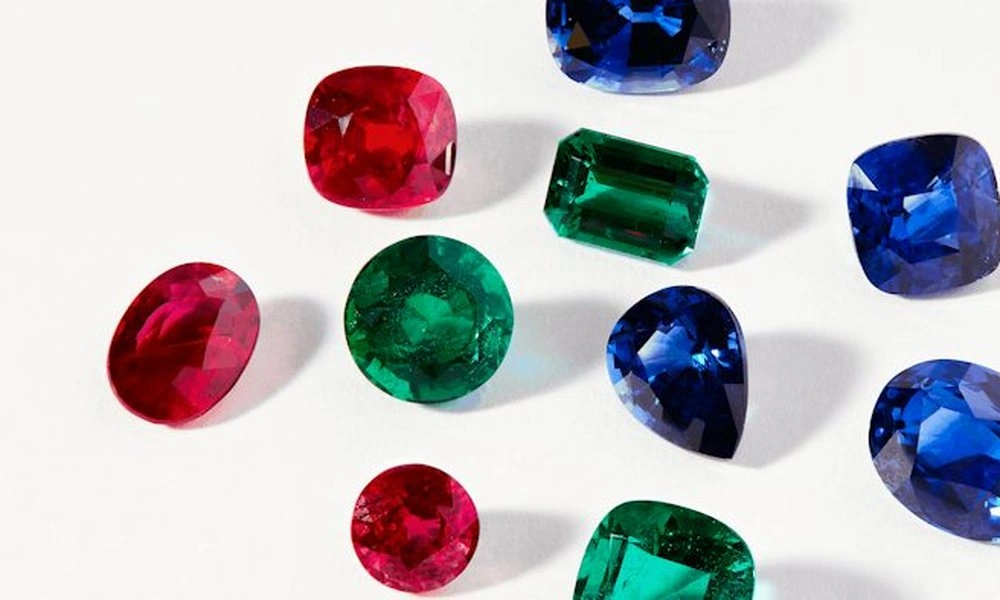
White diamonds dominate high jewellery, and Hermès is no exception but the house’s most distinctive pieces use colour, and they use it in a way that reflects Hardy’s background as a designer rather than a gem merchant. He has said he prioritises visual effect, colour and texture over the monetary value of stones, and the collections show it.
Pastel tourmalines, prehnite, black jade, pink quartz and aventurine appeared in the very first Haute Bijouterie collection, stones chosen for their hue and their feel rather than their standing in the trade.
Rough, uncut stones appear too, chosen for their intensity: the Lumières brutes rings and earrings of Les Jeux de l’ombre are built around rough brown diamonds, their shadows deepening through a dégradé of brown to ebony stones.
That approach to colour carries a practical consequence for the wearer. Coloured stones are harder to match than white diamonds, because the eye reads differences in hue more readily than differences in tone. A row of sapphires must agree in colour and saturation, or the row will look patchy.
A dégradé the gradual shift from one shade to another that Hardy uses so often is harder still, because each stone must sit exactly in its place in the sequence. The effect, when it works, is a surface that seems to change as it moves, catching light differently at every angle.
It is also why the great houses hold large stocks of stones and sort them over years: the matching for a single important piece may draw on stones bought a decade apart. And the house’s palette is restrained rather than rainbow-bright black spinel against white diamond, a single yellow diamond in a field of blue sapphires colour used sparingly, exactly where it is needed, and never for its own sake.
Wearing Hermès High Jewellery
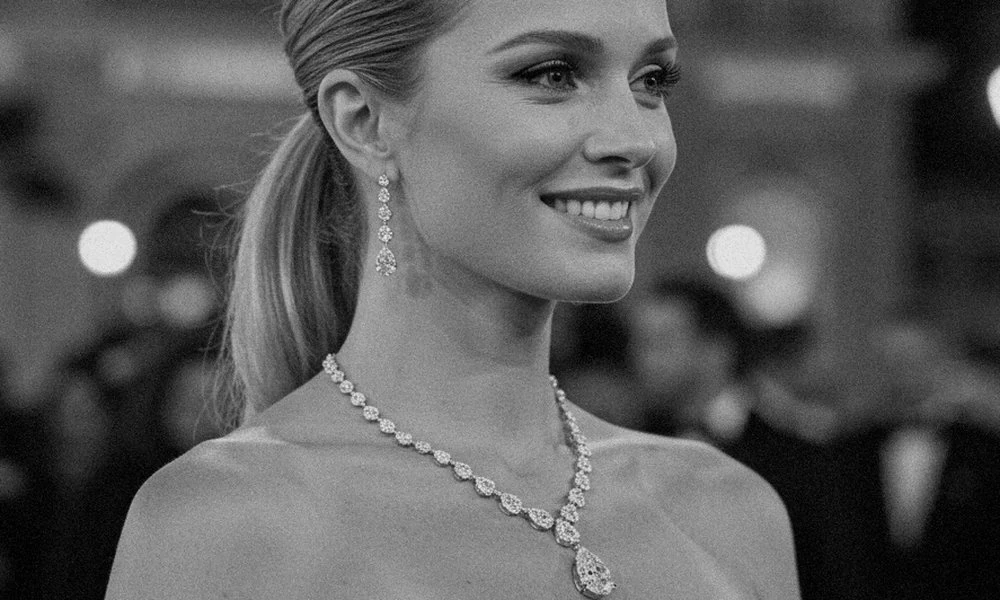
For all their value, Hermès high jewellery pieces are made to be worn, and they are at their best in the evening against bare skin, with a dark sleeve, in low, warm light, where the stones can catch and release their fire in turn. Daylight is less kind to pavé: strong sun flattens a diamond surface into glare, while candlelight lets each stone speak separately.
A fully pavé necklace needs no other jewellery on the same part of the body; a pair of earrings, or a ring on the other hand, is enough.
Wearability is a real consideration, and the house takes it seriously. A necklace should sit on the collarbone, not slide; a bracelet should flex with the wrist, not fight it; a ring should turn comfortably and sit flat. This is where the house’s history as a maker of things that must work pays off.
The Chaîne d’ancre bracelet, for all its simplicity, is comfortable precisely because its links are engineered to move. The transformable necklaces, which open and close, are designed to be operated by the wearer, not only admired. If you are ever offered the chance to try a piece on, pay attention to how it sits after a minute, not how it looks in the first ten seconds. Comfort is the honest test.
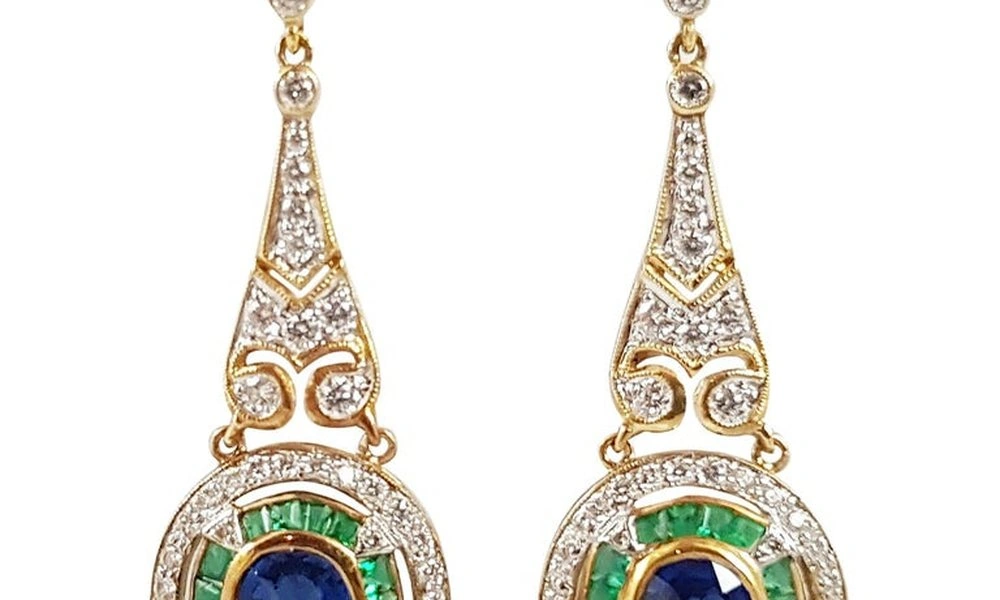
There is also the question of scale. Hermès high jewellery is often bold sculptural necklaces, graphic rings, long earrings and boldness needs confidence from the wearer. The house’s answer is that the pieces are designed to be lived in, not merely displayed, and that their weight and balance are part of the design.
Smaller pieces exist too: a single stone, a short chain, a pair of earrings that can be worn in daylight without ceremony. The category has softened in recent years, and the line between fine jewellery and high jewellery is less a wall than a gradient. Start with the piece you would reach for most often, and let the occasion grow around it.
Collecting, Care and Keeping
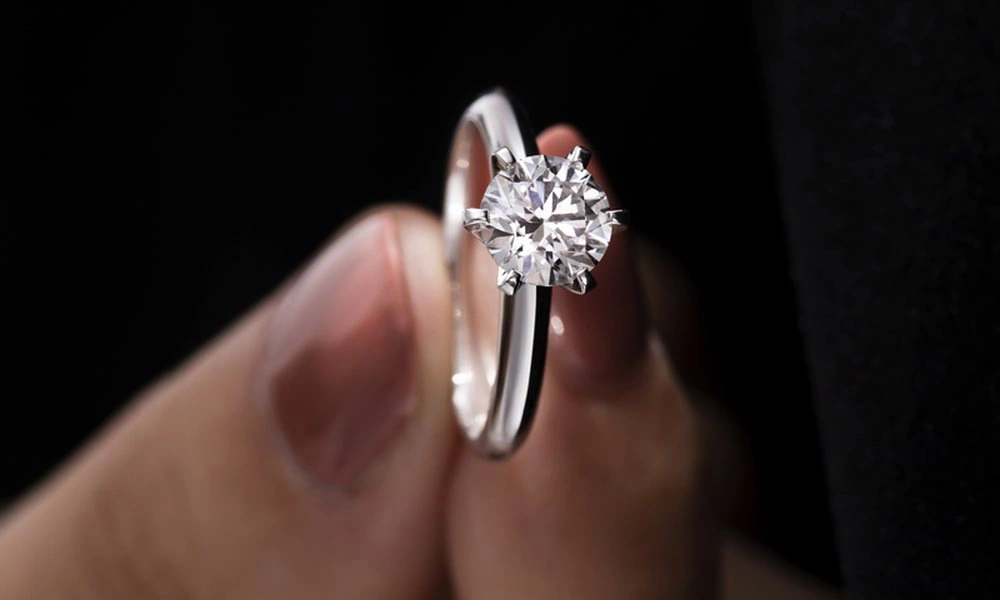
For collectors, Hermès high jewellery rewards patience and a clear eye. The pieces are made in tiny numbers many are unique and they are rarely available on demand. The house does not advertise its high jewellery widely, and the collections are shown to clients rather than sold from a window.
That scarcity is real, not manufactured: a piece that takes hundreds of hours to make cannot be produced in quantity, and the stones for the most important pieces may take years to assemble. The pieces that hold their standing are the ones where the making is beyond question: a recognised design, stones that match, a mechanism that works, and a form that will still look right in twenty years.
The market agrees, in its own way.
Hermès objects have a long record at auction, and the house’s bags in particular have become a reference point for how luxury objects hold value the most expensive handbags ever sold at auction include Hermès pieces among the headline lots, and our survey of the most expensive handbags ever sold at auction shows how consistently the house performs when rarity, condition and provenance align. Jewellery follows the same logic, though more quietly: the pieces that endure are the ones with a clear design, a documented history and the house’s craftsmanship behind them. Novelty fades; craft does not.
Care is part of the pleasure, and it is straightforward. Pavé settings should be checked regularly a loose stone caught early is a small repair, and any competent jeweller can check the settings with a loupe in minutes. Cleaning is gentle: warm water, a soft brush, mild soap, and a careful dry.
Ultrasonic cleaners, so convenient for plain gold, are best avoided for pavé work and for emeralds. Keep the papers, the box and the service history together, and keep the piece insured with a current valuation. Above all, wear it. A jewel kept permanently in a safe is a museum piece, not a companion, and Hermès has always made its things to be used.
If you ever find yourself in front of a Hermès window, look past the sparkle for a moment and notice the shapes underneath the chain, the stirrup, the hoof, the clasp.
They have been there since the workshop days, and they are still doing the work. A house that began by making things for horses ended up making some of the most thoughtful jewellery in Paris, simply by refusing to forget what it had learned. That is a heritage worth wearing, and worth taking your time over.