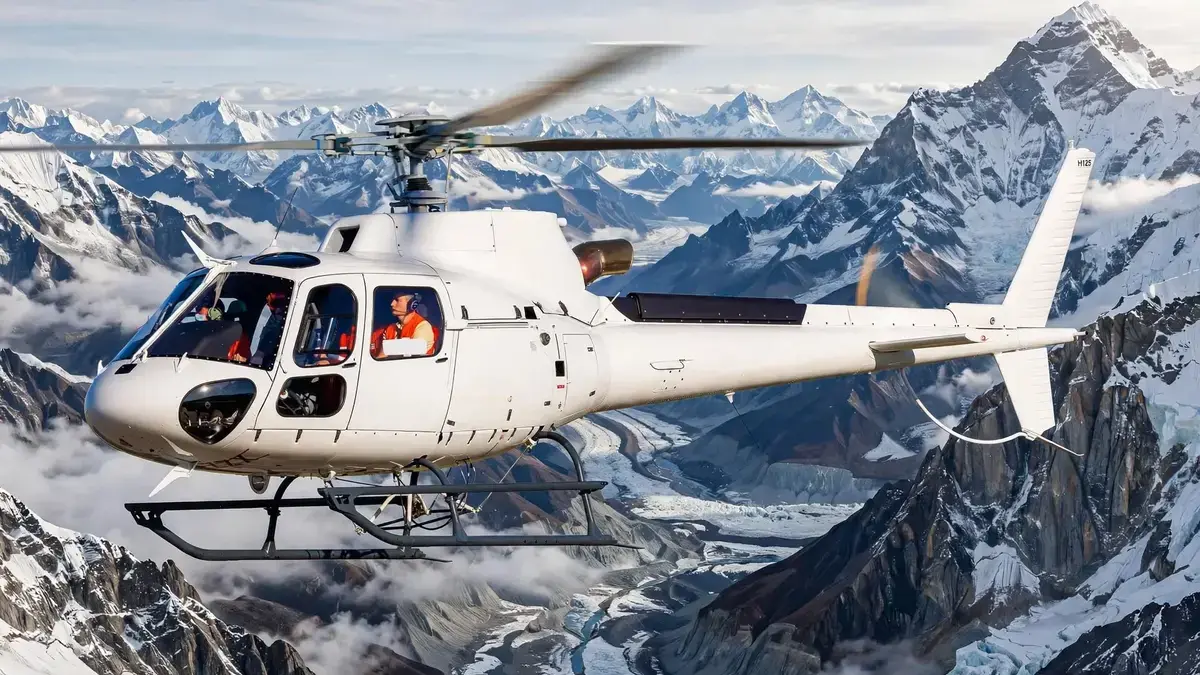
In May 2005, a helicopter landed on the summit of Mount Everest at 8,849 meters, where the air holds a third of its sea level density, where humans without oxygen lose consciousness in minutes, and where aviation authorities had long declared sustained flight impossible.
The machine was an Airbus H125, known then as the AS350 B3 Écureuil, and the landing, a demonstration by test pilot Didier Delsalle, was not a stunt but a certification of what the type had been engineered to do.
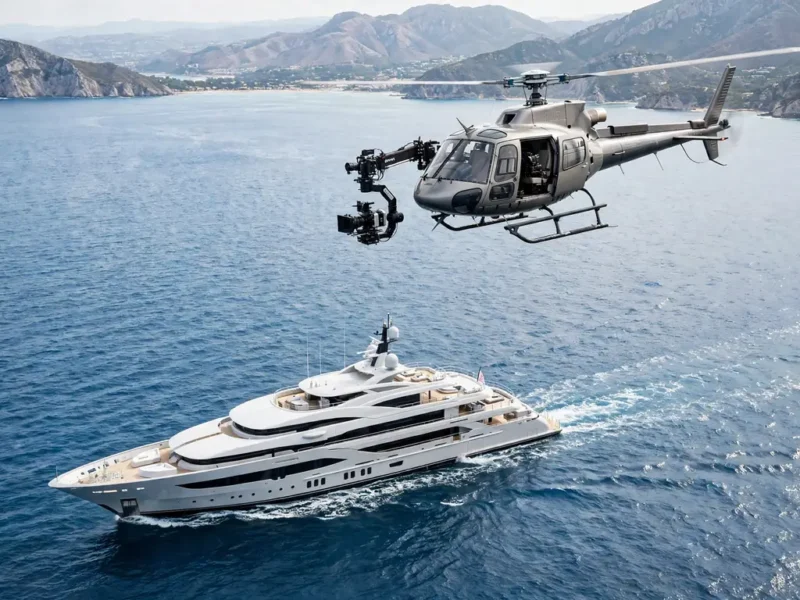
The H125 is the bestselling light single engine helicopter in the world, the workhorse of the mountain rescue services, the utility fleets, and the heli skiing operations, and its story is the story of what happens when a design brief asks one question relentlessly: how high?
Here is the engineering of altitude.
The Écureuil’s Beginning
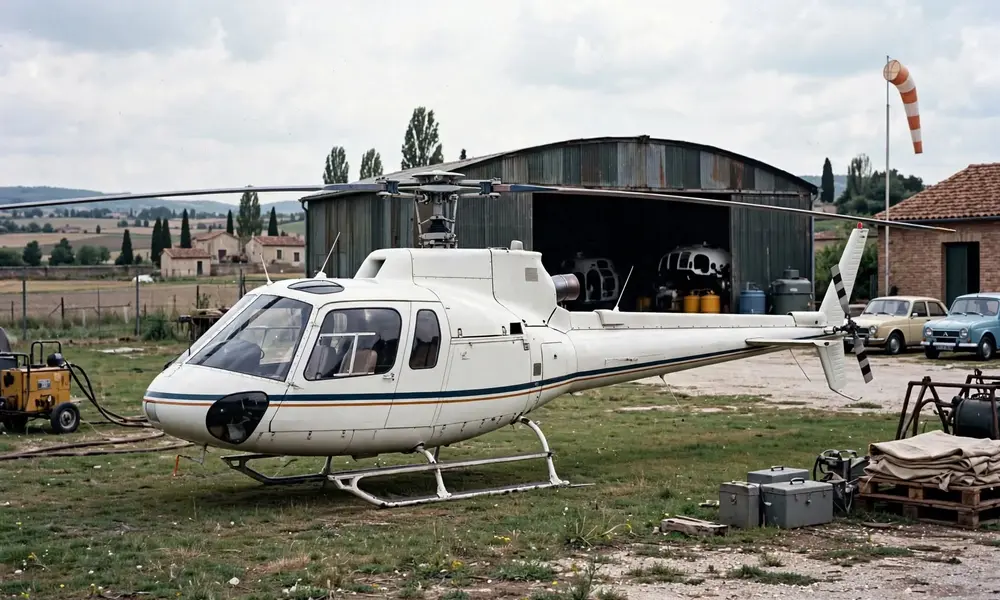
The type’s story began in the 1970s, when Aérospatiale, the French national manufacturer, sought a replacement for the aging Alouette generation with a machine of radical simplicity: a single engine, a starflex rotor head of composite simplicity, a wide cabin with panoramic visibility, and a flat floor that could swallow a stretcher, a sling load, or six passengers with equal grace.
The Écureuil, Squirrel in French, first flew in 1974 and entered service in 1978, and its design innovations, the shrouded tail rotor for ground safety, the composite blades, the maintenance accessibility, established the template that light helicopters follow to this day.
The type’s adaptability, the same airframe serving police, ambulance, utility, and VIP missions, made it the most produced Western light helicopter of its era.
The Everest Proof
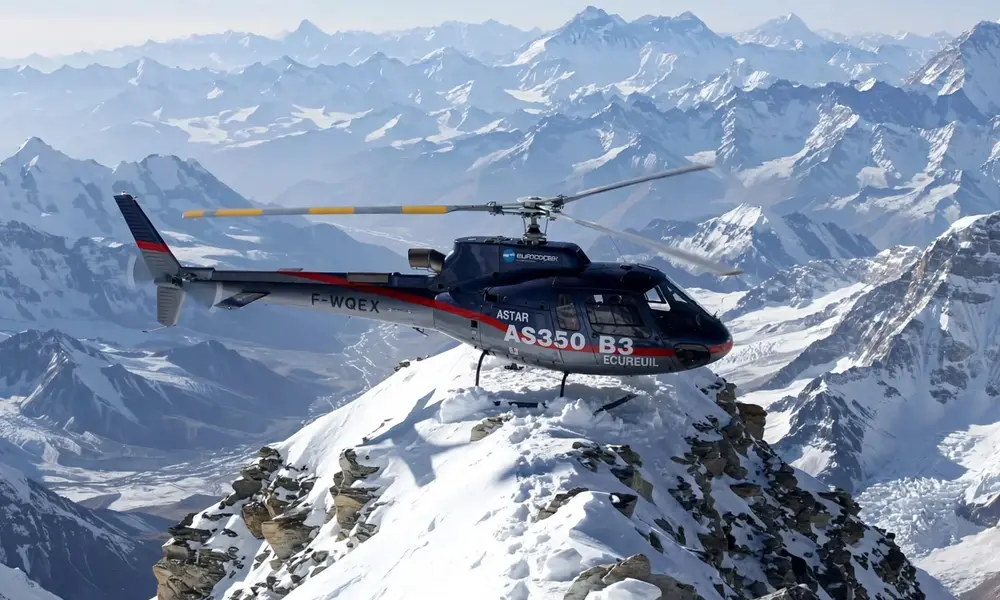
The 2005 Everest landing crowned two decades of altitude work: the H125 family had set time to climb records to 3,000, 6,000, and 9,000 meters through the 1990s, each a demonstration of the Safran Arriel engine’s power margins and the rotor system’s efficiency in thin air.
Delsalle’s summit landing, repeated the following day to prove repeatability, rewrote the altitude ceiling of practical helicopter operations and established the H125 as the mountain helicopter, the default choice of the services that work where helicopters were never supposed to.
The French Gendarmerie’s high mountain rescue units, the Swiss Air-Rega, the New Zealand operators, and the heli skiing fleets of the Alps and the Rockies all standardized on the type, and the world’s mountain communities came to know its sound as the noise of rescue arriving.
The Workhorse Economy
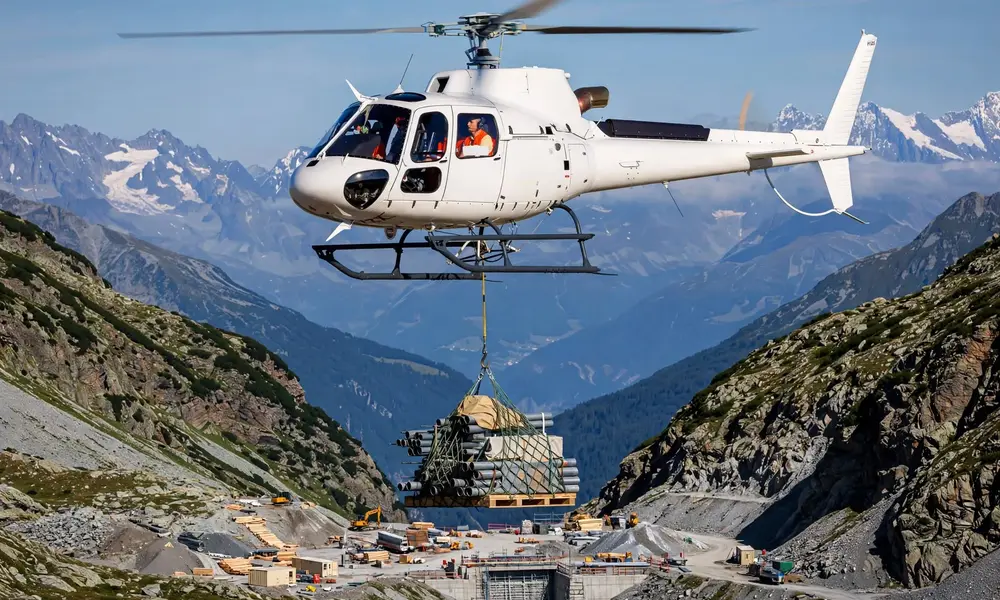
The H125’s dominance rests on economics as much as performance: the type’s operating costs, in the neighborhood of $600 to $800 per hour, undercut every twin in the fleet while its utility keeps utilization high, and the global support network, built across five decades and thousands of airframes, keeps availability the industry benchmark.
The cabin’s flexibility, cargo swing, medical interior, agricultural spray gear, or executive seating in hours, gives operators a fleet multiplier a dedicated type cannot match, and the type’s safety record across tens of millions of flight hours provides the insurance market’s confidence that underwrites the economics.
For owners moving up from training helicopters, our first helicopter buying guide places the H125 as the utility ceiling of the light single category, below the twins like the AW139 that the long overwater and heavy VIP missions require.
The Mountain’s Own Machine
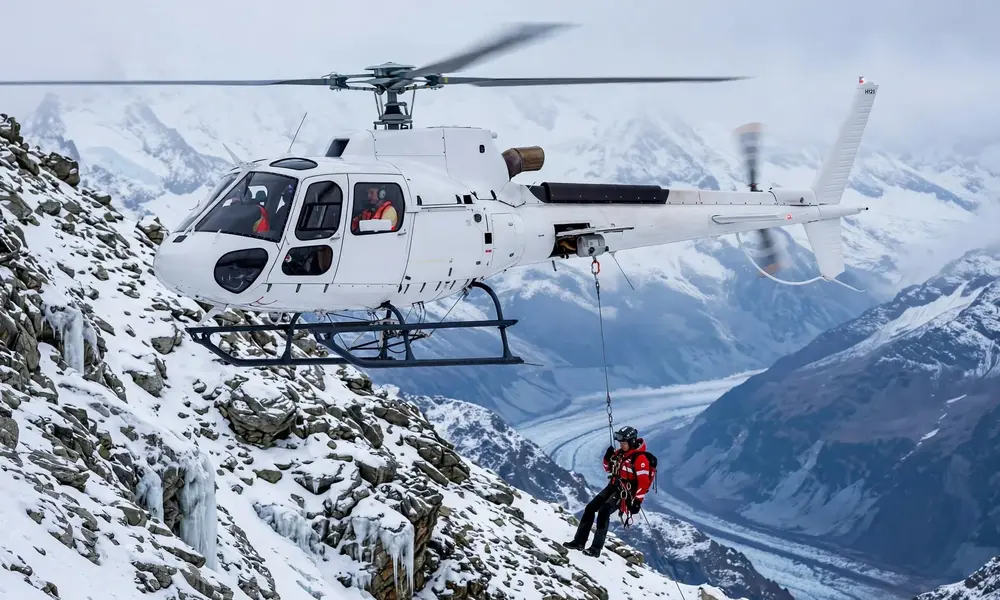
For the passengers who fly the H125, the experience is elemental: the cabin’s panoramic visibility puts the Alpine wall or the canyon floor in full frame, the Arriel’s turbine throb vibrates through the seats, and the machine’s agility, its ability to side slip onto a ridge the size of a tennis court or to hold a hover above a glacier’s crevasse, converts flight into something closer to climbing with an engine.
The type’s cultural standing in the mountain world is unique: among guides, rescuers, and heli skiers, the H125 is not equipment but colleague, and the stories of its improbable work, the 14,000 foot hoist, the whiteout landing on a moving glacier, the ferrying of an entire rescue team above 7,000 meters, are told the way sailors tell of ships. The Everest proof was a demonstration; the decades since have been the certification.
FAQs
1. What is the Airbus H125?
The bestselling light single engine helicopter in the world, formerly the AS350 Écureuil, built by Airbus Helicopters, with over 7,000 delivered across utility, rescue, police, and VIP missions since 1978.
2. Did the H125 really land on Everest?
Yes: test pilot Didier Delsalle landed an AS350 B3 on the summit in May 2005 at 8,849 meters, repeated the feat the next day, and the achievement certified the type’s unmatched high altitude performance.
3. What makes the H125 good at altitude?
The Safran Arriel engine’s power margins, the efficient starflex rotor system, and a light airframe combine to deliver sustained hover performance at altitudes where other helicopters cannot maintain flight, the defining engineering achievement of the type.
4. How much does an H125 cost?
New aircraft run around $3 to $3.5 million depending on configuration, with used examples from roughly $1 million to $2.5 million by year and hours, and operating costs typically $600 to $800 per hour.
5. Who flies the H125?
Mountain rescue services including the French Gendarmerie and Swiss Air-Rega, heli skiing operators worldwide, police and air ambulance fleets, utility operators on every continent, and VIP owners who value its performance and economics.
6. What is the H125’s range?
Roughly 350 to 400 miles depending on configuration and reserves, with endurance around three hours, figures that serve the utility and rescue missions the type dominates rather than the point to point VIP missions.
7. How does the H125 compare to the Bell 407?
The H125 outsells the 407 substantially in the global market, with the Bell holding strength in North America. The H125 leads in altitude performance and fleet size; the choice often follows regional support networks and mission specifics.
8. Is the H125 safe?
The type’s record across five decades and tens of millions of hours is the insurance market’s reference, and its shrouded tail rotor and crashworthy design addressed the light helicopter’s historic hazards at the design stage.