On the evening of October 13, 2018, a bottle of 1945 Domaine de la Romanée-Conti, which would become the Most Expensive Wine Ever Sold at auction, was carried to the front of a packed Sotheby’s saleroom in New York.
The estimate, already a gesture of fantasy, sat at $32,000. Bidding started there and continued for minutes. It climbed past $100,000, then $300,000, and eventually surpassed the price of a Porsche. Finally, the hammer fell at $558,000.
The room erupted. The buyer was reportedly a private collector from Asia. They now owned 750 milliliters of Burgundy from a vineyard that produced roughly six hundred bottles that year. Phylloxera and war later reduced the domaine’s holdings to almost nothing.
That bottle is the most expensive standard bottle of wine ever sold at auction. It leads a category of objects defined by a beautiful, uncomfortable tension. The people who pay these prices almost never drink the wine. Meanwhile, those who would appreciate drinking it most can rarely afford it.
Here are the five bottles that broke the market, and the honest answer to the question nobody at these auctions asks out loud: is any of it still good?
1. 1945 Domaine de la Romanée-Conti: $558,000
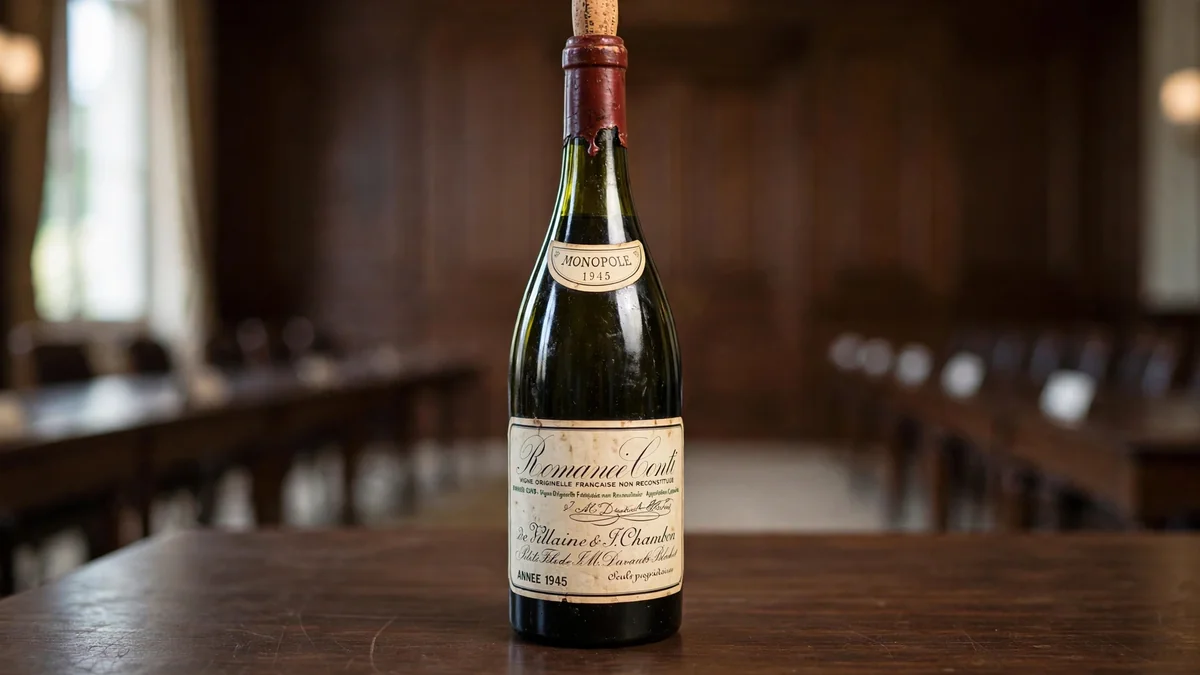
Sotheby’s, New York, October 2018
The 1945 vintage is the most mythologized in Burgundy’s history. It was the last harvest before the domaine’s ancient vines were ripped out for replanting. War had also left the vineyards nearly abandoned that year. The surviving fruit produced a wine of legendary concentration.
Fewer than six hundred bottles were made. Even fewer survive with provenance as strong as this bottle’s. It came from the cellar of a single collector, sealed and untouched. By every serious account, the wine inside has been past its peak for years. The last credible tasting notes describe a ghost of its former self, more memory than wine.
The buyer did not purchase a drink. They purchased the most important bottle of Burgundy in existence. At $558,000, by the standards of that market, they may even have gotten a bargain.
2. 1992 Screaming Eagle, Six Liter: $500,000
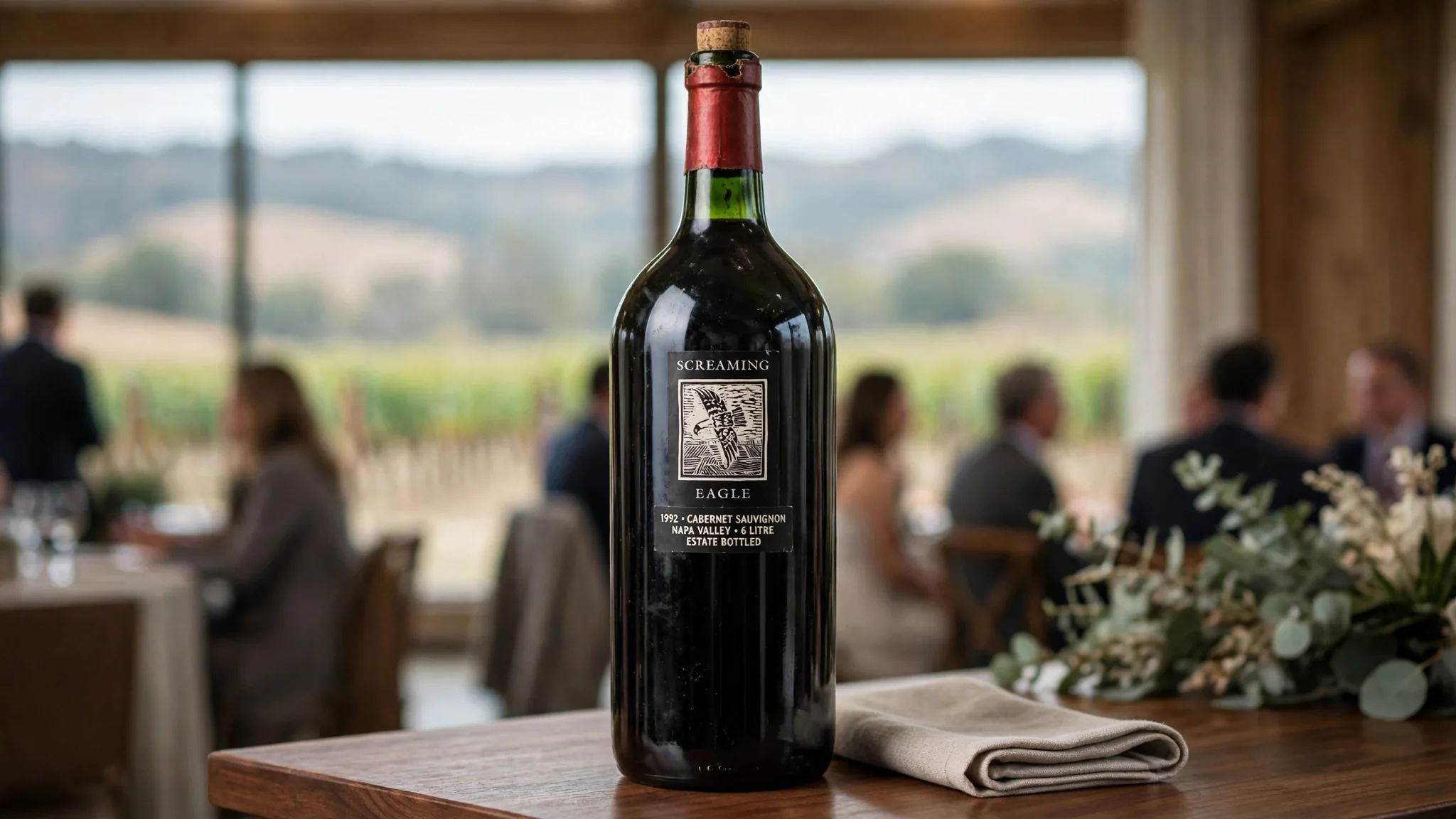
Napa Valley Auction, 2000
The only non-European wine on the list achieved its price through a different alchemy entirely: charity, spectacle, and the moment Napa became a luxury brand. At the 2000 Napa Valley Wine Auction, a single six-liter bottle of Screaming Eagle’s 1992 Cabernet Sauvignon sold for $500,000.
The wine had just received a perfect score and become America’s first cult Cabernet. A Cisco Systems executive placed the winning bid, seeking the attention as much as the wine itself.
The proceeds went to charity, which explains the price better than any tasting note could. On drinkability, there is better news here than elsewhere on the list. The 1992 Screaming Eagle remains one of the greatest American Cabernets ever made.
A six-liter format ages differently, and this bottle’s provenance passed through a charity dinner. However, wine from that vintage opened in recent years has reportedly been superb. It is the one bottle on this list that a serious drinker might actually envy.
3. 1945 Château Mouton Rothschild: $310,700
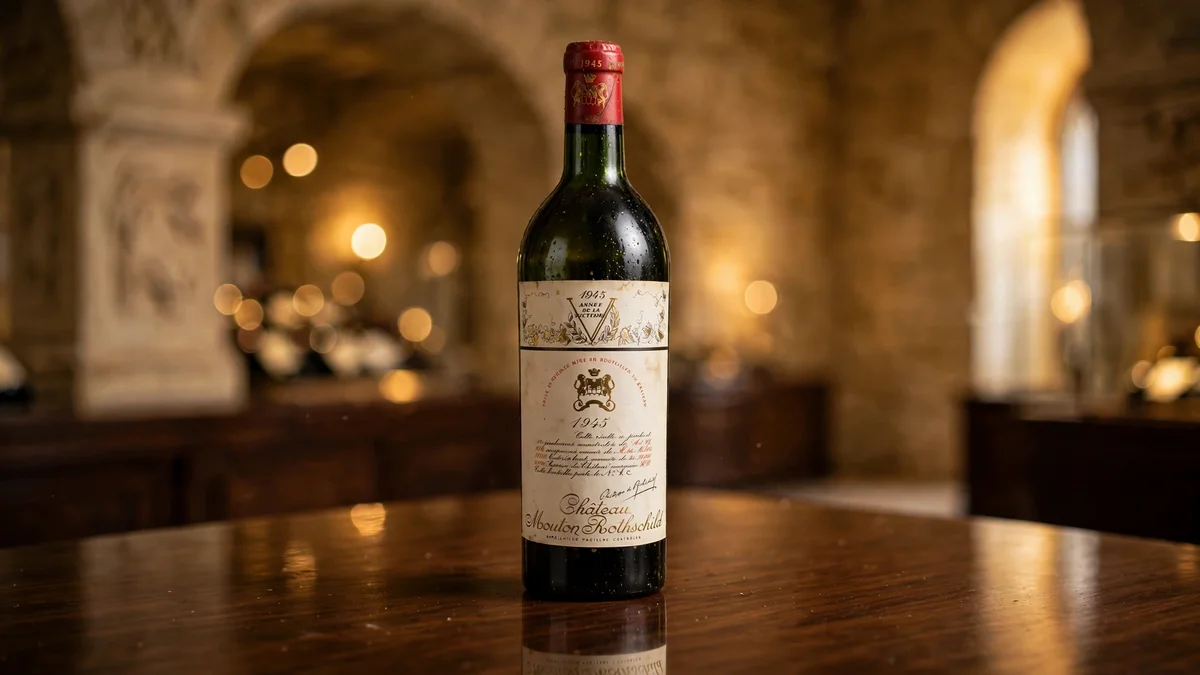
Sotheby’s, New York, October 2018
The same auction, the same legendary vintage, and the same wartime mystique. Mouton’s 1945 vintage, labeled with a V for Victory, featured a design celebrating the end of the war.
It is Bordeaux’s equivalent of the Romanée-Conti. This bottle came from the same immaculate cellar as the DRC. It also set the record for any Bordeaux wine at the time.
The answer on drinkability is the same sad poetry. The greatest tasters alive have reported that 1945 Mouton passed its peak decades ago. The surviving bottles are now trophies of history rather than sources of pleasure. The wine world accepts this openly.
That is perhaps the most revealing fact about the trophy market. At these prices, a bottle’s condition as an object matters more than its contents. Auction houses price accordingly.
4. 1869 Château Lafite Rothschild: Approximately $233,000 Per Bottle
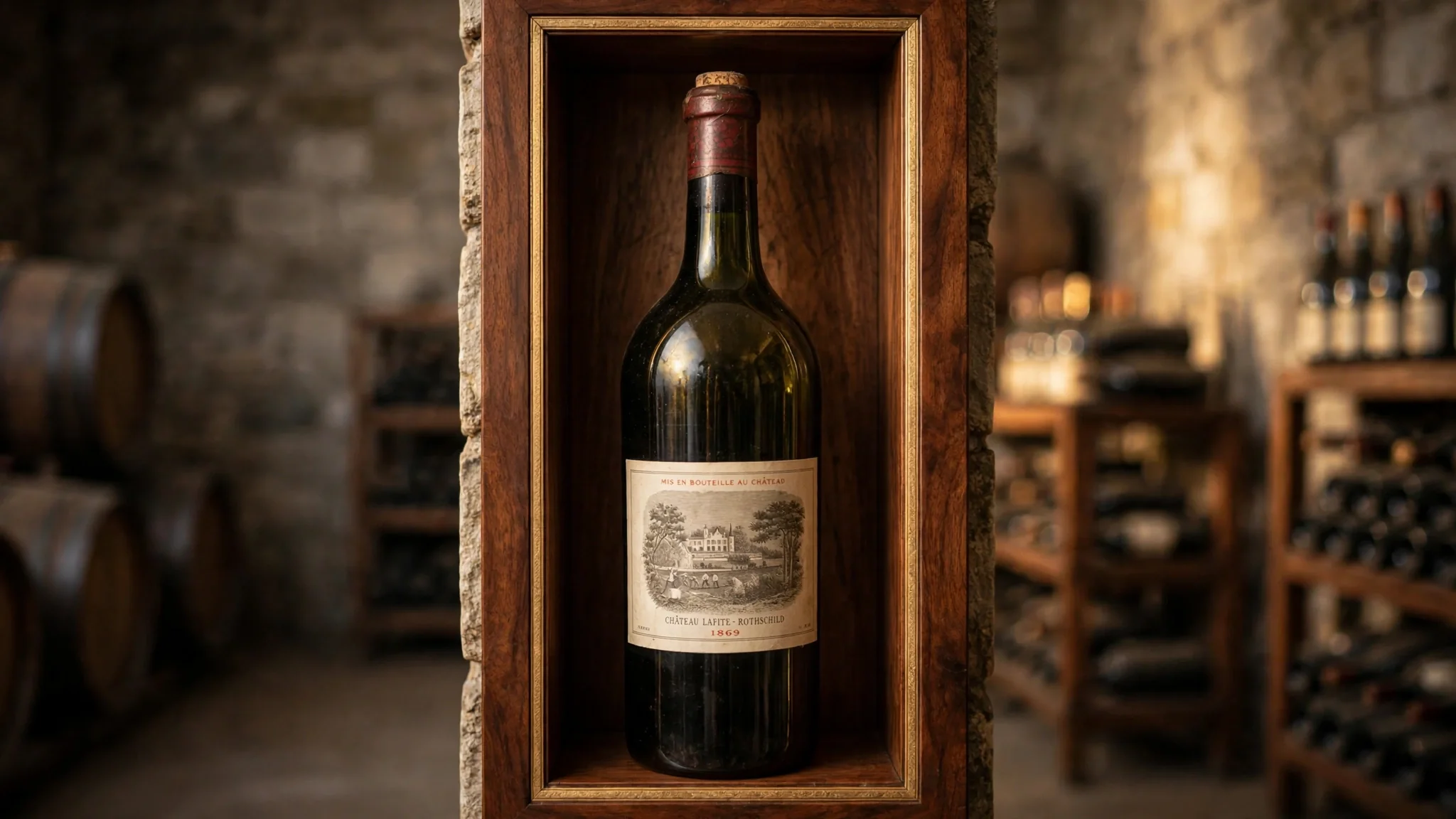
Sotheby’s, Hong Kong, 2010
In 2010, three bottles of 1869 Lafite from the estate’s own cellars came to auction in Hong Kong, and Asian bidding pushed a single bottle to roughly $233,000, at the time a world record.
The vintage’s greatness is documented by a century and a half of cellar books. When stored perfectly, Lafite from the 1860s has been known to astonish. Wines from that era, opened at the château in living memory, were described as profound. But the odds are mathematically cruel.
A bottle from 1869 that has been moved, warmed, shaken, or simply unlucky may be vinegar with a pedigree. No cork has survived a century and a half without risk. The honest assessment is that these bottles were bought as the ultimate expressions of Lafite’s name, the first growth’s first growth. Drinkability was a lottery ticket rather than a plan.
5. 1811 Château d’Yquem: $117,000
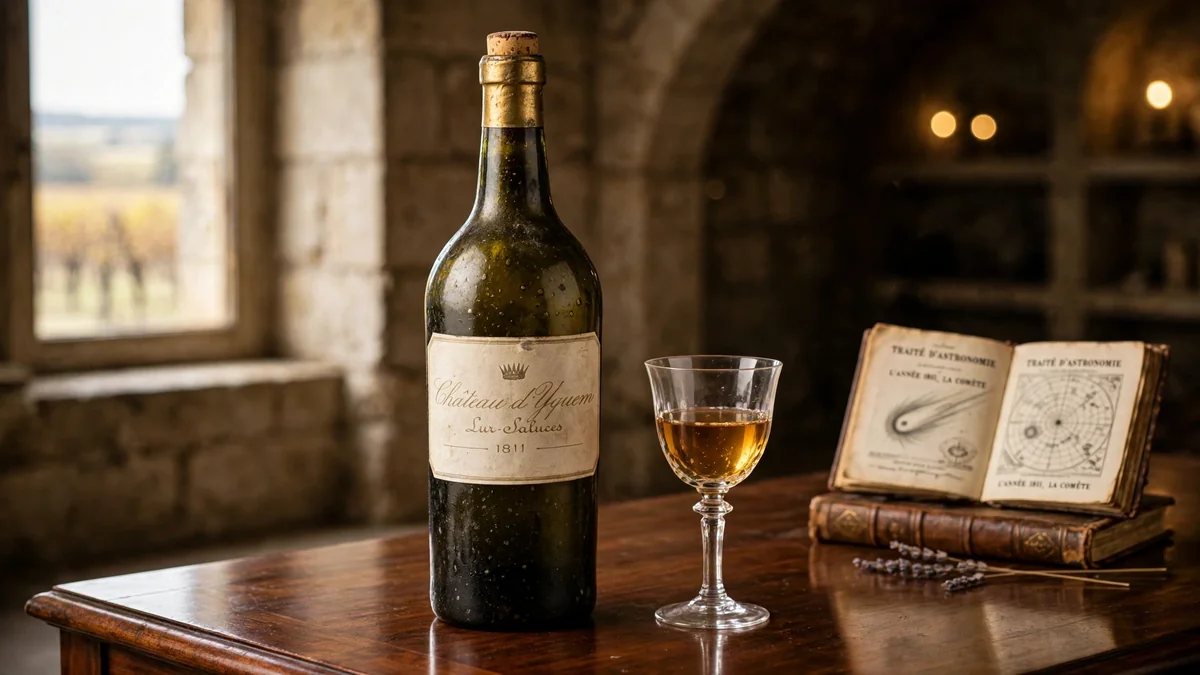
The Antique Wine Company, Private Sale, 2011
The only white wine on the list, and the oldest, the 1811 Yquem comes from the great comet vintage, the year a comet blazed over France and legend fused it with the wine’s perfection.
A bottle was sold in 2011 for $117,000 to a private collector, and here the drinkability news is genuinely remarkable: Yquem is among the longest lived wines on earth, its sugar and acid preserving it across centuries, and master sommeliers who have tasted nineteenth century Yquem describe wines of indescribable complexity, fig and saffron and time itself.
If any bottle on this list justifies its price in the glass, it is this one, and the comet vintage’s romantic mythology, whether or not the comet touched the grapes, is the purest example of wine pricing story as much as substance.
The Cautionary Tale: The Jefferson Bottles
No account of wine’s highest prices is complete without the story that almost was. In 1985, a 1787 Château Lafite etched with the initials Th.J., presented as having belonged to Thomas Jefferson, sold at auction for about $156,000, the most expensive bottle ever sold at that time.
The buyer was Christopher Forbes. The bottles, a group of 1784 and 1787 Bordeaux with Jefferson initials, were later proven conclusively to be fakes, the work of a German forger whose etching tools and Jefferson decanters were found by investigators.
The episode rewrote the market’s rules: it established modern authentication science, chemical dating of glass and cork and engravings, as the price of admission at the top of the trade, and it remains the reason that provenance now adds or subtracts zeros at auction. The most expensive bottle in history was, in the end, an empty story, and the market’s current obsession with cellar records traces directly back to that lesson.
The Verdict on Drinkability
The uncomfortable truth unites the list: at these prices, drinkability is beside the point, and the market knows it. The 1945s are ghosts. The 1869 is a lottery ticket. The 1811 Yquem might still sing. Only the Screaming Eagle, ironically the least aristocratic bottle on the list, was bought at a price that a great dinner could conceivably justify.
Wine at this altitude functions less like a beverage and more like the other assets the wealthy trade, the watches and handbags and classic cars whose value lives in scarcity, provenance, and story rather than utility. The wisest collectors buy two bottles of everything great: one to trade, and one to drink with friends, which is the only investment thesis in wine that never fails.
FAQs
What is the most expensive bottle of wine ever sold?
The 1945 Domaine de la Romanée-Conti sold at Sotheby’s New York in October 2018 for $558,000, the record for a standard 750 milliliter bottle. Larger formats and charity auctions have produced higher totals, notably the 1992 Screaming Eagle six liter at $500,000 in 2000.
Why is the 1945 Romanée-Conti so valuable?
The 1945 vintage was the last from the domaine’s pre-phylloxera vines before replanting, produced in tiny quantities during wartime conditions, and is regarded as the greatest Burgundy vintage of the century. With fewer than six hundred bottles made and a fraction surviving, supply is essentially fixed against enormous demand.
Is the world’s most expensive wine still drinkable?
Mostly no. Great tasters report that the 1945 reds, both the Romanée-Conti and the Mouton, are past their peak and now drink as ghosts of their former selves. The 1811 Yquem is the notable exception, as its sugar and acid preserve it across centuries, and the 1992 Screaming Eagle remains superb.
What were the Jefferson bottles?
A group of 1784 and 1787 Bordeaux bottles etched with Thomas Jefferson’s initials surfaced in the 1980s and sold for record prices, before investigators proved them to be sophisticated fakes produced by a German forger. The scandal transformed authentication standards across the fine wine trade.
Why do Asian collectors dominate these auctions?
The landmark results of the past two decades have clustered in Hong Kong and New York sales with heavy Asian bidding, driven by the cultural prestige of Lafite and DRC in particular, which became status symbols in Chinese business culture. Hong Kong’s tax free wine trade amplified the effect, making it the world’s auction capital for wine.
Does expensive wine appreciate as an investment?
The greatest bottles have appreciated enormously over decades, with blue chip Burgundy and first growth Bordeaux leading. But the market is illiquid, storage dependent, and vulnerable to provenance shocks, and most wine bought at any price is made to be drunk. Treat investment claims with skepticism and drinkability as the point.
What is a comet vintage?
A comet vintage is a year in which a great comet appeared over the wine growing regions and produced legendary wines, most famously 1811, the year of Yquem’s most mythologized vintage. The comet’s actual effect on the grapes is nil; the legend’s power over prices is real and has lasted two centuries.
How do auction houses authenticate old wine?
Through provenance documentation, cellar records, and scientific analysis of the bottle itself, including glass composition and manufacturing marks, cork condition, engraving technique, and chemical testing of the wine. The Jefferson scandal established these methods, and today a bottle without impeccable provenance trades at a deep discount or not at all.