Most Expensive Champagne bottles occupy a unique place in the world of luxury collecting, from rare shipwreck discoveries to jeweled releases and prestigious vintage cuvées. While wine auction records belong to historic bottles like the 1945 Romanée-Conti and the Jefferson legends, champagne has its own exclusive market.
Explore the greatest wine auction records to understand how provenance and rarity shape luxury bottle values. Here, oversized bottles, exceptional provenance, and limited releases often turn champagne into a luxury collectible rather than simply a beverage. Here are the seven that define the category’s ceiling.
1. Armand de Brignac Midas: $215,000
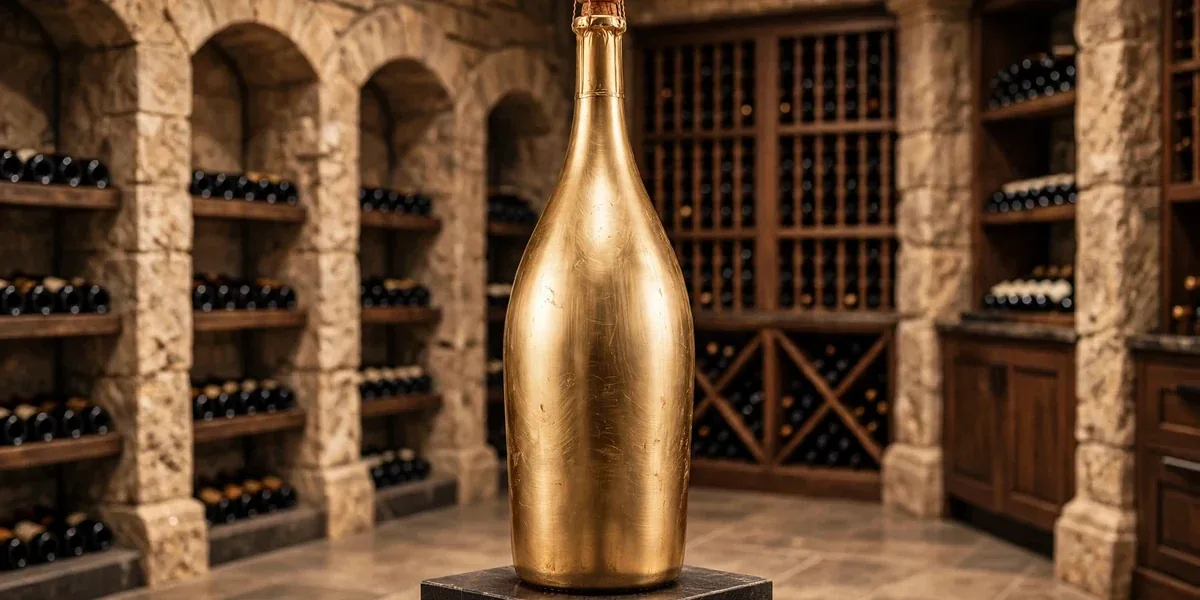
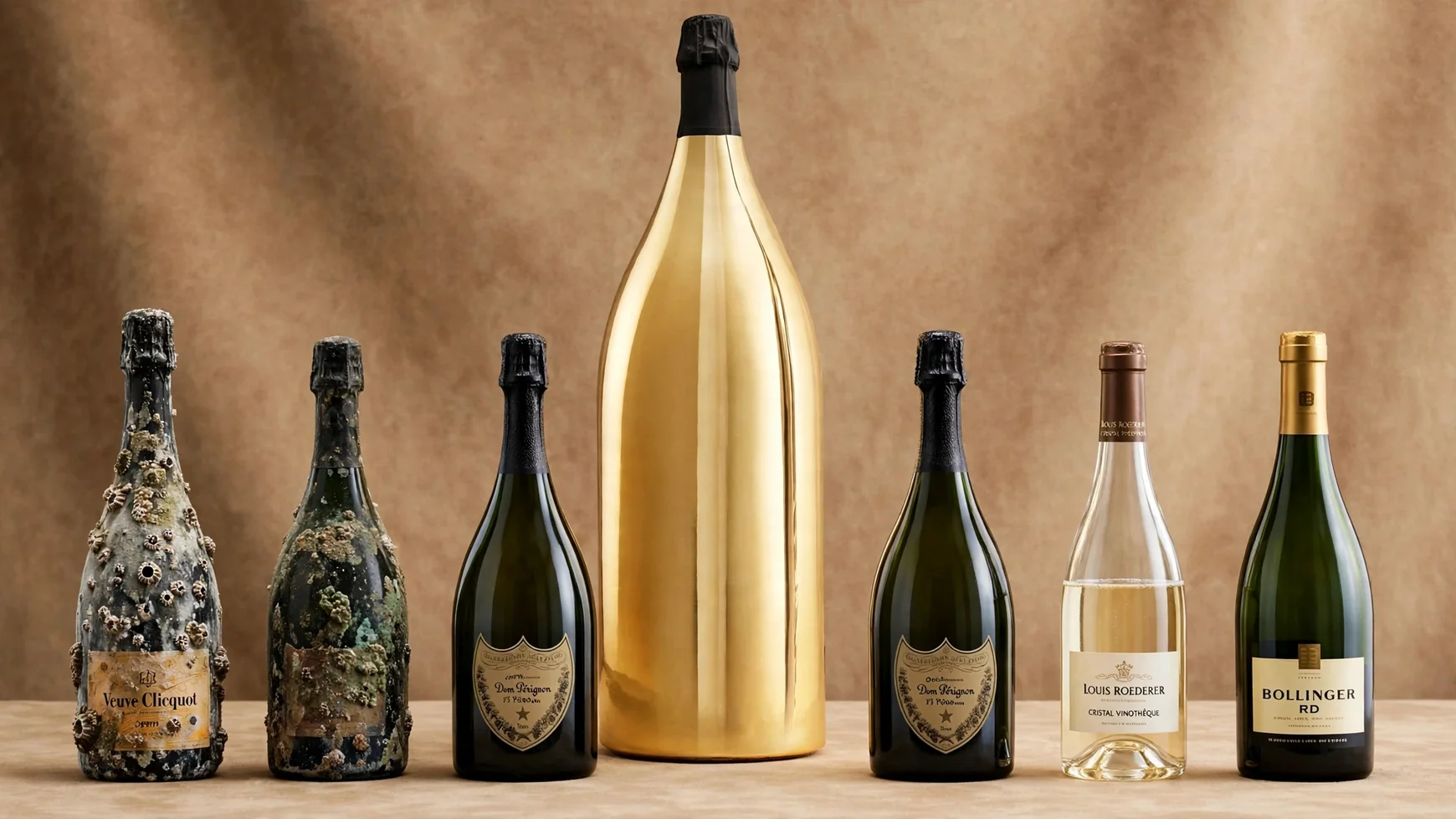
The Ace of Spades’ 30-litre Midas format is the largest champagne bottle produced by a major house. It was priced at $215,000 on release.
The Midas’s appeal is pure spectacle. It holds the equivalent of forty standard bottles in a single gold-finished vessel and requires two servers to pour. Its presence in the world’s nightclubs established the jeweled champagne format as one of the luxury economy’s most visible extravagances.
2. The 1907 Heidsieck Monopole Shipwreck Bottles: $275,000
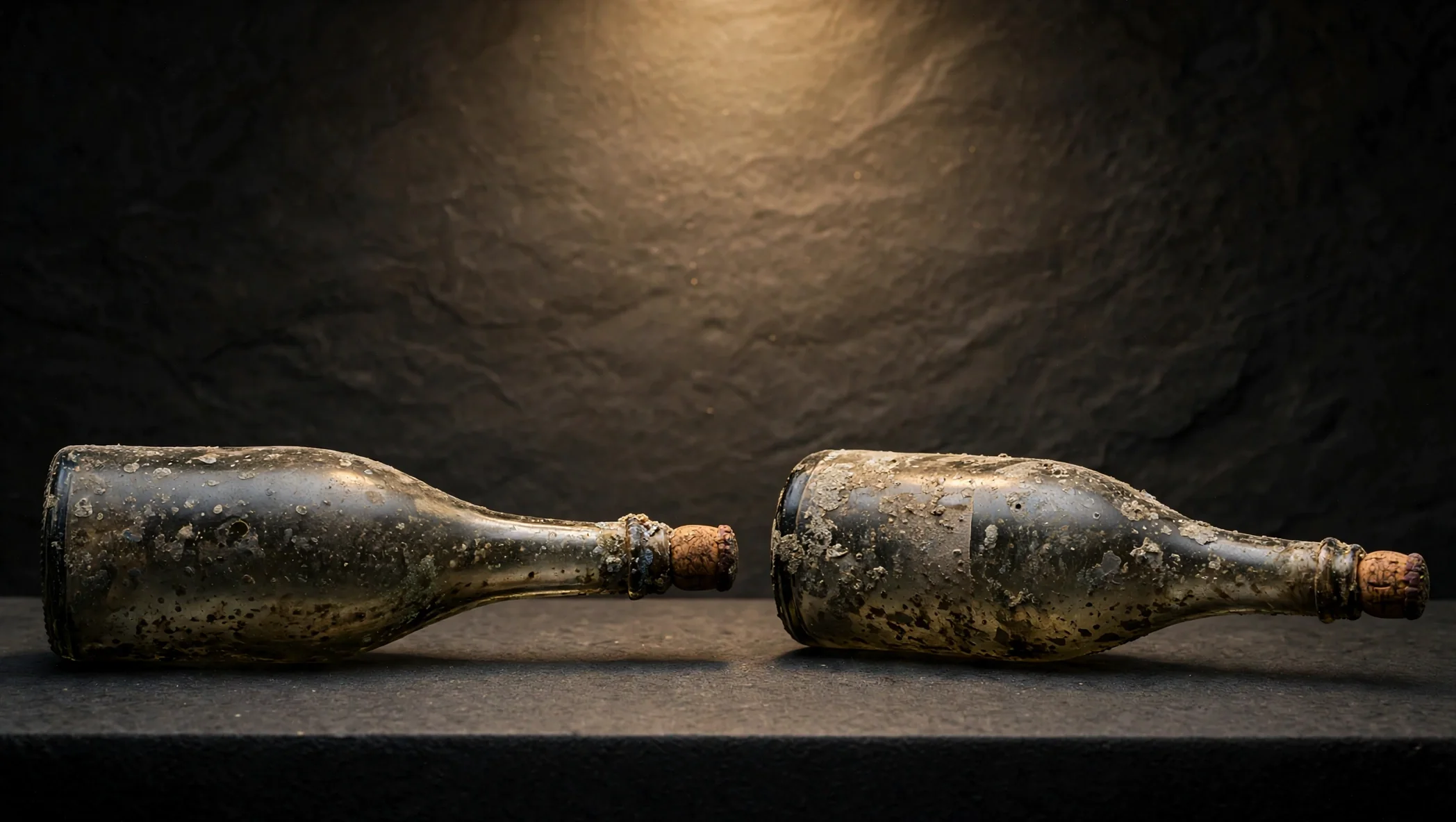
One of the most storied salvage stories in wine history involves two thousand bottles of 1907 Heidsieck Monopole. They were destined for the Russian imperial court but were lost when the Swedish schooner carrying them was torpedoed during the First World War.
The bottles were recovered from the Baltic seabed in 1998, after eighty years underwater. Their corks had been preserved by the cold, dark sea. Some bottles sold for as much as $275,000 each.
The story of the czar’s champagne sleeping beneath the sea now adds enormous value to every bottle, regardless of what eighty years of submersion did to the wine inside.
3. Krug Clos d’Ambonnay: $2,000 to $3,500 Per Bottle
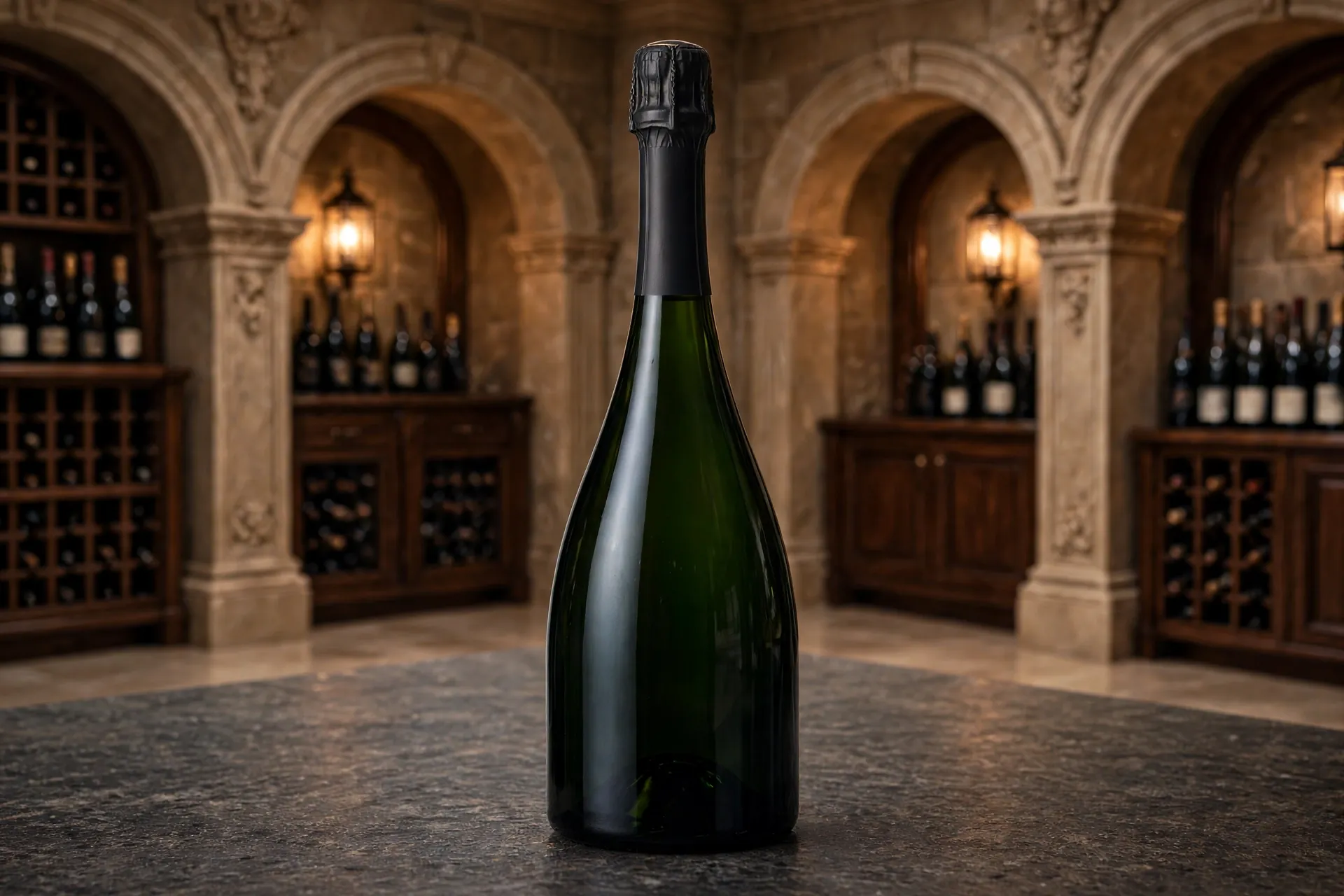
The prestige cuvée summit belongs to Krug’s single-vineyard blanc de noirs from the walled Ambonnay climat. Produced in quantities of only a few thousand bottles in declared vintages, it sits at the top of the standard champagne market.
The Clos d’Ambonnay’s justification lies entirely in the glass. Critics place it among the greatest champagnes ever made. Its price anchors the category’s credible ceiling: the most a wine drinker can pay for a champagne that is bought to be drunk.
4. Dom Pérignon P3 Plénitude: $1,500 to $3,000
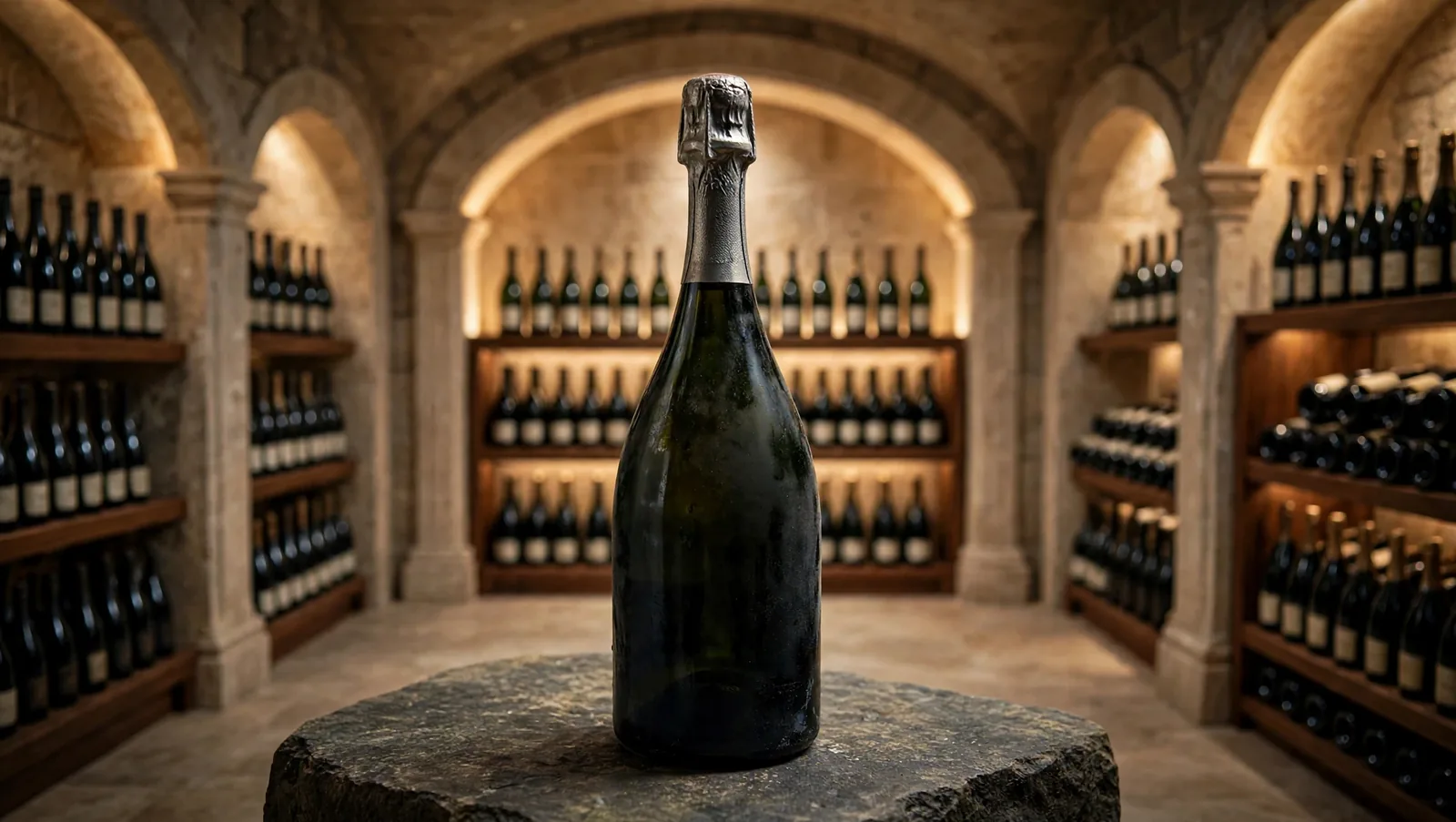
The house’s late-disgorged pinnacle consists of vintages matured on their lees for decades beyond the standard release. They are unveiled as the third Plénitude, with pricing to match.
The P3 program prices time itself. Each bottle represents thirty or forty years of cellaring before release. The vintages offered, drawn from the great years of the late twentieth century, give collectors a champagne that drinks like a wine of the great auction records.
5. Louis Roederer Cristal Vinothèque: $2,000 to $4,000
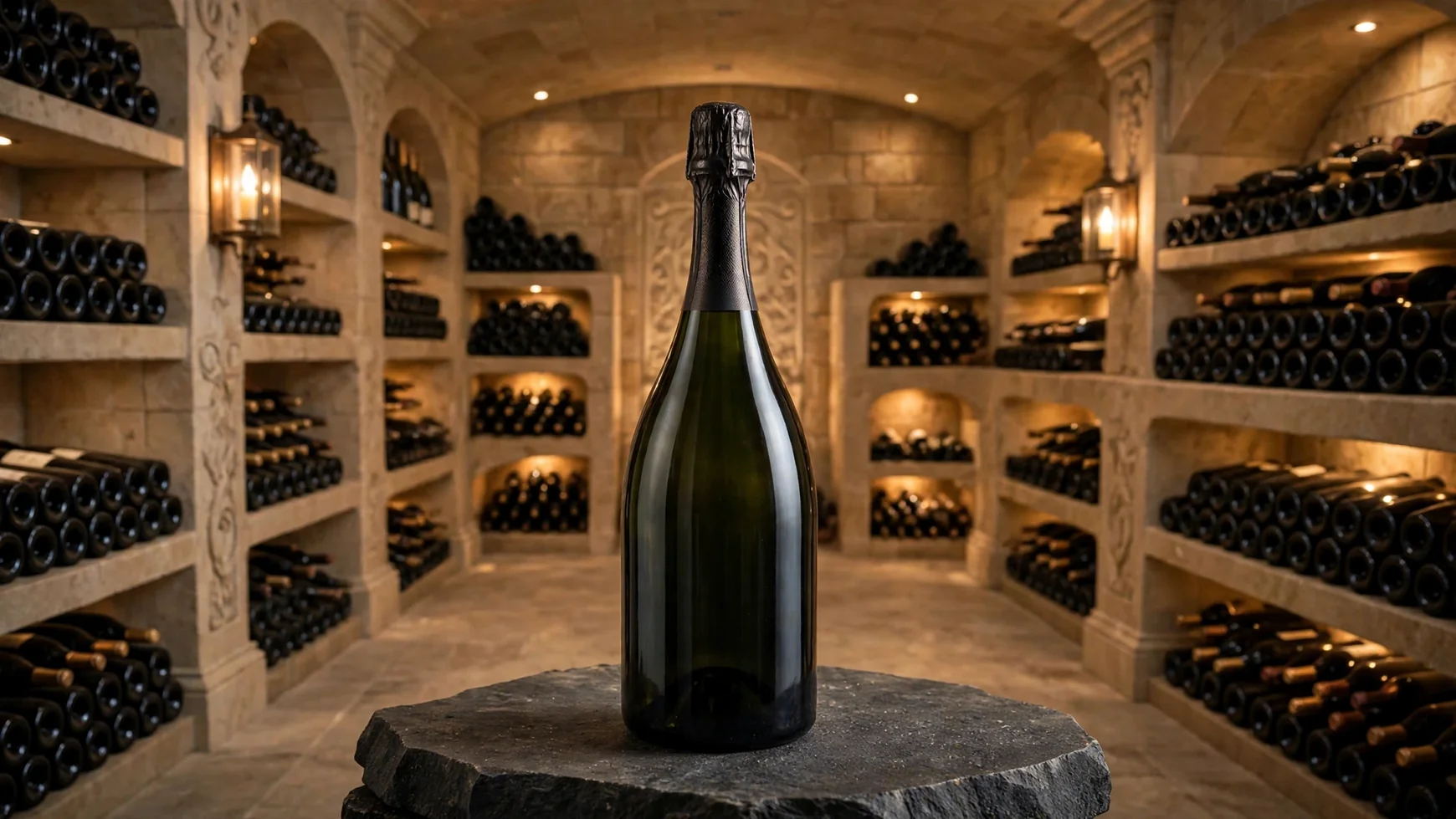
The house’s library releases of its famous cuvée are disgorged after extended cellaring and sold at multiples of the standard Cristal. The standard bottle’s price was itself a cultural artifact of the hip-hop era.
The Vinothèque line reflects the patience of the house’s own cellars. Magnum formats extend this progression for the collector market.
6. The Shipwrecked Veuve Clicquot: $15,000 to $30,000
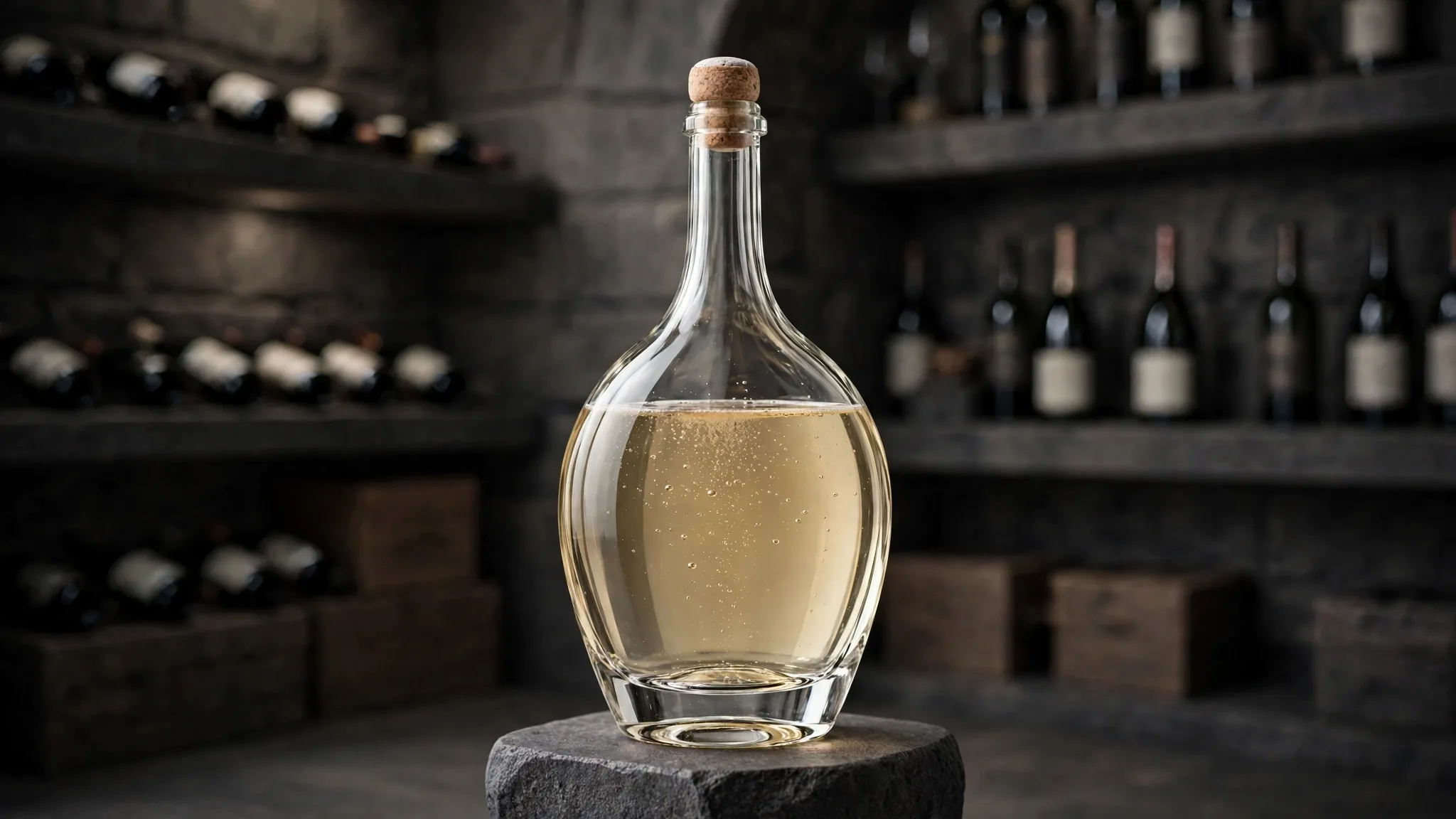
The Baltic discoveries of the 2010s included Veuve Clicquot bottles from the 1840s. They were among the oldest drinkable champagnes ever authenticated.
The bottles commanded five-figure prices from collectors who understood that the auction was about archaeology as much as wine. The discovery reshaped champagne’s understanding of its own durability and established the deep sea as the category’s most romantic provenance.
7. Bollinger RD and the Great Late Disgorged: $300 to $1,200
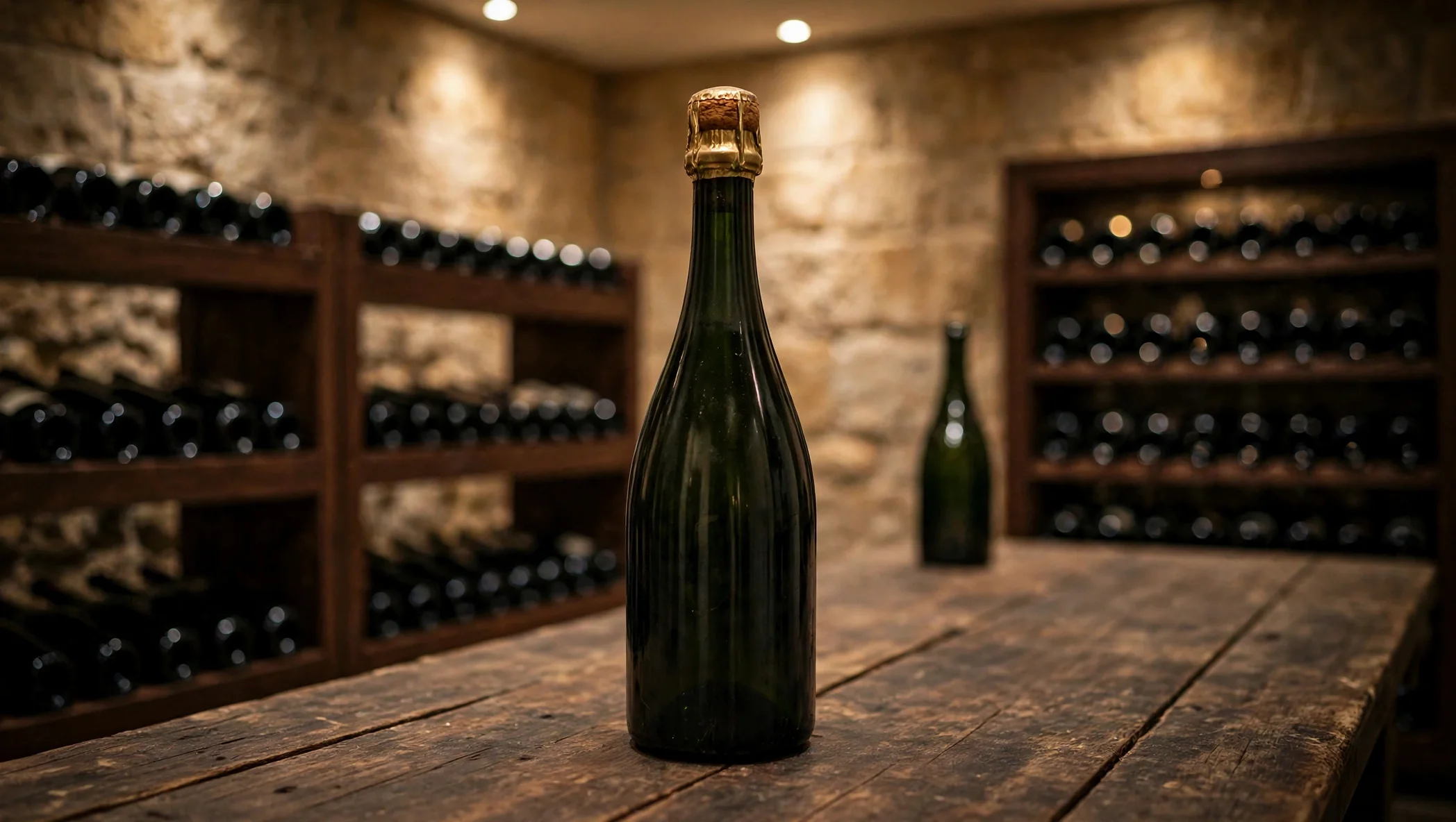
The accessible summit consists of recently disgorged cuvées from the great houses. These offer the complexity of late releases at prices that serious collectors can afford to drink rather than store in a vault.
Bollinger’s RD, the house’s flagship late release, anchors the category. Its price, a fraction of that of the trophy bottles, demonstrates the champagne market’s healthy structure: a pyramid with a base that is consumed and an apex that is collected.
What the Market Teaches
The champagne ceiling comes down to three observations.
Format is a luxury variable. The same wine in a Midas or a jeroboam can command multiples of the standard bottle’s price.
Provenance tells the story. The shipwreck bottles prove that a story can outrank condition. Champagne is perhaps the only category where a century at the bottom of the sea can add value.
The credible price ceiling is around $3,500. This is the price a great champagne can command as a beverage. Above that point, buyers are purchasing objects rather than wine. The distinction is one the houses themselves now engineer through jeweled casings and numbered editions.
FAQs
1. What is the most expensive champagne ever sold?
The salvaged 1907 Heidsieck Monopole bottles, at up to $275,000 each, hold the record, with the Armand de Brignac Midas at $215,000 the highest priced new release.
2. Why are shipwreck champagnes so expensive?
Provenance and story: the combination of documented history, imperial associations, and the romance of the sea adds a premium that condition alone cannot explain, and the survival of any drinkable wine from the deep is a provenance no cellar can manufacture.
3. What is the most expensive champagne meant for drinking?
Krug’s Clos d’Ambonnay and the great late disgorged cuvées, at $2,000 to $4,000, represent the summit of the bottle bought to be opened, with everything above that pricing the object rather than the wine.
4. What is a Midas bottle?
A 30 liter champagne format produced by Armand de Brignac, equivalent to forty standard bottles, priced at $215,000 and requiring two people to pour. It is the largest format produced by a major champagne house.
5. Are these champagnes good?
The prestige cuvées at the credible ceiling are among the greatest wines made, period. The trophy bottles’ contents are often secondary to their objects, and the shipwreck wines are acquired as history as much as beverage.
6. What is late disgorgement?
Leaving the champagne on its lees, the dead yeast of the second fermentation, for years or decades beyond the standard release, then disgorging it shortly before sale, producing a wine of extraordinary depth and freshness paradoxically combined.
7. Do champagnes appreciate as investments?
The great vintages of the prestige cuvées have appreciated steadily, but champagne’s investment market is younger and thinner than the fine wine market’s. Buy to drink, and let the appreciation be a pleasant surprise.
8. What should a first collector buy?
A bottle of Krug Vintage or Bollinger RD from a good year, drunk with friends who will appreciate it: the education in what great champagne actually is cannot be gotten from the trophy lists.