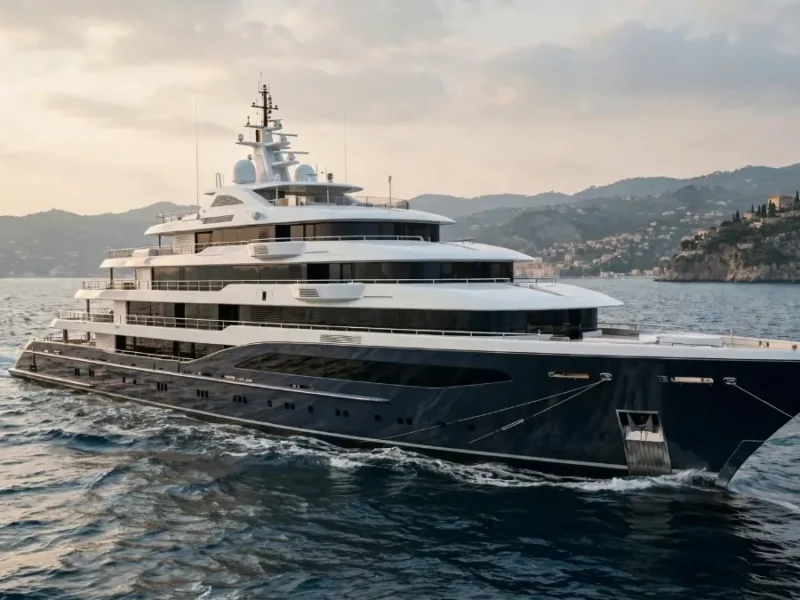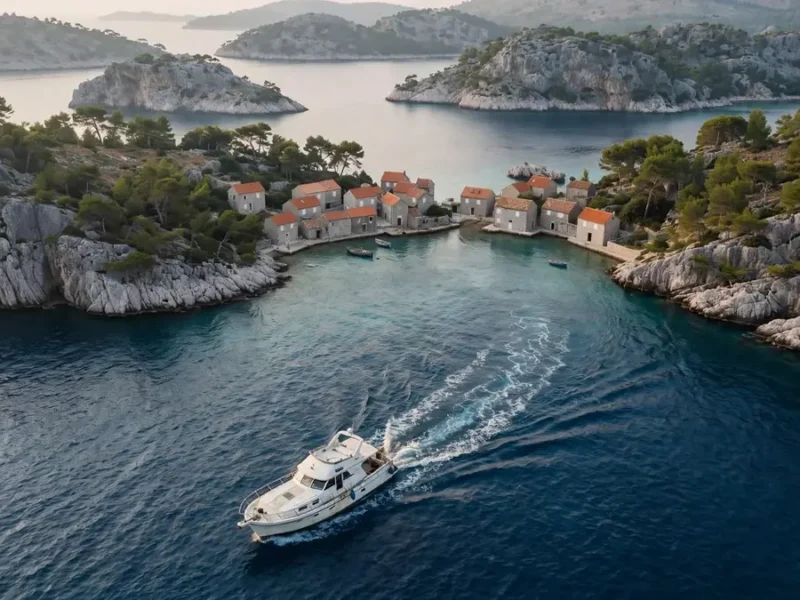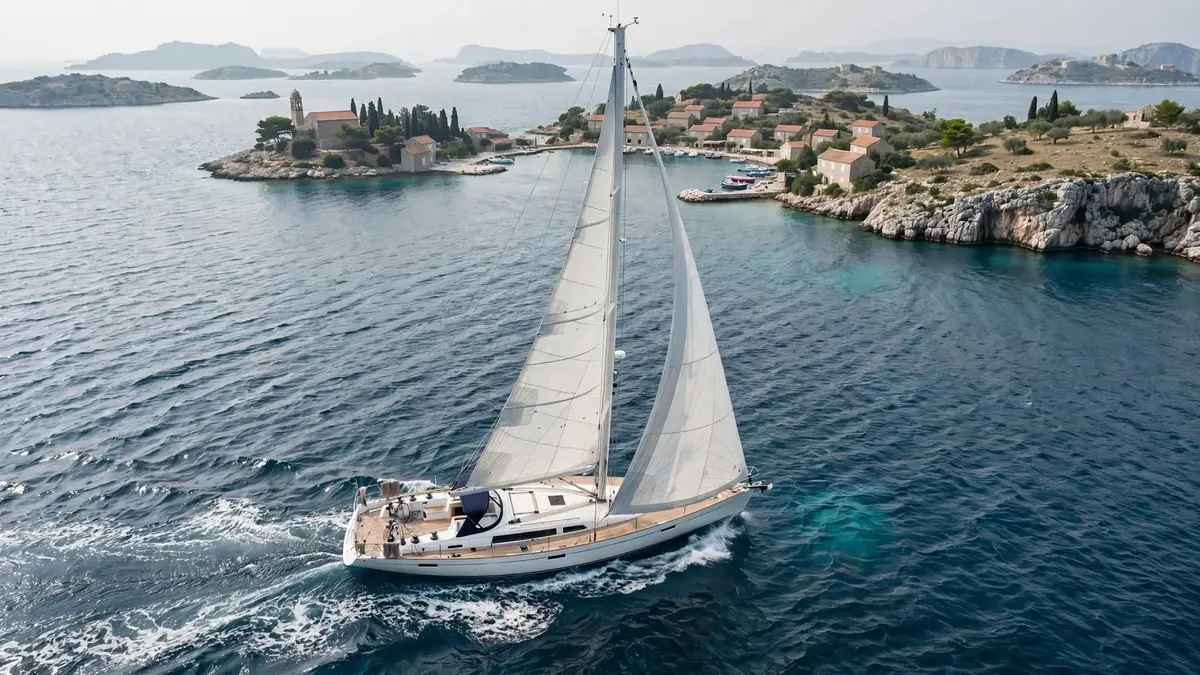
A luxury yacht charter in Croatia opens a sea the western Mediterranean’s grand ports can no longer offer: a coast of more than a thousand islands strung down the Adriatic’s eastern shore, the water so clear it reads as an optical trick, the distances between wonders measured in hours rather than days, and a sailing culture so deep that the country’s finest holiday is conducted under canvas almost as a matter of national identity.
For a century this coast was the sailing fraternity’s private knowledge, a place the French and Italian fleets passed on their way to their own famous waters, and the sailors who knew it kept it with the discretion of people who have found something better and would prefer it unshared.
That discretion has now lapsed, happily for everyone except the sailors, and the Adriatic has become the Mediterranean’s busiest charter sea, a rise in the fortunes of this coast that Pravi Celer has followed in its survey of the boating trends reshaping the charter world, and the guests who arrive today find the fleet grown, the marinas excellent, and the water unchanged, which was always the point.
I had the Croatian case made by a charter captain based in Split, a man who learned the coast from his grandfather and now teaches it to his own crew, over coffee on the Riva with Diocletian’s palace walls rising behind us. The western Mediterranean, he said, is where you go to be seen.
The Adriatic is where you go to sail. He swept an arm at the harbor. From this dock, he said, I can take you to an island where no one lives, anchor in a cove where the water is five meters deep and so clear the bottom looks close enough to touch, and eat in a konoba where the owner’s father caught the fish this morning.
And tomorrow I can do it again in a different direction, and the day after, and for the rest of the month without repeating myself. This guide follows his map: the coasts and their characters, what the week holds, who it suits, and the method, with the honesty this series owes its readers at every step.
The Two Coasts
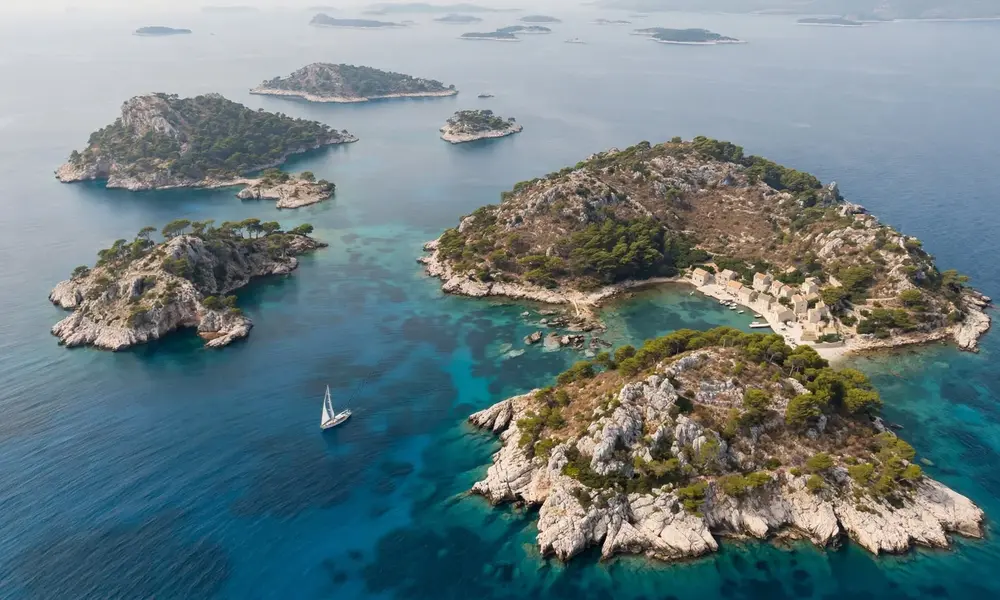
The Dalmatian coast south of Split comes first. It is the classic cruising ground, and it divides naturally into two distinct registers.
The island route runs from Šolta through Brač. Brač is home to Zlatni Rat, the Adriatic’s most famous ribbon of pebble. Next comes Hvar, the sunniest island in Croatia. Its town features a marble piazza filled with Venetian memories.
Further along lies Vis, the farthest inhabited island. It remained closed as a naval base until 1989. As a result, it has been preserved like a photograph of the old Adriatic. Its fishing towns of Komiža and Vis remain largely unchanged, and its coves are still quiet.
Beyond Vis lie Korčula and Mljet. Korčula has a walled old town that claims Marco Polo among its sons. Mljet is known as the green island. Its western half forms a national park of salt lakes.
At the end of the coast stands Dubrovnik, the pearl of the Adriatic. Its walls rise directly from the sea, just as they have for five centuries.
North of Split, the Kornati archipelago offers a different side of Croatia. It consists of eighty-nine islands of bare, lunar stone. They are uninhabited and surrendered entirely to sailors. Each anchorage holds only a handful of boats. The only buildings are the dry stone walls left by shepherds long gone.
Why the Adriatic Week Feels Different
Three differences set the Adriatic apart from the western seas, all in the guest’s favor.
The islands come first. No other coast in this series offers the same density of destinations. A single week can take in seven or eight islands without requiring a passage longer than two hours. The passages themselves become part of the pleasure. Island after island rises on the horizon, making the journey as rewarding as the destinations.
The water comes second. The Adriatic’s clarity comes from its limestone seabeds and the absence of major rivers. This gives swimming and anchoring a quality the western Mediterranean cannot match. The anchor remains visible on the bottom in six meters of water. In the evening, fish can still be seen swimming beneath the platform.
The sailing comes third. The maestral is a reliable afternoon breeze from the northwest. It builds almost daily through the summer. From two until six, it fills the sails with a dependability the Riviera’s winds cannot promise.
The coast’s entire culture revolves around this rhythm. Everything from fleet design to the daily routine reflects it. The day moves from a morning swim to an afternoon sail, followed by an evening at a konoba. The coast takes its sailing seriously. Guests who do the same are welcomed like members.
The Week’s Shape
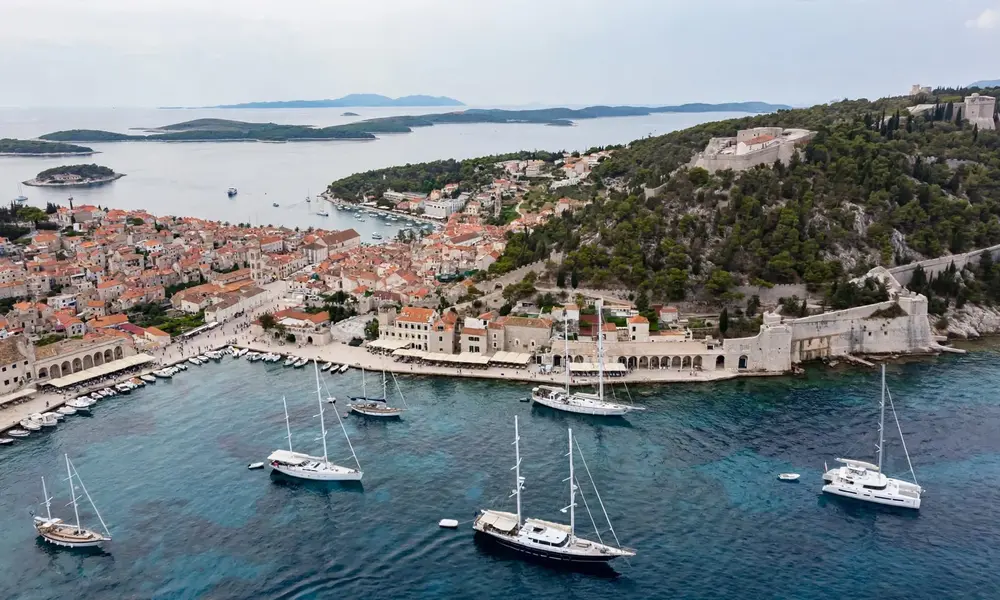
The classic itinerary is based in Split. Begin by boarding on the Riva, with the emperor’s palace as your neighbor. Enjoy dinner in its cellars, now converted into restaurants.
Day two crosses to Šolta or the sheltered coves of Brač. This is where the first swim and the first konoba await.
Day three belongs to Hvar. Spend the afternoon anchored offshore among the Pakleni Islands. In the evening, explore the marble piazza and the fortress.
Day four sails to Vis. Visit the Blue Cave of Biševo by tender in the early morning. Then explore the cove of Stiniva. Finish the day with dinner in Komiža, where fishermen mend their nets.
Day five takes you to Korčula. Spend the evening exploring its walled old town.
Day six crosses to Mljet’s lakes or the Elafiti Islands. The choice depends on the party’s preferences.
Day seven enters Dubrovnik’s harbor in the morning. The walls rise on both sides, creating the week’s most dramatic arrival. It is saved for the very end.
Guests basing themselves farther north at Šibenik should trade the island route for the Kornati. They should spend the week exploring the archipelago. These bare islands deserve at least two full days.
Who It Suits
The Croatian charter suits sailors first, obviously and completely. The coast is the Mediterranean’s finest classroom and its most rewarding sailing ground.
It also suits island collectors. They can visit seven islands in a week and still feel they have hurried.
Families will find plenty to enjoy, too. The passages are short, and the morning anchorages are calm. The local culture is also kind to children. These are some of the Adriatic’s quiet specialities.
It also appeals to the value-conscious connoisseur. Charter rates compare favorably with those of the western Mediterranean. The fleet is also the newest in Europe. At the quality end, many catamarans and sailing yachts are barely a season or two old.
However, the Croatian charter does not suit those who need the theater of the season. The casino and piazzetta society are largely absent. The Adriatic’s pleasures are water, wind, stone, and the table.
Guests who need a lively social scene should read the series’ guides to Monaco and Saint-Tropez instead. Alternatively, they can accept that Croatia has a smaller, more local scene. Hvar’s harbor on a summer evening is the clearest example.
A Method for Booking Well
First, choose your base according to the itinerary’s focus. Choose Split for the classic island route to Dubrovnik. Choose Dubrovnik itself for a south-based week. For the Kornati, consider Šibenik or Zadar.
Second, hire a captain with local seasonal experience. The maestral’s schedule, the park rules at Mljet and the Kornati, and the hidden coves that crowds often miss all require local knowledge.
Third, book during the shoulder season. June and September offer more space in anchorages and quieter towns. Choose July and August only with early booking and a willingness to embrace the festival atmosphere.
Fourth, provision for meals at local konobas. Let the crew handle the park permits, which are arranged as part of the routine. Still, it is worth confirming the arrangements in writing.
Finally, sail the afternoons without apology. The maestral is the coast’s gift. The quietest guest is the one whose engines are still warm from the morning. Their sails are full, and the islands slide past at the pace the sea intended.
Frequently Asked Questions
What is a luxury yacht charter in Croatia?
The private hire of a crewed yacht, motor or sailing, based at Split, Dubrovnik, or Šibenik, and sailing the Dalmatian islands of the Adriatic, the densest island cruising ground in the Mediterranean.
Where do you board a Croatia yacht charter?
At Split for the classic island line, Dubrovnik for a south-based week among the Elafiti islands, or Šibenik or Zadar for the Kornati archipelago. The Split fleet is the largest on the coast.
What is the best route for a Croatia yacht charter?
The classic route runs from Split to Dubrovnik through Šolta, Brač, Hvar, Vis, Korčula, and Mljet. The northern alternative allows two or three days of bare island sailing in the Kornati.
Can you visit the Blue Cave in Croatia by yacht?
Yes, on Biševo Island off Vis, by tender in the early hours before the tour boats gather. The cave’s light at midmorning is the phenomenon, and arriving early is the method.
Is Croatia expensive to charter?
A rung kinder than the western Mediterranean, with a newer fleet and sensible marina rates. The particularities are VAT at twenty-five percent and the park fees at Mljet and the Kornati, both modest, both collected as routine, and both worth every euro.
When is the best season for a Croatia yacht charter?
June and September for warm water, reliable maestral, and anchorages with room; May and October for the quiet coast and the year’s gentlest rates; July and August for the full festival at full price.