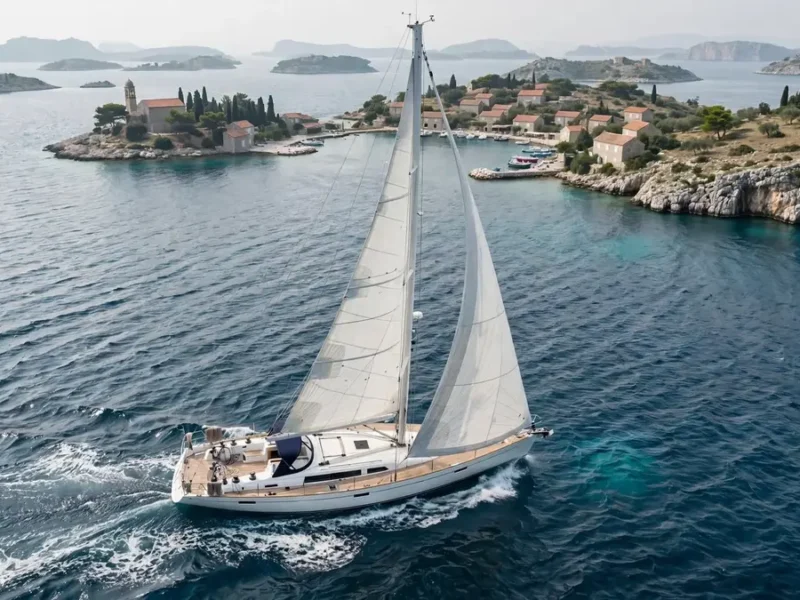
A Croatia yacht charter itinerary, honestly planned, follows the island line from Split to Dubrovnik. The route heads south so the coast’s most dramatic arrival is saved for the week’s end. It also lets the islands set the rhythm of each day. A morning sail leads to an anchorage by noon, followed by a town visit in the evening. The konoba becomes the day’s full stop.
The distance is short, barely ninety nautical miles from departure to arrival. Yet the route touches a dozen islands. The art of the week is to resist the temptation to visit them all. Each island along the route deserves its own day, and the itinerary below gives the best of them that time.
This guide builds the seven-night structure day by day. It explains the logic behind each day’s route. It then closes with a method for adapting the itinerary, following the series’ established order.
Day One: Board at Split, in the Emperor’s Shadow
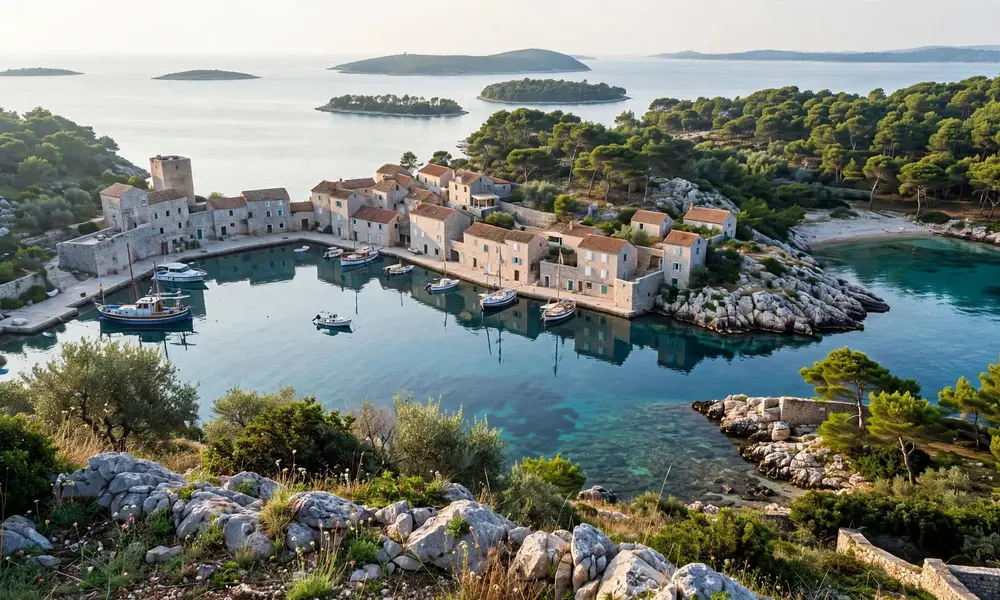
Arrive by midday, with the transfer from Split’s airport taking twenty minutes. Board on the Riva, with Diocletian’s Palace as the week’s first monument. The emperor built it seventeen centuries ago to spend his final days by this water. His judgment has aged well.
The captain gives the tour, and the crew makes its introductions. The provisioning conversation takes place over coffee in the palace’s Peristyle. The first swim follows from the yacht’s platform in the harbor’s clear water. Marjan Hill stands green across the bay.
The evening belongs to the palace’s cellars. They have been converted into restaurants where dinner is served beneath the vaults once walked by the emperor’s guard.
Sleep to the sounds of a working harbor. Tomorrow, the islands begin. The week’s only regret will be that the palace gets just one evening when it could easily take three.
Day Two: Šolta or Brač, and the First Konoba
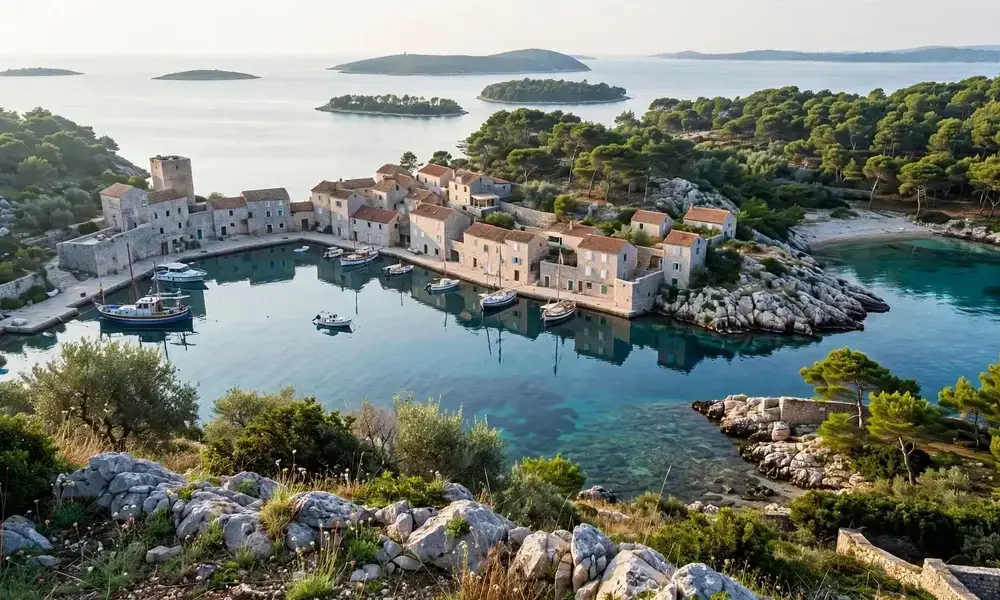
Cross the channel to the first island, for the Adriatic should be introduced gently. Šolta’s Maslinica offers sheltered western coves and a fish farm’s restaurant at its head. Brač offers Bol and the Zlatni Rat, the golden horn of pebble that shifts with the currents. It is the Adriatic’s most photographed beach and, early or late, its most swimmable.
Anchor in the cove and swim from the platform in water of unreasonable clarity. Hold the evening for the first konoba, a family tavern where the owner’s father caught the fish. The grill does the rest, and the wine is local and honest.
The week has found its rhythm by the second night: swim, sail, konoba, stars.
Day Three: Hvar, the Marble Piazza and the Pakleni Islands
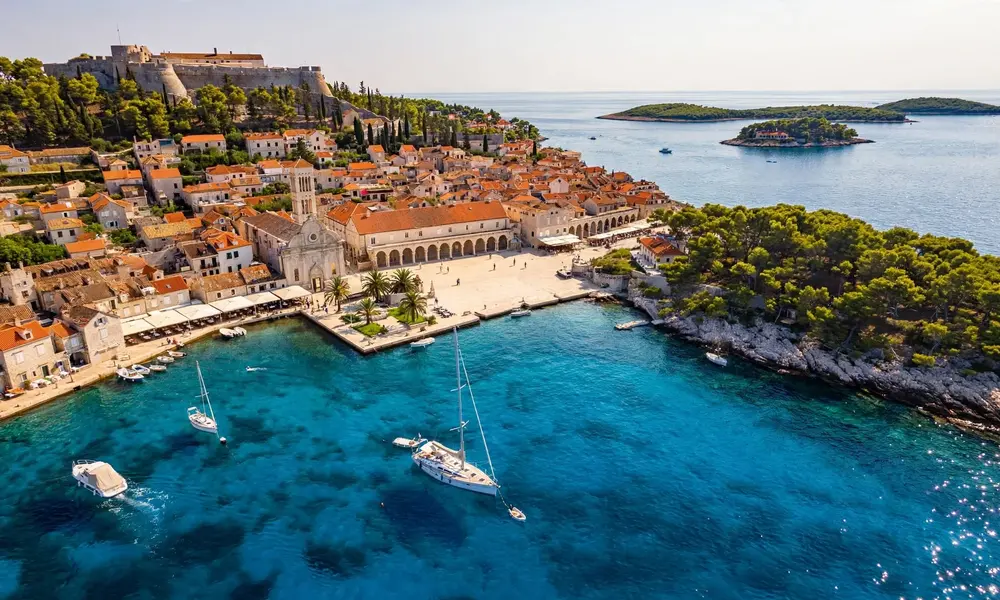
Sail to Hvar, the sunniest island in Croatia. Arrive in the late morning so the approach reads properly: the town’s stone waterfront, the Venetian piazza of polished marble said to be the finest in the Adriatic, and the fortress above it all.
Anchor off the Pakleni Islands, the wooded islets scattered opposite the harbor. Their coves around Palmižana hold a dozen boats each in pine shade and clear water. The afternoon belongs to the anchorage; the evening belongs to the town. The piazza’s society gathers for the promenade and the long dinner in the lanes behind it.
Hvar’s summer night is the coast’s most social hour. The yacht’s party, sleeping at the anchorage, gets the town after the day boats have gone. In the morning, they enjoy the water before the boats return.
Day Four: Vis, the Blue Cave, and the Cove of Stiniva
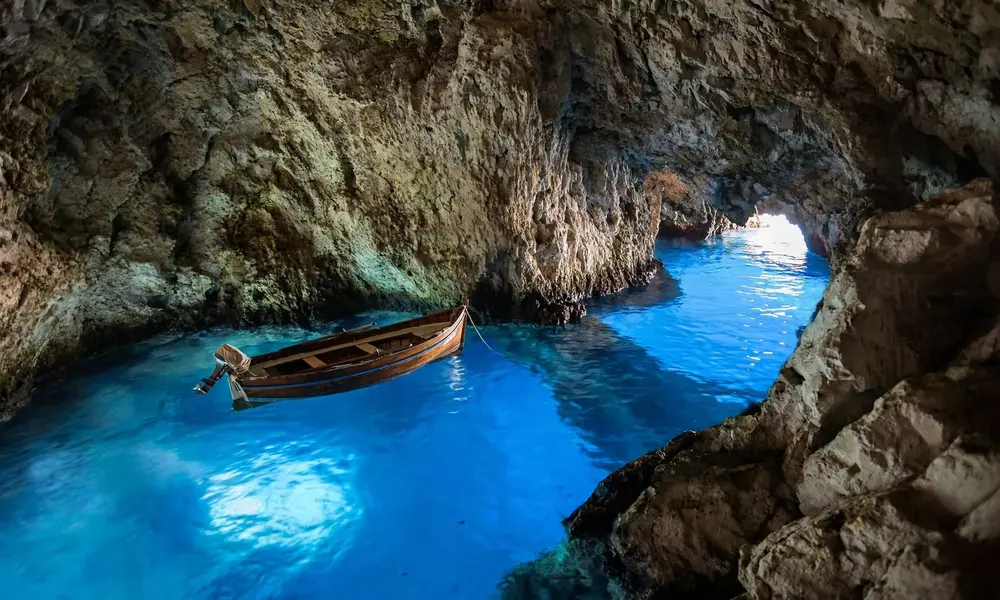
Sail farthest on the fourth day, to Vis, the island kept closed as a naval base until 1989 and preserved like a photograph since. Leave the yacht at anchor and take the tender early to Biševo’s Blue Cave. This sea grotto’s interior light at midmorning turns the water an impossible silver blue. The early hour also avoids the tour boats that queue by ten.
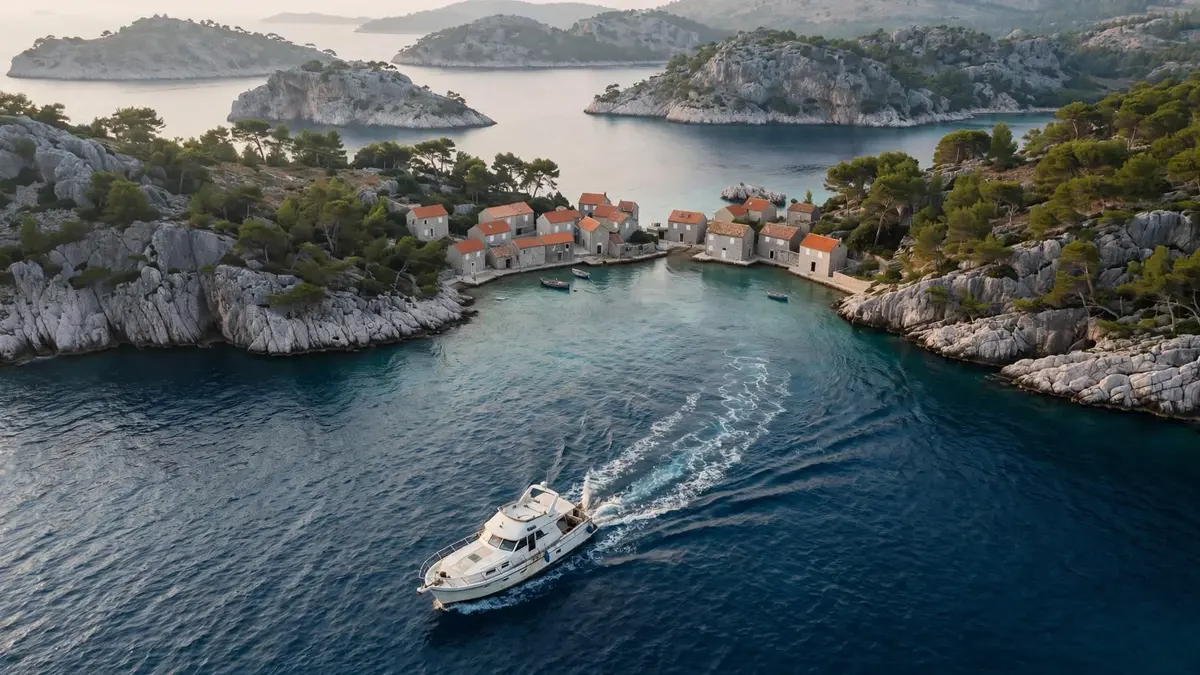
Return along Vis’s southern coast to Stiniva, a narrow cove between cliffs that open at the last moment onto a pebble beach and fishermen’s huts. It is the Adriatic’s finest small anchorage and the week’s swimming summit.
Spend the evening in Komiža, the fishermen’s town on the western shore. Its stone houses and harbor remain unchanged after a century. Enjoy dinner at a table where the day’s catch is the only menu argument.
Day Five: Korčula, the Walled Town
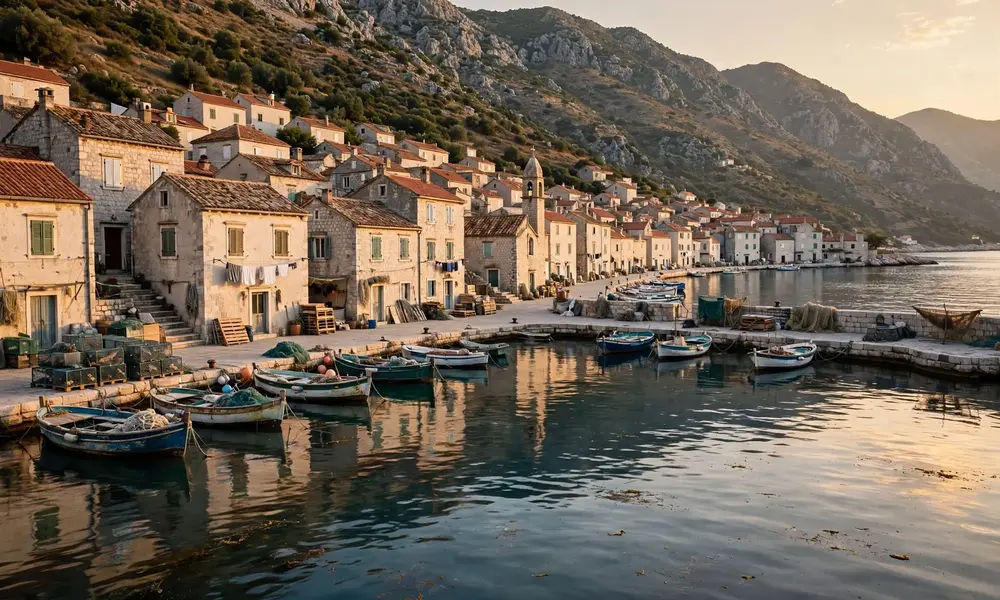
Cross to Korčula, the island whose walled old town is a compact jewel of Venetian stone on its peninsula. It claims Marco Polo among its sons and backs the claim with a house and a museum. The approach reveals the town in full: the towers, the cathedral’s facade, and the pine-shaded channel between town and island.
Anchor in the channel and go ashore for the late afternoon. The lanes are arranged in a herringbone pattern to catch the breeze. Small squares, each with its church, lead towards the waterfront konobas, which compete gently for the evening.
Korčula’s night is quieter than Hvar’s and perhaps the week’s most local. The town belongs to its people in a way the famous islands no longer can. The guest who stays for the evening belongs, briefly, to the town.
Day Six: Mljet, the Salt Lakes, or the Elafiti Islands
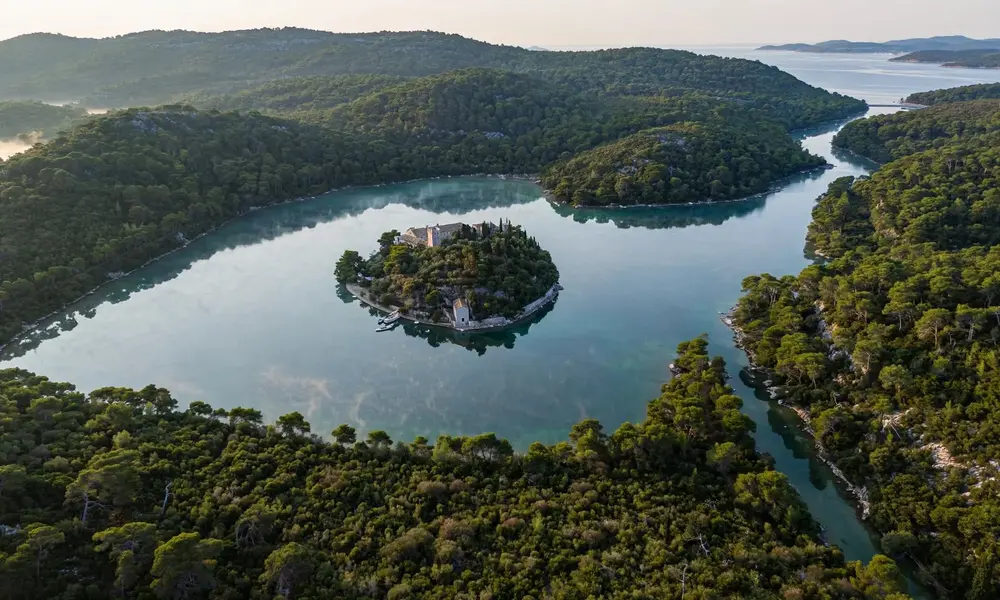
The sixth day turns toward the coast’s end, and the choice is the party’s. Mljet, the green island, offers its national park on the western half. Two salt lakes are joined to the sea by a channel. An islet in the larger lake carries a Benedictine monastery. The water inside the lakes is warmer and greener than the open sea.
The park entrance, a few hundred euros for the yacht, buys the emptiness. The lakes reward the day completely.
The alternative runs to the Elafiti Islands north of Dubrovnik: Šipan, Lopud, and Koločep. They are car-free and gentle. Lopud’s Bay of Šunj offers a crescent of sand, rare on this limestone coast.
Either choice ends with the sail south at dusk. The coast’s profile changes, and the week’s final island appears on the horizon.
Day Seven: Dubrovnik, the Walls From the Water
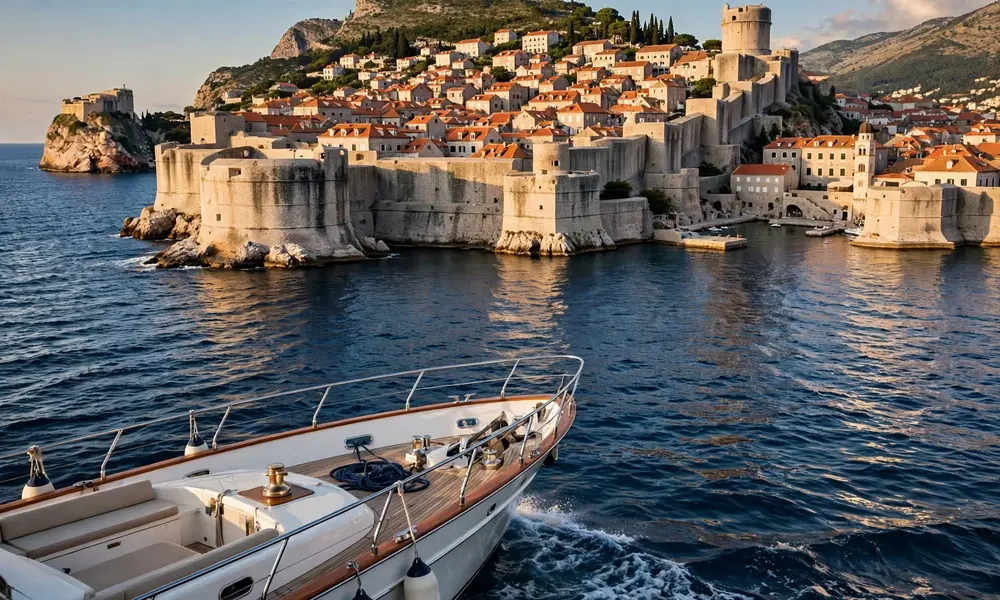
The last morning enters Dubrovnik’s harbor as the city deserves to be entered: from the sea, with the walls rising on both sides and the old town opening behind them. No arrival in this series, not Monaco’s nor Capri’s, matches the first sight of the Pearl’s fortifications from the water.
The tender lands at the old port. The morning is spent walking the walls, following the full circuit of stone with the sea on one side and the red roofs on the other. It is the single finest hour of urban sightseeing on this coast.
Enjoy a long farewell lunch in the lanes, pick up the market’s provisions for home, and prepare for a disembarkation that feels like the end of a pilgrimage.
The walls have stood for five centuries. The week has passed in seven days. Both are too short, and both are complete.
A Method for Adapting This Week
The structure holds for most parties, with four adjustments. Walkers should promote Brač’s Vidova Gora, the highest summit of the Adriatic islands, and the trails above Mljet’s lakes. They can take the morning hikes while the yacht moves on to meet them. A well-chosen trail companion, the kind Pravi Celer has surveyed in its notes on the best hiking apps for the prepared walker, turns the island line into a coast walked as well as sailed.
Swimmers should protect Stiniva, the Pakleni coves, and the lakes against every competing plan.
Those with ten days should add the Kornati from Šibenik or slow the week to four-hour days, letting each island breathe. Those with five should cut Vis and Mljet but keep Hvar, Korčula, and the Dubrovnik arrival, the line’s unbreakable spine.
Everyone should obey the wind’s schedule without complaint. The maestral decides the afternoons, while the mornings belong to the anchorages. The guest who sails with the sea’s rhythm rather than against it will find the coast generous beyond its price.
Frequently Asked Questions
How many days do you need for a Croatia yacht charter?
Seven nights is the classic for the Split-to-Dubrovnik line, long enough for five islands and the final arrival beneath the walls, with no passage over two hours. Ten days allows the Kornati or a slower rhythm.
Where do you board a Croatia yacht charter?
At Split for the classic southbound line, Šibenik for the Kornati, or Dubrovnik for a northbound week among the Elafiti islands. One-way charters between Split and Dubrovnik are the coast’s signature arrangement.
What is the best island on the Split-to-Dubrovnik route?
Vis for the Blue Cave and the preserved old Adriatic, Hvar for the piazza and the Pakleni anchorages, Korčula for the walled town, and Mljet for the lakes. Each earns its day, and the week earns all of them.
Can you visit Dubrovnik from a yacht?
Yes, and the arrival beneath the walls is the coast’s greatest. Yachts anchor outside the old port or take marina berths nearby, and the tender lands at the old port’s steps below the city.
Should you anchor or take a marina berth in Croatia?
Anchor; the coast rewards it more than any in the series. Its coves are free outside the national parks, while the marinas are sensibly priced for the nights the weather or the town suggests them.
What should I pack for a Croatia charter week?
Soft bags, deck shoes, swimwear in quantity, a light layer for the maestral’s evenings at anchor, walking shoes for Vidova Gora and Mljet, and nothing more. The konobas supply the rest of the week.