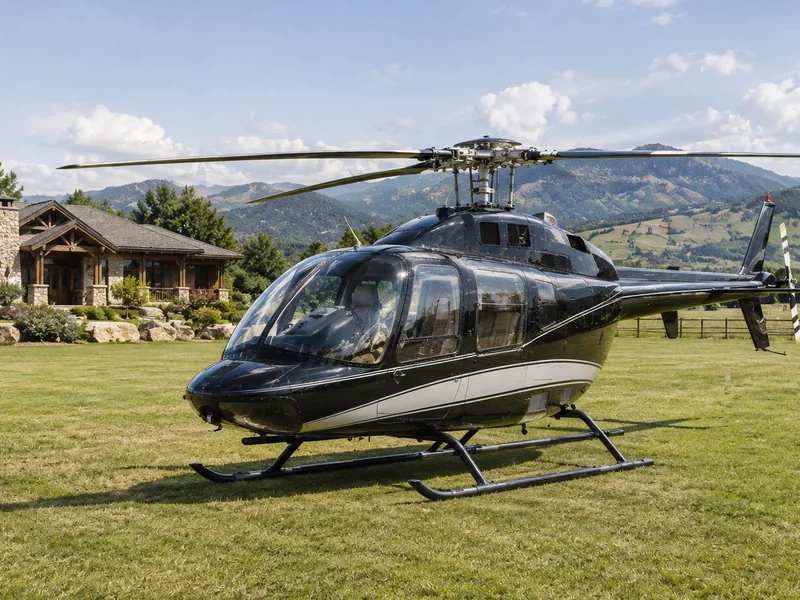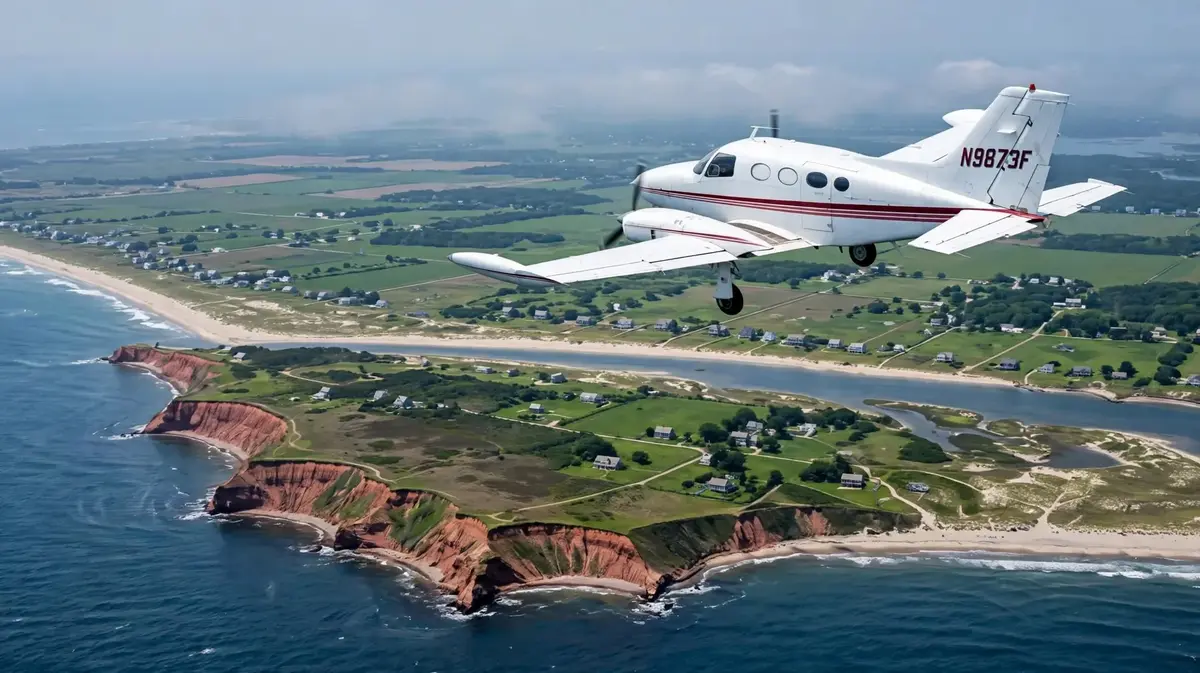
There is a moment on the approach into Martha’s Vineyard Airport that every island regular knows. The aircraft might be a nine-seat Cessna 402 or a chartered helicopter crossing from Hyannis. It breaks through the summer haze, revealing the island below.
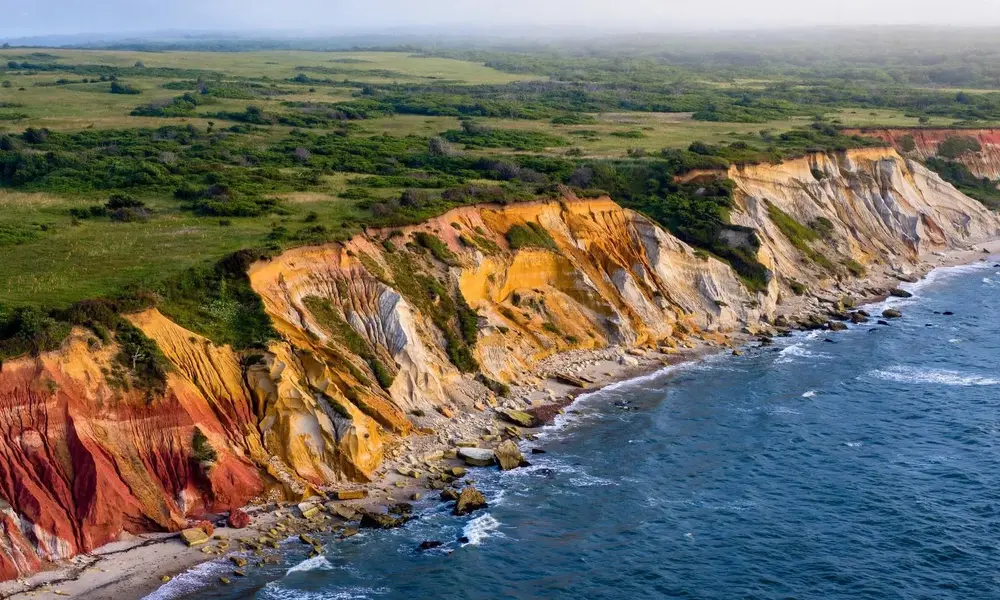
Its geography of privilege gradually comes into view. The red clay cliffs of Aquinnah stand at the far tip. The barrier beach of Katama runs south from Edgartown. Between them lies a quilt of farmland, moorland, and shingled houses. Their values would startle the farmers who originally built them.
Thirty minutes ago, you were parking at a Cape Cod airfield. Now you are flying over an island with no bridge, no railway, and a waiting list for everything.
Martha’s Vineyard and Nantucket are the two great islands of Southern New England. They share one transportation fact that defines their summer culture: you cannot drive to either of them.
The car ferries from Woods Hole and Hyannis often book solid weeks in advance. They also turn the journey into a half-day ritual.
The air route offers a different experience. Flights from the mainland take anywhere from twenty to forty minutes. This turns a weekend decision into an actual weekend.
For the luxury traveler, choosing how to fly is the first and most consequential decision of the trip. The options include commercial island hoppers, seasonal seaplanes, and private charters.
Here is the complete guide to doing it well.
The Commercial Island Hoppers: Cape Air and the Seasonals
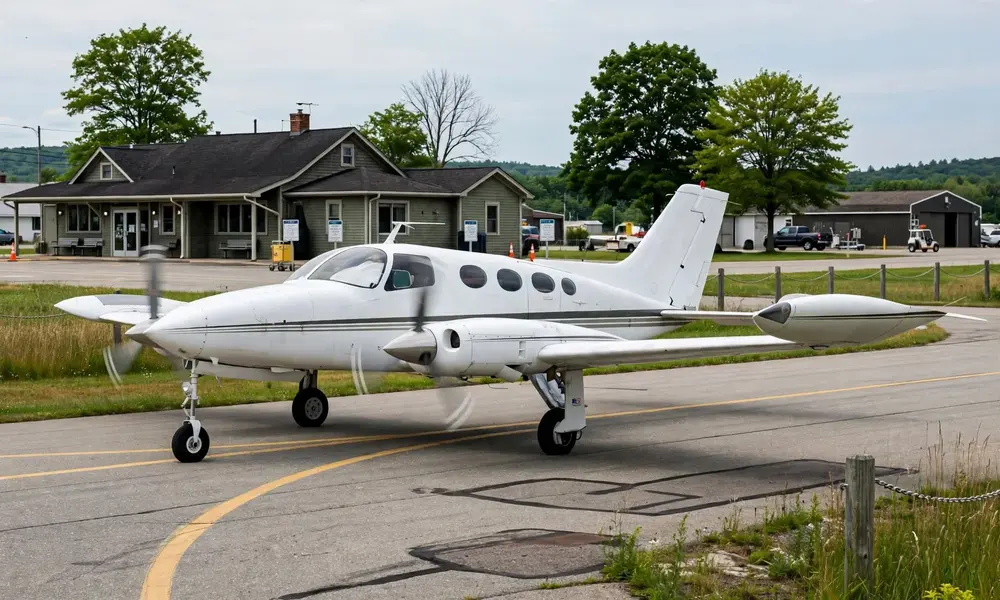
The backbone of island air travel is Cape Air, the Massachusetts-based airline. Its Cessna 402s shuttle throughout the day between Boston, Hyannis, New Bedford, and the two islands.
The 402 carries nine passengers in a cabin of endearing austerity. It cruises low enough for the flight to double as a sightseeing trip. From Boston, it reaches Martha’s Vineyard in about 35 minutes. From Hyannis, the flight takes around 20 minutes.
Fares range from roughly $100 to $250 each way, depending on the route and demand. The experience remains one of the last genuinely charming corners of American regional aviation. Paper boarding passes and pilots announcing the islands as they pass are part of its appeal.
Cape Air also flies to Nantucket on similar schedules. The approach offers views over the island’s moors and lighthouses. It is among the prettiest short flights in the country.
Seasonally, usually from late spring through early fall, seaplane services join the mix. The most prominent option is Tailwind Air’s Manhattan routes. A Cessna Caravan on floats takes off from the East River near Manhattan. It then lands in the harbors of either island after about 70 to 90 minutes.
The seaplane is the most romantic option. However, it is also the most weather-dependent. Fog over the harbor can disrupt more summer days than any published schedule suggests.
Book early for holiday weekends. Island seats of every kind can disappear quickly.
The Private Charter Route
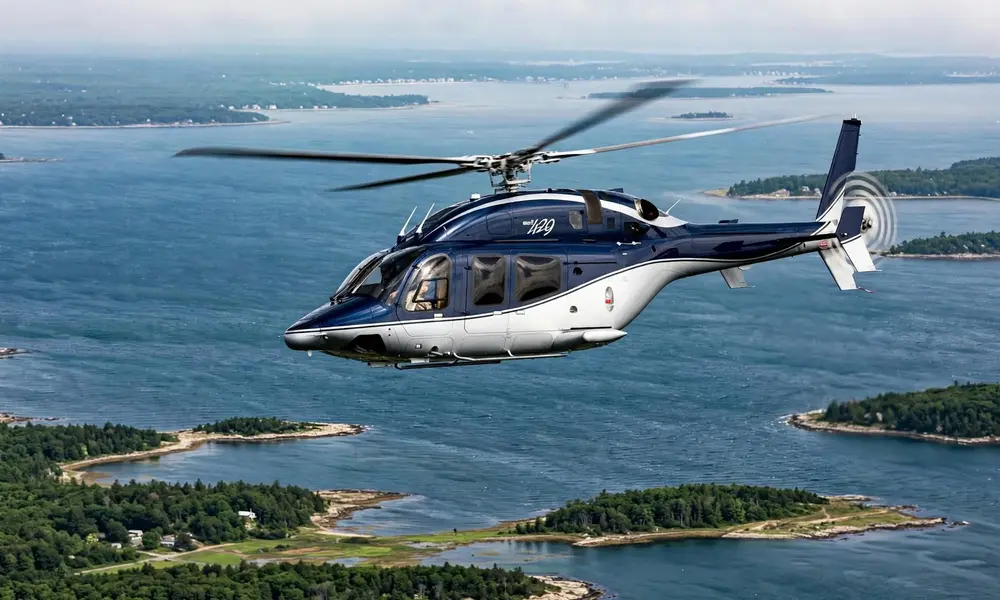
For travelers already in the private aviation ecosystem, the islands are among the easiest trips in the Northeast.
A helicopter charter from Manhattan to either island costs around $4,000 to $7,000 each way. The price depends on the aircraft and operator. Flight times are roughly one hour.
A light jet from Teterboro or Westchester can reach either island’s runway in 40 to 50 minutes. However, jet travelers should consider the runway lengths. Martha’s Vineyard has a 5,500-foot runway, while Nantucket has a 6,300-foot runway. Both comfortably handle light and midsize aircraft. However, they are not designed for the largest cabins.
The airports themselves are part of the charm. Martha’s Vineyard Airport in West Tisbury is a former Naval Air Station. Its long runways and towered operations make it the more capable field.
Nantucket Memorial Airport sits near the island’s center. It operates under heavy seasonal traffic. On August weekends, its small terminal can see private jets queued wingtip to wingtip.
Slots, parking reservations, and fuel arrangements all matter during peak season. An experienced charter broker handles all three. This is one advantage of booking a full charter over an app-based seat.
The seasonal flow of aircraft between the islands and the city resembles the Hamptons helicopter migration. Many of the same operators serve both corridors.
The Two Islands, Two Characters
Choosing between the two is the real decision. Ultimately, it comes down to personality.
Martha’s Vineyard is the larger and more varied island. It has six towns, each with a distinct identity. Oak Bluffs is known for its gingerbread cottages and carousel. Edgartown has stately captains’ houses. At the western end, Aquinnah offers dramatic clay cliffs.
The island rewards visitors who have a car or bicycle and a full week to explore. Its dining scene is also more developed than Nantucket’s. Options range from harborside seafood shacks to serious restaurants.
Nantucket is smaller and farther away. Its beauty is also more uniform. The island has a single town of gray shingle and white trim. Its wharves are lined with sailing yachts. Moors roll toward the Atlantic surf along the south shore.
It is the more polished island. It feels carefully curated. Its real estate is routinely among the most expensive in America per square foot. That value is reflected in the careful preservation of the entire island.
Nantucket rewards walkers and sailors. The Vineyard rewards explorers. Our guide to the distinct villages of New England’s island and coastal retreats offers a similar perspective. In the spirit of our Hamptons villages feature, the Vineyard is a collection of places, while Nantucket is a single mood.
Choose accordingly. You can also split the trip by ferry between the two islands. Ferries run several times daily during the season. The journey takes about an hour and fifteen minutes.
The Logistics That Make or Break the Trip

Three rules govern island air travel.
First, the season inverts the year. From Memorial Day through Labor Day, everything must be reserved far in advance. This includes ferries, rental cars, restaurant tables, and charter slots. From October through April, much of the hospitality world simply closes. If your dates are flexible, the shoulder weeks of June and September offer the islands at their best.
Second, weather rules everything. Summer fog can close seaplane routes and delay the hopper flights. Afternoon thunderstorms can also turn short flights into holding patterns. Build extra time into same-day connections.
Third, the ground side matters as much as the air side. Rental cars on the islands are scarce and expensive during the season. Taxis are limited. The wise charter traveler coordinates the car before arranging the plane.
For travelers deciding whether a private charter is worth the cost compared with a $200 Cape Air seat, the answer usually depends on the group size. A family of four paying peak-weekend fares can approach charter territory anyway. A charter also removes the reservation struggle entirely.
Those considering the broader question of when private flying pays for itself can find the break-even calculations in our feature on owning versus chartering versus jet cards. The seasonal economics of aircraft seats also apply to shorter island hops. Our article on the cost of flying privately between New York and Miami explores this in greater detail.
Why the Flight Is the Point
Strip away the logistics, and the island flight remains one of the great small rituals of the American summer. The Cessna banks over the Cape’s kettle ponds. The island then rises from the sea. The seaplane settles onto a harbor crowded with sailboats. The helicopter crosses the Sound, with Manhattan shrinking behind.
For an hour at most, you are travelling between two worlds. One is the connected mainland. The other is the deliberately unconnected island. The mode of the crossing sets the tone for everything that follows.
The ferry delivers you as a visitor. The plane, whatever its size, delivers you as an arrival.
FAQs
1. How long is the flight from Boston to Martha’s Vineyard?
Cape Air’s island hoppers cover the Boston to Martha’s Vineyard route in about 35 minutes, and the Boston to Nantucket route in a similar time. From Hyannis, the flights drop to roughly 20 minutes. Seaplane services from Manhattan take about 70 to 90 minutes to either island.
2. How much does it cost to fly to Martha’s Vineyard or Nantucket?
Commercial island hopper fares typically run $100 to $250 each way depending on route and how far in advance you book. Seasonal seaplane seats from Manhattan run considerably more, often $400 to $700 each way. Private helicopter charters from Manhattan generally range from $4,000 to $7,000 each way, and light jet charters fall in a similar band.
3. Can you fly directly from New York to the islands?
Yes. Seaplane services operate seasonally from the East River in Manhattan directly into island harbors, and private helicopters and jets depart from Manhattan heliports and the metropolitan area’s private jet airports for both islands year round. Commercial options route through Boston or Hyannis.
4. Which island airport should I use for Martha’s Vineyard?
Martha’s Vineyard Airport in West Tisbury is the island’s only airport, with a 5,500 foot runway handling commercial island hoppers and most private aircraft. Nantucket Memorial Airport serves Nantucket with a 6,300 foot runway. Both operate towers and can accommodate light and midsize jets.
5. Do I need to rent a car on the islands?
On Nantucket, often not: the town is walkable and bikes cover most needs. On Martha’s Vineyard, a car or plan is more useful given the island’s size and spread out towns, but rental cars are scarce and expensive in season. Reserve vehicles when you book flights, or plan around the island bus system and bicycles.
6. When is the best time to visit the islands by air?
June and September offer the best combination of weather, availability, and price. Peak season, mid July through mid August, means booked solid flights and premium pricing. The islands largely close down from November through April, when air service reduces to a skeleton schedule.
7. What happens if weather cancels my island flight?
Fog and thunderstorms can delay or cancel island flights, particularly seaplane services. Commercial airlines rebook on later departures, but on peak summer days the backlog can stretch hours. Private charter offers more flexibility to reroute or depart early, which is one argument for the premium. Never book an island arrival the same day as an unchangeable evening commitment.
8. Can I take a helicopter between the two islands?
Yes, and it is one of the most spectacular short flights in the Northeast, roughly 15 minutes over open water with views of both islands’ coastlines. Private helicopters and seaplanes offer inter island charters in season, and the ferry provides the budget alternative at about an hour and fifteen minutes.