The Bvlgari story begins with a Greek silversmith who crossed the Ionian Sea with little more than his craft and ended up defining how the entire world imagines Roman glamour.
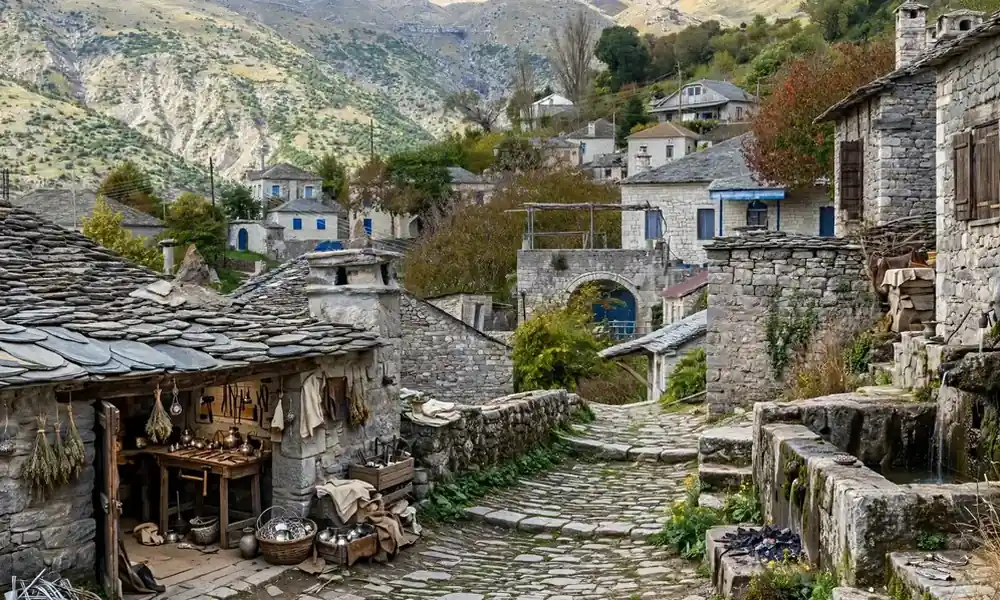
Sotirios Voulgaris, who later Italianized his name to Sotirio Bulgari, was born in 1857. He grew up in the mountain village of Kalarrytes in Epirus, where silversmithing had been his family’s trade for generations. After honing his skills in Corfu and Naples, he arrived in Rome and in 1884 opened his own shop on Via Sistina.
What he could not have known was that the Eternal City would become his greatest collaborator.
Over the following century and a half, his descendants transformed a small silver workshop into a maison that dressed Elizabeth Taylor, pioneered colored gemstones in high jewelry, and built an empire that now spans jewels, watches, fragrances, and hotels.
Bvlgari is the rare luxury house whose product is not merely made in a city but made of it.
The Greek Silversmith Who Became Roman
Sotirio’s early Rome years were itinerant and difficult, marked by shop moves, a robbery that cost him his stock, and the constant hustle of a foreign craftsman in a proud city.
His breakthrough came through tourists rather than Romans: his shop on Via Sistina sat on the route between the grand hotels and the Spanish Steps, and wealthy travelers on the Grand Tour developed an appetite for his archaeological revival silver.
In 1905 he made the decisive move to Via dei Condotti, opening the store that remains the house’s flagship today, with a salon designed to rival the great jewelers of Paris and London.
His sons, Constantino and Giorgio, grew the business in different directions that would define the brand forever.
Constantino, the scholar, studied ancient goldsmithing and wrote the definitive book on Italian silversmiths. Giorgio, the gemologist, mastered precious stones.
Together in the 1930s they pushed Bvlgari from silver into platinum and diamond high jewelry, creating the house’s first great Parisian style pieces and earning royal commissions, including the wedding jewels of Princess Giovanna of Savoy.
The Revolution of Color
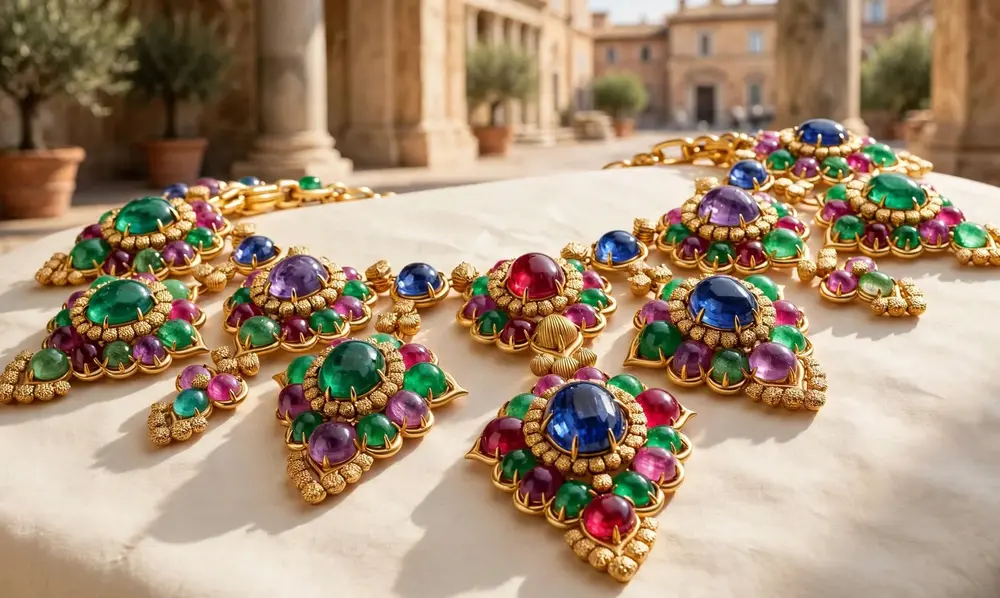
The moment Bvlgari became unmistakably itself arrived in the 1950s and 1960s, when the house committed the heresy that made it immortal.
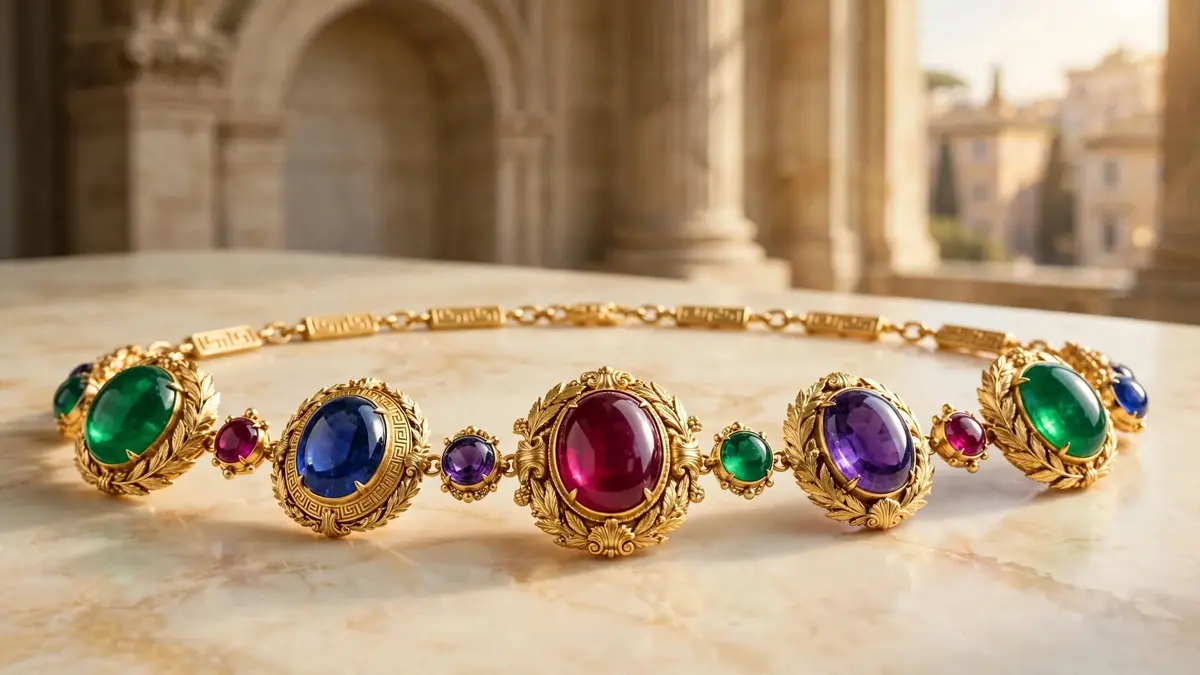
While Parisian haute joaillerie worshipped the white purity of diamonds and platinum, Bvlgari embraced yellow gold, then considered passé, and filled it with colored gemstones: emeralds, sapphires, rubies, amethysts, and tourmalines, often cut as smooth cabochons rather than brilliant faceted stones. Critics initially dismissed the style as barbaric.
Clients recognized it as sunshine rendered in gold.
The philosophy was deeply Roman. The city’s mosaics, its imperial marble, its evening light all live inside Bvlgari’s palette, and the house’s designers drew openly from Roman architecture: rings shaped like the coffered ceiling of the Pantheon, settings inspired by ancient coins, which the house famously mounted directly into its Monete creations.
This chromatic confidence became Bvlgari’s signature and remains the clearest visual identity among the world’s great luxury jewelry brands, recognizable across a room in a way no diamond solitaire can match.
Elizabeth Taylor and the Serpenti
If color gave Bvlgari its language, Rome’s Cinecittà studios gave it its mythology. During the Dolce Vita era of the 1950s and 1960s, Hollywood moved to Rome, and the stars moved into the Via Condotti boutique.
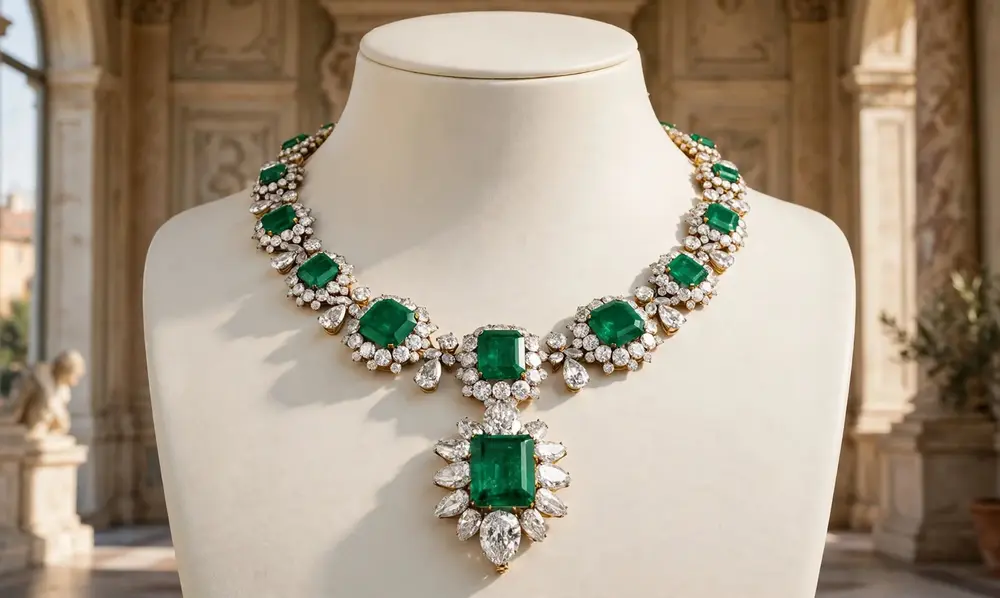
The defining romance began in 1962, when Elizabeth Taylor arrived to film Cleopatra. There, she met Richard Burton and the jeweler who would document their love in stones. Burton, who joked that the only Italian word Liz knew was Bulgari, gave her an emerald and diamond suite that became legendary.
It included a necklace featuring a 23-carat Colombian emerald pendant that could detach and be worn as a brooch.
Taylor’s Bvlgari pieces were not ornaments but chapters of her life, and when her collection was auctioned in 2011, the Bvlgari jewels achieved record prices, with the house itself buying back several pieces for its heritage archive.
The same era produced the Serpenti, the coiling serpent watch and bracelet that wrapped around Taylor’s wrist on the Cleopatra set and remains the house’s most iconic design. The snake, an ancient Roman symbol of wisdom and rebirth, became Bvlgari’s spirit animal, endlessly reinvented in gold, enamel, and gems, and a fixture among the most iconic designs in luxury.
From Jeweler to Complete Luxury House

The modern Bvlgari is far more than a jeweler.
The watch division grew partly through the acquisition of the Gérald Genta and Daniel Roth ateliers.
It achieved genuine horological legitimacy with the Octo Finissimo collection, which has set multiple world records for thinness. The collection also earned the respect of the most demanding collectors, placing the house in serious conversation among the makers of the world’s most iconic watches.
The B.zero1 ring, launched in 1999 and inspired by the Colosseum’s curves, became a modern classic and an entry point for a new generation.
Fragrances followed, building a significant presence in the perfumeries of the world, and in 2004 the house opened its first hotel in Milan, beginning a hospitality collection that now spans Rome, London, Dubai, Paris, Tokyo, and beyond, translating the brand’s Roman opulence into places to live rather than merely wear.
The boldest transformation of all came in 2011, when the Bulgari family sold the company to LVMH for approximately 5.2 billion dollars, one of the largest luxury acquisitions in history, securing the capital and distribution to grow while preserving the creative soul in Rome.
Why Rome Remains the Product
What ultimately separates Bvlgari in the jewelry landscape is that its luxury has an address. Cartier represents Parisian refinement, while Tiffany embodies New York modernism. Bvlgari, however, speaks of Rome: theatrical, sensual, sun-warmed, and slightly operatic.
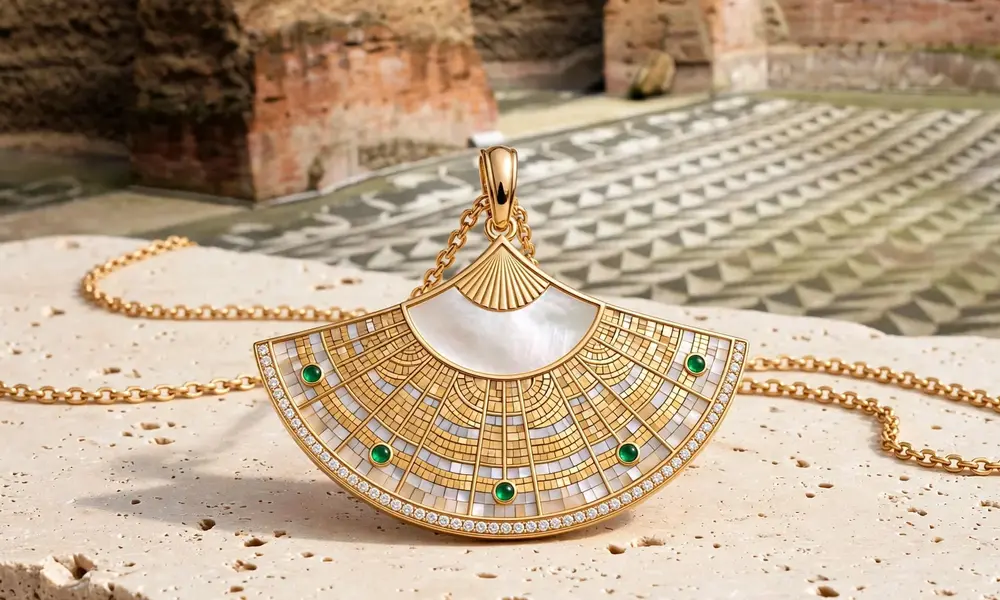
Every collection returns to the city’s architecture and light. The Divas’ Dream fan shape echoes the mosaics of the Baths of Caracalla. The Serpenti channels the eternal serpent of Roman myth. Even the boutiques are designed as Roman experiences, all marble and saffron light.
This rootedness is the house’s shield in an industry where trends shift with algorithms.
A style founded on two thousand years of architectural history does not date. For collectors and gift buyers alike, that permanence explains why Bvlgari pieces hold both emotional and financial weight, standing alongside the houses chronicled in our guide to the most expensive jewelry brands in the world as investments in beauty that outlast their seasons.
FAQs
Who founded Bvlgari and when?
Bvlgari was founded by Sotirios Voulgaris, a Greek silversmith from Epirus who later became known as Sotirio Bulgari. He established the luxury jewelry house in Rome in 1884. After opening several early shops near the Spanish Steps, he launched the famous flagship store on Via dei Condotti in 1905, which remains the brand’s historic home.
Why is Bvlgari famous for colored gemstones?
Bvlgari became famous for its colorful gemstones during the 1950s and 1960s. The brand moved away from traditional Parisian jewelry styles dominated by white diamonds and platinum, embracing yellow gold and vibrant gemstones with smooth cabochon cuts. Its colorful designs were inspired by the mosaics, architecture, and natural light of Rome.
What is the Bvlgari Serpenti?
The Bvlgari Serpenti is the brand’s iconic serpent-inspired design. It was first introduced as a flexible bracelet watch in the 1940s, using the Tubogas technique. Elizabeth Taylor famously wore one while filming Cleopatra in Rome, helping establish its legendary status. Today, the Serpenti design appears in jewelry, watches, and handbags.
What was Elizabeth Taylor’s connection to Bvlgari?
Elizabeth Taylor became one of Bvlgari’s most famous clients while filming Cleopatra in Rome in 1962. Richard Burton gifted her several exceptional emerald and diamond pieces from the brand. When her jewelry collection went to auction in 2011, her Bvlgari pieces attracted record-breaking prices. The maison also repurchased several items for its heritage collection.
Does Bvlgari make watches?
Yes, Bvlgari produces luxury watches and is particularly renowned for its Octo Finissimo collection. The collection has achieved multiple world records for mechanical thinness. The brand also strengthened its watchmaking expertise by acquiring the Gérald Genta and Daniel Roth ateliers. These acquisitions allowed Bvlgari to combine Swiss watchmaking techniques with its distinctive Roman design.
Who owns Bvlgari today?
Bvlgari is owned by LVMH Moët Hennessy Louis Vuitton, which acquired the brand in 2011 for approximately $5.2 billion. The acquisition was one of the largest transactions in the luxury industry. The Bulgari family received a significant stake in LVMH, while the maison continued operating from its headquarters in Rome.
What is the B.zero1 ring?
The B.zero1 ring was launched in 1999 and became one of Bvlgari’s most recognizable modern jewelry designs. Inspired by the curves of Rome’s Colosseum, it features a distinctive spiral structure with the Bvlgari name engraved on its sides. Its contemporary design has made it a popular entry point into the brand’s luxury jewelry collections.
Does Bvlgari have hotels?
Yes, Bvlgari operates a luxury hotel and resort collection that brings its distinctive Roman style into hospitality. Its first property opened in Milan in 2004, and the collection has expanded to destinations including Rome, London, Paris, Dubai, Tokyo, and Shanghai. The hotels are designed in collaboration with the architectural firm Antonio Citterio Patricia Viel.