The Burberry trench coat was born in the mud of the First World War, and the fact that it now appears on fashion runways, royal family members, and film stars a century later is one of the strangest and most instructive journeys in luxury history.
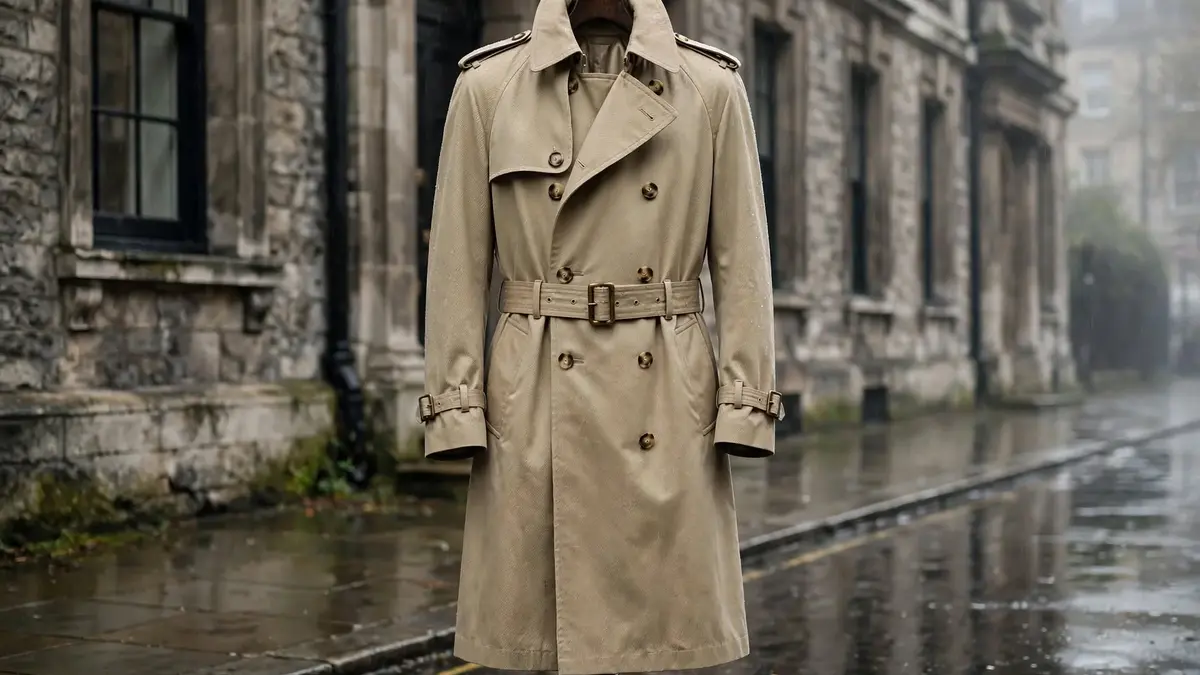
Stand in a rainstorm in London today and you will still see it everywhere: the belted silhouette, the D rings, the epaulettes, the storm flap, every detail originally designed for an officer crawling through trenches in Flanders.
The house behind it was founded in 1856 by a 21 year old draper’s apprentice named Thomas Burberry, whose obsession was not fashion at all but weather.
He wanted to build clothing that defeated the English climate, and in pursuing that single practical goal, he created a garment so perfectly resolved that the world has never found a reason to change it. This is the story of how function became legend.
Thomas Burberry and the Fabric That Changed Everything
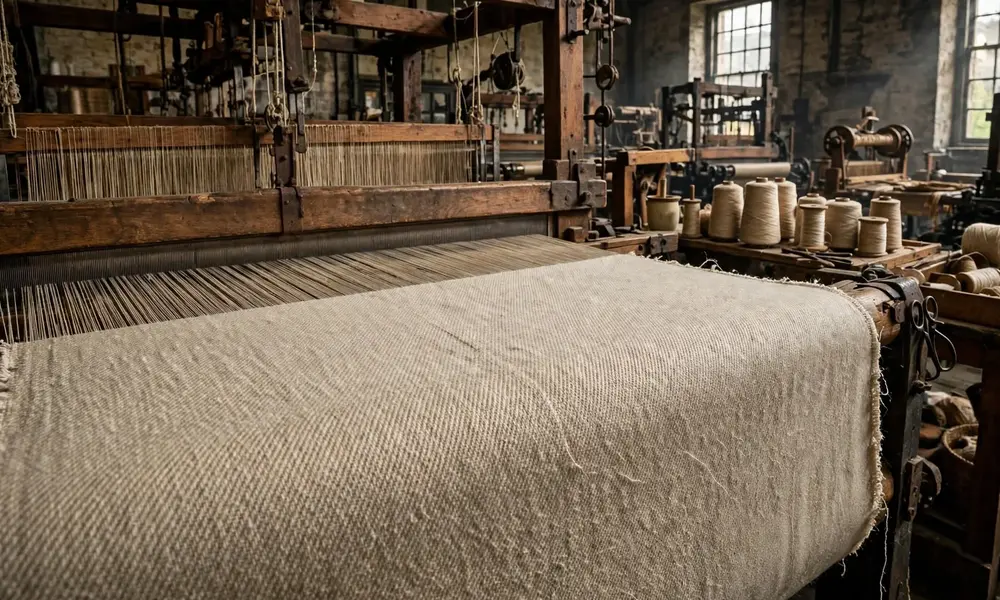
Thomas Burberry opened his outfitter’s shop in Basingstoke, Hampshire, in 1856, building a respectable regional business on outdoor clothing for farmers, hunters, and sportsmen. His breakthrough arrived in 1879 with the invention of gabardine, a fabric woven from yarn that was waterproofed before weaving rather than coated afterward.
The result was revolutionary: a cloth that repelled rain yet breathed, that was light enough for movement yet tough enough for expeditions. Where rubberized mackintoshes left wearers sweating and stiff, gabardine moved like ordinary suiting and shrugged off storms.
The British establishment noticed immediately. Explorer Ernest Shackleton wore Burberry gabardine on Antarctic expeditions. Aviator Claude Grahame-White wore it for record breaking flights. Roald Amundsen’s team reached the South Pole in Burberry supplied gear.
When the British War Office commissioned a new officer’s coat for the First World War, Burberry’s design, with its D rings for equipment, epaulettes for rank, and deep pleated pockets, became standard issue. Soldiers called it the trench coat, and when survivors brought their coats home in 1918, the garment walked directly from the battlefield into civilian life.
From Heritage to Global Fashion House
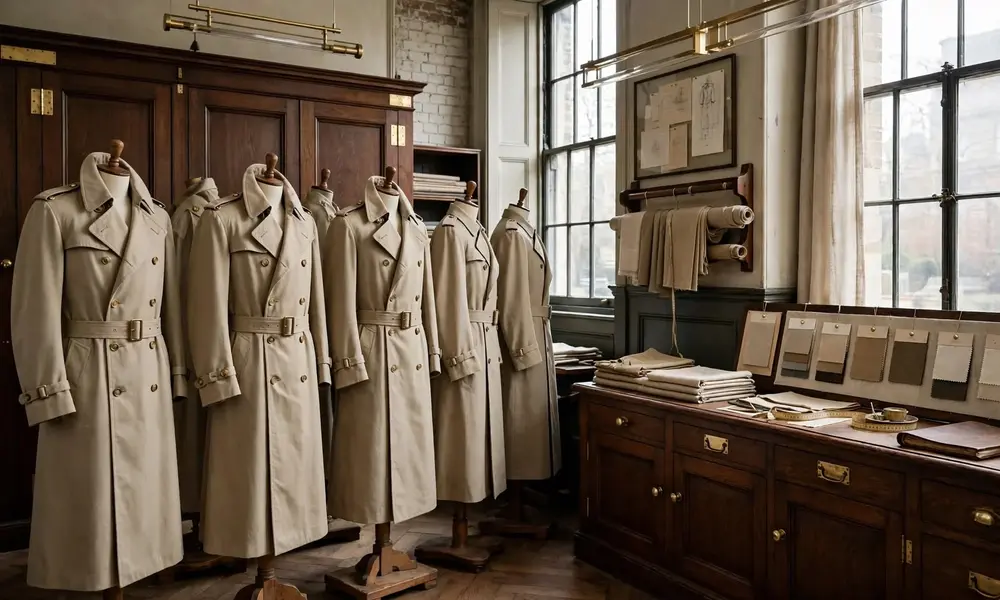
The twentieth century turned Burberry into an institution. The Equestrian Knight logo arrived in 1901, drawn from a public competition. The famous check, originally a lining pattern introduced in the 1920s, would become one of the most recognized designs on earth. Royal warrants from Queen Elizabeth II and the Prince of Wales confirmed the house’s place in British life. And Hollywood did its part:
Humphrey Bogart in Casablanca, Audrey Hepburn in Breakfast at Tiffany’s, and generations of leading figures after them made the trench coat a cinematic shorthand for romance and mystery, a reputation that still shapes how the house sits among the world’s defining luxury brands.
By the 1990s, however, heritage alone was not enough. The house had licensed its name too widely, and the check was appearing on products far from its quality origins.
The turnaround that followed became a business school case study: licensing clawed back, the brand repositioned upmarket, and a series of creative leaders, from Christopher Bailey’s digital era reinvention through Riccardo Tisci’s streetwear edge to Daniel Lee’s current celebration of Britishness, kept the house in cultural conversation while the trench remained its anchor.
The Check: Triumph, Overexposure, and Redemption
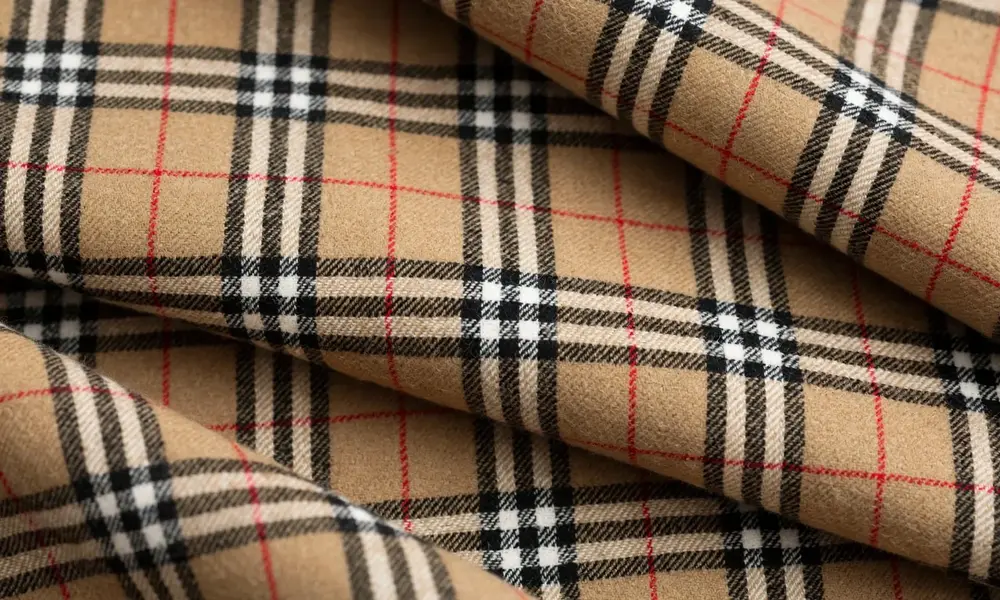
No element of Burberry’s story is more dramatic than the journey of the Nova check. For decades the camel, black, white, and red pattern was a quiet interior detail.
When it moved onto exteriors, scarves, and accessories in the 1990s and early 2000s, it exploded so completely that counterfeiters and license holders spread it across every conceivable product, and the pattern briefly became a symbol of overexposure rather than exclusivity.
Football crowds and knockoff markets adopted it, and luxury observers wrote the pattern’s obituary.
The house’s response was disciplined and patient. It withdrew the check from most products, restricted its visibility, and let time restore its meaning. When Burberry reintroduced the pattern under new creative direction, it returned as heritage rather than habit.
Vintage pieces from the era of overexposure are now collected with genuine affection, proving that even Burberry’s most difficult decade produced objects with lasting value for vintage collectors. The lesson the house taught the industry is permanent: a symbol is only as strong as its scarcity.
Beyond the Trench: Fragrance, Accessories, and Craft
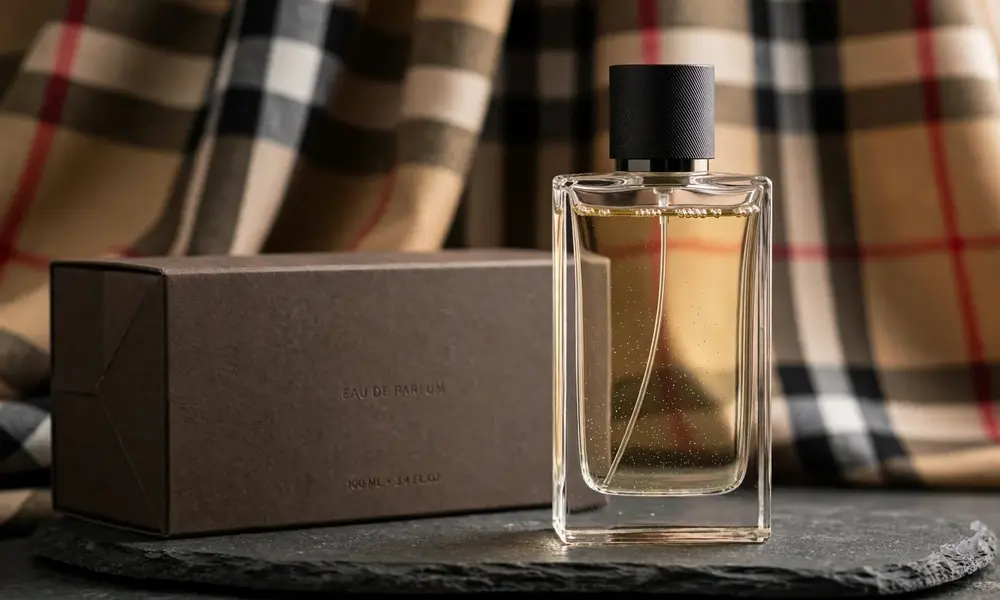
Modern Burberry is a complete luxury house, and its reach extends well past outerwear. Its fragrance line has produced enduring successes that feature in our coverage of the best fragrances of the year, translating the brand’s British identity into scent.
Handbags like the Lola, the Olympia, and the vintage inspired archives collections compete for attention in the investment category covered in our guide to handbags worth the investment.
And the trench coat itself remains handmade at the house’s Castleford factory in Yorkshire, where a single coat passes through more than one hundred skilled processes, including the hand tied collar stitching that tailors still consider the signature of genuine quality.
This commitment to domestic manufacturing is increasingly rare in luxury, and it matters to the product’s authority. A Burberry trench is not merely designed in Britain; it is materially of Britain, built from gabardine woven and finished under the same Yorkshire skies that inspired its invention. In a market where provenance is the new currency, that authenticity is the house’s deepest asset.
Why the Trench Endures
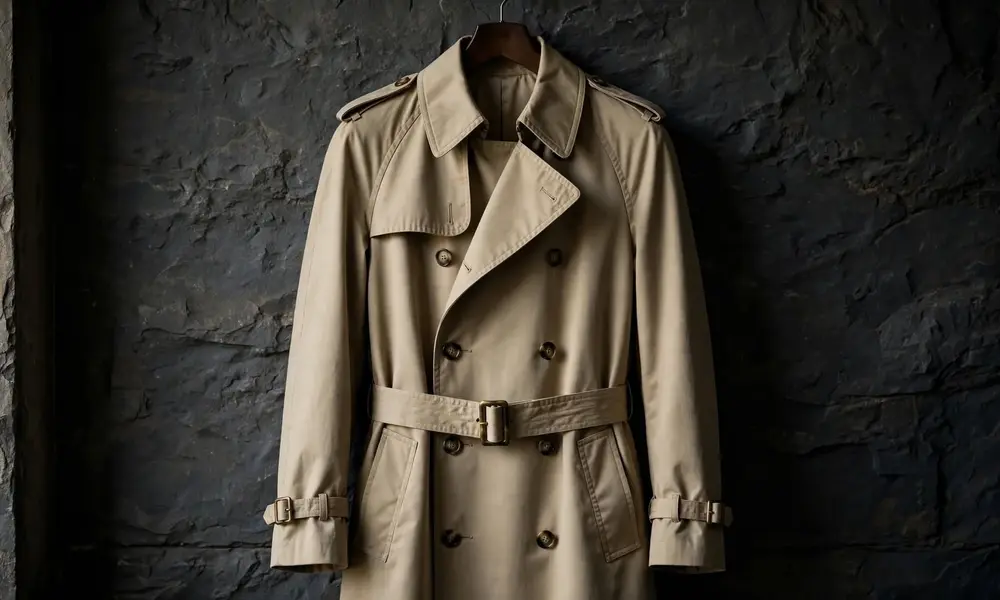
Fashion has produced thousands of iconic garments, yet almost none remain in continuous production for over a century with their design essentially intact. The trench coat endures because it was never a fashion statement. It was a solution, engineered so completely that elegance emerged as a side effect of function. Every detail still works: the storm flap still sheds rain, the belt still cinches against wind, the D rings still hold whatever you clip to them.
That integrity gives the house a kind of immunity. Trends will come for Burberry’s creative direction, as they have repeatedly, and commentators will argue about each new era, as they should. But underneath every reinvention stands a coat invented for a war, perfected by a century of wear, and still made by hand in Yorkshire. Houses have been built on less. Very few have been built on more.
FAQs
When was Burberry founded?
Thomas Burberry founded his outfitter’s shop in Basingstoke, England, in 1856, at the age of 21. The business grew from a regional outdoor clothing store into a global luxury fashion house through fabric innovations, particularly gabardine.
What is gabardine and why does it matter?
Gabardine is a tightly woven fabric invented by Thomas Burberry in 1879, in which yarn is waterproofed before weaving. The result is breathable, lightweight, and rain-resistant, offering an alternative to heavy rubberized rainwear. It remains the foundation of the Burberry trench coat today.
Why is it called a trench coat?
The coat earned its name during the First World War, when Burberry’s gabardine officer’s coat became associated with British military uniforms. Soldiers wore it in the trenches of the Western Front, and veterans brought the garment into civilian fashion after 1918.
What is the Burberry check?
The Burberry check, known as the Nova Check, is a camel, black, white, and red plaid introduced as a coat lining in the 1920s. It became one of fashion’s most recognizable patterns, experienced overexposure in the early 2000s, and has since been repositioned as a symbol of the brand’s heritage.
Where are Burberry trench coats made?
Classic Burberry trench coats are manufactured at the brand’s factory in Castleford, Yorkshire, England. Each coat passes through numerous individual processes, including hand-finished collar stitching, which is considered an important detail of traditional craftsmanship.
Does Burberry have royal warrants?
Yes. Burberry has historically held royal warrants from the British royal family, beginning with a warrant from Queen Elizabeth II in 1955, followed by recognition from the Prince of Wales. These warrants recognized Burberry as an official supplier to the royal household.
Which films made the Burberry trench famous?
Humphrey Bogart wore a trench coat in Casablanca in 1942, while Audrey Hepburn wore one in Breakfast at Tiffany’s in 1961. These films helped establish the trench coat’s association with romance, sophistication, and timeless style.
Is Burberry a good investment brand?
The Burberry trench coat can hold its value better than many seasonal outerwear pieces because of its timeless design and durability. Vintage Burberry pieces from the 1990s and 2000s also have a collector market. Condition, authenticity, provenance, and classic styling influence resale value.