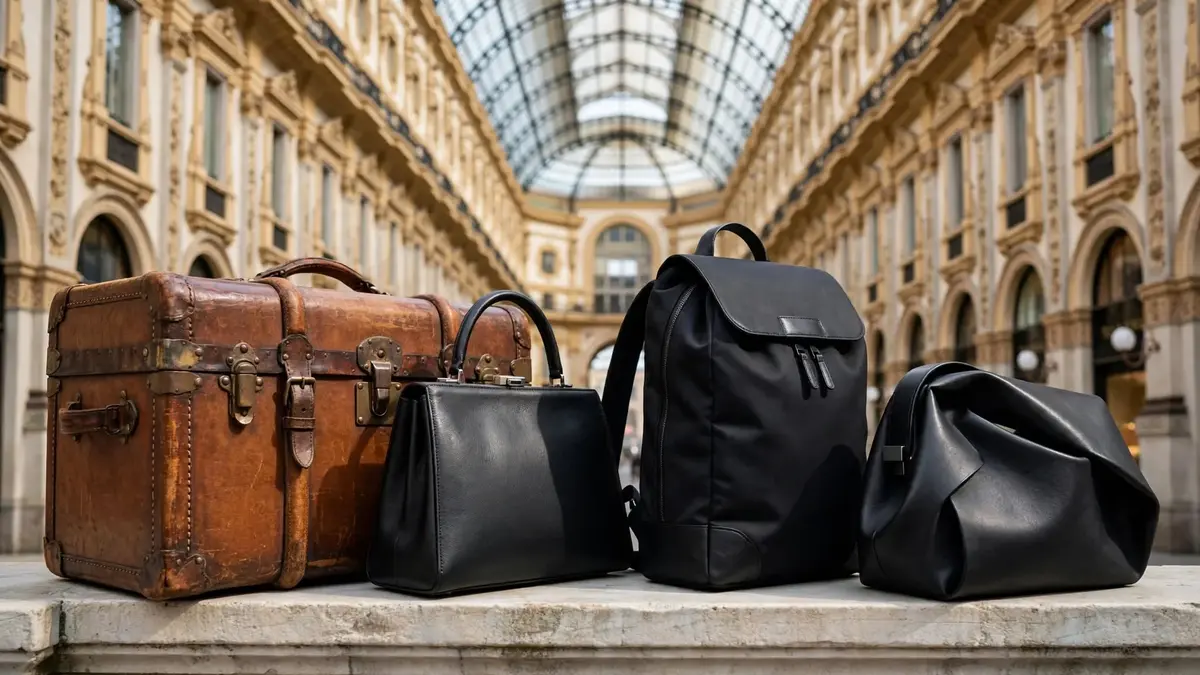
The Prada story begins in 1913 inside Milan’s Galleria Vittorio Emanuele II, where Mario Prada opened a leather goods shop selling trunks, handbags, and travel accessories to the Italian aristocracy, and where, by his own decree, no woman in the family would ever work in the business.
History enjoys its ironies, and few are richer than this one. Mario Prada once believed women could not run his business. Yet his granddaughter saved the house, transformed its identity, and elevated it to the summit of world fashion. With a doctorate in political science, a background in mime, and a philosophical approach to clothing, she redefined Prada’s place in luxury fashion.
Miuccia Prada did not merely inherit a luggage shop. She turned it into the most intellectually influential fashion house on earth, a place where nylon became precious, ugliness became chic, and every collection arrives as an argument about culture rather than a line of products. This is how a Milan trunk maker became fashion’s favorite contradiction.
The Galleria Years and a Royal Seal
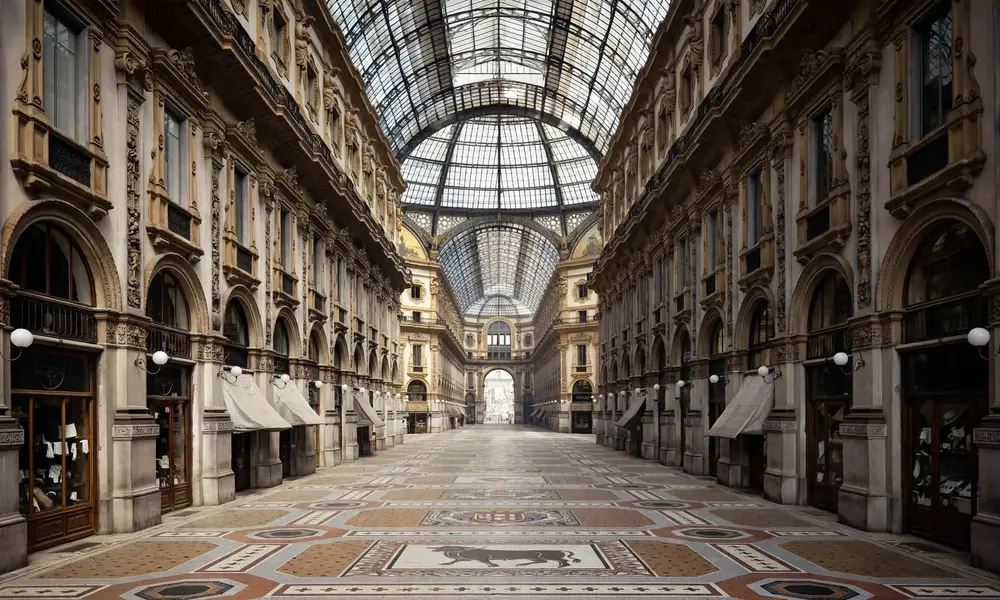
Mario Prada’s Fratelli Prada, the brothers Prada, quickly distinguished itself in the years before the First World War through exceptional materials: walrus leather trunks, fine reptile skin handbags, and travel cases fitted with crystal and tortoiseshell. In 1919 the house received the title of official supplier to the Italian royal household, an honor that allowed Prada to incorporate the House of Savoy’s coat of arms and knotted rope into its logo, where elements of it remain today.
The Galleria shop became a destination for European nobility passing through Milan, and the Prada name became synonymous with objects built to survive a lifetime of travel.
Yet by the 1970s the house had faded into a quiet, dusty respectability. Sales had stagnated, the products had grown old fashioned, and the family business seemed destined to become a footnote in Milanese retail history. The savior arrived from within the family, though nobody, least of all the savior herself, expected it.
Miuccia Prada, The Unlikely Revolutionary
Maria Bianchi, who later took her mother’s maiden name and became Miuccia Prada, spent her twenties as far from fashion as a Milanese aristocrat could be. She earned a doctorate in political science, joined the Italian Communist Party, studied pantomime at the Piccolo Teatro, and protested in the streets while wearing Yves Saint Laurent.
When she reluctantly joined the family business in the mid 1970s and took full control in 1978, she brought no design training and no reverence for fashion convention. What she brought was a mind trained to question everything.
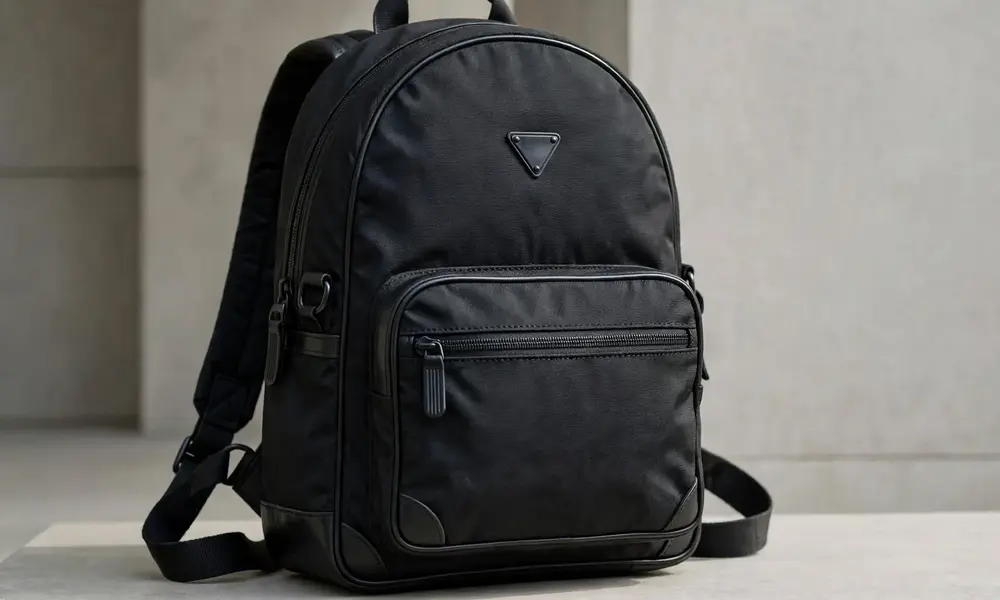
Her first instinct was heresy. In an era when luxury meant leather and logos, she proposed making bags from Pocono, a military grade nylon used for army tents. The 1984 backpack, trimmed in leather and stamped with a small triangle, was initially puzzling and then unstoppable. By the late 1980s the black nylon Prada backpack had become the uniform of a generation of women who wanted intelligence in their accessories rather than ornament.
Her first ready to wear collection in 1988 extended the idea: clothes in muted colors and industrial fabrics that critics struggled to categorize, until they settled on a phrase that became fashion history. Ugly chic.
Building the Universe: Miu Miu, Menswear, and the Group
The 1990s turned Prada from a phenomenon into an empire. Miu Miu launched in 1993 as Miuccia’s more playful second line, named after her family nickname, and it has grown into a powerhouse of its own, recently ranking among the fastest growing major luxury brands in the world.
Menswear arrived the same year, bringing Prada’s cerebral minimalism to tailoring. The company expanded into footwear, eyewear, and fragrance, with perfumes like Prada Paradoxe now standing among the scents tracked in our guide to the best fragrances.
Strategic acquisitions added the British shoemaker Church’s, the driving shoe specialist Car Shoe, and the historic Milanese pastry shop Marchesi 1824, proving that Prada’s idea of luxury includes how you take your coffee.
The house also made its boldest bet outside fashion. In 1997 Patrizio Bertelli, Miuccia’s husband and the group’s commercial architect, entered the America’s Cup with the Luna Rossa sailing team, spending hundreds of millions over the decades to compete for the oldest trophy in international sport.
Critics called it vanity. Bertelli called it the purest expression of the brand: obsessive engineering, Italian pride, and a refusal to accept second place.
The Intellectual Engine: Art, Architecture, and Ideas
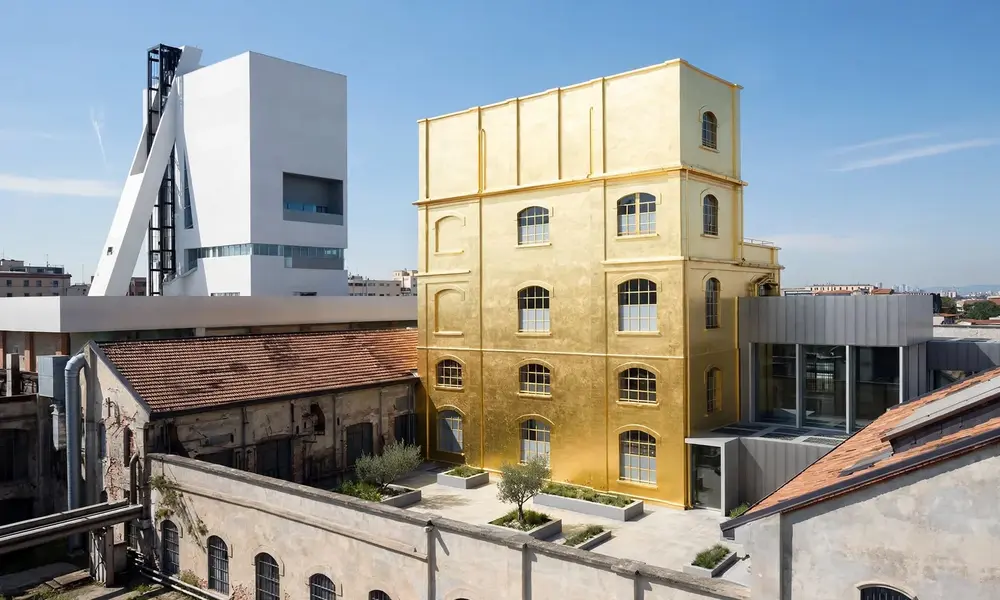
What separates Prada from every other major luxury house is the seriousness of its cultural conversation. Established in 1993, Fondazione Prada has staged exhibitions at its Rem Koolhaas-designed Milan compound since 2015, earning recognition as one of Europe’s leading contemporary art venues.
Prada’s stores, from the Koolhaas designed Epicenters in New York and Los Angeles to Herzog and de Meuron’s crystalline Tokyo tower, function as architecture first and retail second.
The clothes themselves operate as essays. Miuccia Prada has built collections around feminism, around the banality of uniforms, around fear and desire, trusting her audience to think.
In 2020 she invited Raf Simons, the revered Belgian designer, to join her as co-creative director, an unprecedented partnership between two of fashion’s most cerebral figures, now continued as his tenure at the house shapes its current chapter. In an industry where houses are often compared on surface and logos, Prada plays a different game entirely: it sells the feeling of being the most interesting person in the room.
The Icons: Nylon, Cleo, and the Galleria
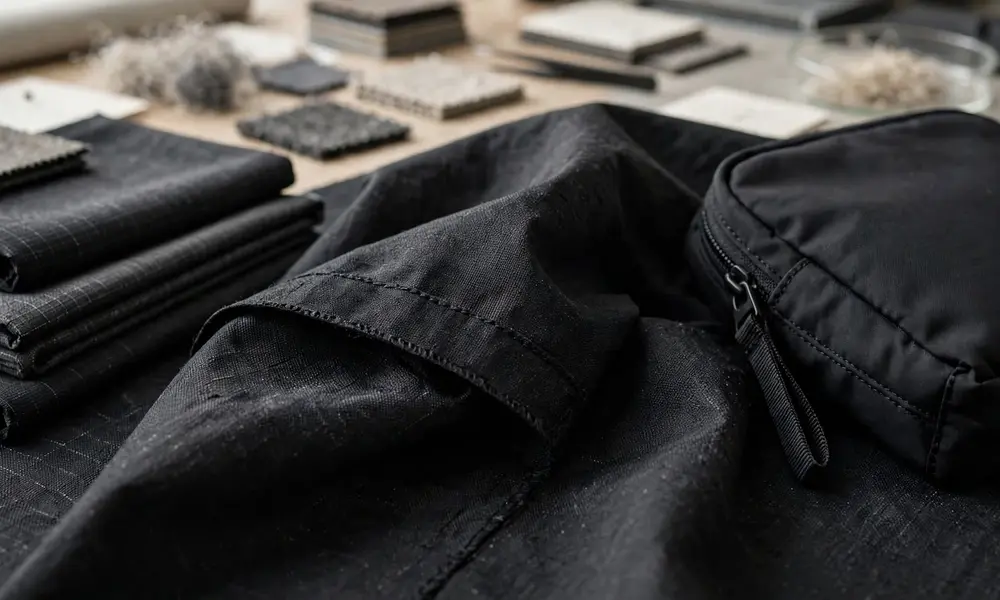
Prada’s product icons mirror its philosophy. The nylon line, reissued as the Re-Edition series, turned a 1990s staple into a new generation’s obsession and demonstrated that sustainable thinking could be woven into heritage through the Re-Nylon program, which converts ocean plastic and textile waste into regenerated yarn.
The Galleria bag, named for the arcade where the house was born, remains the structured emblem of Milanese polish, a fixture among the designer handbags genuinely worth the investment. The Cleo, with its curved, sculptural profile, proved the house can still mint new classics more than a century in.
None of these pieces scream. All of them signal. That is the Prada trick: objects that work like secret handshakes, recognized instantly by those who understand and invisible to those who do not. Among the world’s defining luxury brands, Prada remains the one that treats its customers as readers rather than spectators, and that respect, more than any bag or campaign, is the foundation of its power.
FAQs
When was Prada founded?
Prada was founded in 1913 by Mario Prada as Fratelli Prada, a leather goods shop in Milan’s Galleria Vittorio Emanuele II. The house sold trunks, handbags, and travel accessories to Italian nobility and received a royal warrant from the Italian royal household in 1919.
Who is Miuccia Prada?
Miuccia Prada is Mario Prada’s granddaughter, who took control of the family business in 1978 and transformed it into a global fashion power. Holding a doctorate in political science, she revolutionized luxury by introducing industrial nylon bags, intellectual ready-to-wear, and the concept critics called “ugly chic.”
Why is Prada nylon so famous?
Miuccia Prada introduced bags made from Pocono military-grade nylon in the mid-1980s, turning a humble industrial fabric into a luxury object. The 1984 backpack became a cultural phenomenon, and today’s Re-Nylon program produces the fabric from regenerated ocean plastic and textile waste.
What is Miu Miu?
Miu Miu is Prada’s sister brand, launched by Miuccia Prada in 1993 and named after her family nickname. Positioned as more playful and experimental, it has become one of the fastest-growing luxury brands in the world in recent years.
What is the Fondazione Prada?
The Fondazione Prada is the house’s contemporary art foundation, active since 1993 and housed since 2015 in a Milan compound designed by Rem Koolhaas. It stages major international exhibitions and embodies Prada’s belief that fashion and culture are one continuous conversation.
Does Prada own a sailing team?
Yes. Luna Rossa, backed by Prada since 1997, competes for the America’s Cup, the oldest trophy in international sport. The campaign reflects the group’s passion for engineering and Italian excellence, and the Luna Rossa Ocean line extends the name into fragrance.
What is Prada’s most iconic bag?
The Galleria, named after the Milan arcade where Prada was founded, is the house’s most enduring bag design. The Re-Edition nylon bags and the sculptural Cleo are modern icons, while the 1984 nylon backpack remains the original revolution.
Is Prada still family controlled?
Yes. The Prada Group, listed on the Hong Kong Stock Exchange since 2011, remains controlled by Miuccia Prada and Patrizio Bertelli’s family. Leadership succession has been carefully planned, with their son Lorenzo Bertelli positioned to guide the group’s future.