
You’ve found a beautiful dress online. Soft fabric. A romantic neckline. The kind of vintage-inspired silhouette that makes you imagine spending a sunny afternoon in Paris, even though you’re actually sitting at home in your pajamas. The price looks reasonable. The photographs are lovely. And there’s a little voice in your head saying, Just order it.
But before you do, you notice something. The delivery might take longer than expected. Then someone in the comments mentions dropshipping. Suddenly, you’re wondering whether the brand actually designs and sells its own clothing or simply takes orders for products supplied by another company.
It’s a reasonable question. And an interesting one. Because the world of online fashion is considerably more complicated than it appears from a beautifully styled product photograph. Some brands design clothing and outsource manufacturing.
Others purchase finished garments from wholesalers. Some keep stock in third-party warehouses. And dropshipping retailers sell products without holding inventory themselves, relying on suppliers to ship individual orders. Those businesses can all look remarkably similar from the customer’s perspective. So, is RIHOAS dropshipping?
There is not enough publicly verified evidence to establish that RIHOAS operates its own online store through a conventional dropshipping model. The company has a direct-to-consumer retail website, refers to warehouse processing, and publicly recruits wholesale and retail partners. But the information reviewed does not establish who owns its saleable inventory or whether individual orders are purchased from outside suppliers only after customers pay.
That’s not proof RIHOAS never uses dropshipping. It’s a distinction between what its website reveals and what its internal operations remain too private to confirm. And during this investigation, we found something especially interesting. RIHOAS offers wholesale partnerships with advertised discounts of up to 35%. That changes how we should think about the brand. But it still doesn’t answer every question. Let’s follow the evidence.
What Is Dropshipping, and How Is It Different From Ordinary Online Fashion?
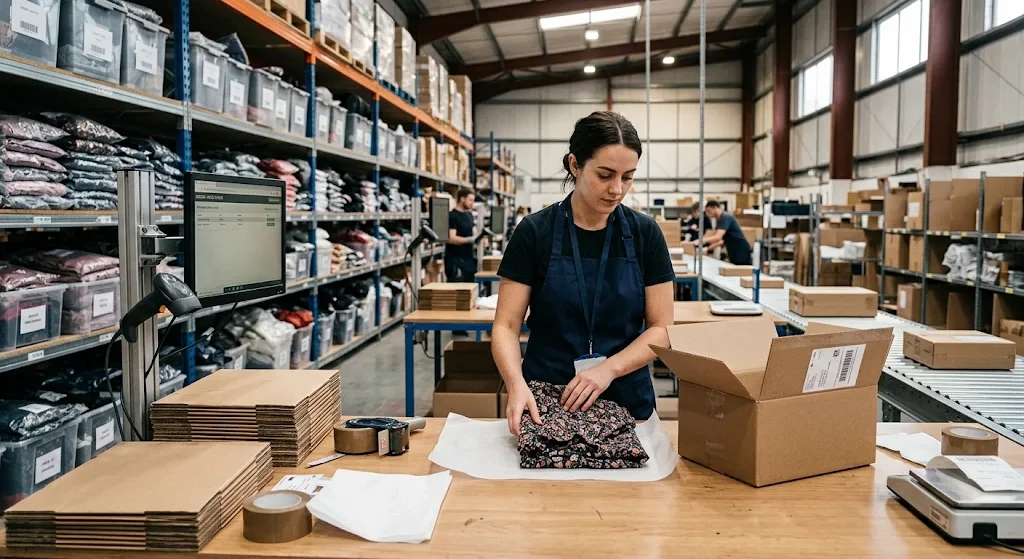
Imagine you run a little online boutique. You discover a beautiful green dress through a clothing supplier. You photograph or advertise the item on your website for $60. A customer orders it. But you don’t have that dress sitting in your own warehouse. Instead, you send the order details to your supplier. The supplier prepares the dress, packages it, and ships it directly to your customer. That’s the basic idea behind dropshipping.
You act as the retailer, but the supplier handles the inventory and fulfillment. Shopify describes dropshipping as a retail fulfillment model in which the seller doesn’t keep the goods it sells in stock. But here’s where things become confusing. A company can outsource production and still be a conventional retailer. It can also use an independent logistics company to store and ship inventory it already owns. Neither arrangement automatically makes it a dropshipper.
Three business models that can look identical
| Business model | Who controls the stock? | Who ships to the customer? |
| Traditional online retailer | Retailer holds or owns inventory | Retailer or logistics partner |
| Dropshipping retailer | Supplier typically holds inventory until the order | Supplier on retailer’s behalf |
| Fashion brand using outsourced manufacturing | Brand may purchase and own finished inventory | Brand or fulfillment partner |
These are simplified models. A single company may use more than one arrangement across its catalog. That’s why a long shipping time, a foreign warehouse, or a Shopify website doesn’t prove dropshipping. To establish the actual model, we’d need to understand the inventory relationship behind the order. And that’s information customers rarely see.
What Does RIHOAS Say About Its Business?

RIHOAS presents itself as a women’s fashion retailer inspired by retro romance and elegant everyday dressing. Its catalog includes dresses, knitwear, tops, skirts, and swimwear. Its official About page discusses fabrics, supply-chain improvements, and production waste.
The website also has a wholesale-partnership page. And that’s where our investigation becomes more interesting. RIHOAS actively invites wholesalers, agencies, and retail partners to work with the company. Its published benefits include promotional support, product discounts, and after-sales assistance. The wholesale page advertises discounts of up to 35% on orders.
That’s a meaningful business detail. It suggests RIHOAS isn’t simply presenting itself to individual customers. It’s also offering a business-to-business relationship.
Does having a wholesale program mean RIHOAS is a dropshipping supplier?
Not necessarily. A company can sell goods in bulk to retailers without shipping individual customer orders on their behalf. A wholesale order may involve a boutique purchasing inventory before offering it for sale. Dropshipping works differently because the supplier typically fulfills the end customer’s order after the retailer makes a sale.
RIHOAS’s wholesale page doesn’t clearly establish whether participating retailers can use an order-by-order dropshipping arrangement. So here’s the distinction. RIHOAS publicly offers wholesale partnerships. Whether it offers a true dropshipping service to those partners remains unverified. That’s much more precise than calling it a dropshipping company because it has an international website.
The Wholesale Clue That Raises Another Question
There’s an interesting tension between two statements on RIHOAS’s own website. The wholesale page invites retail partners to collaborate. But the returns page also states that RIHOAS has not authorized third parties for business purposes and warns that purchases through unauthorized third parties aren’t covered by its warranty arrangements.
Read those statements together and a question naturally arises.
Are there officially approved wholesale partners who can resell RIHOAS clothing?
If so, how can customers distinguish authorized sellers from unauthorized ones?
The language could be referring to different kinds of third-party relationships.
It might also reflect policies written at different times.
Without clarification from the company, we shouldn’t assume the statements describe a single coherent reseller policy.
But the difference deserves attention.
Especially for anyone hoping to buy RIHOAS products from another website.
If a reseller claims to be an official RIHOAS partner, ask how that relationship can be verified before relying on the claim.
A wholesale invitation isn’t a guarantee that every website selling similar clothing has authorization.
Where Does RIHOAS Actually Ship From?
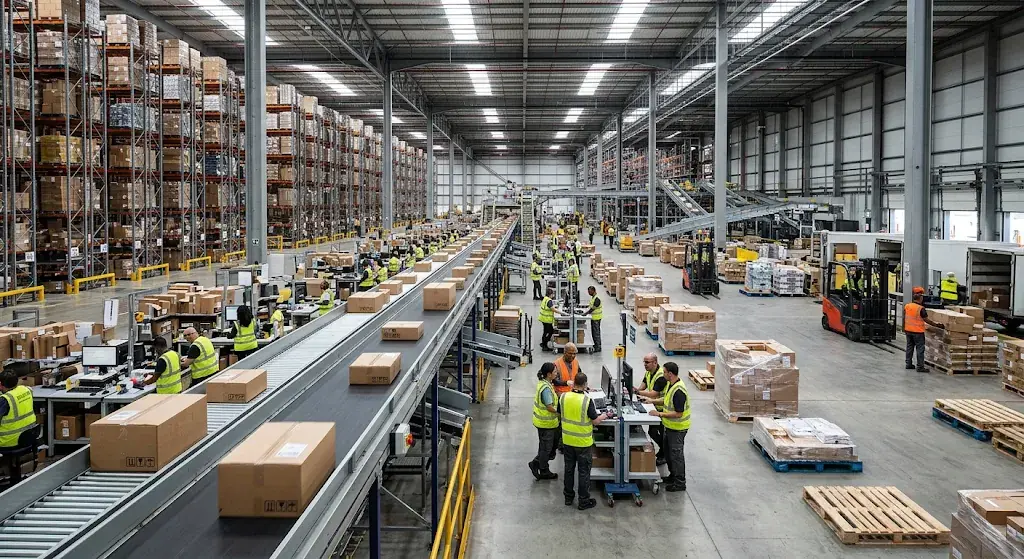
This is the question many shoppers are really trying to answer when they search for dropshipping.
They want to know where their package begins its journey.
And perhaps why their dress takes longer to arrive than an order from a local store.
RIHOAS’s published shipping information refers to warehouse processing before dispatch.
Its detailed shipping page says standard paid orders normally require approximately 48 hours for warehouse processing, excluding preorders.
A separate shipping policy provides a broader processing estimate of one to five business days.
Those two statements are not identical.
The most sensible reading is that buyers should allow for processing time rather than assume every order ships immediately.
The website also says its after-sales warehouses are located in the United States and Hong Kong.
But here’s something essential.
A warehouse used for processing returns isn’t necessarily the warehouse that originally shipped your order.
The company doesn’t publicly establish that every garment is dispatched from either of those locations.
Nor does the mention of a warehouse tell us whether RIHOAS owns the inventory stored there.
A third-party logistics provider could be involved.
A brand-controlled warehouse could be involved.
Different products might follow different routes.
The public information reviewed doesn’t distinguish those possibilities.
Does shipping from China or Hong Kong prove dropshipping?
No. Many established brands manufacture internationally and ship products across borders.
The origin of a parcel doesn’t tell you whether the retailer purchased that garment before or after receiving your order.
Similarly, a tracking label showing an international logistics hub doesn’t identify who owned the merchandise during fulfillment.
That’s why claims such as “It shipped from overseas, so it must be dropshipping” aren’t reliable evidence.
The supply chain is more complicated than the shipping label.
How Long Does RIHOAS Take to Deliver?
Let’s imagine ordering a beautiful dress for a friend’s wedding.
The wedding is on Saturday.
You place your order two weeks beforehand, confident that the published shipping estimate should be enough.
But when you review the policy, you notice something important.
Delivery time begins when the parcel is shipped, not when the purchase is placed.
RIHOAS lists the following estimates for the United States on its detailed shipping page:
| Shipping method | Estimated transit | Published fee |
| Standard US shipping | 7–12 business days | $7.99 |
| Express US shipping | 5–7 business days | $15.99 |
| Selected remote US destinations | Approximately 15–30 days | Destination-specific charges |
These are published estimates, not delivery guarantees. Processing occurs separately. RIHOAS also lists free-shipping thresholds and promotional exceptions. That difference matters.
If your order requires a few business days to process, the total time between checkout and delivery may be considerably longer than the quoted transit period.
And customs procedures, carrier delays, or local delivery conditions can make the actual journey less predictable.
Is slow shipping evidence of dropshipping?
No. A slow shipment could result from cross-border transportation, warehouse processing, stock allocation, customs clearance, or ordinary carrier delays.
Dropshipping is one possible fulfillment model.
It isn’t the only explanation.
A better question is whether the seller clearly communicates the expected delivery window and provides usable tracking information.
For an important event, I’d avoid relying on the shortest possible estimate.
That lovely dress won’t feel nearly as exciting if it arrives after the celebration.
Does RIHOAS Manufacture Its Own Clothing?

This is another question that deserves more than a guess.
RIHOAS talks about improving its supply chain and working with different fabrics.
But that language doesn’t reveal whether it owns production factories, contracts with independent manufacturers, buys finished garments, or uses several sourcing approaches.
A clothing company can design original products and hire external factories to make them.
That’s common throughout the fashion industry.
The important distinction is between design ownership, manufacturing responsibility, inventory ownership, and shipping responsibility.
They’re not the same thing. And a single fashion business can divide those functions among different partners.
What would verify RIHOAS’s production model?
Meaningful evidence would include supplier disclosures, manufacturing arrangements, independent sourcing documentation, or direct confirmation of how it develops and purchases its products.
We haven’t obtained that information for this article.
Therefore, it would be inaccurate to claim that RIHOAS manufactures everything itself.
It would also be inaccurate to claim that every garment comes from an anonymous dropshipping supplier.
Neither conclusion has been established.
For more background on the company’s geographic and business identity, see our existing guide to where RIHOAS is based.
Is RIHOAS a Shopify Dropshipping Store?
RIHOAS’s website uses Shopify technology. Its wholesale page openly includes Shopify platform attribution. But here’s a point that often gets overlooked.
Shopify is an ecommerce platform, not a business-model certification. Traditional retailers use it. Independent designers use it. Luxury brands use it. Wholesalers use it. And dropshippers use it. The website’s underlying software can’t tell us whether RIHOAS buys and holds its own inventory.
So being powered by Shopify is evidence of the website platform. Nothing more. To understand the business model, we need evidence about the commercial relationship between the retailer and its suppliers. Not merely the name of the software running the checkout.
Can You Dropship RIHOAS Clothes Through Your Own Online Store?
Suppose you’re building a small online fashion boutique. You love RIHOAS’s romantic dresses and wonder whether you could sell them through your own website. The brand’s wholesale page makes that possibility worth investigating.
But don’t assume it supports automated dropshipping. A wholesale account and a dropshipping agreement may involve very different terms. Before treating RIHOAS as a potential supplier, you’d need confirmation of whether the company can ship individual orders directly to your customers.
You’d also want to know who holds the inventory, whether inventory feeds are available, how customer-facing packaging works, what wholesale pricing applies, and who handles refunds and damaged items. The published wholesale page provides a way to inquire about partnerships.
It does not establish every operational detail. And because the company’s returns page includes a warning about unauthorized third parties, verifying the approved reseller relationship is especially important. A retailer should never advertise itself as an authorized RIHOAS distributor without an actual agreement.
What Does the Return Process Reveal About RIHOAS?
Here’s something that matters more than the dropshipping label itself. Imagine ordering two dresses. The first fits beautifully. The second looks nothing like you expected when you try it on. You decide to return one. Now the questions become practical.
Where does the parcel go? Who authorizes the return? And who pays to send it back?
RIHOAS publishes a 14-day return-request window beginning when the customer receives the package. For approved returns, the company instructs customers to send their parcels and provide tracking information within seven days. The return address is supplied after approval.
RIHOAS specifically warns against using the original shipping label’s address for returns. And for ordinary change-of-mind returns, the customer is generally responsible for return shipping. These are details shoppers should understand before buying.
But do they prove dropshipping? No. Many conventional online retailers use centralized return facilities or third-party return-processing partners. A separate after-sales warehouse isn’t unusual in modern ecommerce. What matters to the customer is whether the process is clear, timely, and appropriate under the applicable consumer-protection rules.
The Pravi Celer Four-Handoff Test: How to Investigate a Fashion Retailer’s Business Model

After researching RIHOAS, I think the most useful approach is to follow the order rather than judge the website’s appearance. For Pravi Celer, I’ve developed the Four-Handoff Test, an original editorial framework. It asks four questions.
Handoff One: Who Takes Your Money?
Identify the legal selling entity. RIHOAS’s contact page currently identifies Xibor Limited as its website sales and contracting entity. That’s useful for understanding who is presented as the contractual seller. But the name of a contracting company doesn’t establish who manufactured the dress.
Handoff Two: Who Owns the Dress Before You Buy It?
This is the central dropshipping question. Does the retailer already hold inventory? Or is an independent supplier providing the item only after the customer places an order? Public product photography and delivery estimates don’t answer that.
Handoff Three: Who Ships the Order?
Does the retailer operate its own fulfillment facility? Does a logistics partner ship inventory the retailer owns? Or does an independent supplier ship the item under a dropshipping arrangement? Those are different relationships, even when the final package looks identical.
Handoff Four: Who Handles a Problem?
If the garment arrives damaged or doesn’t fit, who is responsible for providing support and arranging the applicable remedy?
A brand’s customer-service process can reveal practical obligations even when the fulfillment model remains undisclosed.
Applying the test to RIHOAS
| Question | What we could verify | What remains unknown |
| Contractual seller | RIHOAS names Xibor Limited on its contact page | Broader corporate and supplier relationships |
| Inventory ownership | Not established | Whether inventory is purchased before customer orders |
| Order fulfillment | Warehouse processing and tracking described | Exact dispatch facility and inventory-owner relationship |
| After-sales handling | RIHOAS publishes its own returns process | Full operational arrangements with external partners |
The framework is not an audit of internal company records.
It is a way of separating what customers can verify from what remains behind the scenes.
The key insight: Without knowing who owns the inventory before each sale, you cannot confidently classify a retailer as a conventional dropshipper.
Is Dropshipping Itself a Bad Thing?
Not necessarily. There’s nothing inherently dishonest about a retailer using a supplier to fulfill an order. Dropshipping is a recognized ecommerce model. The real concerns arise when customers are misled about product availability, shipping times, quality, pricing, or the responsibilities of the seller.
A good dropshipping retailer can communicate honestly, work with reliable suppliers, and provide dependable support. A poorly managed conventional retailer can disappoint customers too. The model doesn’t automatically determine the experience.
And that’s a useful lesson for anyone trying to decide whether to buy from RIHOAS. A garment’s quality isn’t established by the location of the warehouse. And a seller’s credibility isn’t established merely by whether it holds stock.
Those questions require their own evidence. For a separate look at the brand’s pricing, trend-oriented product strategy, and materials, read our investigation of whether RIHOAS is fast fashion.
What Should You Check Before Ordering From RIHOAS?
Let’s return to the dress. The one you loved enough to open another browser tab and investigate. If you still want to buy it, the available evidence suggests a practical approach.
Examine the exact fabric composition, lining, measurements, and care instructions.
Check whether the item is a preorder or final-sale product.
Read the estimated processing and shipping times for your country.
Review the return conditions, especially if returning internationally could become expensive.
And keep your order confirmation and tracking details.
None of these steps establishes whether RIHOAS uses dropshipping.
But they can help you make a better purchase.
And that’s ultimately why the business-model question matters in the first place.
You want to know what happens after you pay.
Five Questions About RIHOAS Dropshipping
Is RIHOAS a dropshipping company?
Public evidence does not conclusively establish that RIHOAS operates its own retail website through a conventional dropshipping model. Its supplier and inventory arrangements remain insufficiently disclosed.
Does RIHOAS have warehouses?
RIHOAS refers to warehouse order processing and identifies after-sales warehouses in the United States and Hong Kong. Those statements do not confirm ownership of the facilities or identify the dispatch origin of every order.
Does RIHOAS manufacture its own products?
The reviewed public information doesn’t establish whether RIHOAS owns factories, works with contract manufacturers, purchases finished clothing, or uses a combination of sourcing methods.
Does RIHOAS offer wholesale or dropshipping partnerships?
RIHOAS publicly advertises wholesale and retail partnerships, including discounts of up to 35%. A specific dropshipping-fulfillment service is not established by that program description.
Is RIHOAS the same as SHEIN or AliExpress?
There is no verified basis in the reviewed evidence to claim RIHOAS shares the same ownership, inventory, or supplier relationships with those companies. Similar online retail practices do not prove a corporate connection.
Final Verdict: RIHOAS Has a Visible Retail Business but an Incompletely Disclosed Supply Chain
There’s something rather wonderful about shopping for a beautiful dress. You imagine where you’ll wear it. What shoes you’ll choose. Whether it will become the piece you reach for every time you want to feel especially lovely. And perhaps that’s exactly why the business behind the clothing matters. Because once you make a purchase, you’re trusting more than a photograph. You’re trusting the company to provide the item it advertised.
To communicate honestly about delivery. And to handle problems fairly if something goes wrong. RIHOAS clearly operates an online retail business. It also publicly recruits wholesale and retail partners. And it describes warehouse processing, shipping arrangements, and after-sales facilities. But none of that establishes the defining characteristic of conventional dropshipping: whether its own customer orders are fulfilled from supplier-held inventory purchased only after the sale.
Our verdict: RIHOAS’s use of a conventional dropshipping model is unverified, not proven or disproven. That may not be the dramatic answer some internet articles promise. But it’s the accurate one. The brand could make this much clearer by explaining its sourcing, inventory ownership, and fulfillment relationships.
Until then, shoppers should focus on the details they can confirm. The garment. The measurements. The delivery window. The return conditions. And the company responsible for their order. Because beautiful fashion should leave you thinking about the wonderful places you’ll wear it. Not wondering who is responsible for getting it to your door.
The most trustworthy online fashion experience isn’t the one with the prettiest photographs. It’s the one where the promise made before checkout matches what arrives afterward.