The Hamptons villages each speak their own dialect of luxury, and choosing the wrong one for your summer is a mistake that costs real money and real disappointment. A friend learned this the expensive way when she rented a house in party-forward Montauk expecting the hushed garden dinners she had seen in magazines, only to discover that her village’s idea of a quiet evening involved a surf bar and a DJ.
The truth is that the Hamptons is not one place but a string of communities stretched along the South Fork of Long Island, each shaped by a century of distinct history, architecture, and social gravity. Old money and new money, farm stands and nightclubs, hedgerows and surf breaks all coexist within thirty miles of sand. Here are the eight villages that define the Hamptons in 2026, and what genuinely makes each one different.
1. Southampton Village, The Original Seat of Old Money
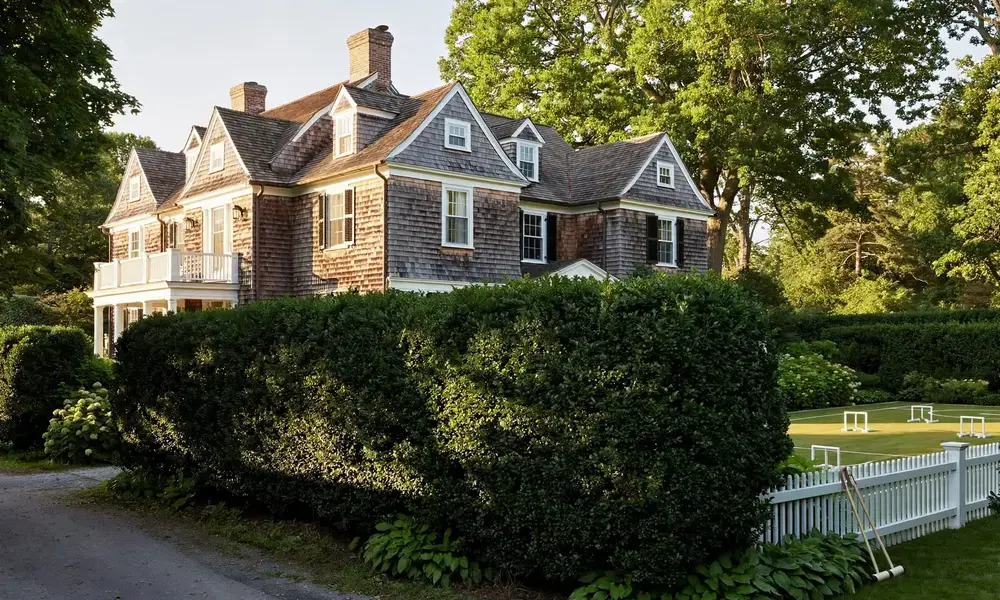
Southampton is where American summer society began, and it has never fully relinquished the crown. Settled in 1640 and colonized by New York’s founding families in the late nineteenth century, the village still moves to a rhythm set by institutions like the Meadow Club, the Southampton Bathing Corporation, and the Parrish Art Museum.
Gin Lane and Meadow Lane host some of the most valuable residential real estate in the United States, hidden behind hedges tall enough to qualify as architecture.
The tone is formal by Hamptons standards: whites at the club, benefit galas for the hospital, and a social calendar that values who you have always been over who you just became.
For visitors, Main Street offers polished boutiques and restaurants like Le Charlot and Sant Ambroeus, where lunch is a spectator sport. Southampton suits those who want the classic fantasy, the one with shingled mansions, croquet lawns, and an unspoken dress code. It is the village most often pictured when people daydream from their desks in Manhattan, browsing the best hotels in New York and plotting their June escape.
2. East Hampton Village, The Polished Power Center
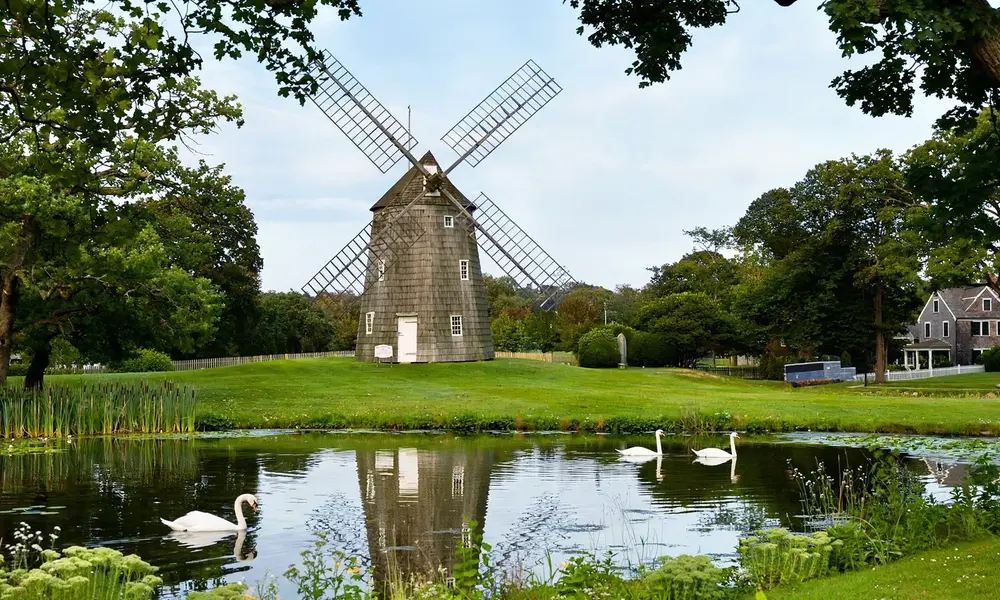
East Hampton matches Southampton for pedigree but adds a layer of contemporary cultural power that has made it the de facto capital of the modern Hamptons. The village’s postcard core, with its windmill, pond, and swans, is surrounded by lanes that shelter media moguls, financiers, and artists in roughly equal measure.
Georgica Pond’s shoreline estates represent the summit of Hamptons real estate, and the Maidstone Club anchors a social scene that runs on quiet invitations rather than public events.
What distinguishes East Hampton is cultural seriousness. LongHouse Reserve, the Pollock-Krasner House, and a summer calendar of gallery openings give the village an artistic spine that predates the wealth by decades. Jackson Pollock painted his masterpieces in nearby Springs, and that legacy still attracts collectors who treat August as a gallery season.
Newtown Lane’s shops, from Chanel to local jewelers, make it the strongest retail village on the South Fork. Choose East Hampton if you want the full package: beach, culture, dining, and the highest concentration of accomplished neighbors per acre.
3. Sag Harbor, The Historic Village With a Bohemian Heart
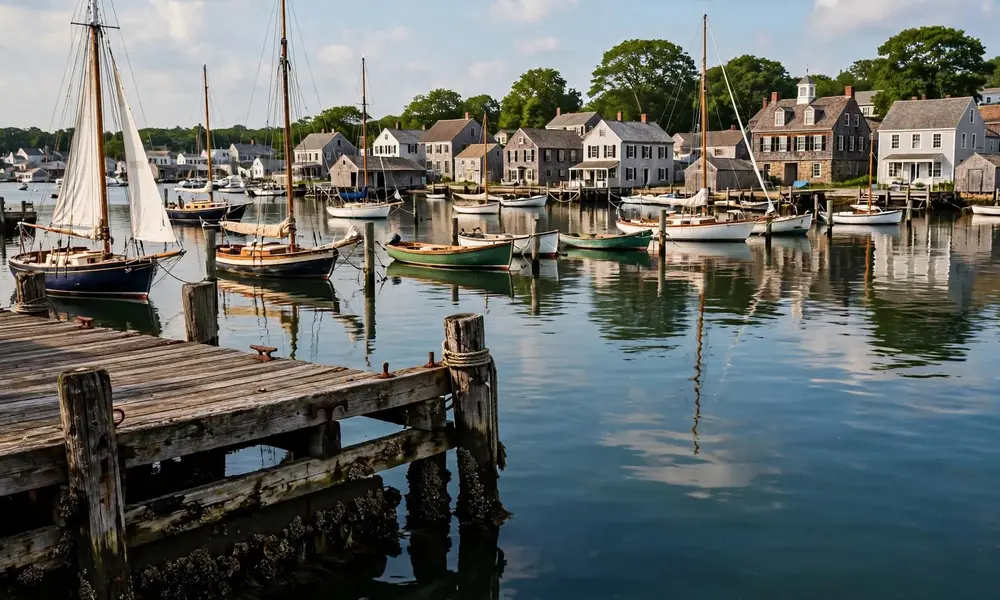
Sag Harbor is the Hamptons village that feels least like the Hamptons, and its residents consider that the highest compliment. A former whaling port with centuries of maritime history, the village has a genuinely year round soul, a walkable Main Street of independent bookstores and restaurants, and a famous tradition of inclusivity.
Its African American beach communities, including Azurest, Sag Harbor Hills, and Ninevah, have hosted generations of Black professionals and artists, giving the village a social fabric unlike anywhere else on the East End.
Writers have always loved Sag Harbor, from John Steinbeck, who lived on its harbor while writing Travels with Charley, to the novelists and editors who still crowd the American Hotel’s bar.
The wharf, the Bay Street Theater, and the yacht filled marina keep the village oriented toward the water in a working rather than purely decorative way. Sag Harbor suits buyers and renters who want character over status, and evenings that end in conversation rather than velvet ropes.
4. Bridgehampton, Where Horse Country Meets the Party Circuit
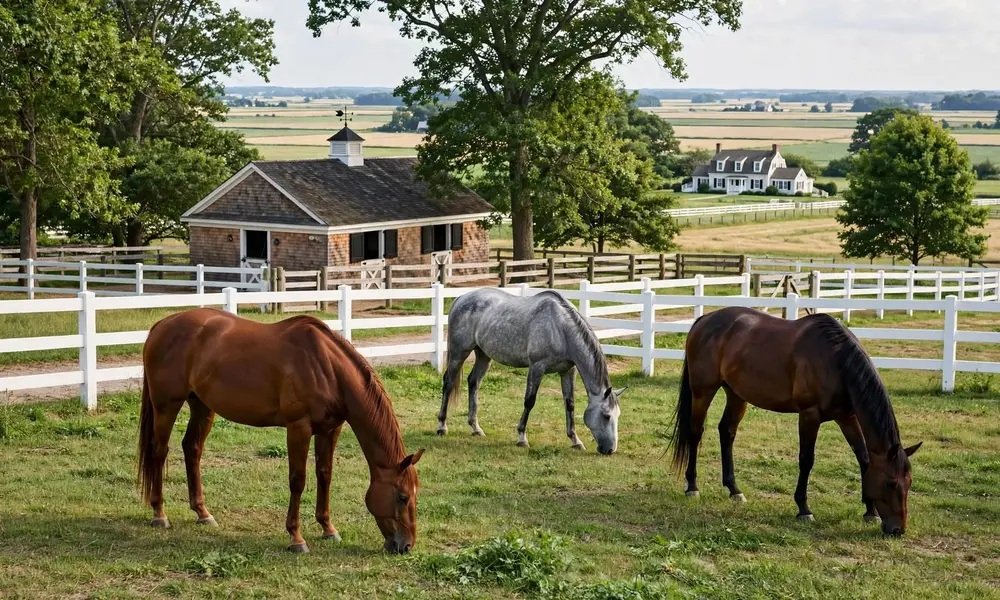
Bridgehampton lives two lives simultaneously, and somehow both thrive. By day it is horse country, home to the Hampton Classic Horse Show each late summer, with riding estates and potato fields turned vineyards defining the landscape.
The village’s Main Street is compact and excellent, anchored by Bobby Van’s, where power lunches have launched media deals for fifty years, and by Topping Rose House, the hotel and restaurant that brought Jean-Georges cooking to the South Fork.
By night in high season, Bridgehampton transforms into the center of the Hamptons social hurricane, hosting the era’s most talked about benefit parties, including the Watermill Center’s legendary summer gala just up the road.
The Bridgehampton Race Circuit once thundered here, and that sporting memory lingers in a village comfortable with spectacle. Bridgehampton works best for those who want equestrian elegance with a lively pulse, and easy access both west toward the city and east toward everything else.
5. Sagaponack, The Quiet Billionaire’s Farm Belt
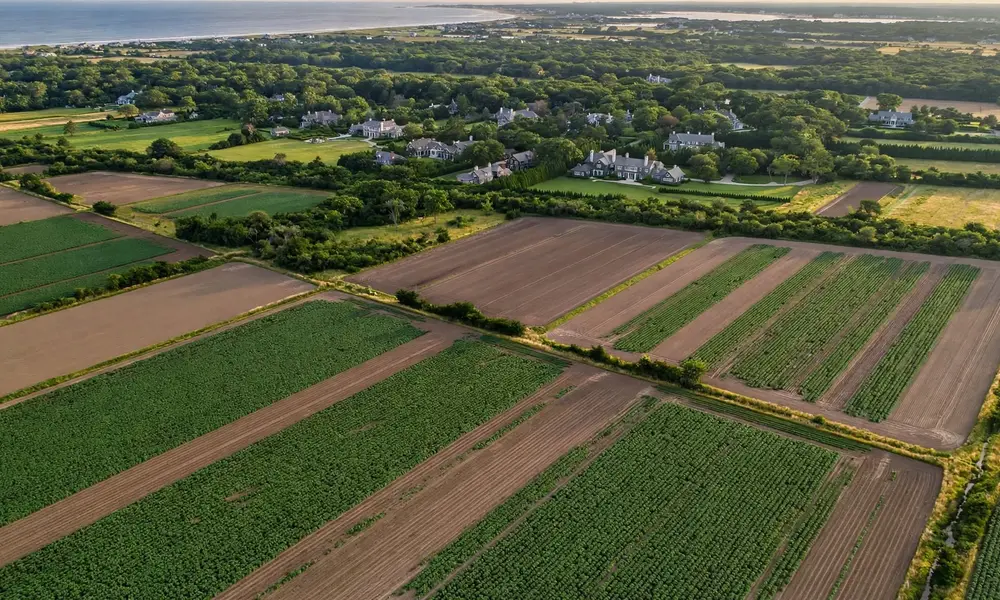
Sagaponack is tiny, fiercely protected, and astonishingly expensive. This small farming village of a few hundred year round residents contains some of the most valuable land in America, where flat fields that still grow potatoes and corn sit beside oceanfront parcels that have traded for sums that make headlines.
Ira Rennert’s Fairfield, one of the largest private residences in the United States, rises from these fields like a rumor made real, and the village has attracted a roster of finance and media titans who value its absolute discretion.
There is essentially no commercial center, no nightlife, and no scene, which is precisely the point. Life here happens behind the hedges: long lunches on oceanfront terraces, children riding bikes down lanes with no traffic, and farm stands operating on the honor system.
Sagg Main Beach remains one of the most beautiful and least crowded on the East End. Sagaponack is for those who have nothing to prove and everything to protect.
6. Amagansett, The Village the Cool Set Quietly Claimed
Amagansett spent decades as the sleepy sibling between East Hampton and Montauk, until a generation of actors, musicians, and fashion people noticed that its modest lanes and dramatic dunes offered something the grander villages could not: invisibility.
The village’s devoted regulars have famously included some of the biggest names in entertainment, drawn by a Main Street that stays low key and beaches like Indian Wells that rank among the finest stretches of sand on the Atlantic coast.
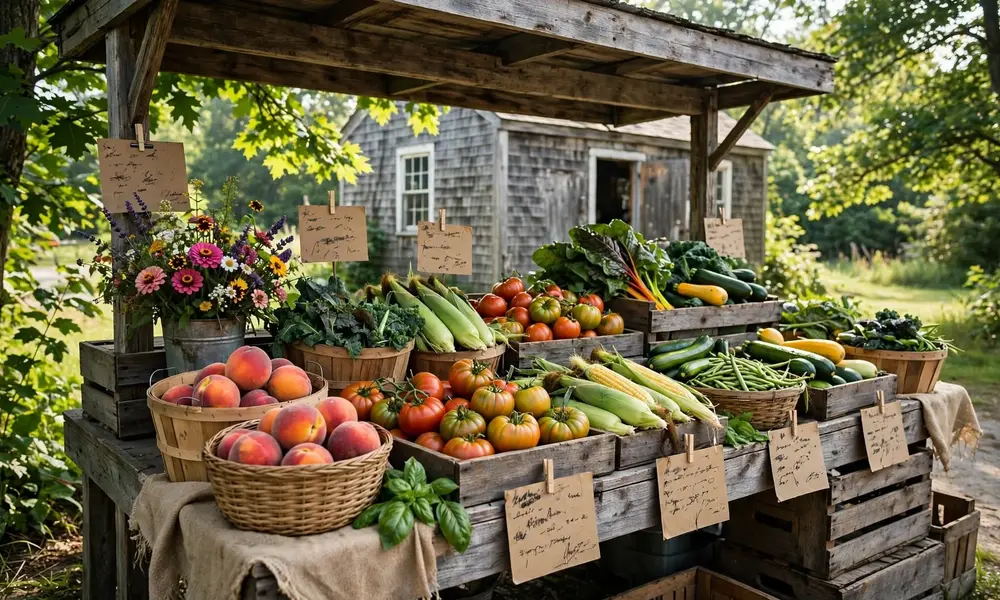
The Amagansett Farmers Market and the Stephen Talkhouse, a legendary small music venue where major artists play surprise sets to two hundred people, define the village’s split personality of farm stand mornings and rock and roll nights.
Dune-front homes along Further Lane and the lanes near the Devon Colony command staggering prices despite their studied modesty. Amagansett is the choice for those who could afford anywhere and choose understatement.
7. Water Mill, The Pastoral Middle Ground
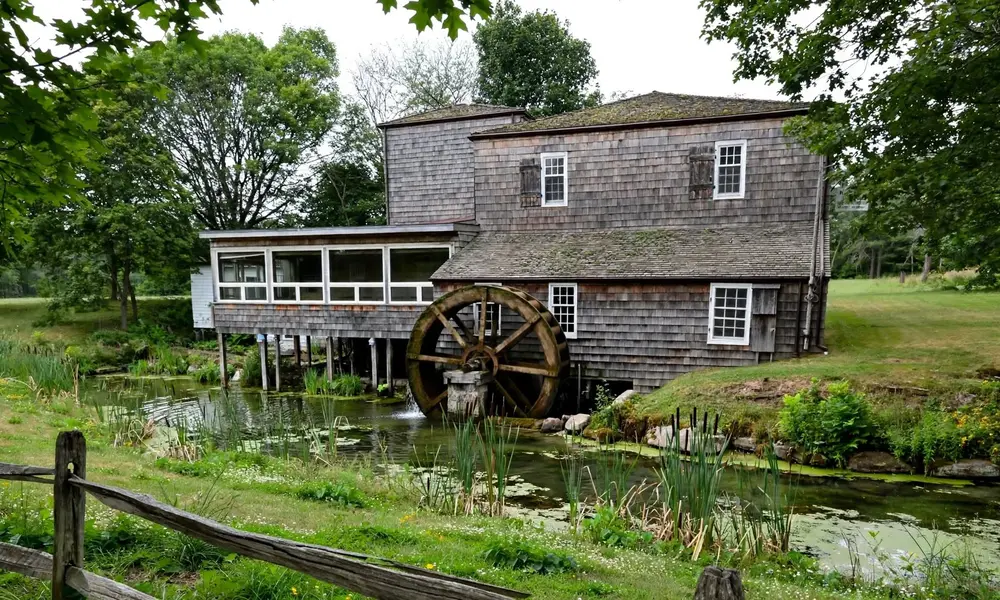
Water Mill often gets treated as a pass through on the road between Southampton and Bridgehampton, which undersells one of the most pleasant villages on the South Fork.
Named for its 1644 gristmill, which still stands as a museum, the village is defined by open farmland, water views across Mecox Bay, and a thriving contemporary art scene centered on the Parrish Art Museum’s striking Herzog and de Meuron building and the Watermill Center, Robert Wilson’s avant garde laboratory.
Real estate here offers relative value by Hamptons standards, with farm field estates and bayfront properties that deliver the pastoral dream at prices below the oceanfront villages. Dining is quietly excellent, from farm to table institutions to the seasonal pop ups that test new restaurant concepts each summer.
Water Mill suits families and art lovers who want space, beauty, and cultural programming without the social performance of the headline villages.
8. Montauk, The End of the World, Deliciously
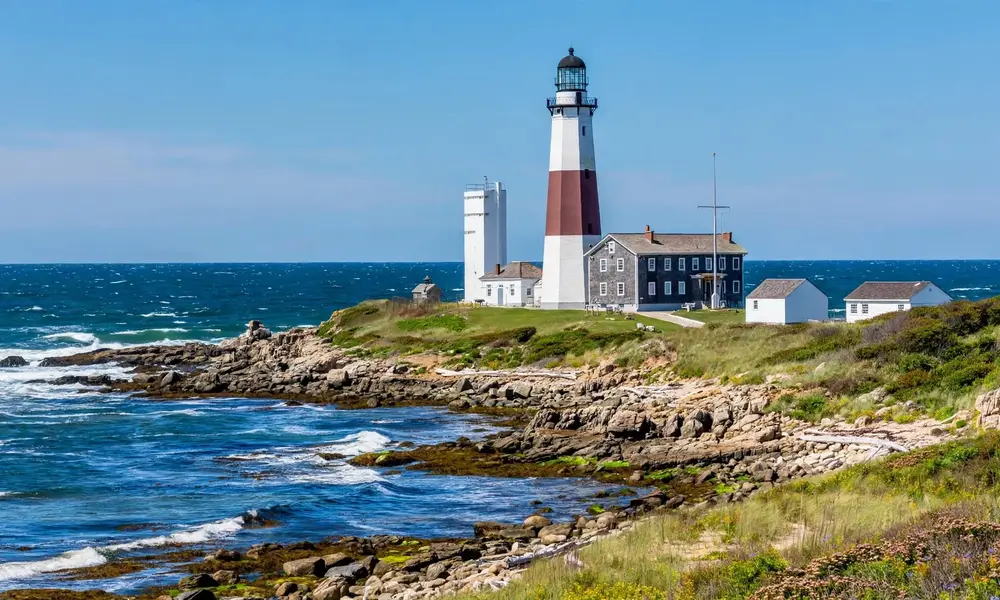
Montauk sits at the very tip of Long Island, and it has always behaved like it. Once a working fishing village and a military outpost, it became famous as the un-Hampton: surfers at Ditch Plains, fishermen hauling striped bass at the docks, and a lighthouse that has watched over the Atlantic since 1796.
The past fifteen years brought boutique hotels, excellent restaurants, and a summer influx of young Manhattanites, transforming Montauk into the East End’s capital of barefoot energy.
Days here run on nature: surfing, fishing charters, hiking the cliffs at Camp Hero and Shadmoor, and sunset drinks at navy yard turned harbor spots. Nights run long at places like the Surf Lodge, where the music continues until the sand outside is full.
Real estate has surged accordingly, though it remains more attainable than the estate villages to the west. Montauk is for those who want their luxury salted and sunburned, the same coastal escape fantasy that draws travelers to the finest luxury villa destinations in the world, translated into a distinctly American register.
Choosing Your Village
The honest way to choose among these eight is to decide what your perfect Hamptons day looks like. Formal gardens and club traditions point to Southampton. Cultural depth and polished power point to East Hampton. Bookstores, boats, and community point to Sag Harbor. Horses and headline parties point to Bridgehampton. Privacy and farmland grandeur point to Sagaponack. Understated celebrity calm points to Amagansett.
Art and open fields point to Water Mill. Salt, surf, and music point to Montauk. Many longtime summer families eventually sample several before the rental that finally feels like home, and the journey between them, through farm stands and ocean roads, is half the pleasure of discovering the best things to do in and around New York once summer ends.
FAQs
Which Hamptons village is the most expensive?
Sagaponack and the oceanfront areas of Southampton and East Hampton compete for the highest property values in the Hamptons. Sagaponack’s oceanfront estates regularly rank among the most expensive properties in America, with homes selling for tens of millions of dollars.
What is the difference between Southampton and East Hampton?
Southampton is known for its traditional old-money society, formal clubs, and reserved social calendar. East Hampton combines similar prestige with stronger contemporary cultural influence, luxury shopping, and a concentration of media and finance figures. Both offer world-class beaches and luxury estates.
Is Montauk part of the Hamptons?
Geographically, Montauk is part of the Town of East Hampton but sits east of the traditional Hamptons villages. Its fishing village roots, surf culture, and casual nightlife give it a distinct identity often described as the un-Hampton.
Which Hamptons village is best for families?
Water Mill and Bridgehampton are popular choices for families, offering open spaces, beaches, farm activities, and summer programs. Sag Harbor also appeals to families seeking a genuine village community with year-round activities and walkable streets.
Where do celebrities stay in the Hamptons?
Celebrities often stay in Amagansett, known for its privacy and beautiful dunes, as well as the estate areas of East Hampton and Sagaponack. Montauk attracts a younger entertainment crowd to its hotels and beaches during peak summer weekends.
When is the best time to visit the Hamptons?
The Hamptons season generally runs from Memorial Day to Labor Day. July and August are the busiest and most expensive months, while September is popular for its warm ocean water, fewer crowds, lower rental prices, and events like the Hampton Classic Horse Show.
Do you need a car in the Hamptons?
A car is strongly recommended because the villages are spread across roughly 30 miles of Long Island’s South Fork. Although the Long Island Rail Road and Jitney services connect the area to Manhattan, traveling between beaches, farm stands, and restaurants is easier with a car.
Which Hamptons village has the best beaches?
East Hampton’s Main Beach regularly ranks among America’s best beaches. Sagg Main in Sagaponack and Indian Wells in Amagansett offer comparable beauty with fewer crowds. Surfers prefer Ditch Plains in Montauk, while calm bay beaches are suitable for young children.