In the spring of 1921, in the south of France, a perfumer presented a fashion designer with two rows of samples. The designer chose the fifth. She took it as an omen her collections were shown on the fifth day of the fifth month and gave it the least romantic name imaginable: a number.
More than a century later, Chanel No. 5 remains the reference point for what a luxury fragrance can be. But the usual telling stops at the anecdote. The real story is about three decisions that were, in 1921, close to scandalous and that quietly invented modern perfume marketing.
Decision One: A Perfume That Smelled Like Nothing in Nature
Gabrielle “Coco” Chanel asked perfumer Ernest Beaux a Russian-born nose who had trained with the supplier to the Tsar’s court for “a woman’s perfume with the scent of a woman.” What she rejected was the era’s dominant style: single-flower soliflores, rose or violet, literal and demure.
Beaux’s answer was abstraction. His formula layered jasmine, rose, ylang-ylang, and sandalwood beneath an unprecedented overdose of aldehydes, synthetic molecules that lift and diffuse a scent the way carbonation lifts champagne.
Aldehydes existed in perfumery before 1921, but nobody had used them so boldly. The result smelled of no single flower. It smelled, in the language of the time, like something composed closer to a piece of music than to a bouquet.
This was the first rule broken: a luxury perfume did not have to imitate nature. It could be a design object in scent form.
Decision Two: A Bottle Like a Laboratory Flask
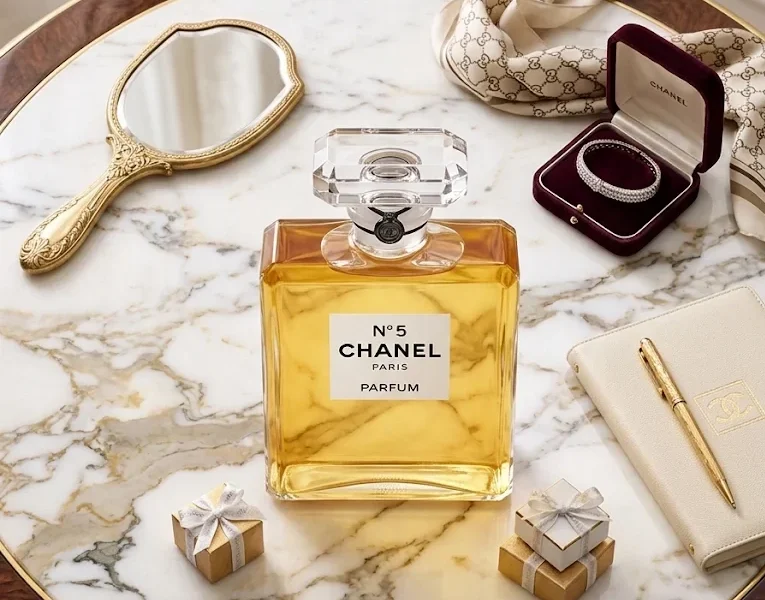
Where rival houses sold perfume in cut crystal and gilded curlicues, Chanel chose a plain, square, almost medical bottle with geometric lines, a faceted stopper said to echo the Place Vendôme, a white label with black type. To a 1920s customer, it looked austere to the point of insult.
That was the point. Chanel understood something that most of the luxury industry would take decades to accept: restraint signals confidence.
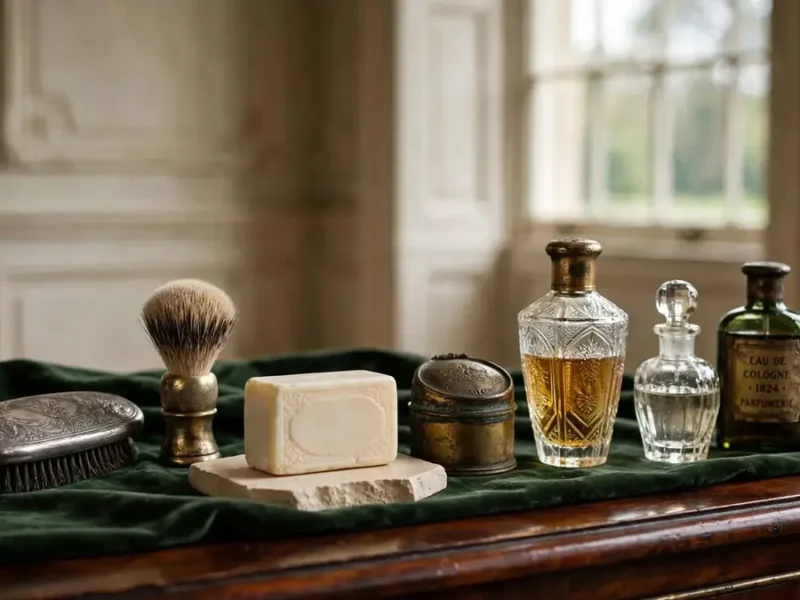
The bottle said the liquid inside needed no costume. It is one of the earliest examples of a luxury brand using minimalism as a mark of status rather than ornateness, an aesthetic debt that many modern luxury beauty brands, including the historic beauty houses with royal warrants, continue to reflect in their packaging and presentation.
Decision Three: Selling the Scent by Wearing It
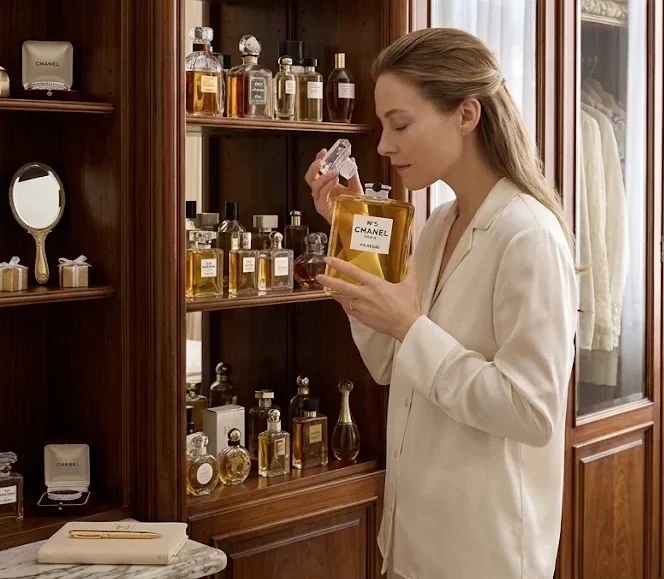
Chanel did not launch No. 5 with an advertising campaign. She launched it socially. She gave bottles to her best clients and to her friends among Paris’s artists, sprayed the boutique’s fitting rooms, and let the perfume travel through salons the way gossip does the most credible channel in existence.
Only later came the famous promotional machinery: the number-as-name that needed no translation in any market, the refusal to change the formula’s identity while endlessly re-staging its image, and in 1937, Chanel posing for the fragrance’s first advertisement herself. The pattern scarcity of product information and abundance of mystique became the template for luxury fragrance marketing worldwide.
The War Years and the Marilyn Moment
The house’s wartime history is complicated, and honesty matters here: Chanel closed her couture house during the Occupation, and her wartime conduct including a documented relationship with a German officer and a role in a failed German intelligence operation remains a dark chapter that biographers still debate.
After the war she lived for years in Switzerland while the Wertheimer family, her partners in Parfums Chanel since 1924, rebuilt the business. She returned to couture in 1954.
Meanwhile, in 1952, Marilyn Monroe answered a magazine’s question about what she wore to bed with five words that advertising money cannot buy: “Just a few drops of Chanel No. 5.”
The quote was authentic, unprompted, and priceless and it fixed the fragrance in American culture just as the postwar beauty market exploded.
Why It Still Sells
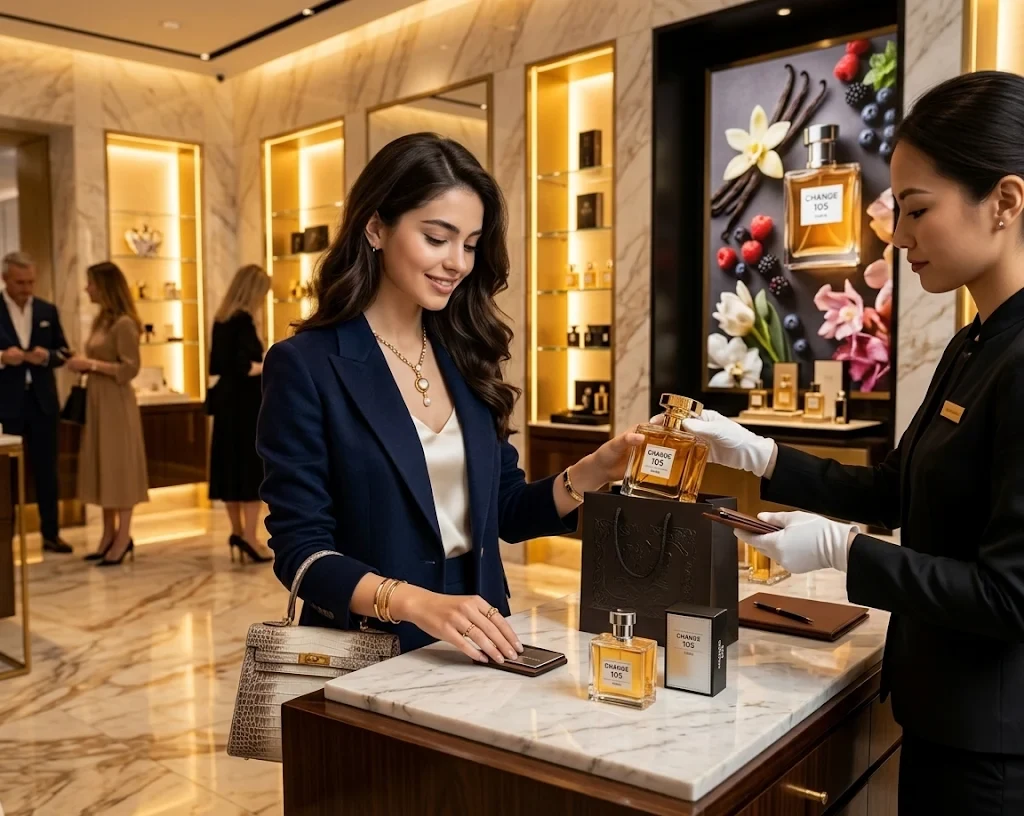
The honest answer is not nostalgia. Chanel has protected No. 5 with the discipline more typical of a champagne house or a watchmaker: the jasmine and May rose at its heart come largely from fields in Grasse, in the south of France, where the house has secured long-term control over its supply of flowers an almost agricultural definition of vertical integration.
The formula has been adjusted over the decades (the parfum, eau de parfum, and eau de toilette are related but distinct interpretations), yet the scent’s signature aldehydic shimmer has been guarded like a trade secret.
And the marketing still follows 1921 logic. When the house spends fortunes on a campaign film, it is selling what Chanel sold from her salon: not ingredients, not utility, but a mood so specific that a number is enough to name it.
A century on, that is the real legacy of No. 5. It taught the luxury industry that abstraction could be more desirable than ornament, that restraint could outshout gold leaf, and that a story, told sparingly, outlives any formula even one this good.
FAQs
When was Chanel No. 5 created?
In 1921, by perfumer Ernest Beaux for Gabrielle “Coco” Chanel. It launched in May of that year.
Why is it called No. 5?
Chanel chose the fifth sample Beaux presented; five was also her lucky number, tied to her May 5 collection showings.
What are aldehydes in perfume?
Synthetic aromatic molecules that add sparkle and diffusion. No. 5 used them in unprecedented concentration, creating its signature abstract, shimmering effect.
Is the formula still the same?
The parfum’s identity has been carefully maintained, with jasmine and May rose sourced largely from Grasse; related concentrations (eau de parfum, eau de toilette) are modern interpretations rather than identical formulas.
Disclaimer: This content is for informational purposes only and reflects our personal opinions and experiences. We just love to write and share what we know and research.