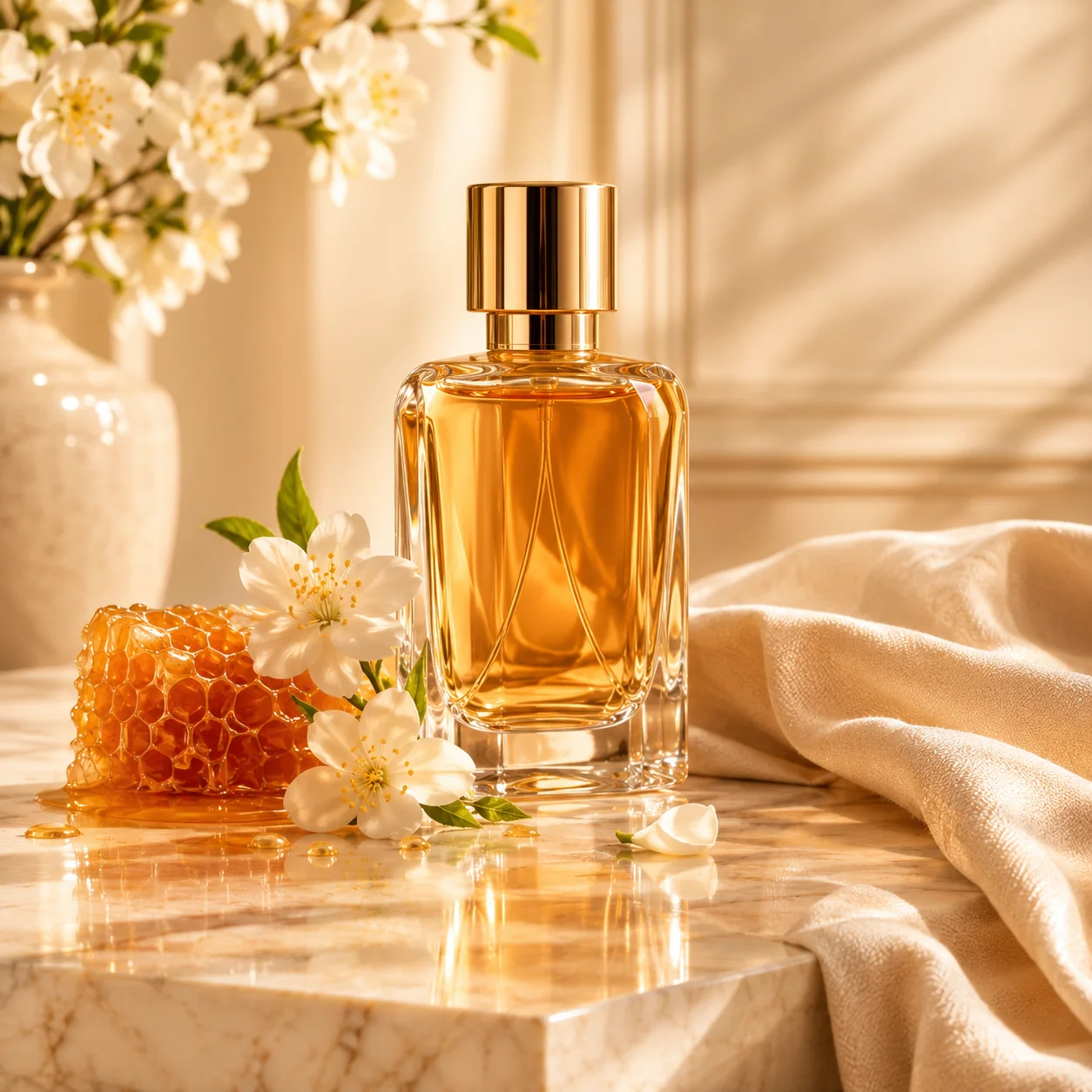
Honey perfume sounds like comfort before you have smelled a single drop. Perhaps it brings to mind breakfast with someone you love, a spoon resting beside a teacup, or the golden light of an unhurried afternoon.
That association is part of its charm. But a honey fragrance does not have to smell like dessert.
The most useful way to choose one is to look at what surrounds the honey note. Fruit, flowers, spice, tobacco, and woods can point you toward very different compositions. Start with those companions, then sample the actual perfume before deciding.
There is a honey direction worth exploring even if sugary fragrances have never quite felt like you.
Key takeaways
- Honey is a scent description, not proof that a perfume contains edible honey.
- The surrounding notes are a better starting point than the word “honey” alone.
- Fruity, spicy, and tobacco pairings offer different directions to explore.
- Compare sweetness, richness, and wearability separately when sampling.
- Published notes cannot establish how a fragrance will smell or last on you.
What does honey perfume smell like?
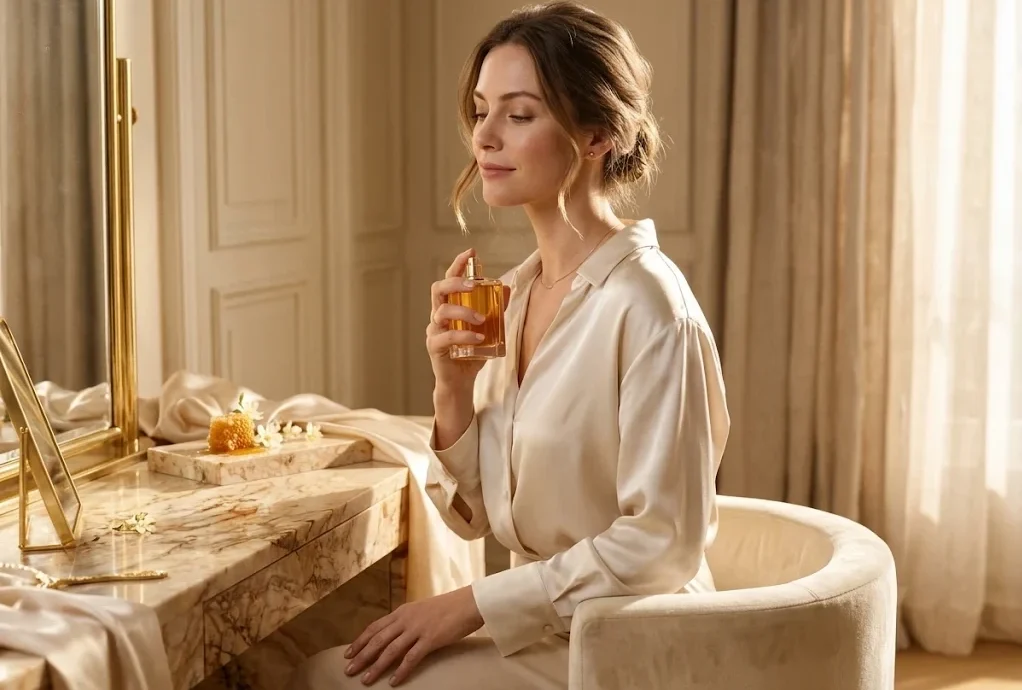
There is no single answer that describes every bottle. “Honey” might suggest sweetness to one person, a floral association to another, or something richer and more textured to someone else.
The complete composition matters. A honey note alongside nectarine gives you a different starting point from honey alongside tobacco or cinnamon.
Treat those combinations as clues rather than predictions. A note list cannot tell you which element you will notice most, or whether you will enjoy the balance.
You also do not need to identify a convincing spoonful of honey for the perfume to succeed. The better question is whether the finished fragrance gives you something you want to wear.
Does a honey note mean the perfume contains real honey?
No. A fragrance note describes a smell or intended impression; it does not, by itself, establish the ingredients used to create it.
Likewise, the word “honey” cannot confirm whether a product is vegan or contains a bee-derived material. Check the maker’s current information if that distinction matters to you.
The same care applies to beeswax. Do not assume honey and beeswax describe the same note, ingredient, or experience.
For broader guidance on interpreting fragrance descriptions, our guide to choosing a luxury perfume offers a helpful place to begin.
Which honey perfumes should you explore first?
A short list with contrasting directions can teach you more about your preferences than several very similar options.
These examples come from the houses’ published descriptions. They are research-based starting points, rather than personal wear-test rankings.
| Perfume | Verified honey pairing | Why include it in a comparison? |
| Jo Malone London Nectarine Blossom & Honey Cologne | Nectarine, peach, cassis, spring flowers, and an acacia honey note | To explore honey in a fruity composition |
| Parfums de Marly Oajan | Honey and cinnamon in the opening | To investigate a honey-and-spice direction |
| Guerlain Tobacco Honey Eau de Parfum | Honey contrasted with a tobacco accord | To explore how honey works beside tobacco |
Jo Malone London Nectarine Blossom & Honey: begin with fruit
Jo Malone London places nectarine, peach, cassis, and spring flowers alongside an acacia honey note. It is a useful candidate if the fruit side of the description interests you as much as the honey.
When sampling, notice what attracts your attention. Is it the fruit, a floral impression, the sweetness, or the combination?
Do not buy it expecting a literal recreation of breakfast honey simply because the word appears in its name. Give the composition room to be its own thing.
Parfums de Marly Oajan: investigate honey with spice
Parfums de Marly describes Oajan’s opening through honey and cinnamon. That makes it a worthwhile contrast to a fruit-led candidate.
Ask yourself whether you want the spice as part of the experience. Loving honey in food does not necessarily mean you will enjoy wearing a honey-and-cinnamon composition.
Let the sample settle before deciding. Your first reaction and your desire to wear it later are both useful information.
Guerlain Tobacco Honey: explore the contrast
Guerlain describes Tobacco Honey through a contrast between honey and a tobacco accord. Its description gives you a reason to investigate the tobacco side, rather than focusing only on the sweet word in the name.
A tobacco accord is an olfactory construction; the name should not be treated as a promise of a literal smoking experience. Equally, do not assume the honey will make the whole fragrance feel gentle.
Try it if both sides of that pairing interest you. The tension between them is the point to explore.
How can you find a honey perfume that is not too sweet?
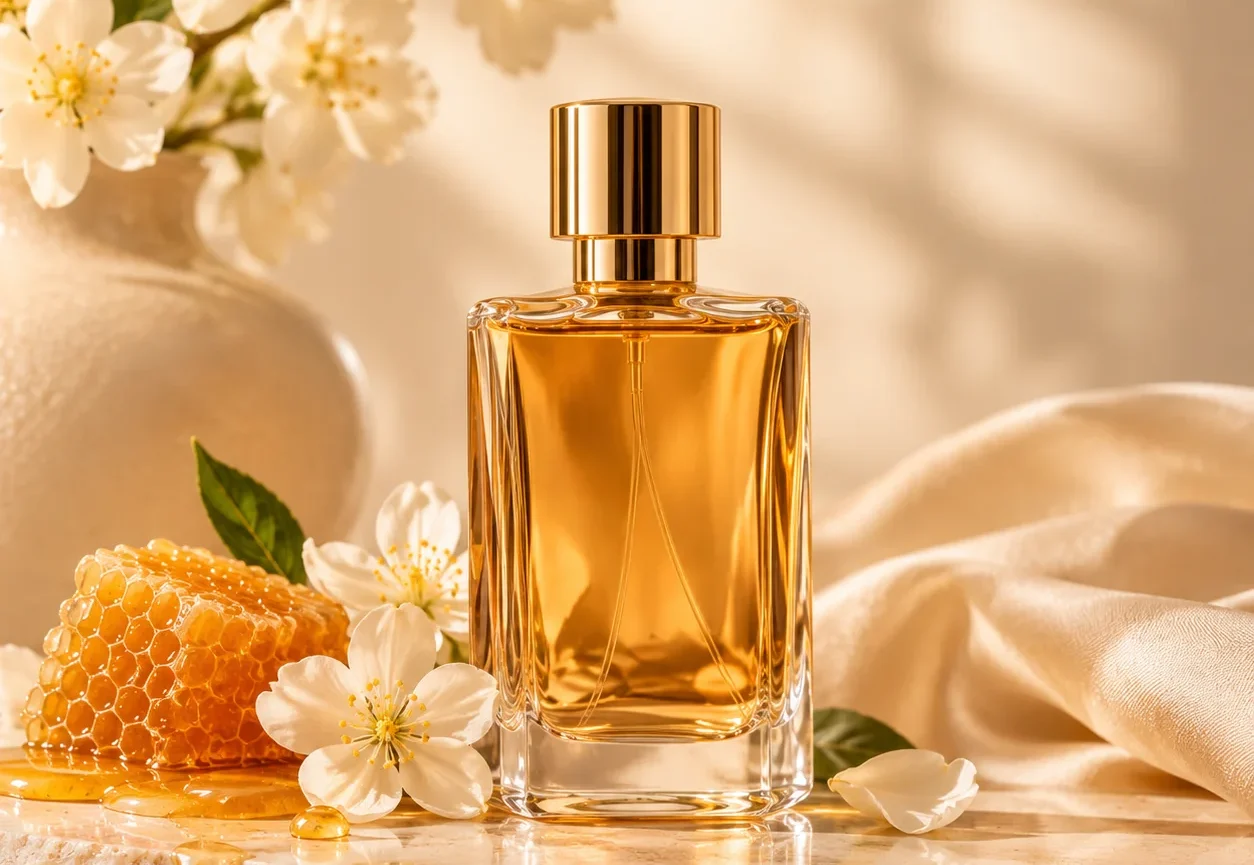
Begin by describing what “too sweet” means to you. Are you avoiding a candy association, a dessert impression, or simply a scent that feels overly rich?
Those are different preferences. Naming yours will make a fragrance appointment much more useful.
You might tell an adviser: “I enjoy honey as an idea, but I would like to compare it with fruit, spice, and tobacco before choosing.” That request gives them more to work with than asking for something sophisticated or expensive.
Do not assume that adding woods or tobacco automatically removes sweetness. The balance needs to be smelled, rather than inferred from a list.
Why should you separate sweetness from richness?
It is easy to use “sweet” as a catch-all description when something feels too much. A more precise record helps you understand what you actually want to change.
Our suggested sampling framework separates three questions:
Sweetness: How sweet does the fragrance seem to you?
Richness: Does the overall impression feel light, full, dense, or somewhere between?
Wearability: Would you enjoy choosing it for the day you actually have planned?
These are personal observations, not laboratory measurements. Their value is in helping you distinguish an enjoyable sweet perfume from a composition that feels more substantial than you want.
A fragrance can appeal to your imagination without fitting your routine. You are allowed to appreciate it and leave it on the counter.
How should you compare honey perfumes?
Choose a small number of contrasting candidates. Begin with paper strips if available, label each clearly, and decide which one you want to investigate further.
If you are comfortable testing on skin, follow the product directions and give that fragrance an ordinary day of your attention. Keep other new scents out of the experiment.
Record your impression near the beginning, later during wear, and before deciding whether to wear it again. You do not need elaborate perfume vocabulary.
“Lovely, but I would only want this occasionally” is a useful conclusion. So is “I keep looking forward to another wear.”
Include a familiar favourite
If you already own a perfume you love, use your memory of wearing it as a reference point. What does the honey candidate add that your current bottle does not?
Perhaps you want something for a different mood. Perhaps the new fragrance largely duplicates a role already filled.
This comparison keeps the decision connected to your life. A perfume does not need to be entirely unlike everything you own, but knowing why you want it makes the purchase more satisfying.
Can you wear honey perfume in warm weather?
Let your own trial answer that question. A note name alone does not establish whether a finished fragrance will feel comfortable in a particular climate or setting.
If you expect to wear it during warm days, sample it under those conditions before buying a large bottle. Notice whether you still enjoy it during normal movement and time indoors.
You do not have to reserve sweetness for winter. You also do not have to keep wearing something that feels overwhelming simply because you loved it on a cooler evening.
Fragrance preferences can make room for context.
Should you layer honey perfume?
Try it alone first. A honey fragrance may already contain the contrast or complexity you are looking for.
If you later want to experiment, change one element at a time. Include scented body products and hair fragrance in that assessment, rather than thinking only about two perfume bottles.
Layering should be enjoyable. It should not feel like buying another product to correct a fragrance you do not really like.
Is honey perfume a good gift?
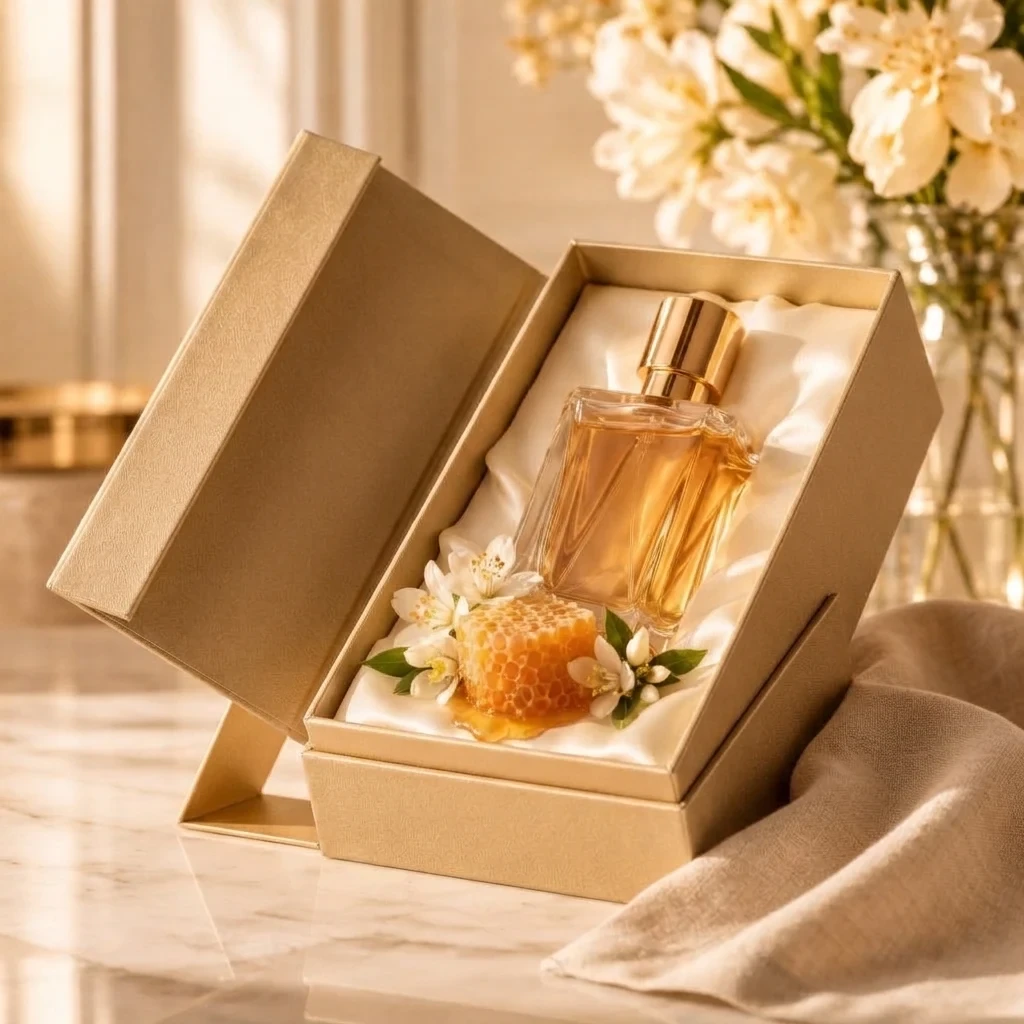
It can be a thoughtful choice when you know the recipient enjoys that direction. The important clue is their fragrance taste, rather than their fondness for honey in tea.
Notice the perfumes they already wear and the descriptions they use. Someone who enjoys fruity scents may want to investigate a different honey pairing from someone who loves spice.
If you are unsure, a suitable sample or discovery option can offer freedom without the pressure of a full bottle. Check the actual contents and gift terms.
Our guide to fragrance gifts for women explores other ways to make a fragrance present feel personal.
Your honey perfume shopping checklist
Before choosing a bottle, ask:
- Which pairing interests me: fruit, flowers, spice, tobacco, or something else?
- Have I sampled the exact perfume and concentration I intend to buy?
- Do I enjoy the later impression as well as the opening?
- Have I separated sweetness from richness in my assessment?
- Can I picture when I would reach for it?
- Have I checked any ingredient or vegan-status questions with the maker?
- Does the bottle size suit my likely use?
- Do I understand the seller’s return terms?
Frequently asked questions
Are all honey perfumes gourmand fragrances?
Do not assume so. Honey can appear in compositions with different surrounding notes. Consider the complete fragrance rather than classifying it from one word.
Are honey perfumes only for women?
Choose according to what you enjoy wearing. A gender category does not tell you whether a honey-and-fruit or honey-and-tobacco combination will suit your preferences.
Does a honey note make perfume last longer?
A note list cannot establish a guaranteed wear time. Assess the actual product rather than expecting a duration from the honey description.
Can a honey perfume smell different from the honey in my kitchen?
Yes. The note belongs to a complete fragrance composition and need not recreate one particular edible honey.
Should I buy a larger bottle because the price per millilitre is lower?
Only if you want and expect to use the additional perfume. A smaller bottle you enjoy finishing can be a better purchase for your habits.
Choose the sweetness you want to return to
Honey carries affectionate associations for many of us. It can suggest care, warmth, or a familiar gesture made by someone who knows us well.
A perfume can borrow from that feeling without recreating it literally. The pleasure is discovering which interpretation belongs in your own day.
Take your time with the samples. The right choice is the one you look forward to wearing again, long after the beautiful name has made its first impression.