Luxury eyewear can change the expression of your whole face. A dark, sculpted frame brings definition. A fine metal rim lets your features remain the focus. A translucent color catches the light so gently that you notice something different each time you put it on.
But the real test comes later, when you have been wearing the glasses long enough to stop thinking about them.
Good luxury eyewear combines design you enjoy with comfortable fit, suitable lenses, careful construction, and dependable aftercare. The name on the temple can introduce you to a particular aesthetic. It cannot tell you whether the bridge fits your nose or whether the finished prescription will work well in that frame.
Begin with curiosity. Then give the practical details the same attention as the beautiful ones.
Key Takeaways
- Choose the frame and lenses as one complete purchase.
- Judge comfort after several minutes, not just a glance in the mirror.
- Acetate, titanium, and stainless steel offer different design possibilities; none guarantees a better frame.
- Confirm prescription suitability before committing to a particular shape.
- For sunglasses, verify UV protection separately from tint darkness and polarization.
- Ask about adjustments, replacement parts, and lens-remake terms before buying.
What Makes Luxury Eyewear Different?
The most convincing differences are often small.
A frame edge feels smooth where it touches your skin. The temples open with a controlled movement. A color has depth rather than appearing flat. The glasses remain comfortable when you look down to read.
Those details can reflect thoughtful design and manufacturing. They should still be assessed on the individual pair.
Price may also reflect branding, distribution, limited production, and decorative materials. Similar considerations apply when exploring designer accessories, where craftsmanship, materials, and individual design details can influence the overall buying experience. You do not need to pretend that every part of the cost purchases better vision.
A beautiful object can be worth buying for its design. The important thing is understanding what you value.
Which Luxury Eyewear Brands Should You Explore?
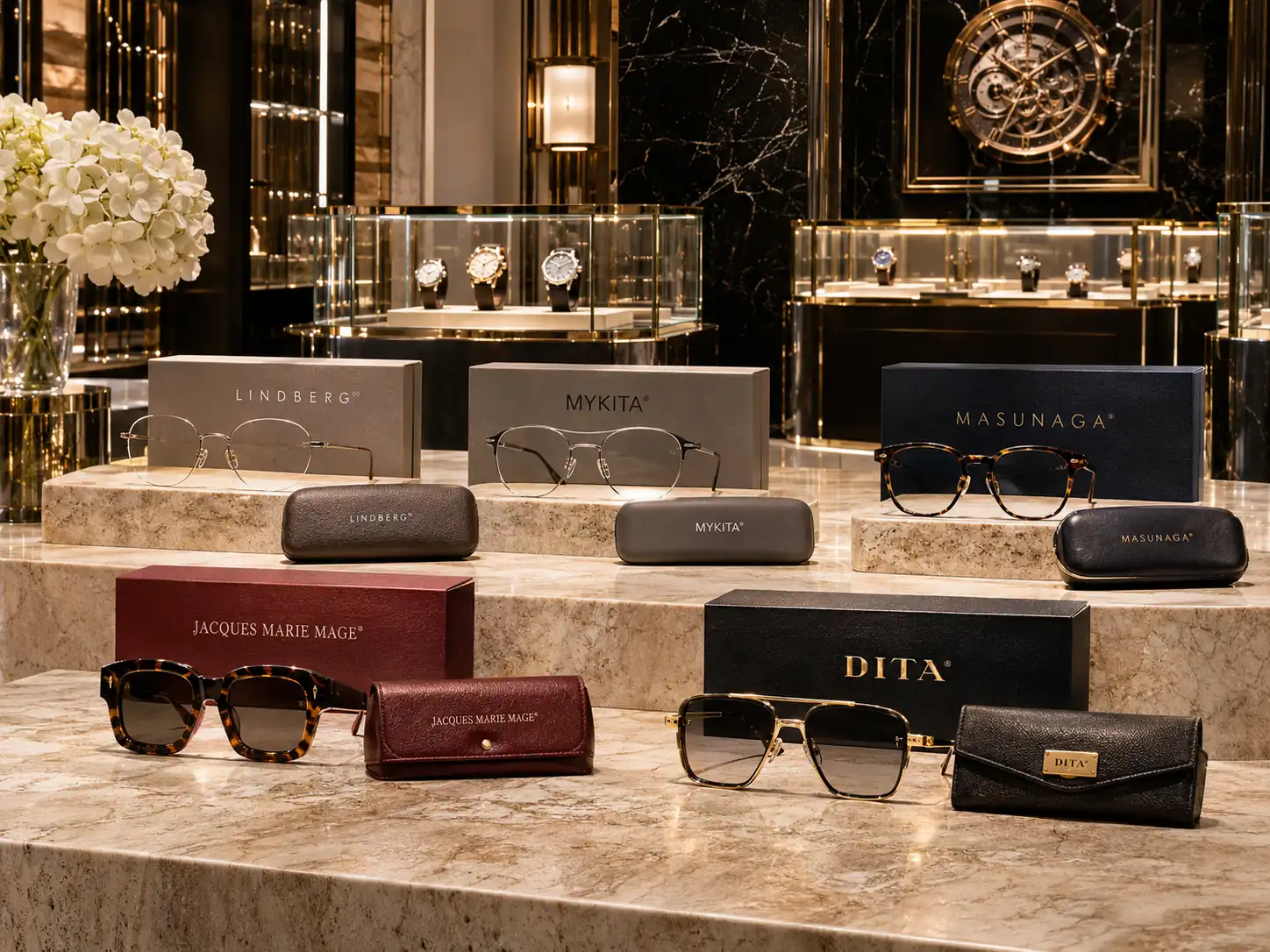
The brands below provide different starting points. They are not ranked from best to worst, and individual collections may vary considerably. Your choice of eyewear can also complement your overall wardrobe, and these luxury styling tips offer further ideas for creating a polished personal appearance.
| Brand | A useful starting point | What to examine during the fitting |
| LINDBERG | Fine titanium and restrained construction | Bridge stability, adjustment, and the feel of the complete frame |
| MYKITA | Architectural metal frames and distinctive hinge engineering | Temple pressure, alignment, and prescription suitability |
| MASUNAGA | Japanese eyewear manufacturing and considered detailing | Finish, proportions, and comfort across the nose |
| Jacques Marie Mage | Expressive shapes and limited-edition designs | Weight, balance, and whether the silhouette feels natural |
| DITA | Detailed titanium and acetate construction | Hardware, adjustment, and comfort during extended wear |
| Oliver Peoples | Heritage-influenced shapes and subtle detailing | Bridge fit, color, and the relationship between frame and face |
LINDBERG: Explore the Appeal of Less
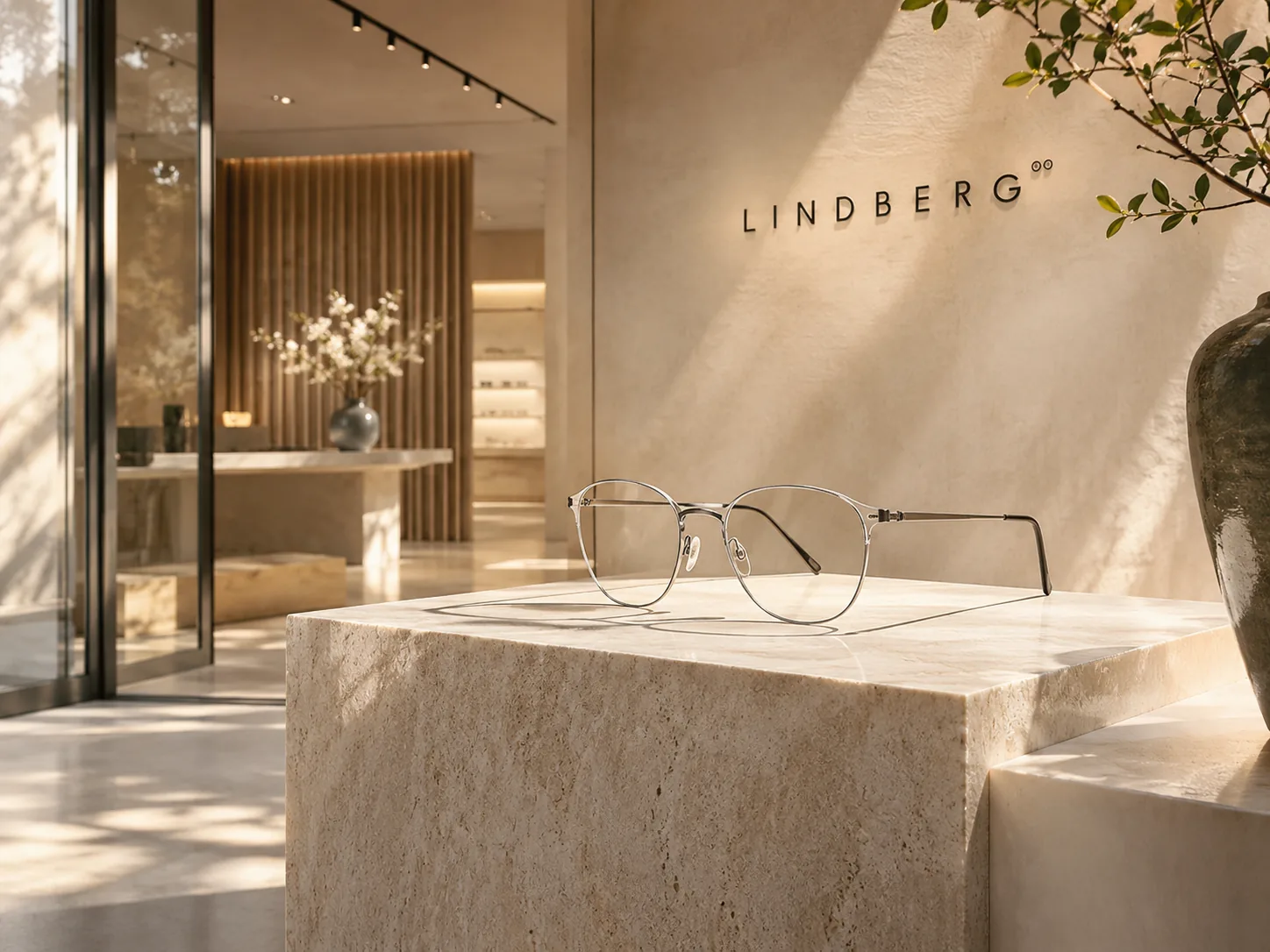
LINDBERG is a useful place to begin if you prefer eyewear that feels visually light.
Its titanium collections include designs with screwless hinges. That engineering is worth examining, but the purchase should still come down to the complete fitting.
A frame can be exceptionally light and still need adjustment. Ask the optician to check its position, stability, and compatibility with the lenses you require.
Minimal appearance should bring ease to your day, not repeated slipping.
MYKITA: When the Technical Detail Becomes the Design
MYKITA’s stainless steel eyewear makes its hinge construction part of its visual identity.
The appeal lies in the relationship between thin material, shape, and function. Look closely at how the temples connect to the front, then put the frame on and see whether you enjoy that character on your own face.
Ask how adjustments and repairs are handled. An unusual technical solution deserves an equally clear explanation of aftercare.
MASUNAGA: Look Closely at the Finish
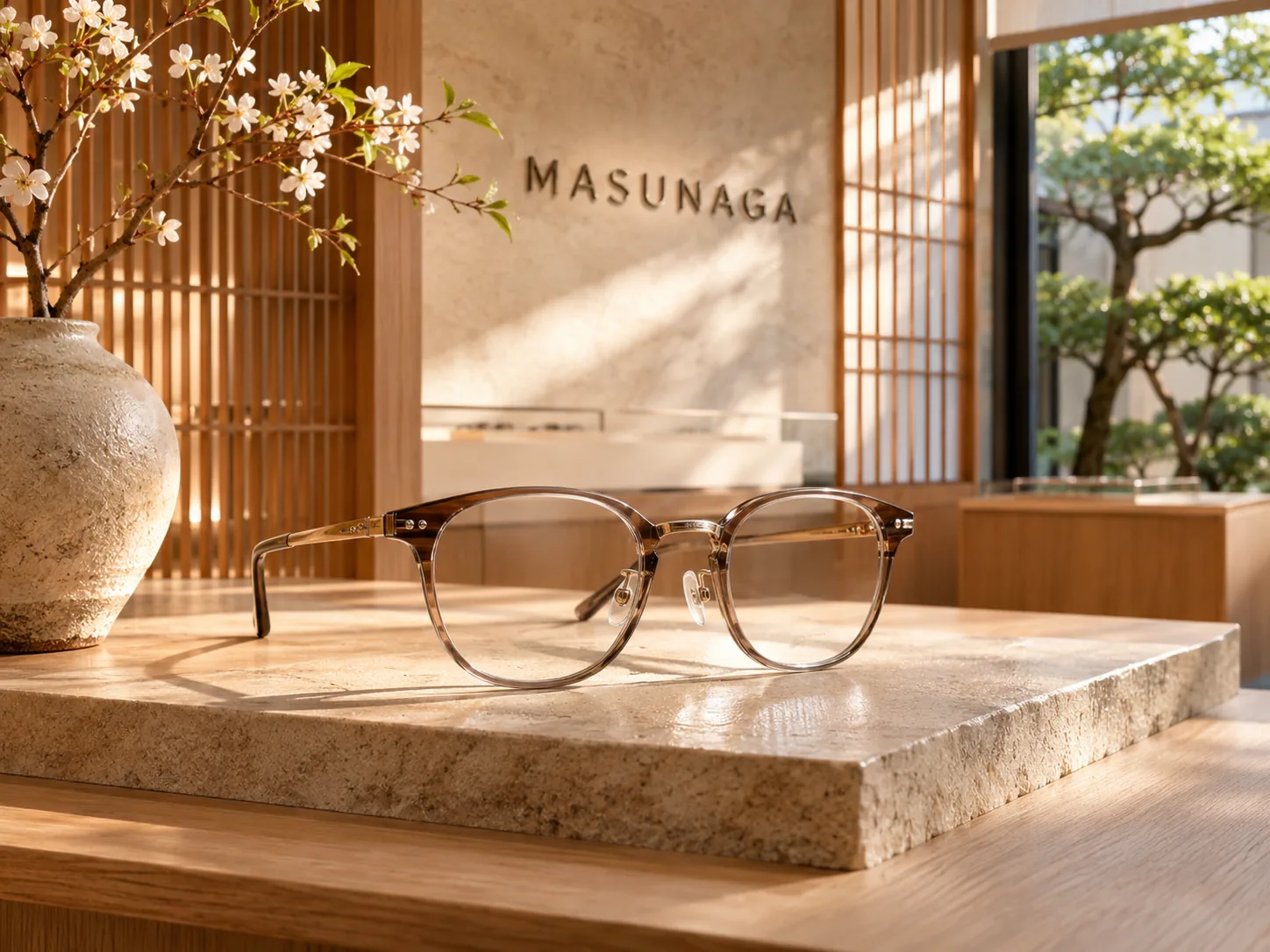
MASUNAGA describes an integrated manufacturing approach rooted in Fukui, Japan.
For the wearer, the useful exercise is to examine the resulting frame: the surfaces, alignment, joins, and way the proportions work together.
Try more than one bridge and size. Admiring the manufacturing story is a lovely introduction, but the pair you choose should feel right without needing you to overlook discomfort.
Jacques Marie Mage: Give a Strong Frame Time
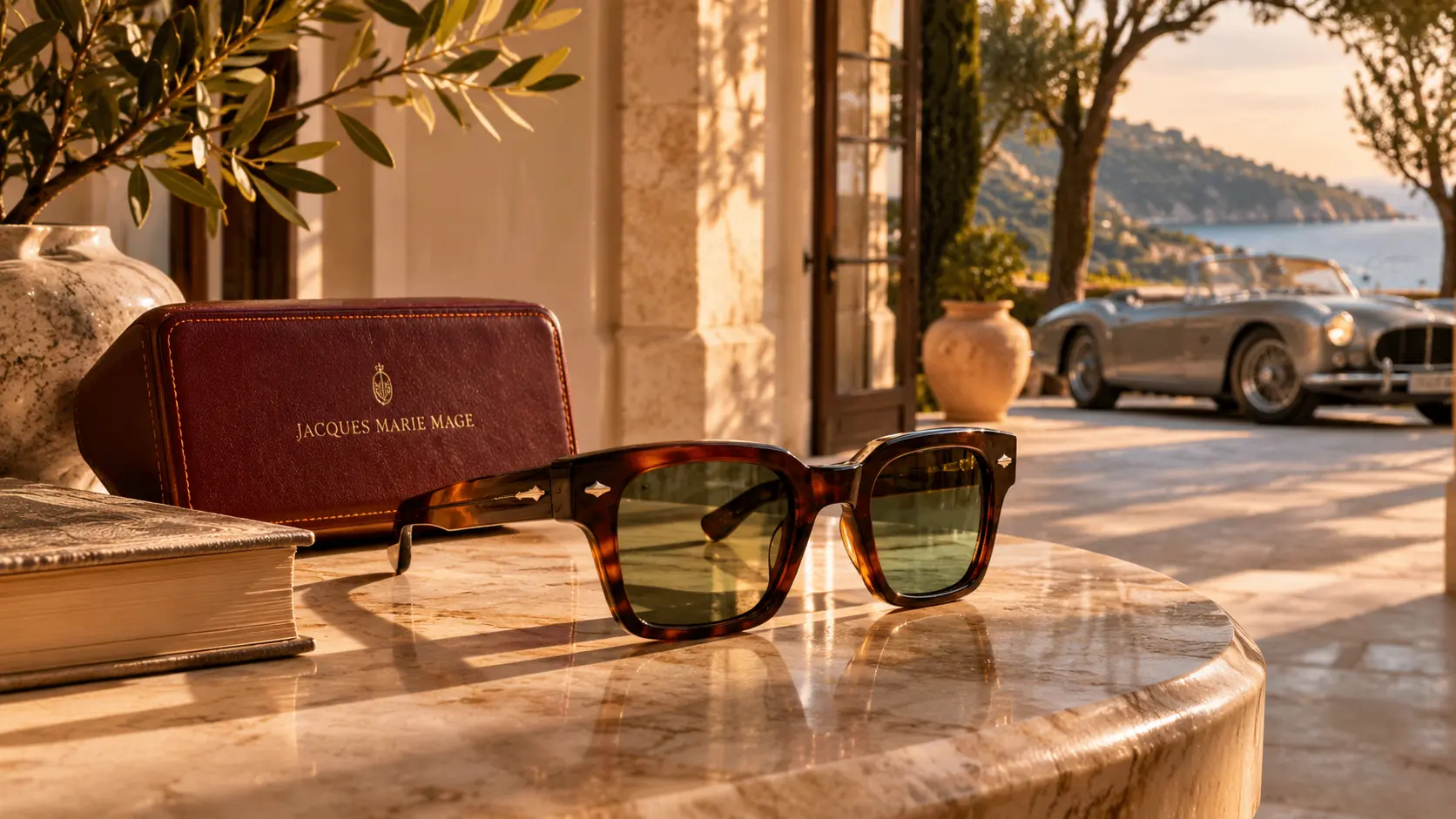
Jacques Marie Mage is worth exploring when you want eyewear with presence.
Its limited-edition designs can make shape, thickness, and decorative detail central to the experience. A bold frame may feel unfamiliar at first, so give yourself time to see it from different distances.
Then check the balance. Notice whether the frame feels secure and whether its weight remains comfortable.
Limited production adds context. It does not remove the need for a good fitting.
DITA: Examine the Construction Without Being Distracted by It
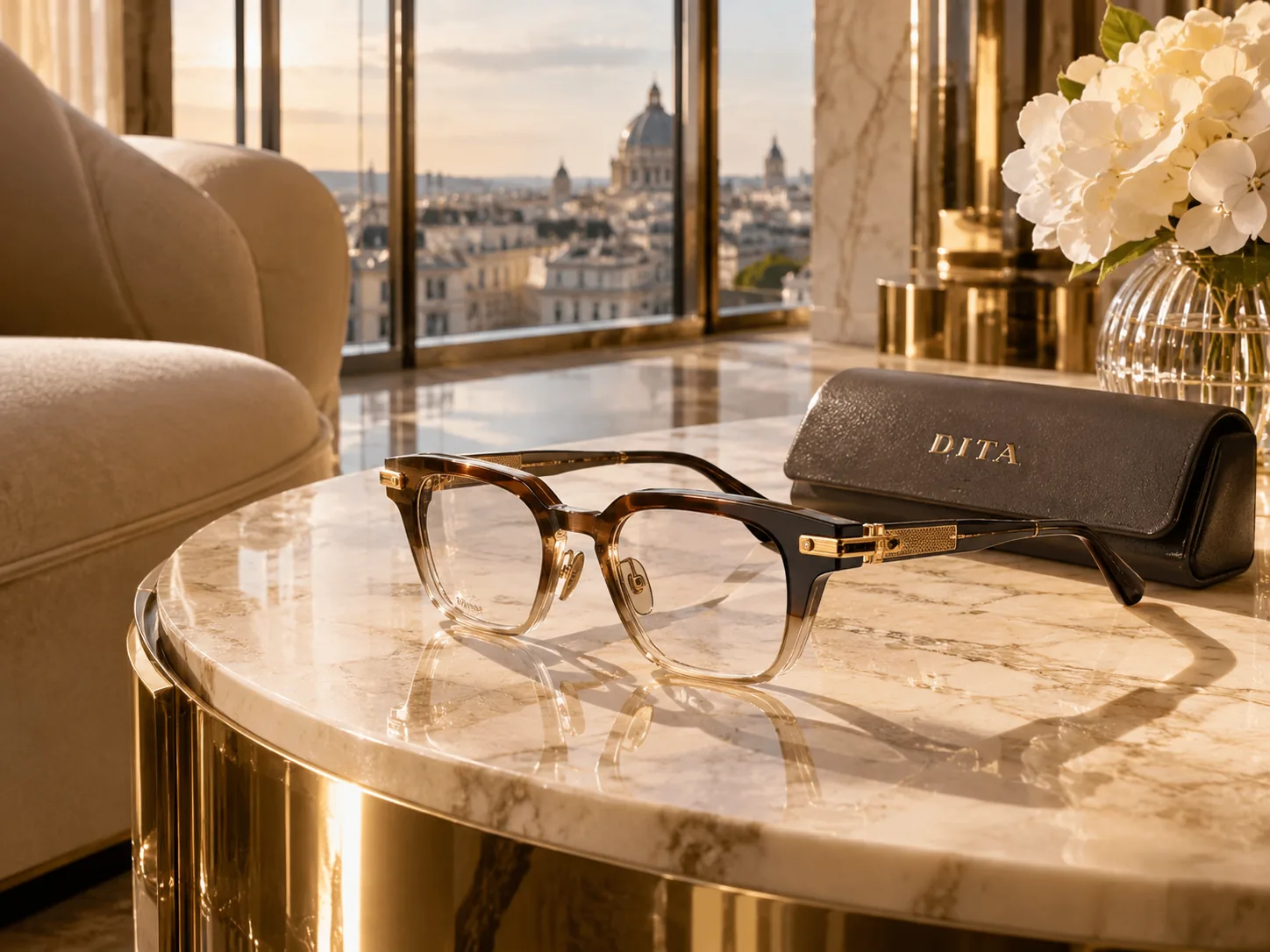
DITA offers designs combining titanium, acetate, and detailed hardware.
Look at those details, but do not stop there. Check whether the temples press, whether the nose pads sit evenly, and whether the frame remains comfortable when you move your head.
An elaborate pair can be a wonderful personal signature. It should also work through the hours you expect to wear it.
Oliver Peoples: Notice the Proportions
Oliver Peoples offers an appealing starting point for heritage-inspired shapes and discreet detail.
Small changes in lens depth, bridge shape, and frame color can make a familiar silhouette feel quite different. Compare several pairs rather than deciding that one named model must be the answer.
Eyewear can also become an important finishing detail in contemporary outfits, particularly when exploring luxury streetwear and its balance of casual silhouettes and refined accessories.
The frame you barely noticed in the display may become the one you like most once it is on your face.
What About Eyewear From Fashion Houses?
Fashion-house eyewear can be a satisfying choice when you enjoy a particular brand’s visual language. Understanding the relationship between personal style and timeless luxury fashion can also help you choose eyewear that complements your wardrobe rather than following short-lived trends.
Approach it as eyewear first. Examine the frame, ask who provides the warranty, and check whether the seller can arrange adjustments and replacement parts.
The brand’s name and the manufacturing organization may be different. Licensing and production arrangements do not, by themselves, establish whether a frame is good or poor.
Judge the specific product and the support available with it. Readers exploring other premium accessories can also discover some of the most distinctive luxury accessories brands and the design philosophies behind them.
Is Acetate Better Than Titanium?
The better material is the one that supports the design and wearing experience you want.
Acetate
Acetate can provide rich color, translucency, and substantial sculpted shapes. It is particularly interesting when the frame itself is a visible part of your style.
Check how the bridge sits and how the weight feels. A broad front may look balanced while still requiring careful adjustment.
Titanium
Titanium allows fine, lightweight constructions, although the finished weight depends on the whole design.
Ask which parts use titanium rather than assuming the entire frame does. Then assess the pair with the lenses it is likely to need.
Stainless steel
Stainless steel can support thin, precise forms and distinctive construction methods.
The material name alone does not describe temple pressure, flexibility, or comfort. Those are qualities to experience during the fitting.
Precious-metal accents or unusual natural materials may add visual interest, but they should come with specific care and repair guidance.
How Should Luxury Eyewear Fit?
Start by putting the glasses on without arranging your face around them.
Relax your expression, look forward, then look down. Notice whether you immediately want to push them back into position.
A good optician should assess the bridge, temple length, frame width, and alignment. Ask which issues can be adjusted and which suggest that another frame would suit you better.
Check the bridge
The bridge is the part that sits across your nose.
A frame should not depend on tight temples to compensate for an unsuitable bridge. Nose pads may offer adjustment, while a molded acetate bridge needs a compatible shape.
Check the temples
The arms should sit comfortably along the sides of your head and behind your ears.
Pressure is not proof of a secure fit. If something pinches, say so before buying.
Check movement and expression
Smile, speak, and turn your head. Observe whether the frame shifts or presses uncomfortably.
Spend several minutes in the pair if possible. Comfort becomes easier to judge when you stop concentrating on your reflection.
Why Should Prescription Lenses Influence the Frame Choice?
The frame you love must also accommodate the lenses you need.
Prescription strength, lens design, frame dimensions, and fitting measurements can affect the finished result. Ask your optician to explain the implications before ordering.
If you use progressive lenses designed to provide different viewing powers within one lens, discuss how the frame and fitting will support your reading, screen use, and distance vision.
Do not select a frame first and assume every lens option will work equally well afterward.
Also ask whether the lenses supplied in a display frame are demonstration lenses. They should not be confused with your finished prescription or the sunglass lenses included in the final purchase.
Does Expensive Sunglass Eyewear Protect Your Eyes Better?
Price alone does not establish protection.
For sunglasses, look for documented 100% UVA and UVB protection, or an appropriate UV400 statement. If the specification is unclear, ask the optician to verify it.
Dark tint and UV protection are different properties. A darker-looking lens should not be assumed to block more ultraviolet radiation.
Polarization is different again. It reduces reflected glare, but polarization itself does not establish UV protection. A lens may provide both; confirm both rather than treating the terms as interchangeable.
Protective performance should be clear before design or branding settles the purchase.
How Much Should You Budget?
Ask for the price of the complete pair.
A frame price may exclude prescription lenses, particular coatings, thinning options, or other features discussed during the consultation. Confirm the final specification before comparing quotes.
For a fair comparison, establish:
- The exact frame and size.
- The prescription lens design.
- The lens material.
- The coatings included.
- Any tint, polarization, or other specified features.
- Fitting and adjustment services.
- Warranty coverage.
- Lens-remake or adaptation terms.
A lower quote is not necessarily better or worse. It may simply describe a different package.
What Aftercare Makes the Purchase More Satisfying?
Ask what happens six months after you leave the shop.
Can you return for adjustments? Are replacement nose pads or temple components available? Who handles a broken hinge? What happens if the prescription lenses need to be remade?
Follow the maker’s and optician’s cleaning instructions. Use a suitable case, and avoid leaving eyewear exposed to excessive heat.
These ordinary habits matter more to the ownership experience than treating every pair as a collector’s item.
A Thoughtful Buying Checklist
- Try at least two sizes or bridge options where available.
- Wear the preferred pair for several minutes.
- Have an optician assess the fit.
- Confirm that the frame suits your prescription.
- Verify sunglass UV protection.
- Obtain a quote for the complete lens-and-frame package.
- Ask about adjustments, repairs, and replacement parts.
- Read warranty and lens-remake terms.
- Choose the pair you enjoy in ordinary light, not only under display lighting.
Frequently Asked Questions
What is the best luxury eyewear brand?
There is no universal winner. LINDBERG, MYKITA, MASUNAGA, Jacques Marie Mage, DITA, and Oliver Peoples offer different design approaches. Fit and lens suitability should guide your final choice.
Are luxury glasses worth the money?
They can be if you value the design, construction, comfort, and aftercare. The higher price does not automatically guarantee better vision or a better fit.
Is titanium eyewear always lighter?
Not necessarily. Finished weight depends on the entire frame and lenses. Compare the complete pairs rather than relying on material names.
Are polarized sunglasses the same as UV-protective sunglasses?
No. Polarization reduces reflected glare. UV protection concerns ultraviolet radiation. Confirm both specifications when you want both features.
Can you put prescription lenses into any luxury frame?
Not always. Suitability depends on the frame, prescription, and lens design. Have an optician confirm compatibility before purchase.
Should you choose frames according to face-shape rules?
Use those rules as suggestions, if you find them helpful. Proportions, fit, personal taste, and the way the frame feels on you are more useful than a rigid face-shape category.
Final Thoughts
The most satisfying luxury eyewear feels personal before it feels prestigious.
You enjoy its shape, trust the lenses, and wear it comfortably through an ordinary day. Perhaps someone notices the beautiful frame. More importantly, you stop adjusting it and get on with seeing the world.
Choose for that experience. The design should delight you; the practical details should let you enjoy it.