What is a statement necklace? It is a necklace designed to become a focal point through its shape, scale, color, texture or construction. It can be a generous gold chain, a sculptural collar or a striking pendant; sparkle is entirely optional.
Picture your most dependable outfit: a white shirt, good trousers, perhaps the shoes you keep having resoled because nobody has improved on them. Add a necklace with an interesting shape, and suddenly the outfit has somewhere to go.
That is the appeal. You have not bought a new wardrobe. You have given familiar clothes something new to say.
The lovely part is how personal the statement can be. Some women want polished gold with a little authority. Others prefer irregular pearls, colored beads or a pendant that looks as though it belongs in a gallery. There is room for all of it, provided you enjoy the piece enough to actually wear it.
Key Takeaways
- A statement necklace creates visual focus; it does not need to be expensive, enormous or covered in stones.
- Judge the necklace with your clothes on, especially around the neckline and shoulders.
- Shape and contrast can create presence without excessive weight.
- Test comfort, movement, fastening and fabric contact before buying.
- Material-specific care matters, particularly for pearls, delicate stones and mixed-material designs.
What Makes a Necklace a Statement Piece?
A statement necklace attracts attention because something about it stands out. That might be oversized links, an unusual curve, a rich color or an unexpected combination of materials.
Context matters, too. A polished silver collar against a black knit can look more striking than a larger necklace disappearing into a busy print. Presence comes from the relationship between the jewelry and the outfit.
For a useful shopping question, try this: what do I notice first, and do I enjoy noticing it?
You do not need to assemble a committee to answer. The piece should make sense to your eye before it needs an explanation.
Which Type of Statement Necklace Suits Your Wardrobe?
Start with the clothes you already reach for. Then consider what kind of shape would give them a fresh direction.
| Necklace style | Its visual character | An outfit to try | Detail to check |
| Bold link chain | Repetition, texture and structure | An open shirt or plain T-shirt | Weight, clasp position and hair catching |
| Sculptural collar | A defined curve or architectural outline | A scoop neck or strapless top | Fit while sitting and turning your head |
| Oversized pendant | One strong point of focus | A long dress or simple knit | Where the pendant lands and how it moves |
| Pearl or bead strands | Rhythm, color and surface detail | A crisp shirt or clean-lined dress | Strand condition, fastening and care |
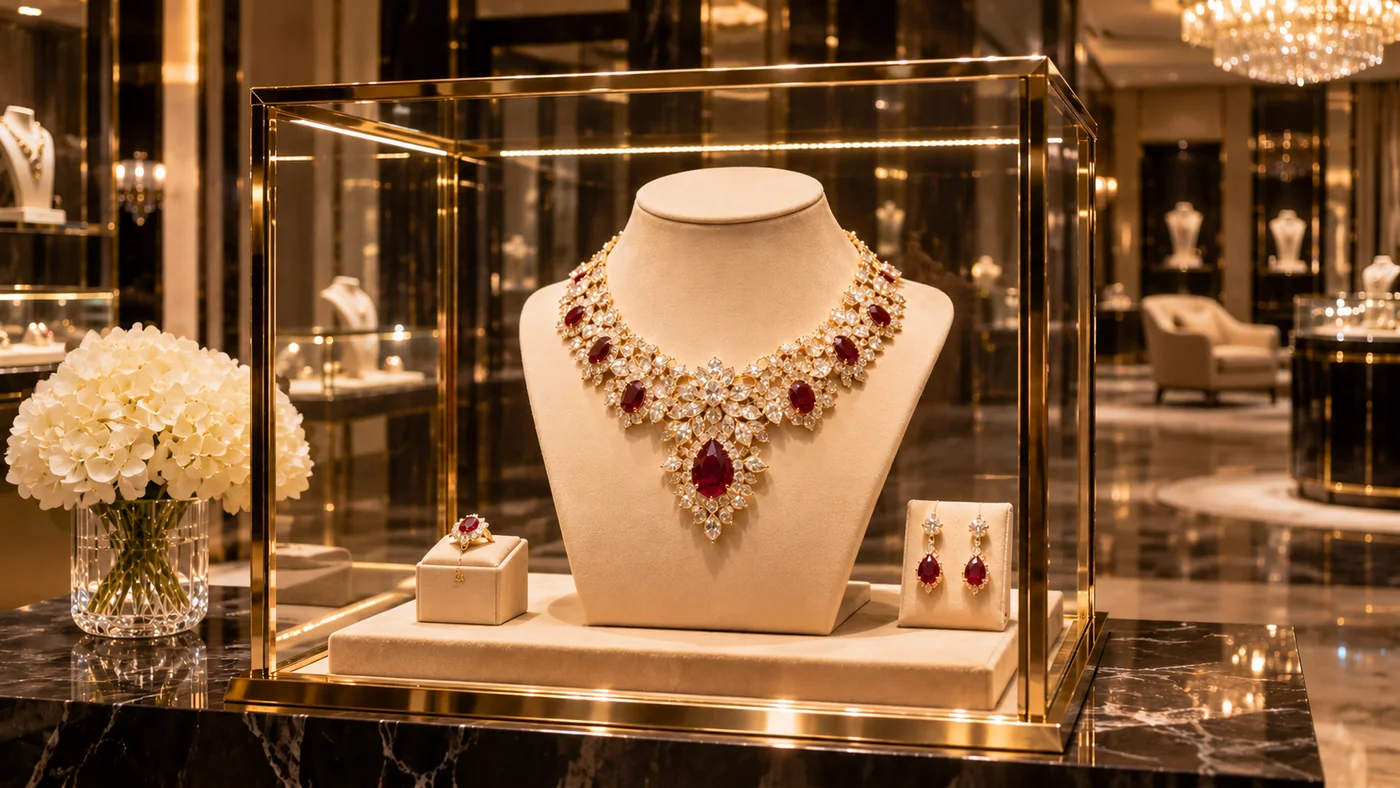
| Crystal or gemstone bib | A wider area of ornament | A simple evening neckline | Edges, setting security and fabric contact |
| Mixed-material design | Contrast and individuality | Understated separates | Care requirements for every component |
These are styling starting points. If the surprising combination feels better, keep it.
How Do You Wear a Statement Necklace With Different Necklines?

With a White Shirt: Leave the Shape Visible
An open collar gives a substantial chain or pendant a natural frame. Adjust the buttons and necklace together rather than treating the shirt as fixed.
Look for a placement where the piece settles instead of repeatedly slipping beneath the fabric. A necklace that disappears every time you move is asking for more management than an ordinary lunch requires.
For another mood, button the shirt higher and try a short necklace over it. Check that the collar and chain sit comfortably together.
With a Crew Neck: Test Where the Two Edges Meet
A necklace can sit clearly above the neckline or intentionally over the fabric. The less successful placement is often the one that keeps catching at the edge.
Try the piece with the actual top. A slight difference in neckline height can change how the entire combination reads.
If an adjustable fastening allows you to improve the placement, use it. Ask the maker before adding an extender to a heavy or specially constructed design.
With a V-Neck: Decide Whether to Follow the Shape
A pendant can follow the opening and draw the eye downward. A rounded collar can introduce contrast across it.
Both can work. Notice whether the necklace and fabric compete for the same small area, especially where a pendant meets the point of the V.
Move, then look again. A flattering arrangement while standing completely still may tell only half the story.
With a Strapless or Square Neckline: Check the Full Outfit
These necklines can give a necklace a clearly defined setting, but straps, sleeves, hair and earrings still affect the balance.
Step away from the mirror. You should be able to appreciate the outfit as a whole, rather than only the jewelry close up.
This is particularly useful with a broad collar or bib necklace. Consider its width alongside your shoulders and the dress construction, without assuming there is one correct proportion for every body.
With a High Neck: Pay Attention to the Fabric
A pendant or bold chain can look wonderful over a plain high-neck top. It can also catch on a delicate knit.
Inspect the back, edges and fastening before pairing them. Check with the seller if the design appears likely to snag. Save an especially vulnerable sweater for smoother companions.
Can You Wear a Statement Necklace During the Day?
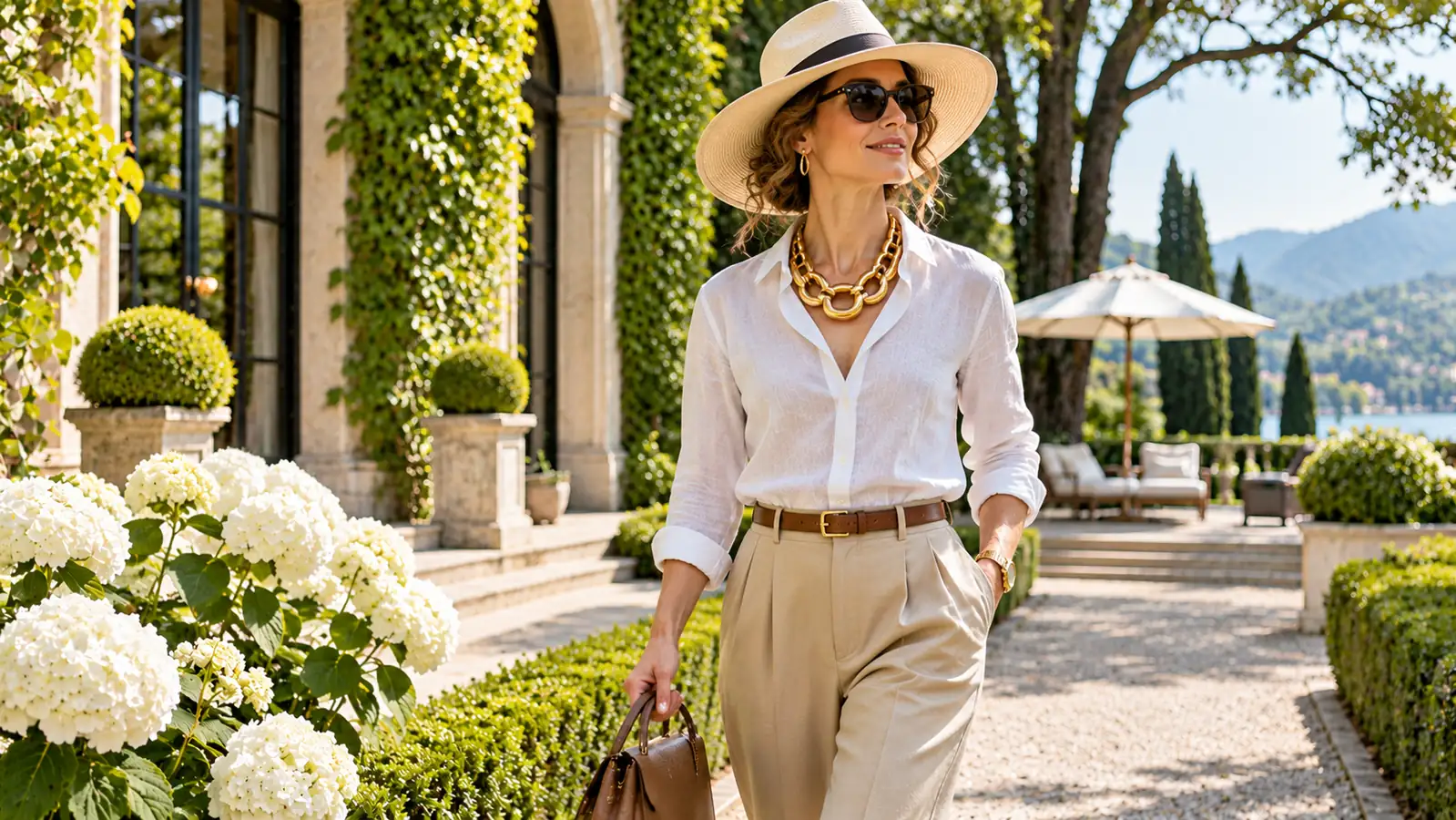
Absolutely. A strong necklace can make everyday clothes more enjoyable without requiring a special occasion.
Try a substantial chain with a T-shirt and tailored trousers. Put a sculptural collar with a plain cotton dress. Let a pendant give a familiar knit a different proportion.
My favorite editorial direction is to start with the most ordinary outfit in your wardrobe. If the necklace improves that one, you have already found a reason to wear it regularly.
There is no need to save every lovely thing for a dinner reservation.
How Do You Choose the Right Size and Length?
Begin with where the necklace sits on you, rather than where it sits on the model.
The same stated length can land differently depending on your proportions and the necklace’s construction. A rigid collar and a flexible chain also behave differently, even when a product listing makes their dimensions sound comparable.
Check the wearable length, any adjustment range and the dimensions of a pendant or central element. For substantial pieces, ask for the weight if it is not listed.
For online shopping, a loose ribbon can help you picture a flexible necklace’s approximate length. It cannot reproduce the fit of a rigid collar or the pull of a heavy pendant. Look for clear measurements and a return policy that gives you a realistic way to assess the piece.
What Should You Test Before Buying?
Try three situations: standing in front of a mirror, sitting as you would at lunch and reaching forward as you would at a desk. This is a simple proposed try-on exercise, not a scientific fit test.
Standing lets you see the overall proportion. Sitting reveals whether a collar presses or a pendant settles awkwardly. Reaching forward shows how much the piece shifts during ordinary movement.
Then run through a short checklist:
- Can you fasten and remove it without difficulty?
- Does it sit comfortably when you turn your head?
- Does the clasp migrate to the front?
- Does it catch your hair, shirt collar or knitwear?
- Do you keep lifting or repositioning it?
- Do you still like it from across the room?
- Do the written return terms allow the assessment you need?
A beautiful necklace deserves a practical audition. The one you enjoy wearing is more useful than the one you keep adjusting.
Do Statement Necklaces Have to Be Fine Jewelry?
No. Statement describes the visual effect, not a material category.
A ceramic pendant or an expressive piece of costume jewelry can have considerable presence. A precious-metal necklace can be restrained. Choose the material and construction for your taste, budget and intended use.
For two verified examples of different approaches, Tiffany describes its HardWear Small Link Necklace in sterling silver through its bold gauge links. Bulgari’s plain Tubogas necklace uses 18-karat yellow gold in a distinctive sculptural form. Neither needs a field of colored stones to create interest.
Use examples like these to identify what appeals to you: repeated links, a continuous curve, a particular surface. Then compare pieces on their own specifications rather than buying a familiar name by reflex.
Should Your Earrings Match Your Necklace?
They can, but they do not have to.
Small earrings are a straightforward way to let a necklace take the lead. Larger earrings can work when you enjoy the combined effect. Check the distance between them, the shapes around your face and how the jewelry looks with your hair as you actually wear it.
If the combination feels crowded, change one element and look again. You might prefer different earrings, a simpler neckline or the necklace alone.
Treat balance as something you can adjust. There is no need to retire a favorite piece because it fails an imaginary rule.
How Should You Care for a Statement Necklace?
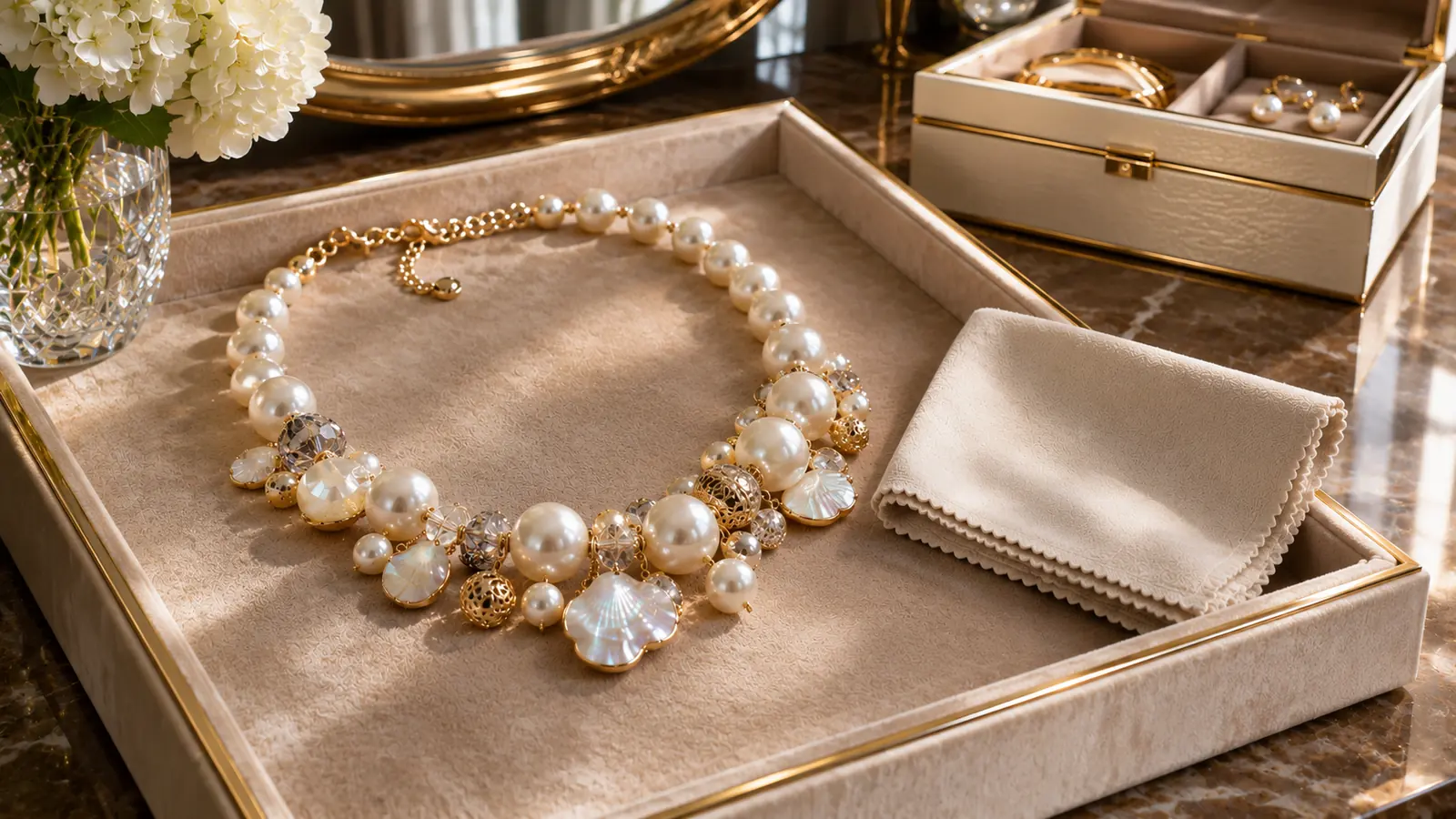
Follow the maker’s instructions for the exact combination of metal, stones, stringing, coatings and other materials. One cleaning method will not suit every necklace.
Pearls deserve particular attention. GIA advises keeping them away from harsh chemicals such as perfume and hairspray, wiping them after wear and protecting them from abrasive surfaces. It also advises against ultrasonic and steam cleaning for pearls.
For a mixed-material or vintage necklace, ask what cleaning is appropriate before applying a product. Support the piece in suitable storage, keep it from tangling with other jewelry and arrange professional inspection if a clasp, setting or strand seems compromised.
Good care should help you enjoy the design, rather than make you nervous about taking it out of the luxuary box.
Are Statement Necklaces Only for Evening Wear?
No. The outfit and the piece’s construction matter more than the time of day. A bold chain over a T-shirt can feel entirely natural; an elaborate crystal bib may be something you prefer for an evening.
Choose according to where you are going and how comfortably you can wear it.
What Is the Easiest Statement Necklace to Start With?
Try a piece with one clear feature: substantial links, a defined curve or a single expressive pendant. Pair it with clothes you already understand.
Once you know which shapes and lengths you enjoy, more adventurous designs become easier to assess. Begin with curiosity and leave yourself room to change your mind.
The right necklace gives you that small, satisfying moment before you leave the house: familiar clothes, something beautiful near your face, and an outfit you are pleased to wear.