Are pearl necklaces in style? Yes – pearls can look entirely at home with contemporary clothes, from a plain T-shirt to a sharply cut jacket. Their effect depends on the strand, the proportions and what you wear around them.
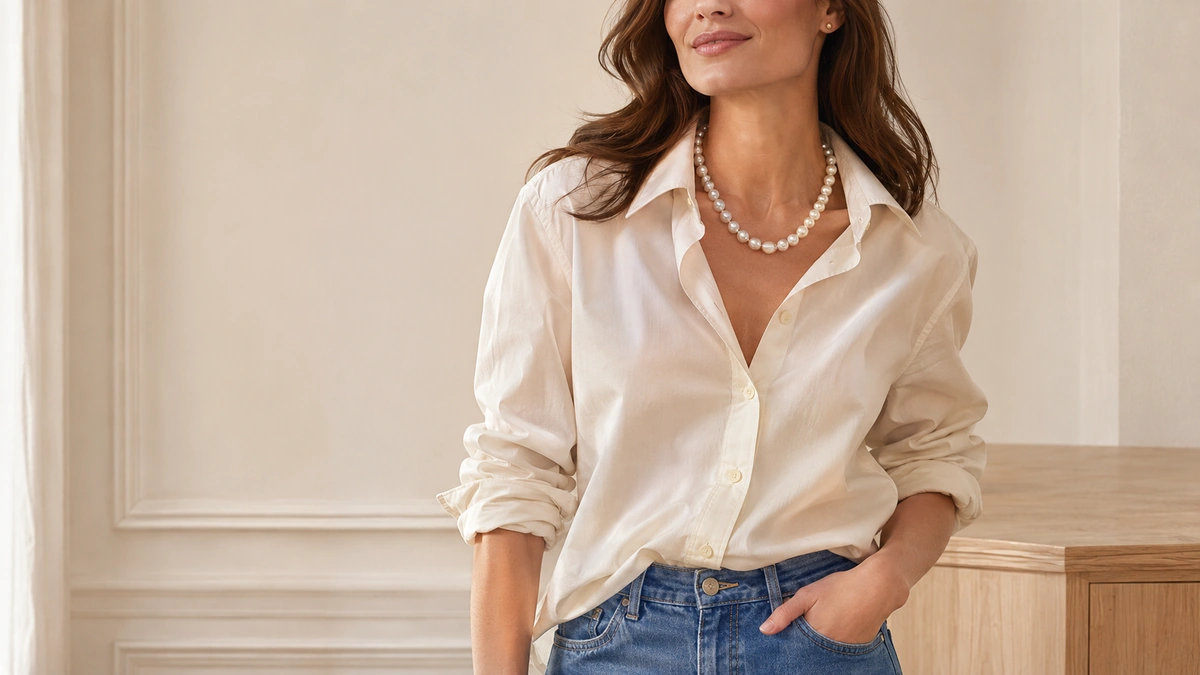
Picture a pearl necklace emerging from an open shirt, with a good pair of jeans and sleeves pushed up. The necklace brings a little glow to the ordinary business of getting dressed. No occasion required.
That is where pearls become especially enjoyable: when you stop dressing for an imagined version of them and see what they can do with your own wardrobe.
A delicate strand, a generous row of round pearls and an irregular baroque necklace all create different moods. Here is how to choose between them, find a length you enjoy and give an inherited piece a fair chance before buying something new.
Key Takeaways
- Pearl necklaces can work beautifully with everyday clothes; they do not need to be reserved for formal occasions.
- Consider pearl size and necklace length together when judging proportion.
- Cultured pearls are genuine pearls; imitation pearls are a different category.
- Baroque describes an irregular shape, not a particular pearl type or a verdict on quality.
- Inspect the stringing and clasp of an older strand before wearing or altering it.
How Can You Make a Pearl Necklace Feel Modern?
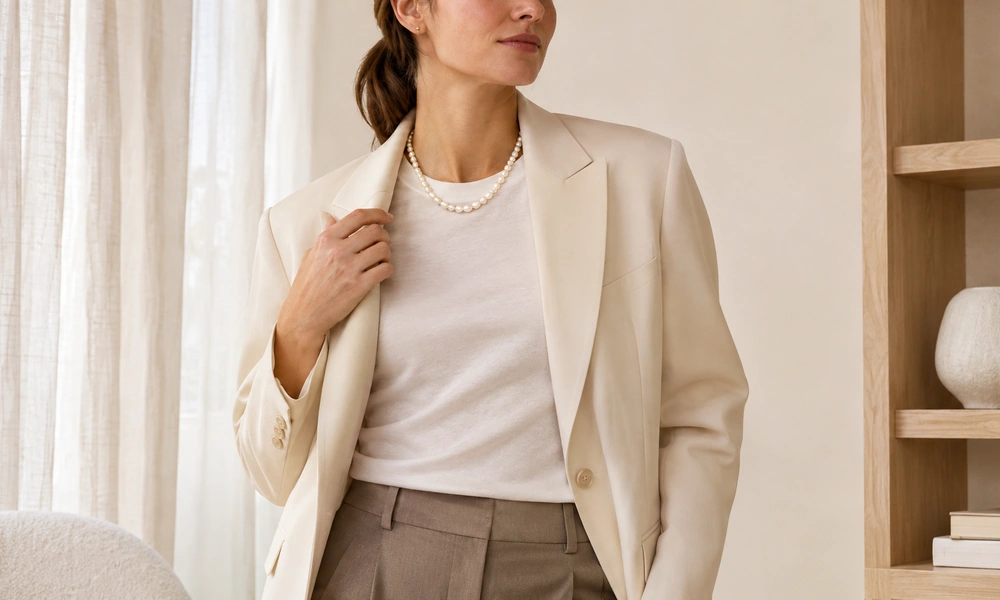
Begin with a familiar outfit and change one element. A plain cotton top gives pearls an uncomplicated setting. An open shirt lets you adjust the frame around them. A tailored jacket adds structure beside their rounded surfaces.
The practical question is whether you like the complete outfit. Try the necklace with your usual hair, shoes and bag, then step back from the mirror. Close-up jewelry photographs cannot tell you how the whole look will feel.
With a T-Shirt and Trousers
A plain T-shirt is a lovely starting point because it gives you so little to negotiate. Put on the strand, check where it meets the neckline and let the trousers establish the rest of the silhouette.
If the necklace keeps catching at the neck edge, try another top or a different length where the design allows. A tiny placement change can be more useful than adding another accessory.
With an Open Shirt
Try the pearls against your skin, framed by the collar. Adjust the buttons until the necklace has room to sit naturally.
You can also wear a strand over a more fully buttoned shirt. Look at whether the collar pushes it out of position. The aim is a combination you can move in comfortably, rather than a pose you have to preserve.
With Denim and a Jacket
Pearls bring an interesting surface beside denim, leather or a structured blazer. Start with the jeans and jacket you actually enjoy wearing; their familiar fit makes it easier to judge the new element.
Small earrings can give the necklace a clear place in the outfit. More expressive earrings are an option too, if you like the combined effect. You do not have to buy a matching set to make the strand feel finished.
With Knitwear
A smooth, plain knit can provide a beautiful backdrop. Check the clasp and any decorative metal elements for rough edges before placing the necklace against a vulnerable fabric.
Try the combination with a coat as well. If a collar or scarf presses against the pearls, adjust how you wear them rather than assuming the arrangement will remain comfortable outdoors.
Which Pearl Necklace Style Should You Choose?
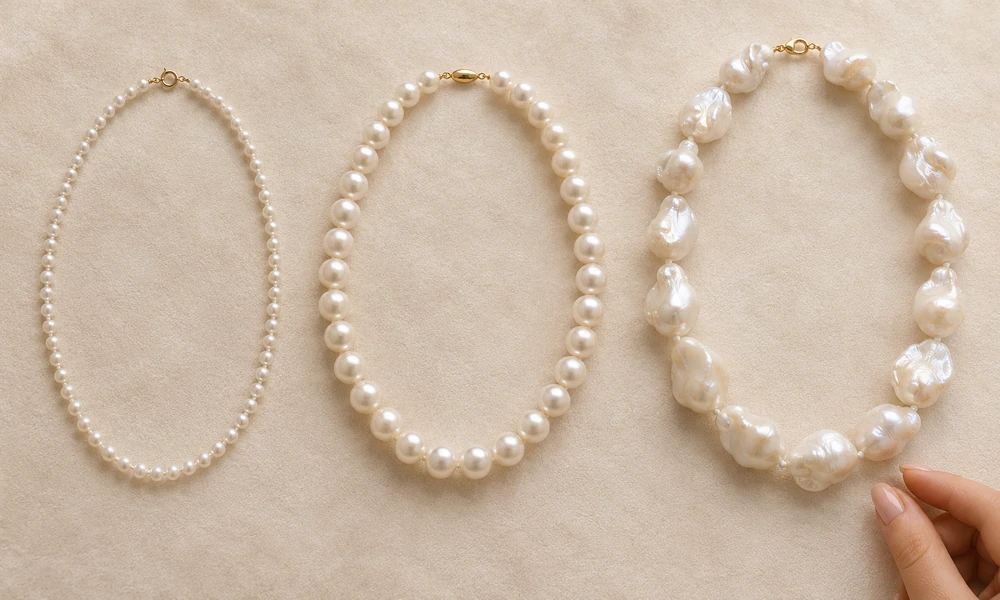
Use the design to guide the outfit, then check the actual materials before buying.
| Necklace design | The effect it can create | An outfit to try | What to check |
| Smaller round-pearl strand | A finer line near the face | Plain T-shirt and tailored trousers | Whether the neckline obscures it |
| Larger round-pearl strand | A more substantial visual presence | Open shirt or simple dress | Pearl diameter, fit and total weight |
| Baroque strand | Irregularity and variation | Clean-lined shirt or knit | The exact pearls pictured and their arrangement |
| Pearl pendant | One focused detail | An open collar or understated top | Pendant dimensions, chain length and setting |
| Pearl-and-metal design | A contrast of surfaces | Denim, a jacket or plain separates | Construction and care of all components |
| Longer strand | A line extending down the outfit | A long dress or simple top | Movement and suitability for the intended wear |
These are styling suggestions, not rules attached to your age or body type. Choose the effect you enjoy seeing.
Why Should You Compare Pearl Size and Necklace Length Together?
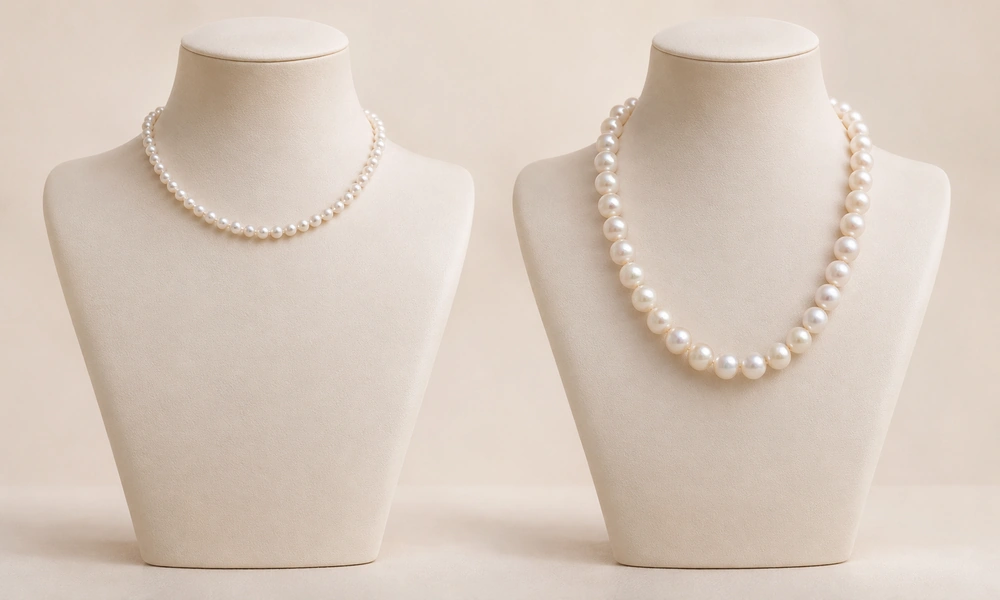
Length is only part of the proportion. A strand of small pearls and a strand of much larger pearls can have the same stated length while making very different impressions.
Here is a simple numerical example: an 8 mm pearl has a diameter about 33% greater than a 6 mm pearl. That calculation describes diameter alone. It does not establish a strand’s weight, value or comfort.
For a useful comparison in a store, first look at different pearl sizes at similar lengths. Then compare lengths with a similar pearl size. Changing one variable at a time makes your preference easier to identify.
Ask whether the stated necklace length includes the clasp, and have the strand measured if the description is unclear. Try it with the clothing you expect to wear most often.
A familiar label such as princess or matinee can help organize a conversation, but the measured fit on you is what matters.
Are Cultured Pearls Real Pearls?
Yes. Cultured pearls develop in mollusks with human intervention. Natural pearls form without that deliberate intervention. Imitation pearls are manufactured to resemble pearls.
Those distinctions matter when reading a product description. A cultured strand should not be dismissed as imitation simply because it was cultivated, and the word pearl by itself may not answer all your questions about a listing.
Ask the seller to identify the pearls, their environment or type, any disclosed treatments and the metal used in the clasp. Our guide to luxury fine jewelry offers a broader introduction to comparing materials and craftsmanship across a collection.
What Does Baroque Mean When Buying Pearls?
Baroque describes irregular shape. It does not automatically tell you whether the pearls are freshwater or saltwater, natural or cultured, nor does it establish their quality.
The appeal is often the individuality: changing outlines, varied surfaces and an arrangement that feels less uniform. If you love that effect, ask to see the exact strand you would receive. A photograph of an example may not represent the pattern and proportions of another necklace.
GIA evaluates pearl quality through seven factors: size, shape, color, luster, surface, nacre and matching. Shape therefore belongs within a fuller assessment.
For styling, you can prefer an irregular silhouette while still asking clear questions about quality. Personal taste and informed buying belong together.
Should You Restring an Inherited Pearl Necklace?
Start with an inspection rather than an alteration plan. A jeweler can assess the clasp, thread, spacing and overall condition, and explain what work is appropriate.
GIA notes that pearl-necklace stringing can darken, stretch or wear thin over time. An older strand may need maintenance even if it has spent most of its life in a box.
If the condition allows, discuss the length you would enjoy wearing. Ask how shortening or lengthening would affect the pearl arrangement, knots and clasp, and what will happen to any pearls removed. Photograph the original necklace and request an estimate before authorizing changes.
Sentimental value deserves a place in the decision. You may want to preserve the design exactly, or make a careful adjustment that helps you wear it more often.
If you are considering an older strand from a seller rather than your own collection, our vintage shopping guide provides a useful starting point for asking about age, condition and documentation.
Can You Layer Pearls With a Gold Chain?
You can explore the look, but consider contact as well as appearance. GIA advises protecting pearls from sharp or rough objects that can scratch them.
Try the pieces together and notice whether a pendant, clasp or chain repeatedly rubs the pearls. If they tangle or collide, adjust the combination or wear them separately.
The same thought applies to decorative clasps worn at the front. Confirm that the necklace was designed to be worn that way and that the fastening remains secure.
What Should You Ask Before Buying a Pearl Necklace?
- Are the pearls natural, cultured or imitation?
- What pearl type, size range and shape are described?
- What treatments, if any, are disclosed?
- Am I buying the pictured strand or an example of the design?
- What is the complete length, and does it include the clasp?
- What metal is used in the fastening and other components?
- What care, restringing and repair services are available?
- Do alterations affect returns or exchanges?
If the seller uses a grade or quality label, ask what it means in that seller’s system. Request descriptions of the underlying characteristics so you can make a meaningful comparison.
How Do You Care for a Pearl Necklace You Wear Often?
Put pearls on after applying cosmetics, perfume and hair products, following the maker’s instructions. After wearing, gently wipe them with a very soft, clean cloth.
Store the strand separately from harder or abrasive jewelry. When choosing a jewelry box for your collection, look for a suitable compartment that supports the necklace without tangling or pressure. Avoid hot, excessively dry storage conditions.
Never use an ultrasonic or steam cleaner on pearls. For a strung necklace, seek cleaning guidance appropriate to both the pearls and the thread. If the string becomes wet during approved cleaning, allow it to dry fully before wearing.
Have stretched or worn stringing and unreliable clasps assessed promptly. Caring for the necklace should make it easier to enjoy with confidence.
Can You Wear Pearls Every Day?
Pearls can be part of regular dressing, with appropriate care. Everyday styling does not mean leaving them on for every activity. Follow the maker’s guidance and remove them when the activity or environment could damage the pearls or construction.
What If Your Pearls Still Feel Too Formal?
Try them with your simplest familiar clothes before buying anything else. Change the neckline, remove a coordinating accessory or compare another length if you have one available.
Give the strand a fair audition. You may discover that the necklace you associate with an important occasion looks particularly good on an entirely ordinary morning.
That is a lovely reason to open the jewelry box: something luminous, something familiar and a new way to enjoy it.