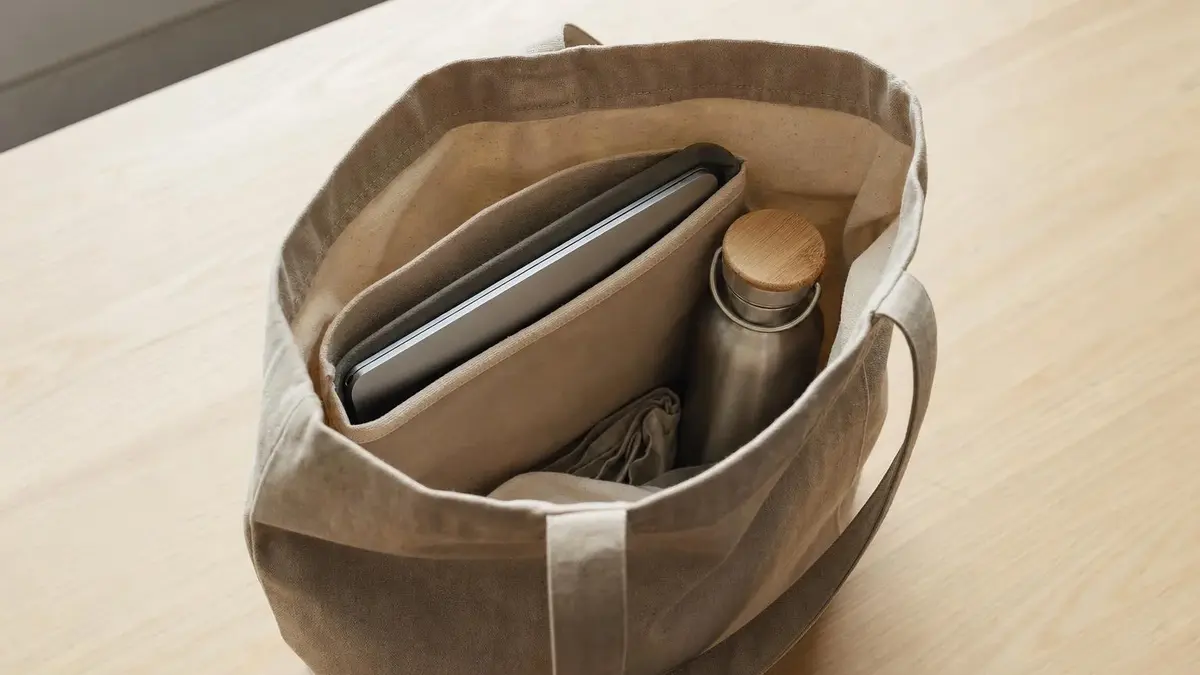
You find a bag you like online. The colour is right, the shape looks polished, and the initials option makes it feel like yours. Then you picture an ordinary Tuesday with a laptop, a water bottle, an umbrella and a small pouch. Will everything fit comfortably, with the closure fastened and room to reach your keys?
Choose for your daily routine first, check the fit, then add the personal details. That order helps you avoid paying for a design you’ll struggle to use.
Start With What You Carry
Your usual load. Before you look at colours, write down what goes in the bag most days: phone, keys, wallet, water bottle, perhaps a laptop and a cardigan for a cold office. Add occasional extras, such as a folded umbrella or a lunch box. Use this list to assess capacity rather than relying on a size label.
Check the usable space. Small, medium and large don’t mean the same thing from one maker to the next. Foley + Corinna’s size guide notes that there is no single standard tote bag size. Compare measurements in centimetres, paying attention to the opening and base as well as the height. A tall bag with a narrow base may not hold a lunch box flat.
Laptops need their own check. The Sak advises checking the maximum laptop size listed for the bag rather than guessing from its external dimensions. Check that the stated fit covers your device, including any sleeve you plan to use.
Try it with your everyday clothes. A bag that sits well over a sleeveless top can pinch over a blazer. Test whether the straps clear your shoulder comfortably while wearing your usual outer layer. If you can, put a few everyday items inside and walk with it. Notice whether the handles dig in, slip off or make the bag awkward to reach into.
Look inside. One flat pocket may be enough if you already organize9h small items in a pouch. If your keys and earphones tend to sink to the bottom, check for accessible internal pockets. Assess the closure separately: a zip top closes the main compartment, but it won’t organise the contents for you.
Choose a Material You Will Enjoy Using
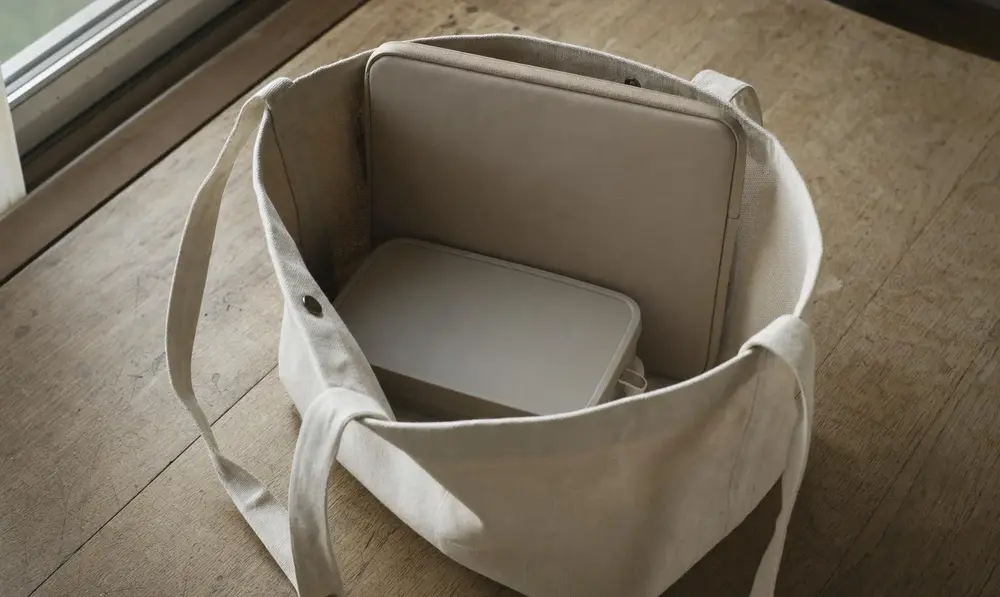
Material affects how a bag looks against your clothes, how it feels to carry and how you care for it. Check the exact construction rather than assuming every bag in a material category behaves alike.
| Material | Styling feel | What to check |
| Cotton canvas | Relaxed and casual | The care label, since some cotton-canvas bags require spot cleaning |
| Synthetic fabric | Can have a smooth, lightweight finish | The exact fibre, construction and maker’s care advice |
| Leather | Can look structured and dressy | Weight when empty, closure type and how the surface marks |
Look beyond the label. Canvas doesn’t automatically mean cotton. Longchamp’s My Pliage service, which lets you design a personalized tote bag, lists the canvas on its L Tote as 100% recycled polyester, while L.L.Bean lists heavy cotton canvas for its Boat and Tote. The canvas label alone doesn’t tell you the fibre content or care requirements.
The recycled-content statement applies to that canvas, not every part of the bag. It describes a material rather than proving that the whole bag is environmentally preferable. Check construction separately, including closures, pockets and handle height.
Read the care instructions. Don’t assume a fabric bag can go in the washing machine. GINETEX states that an article marked with the do-not-wash symbol must not be washed, and the cotton tote mentioned above carries spot-cleaning instructions. Fabric, leather trim and lettering may need different handling, so follow the instructions for the finished bag.
Set a total budget. Include any personalisation fee, then prioritise features you’ll use daily. If a secure closure is essential, make room for it in the budget before paying for decorative extras. Check the final configuration price rather than assuming every colour or personal detail costs the same.
Make the Design Feel Like You
Once a bag passes the practical checks, consider how its shape, texture and colour work with your clothes. Personal details are easier to choose when you’ve settled on a bag you’ll enjoy carrying.
Start with clothes you already wear. If most of your wardrobe is navy, cream and grey, a bag in one of those tones with discreet initials may fit naturally into your outfits. If you reach for the same accent colour each week, perhaps rust or forest green, consider using that shade. If you love prints, you might let the bag carry the pattern and keep the lettering plain. Use these as starting points rather than rules.
Choose one personal detail. Start with the feature you care about most, whether that’s a colour combination or your initials. Add other details only if you like how they work together in the preview. The same restraint behind a well-edited capsule wardrobe applies here: one considered detail tends to age better than several competing ones.
For example, the My Pliage service mentioned earlier offers defined choices of models, colours and initials. As checked on 5 November 2026, it offered seven starting models across bags and accessories, not seven tote sizes. Its set colour, lettering and hardware options provide a manageable starting point for a personal design.
Check each model’s specifications separately. The My Pliage L Tote, checked on the same date, was listed with a zipper-and-snap closure, one flat interior pocket, a listed handle height of 25 cm and a stated fit for a 13-inch laptop. These details give you concrete points to compare with your daily needs; they don’t apply to every bag in the collection.
Check the final design. Before confirming, review the preview and order details:
- Spelling and letter order of your initials
- Letter size, placement and contrast against the base colour
- The full colour combination
- Final price, including personalisation
- Care instructions for the exact bag
- The order-specific production and delivery estimate
- Personalised-order terms
The brand’s Singapore site states that personalised items are final sale and cannot be returned or exchanged. Check the design carefully before making a change-of-mind commitment. Remedies for a faulty item are a separate matter.
A custom tote is more likely to suit your routine when it fits what you carry, feels right with your everyday clothes, and has details you are happy to live with. Before ordering, confirm its measurements, care instructions, final price and personalised-item terms, then keep a copy of the final design.
FAQs
What size should I buy for everyday use?
Choose according to what you carry rather than the size label. Compare your daily items with the maker’s measurements, including the opening and base. If you carry a laptop, check the stated laptop fit instead of estimating from the bag’s outer dimensions.
Will initials look too bold?
Judge the letter size, placement and colour contrast in the design preview. Tone-on-tone lettering looks quieter, while high-contrast lettering stands out more. Compare both against the bag’s full design, especially if it also has a print or contrasting trim.
Can I wash a fabric bag?
Only if its care instructions allow it. Fabric construction alone doesn’t establish washability, and some cotton-canvas bags require spot cleaning. Follow the instructions for the exact bag, including its trim and lettering. If they’re unclear, ask the maker before cleaning it.
What should I check before confirming a custom order?
Review the initials, colours, final price, care instructions and delivery estimate. Read the personalised-item terms too, since change-of-mind returns may be restricted. Correct any uncertainty in the preview or order details before confirming.