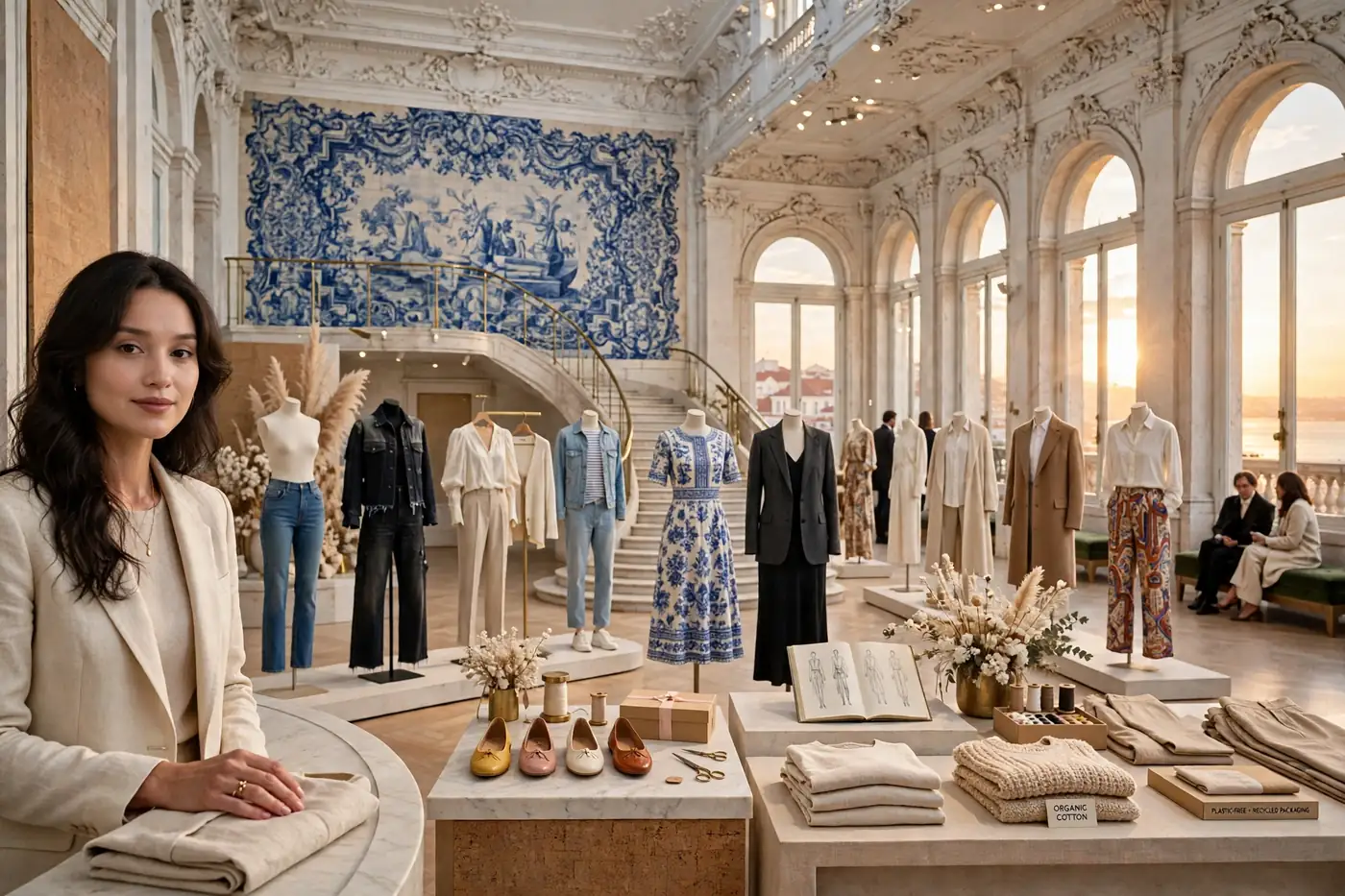
Pick up a garment from almost any premium brand you own and check the label. There’s a decent chance it says Made in Portugal. For decades, the factories around Porto and Barcelos have quietly produced clothing for the biggest names in global fashion, from high street giants to luxury houses that you would rather not know.
Here’s the thing most shoppers miss: Portugal doesn’t just make clothes for other people. It has a fashion scene of its own, and it’s one of the most interesting in Europe right now. Denim specialists with thirty years of fit expertise. A transparency obsessed startup that publishes the cost of every stitch. Designers showing in London and Paris. And a wave of small Lisbon ateliers making the kind of considered, well priced clothing that the quiet luxury crowd dreams about.
These are the twelve Portuguese clothing brands worth knowing, whether you’re filling a wardrobe or planning a shopping trip to Lisbon.
The Names Portugal Gave the World
1. Salsa Jeans
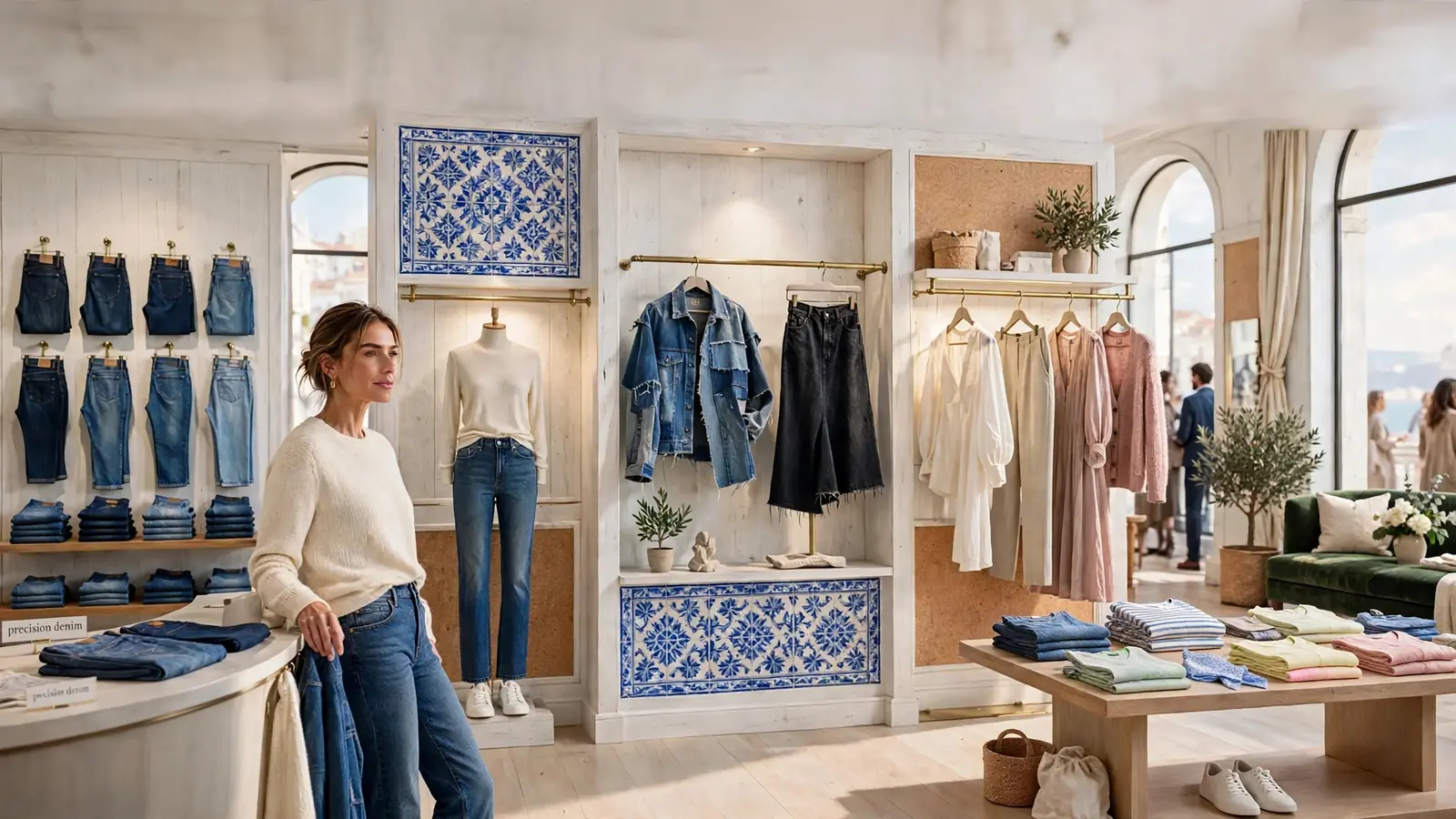
Ask anyone in Portugal to name a homegrown clothing brand and they’ll say Salsa. Founded in 1994 in Vila Nova de Gaia, just across the river from Porto, it became the country’s most internationally successful fashion brand through one obsession: fit. Salsa develops its own construction methods and fabric treatments to make denim work across different body types, and it’s built a retail network across Europe on the back of it.
Jeans run around €90 to €130. Not the cheapest denim on the market, but you’re buying three decades of pattern engineering, not a logo.
2. Marques’Almeida
The biggest name to come out of Portuguese fashion in a generation. Marta Marques and Paulo Almeida met studying in Portugal, won the LVMH Prize in 2015, and built a London based label beloved for its raw edged denim and deconstructed silhouettes. Their clothes sit in Net-a-Porter, Browns and Nordstrom, and they remain the reference point for what Portuguese design talent can achieve globally.
Prices are designer level, roughly €300 to €900, but nothing else on this list carries this kind of international fashion credibility.
3. Lanidor
Since 1995, Lanidor has dressed Portuguese and Spanish women for real life: work, weekends, weddings. It’s an accessible premium brand in the truest sense, feminine and versatile, with most pieces between €50 and €150. It rarely makes international headlines, which is exactly why Portuguese women trust it. Nearly thirty years of quiet consistency counts for something.
4. Tiffosi
Every country needs a brand that does trend aware casual wear at honest prices, and in Portugal that’s Tiffosi. Founded in 1986, it sells denim, tees and easy everyday pieces from about €20 to €60 across Southern Europe and Portuguese speaking markets. It’s fast fashion territory, and the brand doesn’t pretend otherwise. For the full argument on when cheap clothing makes sense and when it doesn’t, our piece on luxury vs fast fashion brands lays it out.
The Craft Specialists
5. Josefinas
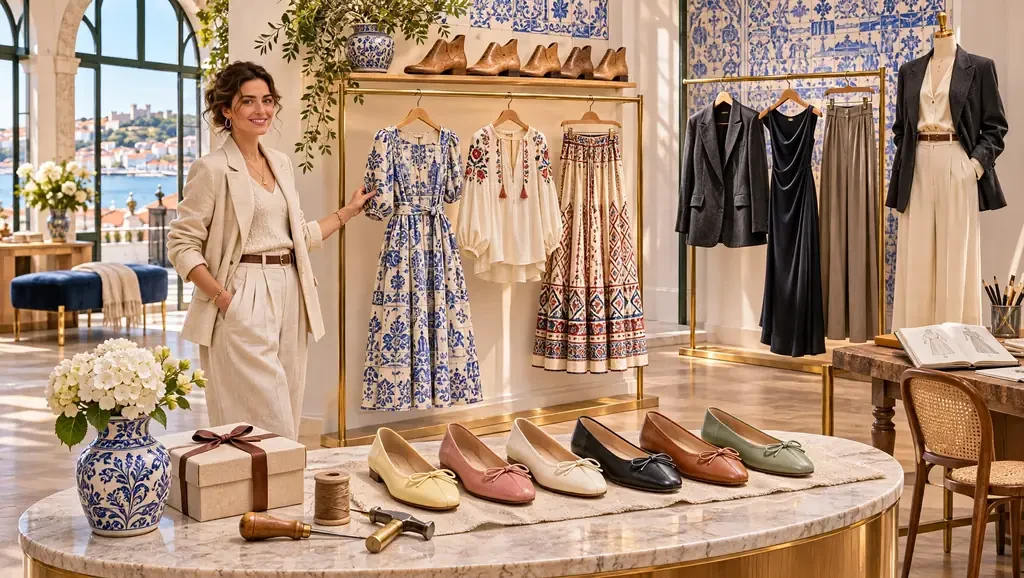
Filipa Júlio founded Josefinas in Porto in 2013 with an unusual ambition: to make the ballerina flat a luxury object again. Every pair is handmade in Portugal using traditional shoemaking, and the brand treats each one as a piece of storytelling, from the packaging to the named collections. International press followed, and today Josefinas is probably the most recognized Portuguese luxury export after Marques’Almeida.
Flats start around €200. Yes, that’s a lot for a ballet flat. It’s also the point.
6. Storytailors
A Lisbon atelier that turns Portuguese culture into clothing: the azulejo tiles, the traditional patterns, the folk references, translated into prints and embroidery you can actually wear to dinner. Founded in 2010, it built a devoted domestic following before looking outward, and that patience shows in the clothes. Expect €80 to €250 for most pieces.
7. Nuno Gama
Portugal’s longest running contemporary designer label, founded in Lisbon in 1989. Gama has spent more than three decades balancing commercial wearability with genuine creative vision, all produced in Portugal, and he mentors younger designers coming through ModaLisboa. If Marques’Almeida is Portuguese fashion’s global future, Nuno Gama is its backbone.
The New Wave
This is where Portuguese fashion gets genuinely exciting. A generation of small labels, mostly in Lisbon and Porto, is building brands the way the sustainable fashion trends we’ve been tracking said the industry would go: local production, honest pricing, natural fabrics, clothes designed to last.
8. Isto
Founded in Porto in 2018, Isto practices what it calls radical transparency. Every product page breaks down exactly what the garment costs to make: the fabric, the labor, the transport, the margin. The clothing itself is deliberately unflashy, organic cotton tees, recycled wool knits, honest basics from €30 to €120. It’s the Portuguese answer to the question every conscious shopper asks: what am I actually paying for?
9. Béhen
Also from Porto, Béhen makes minimalist contemporary clothing from Portuguese fabrics with local manufacturing throughout. The aesthetic is calm and considered, wardrobe foundations rather than seasonal noise, with prices mostly between €100 and €300. If your taste runs to affordable luxury brands that whisper rather than shout, put Béhen at the top of your list.
10. A Line
Everything A Line makes is designed and produced in Portugal from quality natural materials, with tailoring good enough to pass for pieces three times the price. The brand runs a longevity program that repairs or recycles your garments, and its wool coats and crisp shirts are exactly the kind of building blocks we recommend in our luxury capsule wardrobe essentials guide. Find it at The Feeting Room stores in Lisbon and Porto, or online, from around €90 to €350.
11. Gandaia
Ask a stylish Lisbon local what they’re actually wearing and Gandaia comes up fast. The brand makes colorful, distinctive, often unisex pieces that feel playful without chasing trends, and it has kept production in Portugal even as it’s grown. Lisbon fashion insider Rita Montezuma calls out its confidence with print and color as the thing that sets it apart. Pieces run roughly €60 to €180.
12. Guaja
Created by two sisters and their mother, Guaja launched its atelier in 2019 and grew quickly enough to bring in local Portuguese seamstresses. The focus is high quality, timeless pieces in natural fibres with no plastic packaging, and the brand has become a go to for women’s trousers, with tall versions of most cuts. Think €70 to €200.
Also worth a look: Constança Entrudo for genuinely innovative textile design, Taiqpe for reimagined blazers and trenches, Naz for cozy basics with a published sustainability report, and Fly London for comfort footwear with real engineering behind it.
Portuguese Clothing Brands at a Glance
| Brand | Founded | Price Range | Known For | Where to Buy |
| Tiffosi | 1986 | €20 to €60 | Casual denim | Stores across Southern Europe |
| Isto | 2018 | €30 to €120 | Transparent basics | Online |
| Gandaia | 2020s | €60 to €180 | Colorful unisex pieces | Online, Lisbon |
| Guaja | 2019 | €70 to €200 | Women’s trousers | Online, Lisbon and Porto |
| Storytailors | 2010 | €80 to €250 | Portuguese heritage prints | Lisbon atelier, online |
| Salsa Jeans | 1994 | €90 to €130 | Fit engineered denim | Stores across Europe |
| A Line | 2010s | €90 to €350 | Tailoring, wool coats | Lisbon, Porto, online |
| Lanidor | 1995 | €50 to €150 | Everyday womenswear | Portugal and Spain |
| Béhen | 2013 | €100 to €300 | Minimalist essentials | Online |
| Josefinas | 2013 | €200 to €350 | Luxury ballet flats | Online |
| Marques’Almeida | 2011 | €300 to €900 | Deconstructed designer denim | Net-a-Porter, Browns |
| Nuno Gama | 1989 | €150 to €600 | Contemporary tailoring | Lisbon, online |
Why Made in Portugal Actually Means Something
That label on your clothes isn’t marketing. The north of Portugal has spent generations building one of the densest textile manufacturing regions in the world: technical schools, family owned factories, fabric mills that have been running since the 1920s. It’s why so many global brands produce there, and it’s why Portuguese brands have an unfair advantage. Their designers can drive to the factory, argue about a seam, and fix it the same week.
The result is a quality level at mid range prices that few countries can match. When you’re assessing pieces, our guide on how to identify luxury fabrics will help you see what Portuguese brands are doing right: tight weaves, natural fibres, clean finishing.
Planning a shopping trip? Lisbon’s Chiado and Príncipe Real neighborhoods are where most of these labels cluster, and Porto has The Feeting Room plus the ateliers of the northern brands. Our ultimate guide to luxury travel in Europe covers when to go and how to do it properly.
Frequently Asked Questions
What is the most famous Portuguese clothing brand?
Salsa Jeans is the most commercially successful Portuguese clothing brand, selling denim across Europe since 1994. On the international designer stage, Marques’Almeida is the most famous, having won the LVMH Prize in 2015 and secured stockists like Net-a-Porter and Nordstrom.
Is clothing made in Portugal good quality?
Yes, Portugal is considered one of the best clothing manufacturing countries in the world. The northern region around Porto has generations of textile expertise, which is why global premium and luxury brands produce there. Portuguese brands benefit from direct factory access, so quality at mid range prices is often exceptional.
What are the best affordable Portuguese clothing brands?
Tiffosi offers casual pieces from around €20, Isto sells transparent basics from €30, and Lanidor covers feminine womenswear from €50. For the best quality to price balance, Salsa Jeans, Gandaia and A Line deliver well made clothing between €60 and €200.
Where can I buy Portuguese clothing brands?
Most brands on this list sell online with international shipping. In person, Lisbon’s Chiado and Príncipe Real neighborhoods host the highest concentration, including The Feeting Room, which stocks A Line, Guaja and other local labels. Porto’s boutiques carry the northern brands like Béhen and Isto.
The Bottom Line
For years, Portugal’s fashion story was told on other people’s labels. That’s changing. Between a denim giant with real engineering credentials, a prize winning designer duo, and a new wave of honest, locally made labels, Portuguese clothing brands now offer something rare in modern fashion: quality you can verify, prices you can justify, and a story you can actually trace back to a factory door.
Start with one piece. A Salsa jean, an Isto tee, an A Line coat. Wear it for a year and count the cost per wear. That’s the real test of value, and it’s the one Portuguese brands were built to pass.