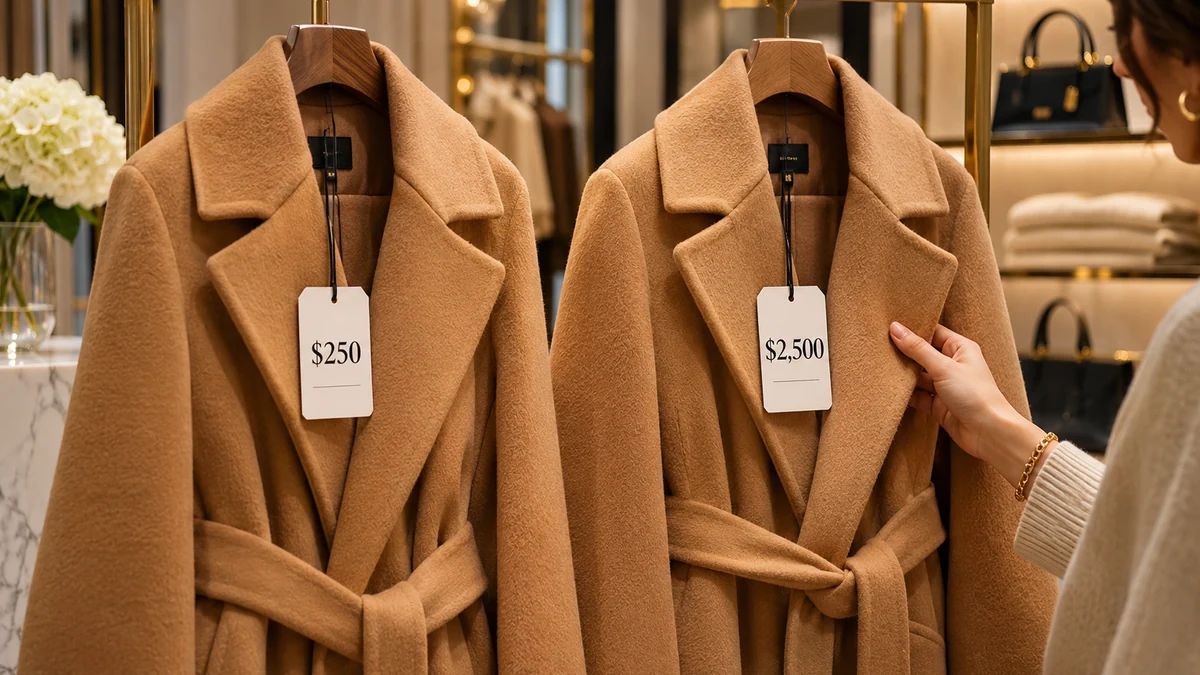
Imagine walking into a beautiful fashion boutique and finding two coats that look almost identical. Both have elegant silhouettes, understated colors, and carefully tailored shoulders. One costs $250, while the other carries a price tag of $2,500. Knowing how to identify luxury fabrics can help you understand what makes one coat worth more than the other.
At first glance, the difference is difficult to understand.
Then you touch the fabrics.
One feels soft but slightly flimsy. The other has a beautiful weight, falls naturally over the body, and maintains its shape without feeling stiff. Look more closely, and you notice the difference in the lining, seams, and construction.
That is where understanding luxury fabrics becomes valuable.
The best way to identify luxury fabrics is to examine their fiber composition, yarn quality, weave or knit construction, texture, drape, color consistency, finishing, and durability. Premium fabrics generally combine carefully selected materials with skilled manufacturing, but an expensive label or exceptionally soft texture does not automatically guarantee quality.
From cashmere and silk to fine wool, linen, and premium cotton, knowing what to look for can help you make more confident fashion purchases.
What Makes a Fabric Luxurious?
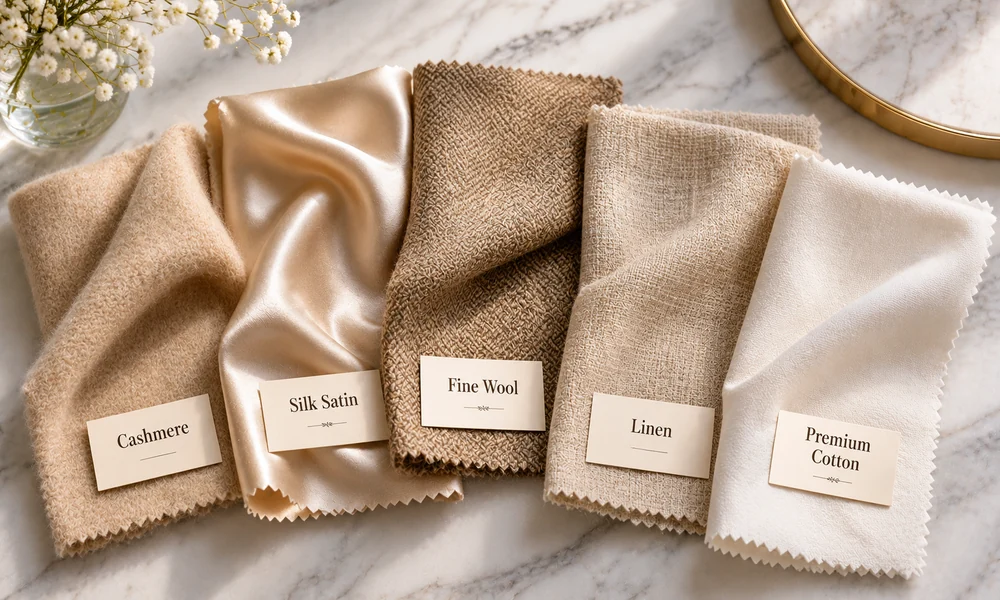
A luxury fabric is a textile distinguished by its materials, craftsmanship, performance, appearance, or rarity.
Some fabrics earn their reputation through exceptionally fine natural fibers. Others are valued for complex weaving methods, traditional production techniques, or specialized finishing.
The most important qualities usually include:
- Fiber quality: The characteristics and consistency of the material used.
- Construction: How the fibers are spun, woven, or knitted.
- Texture: How the fabric feels against the skin.
- Drape: How naturally it falls and moves.
- Finishing: The attention given to the textile’s surface and appearance.
- Durability: How well the fabric performs under appropriate use and care.
- Suitability: Whether the material works effectively for the garment’s purpose.
Luxury is not simply about choosing the softest or most expensive material.
A beautifully woven wool coat and a lightweight silk blouse require very different characteristics. Both can represent exceptional textile quality.
12 Ways to Identify Luxury Fabrics
1. Read the Fabric Composition Label
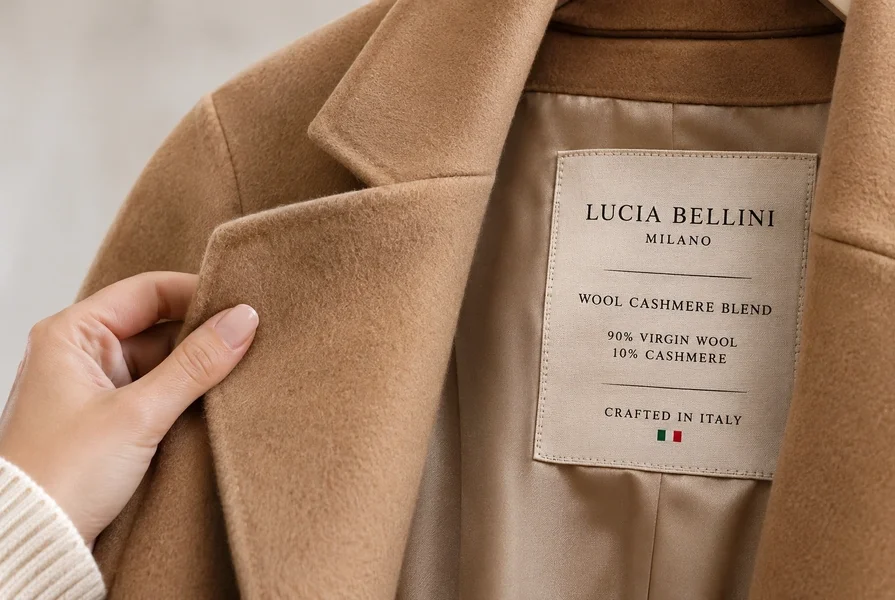
The first step is surprisingly simple: read the label.
A garment’s fiber composition provides important information about its materials.
Common luxury fibers include:
- Cashmere
- Silk
- Fine merino wool
- Alpaca
- Mohair
- High-quality cotton
- Linen
- Vicuña
However, fiber content is only a starting point.
Two garments labeled 100% cashmere may have very different yarn quality, construction, and finishing.
Similarly, a well-engineered wool blend can outperform a poorly constructed garment made entirely from wool.
A higher percentage of natural fibers does not automatically make a product superior.
Look at the material, then evaluate the garment itself.
2. Examine the Texture Carefully
Touch is one of the easiest ways to begin assessing fabric quality.
Fine cashmere often feels soft and comfortable, while quality wool can feel smooth, springy, or structured depending on its construction.
Silk may feel smooth and cool initially, although its texture varies greatly between satin, crepe, chiffon, and other silk fabrics.
Linen often has a distinctive crispness, while premium cotton can feel smooth, substantial, or airy.
Be cautious about judging quality from softness alone.
Chemical finishing, fabric softeners, and surface treatments can make relatively inexpensive materials feel unusually smooth in the shop.
The better question is whether the fabric feels appropriate for its intended purpose.
A beautifully tailored jacket needs structure. A scarf may benefit from softness and fluid movement. A summer shirt should feel comfortable and breathable.
3. Look at the Fabric’s Drape
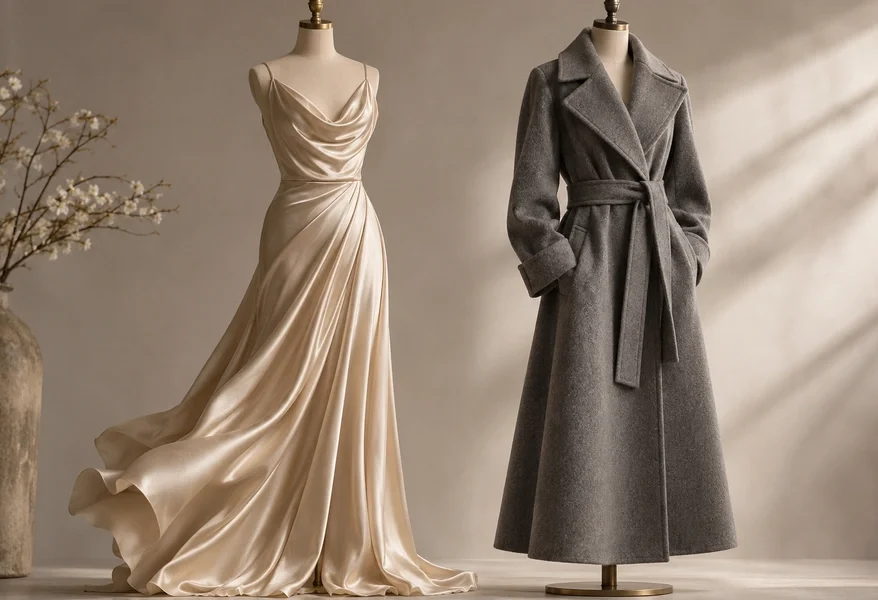
Drape describes the way fabric hangs and moves under its own weight.
It is one of the most revealing features of a well-chosen textile.
Hold a garment naturally or observe how it falls from the shoulders.
Does it create smooth, intentional folds? Does it follow the body comfortably, or does it appear awkward and stiff?
Fine silk often falls in graceful folds, while high-quality suiting wool can combine controlled drape with a structured silhouette.
The ideal drape depends on the garment.
A luxury evening dress may require fluidity, while a tailored coat needs enough body to maintain its shape.
Do not assume that heavier fabric always drapes better. Fiber, yarn, construction, and finishing all influence the result.
4. Inspect the Weave or Knit
Take a closer look at the fabric’s surface.
For woven materials, examine whether the threads appear consistent and whether the pattern is evenly constructed.
For knitted garments, look at stitch definition, tension, and the overall regularity of the fabric.
A high-quality textile typically reflects deliberate manufacturing choices.
However, irregularity is not always a defect.
Handwoven fabrics, slub linen, tweed, and certain artisanal materials may intentionally incorporate variations in texture.
The important distinction is between purposeful character and poor construction.
Loose threads, unexpected gaps, distorted patterns, and weak areas may indicate problems.
5. Check the Fabric’s Density
Fabric density can influence coverage, strength, warmth, and appearance.
A premium cotton shirt may use tightly constructed fabric that feels smooth and substantial without being excessively heavy.
A well-made wool coat may have sufficient body to maintain its silhouette.
However, density should never be evaluated in isolation.
Lightweight silk chiffon is supposed to be delicate and translucent. A luxury summer linen shirt is intended to feel airy.
Neither should be judged against the characteristics of heavy upholstery or winter coating fabric.
Compare materials designed for similar uses.
6. Examine the Color and Finish
Beautiful color can reveal careful dyeing and finishing.
Look for consistent color across the fabric, unless variation is part of the intended design.
Observe the material under natural light when possible.
Does the surface have depth and richness? Are there unexpected faded areas, uneven marks, or signs of poor finishing?
Certain fabrics, particularly silk and fine wool, can display color in especially attractive ways because of their fiber structure and surface.
But visual richness does not prove authenticity.
Some synthetic fabrics also offer impressive colors and finishes.
The best assessment combines appearance with composition and construction.
7. Test the Fabric’s Recovery Gently
Some high-quality textiles have a natural ability to recover from gentle compression or movement.
For example, wool fibers have elasticity that can help a garment recover from creasing.
You can gently compress a small section of fabric and observe how it responds.
Avoid pulling, stretching, or crushing delicate garments in a store.
Also remember that wrinkle behavior depends heavily on fiber type.
Linen naturally wrinkles, even when it is exceptionally high quality.
Silk can crease, while some technical synthetic materials are deliberately developed to resist wrinkles.
Wrinkling alone is not evidence of poor quality.
8. Inspect the Seams and Stitching
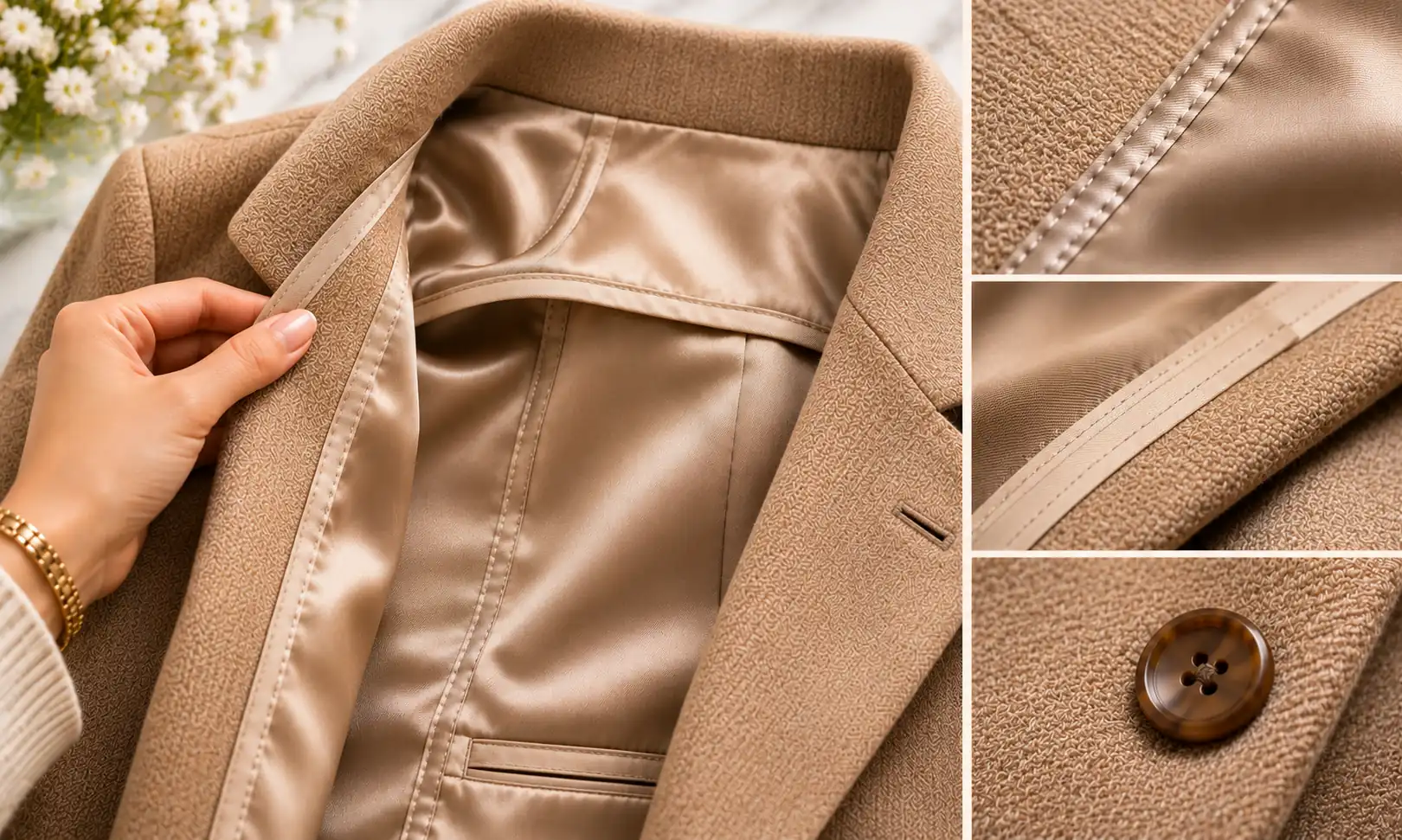
A beautiful fabric deserves equally thoughtful garment construction.
Turn the garment inside out when appropriate and inspect the seams.
Look for:
- Consistent stitching
- Neatly finished seam allowances
- Secure buttons and closures
- Well-attached lining
- Correctly aligned fabric patterns
- Smooth hems
- Reinforcement where necessary
Uneven stitching and poorly finished seams can reduce the durability and appearance of an otherwise attractive garment.
This is especially important with expensive tailored clothing.
The quality of the finished product depends on more than the textile itself.
9. Pay Attention to the Lining
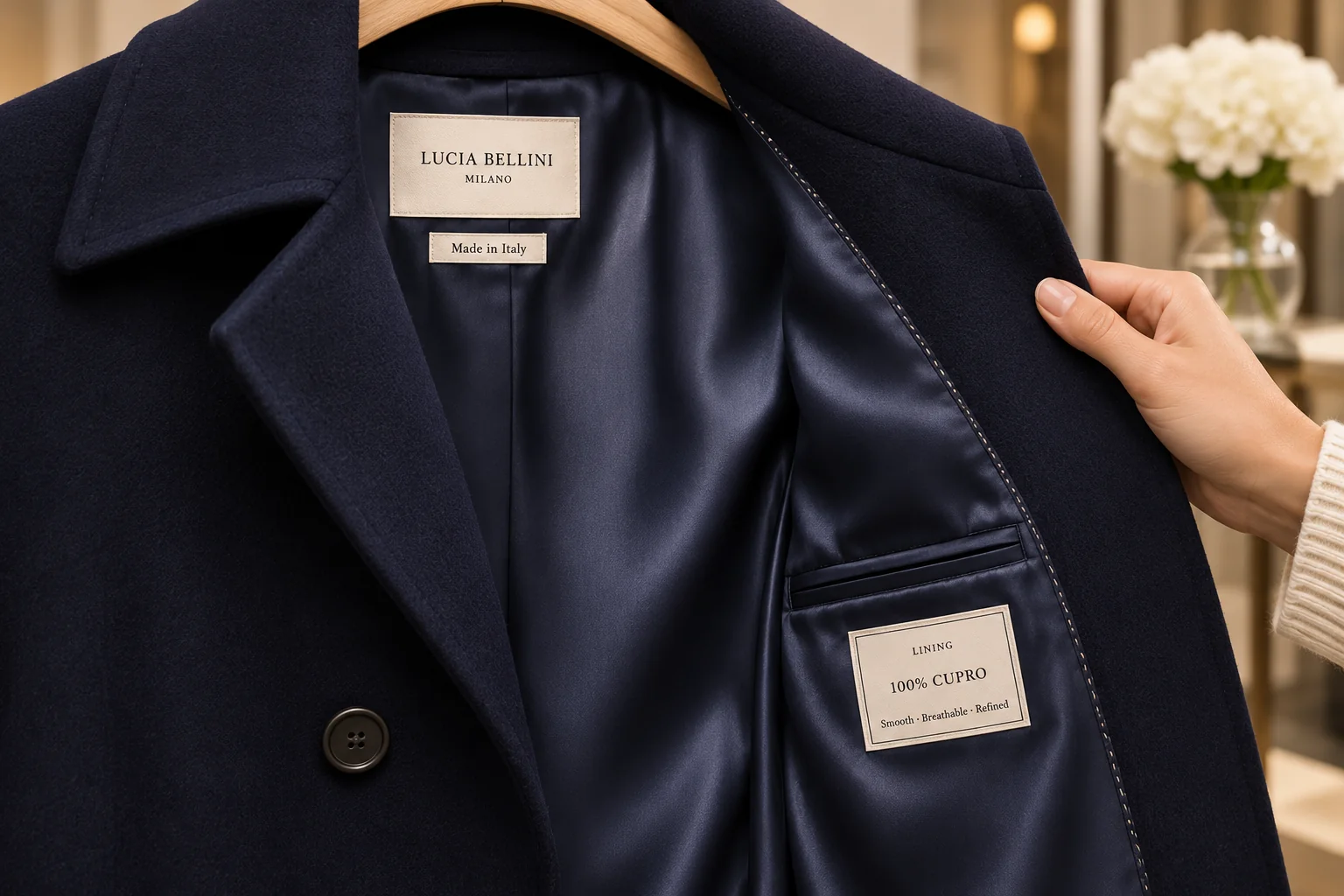
A lining affects comfort, movement, structure, and the way a garment sits against the body.
Premium jackets and coats may use cupro, viscose, silk, or other carefully selected lining materials.
The ideal lining should complement the garment’s purpose.
For example, a smooth lining can help a structured jacket slide comfortably over a shirt.
Inspect whether the lining sits neatly without pulling or bunching.
A garment can have beautiful outer fabric yet feel uncomfortable because of poor lining construction.
10. Understand Natural Fiber Characteristics
Different natural fibers have distinctive properties.
Cashmere is valued for its softness and insulation.
Silk is appreciated for its smoothness, drape, and distinctive appearance.
Wool offers resilience, insulation, and versatility.
Linen is popular for its breathability and relaxed texture.
Cotton is widely valued for comfort, versatility, and ease of wear.
These characteristics can help guide your assessment, but none of them provides a guaranteed authentication test.
Touching a fabric is useful for recognizing quality. Confirming its exact fiber composition may require labeling, trusted certification, or laboratory testing.
11. Look for Meaningful Certifications
Independent certifications can provide useful reassurance about specific textile claims.
For example, Woolmark certification involves testing relevant wool products against standards covering fiber content, durability, colorfastness, and laundering performance.
However, certifications should be interpreted carefully.
A certification may confirm particular characteristics rather than proving that a garment is luxurious in every respect.
A product without a certification is not necessarily poor quality, either.
Use credible certifications as additional evidence alongside material information and physical inspection.
12. Consider How the Fabric Will Age
Exceptional clothing should remain enjoyable beyond its first few wears.
Ask whether the fabric is likely to suit your lifestyle and how much maintenance it requires.
Will the knitwear pill with friction? Does the material need professional cleaning? Is the silk delicate enough to require careful handling?
Some expensive fabrics are inherently delicate.
That does not make them inferior, but it may affect their practicality.
A well-made wool coat can be a wonderful long-term purchase, while a delicate silk evening garment may be intended for occasional use.
Quality and durability are related, but they are not identical.
How to Identify Different Types of Luxury Fabrics
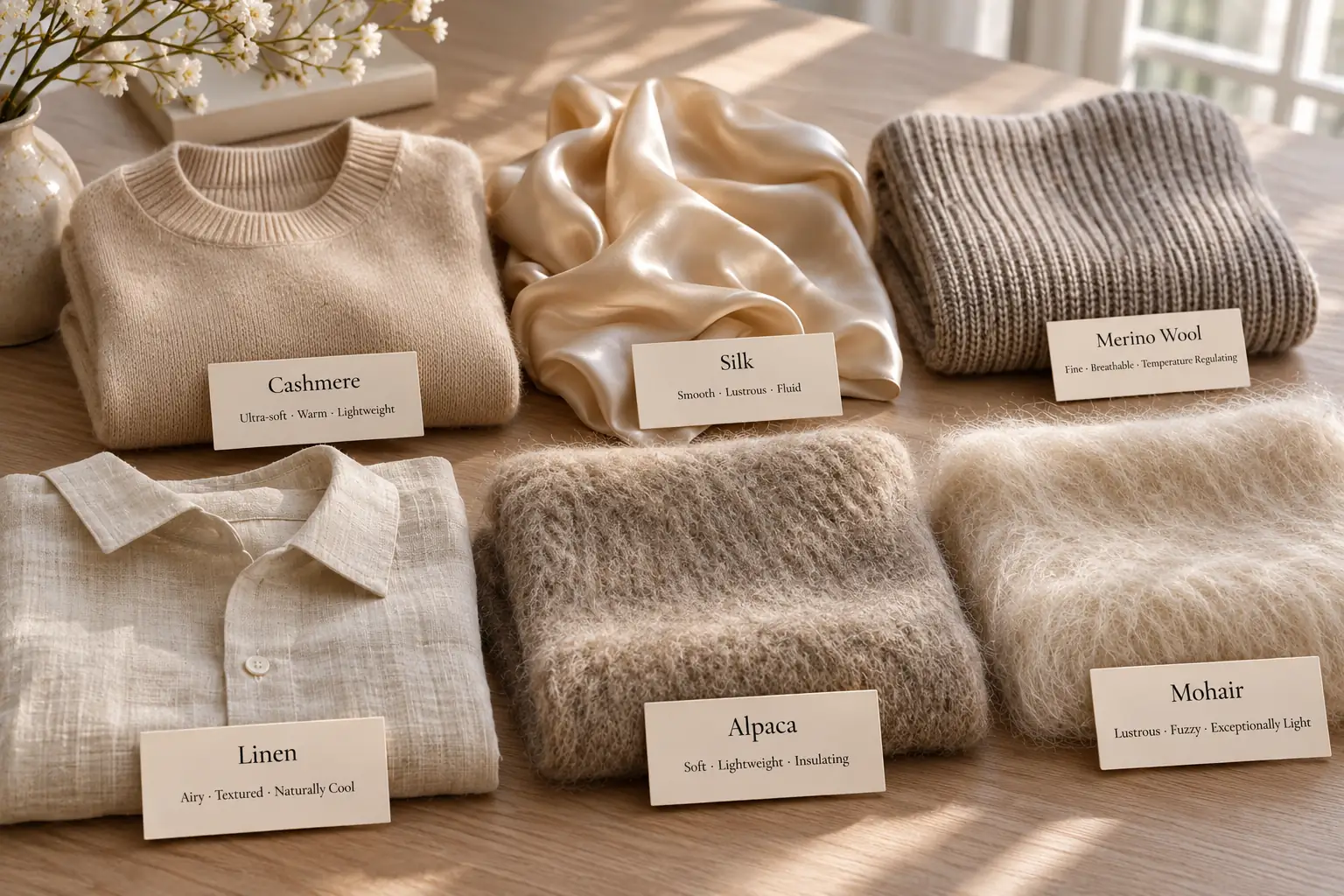
Understanding the characteristics of individual fibers makes shopping easier.
| Fabric | Characteristics to examine | Common luxury uses |
| Cashmere | Softness, yarn consistency, knit density | Sweaters, scarves, coats |
| Silk | Drape, surface texture, weave quality | Dresses, blouses, scarves |
| Merino wool | Resilience, fineness, construction | Knitwear, tailoring |
| Linen | Fiber texture, weave consistency, breathability | Summer clothing, shirts |
| Premium cotton | Yarn quality, smoothness, construction | Shirts, dresses, knitwear |
| Alpaca | Softness, warmth, surface characteristics | Coats, sweaters, scarves |
| Mohair | Luster, resilience, distinctive texture | Tailoring, knitwear |
| Vicuña | Exceptional fineness and provenance | Rare luxury outerwear and scarves |
No single characteristic proves luxury quality. Each fabric should be assessed against the standards appropriate for its type.
How Can You Tell if Cashmere Is High Quality?
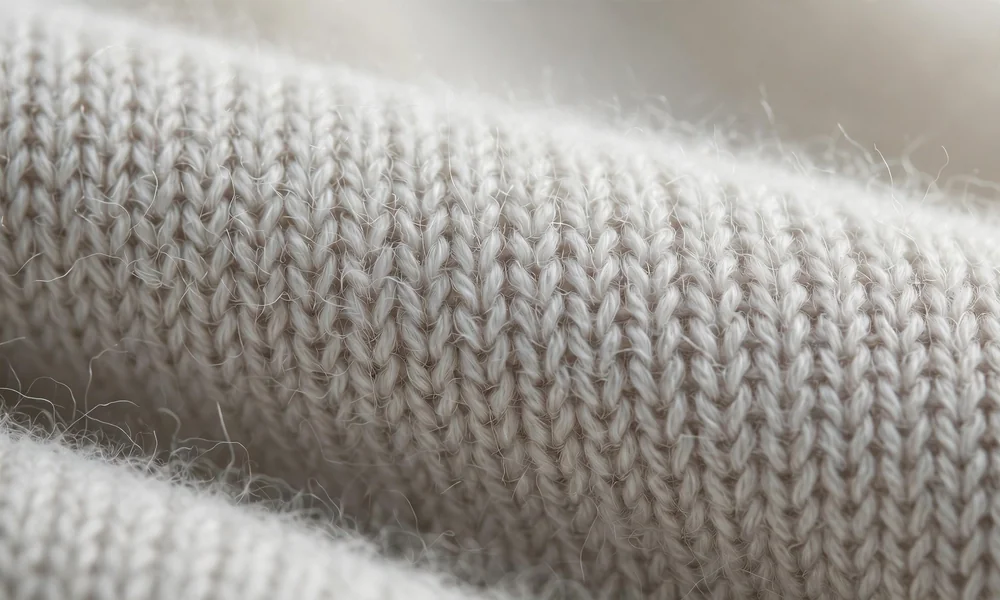
Cashmere is one of the most recognizable luxury fibers, but quality varies significantly.
Its reputation comes from the fine undercoat fibers of cashmere goats, which are valued for their softness and insulating properties.
When examining cashmere, look at the knit’s consistency and how well it has been constructed.
A good garment should feel pleasant against the skin and have appropriate body for its intended design.
Pay attention to loosely protruding fibers, uneven knitting, and areas that appear unusually thin.
However, a slight fuzzy surface is not automatically a defect.
Cashmere can naturally develop some pilling through friction, including on expensive garments.
Pilling depends on several factors, including fiber length, yarn construction, finishing, and how the garment is worn.
Very soft cashmere is not necessarily the most durable.
For an everyday sweater, a balanced combination of softness, shape retention, and practical construction may be more desirable than an exceptionally delicate feel.
How to Recognize High-Quality Silk
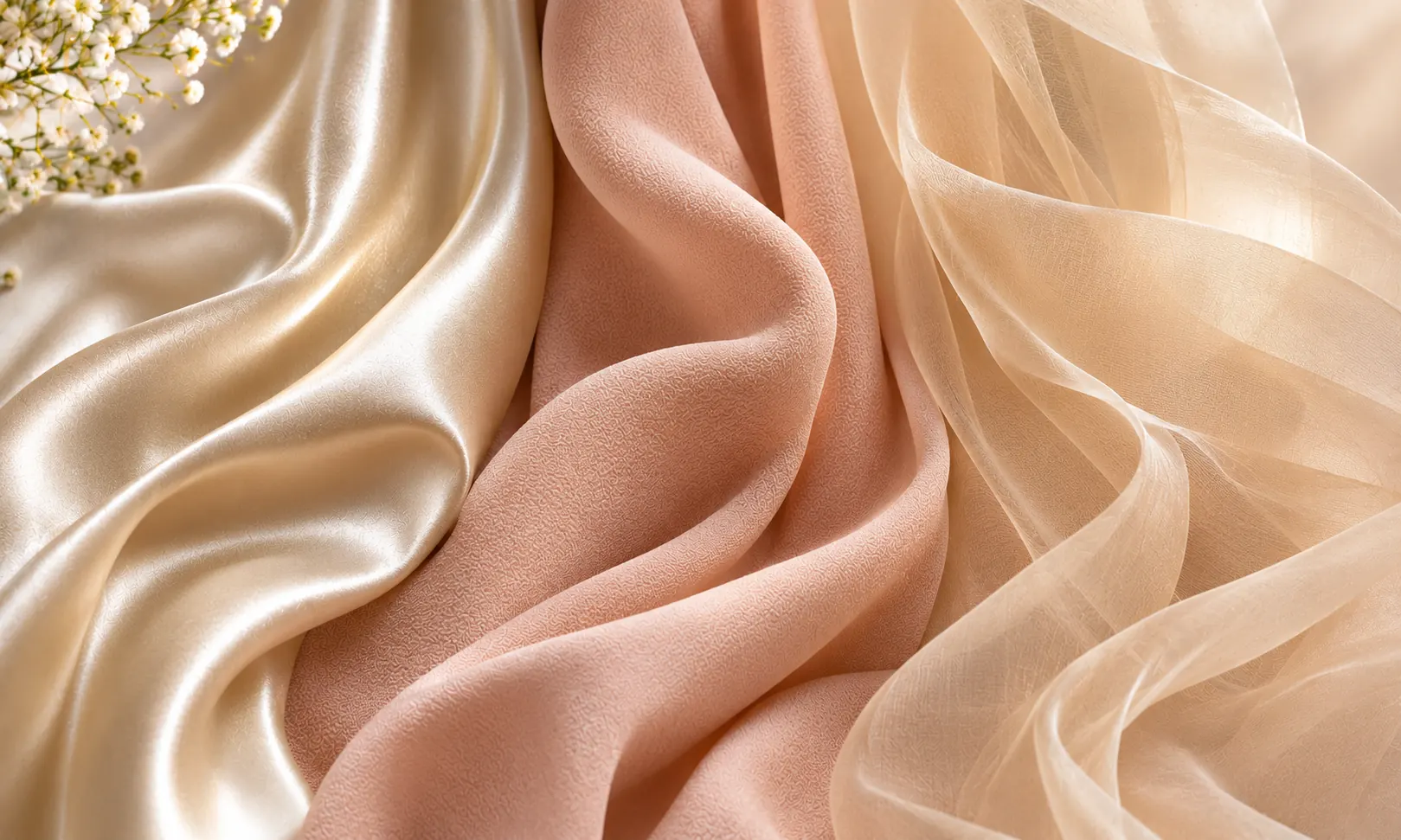
Silk is admired for its appearance, movement, and tactile qualities.
But silk is not one uniform fabric.
Silk satin has a smooth, often lustrous surface. Silk crepe offers a more textured appearance, while chiffon is lightweight and sheer.
Different weaves produce different results.
When shopping for a silk blouse or scarf, examine the fabric’s drape, stitching, and overall finish.
A carefully constructed silk garment should move naturally and feel suitable for its design.
Be cautious about common internet tricks that claim to identify genuine silk through touch or appearance alone.
Synthetic satin can resemble silk, and genuine silk can have many different textures.
A fiber-content label from a trustworthy manufacturer is more useful. For high-value purchases where authenticity is uncertain, independent textile testing provides stronger evidence.
How to Identify Premium Wool
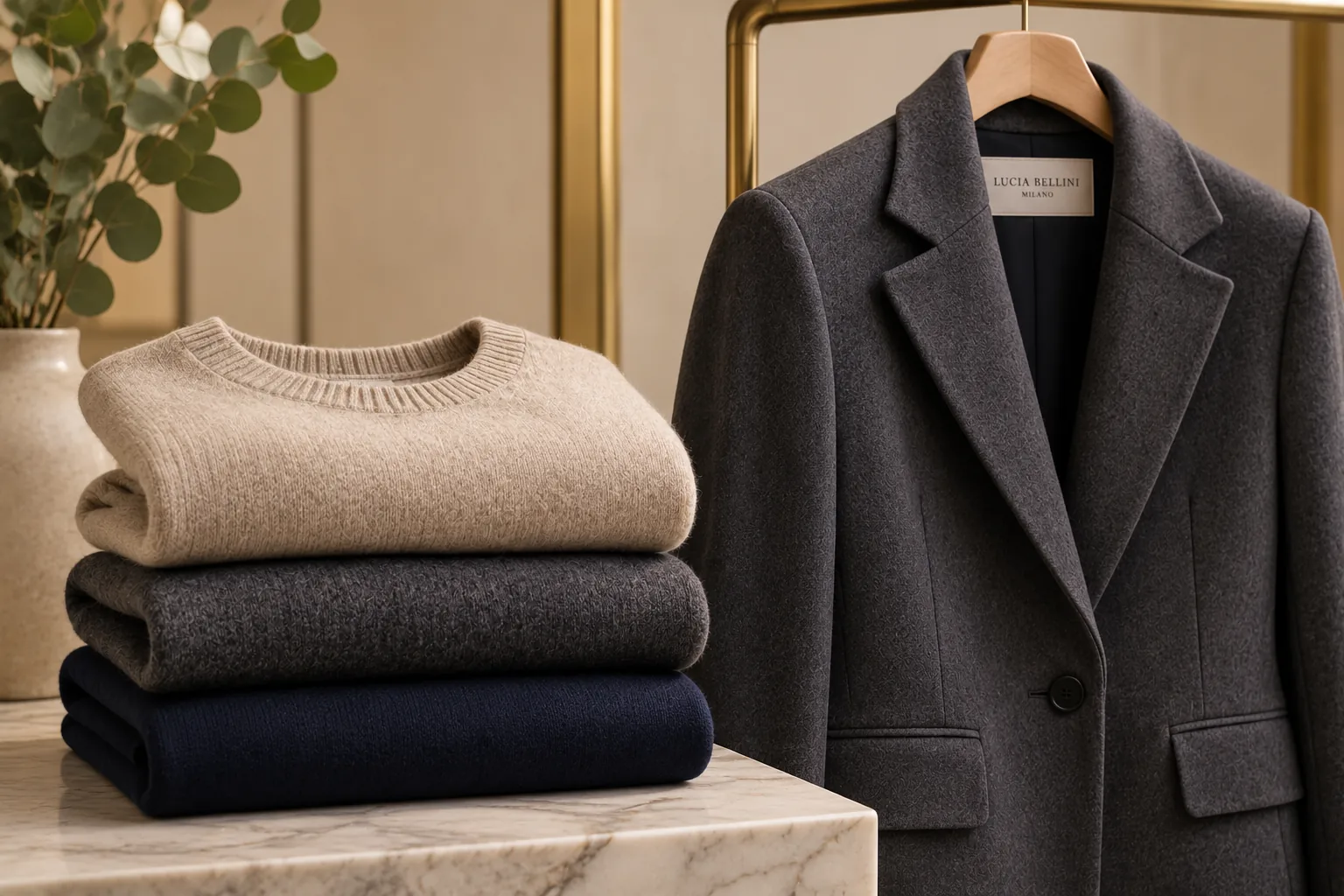
High-quality wool can be soft, structured, resilient, or textured, depending on its fiber characteristics and construction.
Fine merino wool is commonly associated with comfortable knitwear and lightweight tailoring.
Other wool fabrics may be designed for more structured coats or traditional suiting.
Inspect the weave, surface, seams, and how the garment hangs.
For tailored wool clothing, pay particular attention to whether the fabric holds its shape naturally.
The Woolmark label can provide additional assurance for qualifying certified products, although it does not replace an assessment of the complete garment.
Care also matters.
Wool knitwear should generally be folded rather than hung for extended periods, since hanging can distort certain knitted garments.
Always follow the manufacturer’s care instructions.
Is Expensive Fabric Always Better Quality?
No. Price alone is not a reliable measure of fabric quality.
Luxury clothing prices can reflect many factors beyond materials, including design, brand positioning, manufacturing location, distribution, marketing, exclusivity, and retail operating costs.
A relatively affordable garment may use excellent fabric, while an expensive designer piece may prioritize unusual construction or aesthetic experimentation over everyday durability.
That does not necessarily make the designer piece poor quality.
It simply means the buyer may be paying for something different.
This distinction is especially important when shopping for understated fashion, where materials and construction are central to the appeal.
Pravi Celer’s guide to quiet luxury brands for timeless wardrobes explores how fabric, fit, and construction contribute to lasting style.
Does a Luxury Brand Guarantee Better Fabric?
Not always.
Established luxury brands may have access to specialist textile mills and highly developed manufacturing techniques.
However, individual collections can vary significantly.
A fashion house might produce a beautifully tailored wool coat alongside a delicate fashion piece designed primarily for visual impact.
Both may be expensive, but they serve different purposes.
When evaluating luxury clothing, examine the specific garment instead of relying entirely on the brand’s reputation.
This is particularly relevant when comparing mid-tier luxury brands with more exclusive fashion houses.
The highest-priced label is not automatically the best choice for every material or garment.
Luxury Fabrics vs. Ordinary Fabrics: What Is the Difference?
The distinction often comes down to material selection, manufacturing consistency, finishing, and intended performance.
| Feature | Well-made luxury fabric | Lower-quality alternative |
| Fiber selection | Carefully selected for the intended use | May prioritize minimum cost |
| Yarn consistency | Appropriate uniformity or deliberate texture | Unexpected irregularities |
| Construction | Controlled weave or knit | May have weak or uneven areas |
| Surface finish | Thoughtfully finished | May show avoidable defects |
| Drape | Suits the garment’s silhouette | May hang awkwardly |
| Comfort | Designed around wearer needs | May feel irritating or restrictive |
| Durability | Appropriate to the textile’s purpose | May deteriorate prematurely |
These comparisons describe general possibilities, not universal rules.
Some inexpensive textiles are exceptionally well engineered, and some luxury materials are intentionally fragile.
How to Shop for Luxury Fabrics Without Overpaying
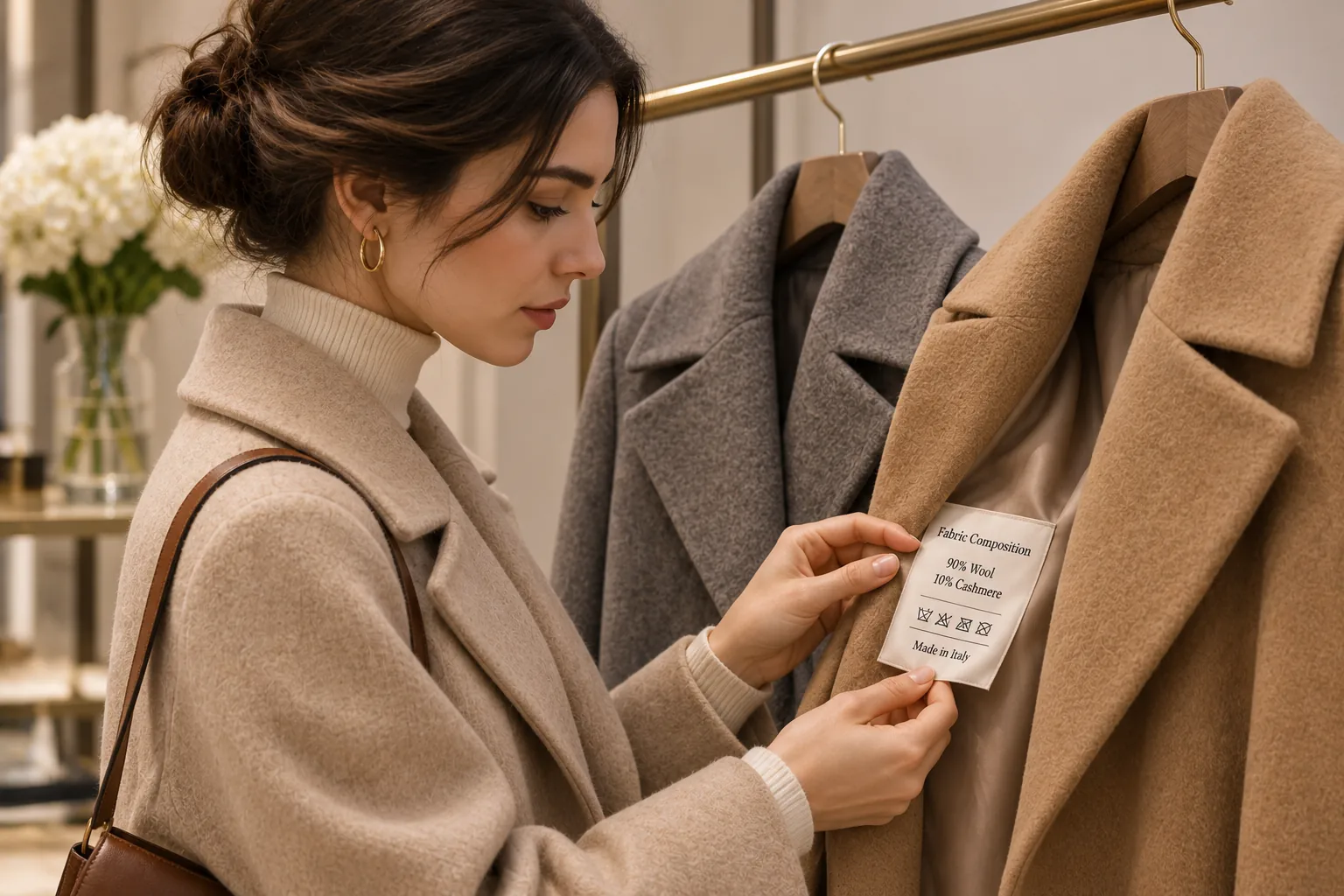
Shopping thoughtfully matters more than simply choosing a prestigious name.
Start by deciding what you want the garment to accomplish.
When choosing a winter coat, warmth, structure, comfort, and durability may matter most.
An evening blouse may call for a fluid drape and a beautiful finish.
Everyday trousers should offer comfort, shape retention, and ease of care.
Before buying, follow this checklist:
- Read the fiber composition label.
- Inspect the weave or knit.
- Examine stitching and seams.
- Check lining and hardware.
- Observe how the garment hangs.
- Consider comfort and fit.
- Review the care instructions.
- Compare similar fabrics across brands.
- Look for credible certification when relevant.
- Decide whether the garment suits your lifestyle.
Pay attention to cost per wear.
A beautifully made coat worn regularly for several years may offer better value than an expensive garment that remains untouched in the wardrobe.
For more inspiration, explore made-to-order luxury fashion brands, where thoughtful fabric selection and individualized construction play an important role.
How to Care for Luxury Fabrics
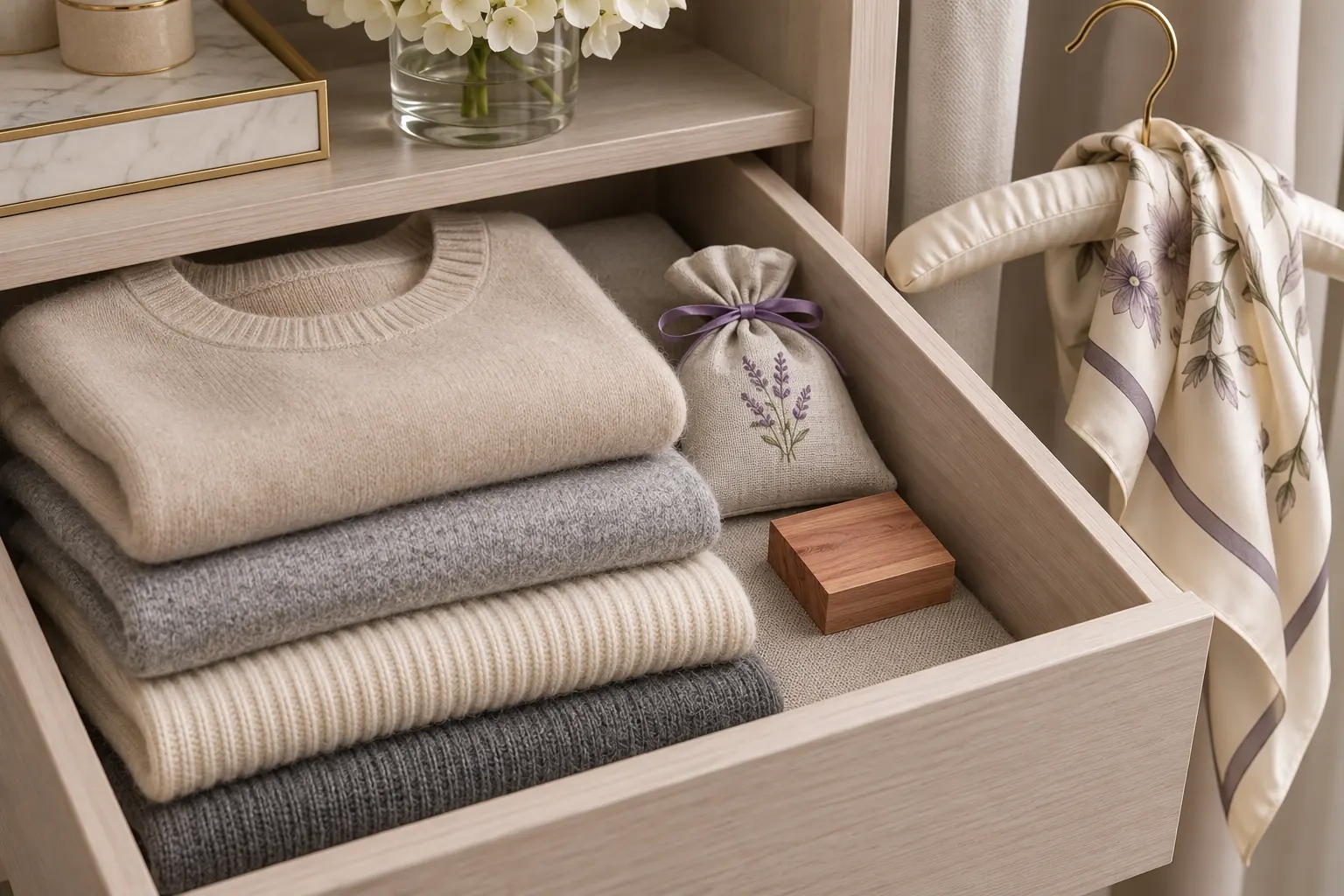
Proper care helps preserve the appearance and performance of premium textiles.
Cashmere
Fold cashmere garments for storage and avoid unnecessary friction.
Follow the care label, use a suitable gentle detergent when washing is permitted, and dry appropriately.
Silk
Handle delicate silk carefully and follow its specific care instructions.
Some silk garments can be hand washed, while others require professional cleaning.
Avoid assuming all silk fabrics can tolerate the same cleaning method.
Wool
Allow wool garments to air between wears when appropriate.
Fold knitted pieces and hang structured woven garments on suitable hangers.
Use care methods consistent with the product label.
Linen
Linen can usually tolerate regular wear, but washing and ironing requirements vary with blends, finishes, and construction.
Its natural tendency to crease is part of its character.
Premium Cotton
Follow the garment’s care instructions, particularly for dyed fabrics and delicate finishes.
Avoid unnecessarily high drying temperatures that may affect shrinkage, color, and fabric appearance.
Common Mistakes When Identifying Luxury Fabrics
Believing Softness Proves Quality
Softness may be influenced by fiber characteristics, finishing treatments, and construction.
It is not a reliable measure of durability or authenticity on its own.
Assuming Natural Fibers Are Always Superior
Natural fibers offer many desirable properties, but high-quality synthetic and blended fabrics can provide excellent performance.
The best choice depends on the intended use.
Confusing Fabric Weight With Quality
A heavy textile is not automatically better than a lightweight one.
Weight should suit the garment and the season.
Ignoring Garment Construction
Even beautiful fabric can disappoint when the seams, lining, or overall tailoring are poor.
Paying More Only for a Logo
Brand heritage and design may have value, but they do not replace a careful examination of the product.
Frequently Asked Questions
How can you tell if a fabric is luxurious?
Examine its fiber composition, weave or knit consistency, texture, drape, finishing, and construction. A high-quality luxury fabric should have characteristics appropriate to its intended purpose rather than simply feeling soft or looking expensive.
What is the most luxurious fabric in the world?
Vicuña is among the rarest and most expensive luxury animal fibers. However, the best fabric depends on its intended use. Silk, cashmere, fine wool, and other premium textiles offer different qualities.
Is cashmere always a luxury fabric?
Cashmere is widely associated with luxury, but its quality varies according to the fibers, yarn, knitting, and finishing. Not every cashmere garment is equally soft, durable, or carefully constructed.
How do you know if silk is real?
Check the fiber-content label and purchase from a trustworthy retailer or manufacturer. Visual appearance and touch cannot conclusively establish authenticity. Independent testing may be necessary for expensive or uncertain purchases.
Is polyester always cheaper or lower quality than silk?
No. Polyester and silk have different properties, and both vary in quality. High-performance synthetic textiles may be suitable for applications where durability, wrinkle resistance, or other practical characteristics are important.
Why do luxury fabrics cost more?
Prices can reflect rare fibers, specialist production, intricate construction, skilled labor, limited availability, and brand positioning. High prices do not automatically guarantee superior performance.
How do you recognize high-quality wool?
Look at the fiber description, fabric construction, surface consistency, drape, and garment finishing. Relevant certifications such as Woolmark may provide additional reassurance about specific quality standards.
What fabrics are used in quiet luxury fashion?
Cashmere, fine wool, silk, linen, and high-quality cotton commonly appear in quiet luxury wardrobes. The aesthetic emphasizes materials, construction, proportion, and understated design rather than prominent logos.
Final Thoughts
Learning how to identify luxury fabrics changes the way you shop.
Instead of judging clothing only by brand, price, or appearance, you begin noticing the small details that make a garment feel special: the natural fall of silk, the structure of a wool coat, the beautiful texture of linen, or the careful finishing of a cashmere sweater.
These details are not always obvious from a distance.
The most rewarding purchases are often the ones that combine beautiful materials with thoughtful construction and a design that suits your life.
A luxury fabric should offer more than an impressive name on a label. It should feel appropriate, perform as expected, and bring lasting pleasure each time you wear it.