
The right prepaid choice is the one whose high-speed data, coverage, and monthly cost fit the way you use your phone. The best prepaid phone plans depend on more than the word “unlimited.” Premium data is the amount of data available at a plan’s higher speeds before the provider reduces speeds.
A good match also needs usable signal where you live and travel. Some plans require another service, such as an internet subscription, so check eligibility before you sign up. The comparisons below separate plans that keep data flowing at slower speeds from plans with other limits.
Key Takeaways
- Compare premium data, not only the advertised unlimited label.
- Check network coverage at home, work, and along regular routes.
- Review eligibility rules, renewal terms, and added fees.
- Lyca Mobile Unlimited Plus is the low-cost unlimited pick in these comparisons.
- For lighter use, Lyca Mobile’s 5 GB plan has the lowest listed price.
Treat the advertised data label as a starting point, then check the speed terms and coverage for the places you use your phone most.
How Do You Choose the Best Prepaid Phone Plans?
Start with the amount of high-speed data you actually use, not the largest allowance on an advertising page. Your own use is the best guide to choosing among prepaid plans.
Compare a typical month of account usage with each plan’s premium data allowance. A plan with more data may cost more without helping if you rarely reach your current limit.
Match the data allowance to your monthly use
Verizon’s usage guide gives examples for three kinds of phone use. Less than 5 GB per month may suit mostly talk, text, and occasional social media. Users who stream music, upload photos, and browse may use 5-10 GB.
Frequent video streaming can call for 10 GB or more in a month. Those ranges are starting points, not rules for every mobile plan. Check your account’s actual data use across several recent months.
Match the plan’s high-speed allowance to your real use, then read what happens when you reach its limit.
Check coverage and the features you will use
Use a provider’s coverage checker with ZIP codes for home, work, and places you visit often. A map for only your home ZIP code can miss a weak signal on your commute.
- Data threshold and slowdown terms
- Coverage at home, work, and on regular routes
- Hotspot allowance
- Wi-Fi calling availability
Wi-Fi calling lets a phone place calls over a wireless internet connection, but each operator sets its own availability. Confirm that feature with the provider and your phone before relying on it.
A data threshold matters most if you stream or tether often. A hotspot allowance may be separate from the phone’s main data pool, so read both terms. Check the network where you use the phone, not just its brand name.
Compare a typical month of your own usage with the plan’s high-speed threshold before choosing.
What Does Prepaid Mean, and How Is It Different From Postpaid?
With prepaid service, you pay before using the upcoming service period; with postpaid service, you generally pay after using service. The payment timing is the main difference.
A prepaid phone is a device used with service paid for before the service period, not a special kind of handset. The same phone may work with prepaid or postpaid plans if it meets the provider’s requirements.
- Payment: Prepaid service is paid upfront; postpaid service is billed after use.
- Credit: A credit check may apply to postpaid plans, while Verizon Prepaid advertises no credit check.
- Renewal: Prepaid service renews when you pay for another service period; postpaid billing follows the account’s billing cycle.
- Unused or exhausted service: Each provider’s plan terms say what happens to unused data or service after you reach a limit.
Many prepaid plans use 28- or 30-day validity periods. The exact renewal date and expiration rules depend on the plan, so a renewal may not fall on the same calendar date each month.
Some prepaid plans stop service if you do not renew in time. Others may let you add data or renew early, depending on their terms. Postpaid plans can offer different device deals or bundled services, but those offers may have their own conditions.
Read the plan’s renewal and expiration terms before paying, since the billing cycle is not always a calendar month.
Which Prepaid Plans Offer the Best Unlimited Data Value?
Lyca Mobile Unlimited Plus is the strongest low-cost unlimited-data pick here at $18 per 30 days. It costs less than Unlimited Pro while listing the same 50 GB full-speed threshold.
Lyca Mobile Unlimited Plus is the cheapest prepaid phone plan with unlimited data among these compared options at $18 per 30 days. Unlimited Pro costs more for the same stated premium data amount.
| Plan | Price and term | Full-speed data |
|---|---|---|
| Lyca Mobile Unlimited Plus | $18 per 30 days | First 50 GB |
| Lyca Mobile Unlimited Pro | $29.50 per 30 days | First 50 GB |
| AT&T annual unlimited offer | $240 upfront for 1 year | First 16 GB, then up to 1.5 Mbps |
Both Lyca plans include unlimited data, plus unlimited international minutes and texts to 100 countries. The listed full-speed access lasts through the first 50 GB.
“Unlimited” can mean that data continues after premium data runs out, but at slower speeds. AT&T’s annual offer, for example, slows data after 16 GB, to a maximum of 1.5 Mbps. That may affect video, large downloads, and other demanding tasks.
For the cheapest prepaid phone plans with unlimited data, compare the price with the slowdown terms. A lower monthly cost helps only if the speeds after the threshold still suit your usual apps.
Choose the lower price only if the plan’s post-threshold speeds suit the things you do online.
What Are the Cheapest Prepaid Plans for Lighter Data Use?
For a small monthly data allowance, Lyca Mobile’s 5 GB plan has the lowest listed price at $10 per 30 days. It is a simple starting point if you use little mobile data.
Lyca Mobile’s 5 GB plan is the lowest listed monthly option at $10 per 30 days. Each listed Lyca plan includes unlimited nationwide talk and text.
| Lyca Mobile plan | Data | Price per 30 days | International calling |
|---|---|---|---|
| 5 GB | 5 GB | $10 | Unlimited to 100 countries |
| 8 GB | 8 GB | $15 | Unlimited to 100 countries |
| 15 GB | 15 GB | $29 | Unlimited to 100 countries |
| 25 GB | 25 GB | $39 | Unlimited to 100 countries |
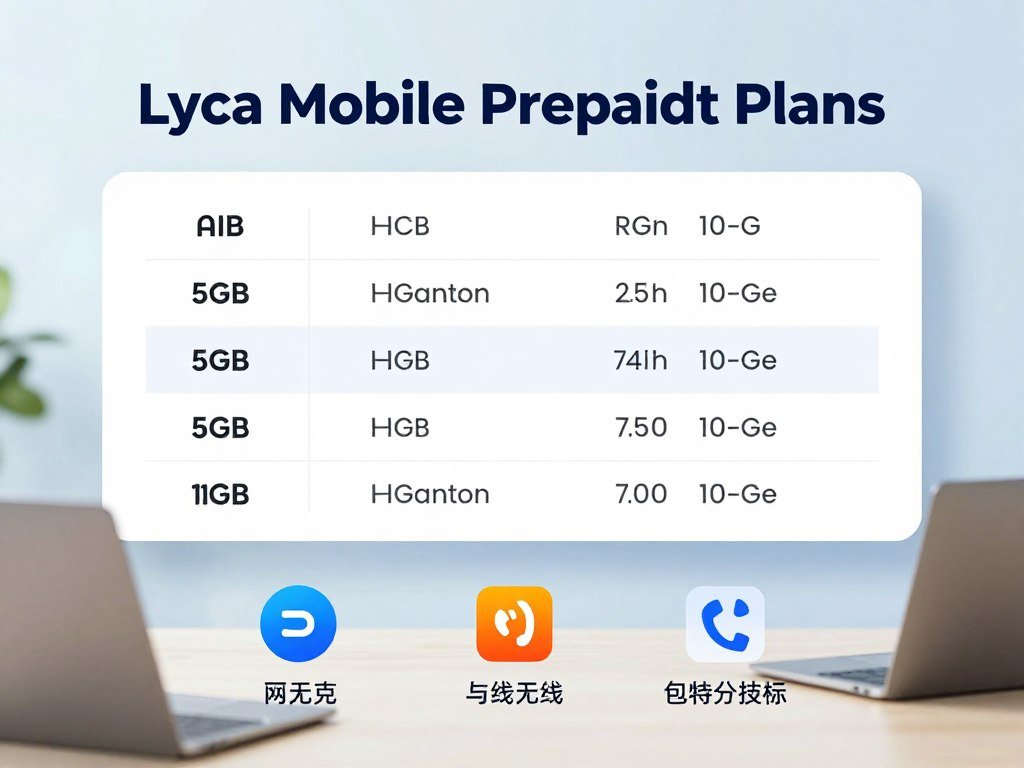
The international benefit covers talk and text to 100 countries. Check the included destinations if you often call a specific country, since the list matters more than a broad label.
Straight Talk’s prepaid plans start at $25 per month. Its Bronze plan includes 10 GB at high speed, then data at 2G speeds. That threshold may suit light use, but it can feel restrictive for frequent video.
Mint Mobile advertised starting prices of $15-$30 per month in a September 2026 comparison. Those are starting prices, not a direct match for each Lyca data tier. Compare the term and included data before weighing the monthly cost.
A prepaid phone plan with less data can be a better fit if you mostly use Wi-Fi. Estimate your normal monthly usage before paying for a larger allowance you may not use.
Which Plans Work Well for Seniors and Two Lines?
Consumer Cellular is the most directly age-targeted option in this comparison, with unlimited plans for adults 50 and older. AARP membership lowers its listed price.
The unlimited plan costs $35 per month for one line or $60 for two lines. AARP members pay $33.25 for one line or $55 for two lines.
Unlimited service and AARP pricing
Consumer Cellular’s plans start at $20 per month and range up to $60 for unlimited talk, text, and data. The unlimited offers give adults 50 and older a clear age-based comparison.
The National Council on Aging’s senior phone plan comparison also reviews age-based and family options. Use the eligibility rules and the included service to compare plans for your household.
Compare one line with two lines
| Plan | Lines | Monthly price | Eligibility |
|---|---|---|---|
| Consumer Cellular unlimited | 1 | $35 | Adults 50 and older |
| Consumer Cellular unlimited | 2 | $60 | Adults 50 and older |
| Consumer Cellular AARP unlimited | 1 | $33.25 | AARP members |
| Consumer Cellular AARP unlimited | 2 | $55 | AARP members |
These are senior and two-line options to consider, not automatic winners for every household. The right choice depends on the full cost and what each line needs.
Most single-line unlimited plans reduce high-speed data after 35 GB. Most multiline unlimited plans reduce it after 50 GB, so two people may share a larger pool before speeds drop.
Check whether the plan’s high-speed allowance fits the combined use of both lines before switching.
What Do Verizon Prepaid Plans Include?
Verizon Prepaid’s 15 GB plan costs $35 per month with Auto Pay after its $45 first month. The first bill is higher than later monthly payments.
Verizon guarantees the base monthly rate on every Verizon Prepaid phone plan for three years. The plans include talk, text, and data on Verizon’s nationwide 5G network.
Verizon Prepaid advertises no annual contract and no credit check. That may appeal if you want a known base rate without a long service contract.
The $70 Prepaid Unlimited Plus smartphone plan includes access to 5G Ultra Wideband where available. You also need a compatible device, and the service depends on coverage at your location.
Auto Pay changes the 15 GB plan’s price after the first month. Keep that difference in mind when comparing the advertised monthly amount with the first payment.
Confirm the Auto Pay requirement and 5G availability at your address before choosing the plan.
How Do AT&T Prepaid Plans Compare?
AT&T Prepaid’s annual offer costs $240 upfront for a year, then slows speeds after 16 GB. The full-year payment suits people comfortable paying ahead.
After 16 GB, data speeds are slowed to a maximum of 1.5 Mbps. The offer includes unlimited talk, text, and data, but full speed does not continue after that threshold.
A light-data month may leave more of the 16 GB premium data unused. A month dominated by video streaming may reach the threshold sooner, after which the slower speed can change how video loads.
The phrase “unlimited data” describes continued access, not constant full-speed service. Consider what you do after using the high-speed allowance, especially if your phone is your main internet connection.
Paying for a year at once can make sense if the service and payment terms fit your budget. It may be less suitable if you want to change providers before the year ends.
Compare the full-year upfront commitment with the amount of high-speed data you actually expect to use.
What Are Xfinity Mobile’s Select and Plus Plans?
Xfinity Mobile is available only to Xfinity Internet members, which makes eligibility the first decision point. Without that service, Select and Plus are not an option.
Select costs $30 per month and Plus costs $45 per month after the first year. Both include unlimited talk, text, and data in the United States for eligible customers.
| Plan use | Price after year one | Domestic service | Requirement or line limit |
|---|---|---|---|
| Select | $30 per month | Unlimited U.S. talk, text, and data | Xfinity Internet |
| Plus | $45 per month | Unlimited U.S. talk, text, and data | Xfinity Internet |
| Select household | $30 per month | Unlimited U.S. talk, text, and data per plan | Up to 12 lines |
| Plus household | $45 per month | Unlimited U.S. talk, text, and data per plan | Up to 12 lines |
The listed Select and Plus prices apply after the first year. Each plan includes domestic talk, text, and data, while the household options can support up to 12 lines.
Xfinity Mobile can be worth considering if you already meet the internet membership requirement. A household with several phones should compare the per-plan terms and total cost before adding lines.
Eligibility is the first practical hurdle, not the line limit. Xfinity Mobile’s plan terms set the internet requirement and describe the included service.
Verify that the internet membership and the after-year-one price suit your household before adding lines.
Which Prepaid Plans Include International Calling?
Lyca Mobile is the clearest included-calling choice for people who regularly call one of its 100 included countries. Calling from home is different from using service while traveling.
Lyca’s listed plans include unlimited international talk and text to 100 countries. That applies to its 5 GB, 8 GB, 15 GB, and 25 GB plans, plus Unlimited Plus and Unlimited Pro.
Calls from the United States to other countries
Verizon Global Choice is available with its $70 Unlimited Plus plan. It provides unlimited calls to one selected country per month and discounted rates to more than 220 countries.
Other international calling may cost per minute or require a paid add-on. Check the country list and call rules before dialing, since “international” can mean different benefits across plans.
Calling from the United States to another country is not the same as roaming. A plan may include calls from home without covering data or calls while you travel abroad.
Calling and data while traveling
Xfinity Select and Plus include unlimited talk, text, and data in more than 215 destinations. International data speeds are reduced after 10 GB per month.
That travel allowance is separate from international calls made from the United States. Before a trip, match the destination and the type of service you need to the plan’s terms.
Confirm that the destination and whether the benefit covers calls from home or roaming abroad match your trip.
Which Plans Give You Useful Hotspot Data?
Xfinity Select and Plus both include unlimited hotspot data, but their reduced-speed thresholds differ. The threshold matters if you often connect a laptop or tablet.
Select slows hotspot data after 15 GB, while Plus slows it after 50 GB. Lyca Mobile instead lists fixed hotspot allowances for its two unlimited plans.
Lyca Mobile Unlimited Plus includes 15 GB of hotspot data. Unlimited Pro includes 25 GB, giving the Pro plan a larger stated hotspot allowance.
“Unlimited hotspot” does not always mean unlimited data at the same speed. After a threshold, a provider may keep the connection available while reducing its speed.
Occasional email and browsing may use less hotspot data than video streaming across several devices. Hotspot-only use can grow quickly when multiple phones, tablets, or computers connect at once.
Wi-Fi calling is a separate phone feature, not a hotspot benefit. Its availability depends on the operator and your device, so treat it as a separate plan check.
Check the hotspot allowance separately from the phone’s overall data allowance if you regularly tether a laptop.
How Can You Check Network Coverage Before Switching?
Check coverage at the places you actually use your phone, not just across the country on a map. Local signal is what shapes daily service.
A coverage checker is more useful when you enter ZIP codes for several places you visit. Use this short checklist:
- Home ZIP code
- Work or school ZIP code
- Regular commute and travel areas
- Compatible phone and supported network technology
A nationwide network claim does not guarantee the same reception indoors or in every location. Buildings, terrain, and local network conditions can affect the signal you receive.
A coverage map helps you plan, but it cannot promise service in every room or on every street. Check the places that matter most, including routes where you need reliable calls.
Verizon Prepaid includes service on Verizon’s nationwide 5G network. Its 5G Ultra Wideband access also needs a compatible device and coverage in the location.
Confirm both the location and device requirements for any faster network tier you expect to use.
Can You Bring Your Own Phone or Get a Free One?
Keeping a compatible unlocked phone can avoid replacing a device just to switch prepaid service. Your current phone may work if the new network supports it.
Verizon accepts compatible unlocked devices for Prepaid service. Check these details before starting a number transfer:
Check an existing phone before switching
- Confirm the phone’s network compatibility and unlock status.
- Gather your current account number.
- Request a number-transfer or port-in PIN.
- Check whether you need any PUK information.
The account number and transfer PIN help move your existing number. Do not cancel the old service first, because the number transfer uses the active account details.
Compare a free-phone offer with buying a device
A free-phone promotion may require a certain plan, service period, or other terms. Compare those conditions with the cost of keeping your current unlocked phone.
Verizon and certain authorized retailers lock purchased Prepaid devices for 365 days after activation. The lock is removed automatically after 365 days of paid active service and ordinary usage, unless Verizon deems the device stolen or fraudulently purchased.
Do not choose a phone based on “free” alone. Compare the full device and service terms, then weigh them against a replacement that fits your needs. For other options, browse budget phones across several price ranges or compare smartphones by everyday needs.
Do not start the number transfer until you have the account number and transfer PIN from your current provider.
What Are the Downsides of Prepaid Phone Plans?
The most important prepaid drawback is that “unlimited” can still mean slower speeds after a high-speed threshold. The wording can hide a limit that matters for streaming or downloads.
Read speed limits, taxes, and renewal terms together before judging the monthly cost. Some providers charge taxes and fees separately from the advertised price.
Speed limits, taxes, and service terms
AT&T’s single-line unlimited offer includes 30 GB per month at a maximum of 3 Mbps. After that, speeds drop to a maximum of 1.5 Mbps, and taxes and fees are extra.
A plan can continue providing data after premium data runs out, yet slower speeds may affect what you can do. Read the threshold and post-threshold speed as separate parts of the offer.
Prepaid renewal dates may follow 28- or 30-day cycles rather than one fixed calendar date. Check how the provider renews service and what happens if payment is late.
When postpaid may be a better fit
Compare postpaid plans too if one of these cases fits your needs:
- A desired device promotion has conditions you want to compare.
- You need features missing from the prepaid options you are considering.
- A work or family account benefits from a specific bundled service.
Do not judge a prepaid plan by its monthly price alone; its speed limits, added fees, and renewal cycle all affect your bill.
Postpaid plans may suit a household that wants a particular bundle, while prepaid may work better for another budget. Check the exact service and payment terms rather than assuming one billing model always costs less.
Read the speed, fee, and renewal terms together before deciding whether the advertised monthly price is the amount you can budget.
Conclusion
The best fit is the prepaid option that combines usable coverage, enough high-speed data, and terms you can live with. The word “unlimited” matters less than the amount of premium data and what happens after you use it.
Check eligibility and renewal terms before paying, especially when a plan depends on another service or renews on a 28- or 30-day cycle. Those details can change whether a low advertised price works for you.
Start with your recent phone usage, then enter your ZIP codes into the coverage checker for your leading choice. Compare your usual data use and ZIP codes against your top choice, then confirm its renewal and speed terms before signing up.
FAQ
What is the best prepaid mobile service?
How can I contact AT&T prepaid customer service?
What does a prepaid phone mean?
What is the downside of a prepaid phone plan?
Do prepaid phones have a monthly fee?
What is the cheapest monthly prepaid plan?
Can I buy a prepaid phone without buying a plan?
Who has the best but cheapest phone plan?