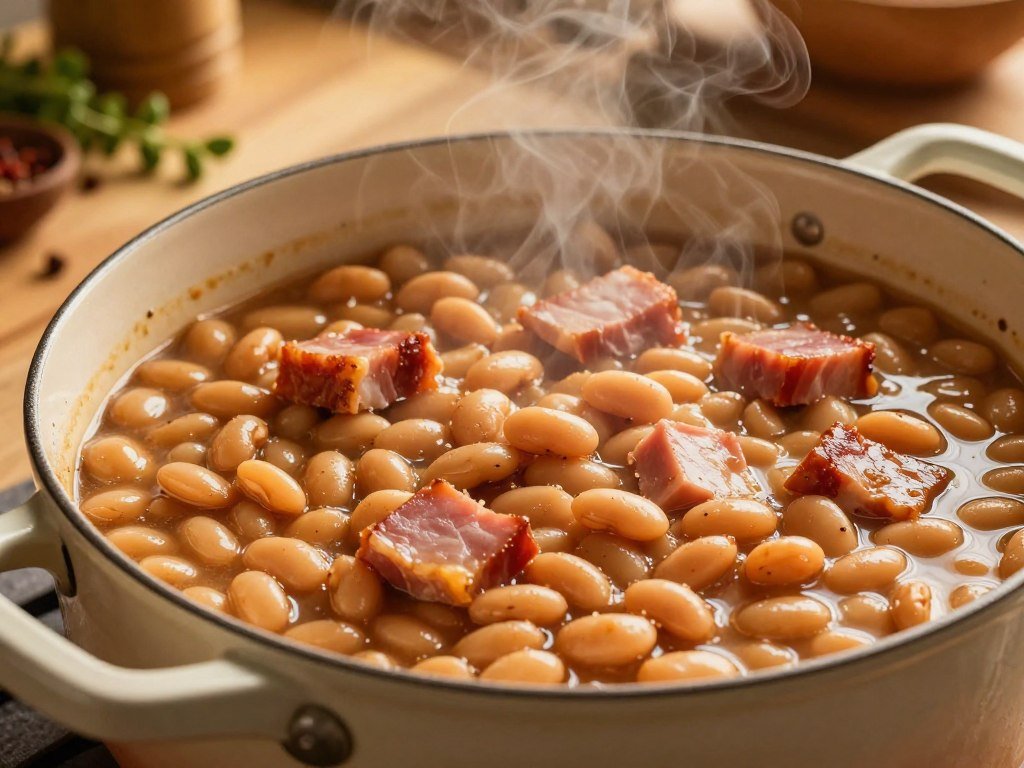
A pot of creamy Great Northern beans and smoky ham can turn a few pantry staples into a satisfying dinner. This meal suits a busy weeknight when you want something warm, filling, and easy to share.
We’ll use a straightforward stovetop method for a cozy, soup-like pot, with a slow-cooker option for a hands-off day. A quick soak means briefly boiling dried beans, then letting them stand in hot water before cooking.
The prep is simple, though the beans need time to soften and take on the savory broth. A little planning makes the hands-on work short, even when the beans need time to simmer.
Key Takeaways
- Use dried Great Northern beans for the from-scratch ham-and-bean pot.
- Choose a stovetop simmer or a slow cooker, based on your day.
- Soak the beans ahead to make cooking easier to plan.
- Adjust the texture by simmering the broth down or mashing beans.
- Use canned beans for a separate, faster tomato-and-greens stew.
Best Great Northern Bean Recipe
For a from-scratch Great Northern bean recipe, start with dried beans, smoked ham, aromatics, and a generous cooking liquid. The result is an old-fashioned Great Northern bean soup with a savory, mellow broth and tender northern beans.
Use dried beans for this recipe, and simmer them gently until tender. The finished pot stays soup-like, though you can cook it down for a thicker texture. A Dutch oven gives the beans and ham room to simmer together.
Old-Fashioned Great Northern Bean Soup from Dried Beans
This dry Great Northern bean soup starts by sorting and rinsing the beans, then soaking and draining them. Give yourself time for the beans to soften before dinner; the active prep is short, but the pot needs a steady simmer.
We build flavor with onion, carrot, celery, garlic, bay leaf, and smoked ham. For another warming bowl with smoked meat and a gentle simmer, try this split pea soup recipe.
Ingredients for the Ham-and-Bean Pot
- 1 lb dried Great Northern beans
- 1 smoked ham hock or 1 lb smoked ham
- 1 diced onion
- 2 chopped carrots and 1 chopped celery stalk
- 3 cloves garlic, chopped, and 1 bay leaf
- 1 tbsp olive oil and 1 tbsp brown sugar
- 4 cups chicken broth and 4 cups water
- Salt and black pepper to taste
The broth and water make a generous base for the beans to absorb as they cook. Smoked ham or a ham hock adds a deep, savory taste, while a little brown sugar rounds out the pot.
Stovetop Directions and Doneness
- Sort the beans and discard any shriveled beans or small stones. Rinse well, soak using your preferred method, then drain.
- Warm the olive oil in a Dutch oven over medium heat. Add the onion, carrots, and celery, then cook until they begin to soften.
- Stir in the garlic and brown sugar. Cook briefly, just until the garlic smells fragrant.
- Add the drained beans, smoked ham or ham hock, bay leaf, chicken broth, and water.
- Bring the pot to a boil, then lower the heat. Cover and gently simmer until the beans are tender, checking them as they cook.
- Remove the bay leaf and taste the broth. Add salt and black pepper as needed.
A from-scratch recipe uses dried beans, not canned ones, because they cook in the broth and build the meal’s base. Add a splash of water if the liquid drops too low before the beans soften.
Smoked ham can make the broth quite savory, so taste before seasoning with more salt.
For a thicker bowl, let the pot simmer uncovered near the end so some liquid cooks away. Taste the broth before adding more salt because smoked ham can already make it savory.
What Makes Great Northern Beans Different from Navy Beans?
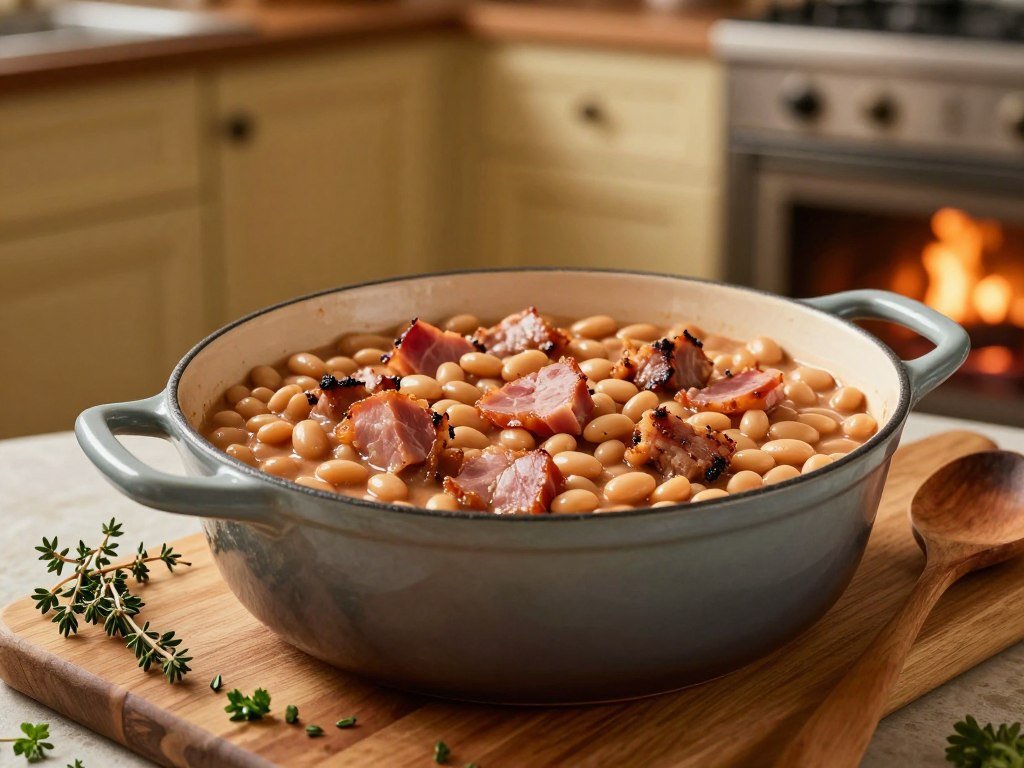
Great Northern beans are a white bean with a mild character and a shape that holds up well in a pot. They are larger than navy beans, so they stay more distinct in a soup or beans recipe.
Great Northern beans hold their shape better than navy beans. Cannellini beans are another white-bean choice for recipes, though their size and texture differ. The best swap depends on whether you want a small, soft bean or a fuller bite.
| Bean | Relative size | Useful texture or role |
|---|---|---|
| Great Northern | Larger than navy | Holds shape well in a pot |
| Navy | Smaller than Great Northern | Softens into a tender, smaller bite |
| Cannellini | Large white bean | White-bean substitute with a fuller shape |
Navy beans can stand in for a northern beans recipe when you want a smaller bean that softens more. Cannellini beans suit a similar meal, but their larger size gives the dish a different look and feel.
This mild bean works well in soups, stews, and other beans recipes where you want the broth to carry the flavor. For a closer match to the original texture, choose Great Northern beans rather than the smaller navy bean.
Do You Need to Soak Great Northern Beans?
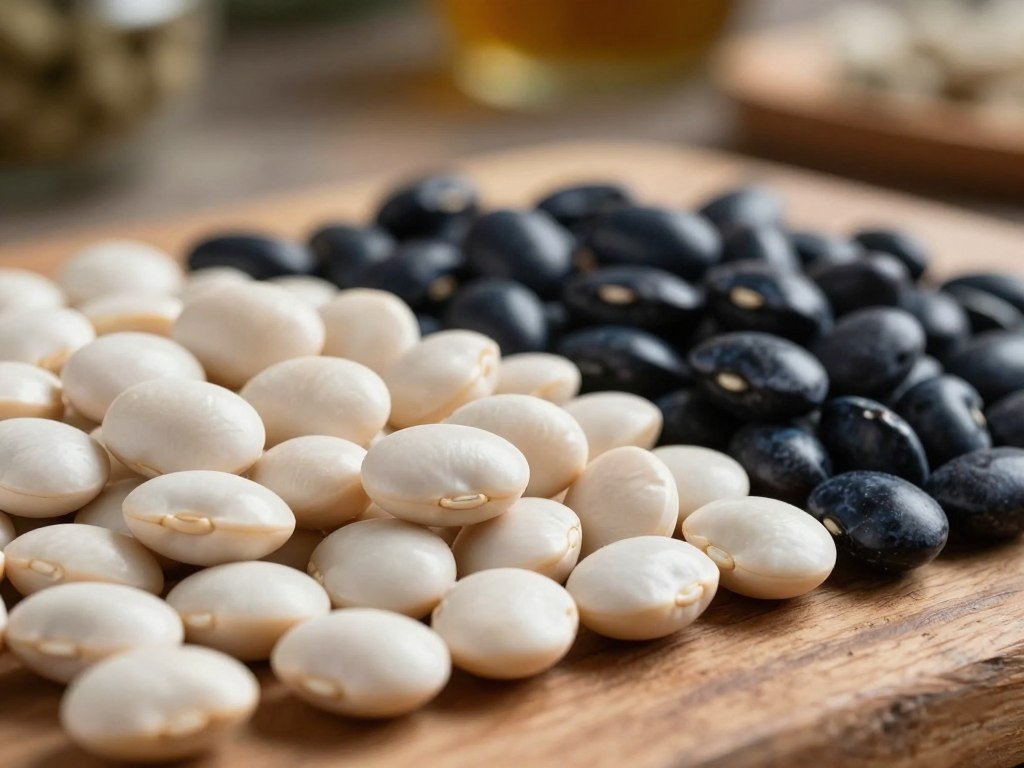
You can soak dried beans with a hot soak, a quick soak, or an overnight soak. Choose the quick soak when you have an hour, or refrigerate the beans overnight if you can plan ahead.
Use the exact water amount and soak time for your chosen method. The quick soak is a method that briefly boils dried beans, then lets them stand in hot water before cooking. Soaked beans are drained before they go into the cooking pot.
| Method | Water per 1 lb dry beans | Boil and soak time |
|---|---|---|
| Hot soak | 10 cups | Boil 2-3 minutes; cover and soak up to 4 hours |
| Quick soak | 6 cups | Boil 2-3 minutes; cover and soak at least 1 hour |
| Overnight soak | 10 cups cold water | Refrigerate 8 hours or overnight; no boil |
Hot Soak
For a hot soak, use 10 cups water for 1 lb, or 2 cups, of dried beans. Bring the beans and water to a boil for 2-3 minutes, then cover the pot and let them stand for up to 4 hours.
This method gives you a longer window than the quick soak. Keep the lid on while the beans stand, then drain them when the soak is complete.
Quick Soak
Use 6 cups water per 1 lb, or 2 cups, of dried beans. Boil the beans for 2-3 minutes, cover, and let them soak for at least 1 hour.
The hot water starts the soak without requiring an overnight plan. Leave enough time for the full standing period before you begin cooking the beans.
Overnight Soak
For an overnight soak, cover 1 lb, or 2 cups, of dried beans with 10 cups cold water. Refrigerate the beans for 8 hours or overnight.
This hands-off option suits cooks who want to prepare ahead. The beans rest in cold water while you handle other meal prep.
The University of Nebraska-Lincoln’s dry bean cooking directions give these soak methods and amounts. Drain the soak water before measuring the recipe’s broth and fresh cooking water.
How Do You Cook Great Northern Beans on the Stove?
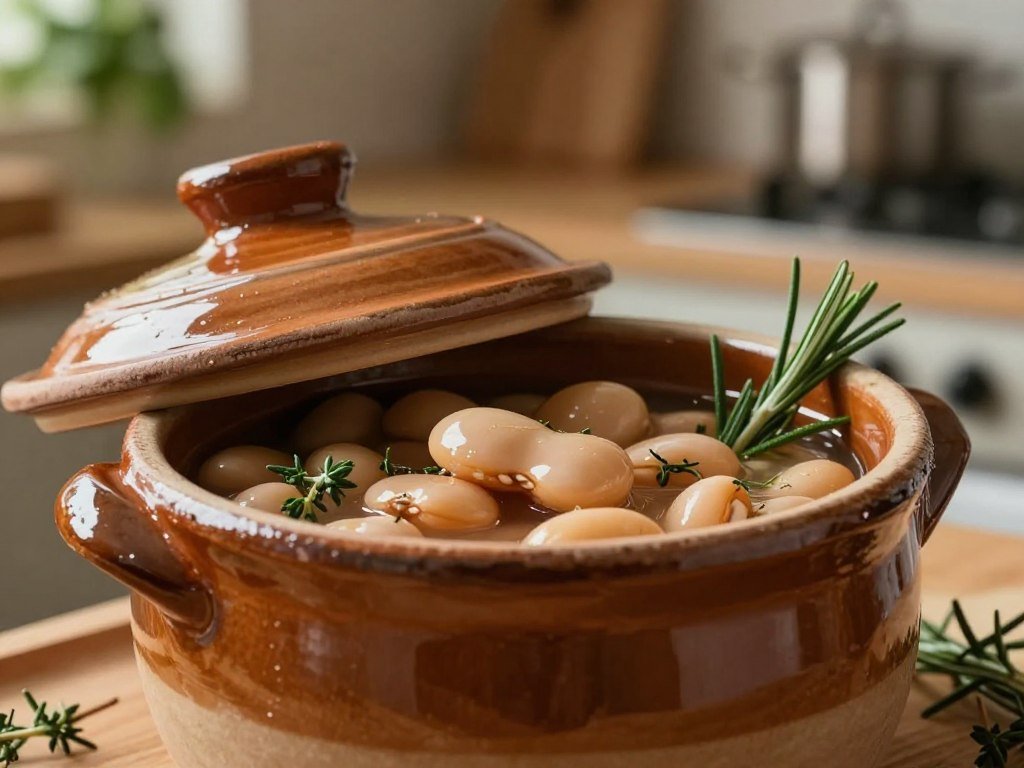
A gentle stovetop simmer brings soaked Great Northern beans to a tender-but-firm texture in about 45-60 minutes. Keep the heat low enough for small bubbles, not a vigorous boil.
Check the beans near the end of that 45-60-minute range. A gentle simmer helps northern beans cook evenly without breaking apart. Keep the pot covered as they cook in liquid.
Dried beans cook in liquid until soft, but older beans may need longer. Start checking early, since a bean can soften before another in the same pot.
For a tender-but-firm finish, the bean should give when you bite it but still hold its shape. If you prefer a softer, creamier texture, continue cooking until the centers no longer feel firm.
UNL Food also notes that Great Northern beans generally take 45-60 minutes to simmer after soaking. Taste a bean before serving and continue cooking if its center is still firm.
Which Seasonings Make Great Northern Beans Taste Better?
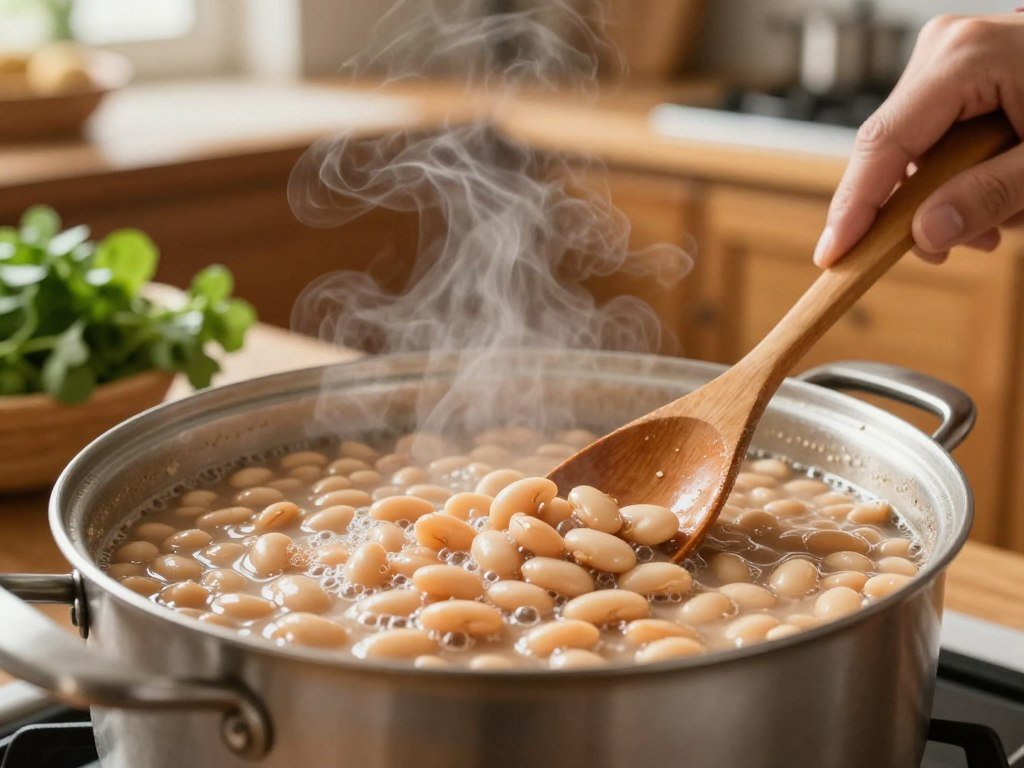
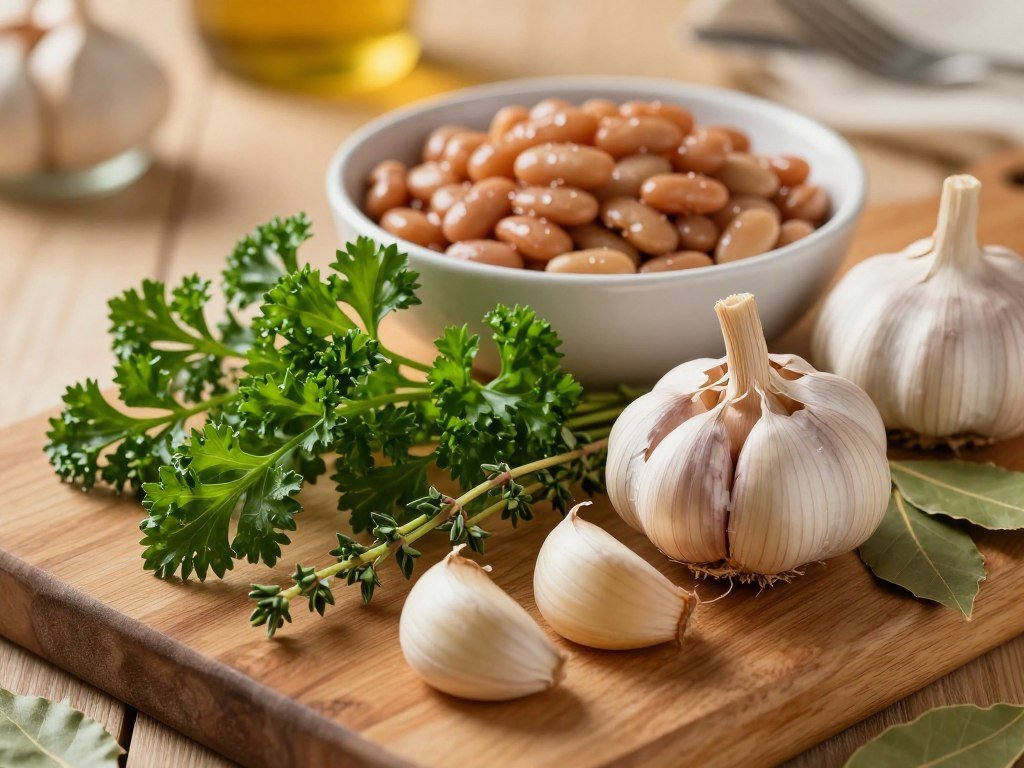
Garlic, herbs, bay leaf, and black pepper add depth without hiding the mild flavor of Great Northern beans. For the most savory flavor, build from a few aromatics and adjust salt near the end.
Smoked ham and salty Cajun seasoning can both add salt, so taste first. Choose one of these simple flavor paths:
- Garlic with thyme and parsley for a fragrant herb base.
- Bay leaf with black pepper for a warm, simple broth.
- Smoked ham with a small pinch of brown sugar for a rounded taste.
- Cajun seasoning for a peppery Creole-style pot; Tony Chachere’s is one option.
One specific method uses 1 tsp fine sea salt, ¼ cup (60 ml) lemon juice, and 4 ½ cups (1 L) water per ½ lb (230 g) dried beans. Another uses the same amounts plus ¼ tsp baking soda.
Baking soda is optional in that measured bean-cooking method, not a seasoning to add freely. It can help soften beans, but excess can affect their taste and texture.
For a meatless take with herbs and vegetables, a book such as Cool Beans offers bean-centered cooking ideas. Keep acidic additions such as lemon juice for the method that specifies them rather than casually changing the main pot.
How Can You Adapt the Recipe for a Slow Cooker or Meatless Meal?
The slow cooker suits a hands-off day, while a meatless Creole pot keeps the same onion-and-pepper flavor base. Pick the style that fits your table, from smoked ham to a vegetable-rich stew.
Use 3 cups chicken broth and 3 cups water for the slow-cooker ham version. For meatless cooking, use vegetable broth and cooking oil in place of meat fat.
Slow-Cooker Ham and Beans
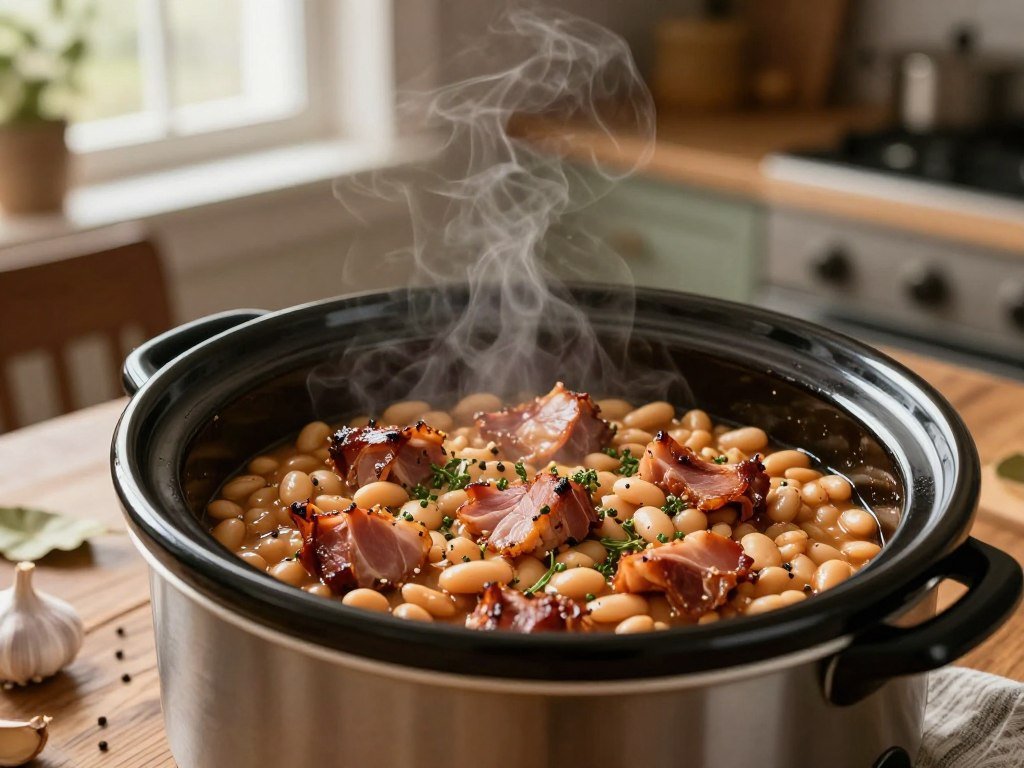
Add soaked and drained beans, smoked ham or a ham hock, aromatics, 3 cups chicken broth, and 3 cups water to the slow cooker. Cook on low for 8 hours, until the beans are tender.
Keep the lid on during cooking so the liquid stays in the pot. If you like planning dinner around a slow cooker, this hearty chili recipe offers another bean-based meal with a slow-cooker option.
Use beans that have been soaked and cooked safely before serving. Food-safety advice about dried kidney beans focuses on their specific risks, so do not treat all dried beans as interchangeable.
Southern-Style Great Northern Beans
A Southern-style pot often starts with smoked pork or a ham hock. Add Creole seasoning for a bold, savory broth, then serve the beans with cornbread for a familiar meal.
Creole white beans can include onion, celery, bell pepper, Cajun seasoning, thyme, and oregano. These vegetables bring a sweet, aromatic base that works well without changing the beans’ mild character.
A Meatless Creole Variation
For a vegetarian or vegan pot, replace bacon fat with cooking oil and choose vegetable broth instead of chicken broth. Soften onion, celery, and bell pepper in the oil, then season with Cajun spices.
This base keeps the dish hearty without smoked meat. Add thyme or oregano for an herbal note, and taste near the end before adding salt.
Tomato, Greens, and White Beans
A tomato-and-vegetable direction can pair white beans with greens and thyme. Use canned beans or beans that are already tender, since acidic tomato belongs in a version built around cooked beans.
Fresh greens add color and a tender bite, while thyme brings a gentle herbal note. Add salt near the end when using smoked meat or a salt-containing Cajun seasoning.
Can Canned Great Northern Beans Make a Fast Tomato Stew?
A can of Great Northern beans turns into tomato stew much faster than a pot of dried beans. A drained, rinsed 15-ounce can makes a tomato-forward dish in about 35 minutes.
This is a distinct quick dish, not a shortcut for cooking dried beans. The canned beans are already cooked, so they only need time to take on the broth and vegetable flavor.
For a tomato-and-greens stew, use Roma tomatoes, kale, shallot, squash, garlic, and thyme. Start by sautéing the shallot and squash until they soften, then add the garlic and thyme.
Stir in the tomatoes, broth, and kale, then simmer until the vegetables are tender. Add the rinsed white beans during the simmer so they warm through without turning mushy.
- Sauté chopped shallot and squash in a little oil.
- Add chopped garlic and thyme, then stir until fragrant.
- Stir in Roma tomatoes, kale, and broth.
- Add drained, rinsed beans and simmer until the vegetables soften.
Keep the tomato-and-greens stew thicker than a broth-based soup by controlling the amount of liquid. Add the broth gradually so the finished stew stays thick rather than soupy.
What Should You Serve with Great Northern Beans?
Rice or cornbread makes a natural partner for a savory pot of ham and beans. Choose a sturdy side to catch the broth, or serve the beans over rice for a filling main meal.
Rice makes the beans more filling, while bread can turn a thick pot into an easy main. These pairings work with different versions:
- White rice with Southern-style beans makes a hearty main meal.
- Cornbread with ham and beans works as a main or a side dish.
- Toasted bread with tomato-and-greens beans makes a simple main.
- Grits with the meatless variation suit a warm, filling dinner.
Serve a smaller scoop of beans beside a vegetable or another main when you want a side dish. A larger bowl over rice can carry dinner on its own.
Tomato-steeped white beans pair especially well with toast or grits, while smoky ham beans feel right at home beside cornbread. Put toast or cornbread on the table when the broth is thick enough to scoop up.
How Long Do Cooked Beans Keep?
Refrigerate cooked beans and plan to use them within 3-4 days. Store cold beans in an airtight container, and freeze portions you will not use soon.
Reheat leftovers to at least 165°F for at least 15 seconds. Refrigerate leftovers within 2 hours, and cool them in shallow containers so they chill quickly.
| What you’re doing | Time or temperature | How to handle it |
|---|---|---|
| Refrigerator storage | 3-4 days | Use an airtight container; refrigerate within 2 hours |
| Freezer storage | Up to 3 months | Pack in a sealed freezer-safe container |
| Reheating | At least 165°F for 15 seconds | Heat thoroughly before serving |
UNL Food’s leftover food safety advice recommends using refrigerated leftovers within 3-4 days and reheating them to 165°F. A tight lid helps keep the beans covered and prevents spills in the refrigerator.
Freeze portions you will not use in that refrigerator window, and reheat them thoroughly before eating.
How Can You Fix Firm or Thin Beans?
Keep firm beans simmering gently, since older beans can take longer to soften. A low, steady heat gives them more time without breaking the beans apart.
Wait to add tomato or vinegar until the beans soften. Acidic ingredients can slow softening when they go in too early.
- Firm centers: Keep the pot at a gentle simmer and check a bean again.
- Thin broth: Mash 1 cup of cooked beans against the pot’s side.
- Firm beans after tomato or vinegar: Keep cooking gently until they soften.
- Beans sticking: Lower the heat and add hot water as needed.
Mashing beans adds body without needing flour or another thickener. Stir the mashed beans back into the broth so the texture thickens across the pot.
If the liquid drops as the beans cook, add hot water in small amounts. Add acidic ingredients only after the beans are tender if softness is the priority.
Lower the heat if beans stick, then loosen the pot with hot water as needed.
How Much Do Dried Beans Yield?
One pound of dry beans, or 2 cups, yields about 6 cups cooked. A 15-ounce can yields about 1 ½ cups cooked Great Northern beans.
Scale every ingredient by the same batch factor. For a double batch, multiply each ingredient by two, then check that your pot has room for the beans and liquid to expand.
The yield difference matters when you are choosing between dried and canned beans. A pound of dried beans makes about four times the cooked amount of one 15-ounce can.
Use the cooked yield to plan how much your recipe needs, not just the dry amount listed at the start. If you scale up, leave space at the top of the pot for the liquid to move as it simmers.
One pound of dry edible beans is also 2 cups before cooking. Measure the cooked yield before dividing it into meal-sized portions.
Conclusion
A pot of Great Northern beans can be a comforting dinner with only a few everyday ingredients. Dried beans, a savory cooking liquid, and a gentle simmer give you a flexible meal that works with smoked ham or vegetables.
Start with the stovetop ham version when you want a classic bowl, or choose the slow cooker when hands-off timing matters. Sort and soak a pound of beans tonight, then start the ham-and-bean pot when you are ready to cook.
FAQ
Can you provide a recipe for bean and ham?
What kind of beans are great northern beans?
How to make beans taste better?
What is the best seasoning to put in beans?
Why add baking soda to beans?
How much baking soda should I add to my beans?
What happens if you put too much baking soda in beans?
Is it okay to soak beans with baking soda and salt?