There’s a moment aboard a beautiful sailing yacht that even the most expensive motor yacht cannot quite reproduce. The engine falls silent. The sails fill with wind.
And suddenly, something extraordinary happens. The yacht begins moving through the sea with a completely different personality. You can hear the water traveling along the hull. The rigging moves gently overhead. And the magnificent vessel beneath your feet feels less like a machine and more like something alive.
Now imagine experiencing all of this aboard a 100-foot sailing yacht.
A beautifully appointed owner’s suite awaits below. There’s a chef preparing lunch, comfortable space for your closest friends, and a shaded cockpit where you can spend the afternoon watching the coastline drift past. It’s sailing, but on an entirely different scale. And that raises a fascinating question.
What makes a 100 foot sailing yacht genuinely luxurious, and how much does it cost to own one?
A 100-foot sailing yacht measures approximately 30.48 metres and can offer spacious guest accommodation, professional crew quarters, advanced sail-handling equipment, refined interiors, and the ability to undertake ambitious ocean voyages. Exceptional examples include the Oyster 100, Nautor Swan 100, and Southern Wind SW100 series.
But here’s what makes this category interesting. Two sailing yachts of almost identical length can offer completely different experiences. One is designed around comfortable world cruising.
Another is built to combine luxury with competitive sailing performance. And a third may prioritize privacy, interior volume, and entertaining. The most beautiful choice depends on what you want from the sea.
What Is a 100 Foot Sailing Yacht?
A 100-foot sailing yacht is a large vessel that uses sails as a primary means of propulsion, supported by an engine for maneuvering and situations where sailing isn’t practical.
Unlike most smaller recreational sailboats, yachts around this size are frequently designed for professional crew operations and extended cruising.
They can offer accommodation comparable to a small luxury residence.
But they’re not floating houses.
The hull, keel, mast, sails, and onboard systems must work together to deliver both performance and comfort.
A well-designed yacht needs to remain manageable when the wind changes, when seas become rough, and when the crew must adjust the sails.
That’s why naval architecture matters so much.
The beauty of a sailing yacht begins long before anyone chooses the upholstery.
How Big Is a 100 Foot Sailing Yacht?
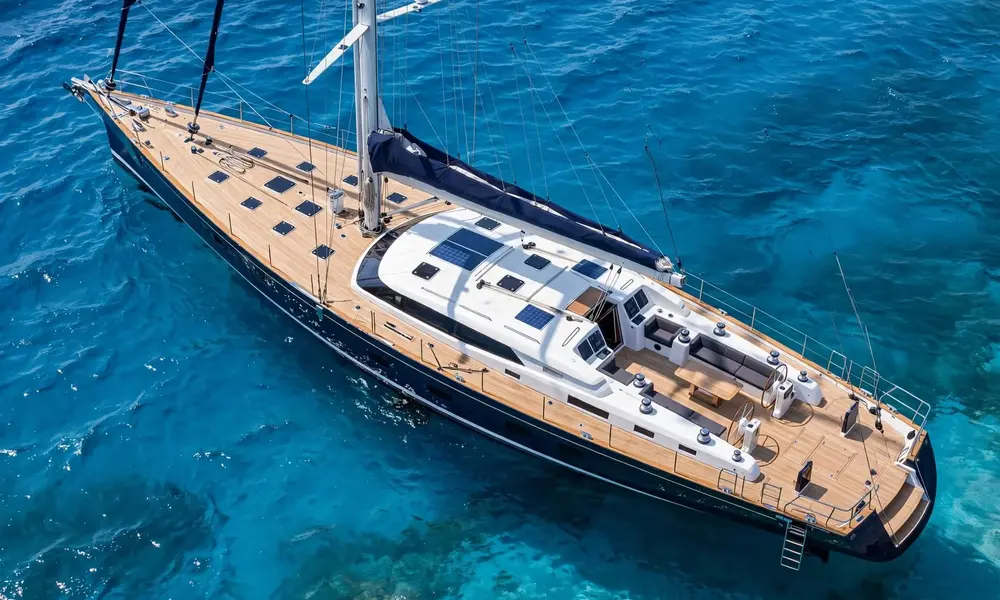
The number sounds straightforward.
But yacht measurements can be surprisingly confusing.
One hundred feet equals 30.48 metres.
However, a yacht advertised as a 100-foot model might measure slightly more or less than that overall.
And the difference matters.
Consider three documented examples.
| Sailing yacht | Length overall | Beam | Draft |
| Oyster 100 | 30.73 m | 7.85 m | 4.10 m |
| Southern Wind SW100 RS Freebird | 30.20 m | 6.70 m | 3.95 m |
| Nautor Swan 100 RED SKY | 30.48 m | 7.04 m | Approx. 4.12 m |
The figures come from builder and brokerage specifications and may vary between individual vessels.
Here is the surprising detail.
The Oyster has a significantly wider beam than the Southern Wind.
Yet the Southern Wind was developed with a stronger performance-oriented emphasis.
Neither design philosophy is inherently superior.
One offers a different balance of internal space, displacement, and sailing characteristics.
The important question isn’t simply how long the yacht is. It’s how that length, width, weight, and hull shape work together.
What Does Luxury Look Like Inside a 100 Foot Sailing Yacht?
Imagine entering the salon after several hours on deck.
The yacht is sailing comfortably.
Sunlight reaches the interior through generous windows.
There’s a beautiful wooden table, comfortable seating, and enough space for guests to relax without feeling crowded.
But the furniture isn’t the most important detail.
It’s how the room works while the yacht is moving.
A sailing yacht heels when it sails.
That means the floors may no longer feel level, and the way you move through the interior changes.
Thoughtfully designed handholds, secure furniture, practical storage, and safe movement routes become essential.
And that makes luxury sailing interiors particularly interesting.
They must be beautiful while remaining genuinely functional.
The Owner’s Suite
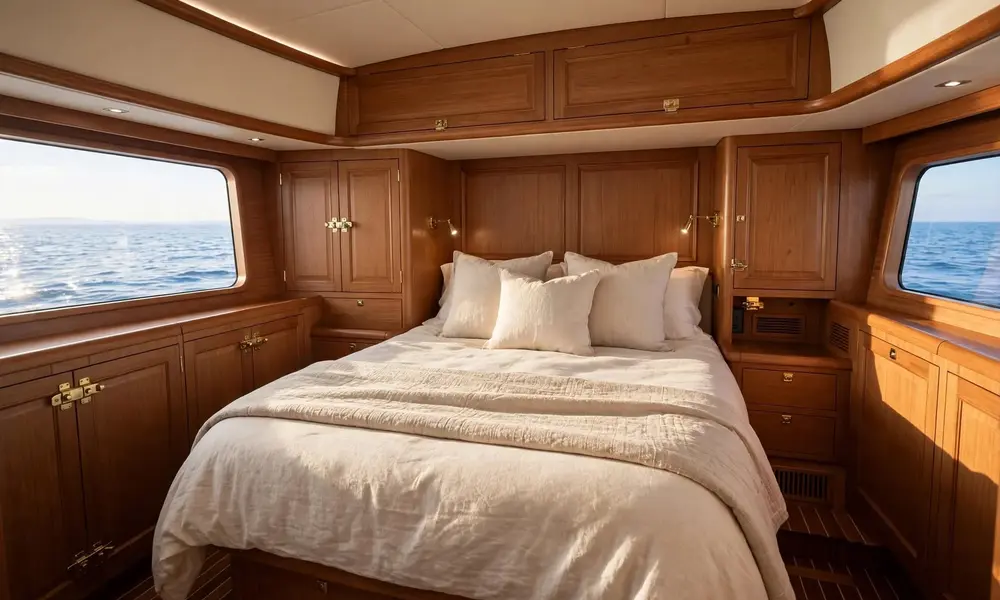
A beautifully designed owner’s cabin may feature a generous bed, private bathroom, carefully planned wardrobes, and elegant materials.
But privacy and comfort matter more than extravagant decoration.
A quiet cabin with excellent ventilation can be more enjoyable than a larger room located beside noisy equipment.
The Main Salon
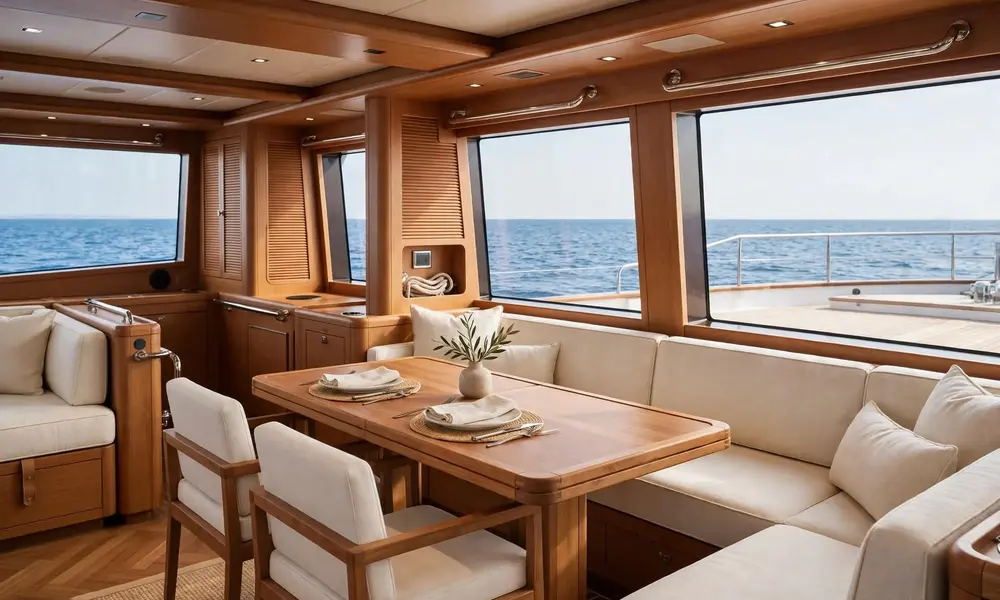
This is often the social heart of the yacht.
A raised salon can offer beautiful views while allowing the spaces below to remain comfortable and private.
The Oyster 100, for example, includes a raised saloon arrangement with panoramic views and a separate dining area.
It’s a lovely way to connect interior life with the surrounding sea.
Guest Accommodation
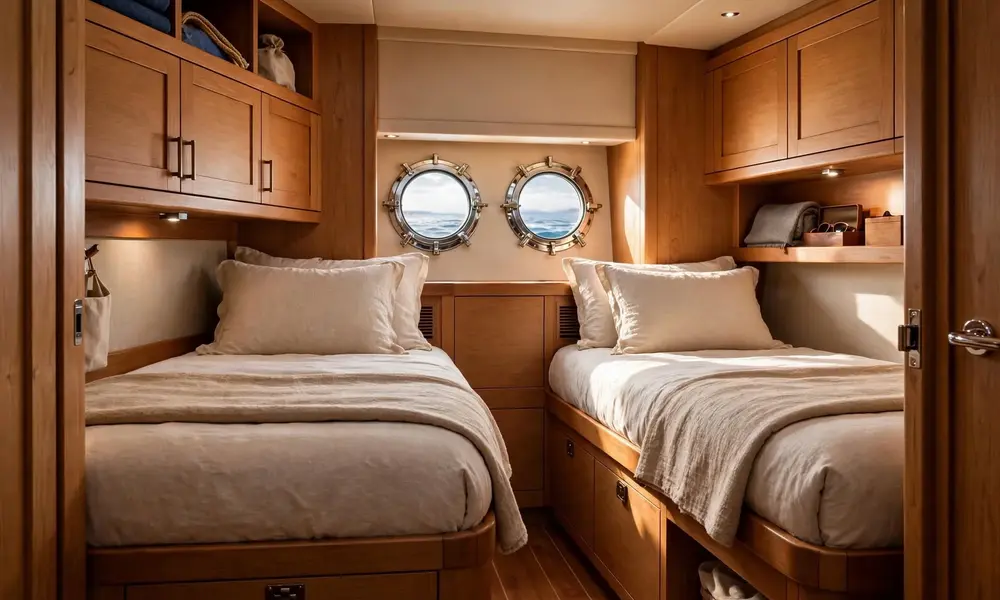
Depending on the design, a yacht of this size may accommodate six to ten guests or more.
But don’t assume every cabin shown in a brochure is available for guests.
Some cabins may be dedicated to crew.
That distinction becomes particularly important when comparing yachts for purchase or charter.
Three Exceptional 100 Foot Sailing Yachts Worth Knowing
1. Oyster 100: Luxury Designed Around Ocean Cruising
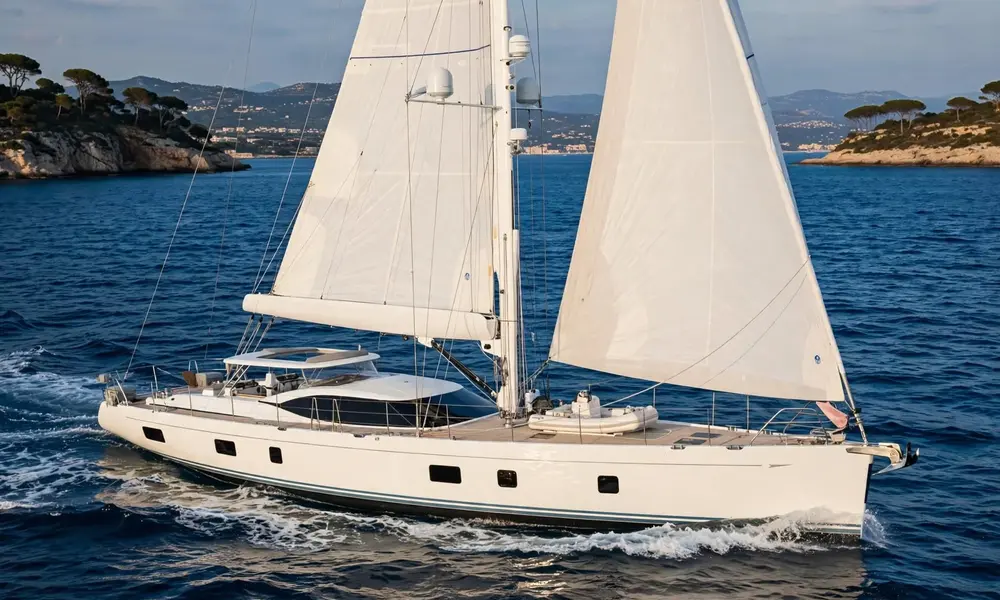
Builder: Oyster Yachts
Naval architecture: Dubois Naval Architects
Length: 30.73 metres
Design emphasis: Bluewater cruising and onboard comfort
There’s something reassuring about a yacht that has been designed around the realities of long-distance sailing.
The Oyster 100 is a wonderful example.
Its hull and accommodation arrangements emphasize substantial internal volume, comfortable cruising, and practical onboard living.
The model features a raised saloon, customizable joinery, and separate crew facilities.
Its displacement is listed at approximately 110 tonnes.
That gives it a very different character from lighter performance-focused yachts.
But heavier doesn’t automatically mean better or worse.
Displacement influences sailing behavior alongside hull shape, stability, sail plan, and other design factors.
What makes it luxurious?
The emphasis on extended living aboard, comfortable accommodation, and the separation of guest and crew areas.
This is a yacht for someone who wants the journey itself to be part of the holiday.
2. Southern Wind SW100 RS: The Beauty of Performance Sailing
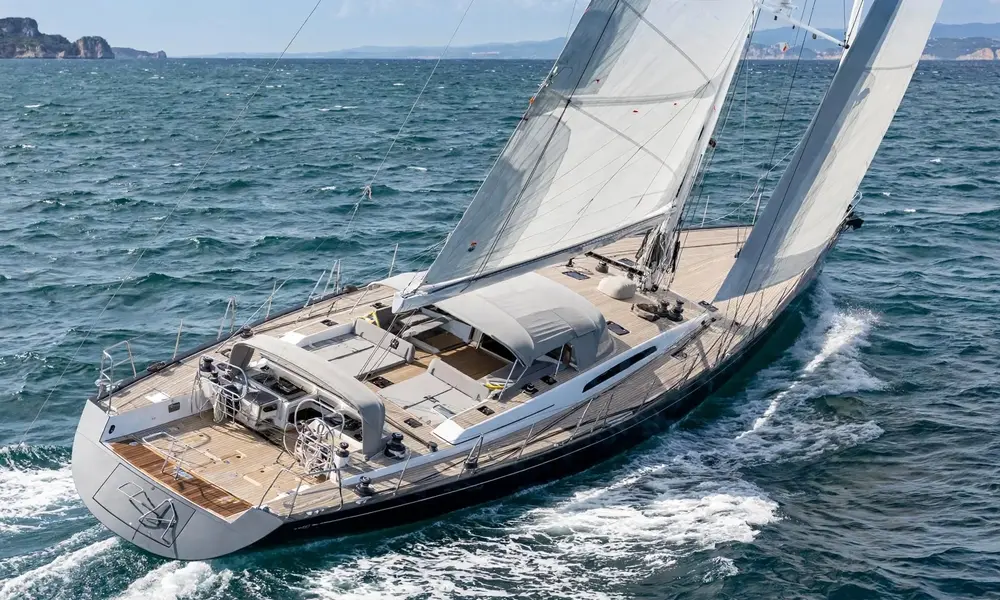
Builder: Southern Wind
Length: Approximately 30.20 metres
Design: Farr Yacht Design and Nauta Design
Design emphasis: Performance cruising
Imagine owning a yacht that can provide a beautiful Mediterranean holiday and still feel exciting when the sails fill in fresh wind.
That’s the appeal of Southern Wind.
The SW100 RS series combines advanced composite construction, a performance-focused hull, and refined interiors.
The 2011 yacht Freebird, for example, has a reported displacement of 62.5 tonnes.
That’s a substantial contrast with the Oyster 100’s published displacement, although the figures should not be compared as identical loading conditions without further technical information.
Freebird also features a practical aft swimming platform and accommodation designed for up to eight guests.
What makes it luxurious?
The combination of sailing enjoyment, elegant accommodation, and a design intended to reward the owner who actually loves being at sea.
For experienced sailors, that can be far more compelling than simply adding another entertainment room.
3. Nautor Swan 100: Scandinavian Craftsmanship and Serious Sailing
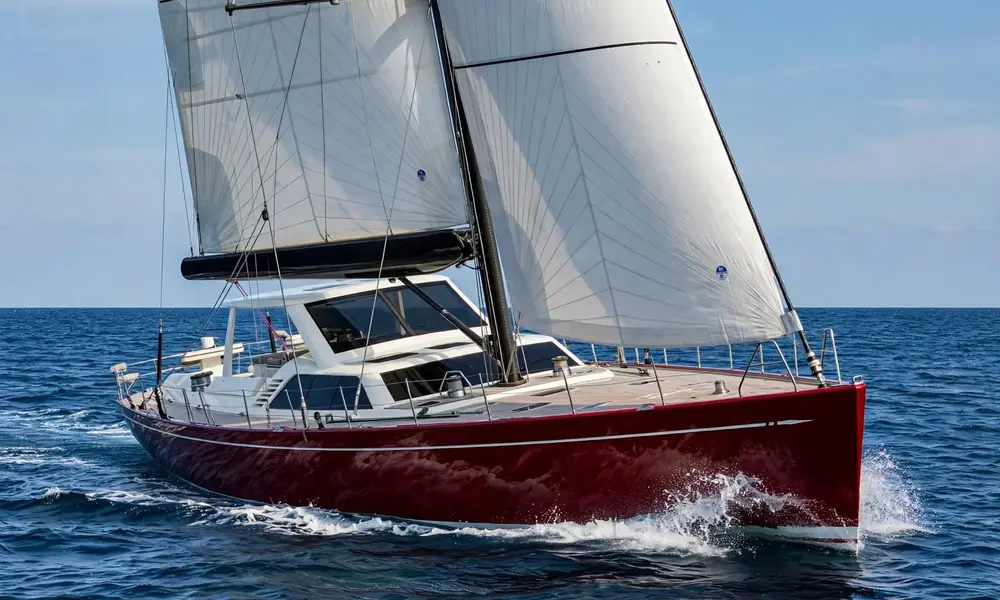
Builder: Nautor Swan
Naval architecture: Germán Frers
Design emphasis: Bluewater performance and refined onboard living
Few names carry the same reputation among serious luxury sailing enthusiasts as Nautor Swan.
The Finnish shipyard has developed a recognizable identity through sophisticated construction, thoughtful design, and a strong connection to offshore sailing.
Its earlier Swan 100 series includes the yacht RED SKY, launched in 2003.
The vessel features a carbon mast, advanced sail-handling systems, and elegant interiors finished with carefully selected materials.
Its hydraulic controls allow many sailing functions to be managed efficiently from the helm.
That doesn’t eliminate the need for qualified crew.
But it demonstrates how engineering can make a very large sailing yacht more manageable.
What makes it luxurious?
The balance between elegant surroundings and genuine sailing capability.
A Swan is particularly appealing to someone who appreciates how the yacht performs as much as how it looks.
How Much Does a 100 Foot Sailing Yacht Cost?
Here’s where the financial side becomes interesting.
A 100-foot sailing yacht can cost several million dollars, with the actual price depending on builder, age, condition, specifications, refit history, and current market demand.
As of November 2026, the following examples appeared in brokerage research.
| Yacht | Year | Advertised price |
| Nautor Swan RED SKY | 2003 | $4,495,000 |
| Southern Wind INTO THE SUNSET | 2009 | €4,950,000 |
| Oyster MARITIMO 100 | 2012 | €5,500,000 |
These are asking prices rather than confirmed sale values. Availability and prices must be reconfirmed with the brokers.
And notice something important.
The asking price tells you remarkably little about the yacht’s future expenses.
One vessel might require substantial rigging work.
Another could have recently completed a major refit.
A third may have a different tax status or equipment inventory.
The real cost is determined by far more than the initial transaction.
For a deeper understanding of those differences, explore our guide to superyacht valuation and the economics of ownership.
What Is the Biggest Difference Between a 100 Foot Sailing Yacht and a Motor Yacht?
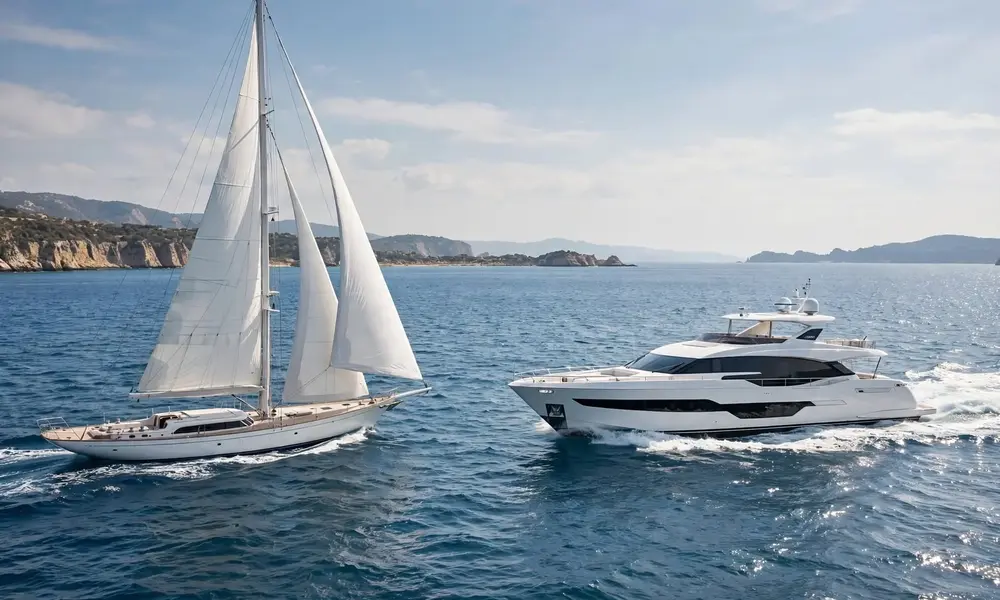
A motor yacht is primarily designed around engine-powered travel.
A sailing yacht uses wind propulsion when conditions allow.
But the difference extends far beyond fuel consumption.
It changes the architecture and the experience.
A motor yacht may provide more consistent interior floor arrangements and generous upper-deck spaces.
A sailing yacht must accommodate the mast, rigging, keel, winches, sail-handling equipment, and the structural loads associated with sailing.
These systems influence everything from deck layout to cabin arrangements.
And they can create extraordinary beauty.
Watching a large sailing yacht move under canvas has a romance that is difficult to reproduce.
But that romance comes with practical responsibilities.
Sails need maintenance.
Rigging requires inspection.
The crew must understand the yacht’s handling characteristics.
And the owner’s preferred itinerary needs to account for weather and sailing conditions.
Neither type is universally better.
They simply offer different kinds of freedom.
The Most Overlooked Luxury: A Sailing Yacht You Can Actually Enjoy Sailing
Here’s something worth considering before purchasing.
Some very large sailing yachts are beautiful at anchor but complicated to operate.
A yacht with an enormous sail plan may require substantial coordination, experienced crew, and specialized equipment.
That can be perfectly appropriate.
But it should match the owner’s expectations.
Modern hydraulic winches, furling arrangements, and carefully designed deck layouts can make sail handling more efficient.
However, automation doesn’t eliminate the physical forces involved.
A 100-foot sailing yacht remains a serious vessel.
For an owner who enjoys participating in the sailing process, the best arrangement might be one that allows meaningful involvement without unnecessary complexity.
And that leads to the most important question.
Do you want to own a sailing yacht, or do you want to experience the pleasure of sailing?
Those aren’t necessarily the same thing.
The Pravi Celer Two-Lives Test: Is This the Right Sailing Yacht?
A luxurious sailing yacht needs to perform in two completely different situations.
The first is when guests are relaxing.
The second is when the vessel is actively sailing.
For Pravi Celer, I’ve developed the Two-Lives Test, an editorial method for evaluating that balance.
Life One: At Anchor
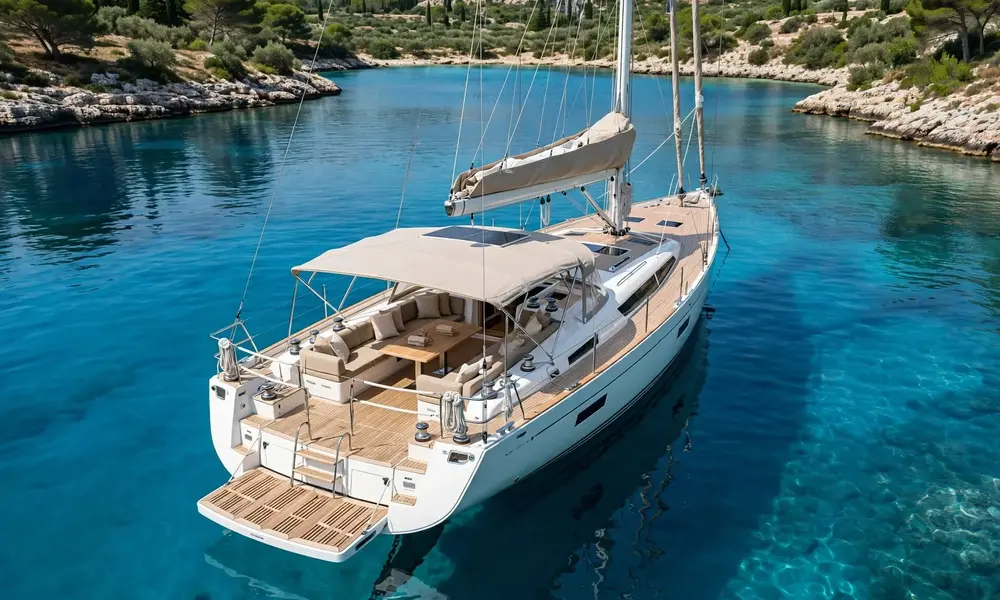
Imagine spending a peaceful afternoon aboard.
Is the cockpit comfortable?
Can guests enjoy shade?
Is boarding from a tender straightforward?
Do the cabins feel private?
Can the crew prepare meals without constantly interrupting guests?
Life Two: Under Sail
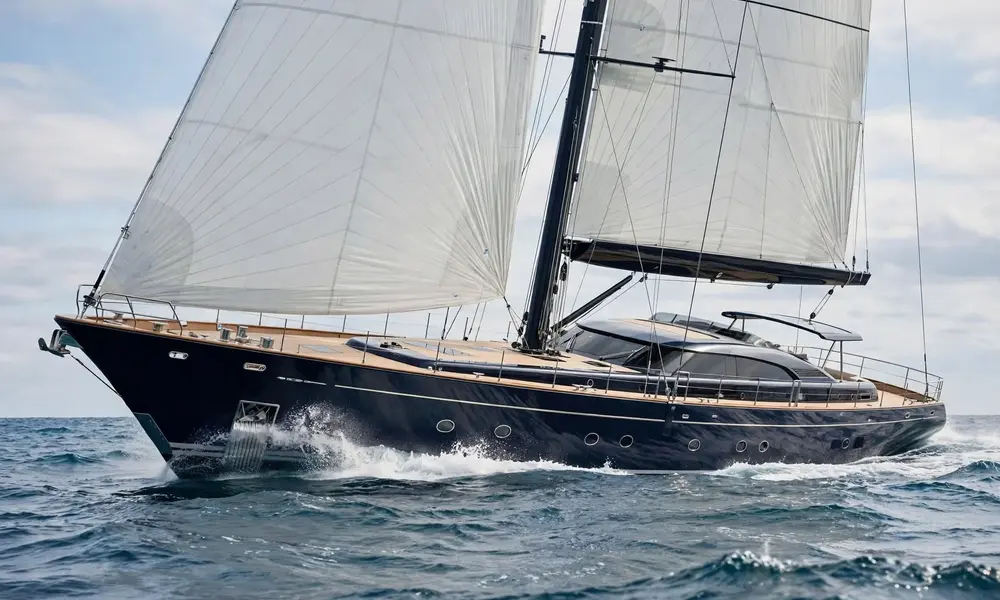
Now imagine the yacht sailing in a fresh breeze.
Can guests move safely?
Are seating positions comfortable when the yacht heels?
Are there secure handholds?
Can the crew reach the winches and sail-control equipment efficiently?
Does the layout keep guests away from hazardous working areas?
The important insight: A yacht that performs beautifully at anchor may not offer the same quality of experience underway.
And the reverse can also be true.
The finest luxury sailing yacht balances both.
This framework is an original Pravi Celer editorial approach, not a replacement for a professional sailing assessment or marine survey.
The Detail Buyers Forget: Can Your Yacht Actually Enter the Marina?
Here’s a practical problem that beautiful interior photographs won’t reveal.
A 100-foot sailing yacht may have a draft of approximately four metres or more.
Draft is the vertical distance from the waterline to the lowest part of the yacht’s underwater structure, usually its keel.
The Oyster 100, for example, has a published draft of 4.10 metres.
Now imagine an intended marina berth with a charted depth of 4.50 metres.
On a simple static calculation, the difference is just 0.40 metres.
That does not establish adequate clearance.
Water level variations, chart datum, waves, vessel loading, seabed conditions, and other factors must be considered.
The yacht may also have a very tall mast, creating restrictions beneath bridges and overhead structures.
This is why berth availability and cruising grounds should influence your yacht search before you fall in love with a particular design.
A beautiful yacht isn’t especially useful if it cannot safely reach the places you want to visit.
How Much Does It Cost to Maintain a 100 Foot Sailing Yacht?
Even when the sails provide propulsion, ownership remains expensive.
The main recurring expenses usually include professional crew, insurance, marina berths, technical maintenance, sails and rigging, engines, electrical systems, and periodic surveys.
Sailing yachts introduce additional maintenance responsibilities that motor-yacht owners may not encounter.
The mast and rigging require careful inspection.
Hydraulic sail-control equipment needs servicing.
Sailcloth wears over time.
And the keel and steering systems deserve particular attention.
Technical consultancy Foreland Marine emphasizes the importance of annual rig inspections and specialist assessment of standing rigging, terminals, mast structures, and associated equipment.
A well-maintained 100-foot sailing yacht can deliver extraordinary experiences.
But it should never be treated as a large recreational boat that needs only occasional attention.
For more on the relationship between onboard technology and safety, read our feature on superyacht engineering.
How to Find the Right 100 Foot Sailing Yacht for Sale
Begin with your intended lifestyle rather than a favorite brand.
If long-distance cruising is your priority, examine storage, tank capacities, machinery access, seaworthiness, and crew arrangements.
If performance matters, investigate displacement, rig design, sail area, keel configuration, and handling systems.
If entertaining is central to the plan, prioritize the cockpit, salon, guest accommodation, and practical service spaces.
Then arrange independent technical inspections.
A competent pre-purchase survey should evaluate the hull, keel, rudders, machinery, electrical equipment, and other relevant systems.
For sailing yachts, commission specialized rig inspections rather than assuming a visual assessment from deck level is sufficient.
Review sail condition, maintenance records, and refit history.
And arrange an appropriate sea trial.
For a vessel in this category, professional maritime legal advice is also important for title, registration, taxes, and any commercial-use considerations.
The result should be an informed purchase—not simply an emotional response to an extraordinary photograph.
Five Questions About 100 Foot Sailing Yachts
Can one person sail a 100-foot yacht?
Some systems can be operated from centralized controls, but a yacht this large ordinarily requires skilled crew for safe routine operations, passages, and emergencies. Automation should not be confused with eliminating crew requirements.
How many people can sleep on a 100-foot sailing yacht?
It varies significantly. The Nautor Swan RED SKY accommodates six guests, while the Oyster 100 model information describes ten berths across five cabins, including accommodation used by crew on the MARITIMO 100 configuration.
Is a 100-foot sailing yacht faster than a motor yacht?
Generally, comparable motor yachts can achieve higher speeds under engine power. Sailing-yacht performance depends heavily on wind, sea conditions, hull design, and sail configuration.
Are 100-foot sailing yachts suitable for ocean crossings?
Many are designed for bluewater cruising, but capability must be evaluated vessel by vessel. Equipment, weather routing, crew experience, maintenance, and safety preparation are essential.
Can you live full-time on a 100-foot sailing yacht?
Yes, provided the vessel is appropriately equipped and operated. Long-term living requires careful consideration of utilities, maintenance, crew, storage, medical access, and legal requirements.
Final Thoughts: A Different Kind of Luxury Awaits Under Sail
There are many ways to experience extraordinary wealth. A beautiful home overlooking the ocean.
A private island. A spectacular motor yacht with every imaginable convenience.
But there’s something rather special about a sailing yacht. It doesn’t simply carry you across the sea.
It allows you to experience the journey differently. You begin to notice the wind. The shape of the sails.
The movement of the water. The changing light across the deck. And the extraordinary skill required to move such an impressive vessel using the forces of nature.
At 100 feet, you can enjoy all of that while surrounded by beautiful interiors, thoughtful service, and the comfort of a genuinely luxurious residence.
But the finest example won’t necessarily be the newest yacht or the one with the most impressive price tag.
It will be the one that makes you enjoy both the destination and every moment spent getting there.
Because the greatest luxury of a 100-foot sailing yacht isn’t simply having the freedom to cross an ocean. It’s discovering how beautiful the crossing itself can be.