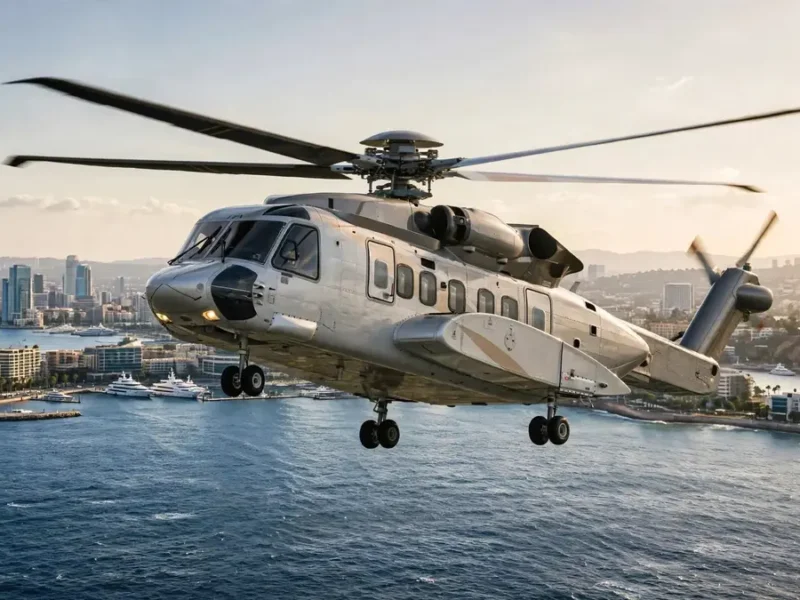
Buying a private jet can cost under $1 million for an older aircraft or more than $80 million for a new flagship business jet. Running it is a separate commitment: published operating models at 450 flight hours a year estimate approximately $1.6 million for a Citation CJ3, $3.5 million for a Challenger 3500, and $4.7 million for a Gulfstream G700, before accounting for the purchase and wider costs of capital.
The cabin makes ownership look effortless. Behind each departure sits a working operation: pilots, maintenance planning, hangar space, insurance, fuel, and money reserved for the next major inspection.
To understand the real cost, separate three questions: What does the aircraft cost to buy? What does it cost to operate? And what will ownership cost over the years you keep it?
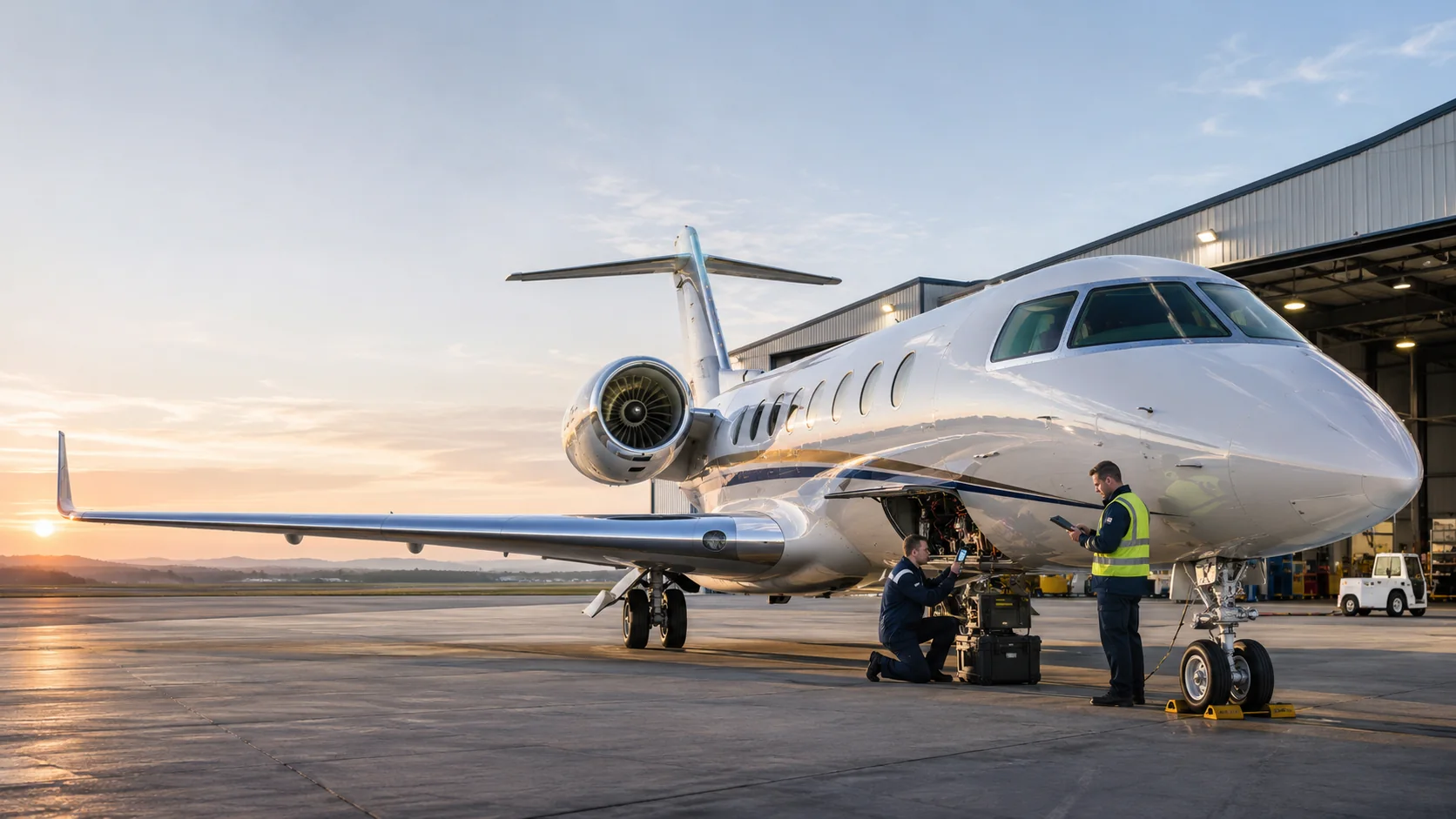
How Much Does a Private Jet Cost to Buy?
| Aircraft | Published purchase reference | Price basis |
| Cirrus Vision Jet G3 | $3.68 million | Price reported by AOPA in February 2026 |
| Bombardier Challenger 3500 | $29.5 million | BCA 2026 equipped price |
| Cessna Citation Longitude | Approximately $30 million | BCA 2026 equipped price |
| Dassault Falcon 2000LXS | $38.3 million | BCA 2026 equipped price |
| Gulfstream G800 | $80.4 million | BCA 2026 equipped price |
| Gulfstream G700 | $84.9 million | BCA 2026 equipped price |
These are published reference prices, rather than guaranteed quotations. Equipment, cabin specifications, contractual adjustments, and delivery terms affect the final agreement. AOPA
How Much Cheaper Is a Used Private Jet?
Preowned aircraft can bring the purchase price down considerably, but age alone does not reveal whether a jet offers good value.
Duncan Aviation’s October 2026 market summary includes the following Vref value ranges across different production years:
| Preowned model | Published reference range |
| Learjet 31A | Approximately 668,000–1.02 million |
| Cessna Citation CJ3 | Approximately 3.44–5.52 million |
| Embraer Phenom 300/300E | Approximately 5.68–13.86 million |
These are valuation references spanning aircraft of different ages and specifications—not confirmed selling prices for individual jets.
A low acquisition price also leaves important questions unanswered. What maintenance is approaching? Are the records complete? Will the aircraft need avionics work? Can its engines and components be supported economically?
Before comparing cabins, compare the maintenance forecasts.
For buyers whose travel is mainly regional, our guide to the best light jets for short-haul luxury travel offers a useful starting point.
How Much Does It Cost to Run a Private Jet Each Year?
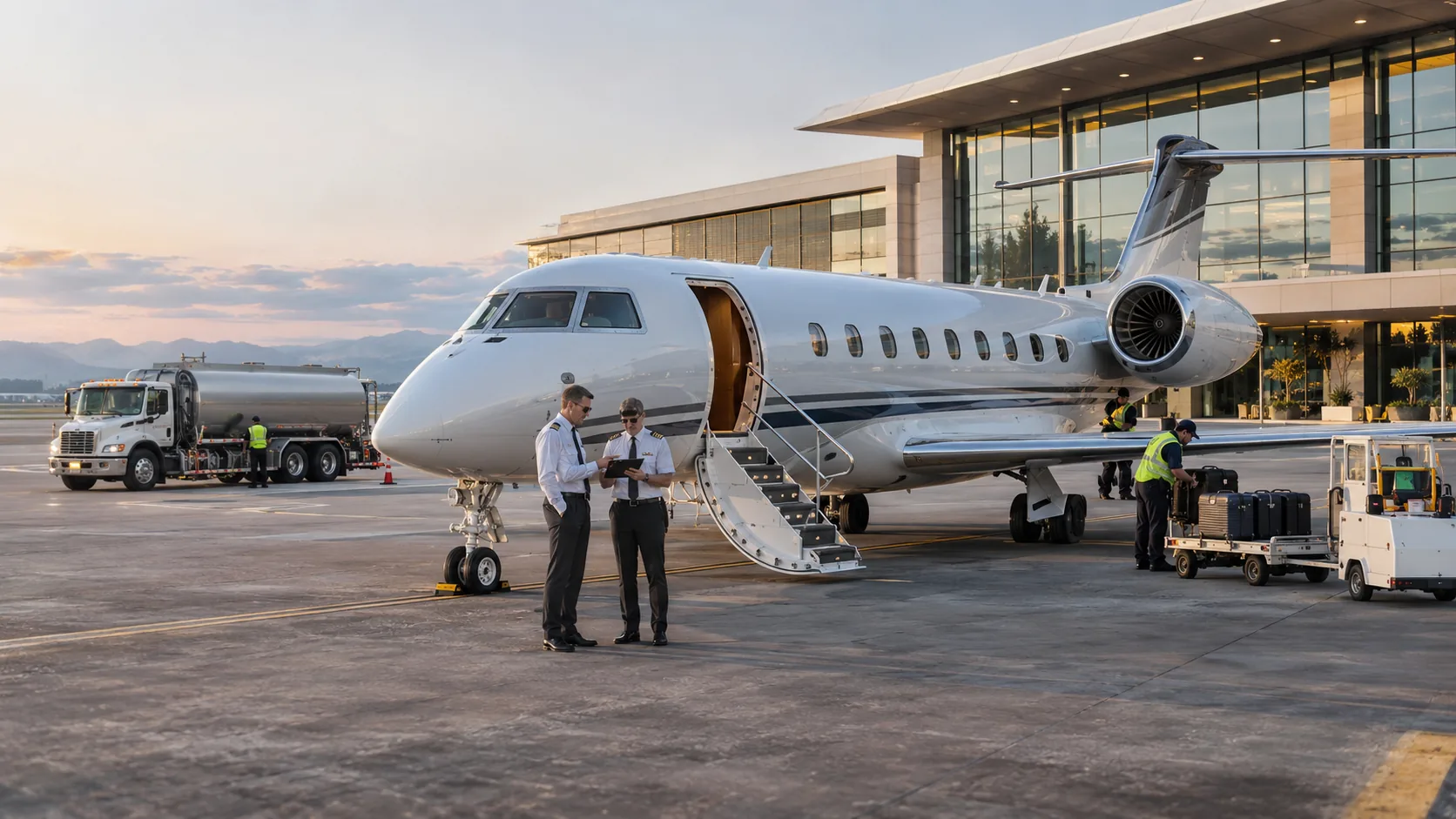
Annual operating costs depend heavily on the aircraft, annual flight hours, staffing, home airport, and maintenance requirements.
The table below shows rounded published estimates from Aircraft Cost Calculator, using its 450-hour annual operating scenario.
| Aircraft | Annual fixed costs | Annual variable costs | Annual operating budget |
| Citation CJ3 | $518,000 | $1.12 million | $1.64 million |
| Challenger 3500 | $885,000 | $2.61 million | $3.50 million |
| Gulfstream G700 | $1.25 million | $3.42 million | $4.66 million |
These are planning models, not operator quotations. The source pages display fuel assumptions of $9 per gallon in their pricing paragraphs and $9.25 elsewhere, so the rounded totals should be treated as indicative. They are not complete ownership totals including acquisition, depreciation, financing, and every possible exceptional expense.
The distinction between fixed and variable expenses matters. Reducing your flying lowers fuel consumption, but it does not remove the cost of keeping the aircraft ready.
Fixed Costs: What You Pay to Keep the Jet Available
Typical fixed expenses include:
- Crew salaries, benefits, and recurrent training.
- Hangar space.
- Insurance.
- Management and administrative support.
- Navigation databases, subscriptions, and maintenance tracking.
Their treatment varies between budgets. Ask which services are included before comparing estimates.
Variable Costs: What Increases With Flying
Variable expenses commonly include fuel, maintenance allowances, engine program payments, and flight-related charges.
Actual trips can also add handling fees, landing charges, deicing, catering, crew accommodation, and international support.
A further distinction matters: your passenger hours may be lower than the aircraft’s total flight hours. Repositioning, maintenance flights, and crew training can add activity without adding another journey for the owner.
How Much Does Private Jet Maintenance Cost?
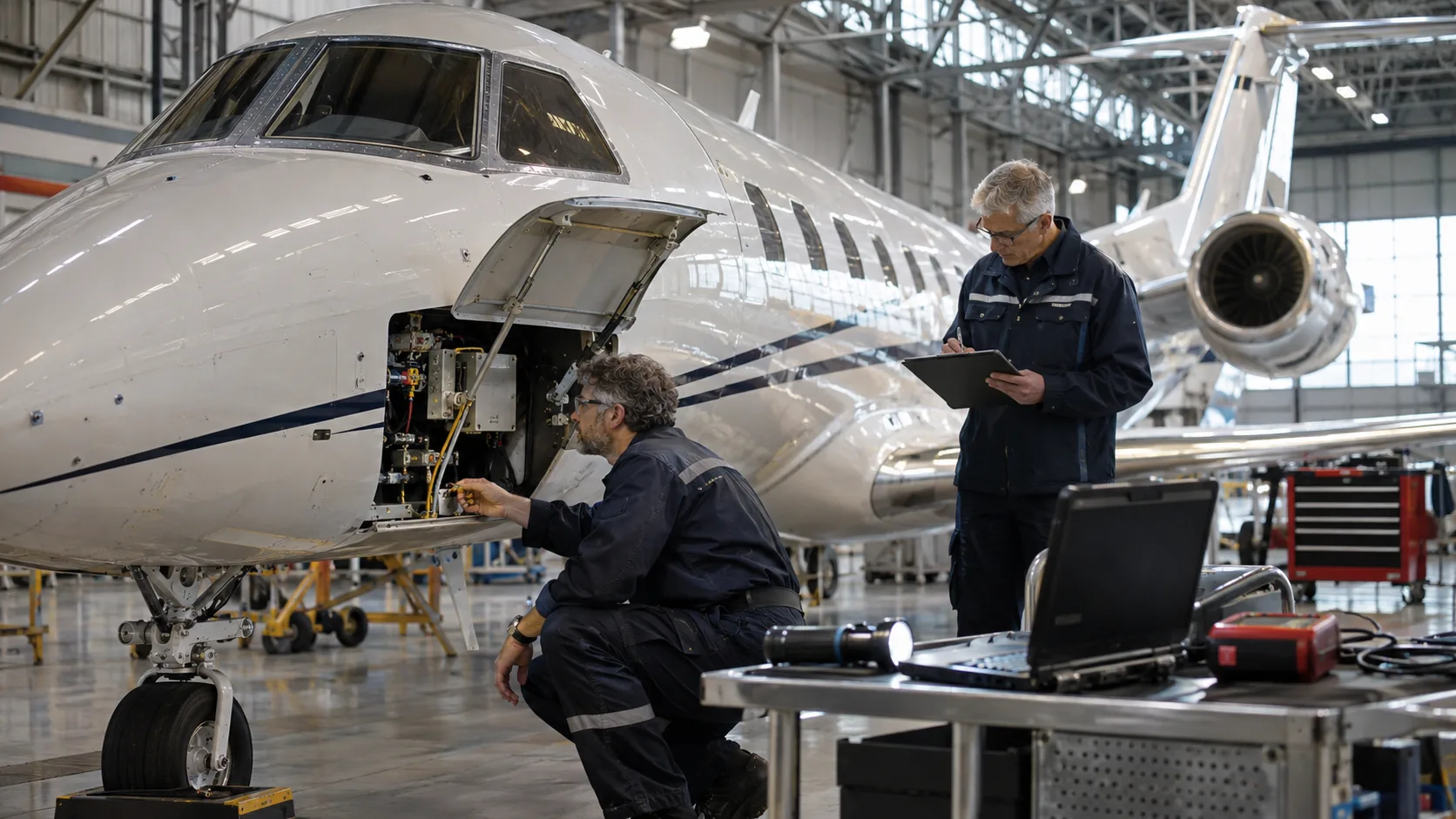
Maintenance can represent hundreds of thousands of dollars a year, with substantially higher allowances for larger aircraft. However, a useful maintenance figure must explain whether it covers routine work, engine programs, major inspections, or all three.
Guardian Jet’s published model budgets illustrate the difference:
| Aircraft | Maintenance allowance per flight hour* | Engine program per flight hour | Combined allowance at 300 hours |
| Phenom 300/300E | Approximately $861 | Approximately $705 | $470,000 |
| Gulfstream G650ER | Approximately $2,700 | Approximately $2,725 | $1.63 million |
The source labels maintenance as a five-year average. These are model estimates, not guaranteed annual invoices or quotations for a particular aircraft. The combined figures are calculated from the published hourly allowances.
These maintenance figures belong to a separate set of models from the annual operating table above. They should not be added to those operating totals.
Routine Maintenance and Major Inspections Are Different Expenses
Routine servicing is only part of the picture. Aircraft maintenance planning also involves larger scheduled inspections, component work, and unexpected defects.
Some requirements depend on flight hours or operating cycles; others arrive with the calendar. Flying less does not necessarily postpone every maintenance obligation. Duncan Aviation specifically identifies calendar-driven inspections as a significant budgeting consideration for buyers.
This makes the aircraft’s upcoming maintenance schedule more useful than a generic claim about what “a private jet” costs to maintain.
What Do Hourly Engine Programs Cover?
An engine maintenance program turns specified future maintenance obligations into payments linked to flying hours.
For example, Rolls-Royce describes CorporateCare Enhanced as a fixed-cost-per-flying-hour program. Coverage varies by engine and contract, with eligible powerplants receiving services that extend beyond the engine itself.
Before buying, establish:
- Whether the aircraft is enrolled.
- What the contract covers and excludes.
- Whether payments are current.
- What transfer conditions or additional charges apply.
An hourly allowance in a spreadsheet and an active maintenance contract are different things. Confirm which one the seller’s budget actually assumes.
The Other Expenses Behind Every Departure
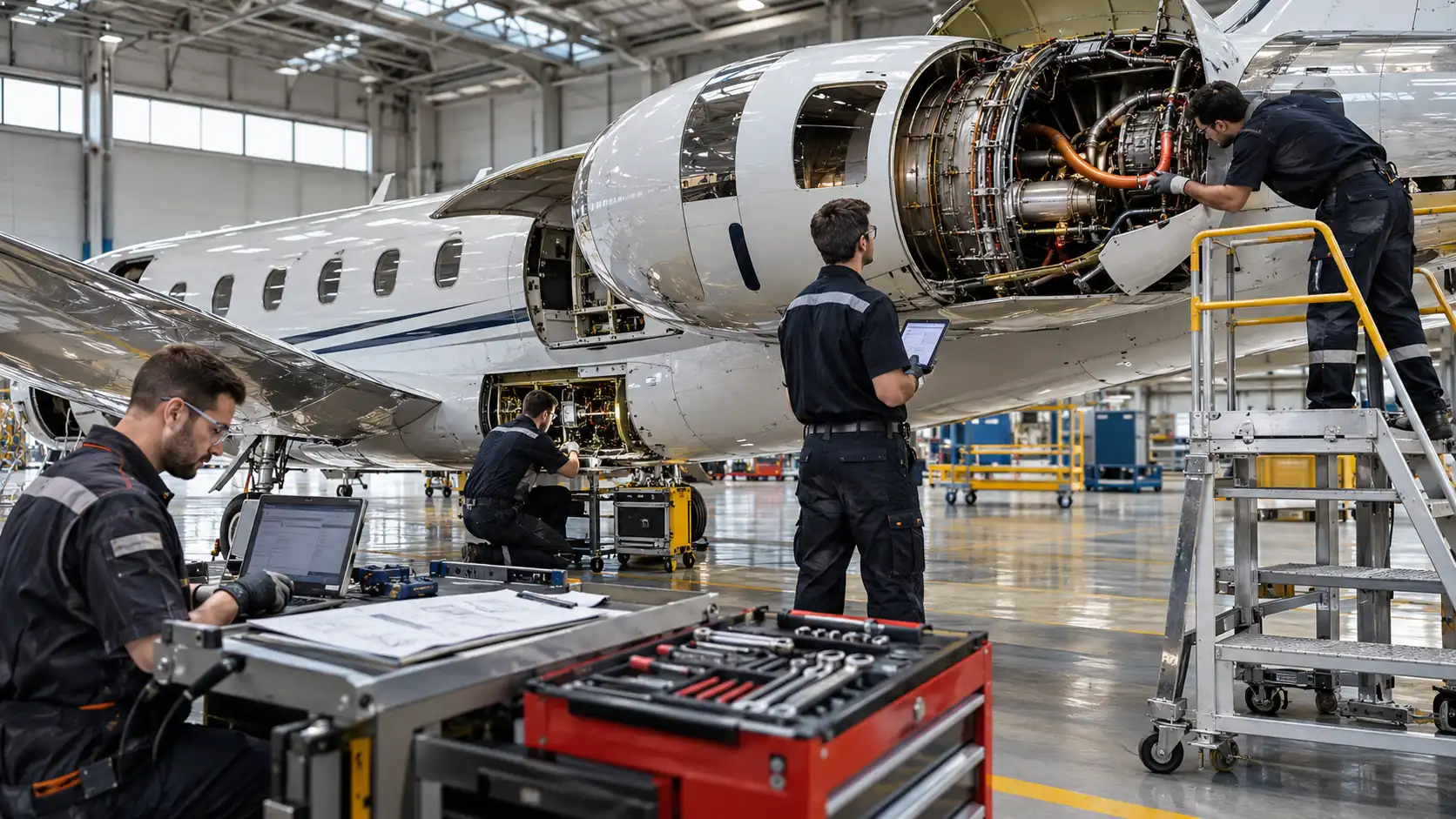
Maintenance gets much of the attention, but several other costs shape the annual budget.
| Expense | What changes the bill |
| Fuel | Aircraft consumption, airport pricing, flight length, and repositioning |
| Crew | Staffing levels, qualifications, training, benefits, and travel |
| Hangar | Aircraft dimensions, airport location, availability, and services |
| Insurance | Aircraft value, pilot experience, coverage, and operations |
| Management | Included services, contract structure, and additional fees |
| Trip services | Handling, parking, catering, deicing, and international arrangements |
The right comparison is a written budget for your intended aircraft and routes.
How Much Does Fuel Alone Matter?
Consider a simple illustration, rather than a current market quotation.
At $7 per gallon, an aircraft consuming 200 gallons per hour would spend $1,400 per flight hour on fuel.
At 300 annual flight hours:
- Annual fuel spending would be $420,000.
- A $1-per-gallon increase would add $60,000 per year.
This explains why an operating estimate without a fuel assumption is difficult to assess. It also explains why an hourly operating cost should never be mistaken for a fuel-only figure.
What Does the Purchase Price Leave Out?
The agreed aircraft price is only one part of the acquisition budget.
Before closing, obtain separate estimates for:
- An independent pre-purchase evaluation: technical condition, records, and upcoming maintenance.
- Transaction support: title checks, escrow, legal work, and acquisition assistance.
- Applicable taxes and registration: determined by the transaction and relevant jurisdictions.
- Delivery and entry into service: aircraft positioning, crew preparation, and operational setup.
- Immediate work: agreed repairs, equipment changes, or cabin improvements.
Duncan Aviation’s buyer guidance highlights the importance of records, pre-purchase evaluations, title verification, and potential avionics requirements.
Request these estimates before committing to the aircraft. They can change the amount of cash needed to put it into service.
Depreciation: The Ownership Cost You Do Not See on a Fuel Invoice

An annual operating budget explains what it takes to run the jet. It does not tell you how much value the aircraft might lose while you own it.
Consider this hypothetical five-year example:
| Item | Amount |
| Aircraft purchase | $10 million |
| Operating expenses: $1.5 million × 5 years | $7.5 million |
| Assumed resale proceeds after five years | −$7 million |
| Five-year cost after resale | $10.5 million |
That equals $2.1 million per year, before financing, taxes, transaction costs, upgrades, and the opportunity cost of the invested money.
The resale figure is an assumption—not a prediction. Its purpose is to show why operating expenses alone cannot describe the full cost of ownership.
For a financed purchase, also distinguish loan payments from economic expenses. Principal repayments affect cash flow; depreciation measures a change in asset value. A sound model keeps those calculations clear.
Is Owning a Private Jet Cheaper Than Chartering?
There is no universal flight-hour threshold at which ownership becomes cheaper. The answer changes with the aircraft, routes, charter quotations, repositioning needs, and the costs included in the comparison.
A simplified example shows why.
Assume:
- Annual fixed ownership expenses: $750,000.
- Variable ownership expenses: $3,000 per flight hour.
- Comparable charter price: $6,500 per hour.
The operating-only crossover would be:
750,000÷(6,500 − $3,000) = approximately 214 hours.
Now add an assumed $500,000 annual capital cost for depreciation and financing or opportunity cost:
$1,250,000 ÷ $3,500 = approximately 357 hours.
The same hypothetical aircraft now produces a very different answer.
Even this calculation leaves out differences in charter billing, aircraft availability, maintenance downtime, and trip patterns. Compare complete annual travel plans using equivalent assumptions.
Our guide to owning, chartering, or choosing a jet card explains the practical differences. Buyers considering shared ownership can also explore our NetJets versus Flexjet comparison.
How to Build a Realistic Private Jet Budget
Start with the travel you regularly make: passenger numbers, luggage, typical distance, airport access, and scheduling requirements.
Then request three documents for each shortlisted aircraft:
1. An Acquisition Budget
Include the purchase, transaction expenses, applicable taxes, delivery, and work needed before service.
2. A Five-Year Operating Forecast
Separate fixed expenses, flight-related costs, maintenance programs, scheduled inspections, and contingency funds.
Ask the provider to state annual hours, fuel prices, crew arrangements, and exclusions.
3. An Ownership and Exit Model
Estimate financing or capital costs, potential depreciation, selling expenses, and realistic resale scenarios.
This turns an attractive purchase price into a decision you can evaluate.
FAQs About Private Jet Ownership Costs
Can You Buy a Private Jet for Under $1 Million?
Yes. Published 2026 valuation references include older aircraft such as the Learjet 31A below $1 million. However, acquisition price does not establish affordability: condition, records, upcoming work, and operating requirements still need assessment.
How Much Does a Private Jet Cost Per Month?
Using the annual operating models above, the monthly equivalents are approximately $137,000 for a Citation CJ3, $291,000 for a Challenger 3500, and $389,000 for a G700 at 450 annual hours. These are annual averages; actual monthly spending fluctuates. Acquisition and wider capital costs are additional.
Is Maintenance Included in Private Jet Operating Costs?
It may be. Many operating models include maintenance allowances and engine program payments, but their scope differs. Check whether major inspections, unexpected repairs, and program exclusions are covered before adding a separate maintenance figure.
Does Flying Less Significantly Reduce Ownership Costs?
It reduces some expenses, especially fuel and hour-based charges. However, hangar commitments, staffing arrangements, insurance, and calendar-driven maintenance can continue even when the aircraft spends more time on the ground.
Is a Used Private Jet Always Better Value Than a New One?
No. A used jet may require less money upfront, but its maintenance schedule, technical condition, support availability, and eventual resale value determine the wider financial picture. Compare individual aircraft rather than assuming a standard discount guarantees better value.
What Should You Budget Before Buying?
The clearest answer is a combination of purchase price, annual operating costs, upcoming maintenance, and the expected cost of holding the aircraft.
A smaller purchase cheque can be followed by expensive inspections. A newer aircraft can offer more predictable early maintenance while tying up considerably more capital.
Choose the aircraft that fits your regular journeys, then price the complete ownership plan. The budget should be as carefully considered as the cabin.
Disclaimer: This article is for informational purposes only. Aircraft prices, operating costs, and maintenance expenses are estimates and may change. Actual costs depend on the aircraft, its condition, location, usage, and ownership arrangements. Consult qualified aviation, financial, and tax professionals before making a purchase.