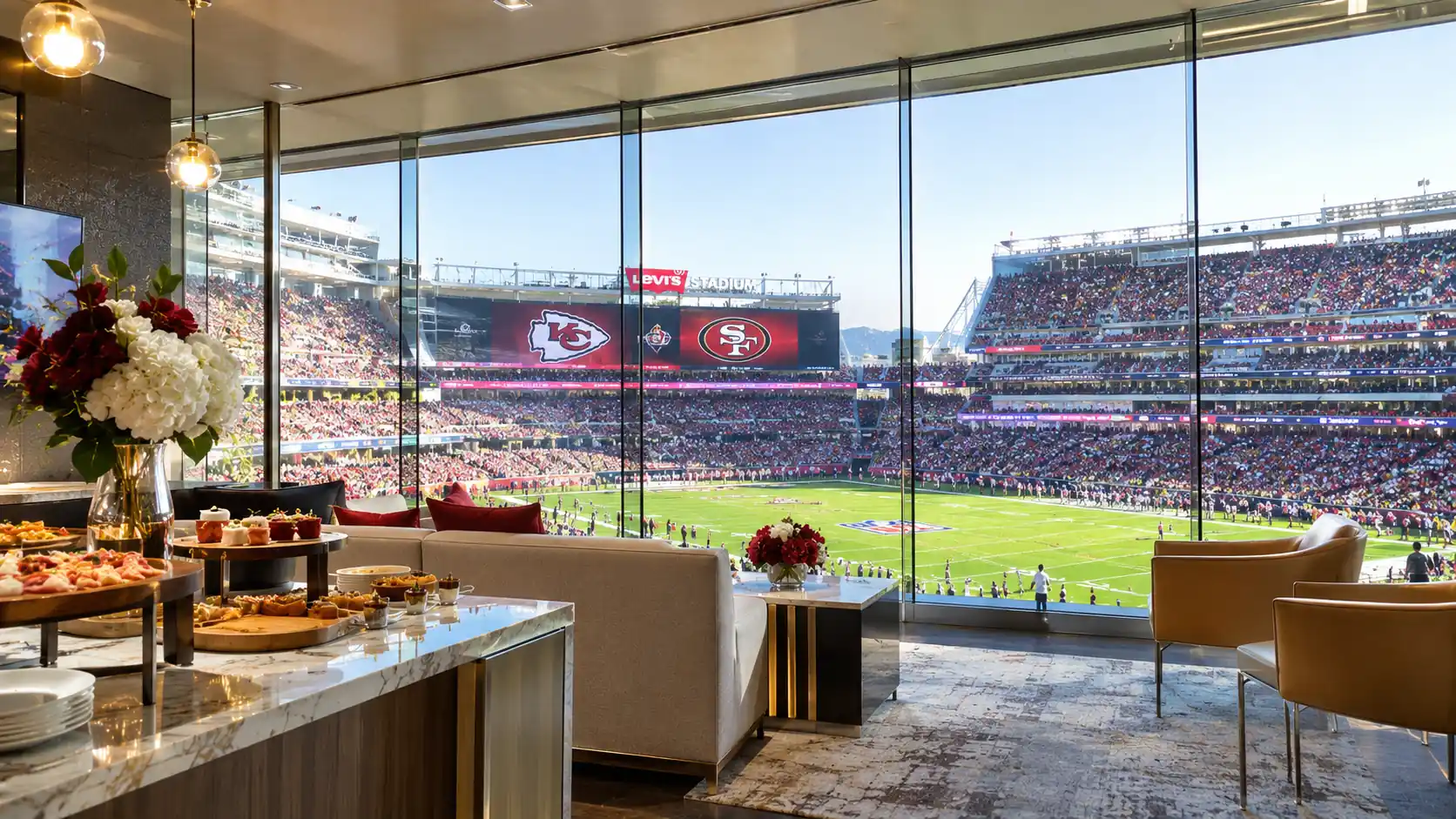
The most expensive ticket in American sports is not a ticket at all. It is a key to a glass-fronted room high above the field, where the Super Bowl unfolds below like a private performance staged for thirty guests. Super Bowl luxury suites have sold for as much as two million dollars for a single evening, a figure that buys a substantial house in most of America and buys, on the NFL’s biggest night, roughly four hours of football.
The suite market has become its own economy, a ritual of corporate America in which the guest list matters more than the game. Here are six tiers and tales from inside the world’s most expensive boxes, and what the money actually buys.
1. The Two-Million-Dollar Record
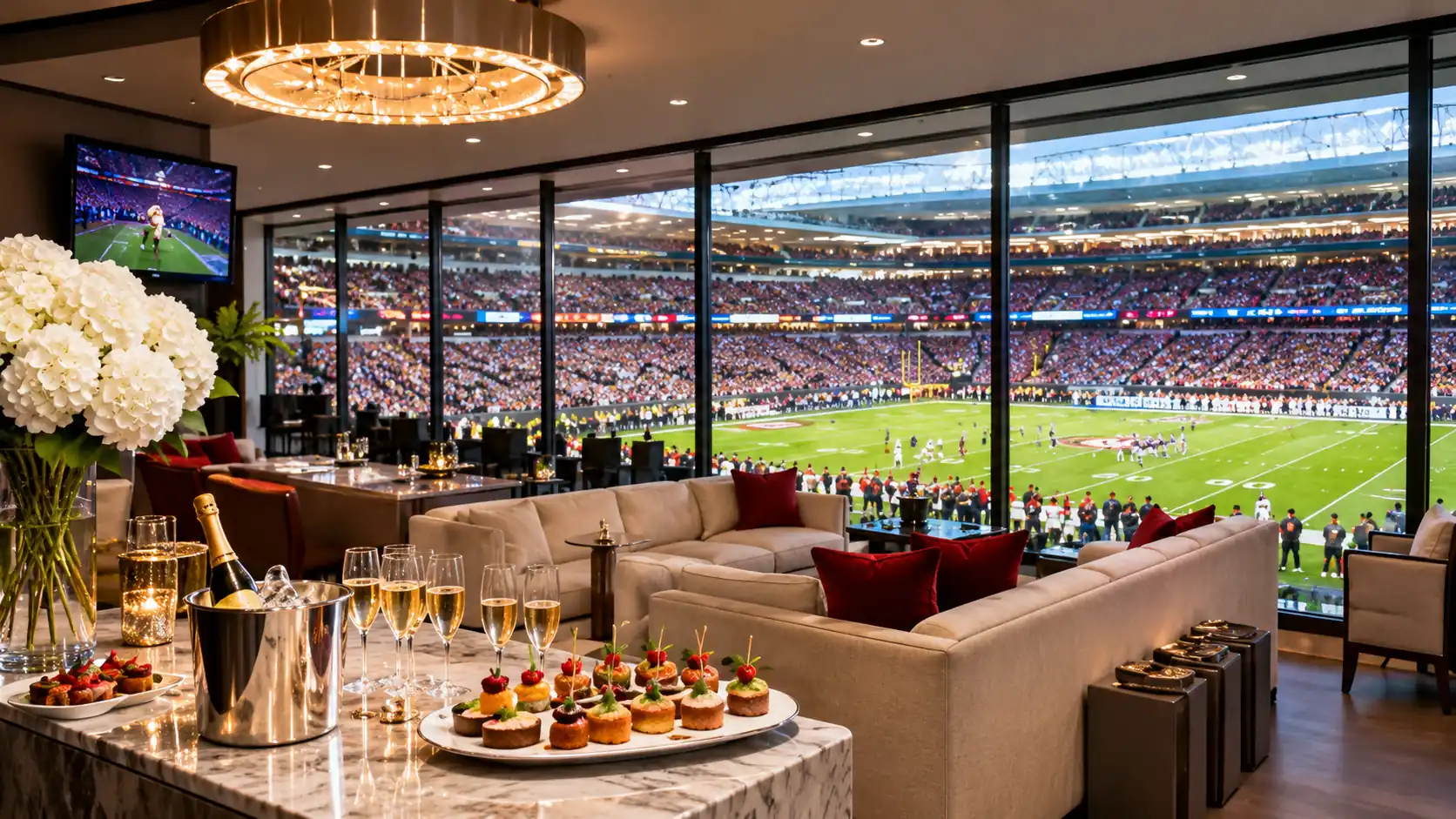
The ceiling of the market was set by the largest suites at recent Super Bowls, where the biggest boxes, accommodating thirty or more guests with premium field views, have commanded prices reported at up to two million dollars through the NFL’s official hospitality channel and the secondary market. The figure includes the room, the catering, and the attendant services, but not the alchemy that truly drives the price: the guest list.
At that altitude, the suite is a business instrument, not a seat. Companies that spend seven figures on a Super Bowl box are purchasing a room in which a year’s worth of relationship-building happens in an evening, with the game providing the excuse. The math, measured in deals rather than touchdowns, is how such numbers are justified to shareholders.
2. The Owner’s Suite Tier
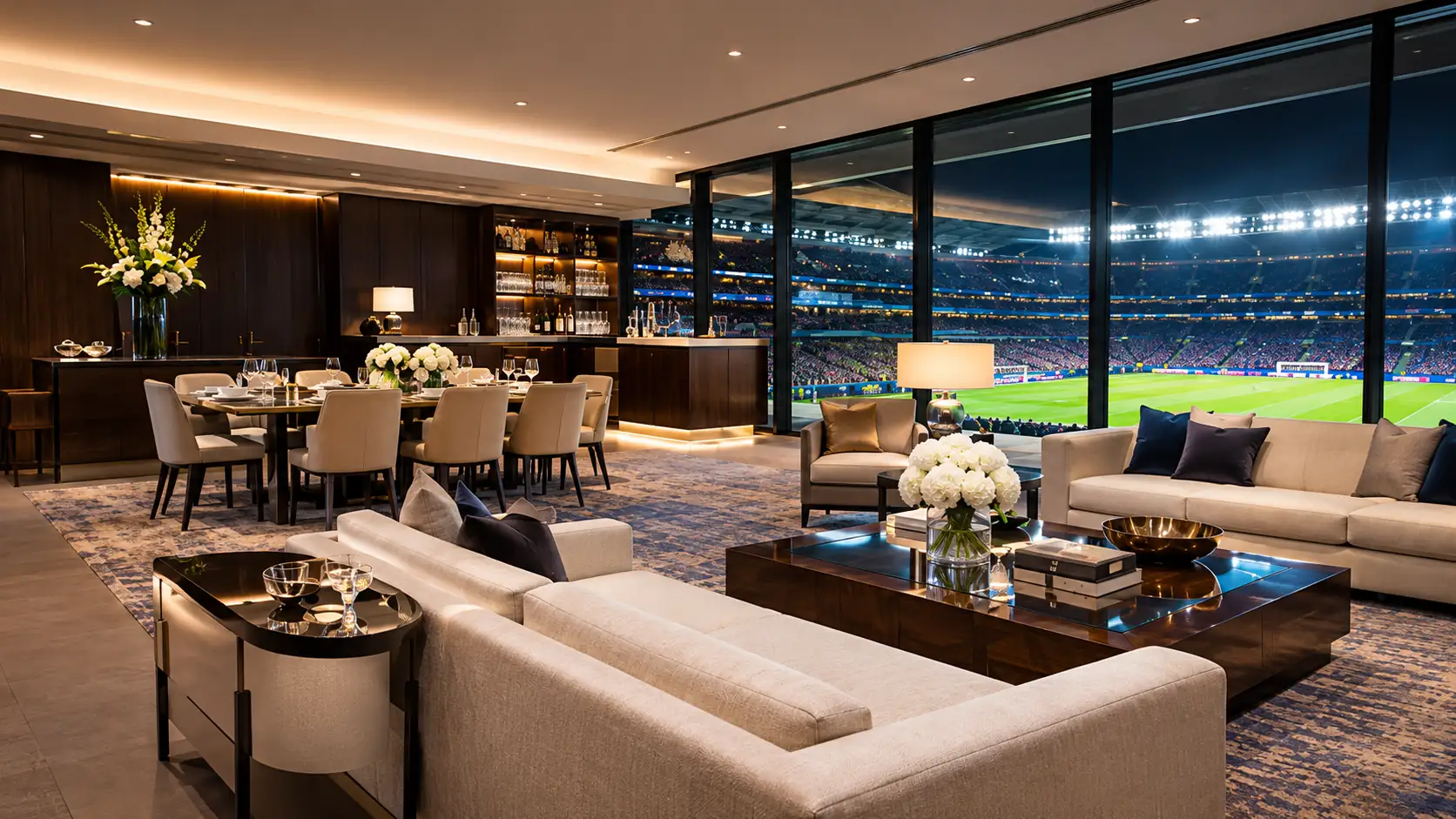
Just below the open market sits a stratum money cannot directly buy: the owners’ suites and the stadiums’ most protected boxes, occupied by franchise owners, league leadership, and the celebrities whose presence is arranged rather than purchased. These rooms set the social template the paid suites imitate: bespoke catering, dedicated sommeliers and chefs, and sightlines engineered for both the field and the television cameras that sweep the boxes throughout the broadcast.
The celebrity suite has become a broadcast subplot in its own right, with camera cuts to the boxes generating the night’s most-shared images. Presence in these rooms functions as a form of currency in entertainment and sport, a visibility that, like the suites themselves, has a price without a price list.
3. The Stadium Club Suites
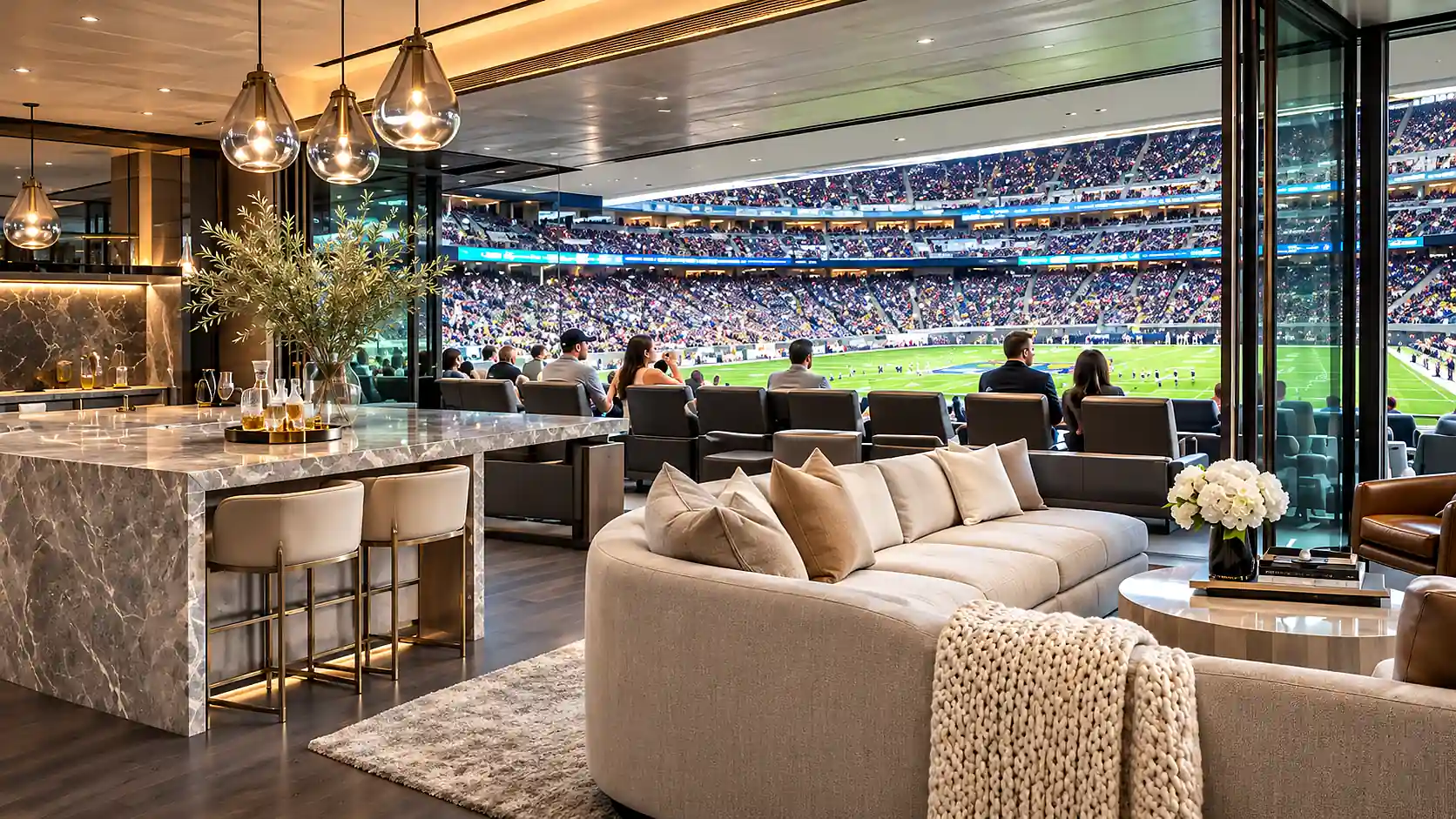
The modern NFL stadium is engineered around premium inventory, and the newest buildings, SoFi Stadium in Los Angeles and Allegiant Stadium in Las Vegas chief among them, were designed with suites as their financial foundation. Their club suites, ranging from roughly five hundred thousand dollars upward for the big game, offer hotel-grade interiors: private restrooms, wet bars, theater seating, and glass that retracts to let the stadium’s roar in.
The design philosophy treats the suite as a hospitality product first and a viewing platform second, reflecting the reality that for many guests, the room’s purpose is hosting. The field is the world’s most expensive wallpaper, and it is magnificent wallpaper.
4. The Field-Level Boxes
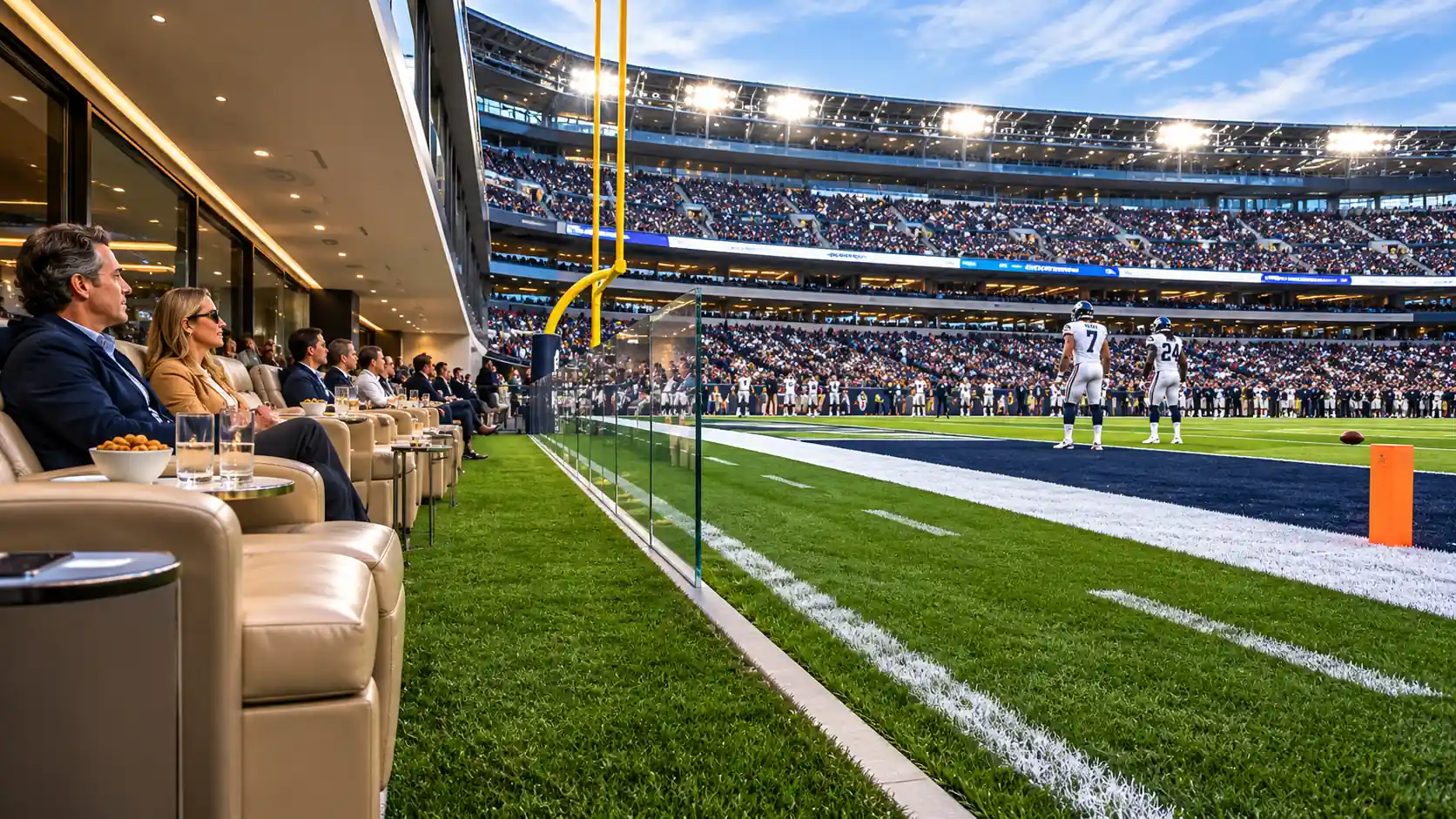
The newest frontier in suite design has moved the luxury down to ground level. Field-level suites and bunker clubs, pioneered in the newest stadiums, place guests at the athletes’ altitude, behind the end zone or along the sideline, where the game’s speed and violence register physically. Players disappear into the tunnel beside you; the grass is close enough to smell.
These rooms trade the panoramic god’s-eye view for proximity, and for a certain guest, a former player, a superfan, a client who wants to feel the collision, they are the superior product. Prices for the big game run deep into six figures, and the waiting lists run longer.
5. The Corporate Season Packages
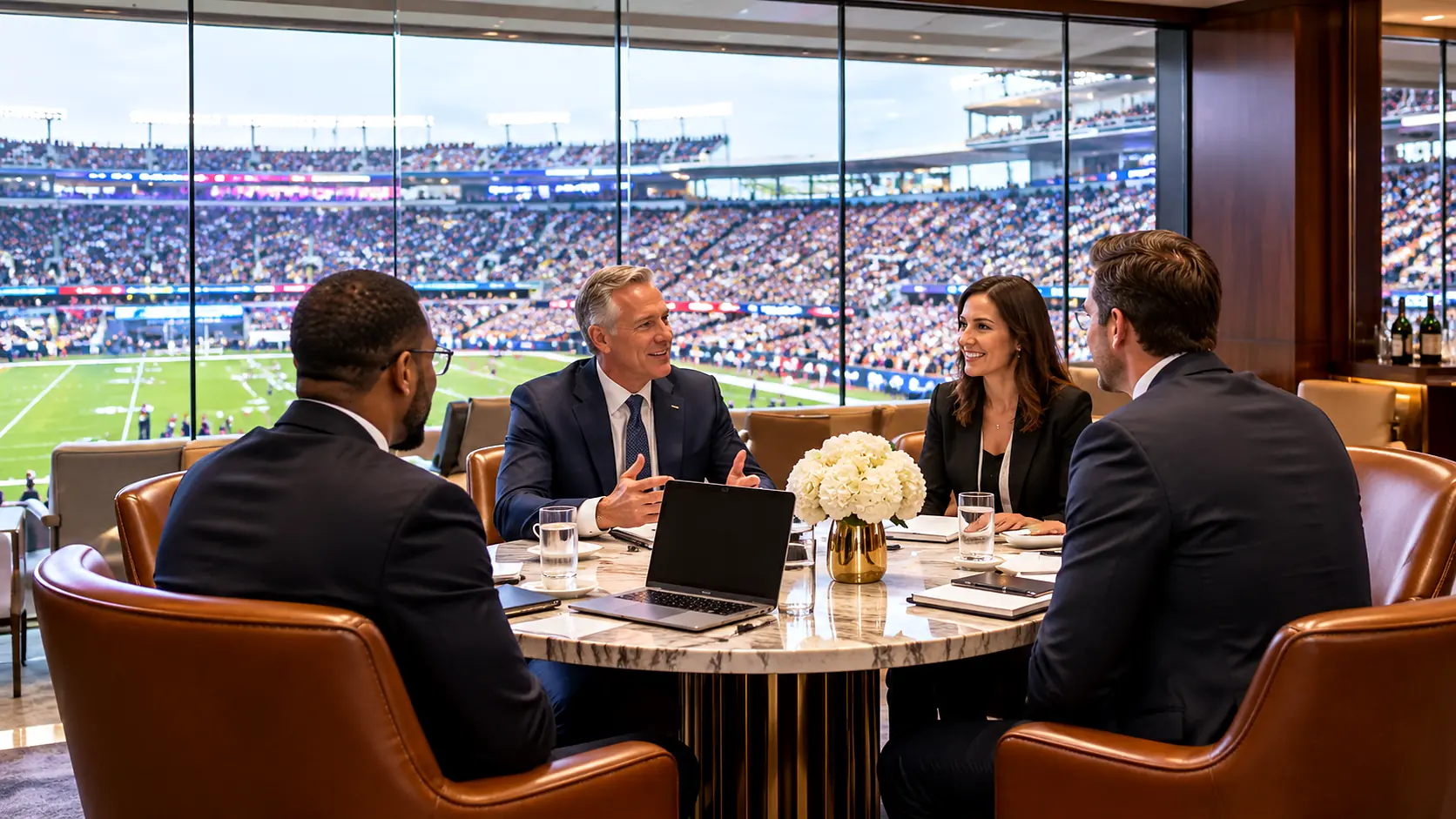
Behind the single-game headline prices sits the steadier machinery of the suite economy: the season-long leases through which corporations hold boxes for every home game, with the Super Bowl rights often bundled or separately negotiated when the host stadium comes due. A premium suite lease at a top stadium runs into the millions annually, justified by fifty weeks of client entertainment for which the Super Bowl is merely the jewel.
This is the quiet truth of the two-million-dollar headline: the companies paying it are not buying a night. They are concluding a year-long negotiation in which the box is the boardroom, and the game is the agenda. Guests arriving for the weekend typically complete the experience with the host city’s finest tables, a circuit our guide to the most expensive Michelin star restaurants in America maps in detail.
6. The Alternative: Chartered Luxury

For those who want Super Bowl luxury without a seven-figure box, the weekend has spawned an ecosystem of alternatives: premium seat packages with official hospitality, five-figure field passes, and the grand tradition of arriving well. The private aviation surge into the host city is itself a spectacle, with hundreds of additional jets descending on the local airports in the days before kickoff, a migration our coverage of private jet charter costs helps decode.
In host cities with harbors, the yacht adds another register: a vessel chartered for the weekend functions as hotel, hospitality suite, and arrival statement in one, a playbook long established at the Monaco Grand Prix and increasingly visible at American sporting summits, as our overview of US luxury yacht rentals explores.
What the Suite Really Buys
Strip the numbers to their essence and the Super Bowl suite sells three things. Proximity to power: the room assembles people worth meeting under conditions designed for meeting them. Privacy: the glass separates the guests from the crowd while keeping the spectacle close. And permanence of memory: nobody forgets the night they watched a Super Bowl from a box, which is precisely the point for the host.
The house comparison, finally, deserves its honest framing. The two-million-dollar suite is not a purchase; it is a rental of four hours. What it rents is not the view but the room’s effect on the people inside it, and in the economy of relationships, the companies paying these prices have decided, with their own arithmetic, that four hours is worth a house. On Super Bowl Sunday, the smartest money in the stadium is rarely watching the quarterback.
FAQs
How much does a Super Bowl luxury suite cost?
Prices range from roughly two hundred thousand dollars for smaller suites to a reported two million dollars for the largest premium boxes at recent Super Bowls, depending on the stadium, location, and capacity.
What is included in a Super Bowl suite?
The suite typically includes the private room, premium catering and beverages, dedicated attendants, parking passes, and hospitality services, with the specific inclusions set by the stadium and the seller.
How many people fit in a Super Bowl suite?
Standard suites hold eighteen to twenty-four guests, while the largest premium boxes at the biggest games accommodate thirty or more.
Why do companies pay millions for a Super Bowl suite?
The suite functions as a business development venue: a single evening hosting key clients and partners in the most-watched setting in American sports, measured against a year of deal-making rather than the price of a seat.
Can individuals buy Super Bowl suites?
Yes, through the NFL’s official hospitality partner and the secondary market, though the largest premium suites are typically secured by corporations and longstanding stadium partners.
Which stadiums have the most expensive suites?
The newest venues, SoFi Stadium in Los Angeles and Allegiant Stadium in Las Vegas, command the top of the market, having been designed around premium inventory as their financial foundation.
What are field-level suites?
Ground-level boxes beside the field or end zone that trade panoramic views for physical proximity to the players, a newer category that has become among the most coveted inventory in modern stadiums.
How do celebrities get Super Bowl suites?
The owners’ boxes and league-controlled suites are arranged through invitation and relationships rather than purchase, with the celebrity presence itself functioning as a form of broadcast currency.