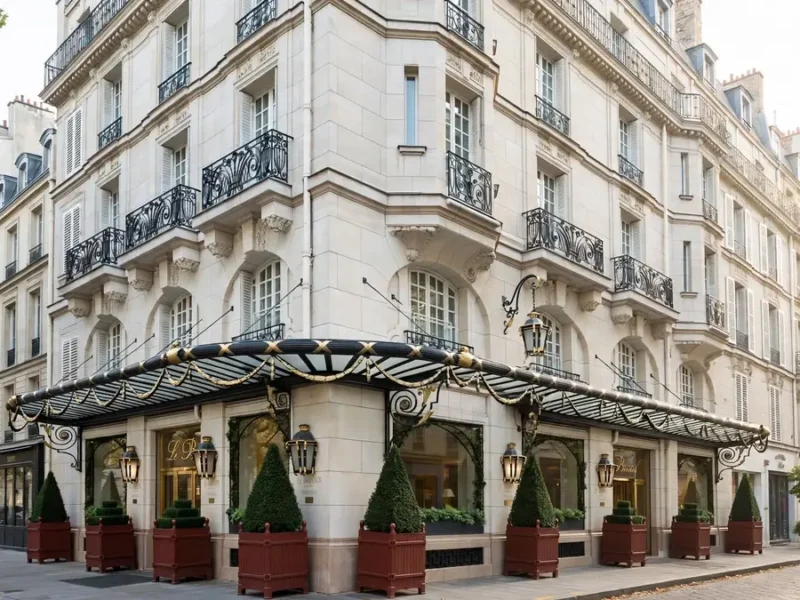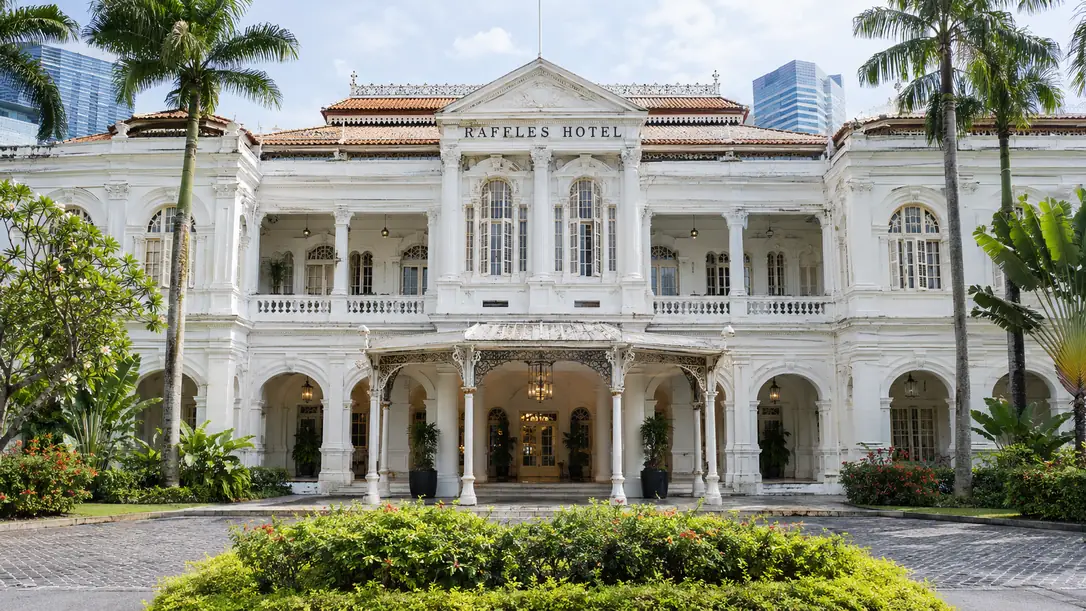
In 1887, the Armenian hoteliers the Sarkies Brothers opened a seaside bungalow on Beach Road, named it after Singapore’s founder, and spent the following century building a hotel so synonymous with its city that a passport stamp and a memory of the Raffles courtyard became for many travelers the same thing. Somerset Maugham wrote in its rooms.
Noel Coward declared that if one must stay in a rumpled corner of the empire, Raffles at least kept the ice coming. The hotel survived world war occupation, the loss of its seafront to reclamation, and the march of the towers around it, and emerged in 2019 from a two and a half year restoration as the grandest colonial survivor in Asia.
Here is the story of the hotel that became a nation.
The Sarkies’ Beginning
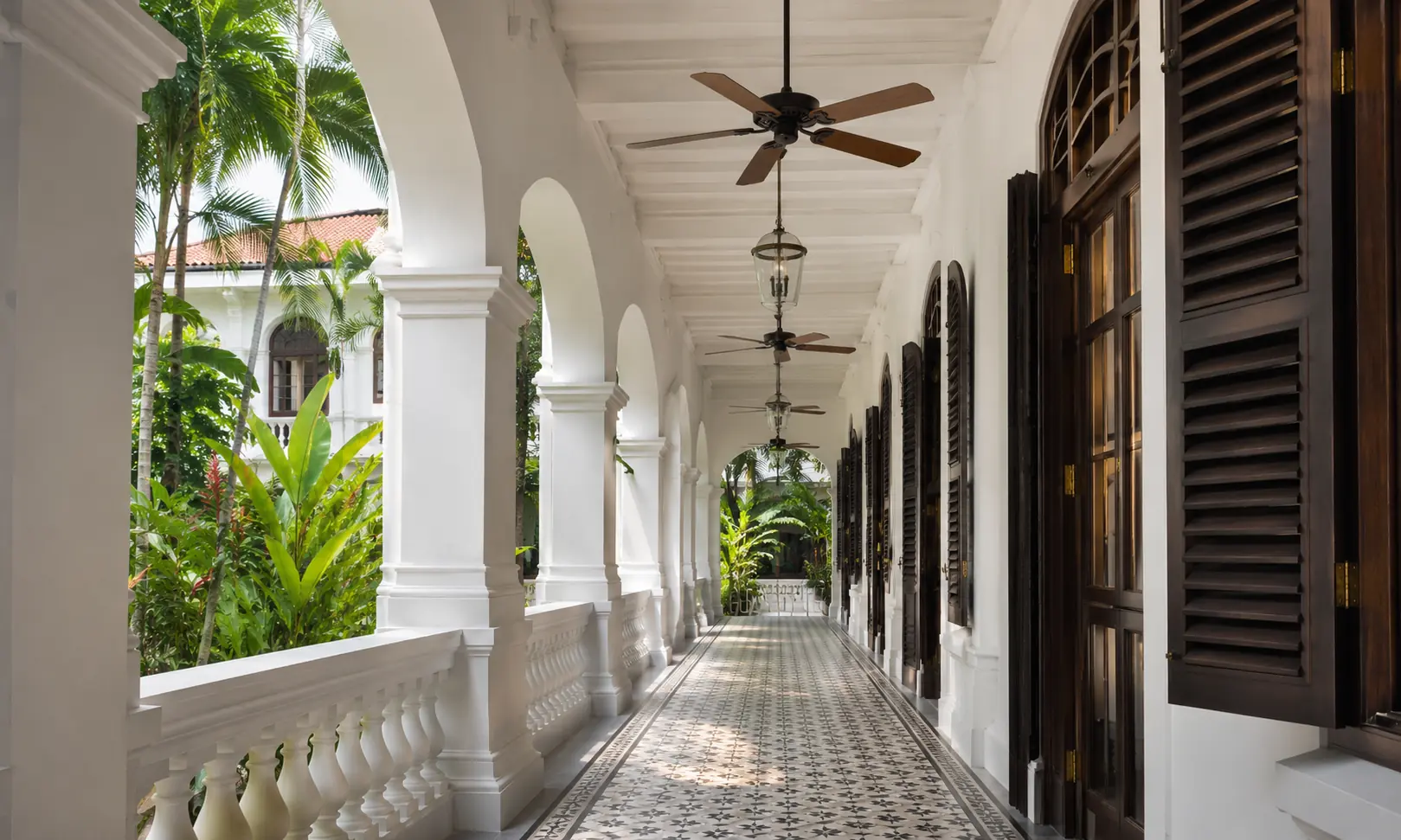
The Sarkies Brothers, refugees from Persia who had built the Eastern and Oriental in Penang, arrived in Singapore when the island was the crossroads of empire, and their insight was to price for the travelers the empire produced: merchants, officials, and the planter class moving between Ceylon and Hong Kong.
The hotel grew by accretion, wings and ballrooms and the cast iron verandahs of the tropics, until the 1899 main building, white and colonnaded, stood as the finest address between Bombay and Yokohama. The Raffles formula of ice, linen, and absolute service in equatorial heat made the hotel a legend by the years before the First World War.
The Writers’ and the War’s
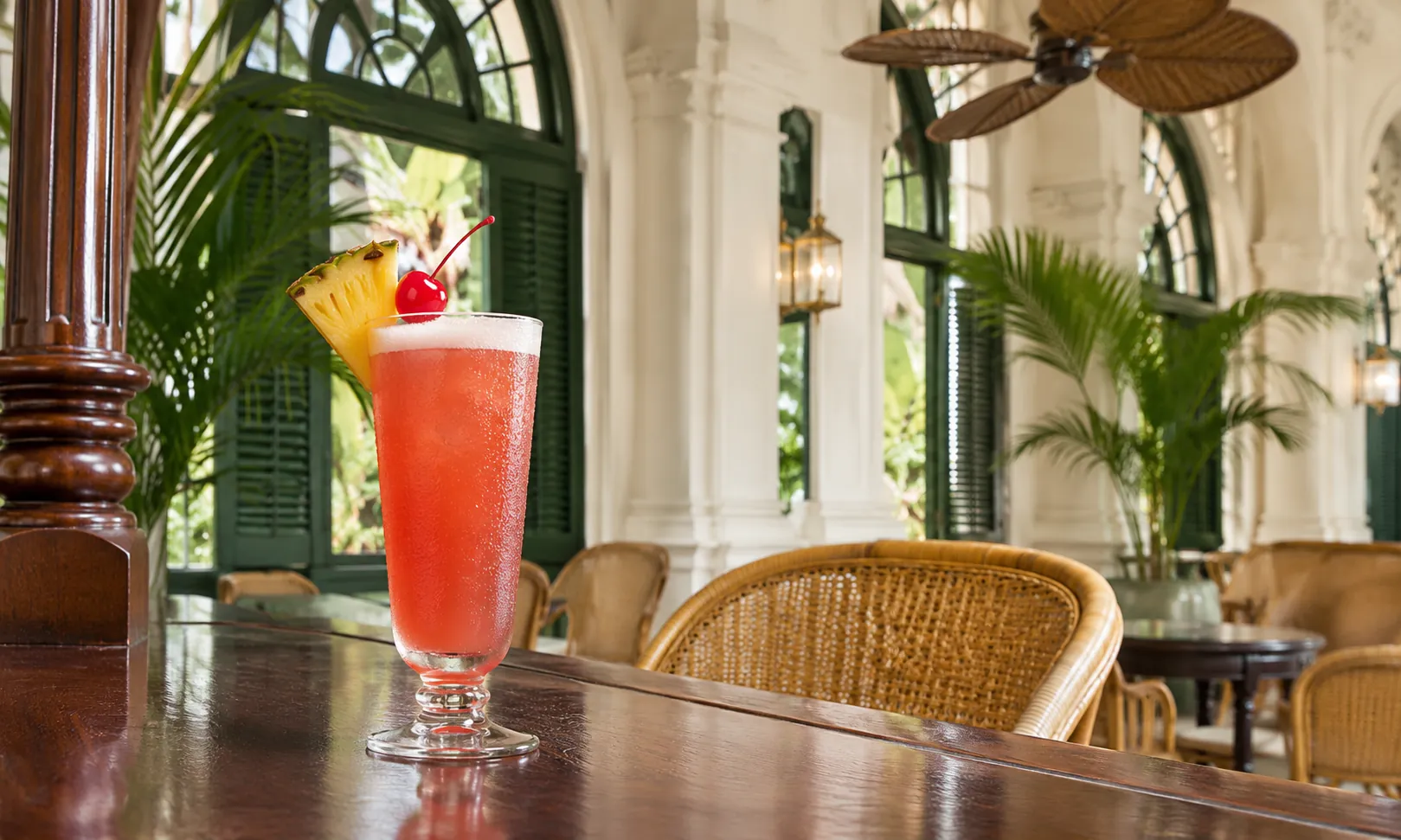
The interwar decades made Raffles the literary hotel of the East. Maugham, Coward, Hemingway, and Kipling wrote of or within it, and the Long Bar, where the Singapore Sling was invented around 1915 by bartender Ngiam Tong Boon as a punch a lady could drink in public, became the colony’s most famous counter.
The Second World War darkened the legend: the hotel’s silver was bricked into the walls, the guests fled, and the Japanese occupation turned the great house into a transit point for prisoners.
The hotel’s postwar restoration, and its 1987 declaration as a national monument, marked Singapore’s own passage from colony to nation: the building survived the empire and became the new country’s memory palace.
The Restoration of 2019
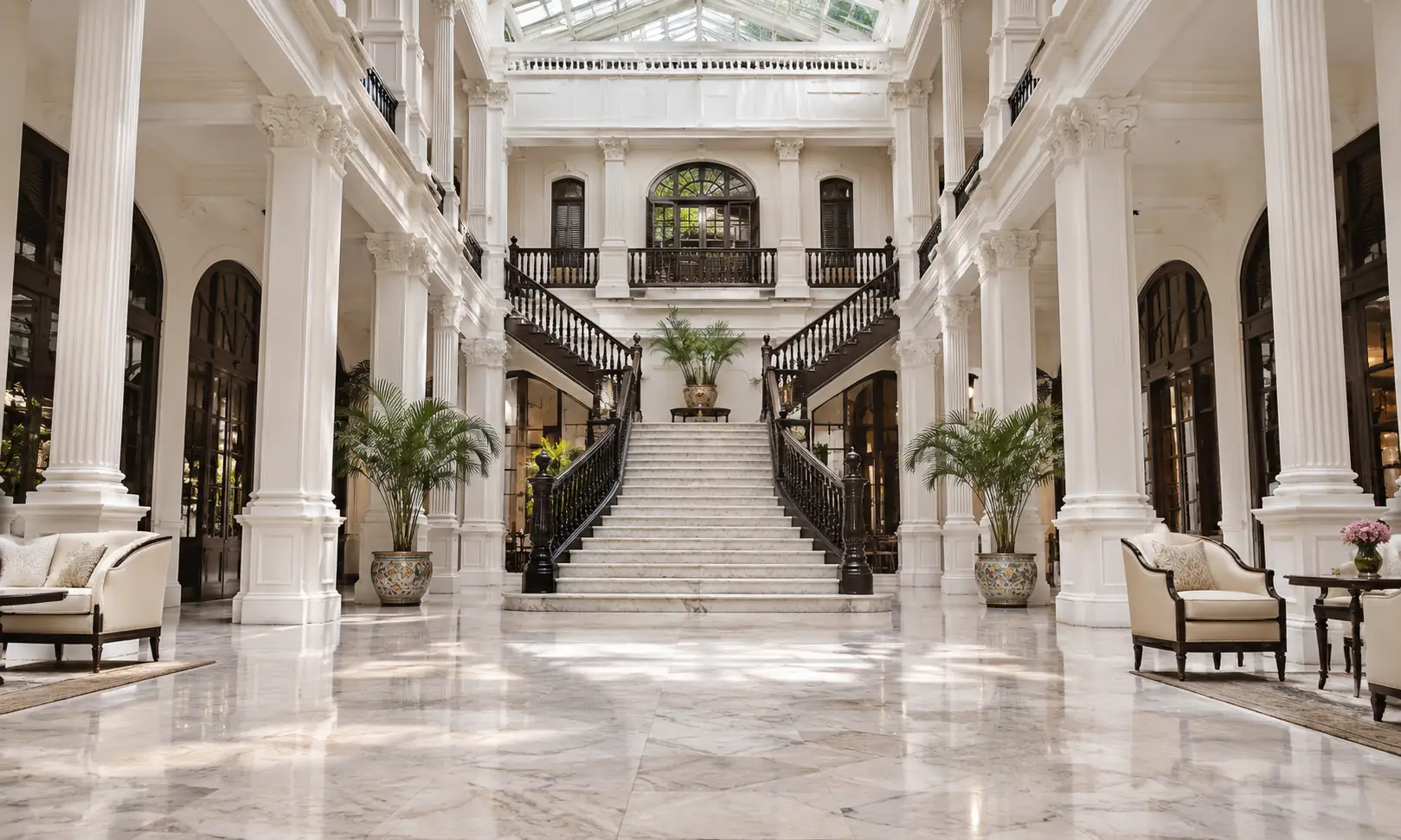
The restoration that closed the hotel in 2017 and returned it in 2019 cost a reported $400 million or more, and its achievement was to make a 130 year old survivor feel not preserved but alive.
The grand lobby’s symmetry was restored, the suites, each now effectively a private residence with its own butler, were rebuilt to modern standards behind the historic fabric, and new courtyards and social spaces rebalanced the hotel around the life of its city rather than the memory of empire.
The Long Bar returned with its peanut shells and its Sling, the Tiffin Room resumed its curry tiffin service, and the Raffles again hosted the nation’s occasions, weddings, and dignities. For the global frame of grand hotels, our features on London’s Claridge’s and The Savoy complete the colonial and metropolitan circuit the Raffles anchors in Asia.
The National Living Room
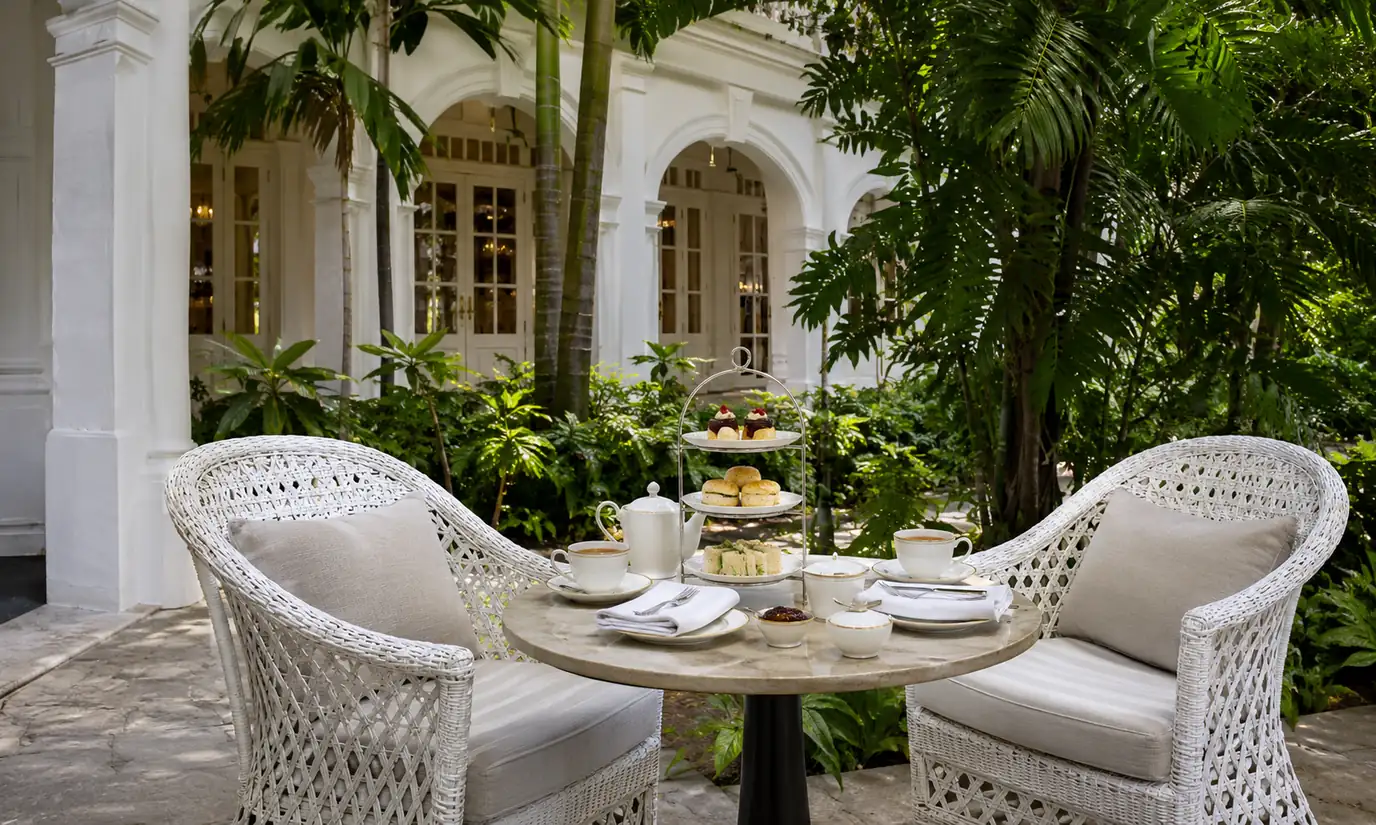
What distinguishes Raffles from its peers is its public function: in Singapore, the hotel is where the nation receives. State visitors are entertained there, national anniversaries are marked on its lawns, and the Singaporean family celebrating a milestone saves for the courtyard’s afternoon tea as Americans once saved for the Plaza.
The hotel’s butlers, heirs to the Sarkies’ original discipline, remain among the most trained in the world, and the white uniform, the ceiling fans, and the tropical formality constitute a grammar of hospitality that the global chains study and rarely equal.
Raffles exports itself now, outposts in Paris, London, and the Maldives carrying the name, but the original on Beach Road remains the proof: a hotel can become a country, if it keeps its ice and its standards long enough.
FAQs
1. When was Raffles Hotel founded?
1887, by the Sarkies Brothers, Armenian hoteliers who had already built the Eastern and Oriental in Penang, beginning with a seaside bungalow that grew into the white colonnaded landmark completed around 1899.
2. Who invented the Singapore Sling?
Bartender Ngiam Tong Boon at the Raffles Long Bar, around 1915, creating a gin based punch whose pink color allowed ladies of the colony to drink in public, a discreet solution to an era’s etiquette.
3. Did Somerset Maugham stay at Raffles?
Yes, and he wrote there: Maugham’s Eastern stories carry the hotel’s atmosphere, and his corner, along with those of Coward, Hemingway, and Kipling, belongs to the Raffles literary legend the hotel preserves.
4. What happened to Raffles during the war?
The silver was bricked into the walls as the Japanese approached, guests fled, and the hotel spent the occupation as a transit point; its postwar restoration paralleled Singapore’s own passage from colony to nation.
5. How much was the 2019 restoration?
Reports place the figure at $400 million or more across the two and a half year closure, restoring the lobby’s symmetry, rebuilding the suites to residence standards, and rebalancing the hotel around modern social spaces.
6. What is a Raffles butler?
Heirs to the Sarkies’ discipline: formally trained, assigned to suites individually, and counted among the world’s most polished hotel staff, the butler service is the hotel’s defining anachronism and its most requested feature.
7. Is Raffles a national monument?
Yes: Singapore declared the hotel a national monument in 1987, a century after its founding, formally recognizing the building as part of the country’s heritage rather than merely its hospitality inventory.
8. Are there other Raffles hotels?
Yes: the brand now operates outposts including Raffles Paris, Raffles London at the OWO, and Raffles Maldives, but the Singapore original remains the standard the name trades on, as our grand hotel coverage places in the global hierarchy.