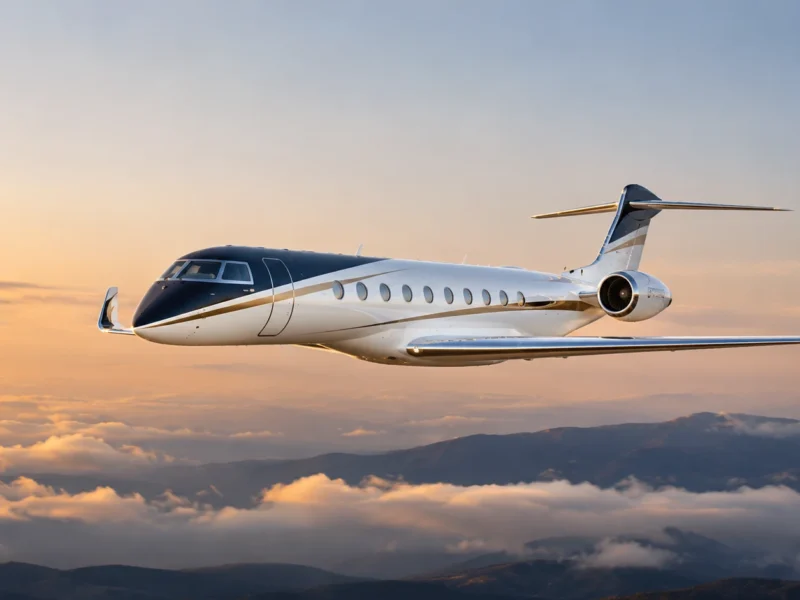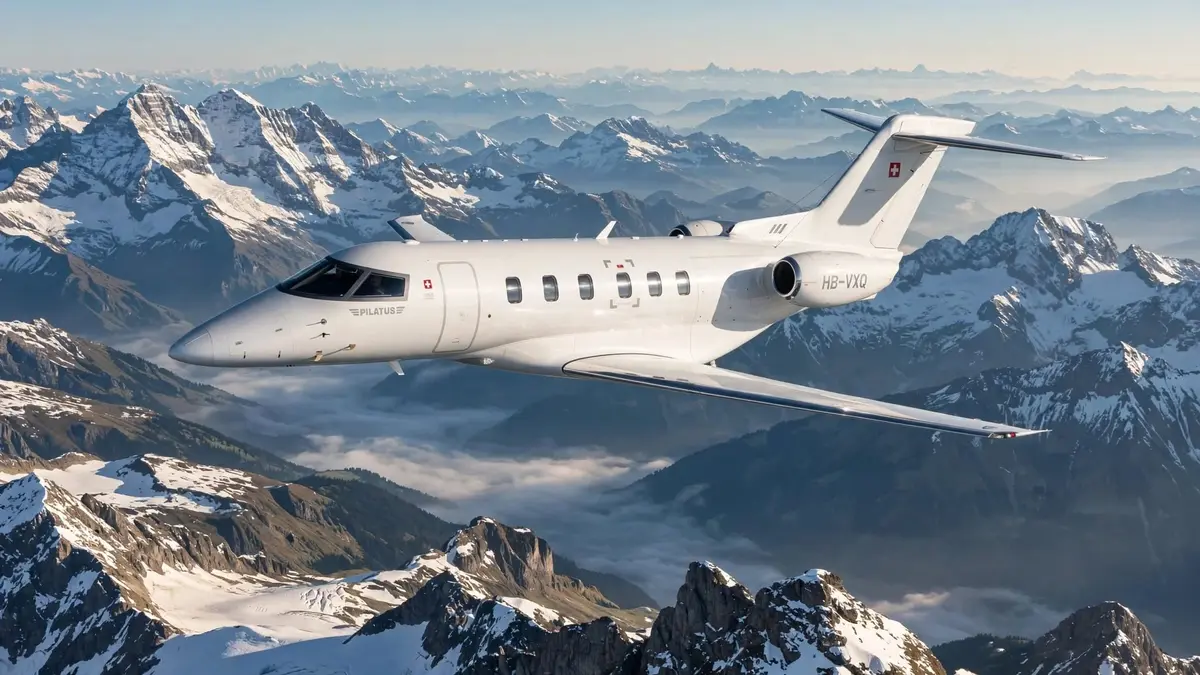
The Pilatus PC-24 is the only business jet in the world designed from the outset to operate from unpaved runways, a light jet with the cabin of a midsize, a standard cargo door, and the ability to land on grass, gravel, and dirt strips that every other jet must fly past. Pilatus calls it the Super Versatile Jet, and for once, the marketing undersells the machine.
Since its certification in 2017, the PC-24 has carved out a category with no direct rival, attracting owners who measure luxury not in marble veneers but in access: the ranch strip, the alpine airfield, the island runway where the tarmac ends and the real world begins.
The Mountain Maker of Stans
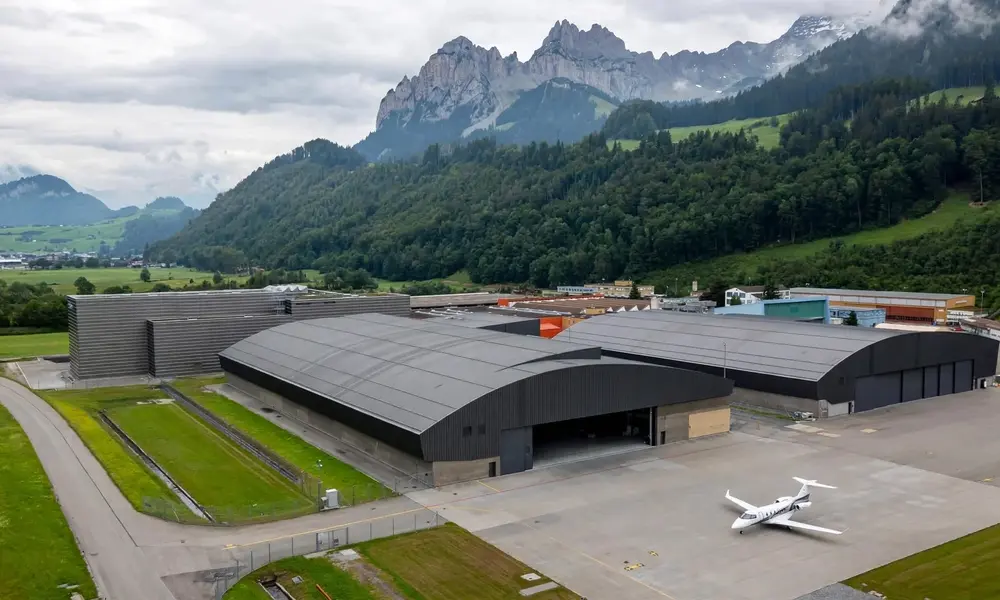
Pilatus Aircraft is not a household name outside aviation, and that invisibility is part of its character. Founded in 1939 in Stans, Switzerland, in the shadow of Mount Pilatus, the company built its reputation on a single extraordinary machine: the PC-12, a single-engine turboprop that became the best-selling aircraft of its type in history by doing everything tolerably and several things superbly.
The PC-12’s formula was distinctly Swiss. Build an aircraft of uncompromising quality, endow it with capabilities nobody else offers, price it sanely, and let owners discover that it quietly outperforms flashier machines in the conditions that actually occur. When Pilatus announced its first jet, the aviation world watched with unusual interest. The company that had perfected the versatile turboprop was about to define what a versatile jet could be.
Engineering for the Unprepared Runway
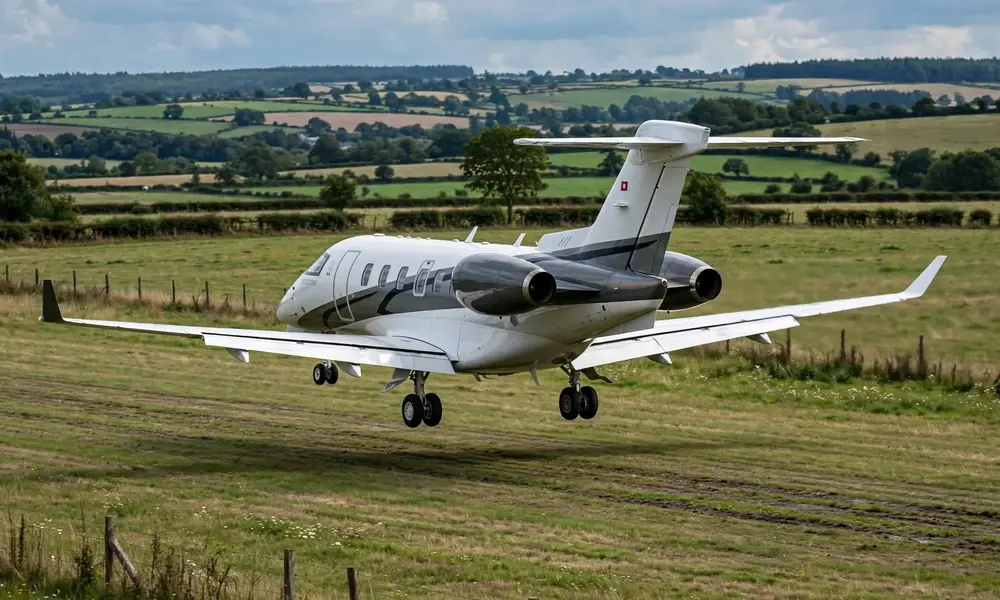
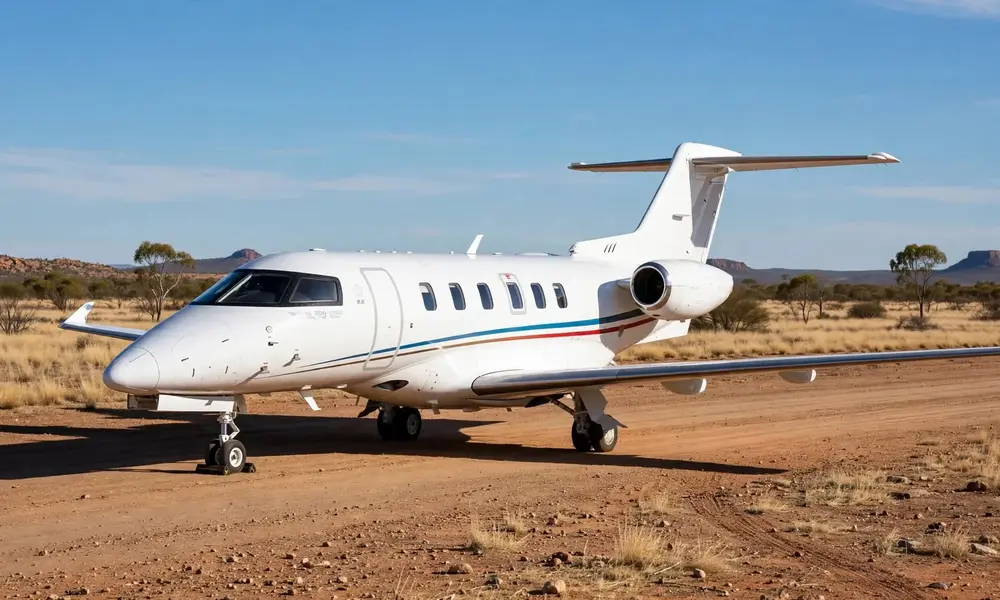
The PC-24’s defining capability begins where pavement ends. Its wing, landing gear, and systems were engineered from the first sketch for operations on grass, gravel, and dirt, with a certification for unpaved strips that no competing business jet holds. The practical consequence is access to thousands of additional airfields worldwide, doubling and in some regions tripling the number of destinations the aircraft can serve directly.
Consider what that means in practice. The owner of a Wyoming ranch lands on the property’s own strip rather than an airport ninety minutes away. The European family reaches a short alpine airfield minutes from the slopes while larger jets divert to the valley city. African lodges, Scottish estates, and Caribbean out islands all move from complicated to direct. In the geography of private travel, the PC-24 does not merely fly routes. It redraws the map.
The short-field performance compounds the advantage. The jet operates from runways of roughly 3,000 feet, a length that excludes most business jets entirely, and it does so with the takeoff and climb margins that Swiss certification standards demand. For travelers comparing the reach of different machines, our survey of private jet aviation provides the broader landscape, but the PC-24’s territory is largely its own.
The Cargo Door That Changed the Cabin
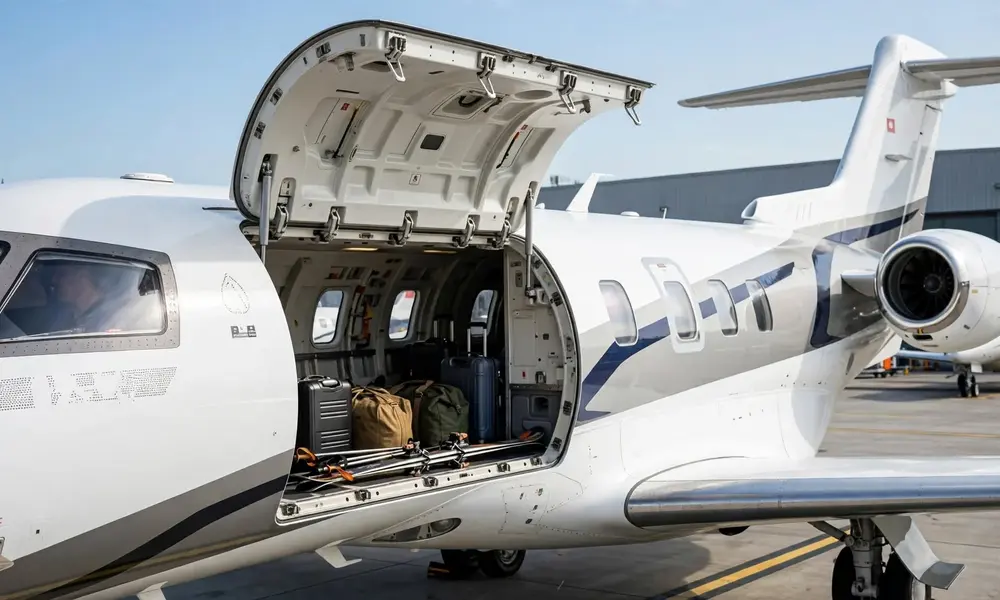
Look at a PC-24 on the ramp and one feature announces its difference immediately: a large cargo door, fitted as standard, of a size normally found on freighters. The door is heritage as much as engineering, carried forward from the PC-12’s legendary utility, and it transforms what the aircraft can carry.
Bicycles, skis, hunting gear, medical stretchers, and the full luggage of eight passengers with their dogs all load through an opening that other light jets cannot imagine.
The cabin behind that door breaks the class rules in a different direction. Pilatus gave the PC-24 a cabin with a flat floor and a cross-section closer to midsize jets than to the light category it prices against, with volume exceeding that of several larger and costlier rivals.
Six to eight passengers travel in an interior designed with BMW Group Designworks, finished with the restrained, functional elegance that Swiss design does best, and served by a fully enclosed lavatory and a galley that supports real catering.
Technology runs quietly through the machine. The Advanced Cockpit Environment, developed with Honeywell, gives pilots a clean, modern workspace with synthetic vision, and the aircraft’s single-pilot certification allows qualified owners to fly it themselves, a significant consideration in a class where crew costs dominate operating budgets.
The Economics of Versatility
The PC-24’s acquisition price sits in the low tens of millions, positioned between the light and midsize categories, and its operating economics follow the Pilatus tradition of sane, predictable costs.
The Williams FJ44 engines are among the most proven powerplants in business aviation, the maintenance programs benefit from Pilatus’s reputation for engineering things that stay fixed, and the type’s versatility concentrates value by replacing missions that might otherwise require two different aircraft.
The ownership base reflects the machine’s character. Ranchers and entrepreneurs, medevac operators and fractional programs, government agencies and first-time jet owners all appear in the delivery logs.
The Royal Flying Doctor Service of Australia, one of the most demanding aviation operations on earth, selected the PC-24 for jet ambulance work across the outback, an endorsement of the unpaved capability that no brochure could equal. Buyers weighing the full arithmetic of ownership will find our examination of the real cost of owning a private jet a useful companion.
The Honest Limitations
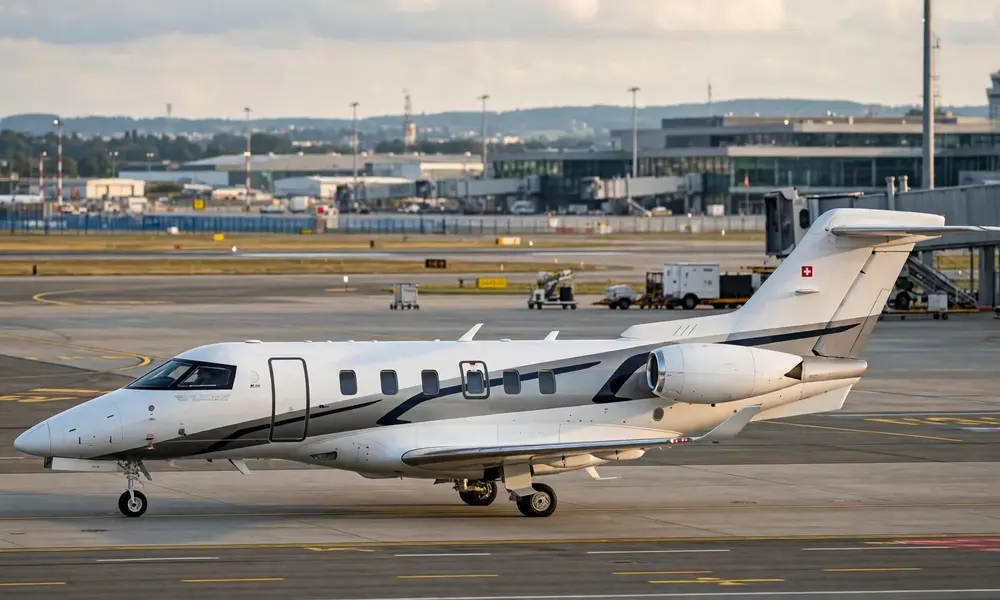
The PC-24’s virtues are real and so are its boundaries. Range sits around 2,000 nautical miles with typical loads, a transcontinental-with-a-stop proposition rather than an oceanic one, and cruise speed, while respectable, trails the fastest light jets. The cabin, though impressively voluminous for the class, remains a light jet cabin in height, and travelers who stand tall will notice the difference against midsize rivals.
The aircraft also asks its owner to value the unconventional. Its strongest arguments, unpaved strips, cargo doors, short fields, matter enormously to the missions they enable and not at all to buyers whose flying runs between major city pairs.
For the pure boardroom shuttle between large airports, more conventional choices in the private jet charter market or the light jet class may serve as well for less.
The Verdict
The Pilatus PC-24 is the rare aircraft that created its own category rather than competing in an existing one. It offers the cabin of a larger jet, the cargo capability of a utility aircraft, the access of a bush plane, and the speed of a jet, wrapped in Swiss build quality and sane economics.
For the owner whose life includes a ranch, a mountain, an island, or simply a preference for the smaller airfield closer to the destination, there is no substitute at any price. The super versatile jet is a reminder that in private aviation, as in all of luxury, the deepest privilege is not speed or status. It is access, and nobody sells access the way Stans does.
FAQs
What is the Pilatus PC-24?
The PC-24 is a twin-engine light business jet from Pilatus Aircraft of Switzerland, certified in 2017, and marketed as the Super Versatile Jet for its ability to operate from short and unpaved runways.
Can the PC-24 really land on grass and gravel?
Yes. The PC-24 is the only business jet certified for operations on unpaved runways, including grass, gravel, and dirt strips, giving it access to thousands of airfields closed to other jets.
What is the range of the Pilatus PC-24?
The aircraft flies approximately 2,000 nautical miles with typical loads, suitable for transcontinental missions with a stop and regional travel without one.
How much does a Pilatus PC-24 cost?
Acquisition pricing sits in the low tens of millions of dollars, positioned between the light and midsize jet categories, with operating costs reflecting Pilatus’s reputation for sane, predictable economics.
How many passengers does the PC-24 carry?
Typical configurations seat six to eight passengers in a flat-floor cabin with midsize-class volume, a fully enclosed lavatory, and a standard cargo door.
Who uses the PC-24?
Owners include ranchers, entrepreneurs, fractional programs, government agencies, and medevac operators, notably the Royal Flying Doctor Service of Australia, which uses the type for jet ambulance work in the outback.
Can an owner fly the PC-24 alone?
Yes. The PC-24 is certified for single-pilot operation, and its Advanced Cockpit Environment, developed with Honeywell, supports qualified owner-pilots.
How does the PC-24 compare to other light jets?
It offers a larger cabin, the unique cargo door, and unpaved runway capability that no light jet rival matches, trading some top speed and range for its unmatched versatility.