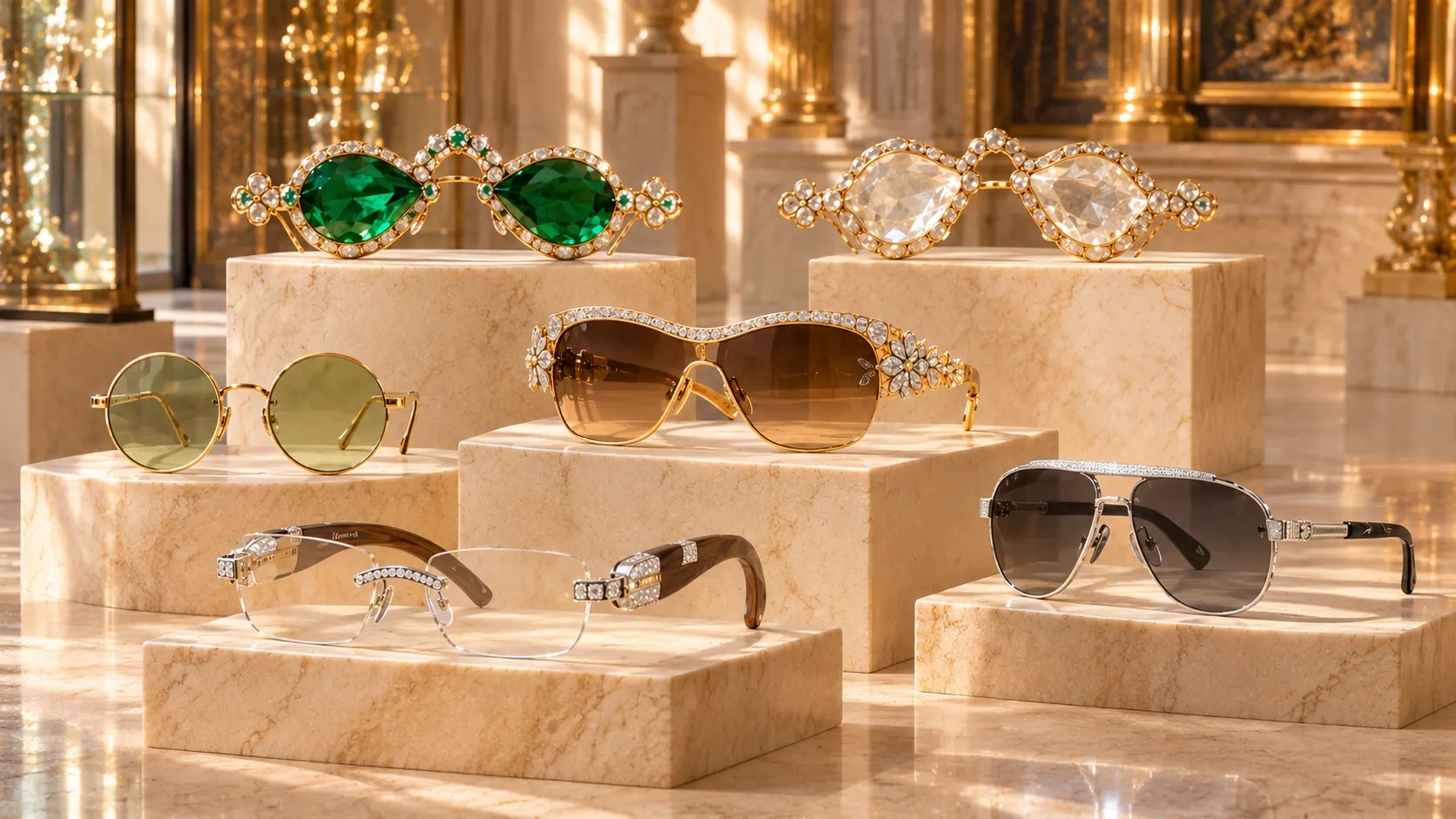
Imagine looking through a diamond rather than wearing one on your finger. Or seeing the world through emerald lenses, their green color turning an ordinary view into something altogether different. These extraordinary creations redefine luxury eyewear, making expensive glasses a fascinating blend of precious gemstones, artistic craftsmanship, and exclusivity.
The most expensive glasses ever made take eyewear into the territory of jewelry, historic artifacts, and collectible objects. Their value can have very little to do with helping someone read a menu.
Among the most valuable spectacles publicly offered are two Mughal-era pairs presented by Sotheby’s in 2021, each carrying an auction estimate of £1.5 million to £2.5 million. For modern jeweled sunglasses, Chopard’s collaboration with De Rigo Vision is widely reported at around $400,000.
Those figures describe different things. An auction estimate is not a completed sale, and a reported launch valuation is not proof that someone paid the advertised amount.
That distinction is where this story becomes more interesting.
Key Takeaways
- Historic gemstone spectacles have carried auction estimates far above familiar luxury-eyewear prices.
- Chopard and De Rigo Vision created a widely reported six-figure jeweled sunglasses project.
- Gold & Wood’s frequently quoted $55,000 example does not establish an all-time eyewear record.
- Celebrity provenance can make ordinary-looking glasses exceptionally valuable.
- Historical prices should not be presented as current retail offers.
- A high price does not establish optical performance or everyday comfort.
What Are the Most Expensive Glasses Ever Made?
There is no single publicly verified ranking that neatly combines historic spectacles, commissioned jewelry, retail sunglasses, and celebrity memorabilia.
A more useful comparison separates the objects from the evidence behind their prices.
| Eyewear | Published amount | What the figure represents |
| Mughal diamond-lens spectacles, known as Halo of Light | £1.5 million–£2.5 million | Sotheby’s 2021 auction estimate |
| Mughal emerald-lens spectacles, known as Gate of Paradise | £1.5 million–£2.5 million | Sotheby’s 2021 auction estimate |
| Chopard–De Rigo Vision jeweled sunglasses | Around $400,000 | Historical reported valuation |
| A pair of John Lennon’s sunglasses | £137,500 | Reported Sotheby’s auction result in 2019 |
| Gold & Wood diamond-set eyewear | Around $55,000 | Historical price repeated in luxury reporting |
| Estede for Bentley platinum sunglasses | Up to $15,000 in contemporary 2010 trade reporting | Historical reported launch pricing |
The currencies remain separate deliberately. Converting old prices at today’s exchange rate can create the appearance of precision while weakening the comparison.
1. Halo of Light: Spectacles With Diamond Lenses
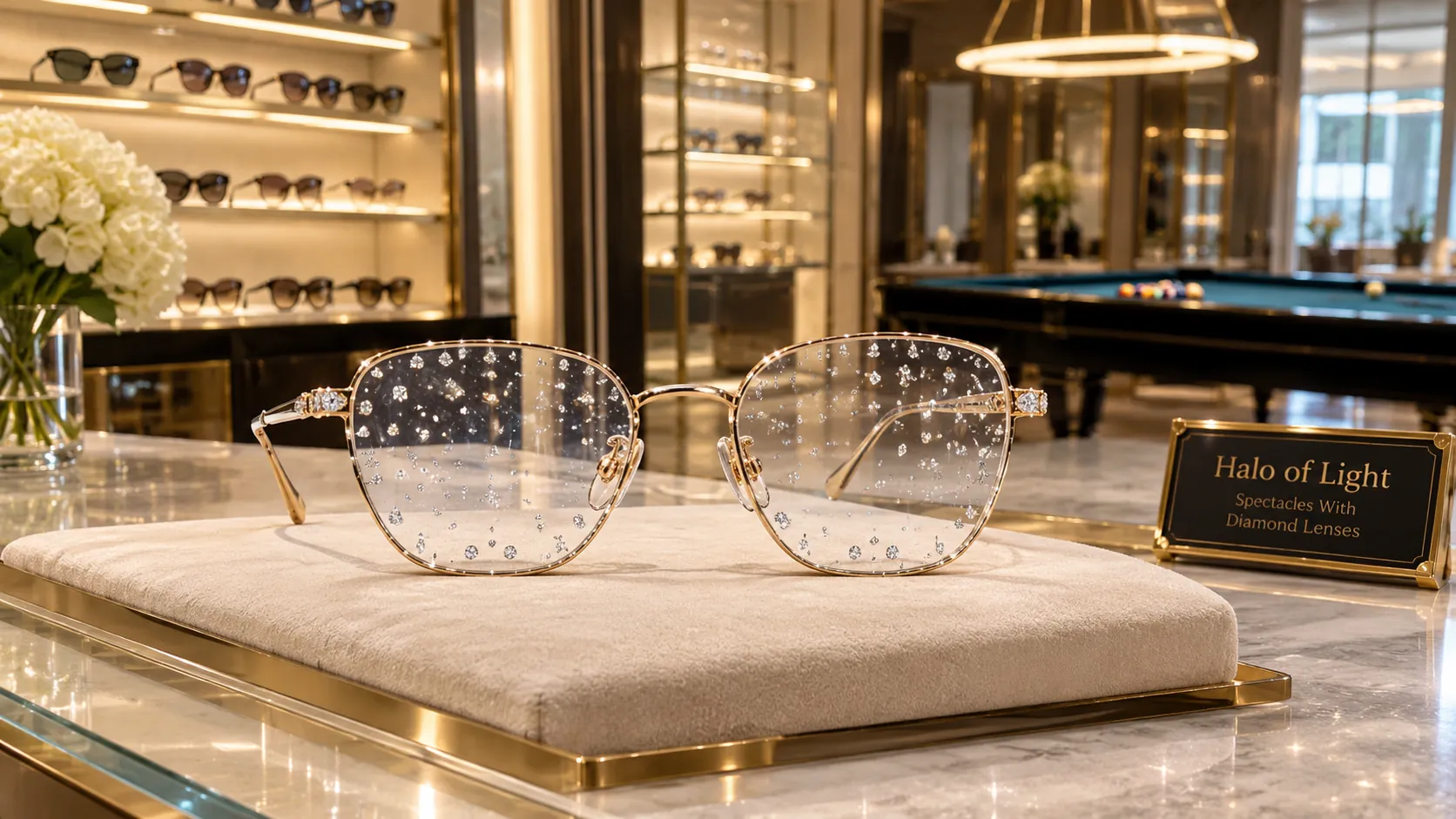
The most remarkable detail about Halo of Light is where the diamonds sit.
They form the lenses themselves.
Sotheby’s catalogued the pair as Mughal spectacles with diamond lenses dating to approximately the seventeenth century, mounted in nineteenth-century diamond-set frames. That dating distinction matters: the lenses and the frames should not be described as though they were necessarily made together.
The auction house assigned the pair an estimate of £1.5 million to £2.5 million for its October 2021 sale.
That makes them an extraordinary example of highly valued eyewear. It does not establish that they sold for the upper estimate.
Why they are so unusual
Most jeweled sunglasses begin with a recognizable frame and add precious materials. These spectacles approach the idea from another direction: the material through which you look is itself a gemstone.
Their interest therefore extends beyond decoration. They combine lapidary work the cutting and shaping of stones with the history of objects made to be worn.
Their practical role should also be understood in that historic context. They are not equivalent to modern prescription glasses.
2. Gate of Paradise: Emeralds as a Way of Seeing
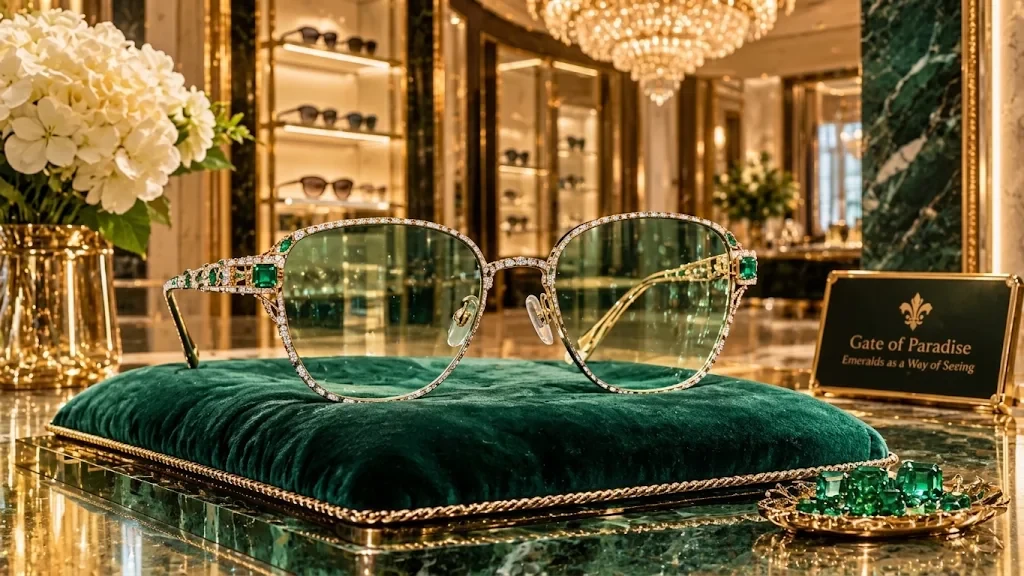
The companion pair, Gate of Paradise, uses emerald lenses in diamond-mounted frames.
Sotheby’s likewise dated the lenses to approximately the seventeenth century and the frames to the nineteenth century. The auction estimate was again £1.5 million to £2.5 million.
The appeal is easy to understand even before considering the estimate. Emeralds are usually encountered as stones set into jewelry. Here, they become broad surfaces intended to be looked through.
Do we know who originally owned them?
The objects have been discussed in connection with Mughal princely culture, but that does not justify assigning them to a particular ruler without firm evidence.
It is tempting to complete an extraordinary object’s story with an equally extraordinary name. Careful writing leaves the uncertainty intact.
The craftsmanship and surviving objects are already compelling.
3. Chopard and De Rigo Vision: Modern Eyewear as High Jewelry
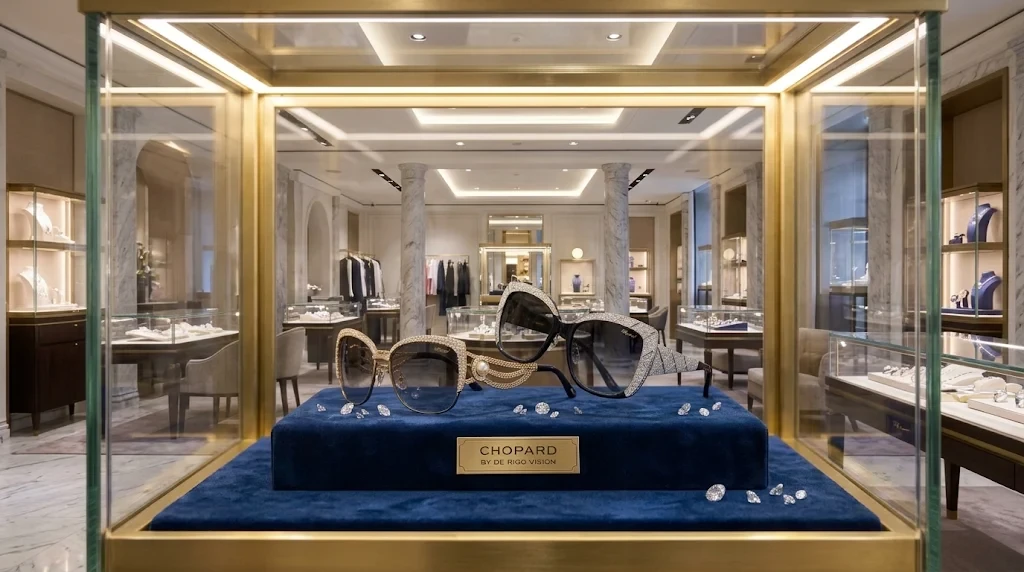
Chopard’s jeweled sunglasses, produced with De Rigo Vision, are among the most frequently cited modern examples of exceptionally expensive eyewear.
For readers interested in contemporary designers, exploring some of the leading luxury eyewear brands offers a closer look at the craftsmanship, materials, and distinctive styles behind premium frames.
Contemporary reporting in 2012 described a pair using gold and diamonds, with a valuation of approximately $400,000. Later articles circulate slightly different dollar figures.
The sensible description is a historically reported six-figure jewelry project. Calling that amount a confirmed auction result would go beyond the evidence.
What makes the price different from ordinary luxury eyewear?
The object belongs partly to the world of jewelry.
The same appreciation for precious materials and detailed craftsmanship can be found among established luxury jewelry brands, particularly those known for their diamond and gemstone creations.
Many luxury designer brands extend their creative identities beyond clothing into eyewear, jewelry, handbags, and other premium accessories.
Gemstones, precious-metal work, setting techniques, design, and exclusivity become central to the valuation. Those qualities are separate from the question of how well the sunglasses fit or how pleasant they are to wear.
You can admire the piece as a feat of decorative craftsmanship without assuming its price measures better vision.
4. John Lennon’s Sunglasses: When the Story Becomes the Value
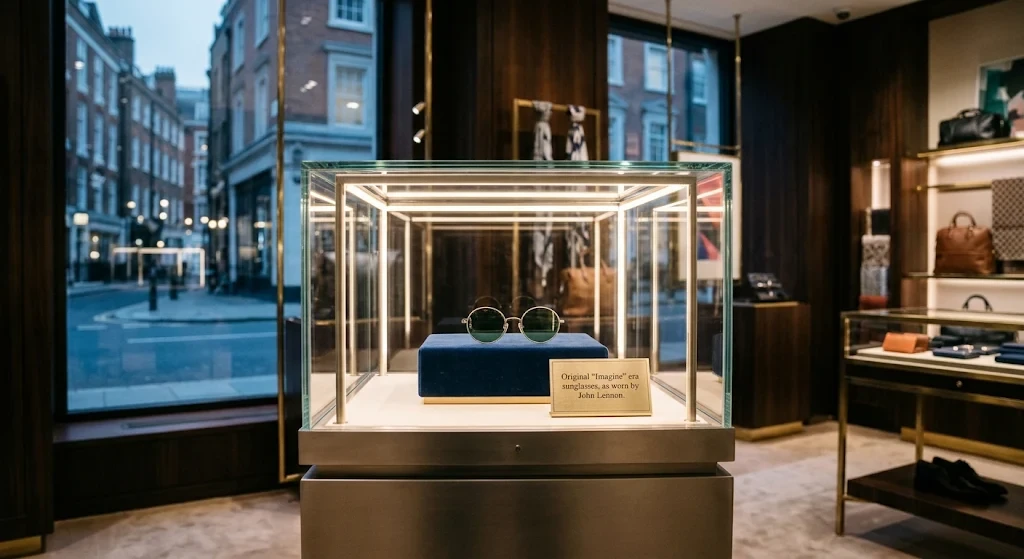
A pair of John Lennon’s sunglasses reportedly sold for £137,500 at Sotheby’s in 2019.
Here the value comes from documented association with a particular person, rather than an extravagant quantity of gold or diamonds.
That is a different collecting market.
A visually similar pair without the same provenance would not carry the same story. The evidence connecting the object to its former wearer is therefore fundamental to understanding what a buyer is acquiring.
This is why celebrity glasses should not be mixed casually into a retail-price ranking. One price concerns a product; the other concerns an individual historical object.
5. Gold & Wood: A Famous Price With Details Worth Checking
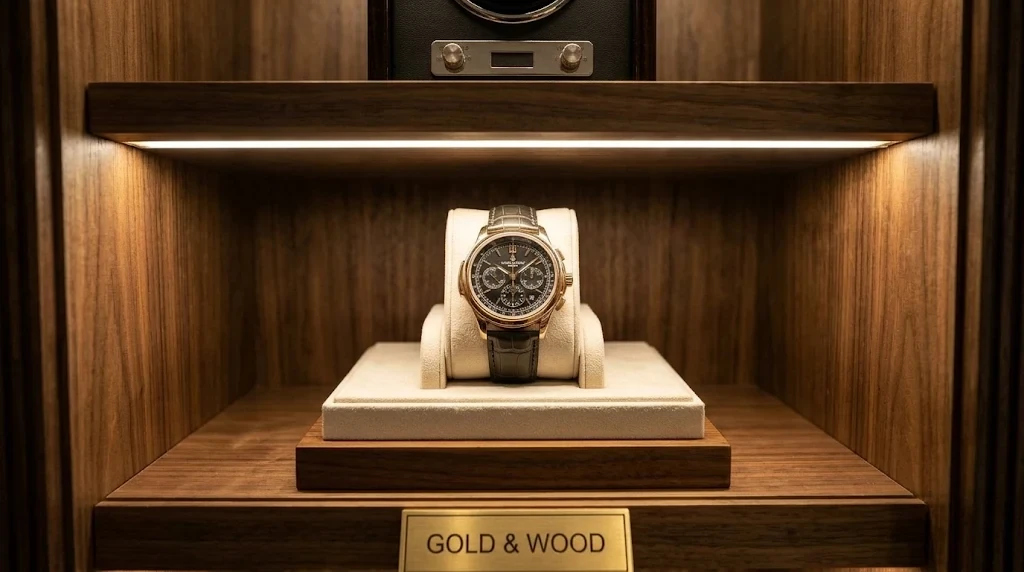
Gold & Wood’s diamond-set eyewear appears repeatedly in expensive-glasses lists at approximately $55,000.
However, descriptions of the model and diamond configuration vary across reports. Some use “253 Diamond” as the identifying name, while other accounts describe a Prestige configuration with a different total stone count.
That inconsistency is a reason to be precise, not to embellish the story.
For a genuine purchase or valuation, the relevant documents would concern the exact pair: its model, materials, gemstone specifications, condition, and supporting paperwork.
The frequently repeated price is useful historical context. It should not be treated as a current offer or a proven all-time record.
6. Bentley Platinum Eyewear: Why Historical Reporting Matters
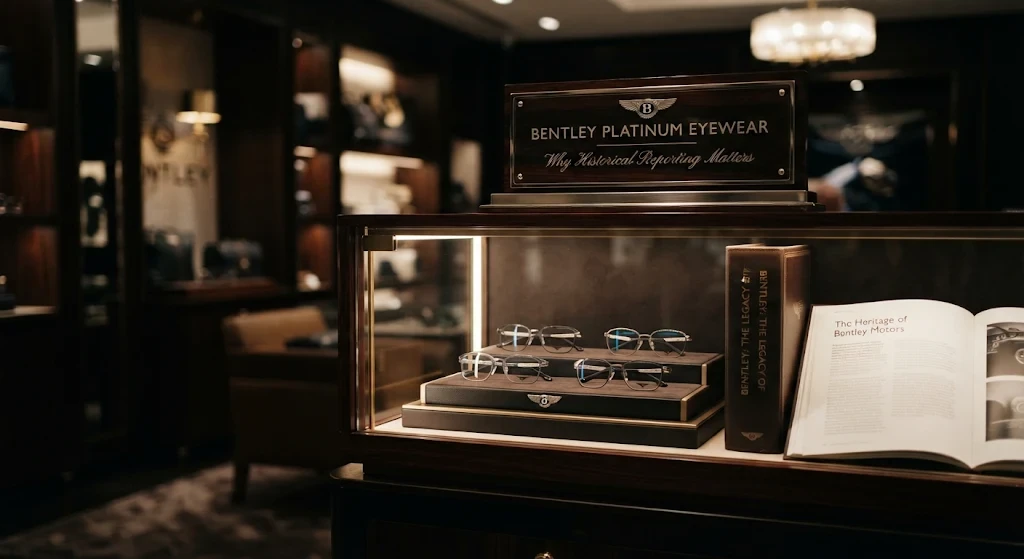
Bentley’s eyewear collaboration with Estede provides a useful example of how luxury prices change as they are repeated.
A 2010 report from the MIDO eyewear trade platform described a limited-edition collection using precious metals, with platinum sunglasses priced at up to $15,000.
Some later luxury lists publish a much higher figure.
Those numbers should not be blended into one confident claim. They may reflect different reporting, editions, currency conversions, or errors. Without documentation for the exact version, the difference remains unresolved.
The lesson applies well beyond eyewear: a precise-looking number is only as useful as the evidence supporting it.
Why Do Lists of the Most Expensive Glasses Disagree?
They often measure different markets without explaining the change.
One article may rank products by reported launch price. Another includes antique auction estimates. A third adds celebrity-owned glasses with a documented sale result.
All three can contain interesting objects. They cannot automatically produce one reliable leaderboard.
An estimate is an expectation
An auction estimate indicates an anticipated price range before bidding. It is not evidence of a completed transaction.
Likewise, an auction page marked “closed” establishes that the event has ended. On its own, that wording does not disclose whether a particular lot sold or for how much.
An asking price belongs to the seller
A price attached to an object tells you what has been requested. It does not necessarily tell you what a buyer accepted.
This matters especially when a unique piece receives extensive publicity but little public transaction information follows.
A sale result needs its own context
For an auction result, establish whether the published total includes the buyer’s premium and which currency was used.
For a private transaction, be clear about how the price became public. Repetition across websites does not turn an unsupported claim into independent confirmation.
What Actually Drives the Value of Exceptional Eyewear?
There are several different answers.
Materials can contribute substantially when the object includes valuable gemstones or precious metals.
Craftsmanship concerns how those materials are shaped, assembled, and finished.
These qualities are also central to leading luxury accessories brands, where material selection, distinctive design, and exceptional craftsmanship contribute to an item’s appeal.
Provenance establishes the object’s documented history, which can be especially important for celebrity memorabilia and antiques.
Rarity describes how unusual the object is, although scarcity alone does not guarantee demand.
The most interesting pieces may combine several of these qualities. Even then, future resale remains uncertain.
Before Accepting a Record-Price Claim
- Identify the exact object or model.
- Check whether the number is an estimate, valuation, asking price, or sale result.
- Record the date and original currency.
- Look for documentation of the materials.
- Distinguish antique lenses from later frames.
- Check provenance claims separately.
- Avoid describing publicity language as an independently verified record.
Frequently Asked Questions
What are the most expensive glasses ever made?
Among the most valuable publicly offered examples are the Mughal diamond- and emerald-lens spectacles presented by Sotheby’s in 2021, each estimated at £1.5 million to £2.5 million. Those estimates are not confirmed sale prices.
What are the most expensive modern sunglasses?
Chopard’s De Rigo Vision collaboration is widely cited at approximately $400,000. That figure is a historical reported valuation, rather than a universally verified sale record.
Are Gold & Wood’s $55,000 glasses the most expensive?
No. Higher published estimates and valuations exist. Their repeated inclusion in luxury lists does not establish an all-time record.
Why can celebrity glasses cost so much?
Their value may depend on a documented connection to the wearer. Buyers are collecting a particular object’s history, not simply its frame materials.
Does a million-pound estimate mean the glasses sold for that amount?
No. An estimate describes an anticipated auction range. A completed sale and its result require separate confirmation.
Are expensive glasses a reliable investment?
No purchase should be treated as a guaranteed investment. Authenticity, provenance, condition, buyer demand, and transaction costs all affect the outcome.
Final Thoughts
The most expensive glasses ever made are fascinating because they ask us to see eyewear differently.
A diamond can become a lens. An emerald can become a window. A familiar pair of sunglasses can acquire extraordinary meaning through the person who wore them.
Enjoy those stories and keep the price labels attached to the right kind of evidence. The objects are remarkable enough without turning an estimate into a sale.

