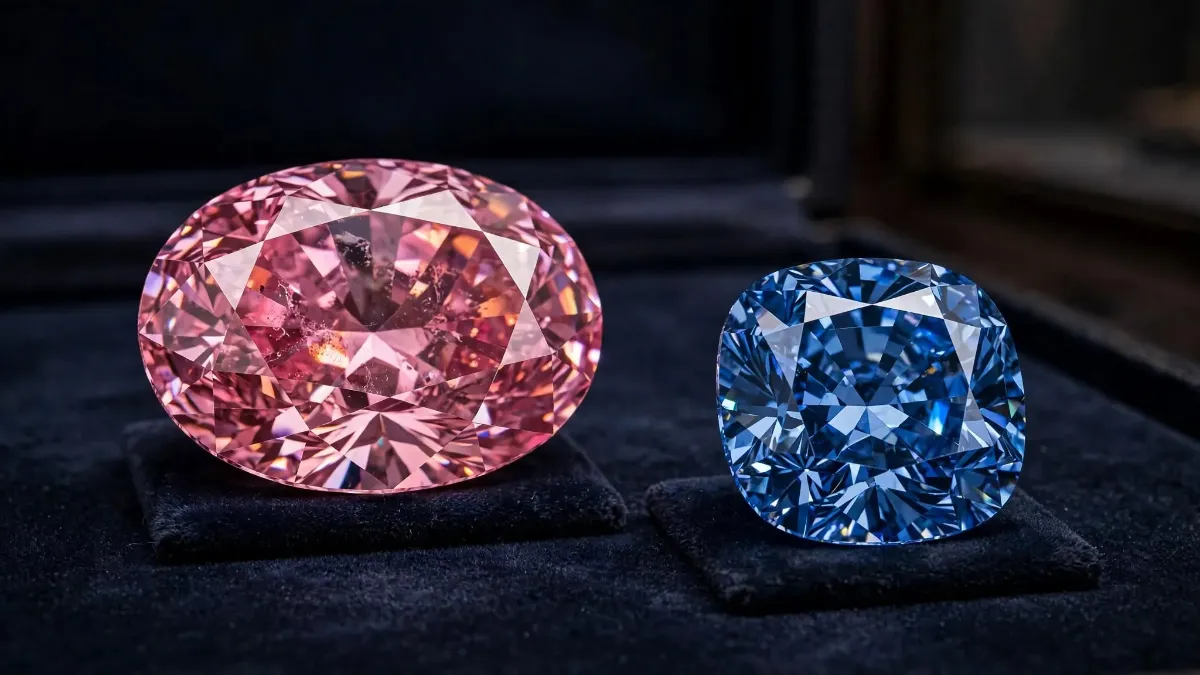
In November 2013, a 59.60 carat pink diamond crossed the block at Sotheby’s Geneva. The Pink Star, as it was named, had been cut from a 132.5 carat rough discovered by De Beers in Africa, polished over two years, and graded flawless vivid pink, the most coveted combination in the colored diamond world.
Bidding opened and did not stop. When the hammer fell at $83.2 million, the buyer, a New York diamond cutter named Isaac Wolf, stood to applause. Within months, Wolf had defaulted, and the stone returned to the auction house, which later sold it privately for $71.2 million to Chow Tai Fook, the Hong Kong jeweler, who renamed it the CTF Pink Star.
That private sale remains the record price ever paid for a diamond, and the episode, a world record hammer followed by a default, is the perfect introduction to a market where the numbers are real, the drama is real, and the arithmetic is unlike any other.
Here are the eight diamonds that define the summit, what makes a stone worth a fortune, and why the market keeps paying.
1. The CTF Pink Star: $71.2 Million
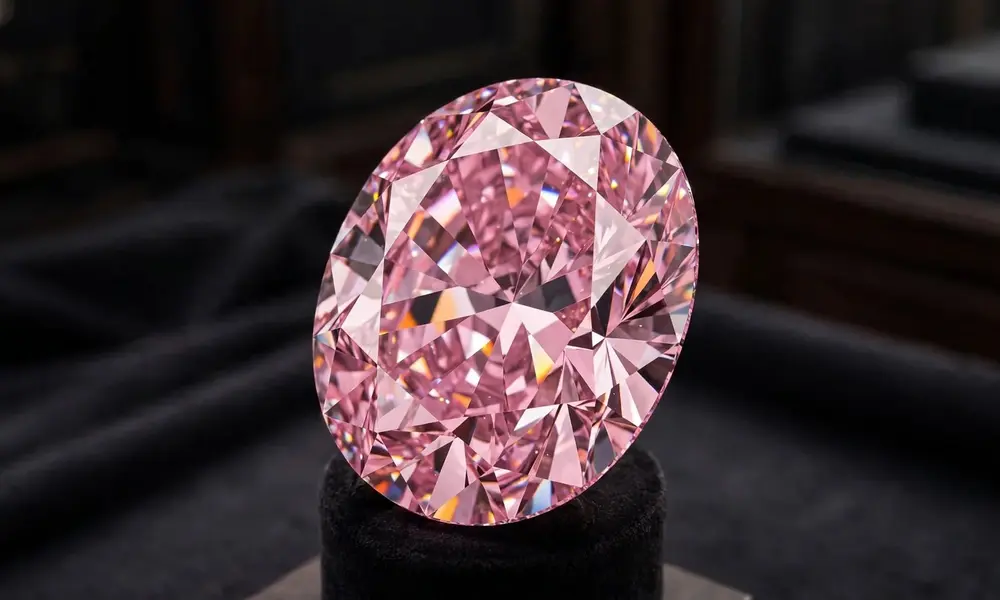
The 59.60 carat oval mixed cut vivid pink, internally flawless, holds the record as the most valuable diamond ever sold. Its color grade, Fancy Vivid Pink, sits at the apex of the pink hierarchy, and its size, nearly 60 carats of that saturation, is a geological anomaly: fewer than a handful of comparable stones exist.
The stone’s journey, from De Beers rough to Sotheby’s drama to a Hong Kong showroom, traces the market’s migration east, where the deepest bidding pools for colored diamonds now live.
2. The Graff Lesedi La Rona? The Williamson Pink Star: $49.9 Million
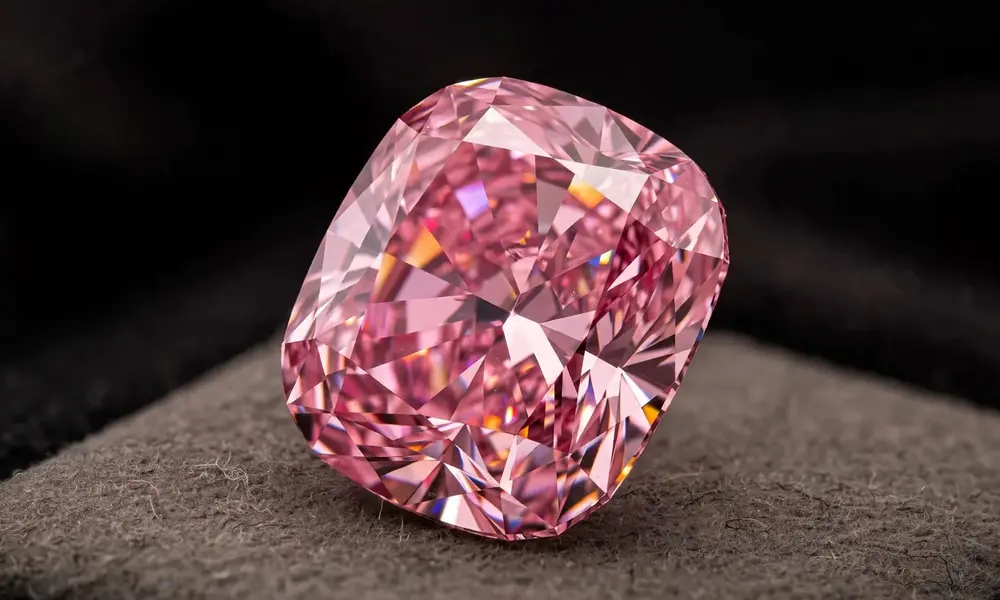
The second highest price belongs to a smaller stone that proved saturation outranks size: the Williamson Pink Star, a 11.15 carat vivid pink cushion cut, sold at Sotheby’s Hong Kong in 2022 for $49.9 million, roughly $4.5 million per carat, the highest per carat price ever achieved for any diamond at auction.
The lesson rewritten the market’s mathematics: a truly vivid smaller stone can outvalue a larger lesser one, and the per carat record now matters as much as the total.
3. The Winston Blue: $23.8 Million
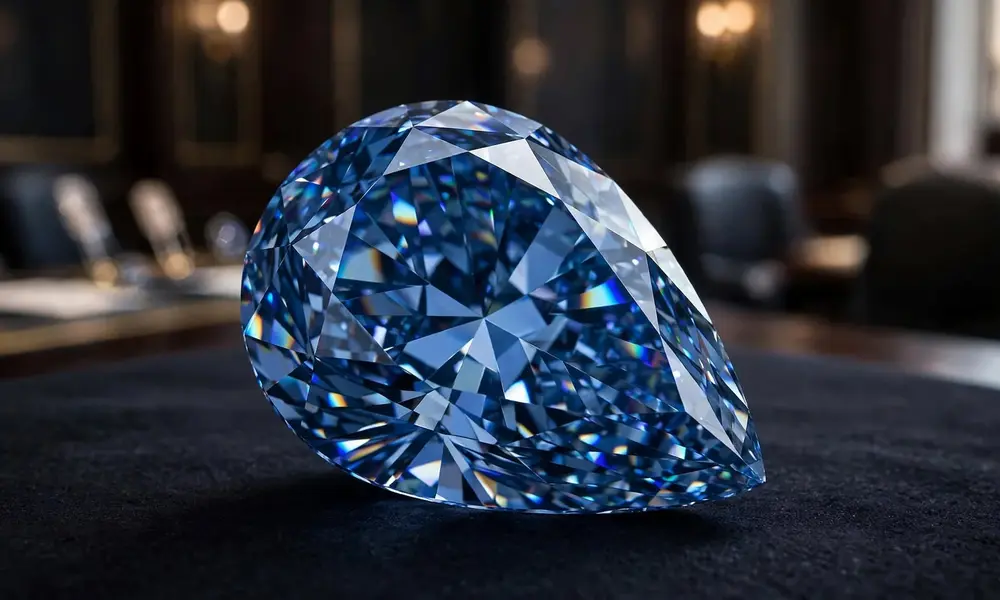
The largest flawless vivid blue diamond ever graded at the time of its sale, a 13.22 carat pear shape, sold at Christie’s Geneva in 2014 for $23.8 million and was renamed the Winston Blue by its purchaser, Harry Winston Inc. Blue diamonds, colored by trace boron, are rarer than pinks, and the stone’s flawless clarity in a saturated blue placed it in a category of perhaps one.
It remains the benchmark against which every important blue is measured.
4. The Zoe Diamond: $32.6 Million
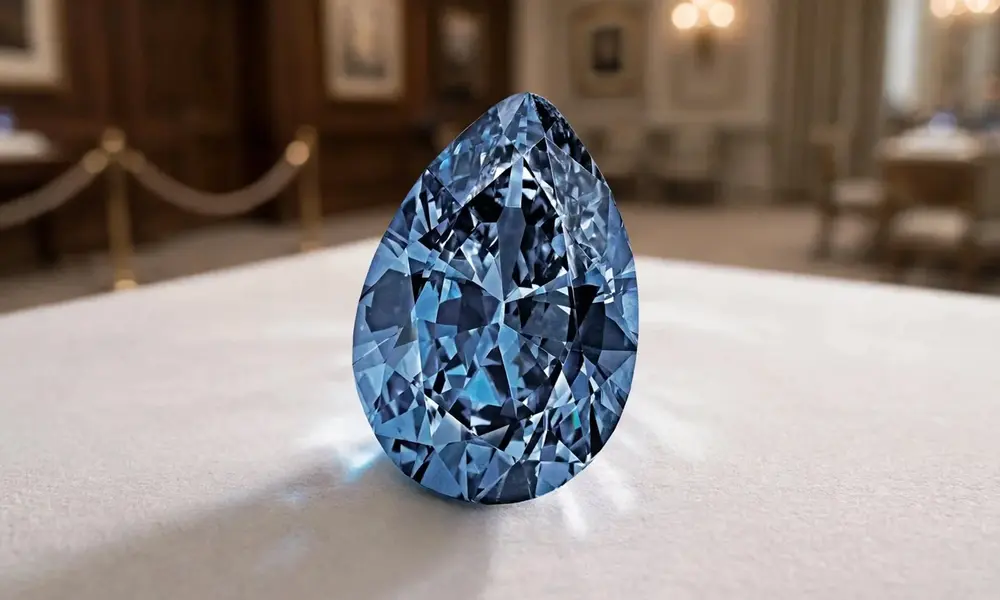
The 9.75 carat vivid blue pear shape, from the estate of Rachel Mellon, sold at Sotheby’s New York in 2014 for $32.6 million, roughly $3.3 million per carat, a result that stunned the room and reset blue diamond pricing overnight.
The Zoe, renamed by its buyer, demonstrated that the American market could produce colored diamond records to rival Geneva and Hong Kong, and its price per carat stood as a record for blue diamonds for years.
5. The Blue Moon of Josephine: $48.5 Million
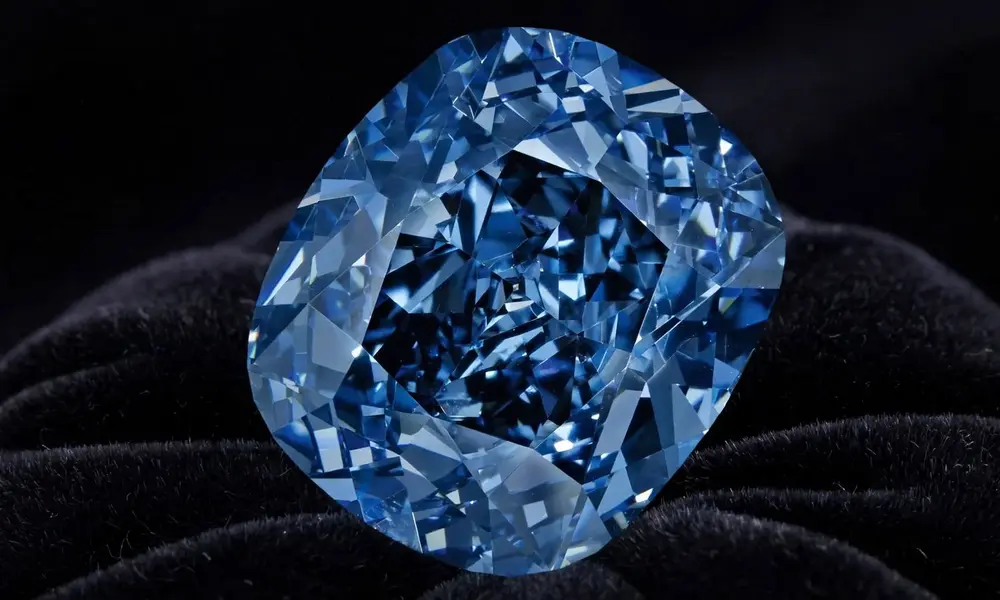
The 12.03 carat cushion cut vivid blue, internally flawless, sold at Sotheby’s Geneva in 2015 for $48.5 million, roughly $4 million per carat. The buyer, a Hong Kong billionaire, renamed it for his daughter, beginning a tradition of record stones renamed for family members that has become the market’s signature.
The Blue Moon’s color, a saturated electric blue of the rarest grade, places it among the most chemically perfect colored stones ever certified.
6. The Oppenheimer Blue: $57.5 Million
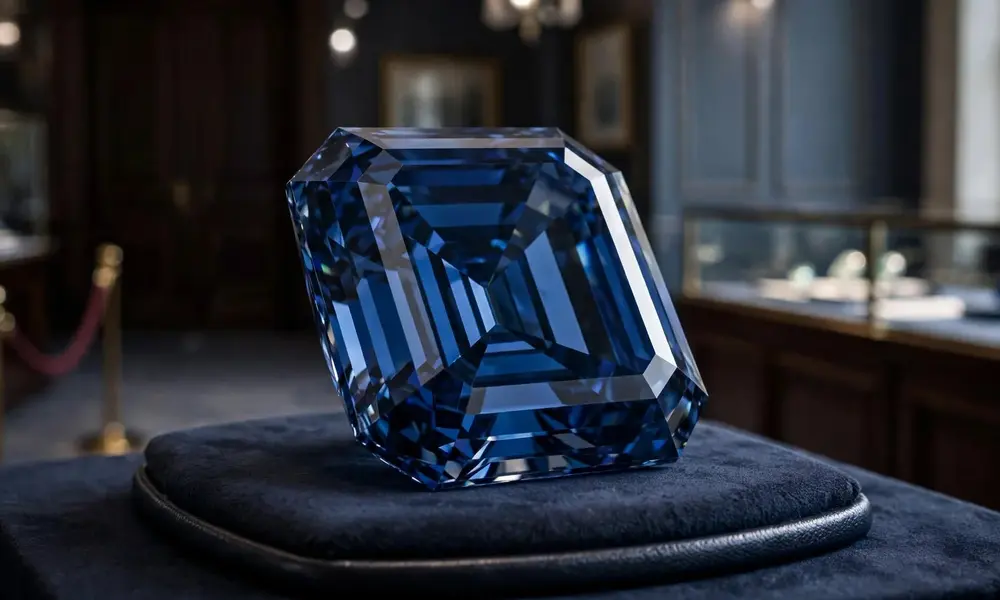
The largest vivid blue diamond ever offered at auction at the time, a 14.62 carat emerald cut, sold at Christie’s Geneva in 2016 for $57.5 million.
Its provenance, from the Oppenheimer family’s collection, added the weight of a century of diamond history to its geological rarity, and its emerald cut, which shows color more demandingly than any other shape, demonstrated the stone’s saturation without concealment. It held the record for any diamond sold at auction for seven months.
7. The Graff Pink: $46.2 Million
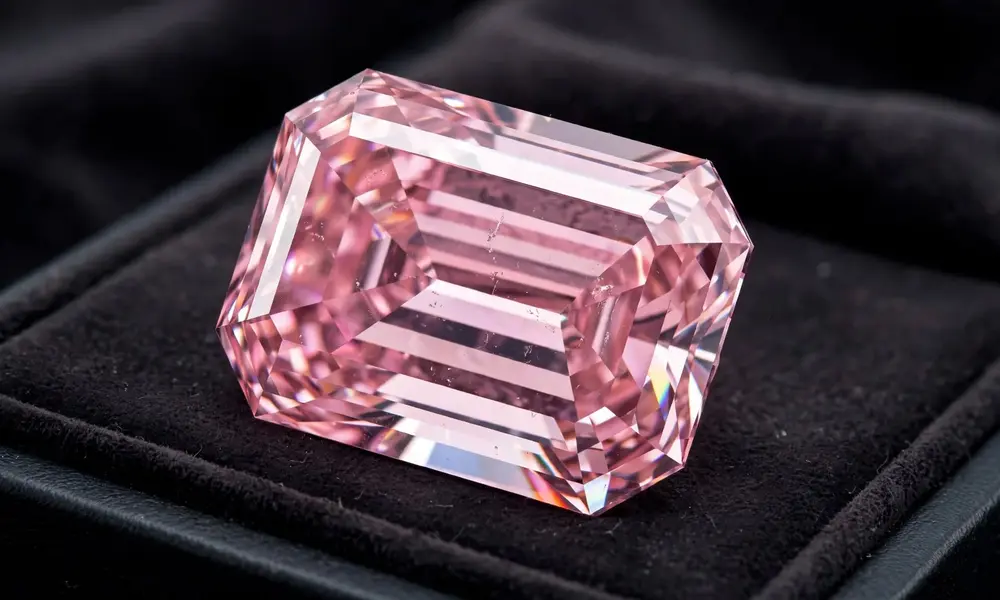
Before the Pink Star, there was the Graff Pink: a 24.78 carat vivid pink emerald cut, sold at Sotheby’s Geneva in 2010 for $46.2 million to Laurence Graff, who renamed it and later recut it to improve its clarity grade, a controversial decision that traded carats for grade.
The Graff Pink set the modern colored diamond market in motion, proving that a single stone could command the price of a major painting and launching the decade of record prices that followed.
8. The Cullinan Dream? The Rock: $21.9 Million
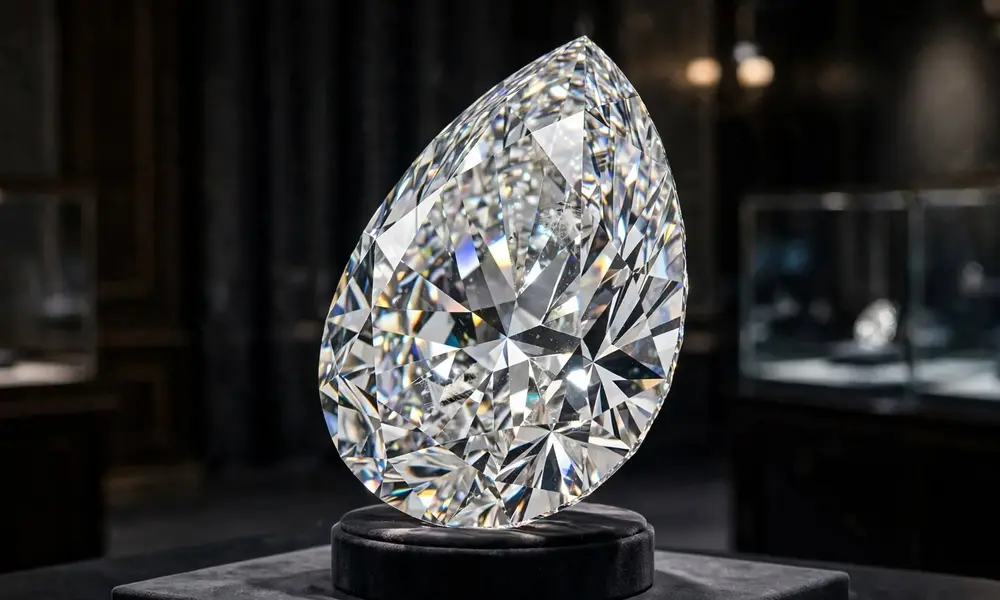
The largest white diamond ever sold at auction, a 228.31 carat pear shape known simply as The Rock, sold at Christie’s Geneva in 2022 for $21.9 million, or roughly $96,000 per carat, a fraction of the colored stones’ per carat prices.
The result confirmed the market’s hierarchy decisively: size alone does not compete with color, and the greatest white diamonds, however vast, price by different rules than the vivid pinks and blues that own the record book.
What the Eight Teach
The market’s logic compresses into three rules. Color outranks everything: a 10 carat vivid pink outvalues a 100 carat white, as The Rock’s result against the Williamson Pink Star proved. Provenance compounds: the Oppenheimer name and the Mellon estate added millions to stones whose qualities alone justified fortunes.
And the market’s center of gravity has moved east, with Hong Kong producing the deepest bidding for the rarest colors, a migration that shows no sign of reversing. The stones themselves, formed over billions of years and colored by accidents of chemistry measured in parts per million, carry the ultimate scarcity: there will never be another.
For the houses that cut and sell them, our jewelry brands ranking maps the landscape this market crowns.
FAQs
What is the most expensive diamond ever sold?
The CTF Pink Star, at $71.2 million in a private sale following its $83.2 million auction record that was later defaulted. The Williamson Pink Star’s $49.9 million stands as the highest price for a diamond sold at auction without subsequent default.
Why are pink and blue diamonds so expensive?
Extreme rarity: vivid pinks and blues occur in a tiny fraction of diamonds, colored by distortions and trace elements respectively, and stones of high saturation over ten carats are geological anomalies. Supply is fixed and discoveries are not keeping pace with demand.
What does per carat price mean?
The total price divided by the stone’s weight, the market’s standard for comparing diamonds of different sizes. Colored records now exceed $4 million per carat, while even the largest whites price under $100,000 per carat.
What happened with the Pink Star’s default?
The winning bidder at the 2013 auction failed to complete the purchase, and Sotheby’s assumed the stone and later resold it privately to Chow Tai Fook for $71.2 million, which stands as the official record.
Are auction diamonds a good investment?
The top tier has appreciated over decades, but the market is illiquid, expertise dependent, and driven by a thin pool of ultra wealthy collectors. Buy for beauty and legacy; treat investment claims with caution.
Who buys these diamonds?
Hong Kong and mainland Chinese jewelers, private collectors, and the great houses, including Harry Winston and Graff, which often rename record stones after purchase, a practice that has become part of the market’s theater.
What is a Fancy Vivid grade?
The highest color saturation grade assigned by the Gemological Institute of America, representing the most intense color display. Vivid is the grade that separates record stones from merely expensive ones.
Why do buyers rename record diamonds?
Ownership theater and branding: renaming a record stone, the Graff Pink, the Blue Moon of Josephine, the CTF Pink Star, embeds the buyer’s identity in the market’s history, a form of legacy that the price alone cannot buy.