
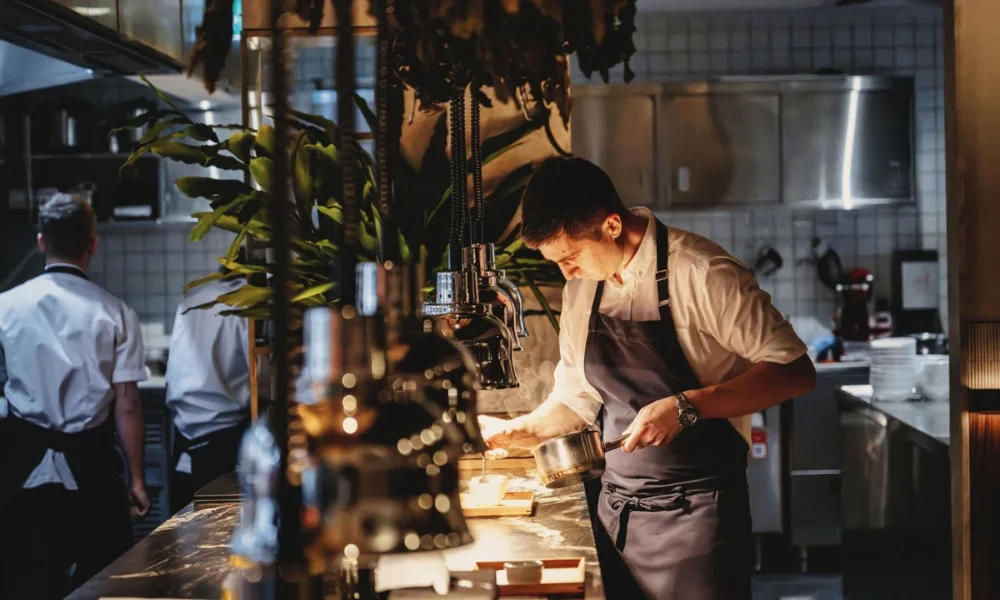
Three months on a waiting list. A reservation confirmation you screenshot and send to three people. Then the night arrives, you sit down at a table that costs more than your last flight, and somewhere between the fifth amuse-bouche and the sommelier explaining biodynamic moon cycles, you quietly wonder if you are enjoying yourself to try fine dining trends or just performing the idea of enjoying yourself.
That hollow feeling drove people away from high-end restaurants in real numbers. And for a stretch in the 2010s, some of those restaurants earned the backlash. Hushed rooms where servers moved like they were auditioning for something. Tasting menus with fourteen courses, none of which left you full. Food plated so precisely it felt wrong to disturb it.
Without wasting much time, let’s get straight to exploring fine dining trends 2026.
Restraint Has Become the Quality of a Luxury Fine Dining Trends
Luxury in dining used to mean more. More courses, more imported ingredients, more tableside theatrics involving flames or dry ice or a server lowering a glass cloche to release something aromatic. It was impressive the first time. Eventually it started feeling less like a meal and more like an escape room with better lighting and a dress code.
The Michelin Guide’s own inspectors flagged this shift clearly in their 2026 cycle. Restaurants earning recognition now tend to carry a single, very clear point of view. Walk in and within two dishes you understand what the chef believes in, where the food originates, and what they are trying to say. No hedging, no crowd-pleasing detour toward something universally safe.
Somni in Los Angeles made this argument in the most unambiguous terms possible. Chef Aitor Zabala returned after years away, opened a 14-seat counter, and built the whole experience around Californian produce and precision with almost nothing extraneous. He earned three Michelin stars in 2025. The waiting list confirms the rest.
What You Actually Get at the Table for Fine Dining Trends
Shorter menus, usually. Fewer courses with more thought per dish rather than more dishes with less thought each. A sense that somebody made a real decision about every element on the plate rather than adding ingredients because the kitchen had them. If you have spent good money somewhere before and walked away feeling like you ate a lot without tasting much, the 2026 version of this experience tends to land differently.
Fire Dining Trends Has Taken Over Michelin Kitchens and it Makes Complete Sense
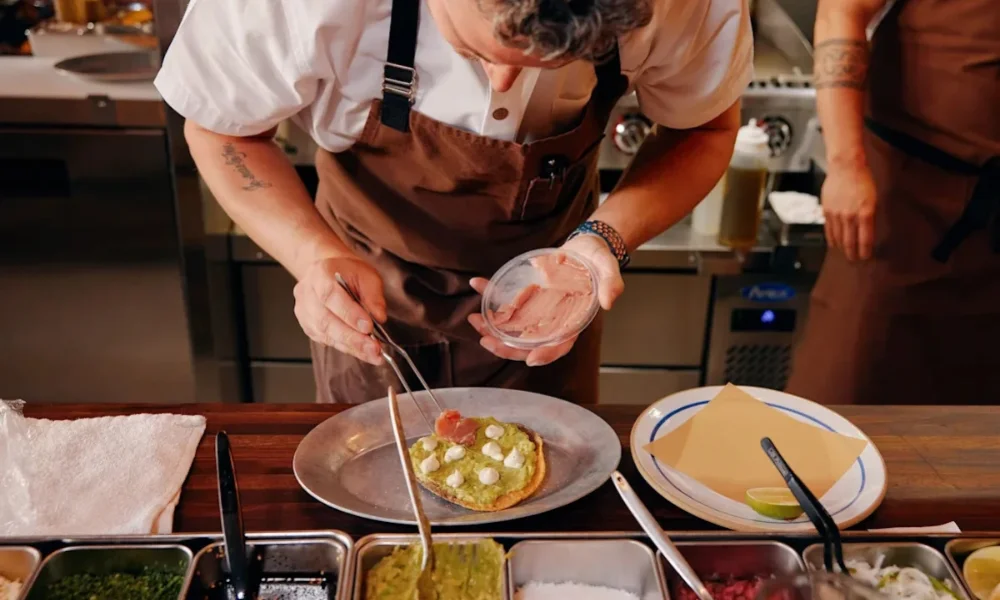
Walk into enough starred restaurants in 2026 and you will notice something you probably did not expect: smoke. Actual wood smoke, or the particular dry char smell of binchotan, the white Japanese charcoal that burns hot enough to sear fish skin into something close to lacquer. Open hearths, embers, kitchens that look like they belong in a forest clearing rather than a culinary institute.
Michelin inspectors named fire cooking the most consistent trend across regions in their fine dining trends 2026 reporting.
In Sweden, restaurants are building menus around slow open-flame cooking in natural settings. In Buenos Aires, open-fire grilling at Don Julio has matured into something inspectors describe with the same language they use for a serious French kitchen. In China, charcoal-cooked clams finished with fermented soy have moved out of their street food origins into dining rooms with reservation lists measured in weeks.
There is a reason this has staying power beyond fashion.
Smoke and char communicate in ways that precision cooking sometimes does not. You can smell what is happening before the plate arrives. Diners have figured out that a menu built around fire usually signals a kitchen built around honesty, and that is hard to resist at any price point.
What Fire-Forward Michelin Restaurants Typically Offer
- Open or semi-open kitchens where the fire is part of the atmosphere rather than hidden behind a partition
- Proteins with deliberate char and irregular edges rather than the geometric plating that photographs well but sometimes tastes like caution
- Fermented or acidic elements running alongside smoky ones throughout the menu, keeping each course balanced rather than exhausting
Cultural Clarity Has Replaced Globetrotting Fusion on Starred Menus
There was a decade where the safest thing a high-end restaurant could do was borrow from everywhere. Japanese technique, South American sourcing, Nordic plating, French sauce base. Some of it produced genuinely exciting food. A lot of it produced expensive meals designed by committee to offend nobody, which in food terms means committing deeply to nothing.
Restaurants earning recognition in fine dining trends 2026 go the other direction entirely. Chishuru in London serves West African food through fermentation, fire, and spice with no translation for Western palates and no softening of complexity.
Adejoké Bakare, the first Black woman to own and lead a Michelin-starred restaurant in the UK, built her menu around the conviction that it did not need to be made easier to eat. It won a star. Casa Marcial in rural Asturias took a third star in 2025 with no imported luxury ingredients at all. Just Asturian land, local breeds, and a seasonal rhythm the Manzano family has followed in the same building for years.
Sustainability in Gourmet Dining Has Finally Moved Past the Talking Stage
For a while, sustainability was something restaurants mentioned alongside their Instagram handle. A gesture, mostly. A line about locally sourced ingredients that sometimes meant they bought mushrooms from a farm one county over while everything else came through a standard distributor. Diners noticed. Eventually Michelin did too.
The Green Star, Michelin’s designation for genuine sustainable gastronomy, carries real weight in 2026. Restaurants holding it are running actual zero-waste kitchen systems and building menus backward from what their farm partner harvested that week.
L’Enclume in Cumbria holds three Michelin stars and runs its own farm, which determines the menu rather than the other way around. SingleThread Inn in California operates the same way. These are not side projects. They are the whole model the restaurant is built around.
- Menus that rotate weekly based on harvest conditions rather than quarterly rebrands
- Wine lists built primarily around natural and biodynamic producers rather than the usual prestige labels
- Visible use of off-cuts, lesser-known cuts, and vegetable parts that most kitchens would discard without a second thought
Younger Chefs Are Running the Rooms That Matter Most Right Now
The 2025 and 2026 Michelin cycles produced something that caught traditionalists off guard: a genuine wave of stars going to chefs under forty who did not come up through the usual decades-long apprenticeship pipeline.
They built their own approach towards fine dining trends without waiting twenty years for permission to run a kitchen their way.
MAE in Barcelona runs on three chefs with Spanish and Latin American roots blending Mediterranean produce with tropical technique. Creative without being earnest about it, which is harder than it sounds.
Adrien Cachot at Vaisseau in Paris went the opposite direction entirely: blind menus, monochrome room, no hand-holding, heavy use of offal and fermented marine ingredients. First star earned by refusing to make anything easier for anybody. Both approaches worked because both chefs knew exactly what they were doing and why, and that conviction is not something you can fake across a twelve-course meal.
How to Book a Michelin Star Experience That Actually Delivers
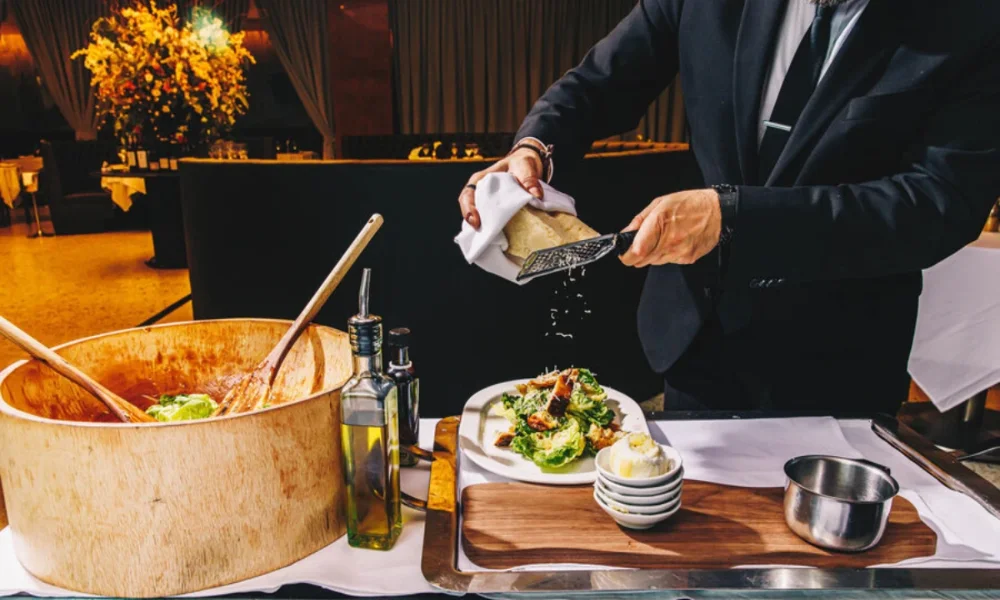
Knowing the landscape is one thing. Spending several hundred dollars on a dinner that genuinely clicks rather than one that technically impresses you while leaving you oddly unmoved is something you have to engineer a little.
- Read about the chef, not just the star count. A one-star room with a chef who has spent a decade obsessing over a single regional cuisine will usually feed you better than a three-star dining room coasting on reputation built years ago.
- Counter dining is worth seeking out. Ten to twenty seats, open kitchen, chefs finishing dishes within arm’s reach. The attention per diner at a counter restaurant runs at a different level than a full dining room, and several of the most exciting Michelin experiences in 2026 are built exactly this way.
- Book around the season. Farm-driven restaurants serve completely different food in spring versus autumn. Pick the season that matches what you actually want to eat, not just whichever slot happens to be available.
- The Bib Gourmand is genuinely underrated. Michelin’s designation for outstanding food at moderate prices regularly produces meals that match one-star experiences at a fraction of the spend. Worth starting there if budget is a real consideration.
For specific restaurant recommendations across gourmet dining destinations, Praviceler’s fine dining and gourmet guide covers real experiences across Michelin-recognised and independently respected restaurants updated through 2026.
Where Fine Dining Actually Stands in 2026
The version of this world that made people feel like they needed a rehearsal before showing up is not entirely gone. There are still rooms operating that way. But they are no longer setting the terms of any conversation that matters.
What is setting those terms now is honesty. Fire you can smell from the street. Food that tastes like it grew somewhere specific and was cooked by somebody who cared about that specificity. Cultural identity served without apology. Menus that change because the farm said so, not because a marketing team decided it was time for a seasonal refresh.
If you wrote off fine dining after a bad experience somewhere, your timing to revisit is actually pretty good. The kitchens earning attention in 2026 are the ones that remember why people started caring about food in the first place.
Frequently Asked Questions
What are the biggest fine dining trends for 2026?
Fire and ember cooking leads, followed by a strong move toward cultural specificity in menus, genuine farm-to-plate sustainability, and shorter tasting menus with more intentional courses. Michelin inspectors in early 2026 also flagged mushrooms as a centrepiece ingredient, tea used as a cooking medium, and fermented flavours crossing into cuisines that would not have touched them five years back.
How do Michelin star restaurants get rated?
Anonymous inspectors dine unannounced and assess five things: ingredient quality, technical mastery, harmony of flavours, how clearly a chef’s personality shows up in the food, and consistency across multiple visits. Decor, service, and price do not factor into star ratings. The Green Star is awarded separately for sustainability practices and is entirely independent of the star calculation.
Is a Michelin star restaurant worth the money in fine dining trends 2026?
Depends on which restaurant. A one-star lunch at a chef-driven neighbourhood room can run less than a casual city dinner and deliver a more interesting meal. The Bib Gourmand category consistently punches above its price. Three-star experiences cost real money, but the rooms earning those ratings in 2026 are more personal and focused than they were a decade back, which makes the spend easier to justify.
What is the difference between a Michelin star and a Green Star?
A Michelin star covers cooking quality only. A Green Star is awarded separately for genuine sustainable gastronomy commitment, covering sourcing, waste systems, energy use, and supply chain transparency. Some restaurants hold both. In 2026 it has become a credible signal worth factoring into your booking, particularly if where your food comes from matters as much to you as how it tastes.
Which countries have the most Michelin star restaurants for fine dining trends?
France leads with 31 three-star restaurants, Japan holds 20, the United States has 16. Spain, Italy, and the UK carry strong representation across the one and two-star tiers. In 2026 the guide expanded into the American Southwest and is preparing entries for New Zealand and the Philippines, reflecting where serious cooking is actually happening rather than where it has historically been assumed to.
