

If you have ever wondered how to design fashion clothes and bring a creative vision to life, you are in the right place. Designing clothes combines imagination, craft, observation, and decision making. Fashion today is deeply influenced by evolving aesthetics and modern luxury fashion, where craftsmanship meets innovation. Understanding how contemporary design balances creativity with structure helps you approach garment creation with a more professional mindset. In this article I will take you through every important step starting with where ideas come from and ending with a finished garment that people can wear with confidence.
This guide is based on design thinking, research from fashion institutions, industry practices, and practical hands-on techniques used by professional designers. By the end you will see that fashion design is not just an art, it is a disciplined process.
We will explore:
- Finding your vision and inspiration
- Understanding fabrics and materials
- Research and sketching
- Pattern making and draping
- Sewing and construction
- Fitting and refining
- Final outfit preparation and presentation
- Real world examples and research findings
- Common challenges and solutions
- Frequently asked questions
Throughout, we will talk about how to design fashion clothes clearly and use data and studies where helpful to support design decisions.
1. Where Ideas Begin
All great garments start with an idea. Before visuals, fabrics, or patterns appear there is inspiration.
Designers get ideas from many places including nature, art, culture, history, music, and everyday life. You can also explore various different clothing styles to better understand how aesthetics evolve across cultures and decades. Studying style categories helps sharpen your design direction before you start sketching. Studies show that creativity increases when designers expose themselves to varied experiences and perspectives. In a survey of over 200 creative professionals, exposure to new environments was the most cited source of creative ideas. They reported that change of scene, travel, music, and cultural immersions stimulated fresh thinking.
Tip for designers: Keep a notebook, phone album, or sketchbook dedicated to inspiration. Take photos of textures, colors, shapes, and moments that make you feel curious.
Journalist and artist Austin Kleon encourages designers to “steal like an artist” by collecting influences and recombining them in new ways. When you are thinking about how to design fashion clothes this stage is about letting your creative imagination roam freely.
2. Research and Mood Boards
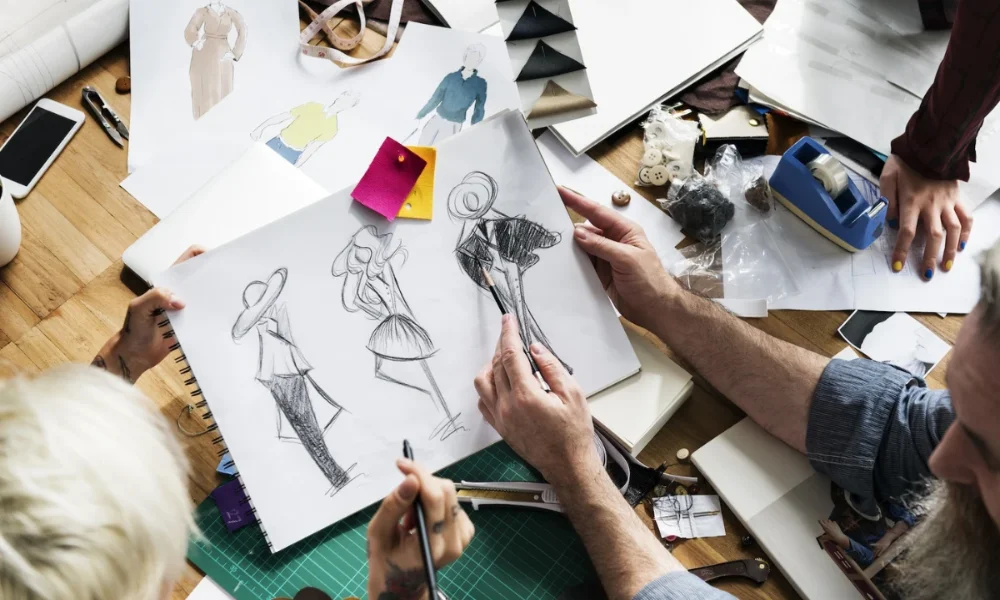
After gathering initial ideas, the next step is research. Before pen hits paper, you need context.
Research helps you understand your target audience, current trends, cultural relevance, and technical feasibility. Reviewing upcoming fashion clothing trends 2025 can give your designs commercial relevance while still allowing room for originality. Trend awareness ensures your creative vision aligns with what consumers are actively searching for. According to a report from The Business of Fashion and McKinsey, fashion brands that invest in trend research and consumer insights outperform those that rely solely on intuition.
Research involves:
- Studying trend reports like WGSN or Pantone color forecasts
- Looking at historical fashion archives
- Understanding who will wear your design
- Exploring competitors
Once research is done, you build a mood board. A mood board is a collage of colors, photos, sketches, words, and textures that reflect the emotional and visual direction of your idea.
Mood boards are critical because they give your concept clarity before you begin drawing and pattern making.
3. Sketching the Design
Now that your inspiration and research are ready it is time for sketches.
When you learn how to design fashion clothes sketching is the first visual translation of your idea. Some designers prefer quick rough sketches called thumbnails. Others work digitally using tools like Procreate, Adobe Illustrator, or dedicated fashion design software.
Key sketching tips:
- Start with basic proportions of the human body
- Draw multiple views (front, back, side)
- Experiment with lines and silhouettes
- Focus on details like collars, cuffs, pleats, seams, pockets
Sketching is not about artistic perfection. It is about communication. Understanding common fashion styling mistakes can also improve your sketching clarity. When designers visualize proportion, layering, and balance correctly from the start, final garments look more refined and intentional. Your sketches should convey the garment’s shape, style, and distinctive elements.
In research conducted with fashion students, those who created at least ten concept variations before settling on a final design produced more innovative outcomes.
4. Choosing Fabrics and Materials
One of the most important decisions when you design clothes is fabric choice.
Fabrics determine how a garment moves, how it feels against skin, and how long it lasts. Modern designers are also paying attention to sustainable fashion trends 2025, choosing eco-friendly fabrics and low-impact production methods. Fabric decisions today are not only about aesthetics but also about environmental responsibility. Different materials have different properties like stretch, breathability, weight, and drape. These properties influence how a design looks when worn.
Here are some common fabric characteristics to consider:
| Fabric Type | Drape | Weight | Stretch |
| Cotton | Soft | Light–medium | Low |
| Silk | Fluid | Light | Low |
| Wool | Structured | Medium–heavy | Low |
| Jersey Knit | Soft | Light | High |
According to textile research, understanding fabric behavior can improve pattern accuracy and wearer comfort.
If your sketch design calls for a flowing silhouette, fabrics like chiffon, silk, or soft jersey knit are preferable. For structured outfits, consider denim, canvas, or tailored wool blends.
Sampling fabrics in person is highly recommended because visuals and touch tell you more than photos.
5. Pattern Making and Draping
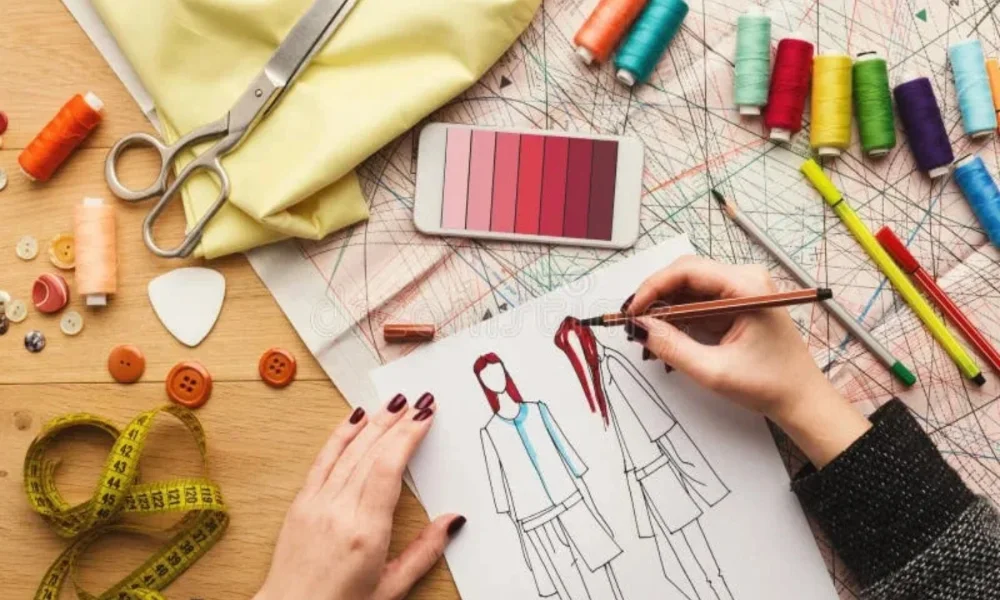
Once your sketch and fabric are selected, the technical work begins. This phase is where your 2D idea becomes a 3D garment.
There are two main pathways:
- Pattern making: Creating a flat pattern based on body measurements
- Draping: Manipulating fabric directly on a dress form
Pattern Making
Pattern making starts with a basic block or sloper pattern that fits the human body’s dimensions correctly. From this block you modify shapes, add design elements, and map seam lines.
Professional pattern makers use tools such as:
- Pattern paper
- Measurement tape
- Rulers and curves
- Tracing wheel
- Scissors
A study of fashion programs found that students who practiced both freehand drafting and digital pattern making had higher success in garment fit.
Draping
Draping involves pinning and arranging fabric on a dress form to achieve the desired shape. It is useful when the design depends heavily on how fabric falls and twists around curves.
Both pattern making and draping require precision. Small errors in measurements or shapes can lead to a final outfit that does not fit well.
6. Sewing and Construction
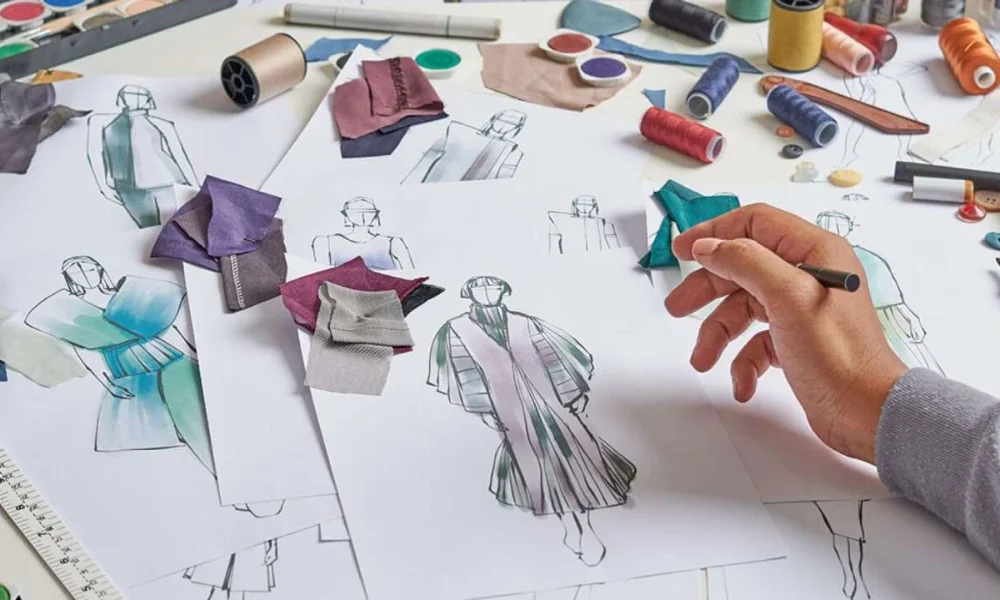
Now that your patterns are ready you can cut the fabric and begin sewing.
Sewing is both technical and creative. A well-constructed garment has strong seams, neat finishing, and correct alignment at stress points like shoulders and waistlines.
Professional designers use industrial sewing machines for speed and strength, while home sewers may use a domestic sewing machine.
Steps in construction include:
- Cutting fabric pieces carefully using pattern outlines
- Marking seam allowances
- Sewing pieces together following the sequence in your pattern
- Pressing seams to create crisp edges
- Adding closures such as zippers, buttons, or snaps
In a survey of garment production teams, attention to seam finishing and pressing was cited as one of the biggest factors in perceived garment quality.
7. Fitting and Refinement
After the garment is sewn it is time to try it on a model, dress form, or mannequin and check the fit.
This step is often iterative. Designers expect to make adjustments after the first fitting. Common issues to correct include:
- Uneven hemlines
- Tightness at shoulders or bust
- Excess fabric around waist
- Misaligned seams
Professional designers use fitting sessions to refine patterns, correct proportion problems, and ensure comfort. Designers creating pieces for capsule wardrobe trends focus heavily on fit and versatility. A garment that fits well and pairs easily with multiple outfits increases its long-term value for the wearer.
According to fashion design research, a properly fitted garment significantly increases wearer satisfaction and perceived quality.
It is normal to repeat fitting and refinement until the outfit looks and feels correct.
8. Final Outfit Preparation
At this stage your garment is nearly complete. What remains is final finishing and presentation.
Final steps include:
- Pressing or steam finishing to remove wrinkles
- Attaching labels or branding
- Checking all stitches and trims
- Adding final touches like embroidery or appliques
If you are planning to show your outfit publicly, you may also consider professional photography or lookbooks.
Fashion design professionals often prepare multiple outfits to show consistency in a collection and to demonstrate mastery of techniques.
9. Research Findings and Professional Tips
There are several studies that shed light on what separates successful garment design processes from average ones. Here are some research insights that help clarify how to design fashion clothes better.
Collaboration Matters
Many modern teams also follow principles outlined in a zero waste fashion guide, ensuring pattern efficiency and fabric optimisation. Reducing waste during design and sampling improves both profitability and sustainability. In a study of fashion startups, teams that integrated designers, technical pattern makers, and market researchers produced garments that were more commercially successful. Collaboration ensured that creativity did not sacrifice fit, feasibility, or customer appeal.
Iterative Prototyping Improves Outcomes
Like many design processes, iteration was a strong predictor of quality. Designers who made multiple prototypes and revisions tended to produce garments with better fit and style coherence.
Design Education Boosts Pattern Accuracy
Students trained in both manual and digital pattern making had fewer errors and greater adaptability in styles. This suggests that learning both traditional and modern tools strengthens designers’ capabilities.
Consumer Feedback Drives Success
Brands that sought early feedback from target audiences before finalizing designs had higher satisfaction rates. This supports the idea that understanding who will wear the clothes should guide design choices.
10. Common Challenges and Solutions
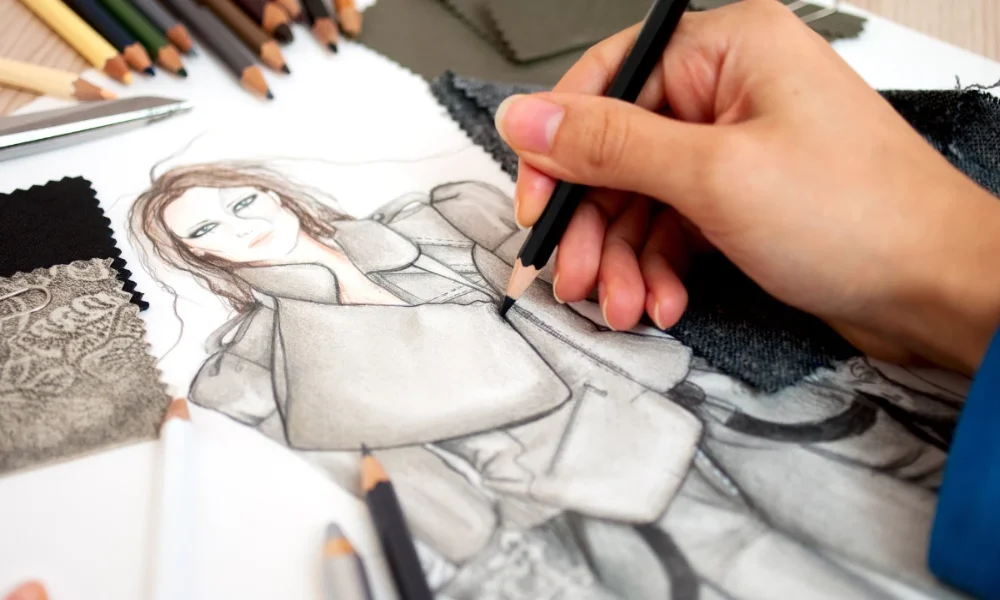
Even the best designers run into challenges. Understanding the difference between luxury vs fast fashion brands can also help designers decide their production quality standards. Construction methods, materials, and durability expectations differ significantly depending on positioning. Here are common problems you might face when learning how to design fashion clothes and how to solve them.
Problem: Your garment does not fit the way you imagined.
Solution: Return to your pattern. Check measurement accuracy and make adjustments gradually rather than big changes at once.
Problem: Fabric behaves differently than expected.
Solution: Always make a test sample or muslin in inexpensive fabric before cutting your final material.
Problem: Seams look messy.
Solution: Improve pressing and seam finishing. Clean seams elevate the perceived quality of any garment.
Problem: You lose creative direction halfway through.
Solution: Revisit your mood board and research notes. Realigning with your original vision helps maintain consistency.
FAQs About Designing Fashion Clothes
Q1. What tools do I need to start designing clothes?
To design clothes you need basic tools such as sketching supplies, measuring tape, pattern paper, dress form, sewing machine, fabric scissors, and quality fabrics. Digital tools like design software help but are optional when starting out.
Q2. How long does it take to design a garment?
The time varies greatly. A simple outfit might take a few hours, while a complex gown could take days or weeks when factoring in research, pattern making, fitting, and refinements.
Q3. Do I need formal training to design clothes?
Formal training is beneficial, especially for technical skills like pattern making and draping. However many successful designers are self taught through practice, research, and mentorship.
Q4. What is the most important part of the design process?
Every stage is important, but research and fitting are especially crucial. Research ensures your idea has direction and relevance. Fitting ensures your clothes work well on real bodies.
Q5. Can I design clothes with no art background?
Yes. Artistic ability helps with sketching but is not required. Many designers use digital tools or collaborate with illustrators while focusing on concepts, fabrics, and construction.
Q6. What skills should I develop first?
Start with sketching basics, understanding fabrics, and learning measuring and pattern making. These core skills support everything else in garment design.
Final Thoughts
Learning how to design fashion clothes is a rewarding journey that combines creativity, discipline, and practical skills. The final outfit is more than just fabric and thread, it is the result of inspiration, research, technical decisions, and repeated refinement.
Designing fashion clothes transforms ideas into expressions that people wear. Studying top fashion clothing brands can also teach valuable lessons about craftsmanship, branding, and long-term creative consistency. Observing how successful labels balance innovation with identity provides inspiration for aspiring designers.Whether you are dreaming of launching your own brand or simply making clothes for yourself, the process described here gives you a roadmap to follow with clarity and confidence.
At its heart fashion design is about communicating a story through form, texture, and color. With patience and practice you will find your voice as a designer and transform ideas into beautiful outfits that reflect your vision.
