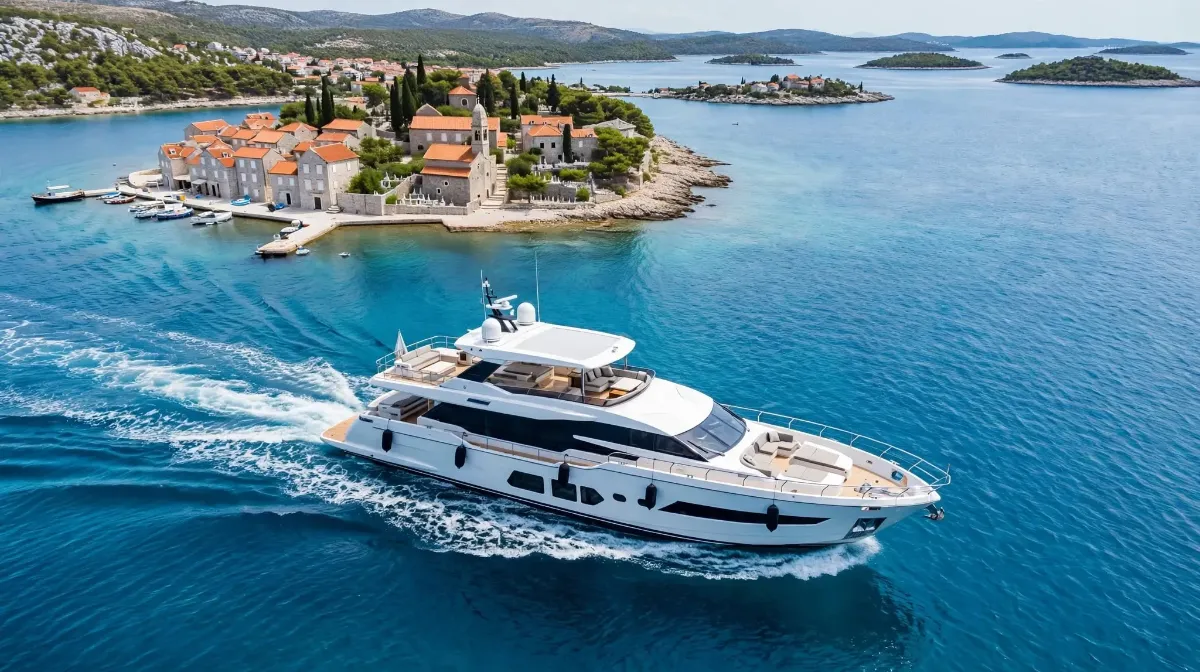
Croatia yacht charter cost, asked plainly, brings the pleasantest surprise of the series. A properly crewed luxury motor yacht on this coast begins around twenty thousand euros per week in high season. This is a rung below the western Mediterranean’s entry price. A representative week at the center of the market totals near one hundred and five thousand euros. This figure includes Croatian VAT, the provisioning allowance, and the crew’s gratuity.
The pricing ladder follows the western Mediterranean’s structure, but with a discount at every rung. The fleet is Europe’s newest, and the marinas are sensibly priced. The coast’s prosperity also arrived recently enough that its pricing has not yet adopted the Riviera’s habits.
What earns Croatia its own cost article is not the premium but the particularities. The VAT rate is twenty five percent, the highest in the European Union. It belongs in every budget from the first conversation. There is also a range of park fees and permits unique to this coast. The finest anchorages sit inside national parks, which charge the yacht rather than the guest.
This guide walks through the pricing ladder and these particularities in turn. It then closes with the itemized week, following the approach this series has maintained since Monaco.
I had the coast’s economics explained by a Split broker over coffee on the Riva. The charter fleet was spread across the harbor below us. Everyone arrives expecting the Croatian price, she said. Everyone is right, but then they forget the VAT and the parks. They reach the final reconciliation surprised.
The VAT is twenty five percent, she said. The parks cost pennies, and the marinas are a third of what you would pay in Saint Tropez. Do the arithmetic in the right order, and this coast is the best value in the Mediterranean. My job is to make sure the arithmetic is done in the right order.
Her arithmetic provides the framework for this guide.
The Base Rate, by Size
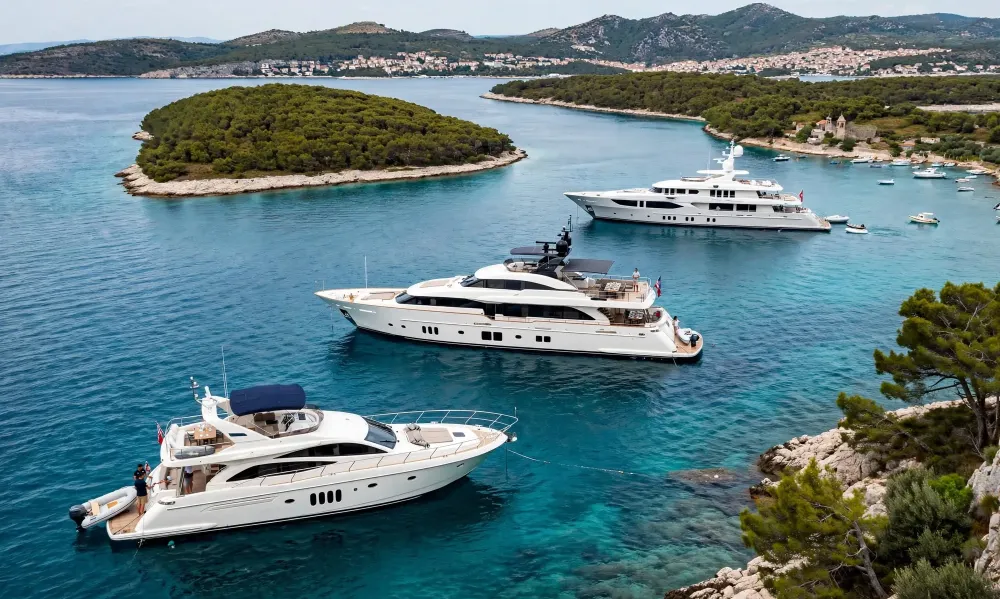
The ladder matches the western Mediterranean’s with the Croatian discount at every step.
The entry of the luxury category, crewed motor yachts of twenty to twenty four meters, runs twenty to thirty thousand euros weekly in high season, four or five cabins and a professional crew of three or four, and on this coast the size serves the week perfectly, since the island hops are short and the anchorages generous.
The center of the market, twenty five to thirty five meters, runs forty to eighty thousand weekly, crews of five to eight, and it is the band the representative week below is built from; most repeat guests on this coast settle here, and the Croatian rates let the same budget reach a band higher than the Riviera would allow.
Above thirty five meters the market opens into the superyacht category, from one hundred thirty thousand weekly to well beyond half a million, though the coast’s true character lives below this line; the Adriatic’s luxury is the water and the islands, not the flagships, and the fleet’s center of gravity sits lower and happier than the western seas’.
Crewed sailing yachts and catamarans deserve the category’s usual note, sharpened here: Croatia holds the largest catamaran charter fleet in the Mediterranean, the island geography having made the twin hulls the coast’s native boat, and a crewed catamaran of forty to fifty feet runs fourteen to twenty eight thousand weekly, the best value in this series.
The Croatian Particularities
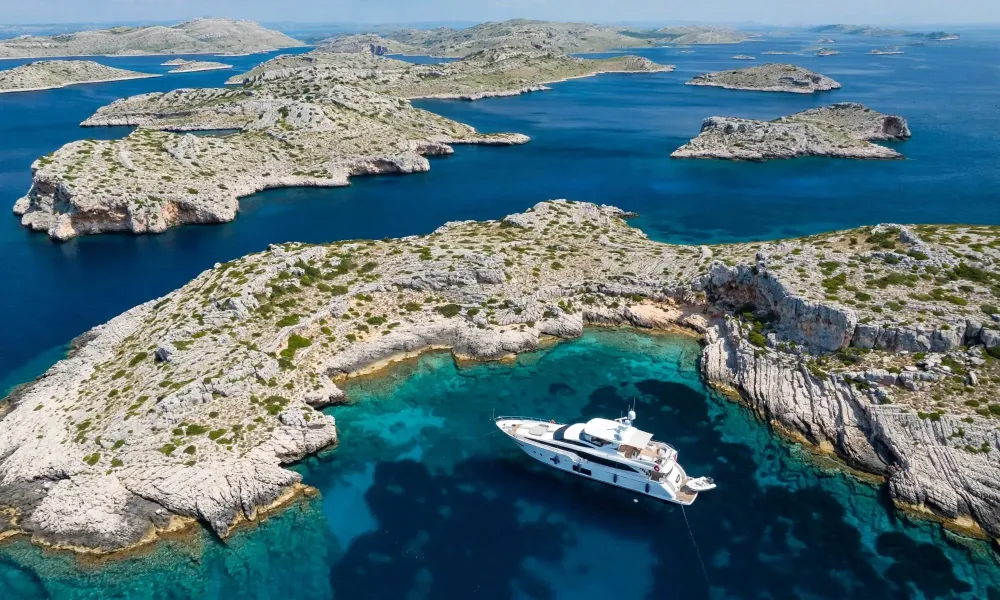
Three adjustments to the western accounting, each specific to this coast.
The VAT comes first, and it must be stated plainly. Croatian embarkation carries VAT at twenty five percent on the charter fee. This is the highest rate in the European Union. On a sixty thousand euro base, that amounts to fifteen thousand euros. This figure belongs in the first draft of the budget, not the last.
The broker’s written quote should state the VAT without any ambiguity. Guests comparing Croatian and French totals should also remember one important detail. Croatian base rates are lower by more than the VAT difference. That is the honest way to make the comparison.
The park fees come second, and these are the coast’s signature expense. The finest anchorages of the week include the salt lakes of Mljet and the lunar islands of the Kornati. Both sit inside national parks that charge the yacht an entrance fee based on its length. At the center of the market, this usually means a few hundred euros for the day, sometimes a little more.
The fees are modest and collected as part of the routine. They are also the direct price of keeping these anchorages quiet and uncrowded. The park system is why Mljet’s lakes hold a dozen boats rather than a hundred. The prepared guest pays the entrance fee with the satisfaction of a membership. The fee serves as the coastline’s quiet defense of the very thing the guest came to find.
The marinas third, in the guest’s favor: the coast’s marina chain, uniformly managed and sensibly priced, runs roughly a third of the Riviera’s figures, two hundred to four hundred euros nightly for the center of the market in high season at the prime spots, less at the smaller harbors, and anchoring, which this coast rewards more than any in the series, costs nothing at all outside the parks.
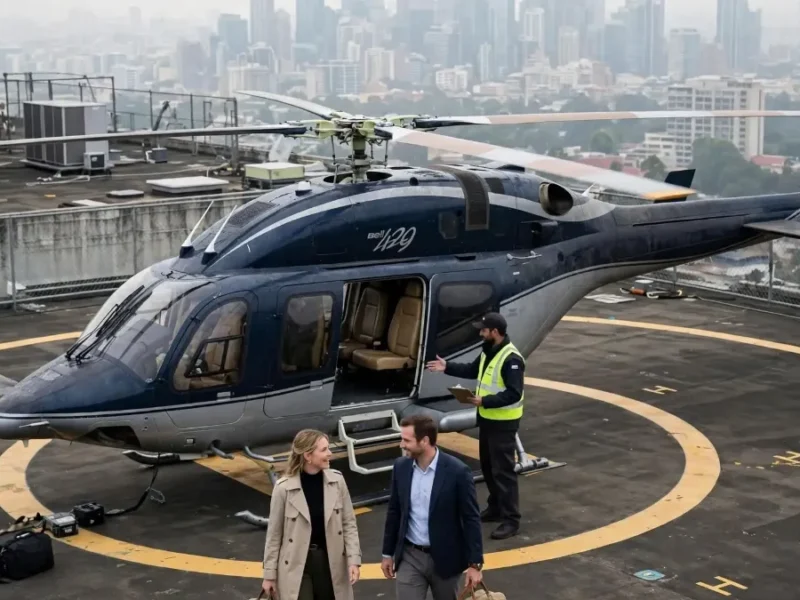
The flight into Split or Dubrovnik completes the companion layer, booked alongside the yacht as the series has advised since Sardinia, a discipline Pravi Celer has long recommended in its notes on the carriers that keep the journey civilized, for the holiday’s first hours are set before the coast is sighted.
The Full Accounting of a Representative Week
A high-season week at the center of the market, aboard a thirty-meter crewed motor yacht based in Split, starts with a sixty thousand euro base. The costs are itemized in the series’ established manner.
The base charter is sixty thousand euros. The provisioning allowance is thirty percent, or eighteen thousand euros. This covers fuel, the coast’s table, marina nights, and park fees. The final amount is reconciled against receipts at week’s end.
VAT at twenty five percent applies to the charter fee. This adds fifteen thousand euros. The crew gratuity follows the customary five to fifteen percent range, adding another three to nine thousand euros.
The total lands between ninety six thousand and one hundred and two thousand euros. This is the most modest representative week in the series. The September version steps down further still. You get the same islands, the same water, and half the company.
Two closing notes, as the series’ custom has become. The first is that the Croatian reconciliation reads more simply than the western weeks’. The fuel is small on the island hops, and the park fees appear as lines so modest they serve as reminders of what they protect. The marina nights, a third of the Riviera’s figures, never once require defending.
The second is structural, and guests arriving from the western seas ask about it constantly. The one-way arrangement between Split and Dubrovnik, the coast’s signature, carries no premium of its own.
The broker quotes the yacht, the crew handles the relocation, and the guest simply sails south and flies home from the second city. The holiday’s geometry is quietly perfect. Compare this with the western Mediterranean’s one-way premiums, where changing ports midweek prices like a second charter. The Adriatic’s good sense shows in yet another line where the coast could have charged more and, so far, has chosen not to.
Frequently Asked Questions
How much does a yacht charter in Croatia cost?
Crewed motor yachts run from about twenty thousand euros weekly at the entry of the category to beyond half a million for superyachts, with the center of the market between forty and eighty thousand in high season, a rung below the western Mediterranean at every step.
Why is Croatian VAT so high on charters?
Croatia applies its standard rate of twenty-five percent to crewed charters, the European Union’s highest. The honest comparison weighs it against the coast’s lower base rates, which more than absorb the difference at every step of the ladder.
What are the national park fees?
Entrance fees charged to the yacht by length at Mljet and the Kornati. They amount to a few hundred euros for the day at the center of the market, collected as routine and directly buying the anchorages’ emptiness.
How much are marinas in Croatia?
Roughly a third of the Riviera’s figures: two hundred to four hundred euros nightly for the center of the market in high season at the prime marinas, a little less at the smaller harbors, with anchoring free outside the parks and the coast rewarding it more than any in the series.
Is Croatia good value against Italy or France?
In this series’ accounting, the best value in the Mediterranean: a newer fleet, sensible marinas, modest park fees, and base rates lower than the western seas at every rung of the ladder, even after the VAT is counted honestly.
When is the cheapest season for a Croatia yacht charter?
May and October carry the lowest rates and the quietest anchorages, with the maestral still reliable and the konobas still open. September offers the warmest water at stepped-down prices, while July and August carry the coast’s modest premium.