A crewed catamaran charter in Capri recovers something the motor yacht has forgotten about the island. The island was always approached by sail.
For twenty centuries, the only way to reach Capri was by crossing the gulf from the mainland. Travelers made the passage under canvas or by oar. The island’s whole mythology, from the emperors and grand tourists to the sirens and poets, arrived this way. They watched the cliffs rise and the Faraglioni gradually emerge from the blue.
The motor yacht crosses in silence and arrives within minutes. This is convenient, but somehow misses the point. A catamaran under sail crosses at the island’s own historical speed. The approach becomes what it once was: a small ceremony of arrival. The island has been performing this ceremony for its visitors since before the villas were built.
I had the catamaran’s island case made by a sailing captain based in Sorrento. We spoke over coffee in Marina Grande while his catamaran took on supplies behind us. The island is small, he said. Motor yachts race around it in an hour and have seen everything but understood nothing.
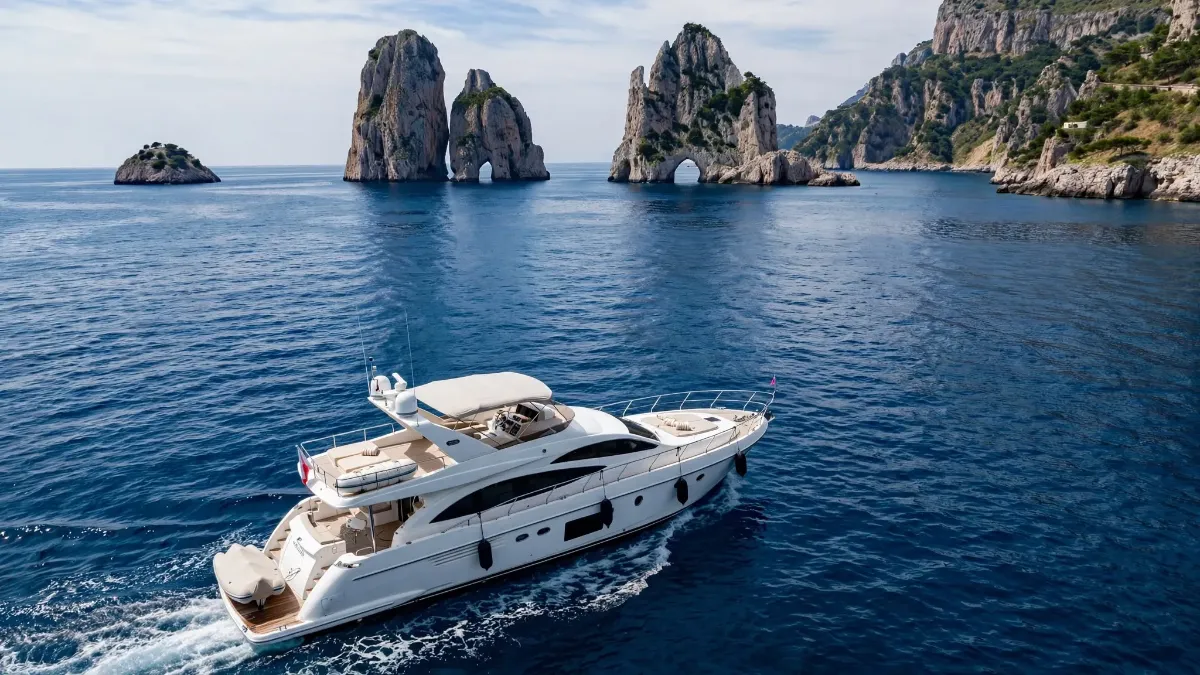
We take the day at a slower pace. The sails go up for the crossing, and we pass the Faraglioni under sail with the engines off. By midmorning, we reach the buoy off Marina Piccola. The afternoon belongs to the Piazzetta, followed by a sail home at dusk. The cliffs turn dark against the golden sky.
People think the catamaran is the quiet boat for families, he concluded. And it is. But around this island, it is also the traditional choice. Tradition here is not a decoration. It is the island’s whole business.
His case, with the honesty this series owes its readers, follows. It covers what twin hulls genuinely offer on this coast, the shape of the week, the costs, and the method.
The Honest Case for the Twin Hulls
Four advantages, each stated plainly and without inflation.
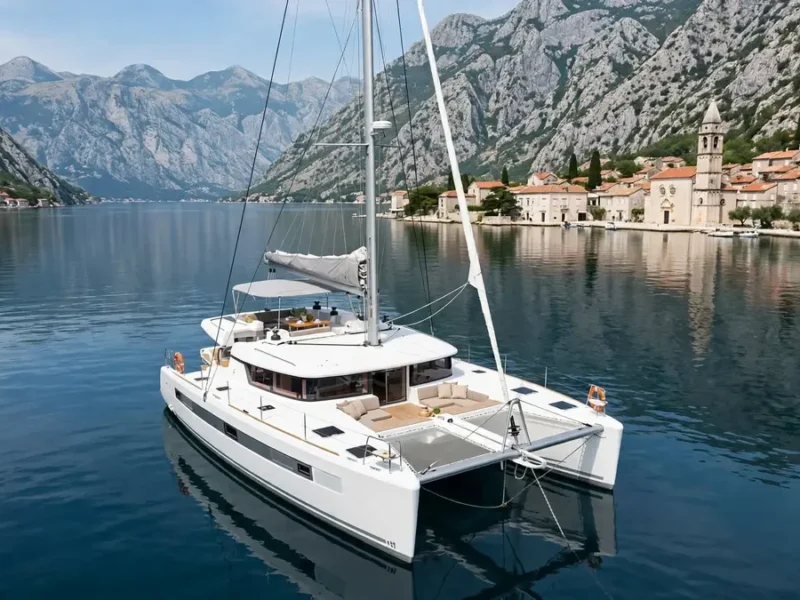
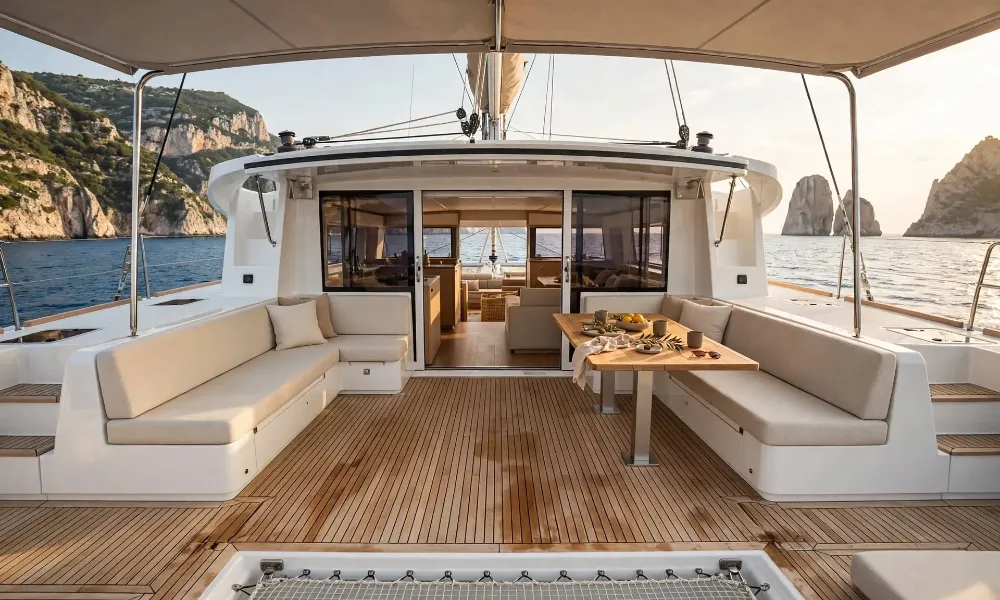
The deck comes first, and it makes the strongest impression. Capri’s days are lived between the water and the town. The catamaran’s spacious, level living floor, shaded cockpit, and forward trampolines create the island’s finest terrace. Picture aperitivo hour at the buoy as the Faraglioni turn gold, a long lunch aboard with the cliffs as your backdrop, and children diving from the platform between courses.
A motor yacht with the same sleeping capacity divides its space into levels and corridors. The catamaran spreads everything beneath the open sky. On an island where the entire economy revolves around the view, that open space is worth more than horsepower.
Sailing comes second, and this is the island-specific argument. The gulf’s passages from Sorrento to Capri, Capri to Positano, and onward to Procida offer genuine half-day sailing experiences. The maestrale builds through the afternoon, while the catamaran covers these distances at speed and remains a sailing vessel. The crossing becomes the day’s main event rather than just a commute. This is exactly how travel around the island worked during its first twenty centuries.
Stability comes third. The buoy field off Marina Piccola sits in the island’s lee but still catches the afternoon wash from passing traffic. The twin hulls keep the evening’s table level despite the movement. It is the same remarkable advantage this series has praised from Saint Tropez to Sardinia. Here, it is delivered beneath the most famous cliffs in Europe.
Price comes fourth, and it quietly makes a decisive difference. The catamaran costs about half as much per week as a motor yacht with equal sleeping capacity. On this island, the savings have an obvious destination: the restaurants and dining experiences.
The Piazzetta’s restaurants, Marina Piccola’s waterfront lunches, and the coast’s magnificent terraces represent the island’s real luxury. The twin hulls help fund these experiences without apology. It is a sensible approach to spending well with family aboard. Pravi Celer has long shared this judgment in its notes on the best hotels for families, and the same principle holds true afloat.
The Week the Island Gives You
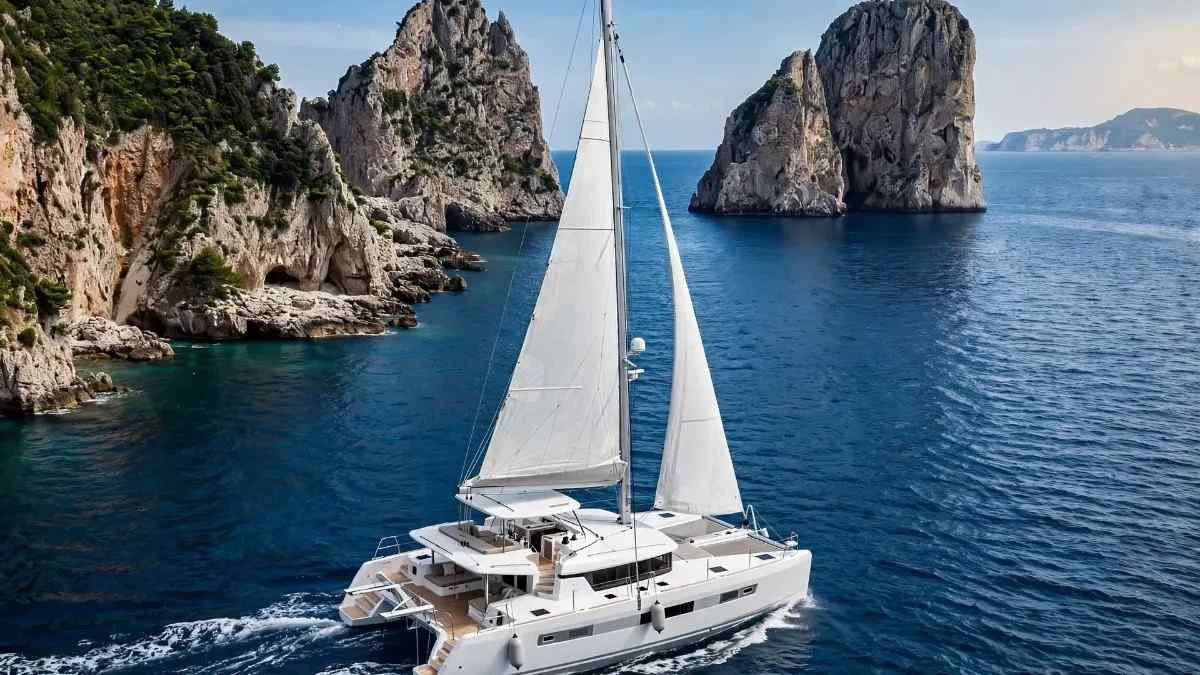
The classic itinerary starts from a base in Sorrento or Naples. It runs for seven nights and never feels rushed. Guests board at the base and enjoy their first dinner beneath the lemon pergolas. The provisioning conversation introduces the island’s local food culture, including its lemons, sea urchins, and wines from the Vesuvian slopes.
Sailing Across to Capri
Day two begins with the first crossing under sail. The island gradually rises from the water, just as sailors have watched it appear for twenty centuries. The buoy off Marina Piccola is reached by midmorning, leaving the afternoon free for the Piazzetta and its whitewashed walls. Later, guests enjoy aperitivo at the buoy as the Faraglioni turn golden and the day boats head home.
Exploring Capri’s Waters
Day three belongs entirely to the island’s water. The tender departs at first light to visit the grottoes before the queues begin. The Faraglioni provide the setting for a swim, with the platform serving as the children’s headquarters. Lunch takes place aboard because the deck offers a better terrace.
Sailing Along the Coast to Positano
Day four takes the yacht along the coast to Positano under sail. Guests admire the town’s colourful facade from the sea before enjoying lunch on a terrace above its cascade of houses. The return journey takes place at dusk, with the island’s silhouette standing against the last golden light.
Discovering Capri’s Mountain Views
Day five is reserved for exploring the island’s heights. A chairlift ride to Monte Solaro offers a panorama that explains the entire gulf. The Villa Jovis walk follows the emperor’s cliffside route, while the quiet western coves provide a peaceful setting for an afternoon swim.
Visiting Procida or Ischia
Day six brings a journey to Procida or Ischia. Each island offers a different experience of the gulf. Guests can explore Corricella’s fishing harbour or visit Ischia’s thermal gardens before returning beneath the first stars.
The Final Dawn Crossing
Day seven closes the journey with one final dawn crossing. The island appears at its emptiest and most authentic during these early hours. After a farewell lunch at the base, the party departs with a new appreciation for the island’s oldest language: arriving by sea.
Who It Suits
The Capri catamaran suits families first and foremost. The deck serves every generation, while the savings help fund better dining experiences. It also suits sailors, for whom the gulf offers genuine sailing opportunities. The island remains the finest destination in this sailing ground.
It suits romantics as well. The approach under canvas captures the island’s original romance. This tradition is older than every hotel built along its cliffs.
It also suits the value-conscious connoisseur. Such travellers understand that the island’s luxury comes from its location, not its horsepower.
However, it does not suit those who measure their week by speed or silhouette. They will find what they want in the motor yacht fleet at the same marina. The island welcomes both kinds of travellers, just as it has welcomed every kind of arrival for twenty centuries.
A Method for Booking Well
First, base at Sorrento or Naples and let the island remain home waters, for the catamaran’s case is the crossing as much as the arrival. Second, ask the broker for a captain with a gulf season, because the buoy field, the grotto timings, and the summer traffic rules are local knowledge enforced with charm and rigor. Third, book June or September, when the island’s hours belong to those who sleep on the water.
Fourth, reserve the piazzetta’s tables early through the broker, spending the saving where the island keeps its genius. And fifth, cross under canvas at least twice, morning out and dusk home, for the island seen from a silent deck at the day’s ends is the argument the whole week rests on, and the sail home at dusk, the cliffs going dark against the last gold and the piazzetta’s lights coming on above, is the finest half hour the gulf offers, whatever the price of the boat beneath you.
Frequently Asked Questions
What is a crewed catamaran charter in Capri?
The private hire of a catamaran sailing yacht with professional crew, based at Sorrento, Naples, or the Marina Grande, serving the island and the gulf under sail.
How much does a crewed catamaran charter in Capri cost?
Working bands of fifteen to thirty thousand euros weekly for forty to fifty foot catamarans with two crew, and forty five to sixty five thousand for fifty five to sixty foot flagships, before the allowance at thirty to forty percent, VAT at twenty two percent, buoys, and gratuity.
Why choose a catamaran around Capri?
For the deck that serves the island’s view first, the stability at the buoy, the honest sailing of the gulf’s crossings, the half price against a motor yacht of the same sleeping capacity, and the recovery of the arrival by sea that the island was built around and the motor fleet has forgotten.
Can a catamaran anchor off the Faraglioni?
Yachts take the managed buoys off Marina Piccola or anchor outside under the island’s rules, the shallow draft of the twin hulls opening a few more options in the island’s shallower pockets; the Faraglioni themselves are visited by tender, early, before the day boats gather, and the arch beneath the middle rock is best swum before nine.
Is a Capri catamaran charter good for families?
Exceptionally; the level deck, the platform at knee height, the shaded cockpit, and the short passages serve every generation from the youngest diver to the oldest sunset watcher, and the saving funds the island’s great tables, which the family will remember longer than any deck.
When is the best season for a catamaran charter in Capri?
June and September for warm water, honest wind, and the island’s hours to yourself; May and October for the quiet island at gentle rates; August only for the guest who loves a festival and booked a year out.