
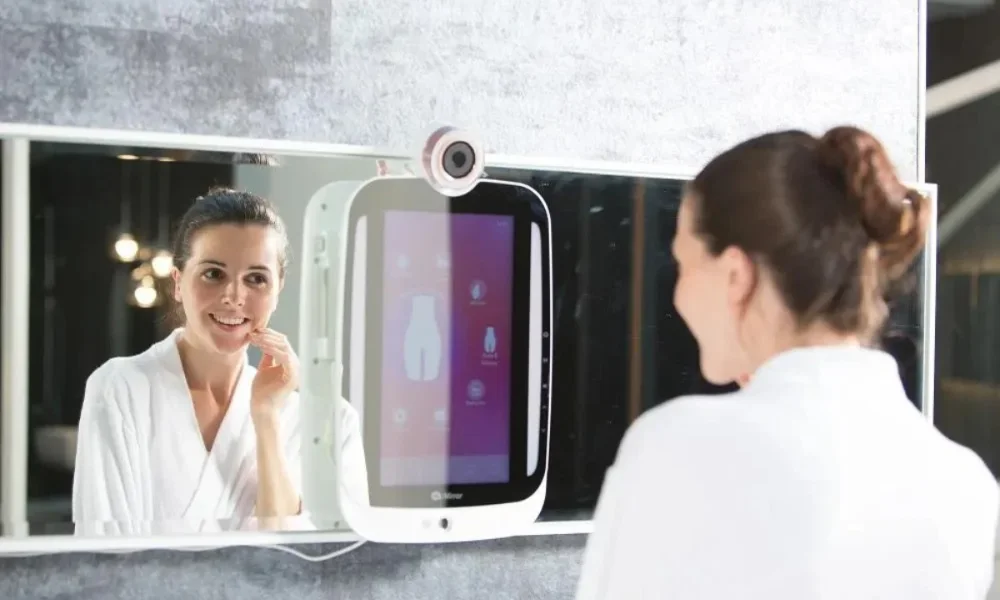
Picture your bathroom at 7am. You’re not fully awake. You stand at the mirror, look at yourself for maybe four seconds, and reach for your toothbrush. The mirror gives you nothing. Just your face staring back. That’s been the deal with mirrors for literally hundreds of years. They reflect. Full stop. In 2026, that’s changed. The AI smart mirror does something your bathroom mirror never could.
It looks back. It reads your heart rate through your skin. It checks how dehydrated you are. It notices that your eyes are puffier than they were last Tuesday and links that to your sleep data from Monday night.
None of that requires you to do anything except stand there like you always have.
This guide covers how smart mirror health tracking works, which brands are worth paying attention to, how these devices fit into a luxury home in real terms, and where the technology still falls short. Let’s get into it.
What an AI Smart Mirror Is (And Isn’t)
Let’s clear something up right away. An AI smart mirror isn’t a tablet glued to your wall. It isn’t a digital photo frame with a ring light. The glass is real, the reflection is real, and most of the time when it’s off you’d never guess it was anything other than a regular mirror.
Behind the surface sits a stack of hardware: cameras, biometric sensors, a depth sensor, and an edge AI processor. Edge means all the computing happens on the device itself. Your health data stays on the mirror. It doesn’t get packaged up and sent to a server farm somewhere.
That detail ends up mattering more than people expect.
Earlier versions of these, the ones from four or five years ago, were mostly glorified smart displays. You’d get your calendar, maybe a weather widget, Alexa if you were lucky. A lot of people wrote the whole category off as a novelty.
The 2026 generation is a genuinely different product. Multi-spectral skin imaging. Continuous passive biometric reads. Sleep quality analysis without a wearable. Features that were clinic-grade in 2021 are now sitting in people’s bathrooms in Dubai and London.
What AI Smart Mirror Health Tracking Actually Does
This is where most people’s scepticism either stays or goes away.
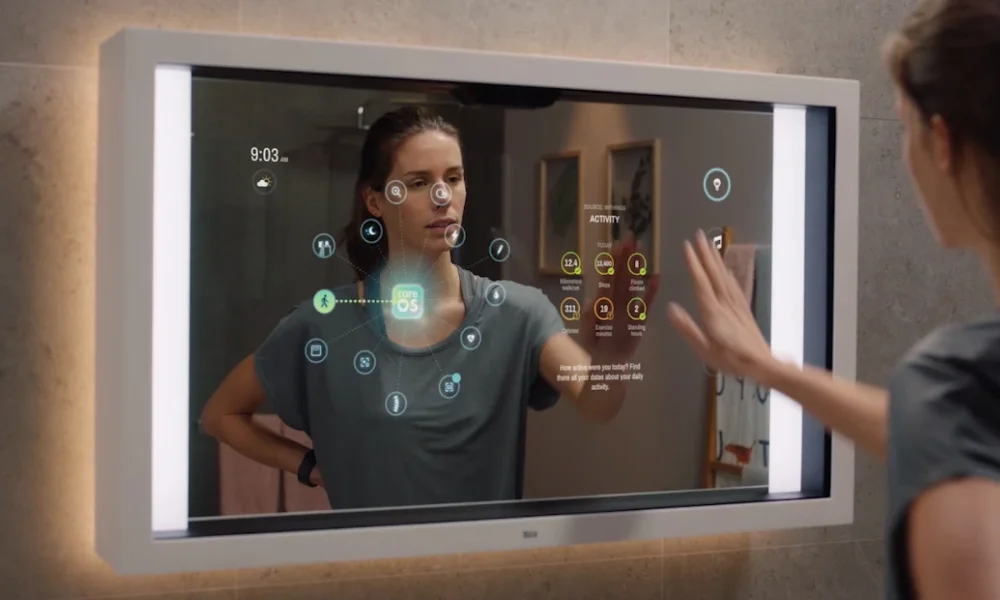
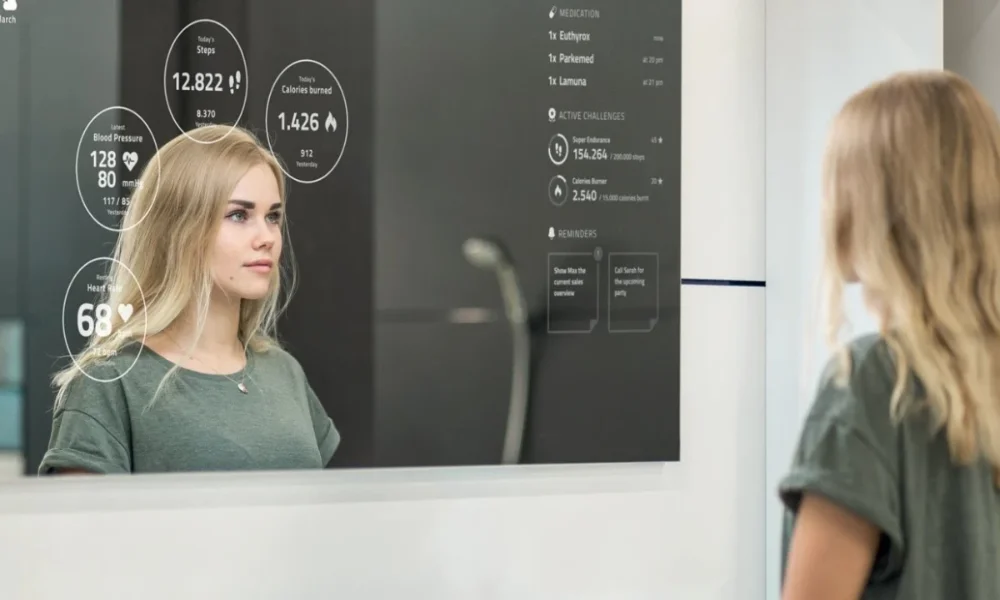
AI Smart mirror health tracking isn’t a novelty health widget. At the serious end of the market, these devices track:
- Heart rate and HRV using photoplethysmography that reads blood flow through skin. No chest strap. No watch. You just stand there.
- Blood oxygen levels giving you early signals about respiratory patterns before you feel any symptom
- Skin condition hydration levels, pore size, surface texture, all mapped fresh every single morning
- Sleep quality estimates pulled from visible overnight indicators: eye puffiness, skin tone, micro-expressions the camera reads in under two seconds
- Posture and spinal alignment tracked live while you’re just going through your normal routine
- Approximate body composition via depth cameras, which means no stepping on a scale for the basic numbers
- Stress markers picked up through facial muscle tension patterns that correlate with cortisol indicators
The part people underestimate is what continuity does to this data.
One reading means almost nothing. But 180 consecutive mornings of readings? That builds a personal baseline no clinic visit can match. Your mirror knows what your resting heart rate looks like when you’re well, when you’re coming down with something, and when you’ve had three bad nights in a row. A single check-up can’t tell you any of that.
Better platforms sync with Apple Health and Google Fit. Some models will flag three consecutive mornings of elevated heart rate and push you a prompt to book a doctor. That’s not a gimmick. That’s the kind of early pattern recognition that catches things.
Which Brands Are Worth Knowing for AI Smart Mirrors
- Hapto Mirror Pro: tracks 43 facial landmarks per session and builds long-term trend lines across months. Strong health data depth.
- Capstone Smart Glass: skin analysis focus with licensed dermatologist review built into their premium plan for flagged changes
- Kohler Verdera Voice Mirror: easiest entry point, Alexa-integrated, solid for someone new to the category who doesn’t need full clinical-depth tracking
- Baracoda Daily Skincare Mirror: three-minute morning scan across 12 facial zones tracking hydration and melanin changes daily
Why People With Luxury Homes Are Actually Buying AI Smart Mirrors
Status is part of it, sure. But status alone doesn’t explain why buyers come back, tell their friends, and add them to every bathroom in the house.
Privacy Is a Bigger Factor Than You’d Think
High-net-worth buyers tend to be careful about data. Fitness rings, smartwatches, health trackers, they’re all running continuous data streams to company servers. Most users never read the privacy policy attached to that data.
A mirror that processes everything on-device is a completely different offer. Your biometric readings stay on the hardware. For people who already think carefully about where their data ends up, that’s a meaningful distinction.
These Devices Talk to Everything Else
Buyers at the luxury home tech level expect their devices to work together without manual configuration. A well-set-up AI smart mirror connects to smart lighting, climate control, even kitchen displays.
Here’s a real example of what that looks like: the mirror picks up fatigue signals two mornings running. That evening the bedroom lights dim an hour earlier than usual. The thermostat drops half a degree. The kitchen display puts up a hydration reminder. Nobody set any of that up manually. It just ran.
That’s the gap between a home with smart devices and an actual luxury smart home. The mirror becomes the morning health signal that the whole system responds to.
It Replaces a Surprising Amount of Appointment Spend
Several AI mirror platforms include guided workout modules now. The mirror watches your positioning and corrects form in real time. Based on your health data that morning, it adjusts what it recommends.
For someone already paying a personal trainer and a nutritionist separately, this doesn’t replace them. But it adds a daily layer that those professionals can also reference. Within a year, some buyers find their check-in appointments getting shorter because they’re arriving with real data already in hand.
Where These Are Showing Up Beyond the Bathroom
The bathroom was the natural starting point. It’s where most people spend time in front of a mirror already. But the category has moved into other rooms fast.
Interior designers working at the high end of the residential market say clients are putting AI mirrors into the initial brief now, not adding them later. The hardware design has grown up to match. Frameless, edge-lit panels that disappear into custom joinery. Several brands build to custom dimensions.
Beyond bathrooms, installations are turning up in:
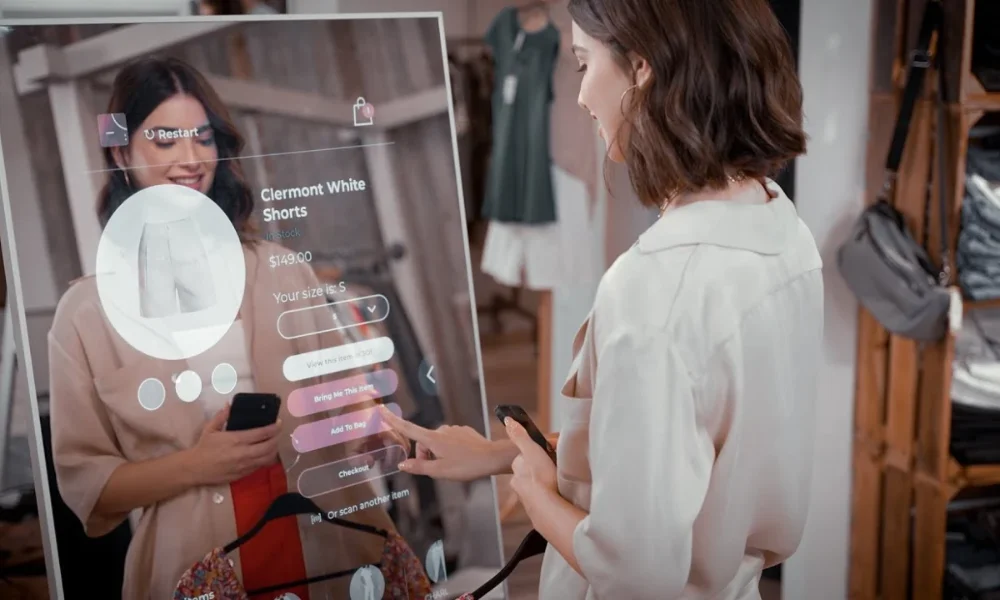
- Walk-in closets: the mirror pulls outfit suggestions from a wardrobe inventory linked to that morning’s weather forecast
- Home gyms: live form correction without a separate screen, tablet, or phone propped up somewhere
- Entry halls: a thirty-second health and appearance check before you leave the house, which sounds minor until you’ve done it for a month
- Guest suites: adds a hotel-grade experience that guests actually notice and remember
In Dubai and London specifically, AI smart mirror integration has started appearing in the standard spec sheets for new residential developments above certain price brackets. It sits next to underfloor heating and home automation as an expected feature, not a listed upgrade.
The Real Numbers on Cost
The honest price range is wide and it’s worth knowing before you start looking.
Entry-level models with basic health features and a clean display: around $800. You get heart rate, a skin summary, and basic smart home hooks. It works. It’s not the full picture.
Mid-range models with proper health tracking depth and full ecosystem integration: $2,500 to $6,000. That’s where most buyers who are serious about the health data end up.
Bespoke installations from brands at the ultra-luxury end: $15,000 and above once you factor in custom sizing, white-glove installation, and long-term support agreements.
For the market these devices are aimed at, upfront cost isn’t usually the sticking point. The question that slows more purchases down is software longevity. Will this thing still get updates in five years? Will the company still be around? Those are fair things to ask. The better brands give clear answers. The ones that don’t are worth avoiding.
Monthly subscription for advanced health analytics on most platforms: $10 to $30. Some brands sell the full feature set as a single purchase with no ongoing cost.
Worth It or Not?
For someone who wants daily health data without adding any new habit to their morning, yes. The mirror is already part of your routine. You’re already standing in front of it. The device just uses that existing moment.
Compare it to what quarterly GP visits, a personal trainer, and a dermatologist cost in a year. A quality AI smart mirror starts making financial sense within two years for someone who uses the data it gives them.
That last part is the catch. If you look at the dashboard once and ignore it for three months, the price tag doesn’t justify itself. The value lives in the habit of actually checking it.
What They Get Wrong (Still)
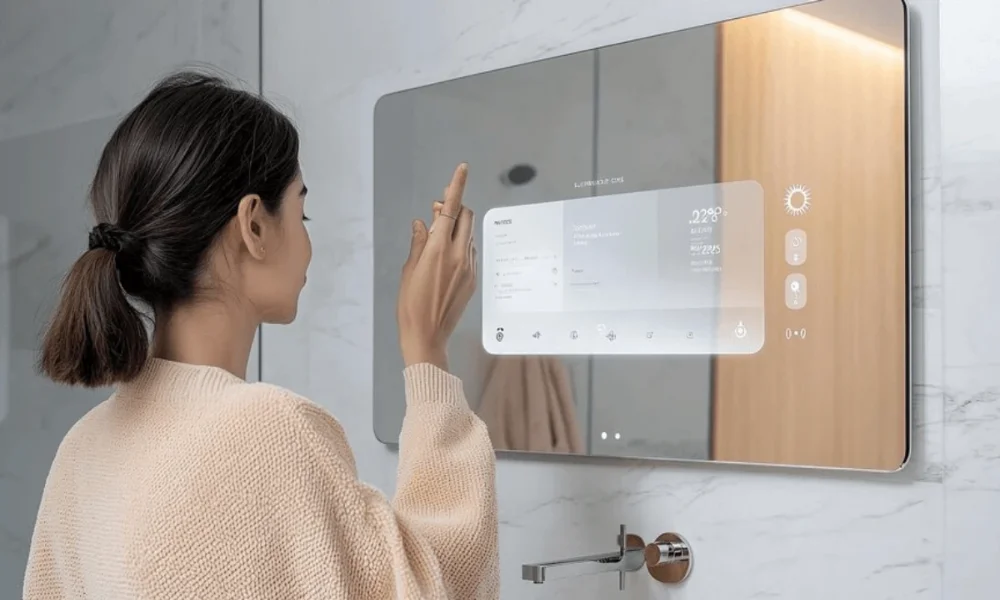
This category has real limitations. Better to know them before you’re committed.
- Lighting dependency. Most biometric sensors read accurately in neutral, consistent light. Warm-toned, multi-angle, dimmer-controlled bathroom lighting throws some readings off. If your bathroom lighting is complex, factor that in.
- Skin tone accuracy. AI health tools across the industry have historically shown gaps in accuracy on darker skin tones. It’s a documented problem. Ask any brand you’re seriously considering whether they publish demographic testing data. If they go quiet on that question, look elsewhere.
- Privacy varies by brand. Edge processing is only as private as the company building the firmware. Read the actual privacy policy. Ask directly whether any data ever leaves the device. Get a straight answer.
- Software lifespan is uncertain. Hardware at this price should last ten years. Consumer tech software support rarely does. Ask about the update commitment before you spend five figures.
- Not a medical device. The mirror spots patterns. A doctor diagnoses them. Don’t use one as a substitute for actual medical care.
What to Actually Check Before Buying
If the investment makes sense for your home, here’s a practical checklist:
- On-device processing. Confirm the AI runs locally, not in the cloud. This affects both speed and privacy.
- Health metric range. Minimum: heart rate, skin condition, sleep indicators, posture. If a model doesn’t cover those four, it’s not earning the price.
- Ecosystem compatibility. Check your existing smart home platform before purchase. Integration problems post-installation are a headache that’s avoidable.
- Display quality. 4K resolution is the floor for a premium install. Anti-glare coating is non-negotiable in a bathroom environment.
- Warranty and update terms. Two years minimum. Written commitment on software updates. If it’s not in the documentation, ask for it in writing.
- Custom sizing. Standard sizes rarely fit a bespoke bathroom well. Check whether the brand works to specification.
For a wider look at luxury home tech that pairs well with an AI smart mirror, the roundup at praviceler.com covers complementary devices worth looking at alongside this.
People Also Ask: AI Smart Mirror FAQs
What does an AI smart mirror do every day?
Every morning when you stand in front of it, the mirror runs a passive health scan. Heart rate, skin hydration, sleep markers, posture. You don’t tap anything or input any data. Over weeks it builds a personal health picture from your normal routine. Higher-end models also pull in calendar and weather. The health tracking is what makes it worth the price.
How accurate is the health tracking?
Heart rate readings using photoplethysmography sensors are clinically reliable under good lighting. Skin analysis and sleep estimation are trend indicators, not clinical measurements. The accuracy compounds over time. Day one data is useful. Month three data is genuinely valuable because the mirror has your personal baseline to compare against.
Is it safe to use daily?
Yes. The sensors use standard visible light and in some models infrared for depth reading. No radiation. The safety question worth asking isn’t about hardware, it’s about data. Know what your brand does with what the mirror collects.
Can it replace a doctor?
No. The mirror identifies patterns and flags trends. It doesn’t diagnose anything. What it does well is catch things you’d normally miss between appointments and give you something concrete to bring to a professional when something looks off.
How does it connect to a smart home?
Wi-Fi and Bluetooth are standard. Apple HomeKit, Google Home, Alexa, and Control4 integration is available across most mid-range and above models. Setup takes under an hour in most cases. Once connected, the mirror can trigger automated routines based on what it detects each morning without any manual input from you.
Bottom Line
AI smart mirrors are not a concept product in 2026. The hardware is mature. The smart mirror health tracking is genuinely useful in daily life. For anyone investing in luxury home tech, these devices belong in the conversation, not as a showpiece but as a functional piece of the home that earns its place every single morning.
Your bathroom mirror has been passive your entire life. The only thing it’s ever done is reflect.
What’s available now does something different. It pays attention. It builds a picture of your health over time, quietly, from a habit you already have. For the right buyer, that’s not a small thing.
